
Three prepaid tiers, a very wide country list, and an unnamed issuer behind them
 Available in US
If you have struggled to get an ordinary bank card — blocked, refused, or simply unavailable where you live — the Zebec card is built with you in mind. That is the pitch, and it is a real one: Zebec’s own pages say it is rebuilding “decentralized infrastructure” since 2021, and its availability list reaches far beyond the places where a conventional card is easy to get. The top-up side is genuinely broad, with funding from a Zebec wallet covering “180+ tokens across 21+ blockchains”.
But breadth and clarity are different things, and clarity is where this card falls short. Zebec does not name the issuer or the BIN sponsor behind the cards on any page I could find, does not disclose the legal entity, and publishes almost no percentages — no FX rate, no conversion percentage, no top-up fee amount for the two lower tiers. Where a review can normally do arithmetic — “this fee times this many payments” — here I am left describing what the card says in words only. That is the honest shape of this review: a good product idea, executed by an entity I cannot name, priced in percentages I cannot compute.
So this is a card to consider if your alternative is nothing at all. It is not a card to load with money you cannot afford to lose contact with.
The conditions described here are current as of October 28, 2026.
The verdict: 7.1 out of 10
Zebec scores 7.1 / 10. That is a good number for a product in this category — above the alternatives I looked at in detail — and it is worth saying why before saying who should take it. The product is well built where the user touches it. Three tiers, all Mastercard prepaid, all working in Apple Pay and Google Pay, funded from a wallet that accepts an unusually wide range of digital assets. Where the card becomes hard to recommend is everything behind that: who issues it, what it legally is, and what it costs in precise terms.
| Criterion | Mark | Why |
|---|---|---|
| Who can get it | 8 / 10 | Silver covers the US, Canada, UK and EU states except Malta; Carbon USD International reaches 90+ countries outside the US and Canada; Black is global subject to sanctions |
| Cost | 8 / 10 | Silver and Carbon carry no sign-up fee and no transaction fee (a promotion on Carbon, subject to change); Black charges for activation, top-up and month, amounts unstated |
| Top-up options | 9 / 10 | Funding from the Zebec wallet with “180+ tokens across 21+ blockchains”; the specific coins are not listed |
| Reliability and complaints | 5 / 10 | No issuer or BIN sponsor named, no legal entity disclosed; no complaints or reviews found; the Black page reads “offline for upgrades” |
| Everyday use | 5 / 10 | Every tier is a Mastercard prepaid with Apple Pay and Google Pay; physical card and ATM access not disclosed |
| Total | 7.1 / 10 | A strong funding engine wrapped in a card programme whose back end is not described |
Who this suits. Someone whose home country is not on a bank’s list, or who cannot pass a bank’s address and document checks, and who already holds crypto. If your money is already in digital assets and you want to spend it at ordinary shops without a traditional banking relationship, the design fits your situation precisely — that is who Zebec says it is building for.
Who this does not suit. Anyone whose main question is trust rather than access. If you want to know who is liable for your balance, which regulator watches the issuer, what a disputed payment is resolved under, or what a conversion costs to the nearest percentage point, Zebec’s public pages will not tell you, and no review can substitute. If you already have a working bank card, the case for switching is thin.
The card’s audience note is worth repeating plainly: Zebec is for users funding a card from 180+ tokens. That is the niche, and if you are not in it, you should read the rest of this page as background rather than as a recommendation.
Who will they give you the card to?
The first thing to understand is that Zebec decides eligibility by country of residence, not citizenship. The card’s own term is “issue location”, which it defines as the country where you declare your home address and apply. Citizenship is not mentioned anywhere in the eligibility rules.
That distinction matters more than it first appears, because in this category the two get treated very differently. Residence is checked through your address and, in some programmes, a local phone number; citizenship is screened separately because sanctions lists and issuer risk policies are usually applied to nationality and country of birth as well. So a card you can obtain by declaring an address is not the same thing as a card whose programme is open to your passport.
Here is how the three tiers divide the world, as Zebec states it:
- Silver (USD) — United States, Canada, Puerto Rico, US Virgin Islands, Guam, American Samoa, Northern Mariana Islands.
- Silver / Carbon (GBP) — United Kingdom, Gibraltar, Guernsey, Isle of Man, Jersey.
- Silver / Carbon (EUR) — EU states except Malta.
- Carbon USD International — “90+” approved countries outside the US and Canada, with Japan, Singapore, Brazil, Kenya and Uruguay given as examples.
- Black — worldwide, subject to sanctions.
The examples on the Carbon International list are telling. Japan, Singapore and Brazil are places where a bank card is not hard to get. Kenya and Uruguay are places where it can be. Zebec is drawing a line that is not simply “where banks are hard” — it is “where Zebec’s own compliance programme is willing to operate”, and it happens to include countries that are not especially underserved.
Where you cannot use it, even if you hold one. The cards “cannot be used” in a compliance list that includes the Russian Federation and Belarus, alongside Iran, Cuba, Syria and North Korea. This is a restriction on the place of use, separate from where the card was issued. A card issued legitimately in one country, used in another, can fail at the till or online checkout in those places. If you travel for work or family reasons, that is the practical fact to plan around.
One inconsistency you should know about: the Carbon page says USD International is offered in “over 70 countries”, while the availability page says “90+”. Zebec’s own official pages disagree with each other here. I have used the larger figure above because it is the one on the availability page, but treat the country count as approximate and confirm yours before relying on it.
I cannot tell you what documents you will be asked for. Zebec’s pages do not state which documents, proof of address or age proof are required. What they do state is that Zebec and its card partners check the device IP and the declared address to enforce the restrictions — which means the address you type and the network you apply from are both part of the check, and a mismatch between them is visible to the programme.
How to get it
The application runs through Zebec’s SuperApp — there is a Web version and a mobile app for iOS and Android — and the card is funded from the Zebec wallet. So the sequence is: get the app, create the account, verify, then order the card and load it.
Which card you get depends on the tier, and the tiers differ in ways that matter.
| Tier | Card type | Card numbers | Currencies |
|---|---|---|---|
| Silver | Single-use prepaid | A new card number on each issuance | USD, EUR or GBP |
| Carbon | Reloadable prepaid | The same number each time | USD, EUR or GBP |
| Black | Premium reloadable | Not stated | USD |
Silver is designed to be disposable — one card number per issuance, which is a reasonable posture if you are worried about a card number being compromised, and a poor one if you would rather keep one number attached to a subscription. Carbon is the tier most people will want: reloadable, same number, three currencies.
Black is described as a premium reloadable card for high spenders, enterprises and invited users. Its own page currently reads “temporarily offline for upgrades”, with a remodel mentioned and resumption expected in Spring 2026. I have not been able to confirm what happened after that date, so treat Black as announced rather than available.
On KYC — verification is required, and how much of it is not described. Zebec’s own materials are inconsistent about this too. The Silver blog describes a limited KYC based on address, with activation in seconds after email confirmation. The Black page says KYC information must be submitted before activation. Neither page sets out the tiers of KYC, the reasons an application can be rejected, or an official processing time for Silver and Carbon. So: verification is definitely part of it; exactly how much, and how long, is not published.
Verification is done by two-factor token, and which channel depends on the programme:
- Silver needs a local phone number in the region, with codes sent by SMS.
- Carbon USD International uses email codes instead.
- Carbon USD Regional also uses SMS tokens.
That difference has a practical edge: a Carbon USD International applicant without a local phone number is not blocked at the SMS step the way a Silver applicant would be.
Physical or virtual card is not stated. Zebec’s documentation and the Black page describe digital activation only — the Black page cites activation in under a minute after KYC, referring to a figure of 30 seconds. Whether a plastic card is issued, and how it is delivered, is not on any page I read. A third-party directory describes Zebec cards as virtual with a physical card planned and not widely distributed, but that is unofficial and undated, so I would not build a plan around it. What you can say with confidence is that the digital side exists and the plastic side is unconfirmed.
One more thing worth knowing about the history: Silver is a relaunch. It is a revival of an earlier card called the Zebec Instant Card, and the Silver blog post announcing it carries no date. That is why there is almost no public review history for this product — it is not that nobody has used it, it is that the current version is recent enough that nobody has written about it in a way I could find.
Fees: what it really costs
The headline is good and the detail is thin. Silver has no sign-up fee and no transaction fee. Carbon has no sign-up fee and no transaction fee, which Zebec’s documentation explicitly calls a no-fee promotion and notes is subject to change. Black charges an activation fee, a top-up fee and a monthly fee, with amounts not stated on the pages I read.
Beyond that: Zebec says variable FX fees may apply, and that crypto conversion rates vary by token. It does not publish the percentages. So the card is free to open and free to spend, but the cost of the moment your money actually converts lives somewhere in rates and variables that are not written down.
Here is everything that is stated, and the places where the answer is silence:
| Fee or limit | Silver | Carbon | Black |
|---|---|---|---|
| Sign-up fee | None | None (promotion, subject to change) | Not stated |
| Transaction fee | None | None (promotion, subject to change) | Not stated |
| Activation fee | Not stated | Not stated | $1 |
| Monthly fee | Not stated | Not stated | $1 |
| Top-up fee | Not stated | Not stated | Approximately 2%, plus $0.30 per transaction |
| FX fee | “Variable FX fees may apply” | “Variable FX fees may apply” | Not stated |
| Crypto conversion | Rates vary by token; no percentage given | Rates vary by token; no percentage given | Variable and additional, on top of the top-up fee |
| Gas / network fee | Charged by the blockchain, not the card | Charged by the blockchain, not the card | Variable and additional |
| ATM fee | Not stated | Not stated | Not stated |
Read the top-up row carefully. Black’s numbers are the only concrete fee figures Zebec publishes anywhere, and they are on the tier that is offline for upgrades. For the two tiers you can actually get, the fees are described in words and not in numbers.
Two or three everyday payments, and which fees bite.
*A coffee in your own currency.* Say you are in a euro country, you hold EUR on a Silver or Carbon card, and you buy a coffee. No transaction fee, no FX fee, because you are spending the same currency you hold. The only cost already spent is the conversion that loaded the balance — and its rate is not published. This is the cleanest path the card offers, and Zebec’s own Silver blog makes the point: matching your card’s denomination to your funding currency can avoid FX fees entirely.
*A coffee in a foreign currency.* Same purchase, but you are in a country that spends dollars, and the shop charges a foreign currency amount. Now the variable FX fee applies on top of whatever the merchant’s own rate does. Zebec does not say what that fee is, so I cannot tell you what the final amount becomes. This is the ordinary, everyday case for a traveller, and it is the case where the missing percentages actually hurt.
*A monthly subscription.* You sign up for a subscription service and let it bill the reloadable Carbon card each month. No transaction fee, no sign-up fee, and the number stays the same across months. What you cannot work out from Zebec’s pages is whether anything changes on the balance side if you top up in a token whose conversion rate has moved since last month — because the conversion rate varies by token and is not disclosed.
One practical tip that is not a trick. Because Silver issues a new card number on each issuance, a subscription on a Silver card will break when you need a new card. Carbon keeps the same number, which is what makes it the tier for recurring payments.
On limits, the tiers separate clearly, and this is the part of the pricing picture Zebec does state properly:
| Limit | Silver | Carbon | Black |
|---|---|---|---|
| Minimum load | $10 | $10 | Not stated |
| Load limit | $10–$1,000 | $1,000 / £1,000 / €1,000 (Carbon page: $10,000 per load) | Up to $10,000 per load |
| Maximum balance | $1,000 | $10,000 / £5,000 / €5,000 | $50,000 |
| Daily spend | Not stated | $10,000 (USD) | Not stated |
Note the second Carbon row: the cards page and the Carbon page give different load limits, $1,000 and $10,000. Zebec’s pages disagree with each other again, so if you plan to load more than $1,000, check which figure your own region shows.
Top up: how the money gets in
Funding comes from the Zebec wallet, and this is the strongest part of the product. Zebec states “180+ tokens across 21+ blockchains”. That is a wide funnel, and it is the reason the top-up score is 9 out of 10 while the everyday-use score is 5. Whatever Zebec is uncertain about elsewhere, the number of assets it will accept is not in doubt.
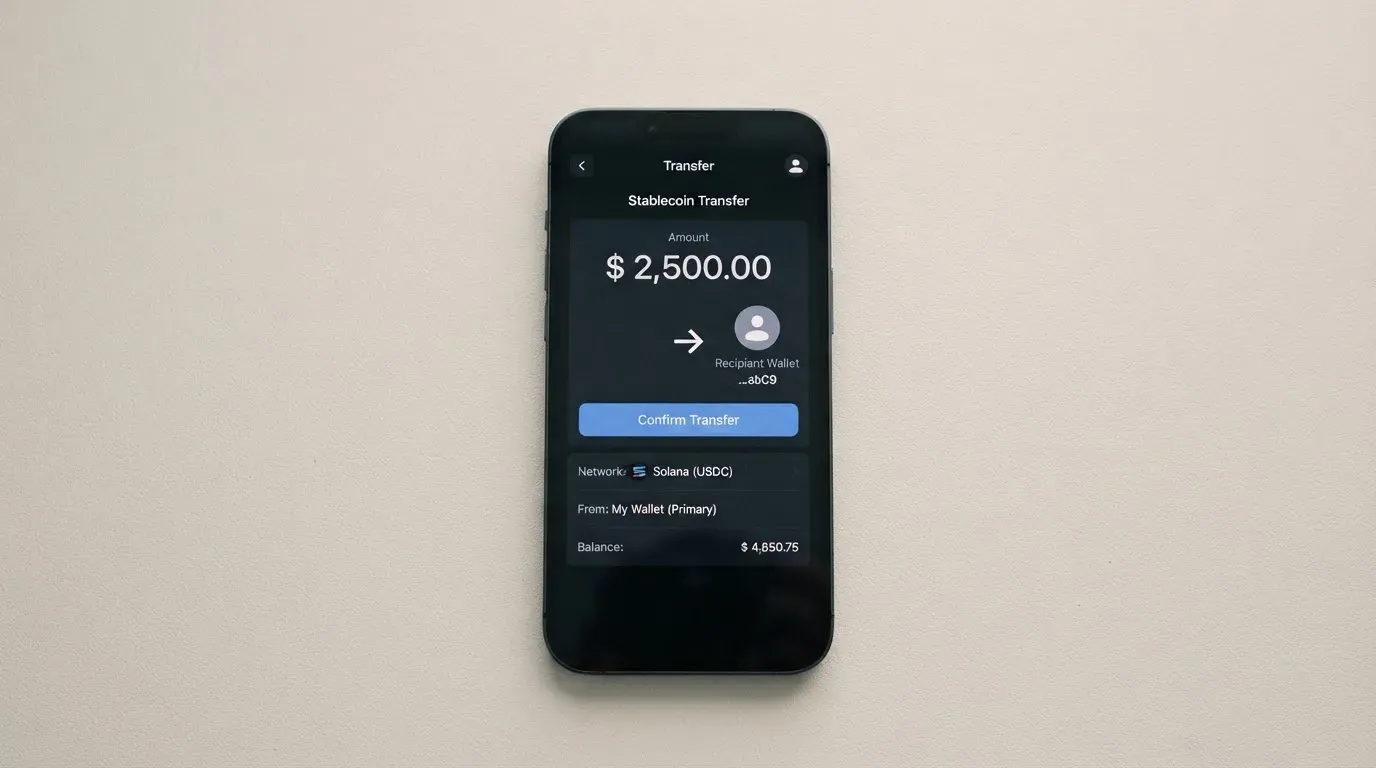
The catch is that the specific coins are not listed. “180+ tokens across 21+ blockchains” tells you there is breadth; it does not tell you whether the token you hold is one of them. If your holding is an asset only Zebec supports on a network you rarely use, you will find out at the point of transfer, not before.
There is no fiat top-up. Zebec’s funding route is from crypto in the wallet. I found no stated path for adding money from a bank account directly, which means if you do not already hold crypto, this card is not a route into spending — it is a route for spending what you already hold.
On the cost of topping up, once again the numbers are scarce:
- Black is the only tier with published figures: a top-up fee of approximately 2%, a $0.30 per-transaction fee, a $1 activation fee and a $1 monthly fee, with gas, crypto conversion and exchange fees variable and additional on top.
- Silver and Carbon publish no top-up fee amount. For them, Zebec says only that variable FX fees may apply and that conversion rates vary by token.
- Minimum load is $10, given for Carbon.
- Withdrawal back out is not stated. I found no description of how, or whether, you move funds from the card back to the wallet.
The last point is the one I would want answered before committing anything meaningful. Top up is documented as a one-way direction, and I would rather flag that than assume a symmetric path exists.
One safety point about the transfer itself, which belongs to crypto generally and applies to every Zebec top-up. Blockchain transfers are irreversible. If a deposit goes out on a network Zebec does not support, or to an address belonging to a different network, the funds can be lost or need manual support recovery with no guarantee. Check the network before you confirm, every time.
Paying with it every day
All three tiers are Mastercard prepaid, and all three work with Apple Pay and Google Pay. That covers the most common real-world payment — phone in hand, tap at the till — and it is the part of everyday use Zebec has been most deliberate about.
Beyond that, the daily-use picture thins out fast.
Physical card and ATMs. Not stated. Zebec does not say whether a plastic card is issued, and it publishes no ATM fee or ATM withdrawal terms. If your day involves cash, that is an unresolved question, and it is worth asking support directly before you rely on the card.
Blocked merchant categories. Not stated. This matters more than it sounds. Merchant category codes are the four-digit numbers that classify a business, and gambling (MCC 7995) is one of the categories issuers commonly block on specific cards as a matter of policy rather than law. Zebec does not publish a blocked list, so you would be discovering restrictions by having a payment declined at the counter.
Disputes and chargebacks. Not stated. There is no dispute, refund or chargeback process described on the cards pages, the Black page or the payees pages — the only route given is a support email address. That absence is worth sitting with. A chargeback is a refund the issuer orders to settle a dispute, with reason codes for fraud, duplicate billing or goods not received; it is a core consumer protection. Whether one is available here is simply not published.
Holding funds after a declined payment. Even a declined authorisation can leave a hold on your balance for several days — typically up to seven. With a $1,000 maximum balance on Silver, a string of declines could tie up a meaningful share of your money for a week. Plan for it.
Rewards. No cashback is stated on any tier. What Zebec does mention is that staking $ZBCN earns “extra rewards”, with no rate given. So there is no cashback line to weigh against fees — and since fees are unstated, there is nothing on either side of that equation to compare.
Where declines can come from beyond the merchant. If you pay online, 3-D Secure may add an identity step: the issuer assesses the risk and either approves frictionlessly or challenges you with a one-time code or a biometric check. If the card’s billing address does not match what you type, address verification can fail — and that check is mostly offered in the US, Canada and the UK, and is generally unavailable for foreign-issued cards. On a prepaid card issued across many countries, that is a plausible source of failed online payments that has nothing to do with your balance.
What can go wrong
This is the section where Zebec is quietest, so I want to be careful to separate what I could not find from what went wrong. I found no official incident reports and no user reports about Zebec cards. There is no Trustpilot page for Zebec cards and no Reddit threads about them. A third-party directory, CryptoCardHub, rates the Zebec Card 3.3 and ranks it 23rd of 86 — that is one directory’s score, not a survey, and I mention it only because it is the only external rating that exists.
The absence of complaints with a product this new is not reassurance. It is what you would expect from a card whose current version has been live a short time and whose predecessor was a different product entirely.
The company behind it. Zebec says it has been building decentralized infrastructure since 2021, and cites 250+ enterprise clients and 50K+ monthly users. Those are the company’s own figures. What is *not* stated anywhere I looked is the legal entity behind the card, the issuer or BIN sponsor, or any licence. Mastercard appears only as a partner logo.
That gap has a concrete consequence. A card number starts with an issuer identification number of six or eight digits, and any merchant can look it up to see which institution and which country issued the card. Merchants use that to decide whether to apply extra scrutiny, which is why a card issued in one country can look “foreign” to a shop in another. So the issuer matters commercially, not just legally — and Zebec does not tell you who it is.
What that means for EU users, concretely. Under MiCA, the EU’s markets-in-crypto-assets regulation, which took legal effect in June 2023 with the token rules applying from 30 June 2024 and the crypto-asset service provider rules from 30 December 2024, e-money tokens may be issued only by a credit institution or an electronic money institution. Transitional arrangements let providers already operating under national law continue only until 1 July 2026 or until they are authorised or refused under MiCA, whichever comes first. So the question you want answered is simple and specific: who is the licensed institution behind this card, and under which regime? Zebec does not say. ESMA maintains an interim register of authorised providers, and that is where I would look rather than at the card’s own site.
Custody of your card balance. Zebec says the wallet is separate from the app — a non-custodial connection — and that the card balance is held with the card programme. It does not say who holds it or how. This is the distinction that matters most in this category, and it is worth stating plainly: control of crypto belongs to whoever holds the private key, and a seed phrase, typically 12 to 24 words, is an unencrypted key that anyone who obtains it can use to restore the wallet and spend its funds. Because crypto transfers are irreversible, there is no built-in recovery — the network cannot freeze or return funds. Custodial providers have a documented record of failure: Mt. Gox, with about US$350 million reported stolen between 2011 and 2014; Coincheck, about US$400 million in 2018; and Ronin Network, US$625 million in 2022. Zebec’s non-custodial wallet is the good part of the design. Where the card balance sits between loading and spending is the part nobody explains.
Stablecoins are not as stable as the name. Zebec’s whole funding model depends on digital assets holding value. A stablecoin aims to hold a stable value against a fiat currency, but despite the name, stablecoins are not necessarily stable: TerraUSD collapsed in May 2022, and USDC temporarily lost its peg in March 2023 during the US banking crisis. Tether’s USDT and Circle’s USDC are dollar-pegged and, per the BIS in July 2025, together make up about 90% of stablecoin market capitalisation. Circle says USDC is redeemable 1:1 for USD and 100% backed by cash and cash equivalents with monthly reserve attestations. That is a well-documented pair. But a load-and-spend model means the value at the moment of conversion is the value you get, and Zebec does not publish how that conversion is priced.
Support, when you need it. Silver’s support is described as 24/7 by email at [email protected], plus X and Telegram — though that blog post carries no date and was written at the Silver relaunch, so I cannot date how current that arrangement is. Black routes to [email protected] and [email protected]; Mobilum is named as the backend processing partner, which is one of the few partner names Zebec does publish.
Black’s status. The Black page shows the site temporarily offline for upgrades with a remodel, and expected resumption in Spring 2026. I could not confirm the state of it after that. UK access to Black is described on the page as restricted pending regulatory review. And I found no sign of a 2026 issuer change — which, given the issuer is not named, is not the reassurance it might seem.
What to take instead
If the reason you are reading this is that a bank card is hard for you to get, the alternatives are worth comparing on the same terms. Here are three I looked at in detail, all in this category, all with their own gaps.
MetaMask Card — 7.1 / 10. The same score as Zebec, and the more transparent of the two. Sign-up is open in 45 listed countries and territories — Andorra, Argentina, Brazil, Canada, Mexico, Germany, France, Spain, Uruguay among them — with other regions on a waitlist; US and UK sign-ups are temporarily closed per the FAQ. It is a Mastercard, virtual card issued instantly, with a metal version you can pre-order after approval; the issuer is named as Monovate with Crypto Life as card provider. The virtual card is free with no annual or maintenance fee; metal is $199 a year. Fees are described as a “minimal fee for each transaction” with no MetaMask-added fees and no foreign transaction fee, but the amount is on a linked table, not on the pages I read. It spends directly from your connected wallet on Linea, Base, Monad and Solana, and names mUSD, wETH, EURe, GBPe, USDC and USDT. Rewards are the strongest here: cashback in mUSD, 1% on virtual and a headline 3% on metal (the footnote caps 3% at the first $10,000 spent, then 1%), plus a $FLY bonus multiplier through a dining app. Choose this over Zebec if you want the issuer named, the residency rule published, and cashback in real numbers.
KAST — 6.1 / 10. Residence-based eligibility shown at KYC, with citizenship also mattering — if you live in a supported country but hold only an ID from a restricted region, you may still fail, and a VPN does not help. Cards are virtual and physical, up to ten per user, across Visa Platinum, Visa Infinite metal and gold-plated tiers, plus themed designs, with balances in USD. The pricing is where it gets interesting and where you must read carefully: Standard is free, Premium is 1,000 USD a year and Private is 10,000 USD a year, billed annually upfront with no monthly option. Stablecoin top-up is 0%, USD card spend is 0%, transaction fee 0%, Apple and Google Pay 0%; the non-USD FX fee is 0.5%–1.75% depending on your residence, transaction country and programme, with 0.10 USD on non-USD transactions under 25 USD and 0.50 USD for a declined payment. Cashback is tiered: 1.5%, 2% or 3% up to monthly spending caps. Choose this if you want your fees printed as numbers and do not mind an annual membership.
TokenPocket — 5.8 / 10. The weakest of the three. A Visa debit for a list of European countries and territories, a Mastercard debit for Australia, Canada, Hong Kong, Japan, Taiwan, New Zealand, Singapore, South Korea and the UK, with the Americas planned. It runs on Arbitrum, the cards are virtual, and balances are in EUR24 and USD24. On cost: an NFT creation fee partly covered by TokenPocket where you pay “a small portion”, and “apart from these, TP Card does not charge any additional fees” — but a 1% fee is charged when depositing cryptocurrency into the card, described as later refunded through rewards or reduced transaction fees. Choose this if your country is on its list and you want a debit rather than a prepaid structure.
One comparison table, since these keep coming up:
| Zebec | MetaMask | KAST | TokenPocket | |
|---|---|---|---|---|
| Score | 7.1 | 7.1 | 6.1 | 5.8 |
| Network | Mastercard prepaid | Mastercard | Visa | Visa / Mastercard debit |
| Issuer named | No | Yes (Monovate) | Not stated | Not stated |
| Eligibility basis | Residence | Residence, 45 countries | Residence and ID | Country list per tier |
| Sign-up fee | None | None (virtual) | 0 USD Standard; tiered above | Small portion of NFT fee |
| Ongoing fee | None stated for Silver and Carbon; Black $1/month | None on virtual; $199/year metal | Membership, tiered | 1% on crypto deposit |
| Cashback | None stated; $ZBCN staking rewards, rate unstated | 1% virtual, 3% metal up to $10,000 | 1.5% / 2% / 3% by tier | Deposit fee refunded via rewards |
| Top-up | “180+ tokens across 21+ blockchains” | Wallet, named tokens on four networks | USDT, USDC, PYUSD, RLUSD | Crypto deposit, networks not listed |
The pattern is clear. Zebec’s column is the one with the most blank cells — and the blanks are in exactly the columns that tell you who stands behind the card and what it costs.
Who I would recommend it to
I would recommend this card to a person in a specific position: you already hold crypto, you already have a Zebec wallet or are comfortable opening one, ordinary banking is difficult or unavailable where you are, and you are spending modest amounts you could afford to have tied up for a week by a payment hold. In that situation, the card does something genuinely useful. Three tiers, three currencies, a single-use option for anyone who does not want a persistent card number, and a funding engine that accepts more assets than anything else I looked at.
I would not recommend it as a primary card, and I would not recommend it to anyone whose main concern is recourse. Here is the short version of why, and you can weigh it yourself.
- You cannot see the price. No FX percentage, no conversion rate, no top-up fee for the tiers you can actually get. A card that is free to open and free to spend, with the real cost hidden in rates that vary, is a card you are asked to trust on precisely the number you would want to check.
- You cannot see the issuer. No BIN sponsor, no legal entity, no licence on any public page. When something goes wrong on a payment, the party who resolves it is the issuer — and Zebec does not tell you who that is.
- You cannot see the protections. No dispute, refund or chargeback process is described. No blocked merchant categories. No insurance or spending controls described.
- You cannot see the record. No reviews, no complaints, no Trustpilot page — which for a recently relaunched product is expected, not reassuring.
What I would do before committing money. Check the ESMA interim register for the provider’s authorisation status, particularly if you are in the EU, where the transitional window runs to 1 July 2026. Ask [email protected], in writing, the four questions the site does not answer: who is the issuer and BIN sponsor; which licence and jurisdiction; what happens to my balance if the programme ends; and is a chargeback available on a declined or fraudulent payment. Write them down and keep the replies — a programme closure typically means a notice period, then loading and spending stop, then you are asked to withdraw, and that sequence is easier to survive if you have already established where your funds sit. Then load the minimum, $10, and test a payment before you load anything you would miss.
And set your own exit test in advance: decide what amount you are willing to have tied up and unable to withdraw for a week, because withdrawal from the card is not described anywhere Zebec publishes. If the answer is “any amount would bother me”, this is not the card for you, and that is a reasonable position to hold.
Frequently asked questions
What is the Zebec card?
The Zebec card is a Mastercard prepaid card issued in three tiers — Silver, Carbon and Black — that you fund from a Zebec crypto wallet rather than from a bank account. Silver is single-use with a new number per issuance, Carbon is reloadable and keeps the same number, and Black is a premium reloadable card. All three work with Apple Pay and Google Pay. It is built for people who cannot easily get an ordinary bank card.
How does the Zebec card work?
You create a Zebec wallet, verify your identity, and the crypto in that wallet is converted and loaded as a fiat balance onto the card. From then on it behaves as a prepaid card: it spends only the balance you have loaded and cannot overdraw it. Because the card is prepaid rather than debit, a purchase draws down a stored amount rather than asking your bank for money at the till.
Is Zebec a bank?
Zebec’s public pages do not say, and this is the most important unanswered question about the card. Zebec describes itself as building decentralized infrastructure since 2021, but it does not disclose a legal entity, the card issuer, the BIN sponsor or any licence. Mastercard appears as a partner. Whether a bank, an electronic money institution or a programme manager stands behind it is not something the site discloses.
Who owns Zebec?
The company’s own materials say it has been building decentralized infrastructure since 2021, and cite 250+ enterprise clients and 50K+ monthly users. Those are Zebec’s figures. The ownership structure and the legal entity behind the card are not stated on the pages I read, so I cannot tell you who ultimately controls the programme you are loading money into.
Is the Zebec card available in my country?
Eligibility is decided by country of residence — the address you declare — not citizenship, and it varies by tier. Silver covers the US, Canada, UK and EU states except Malta; Carbon USD International covers 90+ countries outside the US and Canada. One caveat: Zebec’s own pages disagree, with the Carbon page saying “over 70 countries” and the availability page saying “90+”, so confirm your specific country before relying on it.
Can I use the Zebec card in my country?
Possibly not, even if you hold one. The cards “cannot be used” in a compliance list that includes the Russian Federation and Belarus, along with Iran, Cuba, Syria and North Korea. This restricts the place of use rather than where the card was issued, so a legitimately issued card can fail at a terminal or online checkout in those countries. Everywhere else, Mastercard acceptance is the general expectation.
Does the Zebec card require KYC?
Yes. Zebec describes a limited KYC based on address with activation in seconds by email confirmation for Silver, and says KYC information must be submitted before activation for Black. What documents are required, what the tiers of KYC are, and why an application might be rejected are not stated on the pages I read. Verification uses SMS tokens for Silver and Carbon USD Regional, and email tokens for Carbon USD International.
Is the Zebec card free?
Partly. Silver has no sign-up fee and no transaction fee, and Carbon has neither either — though Zebec’s documentation calls that a promotion and says it is subject to change. Black charges a $1 activation fee, a $1 monthly fee and a top-up fee of approximately 2% plus $0.30 per transaction. Beyond that, variable FX fees may apply and crypto conversion rates vary by token, with no percentages published.
How do I top up the Zebec card?
You transfer crypto from your Zebec wallet to the card, and Zebec says it supports “180+ tokens across 21+ blockchains”. The specific coins are not listed, so check that your token and network are supported before transferring — blockchain transfers are irreversible and a deposit on an unsupported network can be lost or need manual support recovery. There is no stated fiat top-up route; the minimum load is $10.
Is the Zebec card safe?
That depends on which part you mean. The wallet side is non-custodial by Zebec’s account, which means your keys stay with you. But who holds the card balance once loaded is not stated, no dispute or chargeback process is described, and no insurance or spending controls are mentioned. There are no reviews or user reports to draw on either, which is unsurprising for a recent relaunch but leaves you without an outside track record.
Wallet cards in the catalogue – cryptocardcatalog
Content created by the «cryptocardcatalog» team