
A USD Visa card that spends straight from a self-custody USDC balance on Base — free to issue, 2% abroad, and plastic that never arrives
 Available in US
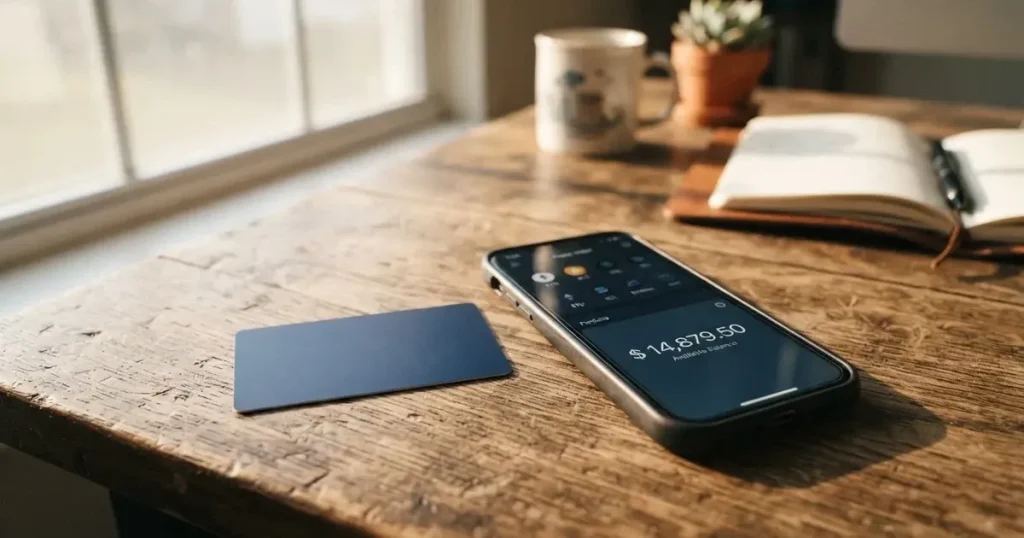
If you have a USDC balance you control the keys to and you want an ordinary Visa number to spend it through, Tuyo is one of the more direct ways to do that. The pitch is narrow and clear: a virtual Visa card, issued in the app the moment your identity check passes, spending from a dollar balance loaded from crypto on Base, with Apple Pay and Google Pay on top and no metal tier, no monthly fee and no plan to buy. That narrowness is both the appeal and the limit. There is no physical card — the card’s own pages say “coming soon” with no date — and everything runs through a company that is not a bank, in a programme that has already announced one rewards scheme is being shut down inside six weeks of my checking.
I scored it 7.3 / 10. That is a good card for a specific person and a poor choice for most other people, and the sections below explain which is which.
The conditions described here are current as of October 28, 2026.
Verdict
Tuyo is worth 7.3 out of 10, and the number is not a rounding of a marketing claim — it is the sum of six criteria that pull in different directions. Two of them are genuinely strong (top-up options, everyday use), two are middling (who can get it, cost), one is the weak point (reliability and complaints), and the audience it fits is a small, identifiable group.
| Criterion | Mark | Why |
|---|---|---|
| Who can get it | 7 / 10 | 27 countries closed by verified residence — including RU, BY, TR, UA, GB, IN, CN and VN — plus 25 US states and territories; the rest of the world is open |
| Cost | 7 / 10 | Issuance and monthly fee are free; 1% for a non-USD currency plus 1% for purchases outside the US, together up to 2% per purchase; crypto conversion 0.25% |
| Top-up options | 9 / 10 | USDC on Base, and any token on Base, Ethereum, Arbitrum, BNB Smart Chain or Polygon with conversion into USDC; fiat via SEPA, ACH, SPEI, Apple Pay and Google Pay |
| Reliability and complaints | 6 / 10 | Tuyo Inc. is not a bank; fiat runs through licensed money transmitter Bridge Ventures, cards come from partner Rain (Signify Holdings) under a Visa licence; the BNPM programme ends 31 October 2026, with complaints of app freezes and slow support |
| Everyday use | 8 / 10 | Virtual Visa instantly, Apple Pay and Google Pay, ATM 250 USD per withdrawal and 3 attempts per 24 hours; plastic “coming soon” with no date |
Who this suits: you already hold crypto in your own wallet, you are comfortable sending USDC on Base and paying network fees yourself, you want a USD Visa number today rather than a card in the post, and you live somewhere the card is actually issued. You want no subscription and you do not want a custodian holding your money between payments.
Who this does not suit: anyone who needs a physical card for a payment terminal at a shop, anyone in a blocked country or one of the listed US states, anyone who expects a card network’s full dispute and chargeback support, and anyone who is uneasy about a fintech holding a card programme that can change its rewards terms on a month’s notice — as this one did.
Will they give you the card?
The short answer is: probably, if you live in a permitted country and pass a single identity check — and not at all if you live in one of 27 that are closed, or one of the US places that are carved out.
The rule is by verified residence, not citizenship. That distinction matters more than it sounds, because your address is what the card’s pages check, and if your address does not match your ID, you are in the territory of the complaints below. The 27 platform-wide prohibited jurisdictions by verified residence are AF, BD, BY, CN, CD, CU, IN, IR, IQ, LB, LY, ML, MM, NP, NG, KP, RU, SO, SS, SD, SY, TR, UA, GB, VE, VN — and of those, Russia is closed on all three fronts: no platform access, no card issuance and no card payments. Belarus is closed to the platform and to card issuance but card payments are listed as available. That is a strange split, and it is exactly the kind of detail that ends up in a support ticket.
Then there is a second, narrower list. The card provider applies additional issuance restrictions for BY, CN (mainland), CU, IN, IR, IQ, IL, MM, NP, NI, KP, RU, SY, TR, UA, VE, VN. The practical effect is that some places in the first list are doubly shut out. Your address being absent from both lists is not the same as being approved — verified residence is checked, and a mismatch is one of the reasons applications fail.
In the United States there is a carve-out the other way round: the card is unavailable in AZ, DE, GA, ID, LA, MD, MS, MO, NV, NM, ND, OH, OR, RI, SD, TN, VT, WA, WI, DC, PR, the US Virgin Islands, American Samoa, Guam and the Northern Mariana Islands. So a US resident in, say, California is in scope and a US resident in Delaware is not. A third-party directory lists Tuyo Inc. as registered in Delaware; the card’s own pages do not state its registration jurisdiction, so treat that as unofficial.
The background worth knowing here is that country and nationality get screened separately throughout this industry. Sanctions screening and issuer risk policy are usually applied to citizenship and country of birth as well as to address, which is why a card can accept a residence and refuse an identity document, and why “my country was on the list” is not a guarantee. Nobody’s public pages say processing time, so there is no honest answer to “how long will it take”.
How to get it
You will need a government-issued ID — a passport or ID card — and you must be 18 or over per the Terms of Service. There is one verification level only: no tiered KYC, no basic-versus-enhanced split. Proof of address is not explicitly stated as a required document, but “verified residence” is checked, so do not assume the absence of a stated document means the absence of a check.
The sequence is: download the app, register, pass identity verification with your government ID, deposit USDC on Base, and the virtual card is issued instantly once KYC approval comes through. There is no waiting for a card to be manufactured or posted, because there is no physical card to manufacture.
That last sentence is the honest catch. The physical card is listed as “coming soon” with no announced date, no cost, no delivery time and no replacement cost. There is no metal tier either — one tier, virtual only. If your mental picture of this card involves plastic in a wallet, that picture is not available yet.
One rule to read before you apply: a rejected card application is final. And the app does not always explain a rejection. If you get a generic setup error instead of a decision, the card’s own guidance is to contact support to check for missing or incorrect profile data. The stated rejection reasons are document issues, unclear photos, and unsupported occupation codes — that last one surprises people, because it means the profession you entered on the form can be the whole problem.
The app exists on both platforms: iOS (iPhone, iOS 16.4 or later) and Android.
Fees: what it really costs
Issuance is free, the monthly fee is free, the yearly fee is free, and there is exactly one tier, so there is nothing to upgrade to and no paid plan to consider. On the cost of using it, the picture is good at home and expensive abroad, and the 2% figure is not an edge case — it is the normal cost of a purchase outside the US in a currency other than dollars.
| Fee or limit | Value |
|---|---|
| Issuance | Free |
| Monthly / yearly fee | Free (single tier, no paid tiers) |
| Crypto conversion / trading | 0.25% volume fee, or the network fee if that is higher during congestion; bridging tokens and stablecoin-to-stablecoin trades are exempt from the volume fee |
| Foreign exchange | 1% when spending in a currency other than USD |
| Abroad | 1% on any purchase made outside the US (charged by the card provider) |
| USD purchases inside the US | 0% |
| Combined ceiling | Up to 2% per purchase when both the currency and location fees apply |
| ATM | Tuyo charges no ATM fee of its own; the ATM operator’s own fees apply and count toward the limit |
| ATM limit | 250 USD maximum per withdrawal, including any ATM surcharge; 3 withdrawal attempts per rolling 24 hours, approved and declined both counting |
| Daily spending limit (new card) | 50,000 USD maximum |
| Daily spending limit (after 50,000 USD total spend) | Rises to 100,000 USD |
| Daily spending limit (after 100,000 USD total spend) | Rises to 200,000 USD |
| Monthly limit | Not stated |
| Legal maximums in the Cardholder Agreement (International, Nov 2025) | Foreign Exchange Fee “up to 3%”, Cross Border Fee “up to 3%” |
Three ordinary payments show how this works in practice.
A coffee in a US city, paid in dollars: 0% fee. The full amount comes out of the eligible dollar balance in Cash, including any funds sitting in an active interest strategy.
A coffee in Lisbon, in euros, with a US card: 1% FX fee plus the 1% abroad fee, so up to 2% of the transaction. On a 4.50 euro purchase that is roughly nine cents — invisible, and also the reason a small-ticket card never shows you what the rate really is.
A larger purchase from a non-US merchant, priced in dollars: still 1% abroad fee, no FX fee, because the currency is not the problem, the location is.
Two details to keep. The limits are raised automatically as your total spend accumulates, and you can change the daily limit yourself in the app (Card → Change limit) once you have made at least one purchase. And the 0.25% conversion fee is not the only cost of moving value in — the network fee applies too when it is higher, and bridging and stablecoin-to-stablecoin trades are exempt, which is why sending USDC from one chain to another is the cheap path.
Against that, the agreement’s legal maximums of up to 3% and up to 3% are a ceiling rather than the current charge. What you pay today is 1% and 1%.
Multi-currency account numbers are provided: USD with account and routing number, EUR with IBAN, and MXN with CLABE. EUR deposits can auto-convert to USD — the card spends from the eligible dollar balance, so that conversion is what puts your euros into reach. EUR-to-USD conversion at around 0.50% has been reported by users, and the card’s own FAQ describes the fiat-to-crypto side as a “small FX spread (usually under 1%)”.
Top up options
This is the criterion I scored highest, and the reason is that Tuyo accepts value from both directions — crypto from several networks, and fiat from several rails — which means you are rarely stuck.
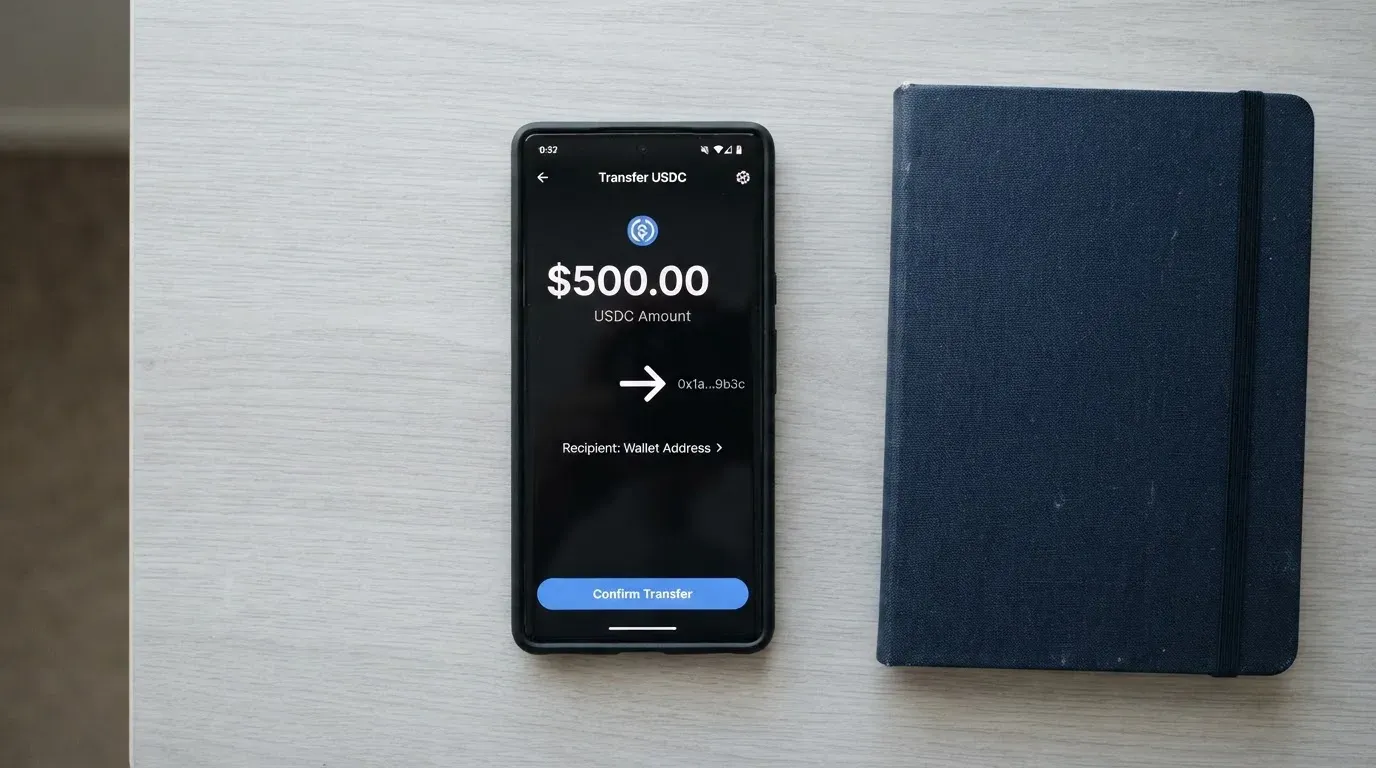
Crypto first, since that is the core: the card is powered by USDC on Base. You can deposit USDC, or any token, on Base, Ethereum, Arbitrum, BNB Smart Chain or Polygon, and convert it into Base USDC inside the app. Receiving USDC on Base is free; you pay the sending network fee. The card spends from the eligible dollar balance in Cash, and that includes funds in active interest strategies — so money that is sitting in an earn product is still spendable.
The network list is the practical part, and it deserves one warning. A transfer sent on a network the provider does not support, or to an address belonging to another network, can be lost or need manual recovery with no guarantee, because blockchain transfers are irreversible. Send a small test amount the first time. Also remember that on Ethereum-style networks the fee is paid in the chain’s own token, so a wallet holding a token but none of that token cannot send anything.
Fiat second: Apple Pay and Google Pay, debit or credit card, a linked US bank account, a USD bank transfer (ACH or domestic wire — no SWIFT), a EUR bank transfer (SEPA or SEPA Instant, no SWIFT, from an account in your own name), and an MXN bank transfer via SPEI. Fiat-to-crypto conversion carries a small FX spread, usually under 1%. The minimum top-up is not stated anywhere on the public pages, which is a small thing to be annoyed by.
Withdrawing works in both directions too. Because the arrangement is self-custodial, you can always withdraw crypto to your own wallet, even if KYC fails or the account is restricted — the card’s line is “No lock-ups, no exceptions”. Fiat withdrawal goes out by bank transfer using the USD, EUR or MXN account details. No specific withdrawal fee is stated beyond standard trading and network fees, and what happens to a balance at account closure is not stated either.
Paying with it every day
Apple Pay and Google Pay are both supported, and for most people that is the actual way this card gets used — a virtual card number added to a phone wallet, which then behaves like any other card at the till. Behind that number sits a Device Account Number in the phone’s secure hardware and a fresh one-time security code per payment, so the real card number is not what sits on the network.
Virtual card in hand: instantly, in the app, on KYC approval. That is the strongest part of the everyday-use picture, and it is the reason the score is 8 rather than lower.
The friction points are specific and worth naming. Some merchant categories are blocked, and when that happens the app shows “Merchant not supported” — the classic example is gambling, where merchants carry a category code that many issuers block by policy rather than by law. Separately, Apple or Google may refuse to add the wallet on their own risk assessment, based on your device, your location, or your account history with them, and that is a decision you cannot appeal to Tuyo.
Cash is thin: 250 USD maximum per withdrawal, three attempts per rolling 24 hours with declined attempts counting toward the three, and no free allowance stated. If you need cash regularly, this is not your card.
Rewards are in the middle of a change and the direction of that change matters. There is no traditional cashback today. Instead there is BNPM — Buy Now Pay Maybe, random free purchases handed out at Tuyo’s sole discretion — which ends 31 October 2026. From 1 November 2026 it is replaced by 1.5% cashback on all purchases globally, with no minimums, caps, categories or membership requirements, valid through the end of 2026. Alongside that sit TUYOs points, earned from card spend, trading and Earn strategies; TUYOs are off-chain points, not a cryptocurrency token and not tradable or transferable, with a token launch expected in 2026 and at least 20% of supply allocated to users and community.
The honest read: 1.5% cashback from November is a better structure than random free purchases, because you can plan around a number. It is worth noting that this rate applies through the end of 2026.
The app itself is rated 4.4 out of 5 on the App Store from 130 ratings (read 21 October 2026) and 3.9 out of 5 on Google Play from about 305 reviews with 10K+ downloads (updated 27 July 2026). It supports English and Spanish.
What can go wrong
Reliability is where this card loses most of its marks, and the reasons are structural rather than a run of bad luck.
Start with what you are actually contracting with. Tuyo Inc. is a financial technology company, not a bank. Fiat currency services — fiat-to-stablecoin conversions and the virtual bank account numbers — come from Bridge Ventures, Inc., a licensed and regulated US money transmitter, compliant in the US and the EEA. The cards are issued by partner institutions under a Visa licence, with Rain (Signify Holdings, Inc.) named as Tuyo’s card issuance partner. Only one licence is named explicitly on the site: the Bridge Ventures money transmitter licence. So on any given purchase there is a brand, a money transmitter, and an issuer, and the card’s public pages are the place where those three meet.
Then there is the rewards reversal. On 19 October 2026 Tuyo announced BNPM would end on 31 October 2026, with 1.5% cashback replacing it from 1 November 2026; the co-founder cited user exploitation, mounting costs and team distraction (The Coinformer, 20 October 2026). The programme had launched in May 2026, when a Tuyo co-founder declared “cashback is dead” on X (7 May 2026). And in June 2026 the CEO of Rain told Forbes his company was not looking at or doing probabilistic rewards like BNPM, citing legal and regulatory concerns. Whatever the reason, the sequence reads as a reward that did not survive contact with its users.
The complaints themselves cluster into four themes, from Trustpilot and the app store reviews:
- App bugs and freezing after verification, needing a reinstall, followed by inability to get back into the account, and support taking days to respond (Trustpilot, September 2026; Google Play, July 2026).
- BNPM free purchases dropping off sharply after the first couple of months, with one user reporting the card stopped covering charges entirely (Trustpilot, September–October 2026).
- Verification problems blocking the addition of funds with support unresponsive (App Store, May 2026).
- Country eligibility confusion: the app said the user’s country was eligible, the user deposited funds, and the card was then denied, with support citing ineligibility after the fact (Google Play, July 2026).
I could not retrieve an aggregate Trustpilot score — the page is behind Cloudflare anti-bot verification — so any number you see quoted for Tuyo’s Trustpilot rating should be treated as unverified until you check it yourself. The status page at status.tuyo.com shows no service incidents for August to October 2026, and support is reachable in-app or at [email protected]. Hours are not stated; a “usually reply within one business day” line appears on a separate tuyo.space contact page, which is a different product and is not confirmed for the card.
There are three further gaps I want to be explicit about, because they are absences rather than defects and you should price them yourself. First, the card’s public pages do not address chargebacks, disputed transactions, refund handling or time frames at all — the official help centre and FAQ skip them, and the Cardholder Agreement (International, Nov 2025) was hosted on Notion and could not be read as HTML. If a payment goes wrong, there is no published process for me to point you at. Second, the money is self-custodial: you hold the private keys, Tuyo never takes custody, the app uses biometrics and the device secure enclave with iCloud/Google Drive backup, and there is a freeze/unfreeze toggle and an in-app PIN. That is real control, and it is also total responsibility — blockchain transfers are irreversible, a stolen key has no recovery path, and the network cannot freeze or return anything. Third, the funds are not FDIC-insured, and safeguarding of fiat is the regulated partners’ job, not a deposit guarantee.
A note on balances you should not forget: declined authorisations can leave a hold on your funds that stays for several days, sometimes up to seven. A string of declines can therefore lock up money you have already budgeted.
What to take instead
None of these is universally better. They differ in which country you live in, whether you want plastic, and whether a fee is worth a rewards rate — so here they are side by side rather than ranked.
| Alternative | Score | Card | Who it is for | Cost shape |
|---|---|---|---|---|
| MetaMask Card | 7.1 / 10 | Mastercard; virtual instantly, metal pre-orderable at 199 USD/year | Sign-ups open in 45 listed countries/territories, others on a waitlist; proof of residency required; US/UK sign-ups temporarily closed per FAQ | Virtual free with no annual or maintenance fee; “minimal fee for each transaction”, amount not stated on the pages read; no additional MetaMask fees and no foreign transaction fee, Mastercard rate used |
| KAST | 6.1 / 10 | Virtual and physical, up to 10 cards; Visa Platinum, Visa Infinite metal, Visa Infinite gold plated | Residence-based list shown at KYC, not published; if you live in a supported country but hold an ID from a restricted region you may still fail | Standard 0 USD/year, Premium 1,000 USD, Private 10,000 USD; stablecoin top-up 0%, USD spend 0%; non-USD FX 0.5%–1.75% by country and programme; non-USD under 25 USD costs 0.10 USD; declined transaction 0.50 USD; inactivity 1 USD/month after 12 months |
| TokenPocket | 5.8 / 10 | Visa debit for a list of European countries/territories; Mastercard debit for Australia, Canada, Hong Kong, Japan, Taiwan, New Zealand, Singapore, South Korea, UK and others; virtual | Best matched to its listed countries rather than globally; Americas were planned but that is not a current statement | NFT creation fee partly covered, user pays “a small portion”, amount not stated; 1% fee on depositing cryptocurrency into the card, to be refunded later via rewards or reduced transaction fees; FX fee not stated |
Three contrasts worth drawing out. KAST charges you for the privilege and then charges you almost nothing to spend: 0% to top up, 0% transaction fee on USD spend, and 1.5% to 3% cashback depending on tier — a rational setup if you will actually use the rewards, and a bad one if you will not. MetaMask is free at the virtual tier and earns 1% cashback in mUSD, with a 3% headline on metal limited by a footnote to the first 10,000 USD spent, and 5X/7X $FLY bonuses through a dining app. TokenPocket’s 1% deposit fee is the outlier: it is charged at funding time and refunded later, so you are extending credit to the provider for a while.
Against Tuyo, the practical differences are these. Tuyo is the cheapest to hold and the only one of the four here that runs on Base USDC with a 0.25% conversion fee and five network options on the crypto side. KAST is the only one of these that gives you a physical card with a published delivery price. MetaMask gives you a metal option and a rewards structure with a named token behind it. And all three alternatives are stricter or vaguer on eligibility in their own ways — KAST will not publish its country list, MetaMask has closed US and UK sign-ups, TokenPocket’s coverage is a list of specific countries.
One background point that applies to the whole category: Visa and Mastercard do not issue crypto cards to consumers themselves. They license issuers and can suspend a programme — Visa terminated its global agreements with FTX on 13 November 2022, and the FTX US debit card was wound down. WaveCrest, a Visa issuer that supplied several crypto card brands, was suspended by Visa in Europe in 2018 and all its programmes closed. Programme closures are the normal failure mode, not the exotic one.
Who I would recommend it to
I would recommend Tuyo to someone who already keeps their own keys, already holds USDC or something convertible into it, and wants a spending card inside ten minutes rather than inside ten days. If your money is already self-custodial, Tuyo adds a Visa interface without adding a custodian to the loop — that is a real and underappreciated thing, and the promise that you can withdraw to your own wallet even if KYC fails is the sharpest version of it I have seen.
I would recommend it specifically to a person who travels or buys from non-US merchants and can live with 2% on those purchases, because 2% is cheaper than most foreign transaction fees in this category and the same 0% applies to dollar spend at home.
I would not recommend it to you if any of these are true. You need a physical card. You live in one of the 27 prohibited countries, or in one of the listed US states. You spend heavily in a low-margin business where 2% is a real cost. You want published chargeback and dispute procedures and cannot find them yourself. Or you are the kind of user who is unsettled by a rewards programme ending on a fixed date six weeks after announcement — in that case the card still works, but the way its owner behaves when costs rise is now on the record.
And if you have no crypto at all and simply want a USD Visa, none of this is the right tool. Tuyo is a way to spend a crypto balance, not a way to get a bank account.
Frequently asked questions
What is Tuyo card?
Tuyo is a virtual Visa card issued in a phone app, spending from a dollar balance you load with crypto. It runs on USDC on the Base network, and the card’s balance draws from what it calls Cash, including funds in active interest strategies. Tuyo Inc. is a financial technology company, not a bank; fiat services come from Bridge Ventures, and the card is issued by a licensed partner under Visa.
Is Tuyo a bank?
No. Tuyo Inc. is a financial technology company. The pieces around it are regulated in specific ways: Bridge Ventures, Inc. supplies the fiat currency services and virtual bank account numbers under a US money transmitter licence, and partner institutions issue the cards under a Visa licence. Only the Bridge Ventures licence is explicitly named on the site’s own pages, so if the regulatory detail matters to you, that is where to look.
Is the Tuyo card free?
Issuance is free, the monthly fee is free, the yearly fee is free, and there is a single tier with no paid upgrades. Spending is not always free: 1% applies in a currency other than USD, a further 1% applies on purchases outside the US, both can combine to 2% per purchase, and crypto conversion is 0.25%. Dollar purchases inside the US cost nothing.
Which countries can get the Tuyo card?
Twenty-seven countries are platform-wide prohibited by verified residence, including RU, BY, TR, UA, GB, IN, CN and VN, and the card provider applies extra issuance restrictions to a further list including IL and NI. The rule follows verified residence, not citizenship. In the US the card is unavailable in 25 states and territories listed above. Anywhere else is, in principle, open — subject to the identity check.
Does Tuyo card require KYC?
Yes. There is a single verification level: a government-issued ID document, passport or ID card, with a minimum age of 18 per the Terms of Service. Proof of address is not explicitly stated as required, but verified residence is checked. A rejected application is final, and the stated rejection reasons are document issues, unclear photos and unsupported occupation codes.
How do I top up the Tuyo card?
Send USDC on Base — receiving is free, you pay the network fee — or send any token on Base, Ethereum, Arbitrum, BNB Smart Chain or Polygon and let the app convert it into Base USDC. By fiat you can use Apple Pay, Google Pay, a debit or credit card, a linked US bank account, a USD transfer by ACH or domestic wire, a EUR transfer by SEPA or SEPA Instant in your own name, or an MXN transfer by SPEI. No SWIFT, and the minimum top-up is not stated.
How do I add the Tuyo card to Apple Wallet?
Open the app after your card is issued and add the virtual card to Apple Pay, or use Google Pay the same way; both wallets are supported. One thing outside your control: Apple or Google may reject adding the wallet on their own risk checks, based on device, location or account history, and that decision is theirs rather than Tuyo’s. Some merchant categories are also blocked, showing as “Merchant not supported” in the app.
Is the Tuyo card safe?
Self-custody is the strong part: you hold the private keys, Tuyo never takes custody, and the app uses biometrics and the device secure enclave with cloud backup, plus a card freeze toggle, an in-app PIN and adjustable daily limits. The trade is that blockchain transfers are irreversible and a lost key has no recovery path, the funds are not FDIC-insured, and the card’s public pages do not cover chargebacks or disputed transactions at all. That last gap is the one I would want answered before relying on it.
Is the Tuyo card worth it?
For a self-custody user funding a card with USDC, yes, and the 9/10 I gave its top-up options reflects five networks plus six fiat rails behind a free card. The 6/10 on reliability reflects a rewards programme ending on 31 October 2026, partner companies rather than a bank, and repeated reports of app freezes and slow support. Read the complaints section above before you decide, and treat the November cashback as something to check rather than something to assume.
Wallet cards in the catalogue – cryptocardcatalog
Content created by the «cryptocardcatalog» team