
Busha review: cheap to open, thin on what the card actually tells you
 Available in US

Busha is a crypto exchange and wallet, registered in Nigeria, Kenya and Ghana, and the Busha card is a virtual Visa that spends straight from balances the wallet already holds — USD, USDT or USDC. That is the whole product in one sentence, and it is either exactly what you need or exactly not. If you want a card number that pays online subscriptions in dollars without a bank willing to open an account for you, the appeal is obvious. If you want to walk into a shop and tap a piece of plastic, there is no plastic: the card is virtual only, Apple Pay and Google Pay are not supported, and a virtual card with no wallet binding is close to useless at a physical till.
I scored it 4.8 out of 10. The number is not a rounding of something kinder. The card is cheap, and it may well be a perfectly serviceable way for a Nigerian, Ghanaian or Kenyan resident to spend USDT online. It simply does not yet publish the things that decide whether a payment card is trustworthy: which countries issue it, what the issuer is, what conversion costs, what the limits are, and how you get your money back out. That pattern of silence runs through the whole review, and it is the reason the score sits where it does.
The conditions described here are current as of October 28, 2026.
Verdict: 4.8 / 10 — cheap to open, thin on disclosure
The score is the sum of six criteria I mark separately, so you can see exactly where the card earns and where it does not. Cost is the strong column. Everything you would need in order to predict your own cost per payment is empty.
| Criterion | Mark | Why |
|---|---|---|
| Who can get it | 2 / 10 | No countries named on the card pages; Busha entities sit in Nigeria, Kenya and Ghana; naira payments are not supported. Unofficial sources say Nigeria, Ghana and Kenya, 18+, with a verified Busha account. |
| Cost | 8 / 10 | Card creation is $2 once, and there are no funding or maintenance fees. Conversion and FX fees are not disclosed. |
| Top-up options | 5 / 10 | Spending works from USD, USDT and USDC balances in the Busha wallet. The networks are not named. |
| Reliability and complaints | 6 / 10 | Busha Digital Limited, licensed by SEC Nigeria as a Digital Asset Exchange. The card issuer is not named. Unofficial reviews sit around 3.5–3.8 out of 5 on Trustpilot on 16–17 reviews, with slow withdrawals and slow support recurring. |
| Everyday use | 2 / 10 | Virtual Visa only; Apple Pay and Google Pay are not supported. Unofficial reports say no ATM. |
| Total | 4.8 / 10 | A genuinely cheap card wrapped in a lot of silence. |
Who this suits. Someone in Nigeria, Ghana or Kenya who already holds USDT or USDC, pays most things online in dollars, and mainly needs a card number that arrives in minutes rather than a plastic card in the post. If your spending is subscriptions, software, hosting, ad platforms and the like, the shape fits.
Who this does not suit. Anyone who needs to pay in person, draw cash, bind the card to a phone wallet, or predict the cost of a purchase before they make it. Anyone who wants to know which institution stands behind the card when something goes wrong. And anyone who plans to move a large balance — because the limits are not stated, and an unstated limit is not a high limit, it is an unknown.
Two things worth saying plainly before the sections. First, Busha the exchange and Busha the card are related but not the same thing: the card spends from wallet balances, so your everyday experience depends heavily on how the wallet behaves — how fast deposits land, how fast support answers, and how the exchange handles a rate at the moment you sell. Second, the card pages themselves are thin. A third-party review page describes a different product altogether: a USDC Mastercard with up to ten cards and no fees, which contradicts the official description of a Visa, up to four cards, with a $2 creation fee. Where the two disagree, the card’s own words have been cited, and the other has been flagged as unofficial.
Who will they give you the card to
The honest answer is that the card’s public pages do not say. There is no list of eligible countries on them. What they say is that applicants “complete the eligibility questions”, which is a phrase that describes a questionnaire, not a standard.
What the surrounding facts do tell you is the shape of the operation. Busha entities exist in Nigeria, Kenya and Ghana — Busha Digital Limited in Nigeria (registration 1495049) and in Kenya (PVT-GYUQJAEL), and Busha Digital Ltd in Ghana (CS-182631123). Busha is licensed by SEC Nigeria as a Digital Asset Exchange, and has data-protection registrations in Kenya (ODPC 15965), in Ghana and in Nigeria. It is not a bank. It is an exchange with a card attached, and the licence it holds is about digital assets, not about payment cards.
Naira payments are not supported. That is stated, and it matters more than it first appears: it means the card is a dollar instrument inside an African exchange, not a local-currency card.
One unofficial line is worth carrying with appropriate caution. A third-party page, as of May 2026, describes the card as available to applicants in Nigeria, Ghana and Kenya aged 18+ with a verified Busha account. That is consistent with where the companies are registered, which is mild supporting evidence and not confirmation. The card’s own pages do not confirm the age, the countries or the requirement for a verified account.
So the practical test before you spend an afternoon on the questionnaire is simple: are you resident in one of those three countries, do you already have a Busha account you can get verified, and is what you want to buy priced in dollars? If any of those is no, stop reading here and look at the alternatives further down.
How to get it
The stated flow is short. You complete the eligibility questions, you accept the Card Terms, and — if you are approved and have paid the $2 card creation fee — the virtual card is issued “within minutes”. There is no physical card in the plan at all: virtual only.
That is genuinely faster than a bank application, and I want to be fair about it. The awkward part is what sits underneath that short flow.
Identity checks are not detailed. An AML & KYC Policy and an “ID Verification” help article both exist, but the help centre redirected when the article was opened, so neither could be read. Which documents are required, whether proof of address is needed, what the minimum age is, how long verification takes and what causes a rejection: not stated. For a regulated business, none of that is unusual — for you, it means the friction you are most likely to hit is not priced into this review, because the card has not published its own friction.
There is a verification-level system, and the numbers are in naira. A help-centre page titled “Verification Levels and Limits” sets out fiat limits for Nigeria in NGN:
- Level 1 — deposits only, withdrawals not allowed
- Level 2 — up to NGN 10,000,000 per month, for deposits and withdrawals
- Level 3 — up to NGN 500,000,000 per month
Which level the card itself requires is not stated, nor are the documents, processing time or rejection reasons attached to each level. Read that list as a description of the wallet, not of the card. The card spends wallet balances, so whatever level your account sits at is the ceiling on what you can move — and that is the number to plan around, not the card’s own (unstated) spending limits.
What you get. A Visa, virtual, denominated in USD — described as a “stablecoin-backed virtual USD Visa card”. Up to four cards, each with a custom name and colour. That is the entire product line: one card type, no paid tiers, no metal, no differentiator beyond the label on the front.
Fees: what it really costs
Here is the good news and the bad news, and the bad news is larger.
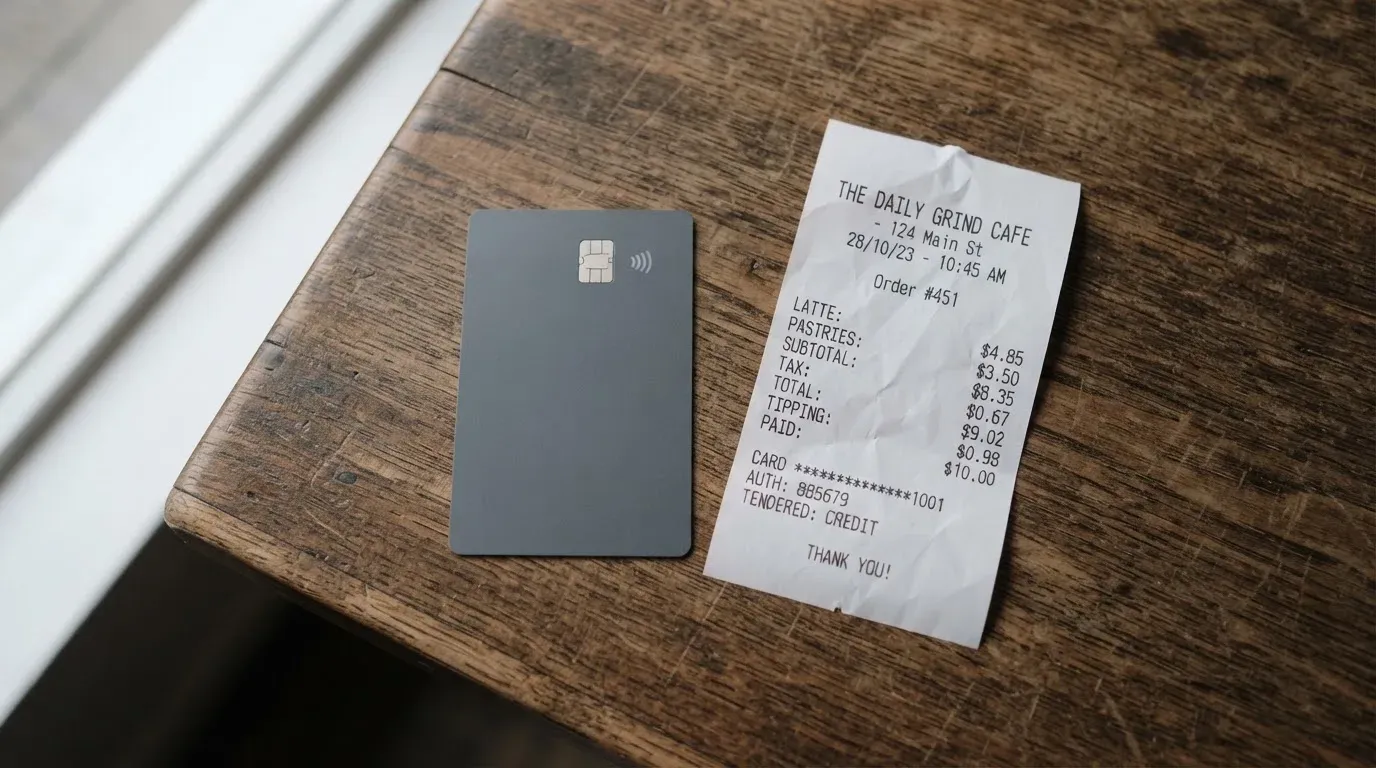
The good news: creating the card costs $2, one time. Beyond that, the card states no funding fees and no maintenance fees. There is no monthly charge to keep it alive.
The bad news: the conversion fee is not stated, and the FX fee is not stated. Those are the two numbers you need most, because they determine what a payment actually costs you. If you hold USDT and buy something priced in dollars, something has to convert the USDT, and the card does not publish the rate or the cut. If you buy something priced in a currency that is not dollars, something has to convert the dollars, and again there is no published rate and no published fee.
| Item | What the card says |
|---|---|
| Card creation | $2, one time |
| Monthly fee | None — “No funding fees or maintenance fees” |
| Funding / top-up fee | None stated — “No funding fees” |
| Conversion fee | Not stated |
| Foreign exchange (FX) fee | Not stated |
| ATM / cash withdrawal | Not stated; the card is virtual only |
| Daily spending limit | Not stated |
| Monthly spending limit | Not stated |
| Minimum top-up | Not stated in the current post |
| Paid tiers | Not stated — one card type, up to 4 virtual cards |
Now let me make the missing numbers concrete by walking through three ordinary payments. I cannot tell you what any of them costs, and that is the point.
A monthly software subscription, paid from a USD balance. This is the clean case. The balance is already dollars, the card is a dollar Visa, so no conversion and no FX ought to be involved. If your subscription is priced in dollars and the merchant accepts a foreign-issued Visa, you are in the best-case scenario the card is designed for.
The same subscription, paid from a USDT balance. Now a conversion sits between you and the merchant, and Busha does not publish the conversion rate or fee. You will be able to see what you were charged after the fact, in the app, against whatever rate applied at that moment. You cannot check in advance. One third-party review theme was exactly this: rate gaps when selling crypto.
A purchase priced in euros or naira, from a USD balance. This is the one that can surprise you, because it stacks an unknown on an unknown. The card says it works “wherever Visa supports international USD payments”, and that the FX fee for non-USD payments is not stated. Visa’s own exchange rate is one component; whatever margin Busha adds is unpublished. If a large share of your spending is in non-dollar currencies, this is the single fact that should stop you — not the $2, not the missing annual fee.
One more unofficial thread, flagged so you do not rely on it: a third-party page (UEEX, May 2026) claims there are no annual, monthly, transaction or foreign transaction fees at all, and only platform fees for buying USDC plus network fees. That same page describes a USDC Mastercard with up to ten cards, which directly contradicts the official Visa, four cards and $2 creation fee. The claim that the official page contradicts is itself the warning: treat “no fees at all” as unconfirmed.
How to Top up the card
There is no separate card balance to manage, which is the design’s real simplification. The card spends directly from the balances already in your Busha wallet:
> “Busha Card currently supports spending from USD, USDT, and USDC balances.”
No funding fee. No maintenance fee. That is the stated top-up story, and for someone who is already holding these assets it is about as short as a top-up story can be.
What is missing is the part that catches people out. The networks are not named. Sending USDT or USDC is not one action — it is many, and the chain you pick decides whether the money arrives, how fast, and whether it arrives at all. Ethereum costs more to send than Tron. If you pick a network the provider does not support, or paste an address for a different network, the transfer can be lost or need manual support recovery with no guarantee: blockchain transfers are irreversible by nature, and the network cannot undo them. There is also a second layer: if you send ERC-20 tokens with no ETH in the wallet, the transfer fails, because gas is paid only in ETH. Tron charges through its own bandwidth and energy resources, often by burning TRX.
So the top-up question you should actually ask Busha is not “how much does it cost” — the card says that is zero — it is “which network do I send on, and what is my deposit address for each one?” Get that answer in writing before you move a meaningful amount. If the answer is vague, that is your signal.
On older figures, one warning about numbers you may find elsewhere: a 2022 post for an earlier USDC-based card gave a minimum of 2 USDC and a maximum of 5,000 USDC per funding, and up to 10,000 USDC held per card. That is an older product, not confirmed for the current Visa card. Do not plan around it.
Getting money back out is the gap I would push hardest on. The current post does not describe moving the card balance back, closing a card, or what happens to funds when you stop using it. The 2026 post gives no closure terms, and the Card Terms are not linked from it. Given that the card cannot overdraw — it draws on a stored balance — the balance you cannot get back is a real category of loss, and it is the one the card’s pages do not address at all. Ask how to withdraw, and ask what happens to a residual balance at closure, before you put money in.
Paying with it every day
The day-to-day picture is where the card is at its weakest, and this is not a matter of opinion so much as three stated facts.
It is virtual only. No physical card exists in the product description. That means every payment is typed, pasted or scanned somewhere — and it means no card-present benefits: no tap, no contactless, no ATM.
Apple Pay and Google Pay are not currently supported. Stated plainly by the card. This is a bigger loss than it first sounds. Normally a virtual card is a gift to phone users: you drop the number into a mobile wallet and pay by Face ID at a terminal. Busha takes that away, so even in a shop with a terminal you would be reaching for a phone and a keyboard while the queue waits. There is a related reason wallets matter beyond convenience — Apple Pay replaces the card number with a device-specific number kept in the Secure Element and generates a fresh security code per payment, which reduces the damage a leaked card number can do. Not having it means your usable card number lives in more places than it otherwise would.
Blocked merchant categories are not stated. The card works “wherever Visa supports international USD payments” — a broad promise with an unstated boundary. Some categories are blocked by policy rather than law, and the list varies by issuer: gambling (MCC 7995, covering casinos, betting and lotteries) is the classic one. You may find out at the checkout rather than beforehand.
Two mechanics explain declines you might otherwise puzzle over, and they apply to this card because it is a foreign-issued Visa. Merchants can look up the BIN — the six or eight digits at the start of a card number that identify the issuing institution — and see the issuer and its country. If that country differs from your billing address, extra scrutiny is a common response, and some merchants decline prepaid or foreign BINs outright. Separately, Address Verification compares the numeric parts of the billing address the buyer types with issuer records; it is mainly a US, Canadian and UK system and is generally unavailable for foreign-issued cards, which causes declines in countries where shoppers expect it to work. A failed authorisation can also leave a hold on funds for several days, typically up to seven.
No rewards. No cashback is mentioned anywhere. Do not build a plan around one.
The app is the interface, and it rates well. iOS and Android. The App Store Nigeria listing shows 4.6 out of 5 from 5.4K ratings, and the Busha site cites 4.6 on the App Store (5k+) and 4.5 on Google Play (11k+). A third-party page puts Google Play at around 4.36. That is a well-regarded app for a crypto wallet — which again says more about the wallet than the card.
Disputes are not addressed. No dispute, chargeback or refund terms appear in the post, and the Card Terms are not linked. A chargeback is a refund ordered by the issuer with reason codes such as fraud, duplicate billing or goods not received; whether you can use that route here is simply not stated. If a charge goes wrong, you are currently relying on support rather than on a documented process — and support is the next section.
What can go wrong
The issuer is not named. This is the most consequential single fact in the review. The card’s public pages name the exchange (Busha Digital Limited) and its licences, but not the institution that actually stands behind the card programme and holds your card balance. Those are different roles: the network routes the payments and sets the rules, the issuer holds the programme, and the crypto brand is often only a programme manager wearing both hats. When you cannot tell which of those Busha is, you cannot tell who your complaint is against when the payment goes wrong.
Complaints: nothing official found, and that is not the same as nothing. A dedicated search for Busha virtual USD card complaints — across Reddit and Trustpilot — returned no Busha reviews at all, only Wirex and Spend.net. So there is no body of user reports or news to read. What exists is a single third-party source: a UEEX review page from May 2026, which cites Busha on Trustpilot at roughly 3.5–3.8 out of 5 from about 16–17 reviews, and lists recurring themes of deposits and withdrawals that are slow or never appearing, KYC delays and forced upgrades, rate gaps when selling crypto, and slow support. It also gives Google Play at around 4.36, which sits oddly beside the 4.5 the company cites. The Trustpilot page itself was not fetched, so the ratings are as reported by someone else, on a very small sample. Sixteen or seventeen reviews is not a track record; it is an anecdote with a rating attached.
Security controls for the card are not described. The card post says nothing about freezing the card, two-factor authentication, or spending controls; the footer mentions an ISMS Policy; and the help centre has a “Security” collection of eleven articles that were not read. That is not evidence of weakness — it is absence of information, which is exactly the problem.
The wallet is custodial, and that is the structural risk. Busha holds the credentials for the wallet. Control of crypto belongs to whoever holds the private key or seed phrase — typically 12 to 24 words, in an unencrypted form, and anyone who obtains it can restore the wallet and spend the funds. With a custodial wallet you must trust the provider completely, and transfers are typically irreversible: a stolen key has no built-in recovery, because the network cannot freeze or return funds. Custodial platforms have a real record of failures — Mt. Gox (about US$350 million reported stolen, 2011–2014), Coincheck (about US$400 million, 2018), Ronin Network (US$625 million, 2022). The self-custody alternative reverses the trade: your funds stay in your own wallet until the moment of payment, but you alone bear the risk of key loss, phishing, and clipboard-hijacking malware that silently swaps a copied address.
Programme risk is not hypothetical. Visa and Mastercard do not issue crypto cards to consumers themselves; they license issuers and can suspend a programme. Visa terminated its global agreements with FTX on 13 November 2022 and the FTX US debit card was wound down. WaveCrest, a Visa issuer that supplied crypto card brands, was suspended by Visa in Europe in 2018, closing all WaveCrest-issued Visa programmes. Closures typically follow a pattern: a notice period, then spending and loading stop, then users are asked to withdraw remaining balances. Because Busha does not state what happens to a balance at closure, that last step is the part you cannot plan for.
Sanctions and geography. Tether says it disables tokens in wallets on the OFAC sanctions list and has frozen funds tied to illicit activity — stablecoins are not censorship-proof. Cards of this type also carry country restrictions of their own, and Busha does not publish a list of where its card may be used.
Stability of the asset you spend. A stablecoin aims to hold a stable value against a fiat currency, but despite the name, stablecoins are not necessarily stable. Tether’s USDT and Circle’s USDC are dollar-pegged, and the BIS put about 90% of stablecoin market capitalisation in these two. USDC is redeemable 1:1 for USD and 100% backed by cash and cash equivalents, mostly in an SEC-registered government money market fund, with monthly reserve attestations by a Big Four firm; it is natively supported on 38 networks as of 16 September 2026, including Ethereum, Solana, Base, Polygon PoS, Avalanche, Arbitrum and Stellar. USDT is built on multiple blockchains with reserves intended to back it 1-to-1, and has been issued on Ethereum, Tron, Solana, Polygon and Avalanche among others. But TerraUSD collapsed in May 2022, and USDC temporarily lost its peg in March 2023 during the US banking crisis. And one circle is not native: Circle stopped supporting USDC on Tron in February 2024, so “USDC over TRC20” is not the straightforward option it looks like.
Taxes are yours to work out. The IRS treats digital assets as property, so exchanging them for goods, services or dollars generally produces a taxable gain or loss; for personal holdings the result is a capital gain or loss, short-term if held a year or less, measured in local fiat currency at fair market value on the date of the transaction. I am not giving tax advice here — but note that every card payment funded from crypto may be a separate disposal, and that is a conversation to have with a professional in your own country.
What to take instead
I have pulled three alternatives from the same comparison pool so you can weigh them against the Busha number rather than against nothing. Scores are on the same ten-point scale.
| Card | Score | Card type | Stated cost | Stated fees |
|---|---|---|---|---|
| Busha | 4.8 / 10 | Virtual USD Visa, up to 4 cards | $2 creation, no monthly or funding fee | Conversion and FX not stated |
| International Visa Card | 6.7 / 10 | U.S.-issued virtual Platinum Visa; physical “Coming soon” | $5 virtual issuance, no maintenance; plans Classic free, Pro $9.00/month, Max $19.00/month | Card use in USD free on all plans; foreign currency: Visa exchange rate + 2% FX fee; deposits free |
| UNi Card | 6.1 / 10 | Multicurrency Mastercard, spends from UNi.Global balance; physical/virtual not stated | No annual fee; issuance fee not stated | No annual fee or foreign transaction fee; assets converted at live OTC rates; “No hidden exchange fees” |
| Whop Cards | 5.2 / 10 | Visa, works anywhere Visa is accepted online and in stores; virtual/physical not stated | Page says “No extra fees”; no amounts listed | Not stated |
International Visa Card is the one that beats Busha on paper, and the reason is specificity. It names its own restricted countries — account and card not available to residents or legal registrants of Belarus, mainland China, North Korea, Cuba, India, Iraq, Iran, Israel, Myanmar, Nepal, Nicaragua, Russia, Syria, Turkey, Ukraine, Venezuela and Vietnam, with FATF grey-list countries reviewed case by case with compliance approval; purchases are blocked in North Korea, Cuba, Iran, Russia, Syria, Ukraine and Venezuela. The rule follows residence or registration, and citizenship is not mentioned. It names a 2% FX fee on top of Visa’s exchange rate, which means you can actually calculate what a foreign purchase costs you. It funds by depositing USDC or USDT into the USD account free at 1:1, and also accepts USD, EUR, SEPA, SWIFT and FedNow deposits; networks are not stated. No cashback is stated. Note what it gives up: the physical card is “Coming soon”, so it is not a solution for in-person spending either.
UNi Card is the one with the clearest fee promise. Multicurrency, on Mastercard, spending from the UNi.Global balance, with no annual fee and no foreign transaction fee, assets converted at live over-the-counter rates and “no hidden exchange fees”. It also pays up to 3% back through “Spend-to-Earn rewards”, which Busha does not offer at all. Who can get one is not stated, nor is how you fund it, nor whether the card is physical or virtual — so the disclosure is better on price and worse on access.
Whop Cards score lowest of the three and are mostly a U.S. story: consumers in 31 states, businesses in 41, with unsupported consumer countries including Belarus, mainland China, Cuba, Hong Kong, India, Iran, Iraq, Israel, Myanmar, Nepal, Nicaragua, North Korea, Russia, Syria, Turkey, Ukraine, Venezuela and Vietnam; the basis — citizenship or residence — is not stated. It pays 5% cashback at select merchants, currently Uber. It spends from a Whop balance, where pending balance becomes usable as soon as a payment arrives while standard withdrawals use settled funds, backed by stablecoin collateral from a linked wallet; coins and networks not stated. What makes it interesting here is the reward rate; what makes it unusable for most of this page’s readers is the state list.
Who I would recommend it to
Recommended if: you live in Nigeria, Ghana or Kenya; you already hold USDT or USDC in a Busha wallet you have used successfully; nearly all your spending is online and in dollars; you want a working card number in minutes, not in weeks; and you have asked Busha, in writing, which network to deposit on and how to withdraw. The $2 and the absence of any funding or maintenance fee make this one of the cheaper ways to put a Visa number in front of a merchant that declines other cards.
Not recommended if: you need to touch a terminal, take money out, or add the card to Apple Pay or Google Pay. You spend heavily in a currency other than dollars, since the FX cost is unpublished. You intend to hold a large balance, since neither the spending limits nor the withdrawal route are stated. You are outside the three countries where Busha is registered, or you cannot pass the verification level your intended volume requires. You need chargeback rights you can point to in writing. Or you simply want a card whose issuer is named.
That last point is the one I keep returning to. Busha is a licensed digital-asset exchange with a well-rated app, real registrations in three countries and a card that costs almost nothing to create. Nothing in that list is a lie. But a payment card is a promise that a specific institution will make good on money you hand it, and this card does not tell you which institution that is, what the conversion costs, what you can spend, or how you get the balance back. For small, test-sized amounts spent online, that is a manageable gap. For anything you would be upset to lose, you are betting on support responsiveness instead of on a documented process — and the one independent review of Busha I found describes support as slow.
If the fee transparency and issuer disclosure matter to you and the geography works, the 2% FX card above is the more predictable instrument today. If you are paid in dollars across many currencies, UNi’s no-FX-fee, up-to-3%-back structure is worth a look, access permitting. If you are in the United States, Whop’s 5% at selected merchants is the incentive worth shopping around.
Whichever you pick, ask three questions in writing before you move money: which network do I send on, what does the conversion or FX fee cost, and what happens to any balance left on the card when I close it. Providers that answer those clearly are the ones to trust with size.
Frequently asked questions
What is the Busha card?
It is a virtual Visa, denominated in dollars, that spends directly from balances held in your Busha wallet rather than a bank. The card is stablecoin-backed, costs $2 to create, and is issued in minutes. You can hold four, each with a custom name and colour. It is virtual only — no physical card exists.
Who owns Busha, and is Busha a bank?
Busha is not a bank. The operating entities are Busha Digital Limited in Nigeria and Kenya, and Busha Digital Ltd in Ghana. Busha is licensed by SEC Nigeria as a Digital Asset Exchange and holds data-protection registrations in Kenya, Ghana and Nigeria. It is an exchange and wallet provider, not a deposit-taking bank.
Who can get the Busha card?
The card’s pages do not list any countries — applicants just complete eligibility questions. Busha entities exist in Nigeria, Kenya and Ghana. A third-party report describes the card as available to applicants aged 18+ in those three countries with a verified Busha account, but that is unconfirmed. Naira payments are not supported.
Does the Busha card require KYC?
Almost certainly, though details are not published. You must accept Card Terms and answer eligibility questions, and both an AML & KYC Policy and an ID Verification help article exist, but neither could be read. Which documents, proof of address, age, processing time and rejection reasons are not stated. Busha’s wallet also has verification levels.
How do I top up the Busha card?
You don’t top up a separate balance — the card spends from USD, USDT and USDC balances already in your Busha wallet. There is no funding or maintenance fee. The catch is that supported networks are not named, so confirm the chain and deposit address first. Blockchain transfers are irreversible, so pick the right network.
Can I use the Busha card in Apple Pay or Google Pay?
No. The card states that Apple Pay and Google Pay are not supported. Combined with the virtual-only status, that means no contactless payments, even at terminals that accept them. Every purchase requires entering card details somewhere, so your card number lives in more places than if it were tokenised in a mobile wallet.
Is the Busha card free?
Not quite. Creating it costs $2 once. After that there are no funding or maintenance fees, according to the card. What is not stated is the most important fee: the conversion fee when spending USDT or USDC, and the FX fee on non-USD payments. So “no monthly fee” is true, but “no fees at all” is not.
Is the Busha card safe, and who is the issuer?
Busha is licensed and its app is well-rated, but public pages never name the bank or e-money institution behind the programme — the issuer. No substantial user reports could be found; one third-party page cites slow withdrawals and support. The wallet is custodial, so Busha holds the credentials, not you.
Is the Busha card worth it?
Probably yes for a Nigerian, Ghanaian or Kenyan resident spending USDT online: $2 once, no monthly charge, and a working Visa number in minutes. For in-person spending, cash, phone wallets, large balances or non-dollar costs, it is less useful — the missing FX rate, limits, and unnamed issuer count against it. Judge it as a cheap online tool.
App and neobank cards in the catalogue – cryptocardcatalog
Content created by the «cryptocardcatalog» team