
A Hong Kong-only Telegram wallet with four card tiers and no named issuer
 Available in US
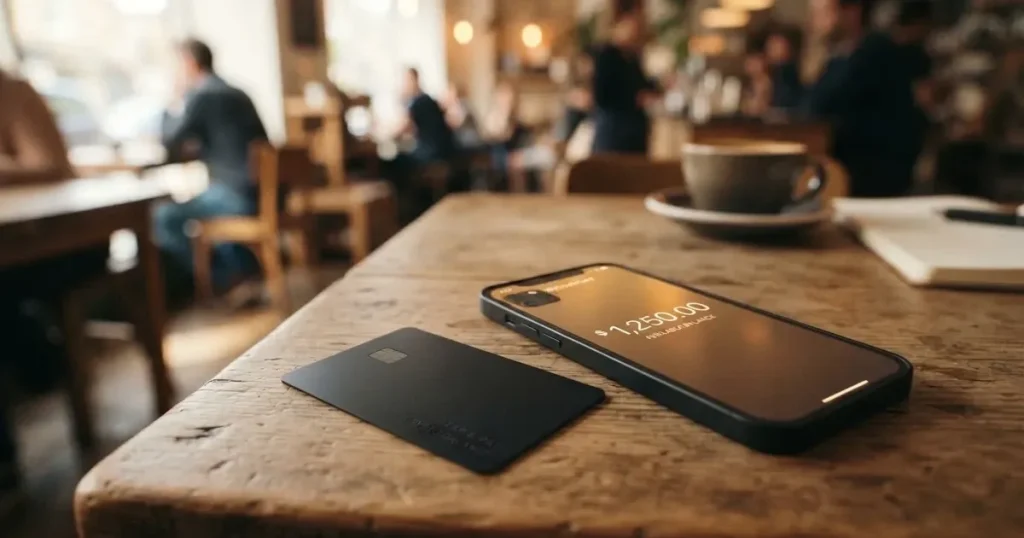
The short answer: AnyXPay is a crypto card product that runs through a Telegram mini-app rather than a bank app, aimed squarely at people who already live in Hong Kong and want to spend from a stablecoin balance inside Telegram. On my scale it comes out at 3.5 out of 10, and that is not a rounding error caused by one bad detail — it is the sum of several gaps that you would notice within a week of using it.
What holds it up is the top-up side. AnyXPay accepts USDT, USDC, USDR, USDQ, EURQ, XAUT, EurR and aUSDT across the TRC-20, ERC-20 and BEP-20 networks, and it also offers bank-card top-up and P2P purchase. For that one part of the product I scored 9 out of 10, and it deserves it: the list of accepted assets is unusually wide, and three networks means you are not locked to sending on an expensive chain by default.
What pulls the rest down is everything around the card. The card itself costs 50 USDT with no monthly fee disclosed, top-ups carry a 4% fee, payments outside Hong Kong may pick up an acquirer conversion markup with no figure published, and the terms let the operator freeze or close an account at any moment without compensation. The developer is listed as “CSB”, the terms are governed by Hong Kong law, and neither the registered address, the issuing bank, nor any licence is named on the pages I read. If you are weighing this card, those are the facts you should decide on, not the token list.
The conditions described here are current as of October 28, 2026.
| Criterion | Mark | Why |
|---|---|---|
| Who can get it | 2 / 10 | Hong Kong residents only; refusal possible in sanctioned jurisdictions; the card page lists no countries |
| Cost | 1 / 10 | 50 USDT per card, 4% top-up fee, fees can change without notice, possible acquirer markup outside Hong Kong |
| Top-up options | 9 / 10 | Eight assets across TRC-20, ERC-20 and BEP-20, plus bank-card top-up and P2P |
| Reliability and complaints | 3 / 10 | Developer “CSB”, Hong Kong law, no issuer or licence named, terms allow freezing or closure without compensation, no independent reviews found |
| Everyday use | 5 / 10 | Four card products, Apple Pay and Google Pay support, but virtual vs physical and ATM access not disclosed |
| Total | 3.5 / 10 |
Will They Give You the Card
The first gate is residency, and it is a narrow one. The terms state that the services are intended only for residents of Hong Kong. That single sentence decides the question for most of the people reading this. If you live in Hong Kong, you are inside the intended audience. If you do not, the card was not built with you in mind, and no amount of good intentions from the operator will change that.
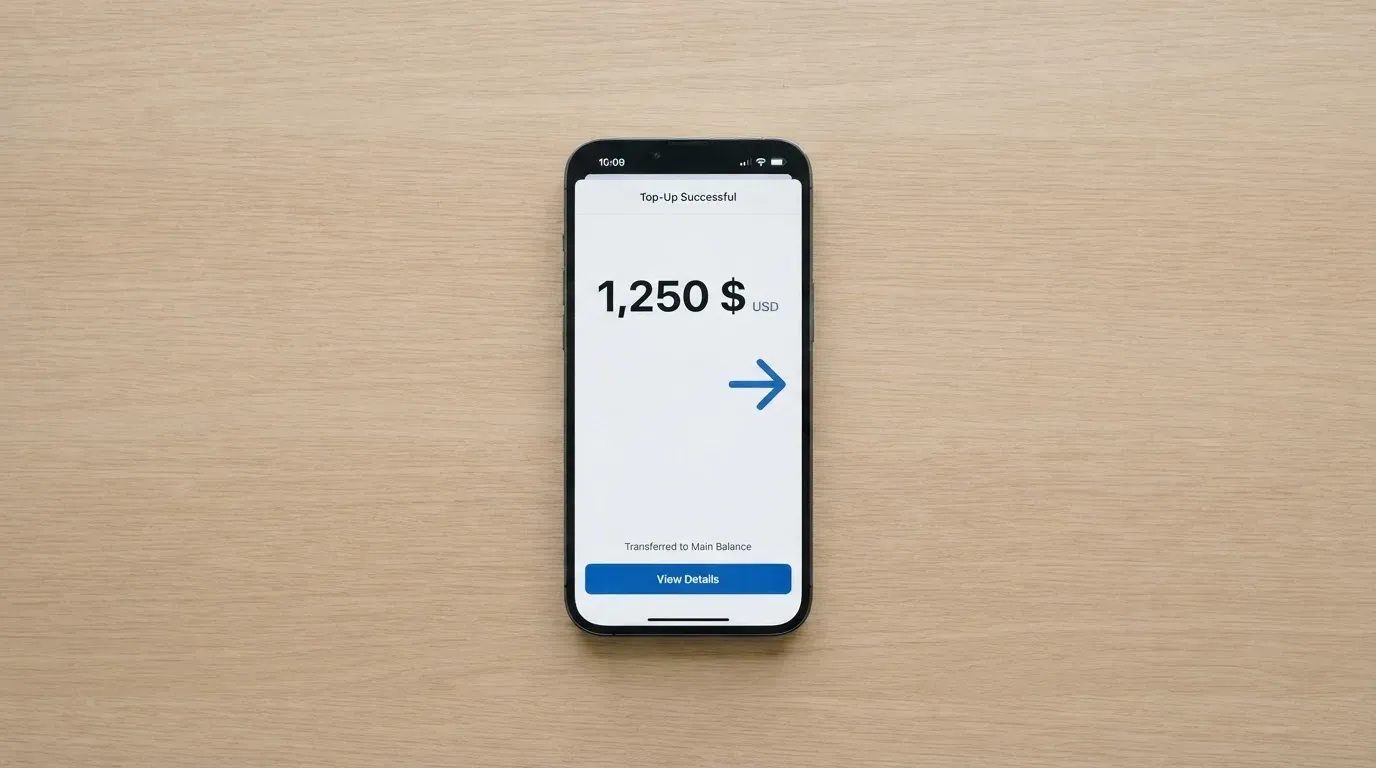
The second gate is sanctions screening. The service may be refused for sanctioned jurisdictions, and the list names Belarus and Russia, along with Cuba, the DPRK, Iran, Syria, Venezuela and others, the terms closing with “etc.”. I want to be careful here: this is a description of what the published terms say, not advice about how to read them, and if you are in one of those places the answer is simply that the service declines you. There is nothing in this review about working around that, and nothing in the product’s design that would help you if you tried.
Third, there is a gap where a country list would normally be. The card page lists no countries at all. Starting data said the card works in 200+ countries, but that figure is not confirmed anywhere on the site, so I would treat it as unofficial and unsupported rather than as a fact you can plan around. For the practical purposes of this review, the operative rule is the Hong Kong residency line in the terms.
So who does this card suit? A Hong Kong resident who keeps stablecoins, is comfortable running a wallet inside Telegram, and wants to spend that balance at ordinary merchants without moving it to a traditional bank first. The audience here is narrow and real: Hong Kong residents paying from a Telegram mini-app. Who does it not suit? Anyone outside Hong Kong, anyone who needs a bank-account relationship with a named institution, anyone for whom an undisclosed 4% plus possible conversion markup on foreign payments is the main cost line, and anyone who needs ATM cash or a chargeback process they can read before they need it.
How to Get It
The signup runs on two levels, and the card itself is easiest at the lower one.
Level 1 asks for an email address and a phone number. That is the basic entry point. The higher level — marked KYC — is required for one card only, Visa Premium. The terms also say that identification data and source-of-funds documents can be requested, though the procedure for that request is not described anywhere I could find. Proof of address and an age requirement are not stated either, and for crypto cards in general being 18 or over is the normal floor, so if you are under 18 assume this is not for you until the operator says otherwise in writing.
The terms add two things that matter more than the signup form itself. First, there is re-verification if your data goes out of date. Second, access may be refused on false data — meaning that if you put in something inaccurate to get past a check, the account can be closed for it. Neither the processing time nor the rejection reasons are published, so you cannot plan around either.
Four card products appear in the card list:
- MasterCard Basic
- MasterCard Pro
- Visa e-commerce
- Visa Premium
The activation text also names “Mastercard Infinity”, which does not appear in the card list itself. That inconsistency is worth noting, because it tells you the card range is still moving. Whether any of these is virtual or physical is not stated, and the card currency is not stated either — both are things you would want to know before you pay 50 USDT for one.
Fees: What It Really Costs
Here is where the score of 1 out of 10 for cost comes from. The published pricing is small in absolute terms and expensive in proportion: you pay 50 USDT for each card, and there is no monthly or annual fee stated at all. That absence cuts both ways — it may mean there is genuinely nothing monthly, or it may simply mean nobody has written it down.
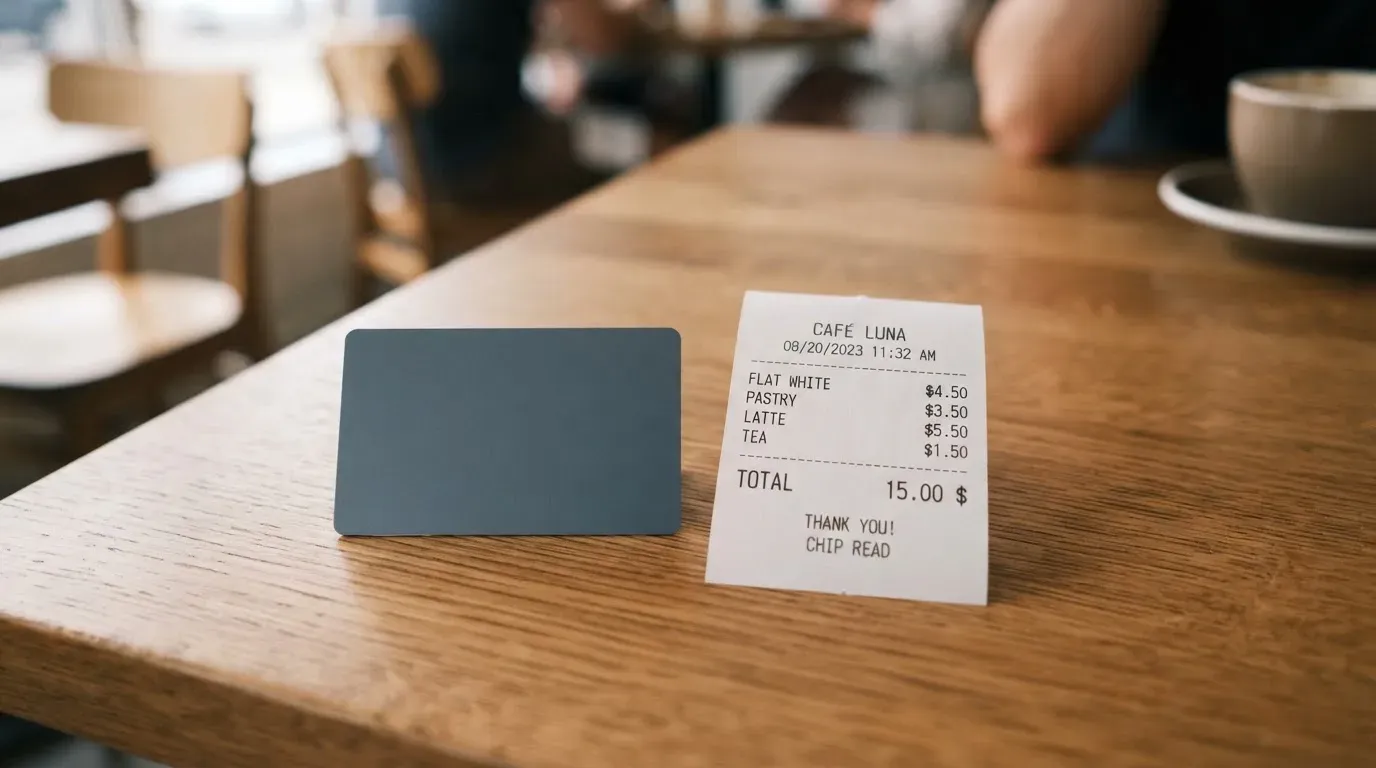
| Item | Value |
|---|---|
| Card issuance | 50 USDT for each card |
| Monthly or annual fee | not stated |
| Top-up fee | 4% |
| Conversion on payments outside Hong Kong | possible acquirer conversion markup, paid by the user, no figure published |
| ATM withdrawal fee | not stated |
| Card currency | not stated |
| Fee changes | fees can change without notice |
The 4% top-up fee is the number that should govern your expectations. It applies every time you load the card, not once, so a card you top up weekly pays it eight times a year on top of the network fee. And the terms say plainly that fees can change without notice — there is no grandfathering, no notice period, no published schedule.
The second cost line is the one with no number attached. Card payments made outside Hong Kong may carry a conversion markup set by the acquirer, and the user pays it. Because no figure is published, I cannot tell you what it is, and neither can you from the public pages. That is worse than a high fee, in my view, because a high fee at least lets you decide whether to accept it. An unquantified fee is a fee you find out about at the till.
Three everyday payments, so the arithmetic has some shape. A coffee bought with a card you just topped up carries the 4% on the top-up as its visible cost, plus whatever the acquirer’s conversion markup turns out to be if the purchase is outside Hong Kong. A weekly grocery run funded by a single monthly top-up amortises that same 4% across the whole basket, which is the pattern the fee structure quietly pushes you toward. A subscription bought on a foreign merchant’s website, months after the last top-up, is the case where the unstated markup matters most and where you have the least warning. I am not going to multiply example prices by example percentages — the card does not publish the percentage, so any total I produced would be my invention rather than a fact about AnyXPay.
The four card products all sit at the same 50 USDT price and the same 4% top-up fee. What separates them is the limits, and one tier is KYC-gated. That is a strange product design: you pay identically for all four and the difference is purely how much you are allowed to move.
How to Top It Up
This is the strongest part of AnyXPay and the reason the top-up score is 9 out of 10 rather than 5.
You can top up directly with USDT, USDC, USDR, USDQ, EURQ, XAUT, EurR and aUSDT. You can do it over the TRC-20, ERC-20 and BEP-20 networks. You can also fund through a bank card, and you can buy through P2P. Eight assets across three chains plus two non-crypto routes is a genuinely wide set of doors, and for someone whose holdings are spread across dollar and euro stablecoins it removes the usual grind of swapping to one asset before every spend.
The costs here are stated and reasonably clear. The top-up fee is 4%. Blockchain fees are paid separately, by you, which is normal — the network charges them, not the card provider. For the fiat routes, bank-card top-up and P2P, fees are not stated. The minimum top-up is not stated either, so if you are planning small, frequent loads you will not find a published floor anywhere.
One asymmetry worth internalising before you load: you can withdraw from the Wallet, minus the network fee, but you cannot withdraw from the Card account. Money that has gone into the card balance is spent from there, not pulled back to the wallet. And paid fees are not refunded. Those two lines together mean the top-up is a one-way street in the direction that matters, which is worth remembering on the day something goes wrong with a payment.
On networks, the practical rule is the one that applies to this whole category: blockchain transfers are irreversible, so a deposit sent on a network the provider does not support, or to an address belonging to another network, can be lost or need manual support recovery with no guarantee of success. Check the network before you send, not after.
Paying With It Every Day
Everyday use is where AnyXPay scores a middle-of-the-road 5 out of 10, and the reason is a mix of things that work and things that simply are not published.
What works: you can add the card to Apple Pay and Google Pay, which is how most people will actually use a Telegram-based card, since the phone is already in your hand. Four card products cover MasterCard Basic, MasterCard Pro, Visa e-commerce and Visa Premium, spanning the range from ordinary spending to a high-limit Premium tier. Whether specific merchant categories are blocked is not stated.
What is not published: whether the cards are virtual or physical, what currency the card holds, and what the ATM situation is. For a card whose entire pitch is everyday spending, an unstated ATM policy is a real gap. Card currency matters more than it sounds, because paying in a currency the card does not hold is where conversion costs hide.
The platform itself is a Telegram mini-app at @anyxpay_bot and a web app at app.anyxpay.com. I found no App Store or Google Play listing, which is consistent with the mini-app model rather than a warning sign in itself — but it does mean your access route runs through Telegram, and you should think about what that implies before you load.
There is a referral programme on the AnyXPay website. No cashback is stated. For comparison, this is a thinner rewards story than some cards in the same category offer, and if cashback is part of why you were considering a crypto card at all, it is not here.
If a payment goes wrong, the route runs through negotiation first, then mediation or HKIAC arbitration in English. Claims on transactions must be filed within the deadline set by the rules, or the right is lost. A chargeback process is not described at all. That last point deserves emphasis: the chargeback mechanism is the ordinary consumer protection in card payments, the thing that makes a disputed transaction recoverable, and its absence from the documentation means you should not assume you have it. In general terms for this category, prepaid-card coverage varies by jurisdiction and should not be taken for granted.
What Can Go Wrong
The risk section is where a review earns its keep, and for AnyXPay the honest version is that most of the risk sits in documentation you cannot read.
The terms permit account freeze or closure at any time, without notice and without compensation. Read that as the single most important sentence on this page. It means the balance you are holding against a future payment is exposed to a decision that has no stated notice period and no stated remedy behind it.
There is a contradiction in the product documentation. The site calls itself an open-source non-custodial Telegram wallet, yet the terms state the wallet is custodial and “not a banking service.” These are conflicting descriptions of where funds are held. In general, a custodial wallet means the provider holds the credentials and requires your complete trust; a self-custody card keeps funds in your own wallet until the moment of payment, but leaves you carrying the full responsibility for key management, including risks from key loss, phishing, and malware. AnyXPay’s documentation does not resolve this conflict. You are responsible for your Telegram account and the security of your device, and the terms state that high-risk assets may be frozen at any time.
On the corporate side: the developer is listed as “CSB”, operating via the Telegram mini-app, with the terms governed by Hong Kong law. The registered address and issuing bank are not stated. Licences are not stated. Whether two-factor authentication or a card-freeze control exists is not stated. The terms were updated 7 July 2026, and the blog carries posts dated 5 May 2026 and 9 October 2025 that are card guides; I found no licence or fine events, and no Trustpilot page for AnyXPay.
On complaints: I found no official incidents and no independent user reviews. The site shows five self-published reviews dated August to September 2025, which are unverified and effectively marketing. That absence of independent reviews is itself information — a service with real users tends to have them somewhere, and its absence means you have no external read on how it behaves when something goes wrong.
Support is available via an in-app button, also present in a Hub tab. Hours are not stated. No specific language support is explicitly mentioned. You should verify that you can receive assistance in your preferred language before you load funds.
Two more category-level risks to keep in view. Crypto transfers are typically irreversible and a stolen private key has no recovery path — the network cannot freeze or return the funds. And custodial platforms have a record of failure: Mt. Gox at roughly US$350 million reported stolen between 2011 and 2014, Coincheck at about US$400 million in 2018, and Ronin Network at US$625 million in 2022. I mention those not to predict anything about AnyXPay, which has no published incident history, but because holding funds with a custodian always carries counterparty risk, and that is true of every product in this category.
One last thing that is easy to miss: high-limit cards have high limits because they are for high-value flows. Visa Premium’s monthly ceiling of $6,000,000 is a number to read carefully rather than to be impressed by.
What to Take Instead
If AnyXPay’s draw is the Telegram-native flow, the category has options that publish more. Here is how the three alternatives I looked at compare, on the same criteria that mattered here.
| AnyXPay | Azul Card | Telecard | OnCards | |
|---|---|---|---|---|
| Score | 3.5 / 10 | 5.3 / 10 | 6.1 / 10 | 4.6 / 10 |
| Who can get it | Hong Kong residents only | Worldwide except Russia, Belarus, North Korea, Iran, Syria, Cuba, Sudan, Venezuela, Ukraine and the Crimea, Donetsk, Luhansk, Zaporizhzhia and Kherson regions | Usable in over 150 countries; no supported or excluded list published | not stated |
| Card form | virtual vs physical not stated | virtual only | virtual only, instant | virtual only |
| Card cost | 50 USDT per card | $20 one-time, refunded after $2,000 in spending | $5 one-time; VIP $49 then $19/month | not stated |
| Ongoing fee | 4% top-up; monthly fee not stated | $5 monthly maintenance; $0.25 per transaction | 1.5% currency conversion on non-USD payments | not stated |
| Funding | Eight assets on TRC-20, ERC-20, BEP-20, plus bank card and P2P | Crypto to the card in Telegram, coins and networks not named | USDT on TRC-20 or ERC-20, USDC on ERC-20 | USDT on BEP20 only |
Azul Card is the one to look at first if residency is your blocker. It is open worldwide apart from a named exclusion list, and its terms are explicit that the restrictions apply regardless of the user’s nationality. Its card creation costs $20, refunded after $2,000 in spending, with $5 monthly maintenance, 4% crypto top-up and $0.25 per transaction. The catch is that it is virtual only, works anywhere Mastercard is accepted, and holds its balance in USD.
Telecard scores highest of the three at 6.1 out of 10, and it is the most transparent on costs. Standard plan $5 one-time, VIP $49 setup then $19/month, with a $99 minimum deposit to activate that it states is “NOT a fee” because it stays in the wallet. Currency conversion 1.5% on non-USD payments, a 0.5 USDT gas fee per successful card transaction, FX and cross-border fees “up to 3% each”, and a deposit fee advertised as 0%. It is virtual Mastercard, instant, no physical or metal card, USD card currency. It funds from USDT on Tron or Ethereum and USDC on Ethereum, with Polygon not supported, and bank transfers listed as coming soon. Referral pays a Fiorini per activated friend plus cashback when friends spend, with the cashback rate unspecified.
OnCards is the thinnest of the four. It is virtual only, described as “a virtual Mastercard / Visa card directly in your Telegram” with the network not fixed, funds via USDT on BEP20, and does not accept bank transfers. Its fees are described only as “simple and clear fees — no hidden charges” with no amounts attached, and who can get it is not stated either. Its score of 4.6 reflects that there is simply not much published to assess.
Two category facts worth carrying into any comparison. First, Visa and Mastercard do not themselves issue crypto cards to consumers — they license issuers, and they can suspend a programme; Visa said in November 2022 it had “terminated our global agreements with FTX”, and WaveCrest, a Visa issuer that supplied crypto card brands, was suspended in Europe in 2018, closing all its Visa programmes. Second, in the EU, customer due diligence covers name, address, date of birth, nationality, identity documents, a sanctions check, the purpose of the relationship and politically-exposed-person status, and if due diligence cannot be completed the institution is required to stop. A card that publishes none of this is asking you for trust it has not earned.
Who I Would Recommend It To
I would recommend AnyXPay to exactly one kind of person: a Hong Kong resident who is already holding stablecoins, is happy to operate inside Telegram, and wants a card that spends a topped-up balance rather than a bank account. For that person the eight assets, three networks and the two extra fiat routes make topping up unusually painless, and 50 USDT with no stated monthly fee is not an unreasonable entry point.
I would not recommend it to anyone who needs an ordinary bank card and has found the process difficult. The whole point of the product is to substitute for a banking relationship, and the public pages do not tell you who stands behind it — no issuing bank, no licence, no registered address, only “CSB” and Hong Kong law. When you cannot see the institution, you cannot assess whether your money is safeguarded, and that gap is not something the token list fills.
I would also steer away from it if you are outside Hong Kong, if you need cash from ATMs, if you rely on chargebacks, if you want cashback, or if you are not comfortable with a custodial wallet description sitting next to a non-custodial one on the same website. And I would read the terms yourself before loading anything, because the card you are evaluating is described in a document that permits the account to be frozen or closed at any time without compensation.
Scoring card breakdown
| Criterion | Mark | Reason |
|---|---|---|
| Who can get it | 2 / 10 | Residency restricted to Hong Kong; sanctioned jurisdictions refused; no country list on the card page |
| Cost | 1 / 10 | 50 USDT per card, 4% top-up, fees changeable without notice, unquantified acquirer markup outside Hong Kong |
| Top-up options | 9 / 10 | Eight assets across three networks, plus bank-card and P2P routes |
| Reliability and complaints | 3 / 10 | No named issuer or licence, terms allow freeze or closure without compensation, no independent reviews |
| Everyday use | 5 / 10 | Four tiers and mobile wallet support, but card form, currency and ATM access undisclosed |
Frequently asked questions
What is the AnyXPay card?
AnyXPay is a crypto payment card product that runs through a Telegram mini-app at @anyxpay_bot, with a web app at app.anyxpay.com. You load a balance from stablecoins or via bank card, and the card spends that stored balance in the way a prepaid card does. It offers four products: MasterCard Basic, MasterCard Pro, Visa e-commerce and Visa Premium.
How does the AnyXPay card work?
You top up a balance and the card spends from it. AnyXPay accepts USDT, USDC, USDR, USDQ, EURQ, XAUT, EurR and aUSDT over the TRC-20, ERC-20 and BEP-20 networks, plus bank-card top-up and P2P purchase. You can add the card to Apple Pay and Google Pay. Balances cannot be withdrawn from the card account back to the wallet.
Is AnyXPay a bank?
No, and the terms say so themselves. The terms describe the wallet as custodial and “not a banking service”, governed by Hong Kong law, with the developer named as “CSB”. No issuing bank, registered address or licence is stated on the pages I read. Treat it as a crypto platform, not a bank, and do not expect deposit-guarantee protection.
Who owns AnyXPay?
The public pages name “CSB” as the developer and say it operates via the Telegram mini-app. The terms are governed by Hong Kong law. Beyond that, ownership structure is not stated, and no licence is named. If ownership matters to your decision, this is a question to put to their support in writing before you load funds.
Does the AnyXPay card require KYC?
Partly. Level 1 asks only for an email address and phone number. Visa Premium is the one product marked as requiring KYC. The terms also allow the operator to request identification data and source-of-funds documents, though the procedure is not described. Proof of address and age requirements are not stated on the pages I read.
How much does the AnyXPay card cost?
The card costs 50 USDT for each card, and no monthly or annual fee is stated. Top-ups carry a 4% fee, blockchain fees are paid separately by you, and the terms say fees can change without notice. Payments made outside Hong Kong may carry an acquirer conversion markup you pay, with no figure published.
Is the AnyXPay card safe?
I cannot answer that in the way you would want. There is no named issuer or licence, the terms permit freezing or closing an account at any time without compensation, and the site calls itself a non-custodial wallet while the terms call it custodial. No independent user reviews were found. Read the terms before depositing.
What are the AnyXPay card limits?
Per transaction, daily and monthly, the published limits are: MasterCard Basic $20,000 / $250,000 / $1,000,000; MasterCard Pro $50,000 / $250,000 / $1,000,000; Visa e-commerce $20,000 / unlimited / unlimited; Visa Premium $200,000 / $200,000 / $6,000,000. All four cost the same 50 USDT, and only Premium requires KYC.
Can I use the AnyXPay card in my country?
Only if you are a resident of Hong Kong. The terms state that the services are intended only for residents of Hong Kong, and the service may be refused for sanctioned jurisdictions including Belarus and Russia, with Cuba, the DPRK, Iran, Syria, Venezuela and others listed. The card page itself names no countries, so claims of wider availability are unofficial.
Is the AnyXPay card free?
No. Each card costs 50 USDT, and there is a 4% fee on every top-up on top of the blockchain network fee you pay yourself. Some alternative cards have cheaper entry points — one alternative I reviewed charges $20 for card creation, refunded after $2,000 in spending — so compare the total cost of funding and spending, not just the price of the plastic.
Virtual cards in the catalogue – cryptocardcatalog
Content created by the «cryptocardcatalog» team