
A dollar card for a crypto balance, aimed at Colombia, with costs the card says it doesn't charge
 Available in US
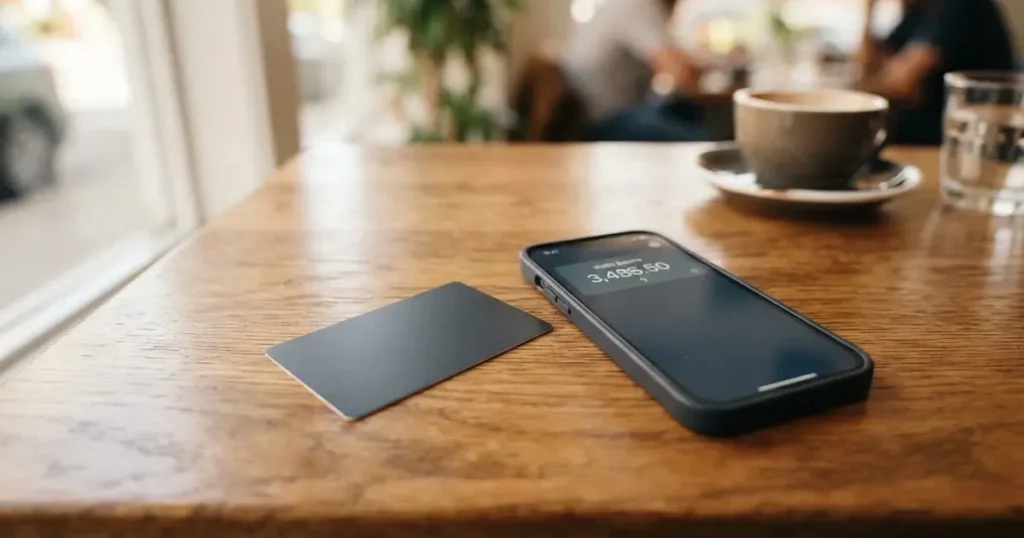
The VIIO card is not really a bank card. It is a Visa-branded payment card attached to a “Digital USD balance” that you fill with USDC or USDT, and its strongest suit — no monthly fee, no issuance fee, free replacement of a virtual card — makes it look almost embarrassingly cheap next to everything else in this category. Its weakest suit is that the card’s own public pages will not tell you the countries where it will actually hand you the plastic, they do not name a percentage for currency conversion, and the company behind it, Persimon S.A.S. (VIIO Colombia), is not the entity most people assume when they read “is VIIO a bank”. I have read the card’s terms, the fee page, the help centre and the support contacts, and this is what I found.
The conditions described here are current as of October 28, 2026.
The score: 6.6 out of 10
| Criterion | Mark | Why |
|---|---|---|
| Who can get it | 5 / 10 | Merchants in 200+ countries, but the list of issuing countries is not disclosed; the contract is governed by Colombian law and the product is aimed at Colombia |
| Cost | 8 / 10 | Virtual issuance 0 USD, reissuance 0 USD, monthly 0 USD; physical currently exempt but 5 USD if balance under 50 USD; “The Card currently does not charge any fee”; conversion percentage not disclosed |
| Top-up options | 6 / 10 | USDC and USDT balances, top-up by PSE, bank transfer and crypto by address or QR; networks undisclosed, crypto top-up fee not named |
| Reliability and complaints | 6 / 10 | Persimon S.A.S. (VIIO Colombia), issuer not named; no official incidents or reviews found; iOS 4.0 from 5 on 12 ratings |
| Everyday use | 8 / 10 | Virtual card with dynamic CVV and contactless physical card, Visa ATMs worldwide, virtual card can be added to Apple Pay; Google Pay not disclosed |
Total: 6.6 / 10.
The average hides two very different scores. On everyday use it is an 8, because a contactless Visa plus Apple Pay plus a virtual card is exactly the modern setup, and there is a cash-out route at any Visa ATM worldwide. On cost it is also an 8, though I would temper that: the card says it charges nothing, but it also does not publish a conversion percentage, so “free” is a claim about the visible line items rather than a promise about what a purchase costs. The 5 for eligibility is the number that should govern your decision, because everything else is moot if you cannot open the account from where you are.
Who this suits: Colombian residents who want a dollar-denominated card they can top up from a USDC balance, who are comfortable with a fintech brand rather than a bank, and who will not be caught out by a 9-to-5 weekday support window in an unknown time zone. Who it does not suit: anyone outside Colombia who cannot confirm residency before applying, anyone who needs a published conversion rate before committing money, and anyone for whom a card issued in Colombia looks foreign is a problem — because it often is.
Who will they hand you the card
Not stated. That is the honest answer, and it is the first thing to check. The card’s terms do not publish an eligibility country list; they simply say Colombian law governs the contract. The marketing side of the business points the other way: the card page claims merchants in “200+ countries”, which is about where you can *spend*, not where you can *sign up*. Those are different questions and card reviews constantly blur them.
What the pages I read do tell you is directional. The help centre signposts a Colombian bank and PSE for topping up, and carries a question about using a passport without a Colombian ID. I did not read the answer to that question, so I will not paraphrase it — but its existence tells you that the support desk already handles applicants who are not straightforward Colombian residents, and that the boundary is a real question they get asked. The product itself, built on Colombian payment rails and governed by Colombian law, is aimed at Colombian residents. Treat anything else as unconfirmed.
Two more things to know before you apply. The issuing bank is not named on the pages I read — the entity you deal with is Persimon S.A.S. (VIIO Colombia), brand “Persimon (VIIO)”. And in the EU an electronic money institution may issue e-money and payment cards but cannot lend; in the US, FinCEN guidance treats administrators of convertible virtual currency as money transmitters. Whichever side of that line VIIO sits on, you are not opening a bank account, and the footer says so plainly: it “does not provide or offer regulated financial services”. The terms add that VIIO “does not collect public funds”.
If you need a firm answer to “can I get this from my country”, the only route is to ask [email protected] before you upload anything.
How to get it
The sequence is short and unusually free of friction at the start. You confirm that you are of legal age, you supply the information requested, you agree to update it at least yearly, and you consent to credit bureau checks. That last one surprises people: a card that costs nothing still runs a credit check. The document list itself is not stated in the terms I read, so I cannot tell you whether you will need a Colombian ID, a proof of address, or a selfie, and I would not guess.
Then there are two thresholds, and this is the detail most likely to trip you up. The virtual card is free once your account has been topped up with at least 3 USD. The physical card needs at least 50 USD in the balance. If you were planning to order plastic on an empty account, the order will simply not go through.
Cards arrive deactivated. You activate them in the app. The card comes in two forms: a virtual card with a dynamic CVV, and a physical contactless card, both on Visa, both spending from the Digital USD balance. Delivery countries, time and cost for the physical card are not stated — which means “where is it posted from, how long does it take, does it cost anything” has no published answer, and that is a question for support, not for me.
Replacement is where the free-money promise is most generous and most concrete. A replacement physical card is 5 USD. A reissued virtual card is 0 USD, and it is free outright if the card is defective or if a disputed charge is resolved in your favour. If you have ever had a card eaten by a laundry cycle and paid to replace one, that last clause is worth more than the monthly fee you are not paying.
Fees: what it really costs
Here is the honest part. VIIO’s own fee table is unusually generous, and unusually incomplete, and you need both facts at the same time.

| Item | What the card states |
|---|---|
| Virtual card issuance | Free |
| Virtual card reissuance | $0 |
| Physical card issuance | “No cost (currently exempt)”, and the page also lists $5 USD if balance is under $50 USD |
| Monthly fee | Free; fees may be reinstated |
| Conversion / FX | Not itemised — purchases “Depend on the VISA type and exchange rate”; no percentage listed |
| Card use | “The Card currently does not charge any fee” |
| ATM | Available at any VISA ATM worldwide; fee “Depend on the ATM operator”; VIIO’s own fee not listed, no free allowance stated |
| Withdrawals | “No cost (currently exempt)” for COP, USD, CAD, AUD, EUR, GBP, MXN; transfer to crypto wallet pays network fee only |
Read that table twice and note what is absent. There is no FX percentage. There is no ATM operator fee schedule and no free-cash allowance. There is no stated figure for what a crypto top-up costs you. And two of the entries are explicitly marked exempt, with the card noting that fees may be reinstated — so the zero in those rows is a current state, not a contract.
Everyday payments, worked through. A coffee bought in Bogotá on the physical card: no VIIO fee is listed, and the conversion rate is whatever Visa applies to the purchase type on the day, with no card-side percentage disclosed. A subscription billed in euros from the virtual card: the same arrangement — “Pay in any currency, VIIO handles the conversion”, rate and type dependent, percentage not listed. Cash from a Visa ATM: the ATM owner’s fee applies and is unknown to you in advance, on top of anything VIIO might charge, which is not listed. That third one is the only payment in this table where I would genuinely expect a surprise on your statement, and it is worth keeping a small peso float if cash matters to you.
There is also a limit structure I cannot fully describe. Per-KYC-level limits are not stated, and the terms say credit is capped at the value of digital assets in the account — which in practice means the card cannot overdraw, and equally that a 10 USD balance is a 10 USD ceiling on your month. There is a single tier: virtual and physical card, with no paid plans stated.
Top up: how the money gets in
Three routes, and they are not equivalent in cost or in convenience.
By PSE, the Colombian instant-payment system, in COP: no cost, currently exempt. This is the cheapest path for anyone actually in Colombia.
By bank transfer in COP: no VIIO cost, but your bank may charge. That is the line as written, and it is the part you control by choosing your bank.
By crypto: you receive at a wallet address or by QR, into a USDC or USDT balance. The crypto top-up fee is not stated, and the networks are not disclosed on the pages I read. That second gap matters more than the first, and I will come back to it.
The reason the networks gap matters: on-chain transfers are irreversible. Send to a network the card provider does not support, or to an address belonging to a different network, and the funds can be lost or need manual support recovery with no guarantee. Circle stopped supporting USDC on Tron in February 2024, so “USDC over TRC20” is not a native option anywhere, and a stablecoin-denominated balance tells you nothing about which chain your deposit actually travels on. Before your first transfer, get the network from support in writing.
There are two further fees to know. Cashing out is quoted as “No cost (currently exempt)” in COP, USD, CAD, AUD, EUR, GBP or MXN, and a transfer back to a crypto wallet charges the network fee only, with none from VIIO. What happens to a remaining balance when you close the account is not addressed anywhere I read. Ask before you get to the point of needing the answer.
Paying with it every day
This is where VIIO is strongest, and the score of 8 reflects that. You get a physical contactless Visa and a virtual card with a dynamic CVV — that is, a security code that changes, so a screenshot of the card number and its code is worth much less than it looks. The virtual card can be added to Apple Pay. Whether Google Pay is supported is not stated, which matters if your phone is Android.
The security controls around it are the modern set: freeze or cancel instantly in the app, instant alerts, and the PIN blocked after 3 wrong entries. Apple’s tokenisation means the real card number is replaced on-device by a device-specific number, with a one-time dynamic code per payment. What none of this settles is custody. Whether the balance is custodial is not stated; the terms say VIIO does not receive or manage user money. I would read that as a statement about the arrangement’s legal character, not as a guarantee that no counterparty is involved.
Rewards: not stated. There is no cashback number to plan around, which, given the missing conversion rate, means I would not build any monthly plan that assumes a rebate here.
Blocked merchant categories are also not stated, so you cannot tell from the public pages whether gambling or similar categories are declined by policy. In this category generally, MCC 7995 covers gambling and many issuers block it on specific cards rather than by law — but I have no VIIO-specific confirmation and will not invent one.
Disputes have a hard deadline, and this is the single most useful thing in the section. A reversal request — for fraud, an unauthorised purchase, non-delivery or defective goods — must be filed within five business days of becoming aware, and it is handled under Article 51 of the Colombian Consumer Protection Statute. Five business days is short. If a charge looks wrong on a Monday, you are already partway through the window.
Support is email at [email protected], plus a help centre at intercom.help/viio_help/en. The help centre states Monday to Friday, 9 am to 5 pm, with the time zone not stated — from outside Colombia, that is two things you do not know: which hours, and in whose afternoon. Help exists in Spanish and English.
What can go wrong
Nothing has gone publicly wrong, as far as I could find. No official incidents, and no Trustpilot or Reddit reviews surfaced in the complaints search. I want to be careful about how I present that: absence of complaints on a small brand’s footprint is weak evidence, not strong evidence. It is also exactly what you would expect from a young product with a small user base — and small user base is the thing to keep in mind, because the rating I can verify is thin. The iOS app sits at 4.0 out of 5 on 12 ratings; the Google Play rating was not readable because the page truncated. Twelve ratings is not a track record.
The more concrete risks are structural. First, custody and issuer opacity: the issuing bank is not named on the pages I read, the custodial status of the balance is not stated, and the entity behind the brand is Persimon S.A.S. with a footer disclaiming regulated financial services. Second, stablecoin risk, which is not the company’s fault but is your money: stablecoins can and have de-peg — TerraUSD collapsed in May 2022, and USDC temporarily lost its peg in March 2023 during the US banking crisis. Third, the two exemptions in the fee table, which the card itself flags as removable. Fourth, geographic friction that is not about eligibility at all: a merchant can look up the BIN and see which institution and country issued the card, and may apply extra scrutiny when that differs from the billing address; some merchants decline prepaid or foreign BINs for exactly this reason. Address verification is mainly offered in the US, Canada and the UK and is generally unavailable for foreign-issued cards, which can cause declines; and a declined authorisation may leave a hold on your funds for several days.
There is a category-wide tail risk worth naming once. Card programmes do close. Visa terminated its global agreements with FTX in November 2022 and the FTX US debit card was wound down. WaveCrest, a Visa issuer that supplied crypto card brands, was suspended by Visa in Europe in 2018, closing all its Visa programmes. The pattern is usually a notice period, then loading and spending stop, then you are asked to withdraw what is left. A 2026 closure reported by a secondary source — new loads ending 8 July 2026, spending stopping 8 August 2026 — is single-source and unconfirmed, so I mention it only as the shape of the risk, not as a fact about any particular provider.
Two smaller things. Press coverage in La Republica in January 2025 reported a launch with Visa and Dock; additions for Venezuela and Portugal are not confirmed on the pages I read. And in the background you should know that Visa and Mastercard do not themselves issue crypto cards to consumers — they license issuers and can suspend a programme. So the brand on your card is not the entity standing behind it.
What to take instead
If VIIO’s eligibility rules and Colombian rails do not fit you, the comparison is not close enough to be worth agonising over. Three alternatives, scored on the same scale:
| Card | Score | Cost | Conversion | Notable point |
|---|---|---|---|---|
| International Visa Card | 6.7 / 10 | Virtual issuance $5 one-time, no maintenance; plans Classic free, Pro $9.00/month, Max $19.00/month | “Visa exchange rate + 2% FX fee”; USD use free | Physical card “Coming soon” |
| VIIO | 6.6 / 10 | Virtual and monthly 0 USD; physical currently exempt, 5 USD under a 50 USD balance | Not itemised; no percentage listed | Colombia-focused, Apple Pay on the virtual card |
| UNi Card | 6.1 / 10 | “No annual fee”; issuance fee not stated | “No annual fee or foreign transaction fee”, converted at live OTC rates | Mastercard, spend-to-Earn up to 3% |
| Whop Cards | 5.2 / 10 | Page says “No extra fees”; no amounts listed | Not stated | 5% cashback at select merchants, currently Uber |
The International Visa Card is the only one of the four with a published FX number, and that transparency is worth more than it looks: 2% is a real price you can plan around, where VIIO’s unstated rate is a real price you cannot. It also publishes its own exclusions in detail — no account or card for residents or legal registrants of Belarus, mainland China, North Korea, Cuba, India, Iraq, Iran, Israel, Myanmar, Nepal, Nicaragua, Russia, Syria, Turkey, Ukraine, Venezuela or Vietnam, with FATF grey-list countries reviewed case by case, and purchases blocked in North Korea, Cuba, Iran, Russia, Syria, Ukraine and Venezuela. Note the basis is residence or registration, not citizenship. It accepts USDC or USDT deposits into a USD account, plus USD, EUR, SEPA, SWIFT and FedNow, and pays in USD from a U.S.-issued Platinum Visa. The catch is that the physical card is “Coming soon”.
The UNi Card is a multicurrency Mastercard spending from a UNi.Global account balance, with no annual fee, no foreign transaction fee, and conversion at live OTC rates with “no hidden exchange fees”, plus spend-to-Earn rewards up to 3%. Its eligibility, physical/virtual form and funding routes are all not stated, which is the same problem VIIO has.
The Whop Cards Visa works anywhere Visa is accepted and spends from a Whop balance; pending balance becomes usable as soon as a payment arrives, and standard withdrawals use settled funds. Starting balances are backed by stablecoin collateral from a linked wallet, with coins and networks not stated. Consumer access covers 31 US states and businesses 41, with unsupported consumer countries including China, Cuba, Hong Kong, India, Iran, Iraq, Israel, Myanmar, Nepal, Nicaragua, North Korea, Russia, Syria, Turkey, Ukraine, Venezuela and Vietnam. The 5% cashback at select merchants, currently Uber, is the best rewards line in this table, and the payout currency and conditions are not stated.
Read that last row honestly: Whop’s 5% is better than anything else here and it is still the lowest-scoring card on the list, because there is not enough published to plan a life around.
Who I would recommend it to
I would recommend VIIO to a Colombian resident who already holds USDC or USDT, wants to spend it as dollars rather than sell it into a bank account, and values a contactless Visa and a zero-fee virtual card more than a published exchange rate. PSE top-ups at no cost, cash out in seven currencies at no cost, a virtual card that costs nothing to reissue, and Apple Pay on the virtual card together make this an unusually cheap way to hold a dollar balance on a card. For someone spending dollar-denominated subscriptions, that is a genuinely good deal.
I would not recommend it as a first crypto card for anyone outside Colombia, because the eligibility rule is unpublished and I would not want you to discover it after uploading documents. I would not recommend it as a card to hold large sums on, given the unnamed issuer, the unstated custody position, a stablecoin balance underneath, a 9-to-5 weekday support window and an app rating that rests on twelve reviews. And I would not recommend it to anyone who needs the cost of a purchase in advance, because the conversion fee is not itemised and that is not something support can improve for you after the fact.
The honest summary: this is a cheap, well-built card for its home market, with a company you will have to size yourself, and a fee page that is generous in what it shows and silent on the number that matters most.
Frequently asked questions
What is the VIIO card?
The VIIO card is a Visa payment card that spends from a “Digital USD balance” rather than from a bank account. You hold a balance denominated in US dollars, fill it with USDC or USDT, and the card draws down that stored balance at each purchase — the prepaid model rather than the debit model. It comes in two forms: a virtual card with a dynamic CVV and a physical contactless card. The company behind it is Persimon S.A.S. (VIIO Colombia).
Is VIIO a bank?
No. The entity is Persimon S.A.S., trading as VIIO Colombia, and the site’s own footer says it “does not provide or offer regulated financial services”. The card terms also state that VIIO “does not collect public funds”. The issuing bank is not named on the pages I read, and the brand is best understood as a card programme rather than a deposit-taking institution — so your balance is not a bank deposit and deposit-guarantee thinking does not apply to it.
Who can get a VIIO card?
The card’s own terms do not publish an eligibility country list — that is not stated — though Colombian law governs the contract and the product is aimed at Colombian residents. The card page’s claim about merchants in “200+ countries” is about where you can spend, not where you can open an account. You confirm legal age, supply requested information, update it yearly and consent to credit bureau checks. If you are outside Colombia, ask [email protected] before uploading anything.
How much does the VIIO card cost to hold?
Virtual issuance is free, virtual reissuance is $0 and there is no monthly fee. The physical card is listed as “No cost (currently exempt)”, but the same page also lists $5 USD if your balance is under $50 USD, and the card notes that fees may be reinstated. A replacement physical card is $5 USD, while a virtual reissue is free — and free outright if the card is defective or a disputed charge is resolved in your favour.
What are VIIO’s fees for spending and withdrawing?
Conversion is the gap. Purchases “Depend on the VISA type and exchange rate” and no percentage is listed; the terms say “The Card currently does not charge any fee”. ATM withdrawals are possible at any Visa ATM worldwide with the fee depending “on the ATM operator”, and no VIIO fee or free allowance is stated. Cashing out is quoted as “No cost (currently exempt)” in COP, USD, CAD, AUD, EUR, GBP and MXN, and transfers to a crypto wallet pay the network fee only.
How do I top up the VIIO card?
Three ways: PSE in Colombian pesos at no cost, currently exempt; bank transfer in COP with no VIIO charge though your bank may charge; and crypto by sending to a wallet address or QR into a USDC or USDT balance. The crypto top-up fee is not stated, and the supported networks are not disclosed on the pages I read. Because on-chain transfers are irreversible, confirm the exact network with support before your first send.
Can I use VIIO in Apple Pay and at ATMs?
The virtual card can be added to Apple Pay, where the card number is replaced by a device-specific number and each payment uses a one-time dynamic code. Apple Pay is confirmed; Google Pay is not stated, which matters if you are on Android. For cash, the card states you can “withdraw local cash at any VISA ATM worldwide” — with the fee set by the ATM’s owner rather than by VIIO.
Is the VIIO card safe?
There are real safeguards: dynamic CVV on the virtual card, instant freeze and cancel in the app, instant alerts, and the PIN blocking after three wrong entries. But no public incidents or reviews surfaced, the issuing bank is unnamed, and whether the balance is custodial is not stated. I found no complaints, and I would not read that as reassurance — the iOS app’s 4.0 rating rests on twelve reviews, which is a very small sample.
What happens if a payment is wrong?
File it fast. VIIO asks for reversal requests covering fraud, unauthorised purchases, non-delivery and defective goods within five business days of becoming aware, handled under Article 51 of the Colombian Consumer Protection Statute. Note that five business days is a short window, and that chargeback rights in this category vary by card type — for prepaid cards, coverage should not be assumed.
Is a VIIO card worth it?
For Colombian residents spending from an existing USDC or USDT balance, the value is clear: free virtual card, free monthly, free PSE top-ups, free cash-out in seven currencies and a contactless Visa. Elsewhere in this comparison I would weigh VIIO against the International Visa Card, which publishes a 2% FX fee — a number you can plan around, unlike VIIO’s unstated conversion rate. VIIO’s own terms do not give daily or monthly spending limits, only a cap tied to the digital assets in your account.
App and neobank cards in the catalogue – cryptocardcatalog
Content created by the «cryptocardcatalog» team