
WhiteBird card: a crypto-funded debit card built for Russian and Belarusian users, weighed on its merits
 Available in US
WhiteBird is a Belarusian-registered crypto platform that issues two payment cards, a Mastercard Crypto card and a Visa Crypto Status card, both built around a rouble-funded exchange and tied to a non-custodial wallet. The product speaks directly to readers in Russia and Belarus who find it hard to open an ordinary bank card, and to a wider circle of non-residents who can pay a one-time fee for a virtual card. Whether it suits you depends almost entirely on where you live, how you fund the card and how much you value the fact that WhiteBird’s website was down when I researched this review.
This review is based on the card’s public materials, the WhiteBird application, and several independent sources. Conditions are current as of October 28, 2026.
Verdict
WhiteBird earns 4.4 out of 10 in our scoring, and the headline is honest: this is a niche product for a specific audience, not a card that tries to win on rewards, polish or broad availability. It does what it sets out to do for residents of Belarus and Russia who want to spend crypto through a card, and the regulatory and licensing picture looks respectable on paper, but the everyday costs add up, the official information is thin, and the card does not seem designed to compete with the major global crypto cards on fees or features.
The card suits residents of Belarus or Russia, who can fund the card in roubles through the WhiteBird exchange, and treat it as a way to pay from a crypto balance rather than as a primary bank card. It does not suit those who live outside the post-Soviet space the card seems built for, if you want a card with rich rewards, or if you need a card whose fees are easy to find and verify on the issuer’s own website.
| Criterion | Mark | Reason |
|---|---|---|
| Who can get it | 2 / 10 | Eligibility is not stated on the card’s own pages; unofficial sources point to Belarus and Russia, with the Visa card extended to several other post-Soviet states |
| Cost | 4 / 10 | The first virtual card for non-residents of Belarus is reported at 200 BYN, with extra plastic at 100 BYN; the recurring servicing fee is zero, but conversion and exchange commissions are 1.5–2.5% |
| Top-up options | 4 / 10 | You can top up with roubles through SBP and SberPay and convert crypto on the WhiteBird exchange; specific networks, coins and bank fees of 0.4–1.5% are not stated on the card’s pages |
| Reliability and complaints | 7 / 10 | The card sits with a Belarusian issuer under a High-Tech Park licence, and no significant complaint pattern has been reported |
| Everyday use | 6 / 10 | A virtual card and a physical card are available, and the platform is mobile-first; Apple Pay, Google Pay and ATM use are not confirmed |
| Total | 4.4 / 10 | A reasonable fit for its narrow audience, not a card to choose for rewards or global reach |
Who will they give you the card
This is the section where the review has to be the most careful, because the card’s official documentation was unavailable, and the public information is almost entirely unofficial. Treat the specifics as such until you confirm them yourself.
Officially, the card does not publish a list of eligible countries or a citizenship test. What you find instead, on third-party sites, is a picture of a product built around the post-Soviet space, with a fee structure that is openly different for residents of Belarus and for everyone else. The Mastercard Crypto card is described as available to Russian citizens on a passport basis, and the Visa Crypto Status card is said to be deliverable across Belarus and Russia. Recent coverage also says WhiteBird has raised its exchange limits and extended Visa card support to cards issued in Belarus, Azerbaijan, Armenia, Kazakhstan, Moldova, Tajikistan, Turkmenistan, Uzbekistan and Georgia. That last point is important: it does not say the card is issued in those countries, it says a Visa card from one of those countries is accepted, which is a different thing and a common point of confusion for first-time users of regional cards.
The first virtual card for non-residents of Belarus is reported to cost 200 BYN, while the starting data on the platform lists 250 BYN for non-residents on the Crypto card. The discrepancy is small and may reflect different points in time, different products or different card tiers. Residents of Belarus are described as getting a first virtual card at no charge.
In practice, the card is built for two groups: Belarusian and Russian residents who can fund it easily in roubles, and a smaller group of non-residents who are willing to pay a one-time fee and who have a way to receive a card delivered to them. If you live elsewhere, you should not assume the card is available to you without contacting support first.
How to get it
The signup path is also not described on the card’s own pages, so the steps below are reconstructed from independent sources and should be treated as the likely rather than the confirmed flow.
You start by downloading the WhiteBird app and creating an account. The application then asks for full identity verification, which the platform describes as mandatory identification through a partner bank’s application. Independent sources say this can be done without leaving the country, which matters if you are applying from a jurisdiction where local bank onboarding is the bottleneck in the first place. Once verification is approved, you order a card: a virtual card first, and an optional physical card delivered to Belarus or Russia for 100 BYN. There is no clear answer on whether the physical card can be sent to other countries, and the absence of a published list of delivery destinations is itself something to check before you order.
For Russian citizens, the most-cited path is verification by passport through the partner bank. For Belarusian residents the path is similar but the first virtual card is described as free. For everyone else, the path is the same with a one-time card fee at the front, and the open question of physical delivery.
A point worth keeping in mind: identity verification is the step where most applications fail, not the card order itself. Have your passport, proof of address and any tax identifiers ready before you start.
Fees: what it really costs
The costs table below is built from unofficial sources. The card’s own pages do not publish a fee schedule, so treat every number as something to confirm on the platform before you commit. Where two unofficial sources disagree, the table shows the range rather than picking a winner.

| Fee or limit | Value |
|---|---|
| First virtual card, residents of Belarus | 0 (per independent sources) |
| First virtual card, non-residents of Belarus | 200 BYN (per profinvestment.com) — starting data on the platform lists 250 BYN |
| Additional physical card | 100 BYN (per myfin.by) |
| Monthly or annual servicing | 0 |
| Sell crypto to card | 1.5% (per profinvestment.com) — another source gives 2.5% for operations up to $10,000 a month |
| Buy crypto from card | 2.5% (per profinvestment.com) — another source gives 3% for operations up to $10,000 a month (unofficial, not confirmed by the card) |
| Crypto Status exchange rates | 1.3% sell / 2.3% buy (per starting data, not confirmed) |
| Bank fee on rouble top-ups | 0.4–1.5% depending on the channel (per profinvestment.com) |
| Single exchange operation limit | up to 39,950 BYN (per CoinSpot, this is an exchange limit, not a card limit) |
To make the table real, walk through three everyday payments.
You buy a coffee for 5 BYN with the Crypto card funded by selling USDT on the exchange. You pay the 1.5% sell commission, so 0.075 BYN, and the card settles the rest. On top of that, if you topped up your exchange account via SBP, the bank fee on that top-up was already paid when you moved the money, not at the moment of payment. The card itself does not add a foreign-exchange fee in this example because the merchant is in Belarus and the card settles in BYN.
You pay a 100 USD subscription to a foreign SaaS tool with the same card. The 1.5% sell commission applies, so 1.50 USD, and you may also face a foreign-exchange margin on the BYN-to-USD conversion if the card does not settle in USD. The 1.5% sell figure is a WhiteBird commission, not the card-network FX margin, and the two stack.
You withdraw 200 BYN from a Belarusian ATM with the physical card. ATM use is not confirmed in the official materials, so assume an ATM fee from the ATM operator (typically a few BYN) on top of any WhiteBird fee, and check both before you rely on cash access.
The pattern is straightforward. The card’s own running cost is zero, and the per-transaction cost is the exchange commission plus any bank fee on the top-up. Where things get expensive is when you layer in the second unofficial source that quotes 2.5% sell and 3% buy for operations up to $10,000 a month. If that second figure is the one that applies to you, the card becomes a much harder sell against competitors that publish a single transparent rate.
Top up: how to fund the card
The card does not behave like a bank card that you load with a salary. It behaves like an exchange account that you can spend from with a card, which is the model the platform is built on.
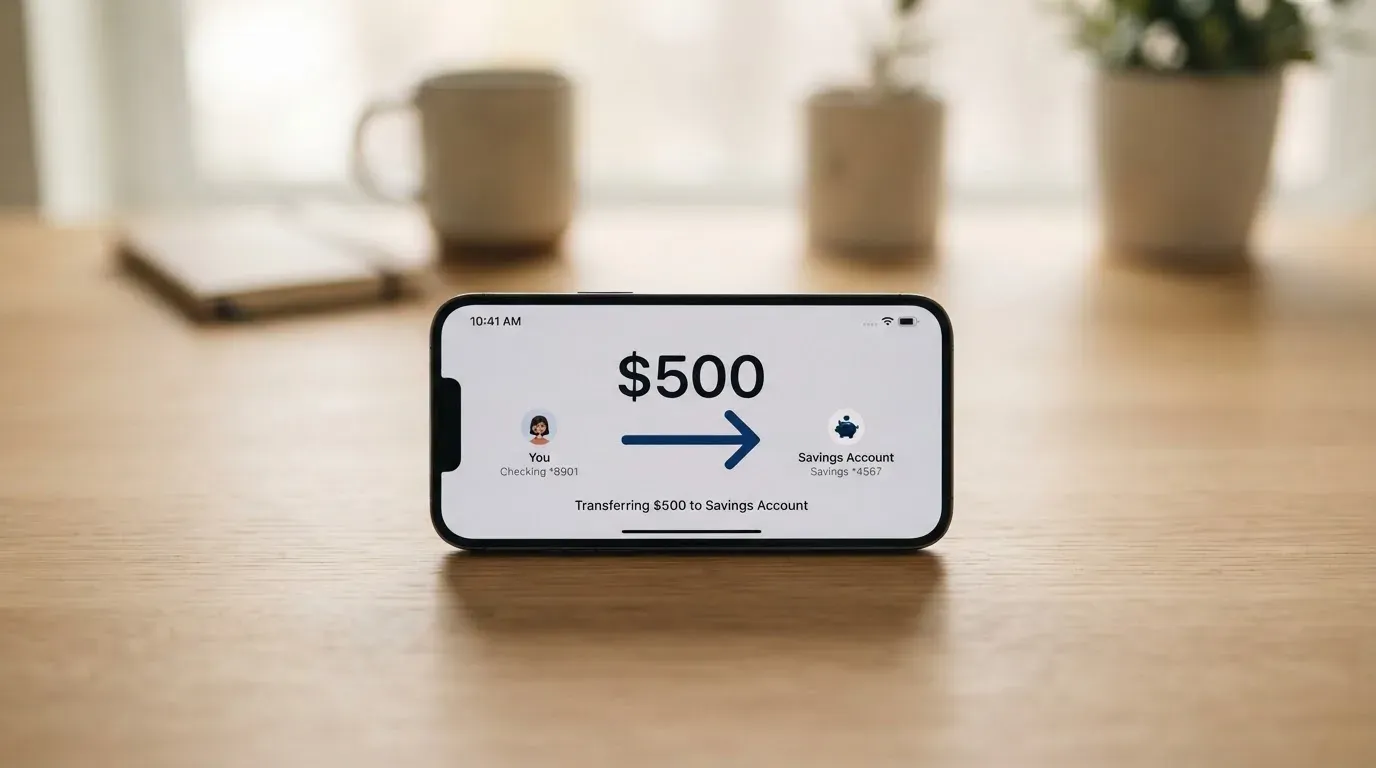
The most-cited top-up path is rouble transfer through SBP or SberPay. In practice you transfer roubles from a Russian bank account into your WhiteBird balance, the platform credits the balance, and you can use the card against that balance or convert it into crypto on the exchange. Bank fees on these transfers are reported at 0.4–1.5% depending on the channel, and you should not assume the lower end without checking with your own bank.
The other path is to send crypto in, sell it on the WhiteBird exchange to the card balance, and spend. The model is: crypto is sold on the platform to the card. The networks and coins supported for direct deposit are not stated on the card’s pages, which is a meaningful gap. Most crypto cards publish a list of supported networks (Ethereum, Tron, Solana, and so on) and a list of supported coins because a wrong network can mean lost funds, and the card’s silence here is something to push on with support before you send anything.
A practical rule: never send a top-up until you have read the platform’s own deposit instructions for the asset you are sending, and never assume that a network that worked for another user will work for you. Blockchain transfers are irreversible, and a deposit sent on a network the provider does not support can be lost or need manual recovery with no guarantee of success.
Paying with it every day
What does using the card actually look like once it is funded? Independent sources describe a virtual card generated inside the app, and an optional physical card delivered for an extra fee. The Crypto card is Mastercard, the Crypto Status card is Visa, and the Crypto card is described as tied to a non-custodial Bitcash wallet, which means the funds sit in a wallet where you hold the keys rather than in a pooled exchange balance.
Apple Pay and Google Pay support are not confirmed in the official materials, which is unusual for a mobile-first product in 2026 and worth checking if contactless payment in stores is the main reason you want a card. ATM use is not stated either, and that is a separate question to ask. App ratings were not read, and an Android version exists (1.1.8 per a third-party listing) but a rating there is not the same as a confirmed user experience.
The rewards picture is empty. There is no cashback scheme, no points programme, no tier structure, and no welcome offer reported in the materials. That is not a deal-breaker for the audience the card is built for, but it does mean the card has to be judged on cost and reliability rather than on what you get back.
For disputes and chargebacks, the card’s pages do not state a process. In practice, disputes on Mastercard and Visa cards are handled by the issuer, which for the Crypto card is Belarusian StatusBank, and you would need to follow that bank’s procedure. Treat this as an open question and ask support to describe the dispute path in writing before you rely on the card for large purchases.
What can go wrong
The risks of this card fall into four groups, and the order is roughly the order in which they bite.
The first is the silence of the official information. Information was not publicly available when I researched this review, and a lot of what you read on third-party sites is consistent but not confirmed. That does not make it wrong, but it means you should not make a decision based on a screenshot of a fee you saw on a single review site. Where this hurts you most is on fees and on which crypto networks and coins you can deposit.
The second is counterparty risk. The Crypto card sits in a non-custodial wallet, which protects you from a custodian failure on the wallet side, but the exchange side of the balance is a custodial platform. The history of crypto platforms is a history of custodians failing, and the card sits on top of one. The licensing picture is reassuring: WhiteBird is a resident of the Belarus High-Tech Park, holds a licence of the Republic of Belarus, and the card is issued by StatusBank. None of that removes the basic point that holding funds with a custodian is a category of risk, not a specific complaint about this custodian.
The third is sanctions and BIN risk. Cards issued in one country can look “foreign” to merchants in another, and merchants can decline them on policy. If you are a cardholder trying to pay a merchant in a third country, you may find the merchant declines the card at checkout for reasons that have nothing to do with you. There is nothing the card can do about this, and the workaround is to plan for it rather than to be surprised by it.
The fourth is the small-print risk that comes with regional cards: ATM fees that are not published, delivery restrictions that are not published, and a dispute process that is not stated. None of these are deal-breakers on their own, but together they mean the card is best treated as a niche tool rather than a primary card.
What to take instead
If the card does not fit your situation, here is a short, honest comparison of three alternatives. None of them are exact substitutes, and each has its own caveats.
| Card | Score | Best fit | Watch out for |
|---|---|---|---|
| Young Card | 5.7 / 10 | Readers who care about cashback paid in YNG tokens and who are in a tier that gives a meaningful rate (Gold 1.8%, Platinum 3.6%) | Eligibility and fees are not stated on the official page I could read; Bronze and Silver tier rates are not stated |
| MSX | 6.4 / 10 | Readers who want a higher-scoring alternative without the regional focus of WhiteBird | Eligibility, card form, costs and funding are not stated officially |
| Bybit Card | 6.0 / 10 | Readers who want a major global crypto card with transparent fees and a published tier structure | The card is not meant for European Economic Area customers, and several countries (including Belarus) are on Bybit’s fiat-service restricted list; rewards changed in October 2026 so only crypto-funded transactions earn |
A quick walk-through. The Bybit Card is the most-featured alternative and the easiest to compare against WhiteBird on fees: virtual card issuance is free, crypto conversion is 0.9% over the One-Click Sell rate in most regions, and FX fees are stated per region (2% in Australia, Asia Pacific, Georgia and Mexico; 2% international fee in Kazakhstan; 7% in Argentina; 1.5% in Brazil; 1% in Peru). The catch is geography: the card is not meant for EEA customers, and the rewards programme changed on 5 October 2026 so only crypto-funded spending earns points or cashback now. WhiteBird is a regional product that does not pretend to be global, and that is the right frame in which to compare it.
Young Card is for readers who care about rewards more than global reach, and MSX is a higher-scoring alternative. If you are choosing between them on the strength of this review, Bybit Card is the most complete picture and the one with the most published detail, and WhiteBird is the one with the strongest regional fit for Belarusian and Russian residents.
Who I would recommend it to
If you are a resident of Belarus or Russia, you fund the card in roubles through SBP or SberPay, you treat it as a way to spend from a crypto balance rather than a primary bank card, and you are comfortable with the fact that the card’s own pages do not publish the fee schedule you are agreeing to, then the WhiteBird card is a reasonable fit. The licensing picture is solid, the issuer is a Belarusian bank, and the platform is built around a non-custodial wallet on the crypto side.
If you live outside Belarus and Russia, you should expect to pay a one-time fee of around 200–250 BYN for a virtual card, plus 100 BYN if you want the physical version, and you should not assume the card will be deliverable to your country without confirming with support first. The card’s costs add up against competitors that publish a single transparent fee, and the rewards picture is empty.
If you want a card that publishes its fees on its own website, supports a published list of crypto networks, has a clear dispute process, and offers a real cashback or points programme, you should look at one of the alternatives above. The WhiteBird card does not try to be that product, and rating it as if it should be that product would be unfair. The score of 4.4 out of 10 reflects that it does what it sets out to do for a narrow audience, and that what it sets out to do is not the same as what a global crypto card tries to do.
Frequently asked questions
What is the WhiteBird card?
The WhiteBird card is a payment card issued by a Belarusian bank and tied to the WhiteBird crypto platform, which lets you spend from a crypto balance through a Mastercard (Crypto) or Visa (Crypto Status) card. The card sits on top of an exchange account and, for the Crypto version, a non-custodial Bitcash wallet. The project’s website was down during my research, so the details in this review come from independent sources and should be confirmed on the platform before you rely on them.
How does the WhiteBird card work?
You fund a balance in roubles or by selling crypto on the WhiteBird exchange, and the card spends that balance at merchants that accept Mastercard or Visa. The Crypto card is tied to a non-custodial wallet, which means the crypto side of the balance is held in a wallet where you hold the keys. The Crypto Status card is a Visa product described in unofficial sources as having lower exchange commissions than the Crypto card.
Is WhiteBird a bank?
No, WhiteBird is a crypto platform and a High-Tech Park resident in Belarus, not a bank. The card itself is issued by StatusBank, a Belarusian bank, and the licence WhiteBird holds is a crypto and exchange licence, not a banking licence. This is a common structure for crypto cards: the brand is the front-end, the bank is the issuer, and the card-network licence sits with the bank under the network’s rules.
Who owns WhiteBird?
WhiteBird is a Belarusian-registered company (White Bird CJSC), a resident of the Belarus High-Tech Park, and the holder of a Republic of Belarus licence. The exact ownership structure beyond the registered entity is not stated officially, and you should not infer it from third-party profiles.
Is the WhiteBird card available in my country?
Officially, the card does not publish a list of supported countries. Independent sources describe the card as built around residents of Belarus and Russia, with the Visa Crypto Status card said to be deliverable to those two countries and a recent extension of Visa support to cards issued in several other post-Soviet states (Azerbaijan, Armenia, Kazakhstan, Moldova, Tajikistan, Turkmenistan, Uzbekistan, Georgia). The cleanest answer is to ask support directly, with your country of residence and the type of card you want in your message, and to confirm delivery to your address before you pay the card fee.
How do I top up the WhiteBird card?
The most-cited path is a rouble transfer through SBP or SberPay, with bank fees of 0.4–1.5% depending on the channel. The other path is to send crypto in and sell it on the WhiteBird exchange to the card balance. The networks and coins supported for direct deposit are not stated on the card’s pages, so read the platform’s own deposit instructions for the asset you are sending before you transfer anything.
Does the WhiteBird card require KYC?
Yes. Independent sources describe identification as mandatory, done through a partner bank’s application, and say it can be completed without leaving the country. The exact documents required (passport, proof of address, tax identifier) are not stated officially, and you should expect to provide the same kind of documents you would provide to a regulated bank.
Is the WhiteBird card free?
The first virtual card is described as free for residents of Belarus and as costing 200 BYN (or 250 BYN per starting data) for non-residents, with an additional 100 BYN for a physical card. There is no stated monthly or annual servicing fee. The running cost of the card is the conversion commission on the exchange (1.5% to sell crypto to the card, 2.5% to buy crypto from the card, per one source) plus any bank fee on the top-up. One alternative source gives 2.5% sell and 3% buy for operations up to $10,000 a month (unofficial, not confirmed by the card), which would make the card considerably more expensive.
Is the WhiteBird card safe?
The licensing picture is reassuring: WhiteBird is a resident of the Belarus High-Tech Park and holds a Republic of Belarus licence, and the card is issued by StatusBank. The Crypto card is tied to a non-custodial Bitcash wallet, which means the crypto side of the balance is held in a wallet where you hold the keys. The exchange side of the balance is custodial, and any custodial platform carries counterparty and hack risk, including the long history of exchange failures. Treat the card as a tool, not as a primary store of value.
Can I add the WhiteBird card to Apple Pay or Google Pay?
Apple Pay and Google Pay support are not confirmed in the official materials available to this review, which is unusual for a mobile-first product. The cleanest answer is to ask support directly, with your device model and country, before you order the card if contactless payment in stores is the main reason you want it. Tokenised mobile wallets are supported by most crypto cards, but a confirmation from the issuer is still worth having in writing.
Exchange cards in the catalogue – cryptocardcatalog
Content created by the «cryptocardcatalog» team