
The wallet you already use, on a card that may not be issued to new customers
 Available in US
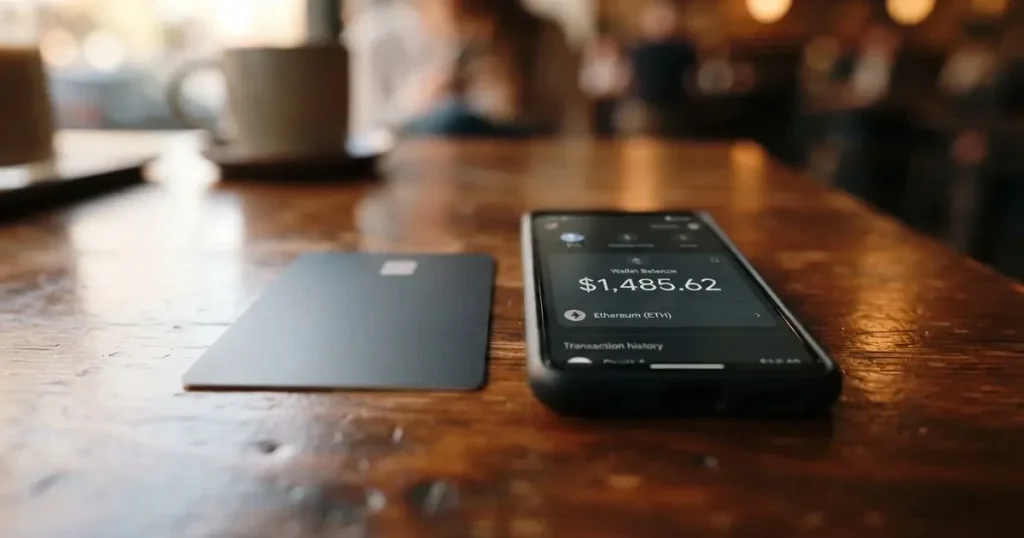
If you keep your crypto in Exodus and want to spend it without constantly moving it to an exchange, the Exodus card is the obvious next question. The pitch is clean: your wallet balance pays for a Mastercard, you hold the keys, and the card itself costs nothing on the free tier. That pitch is real. So is a second fact that has to sit next to it — the company that issues the card was bought by Exodus in May 2026, that issuer reportedly cannot issue cards to new European customers, and new US card issuance is described as not open. So the card you are reading about may be hard to get even where it is nominally supported. I scored it 6.8 out of 10, and the reason is not the fees or the crypto mechanics; it is that the interesting part of this product is the plumbing, and the plumbing has a warning light on it.
I checked the card’s own pages on 20 October 2026, the Exodus Card EU+UK terms document, and the review and press material around them.
The conditions described here are current as of October 28, 2026.
Verdict: 6.8 out of 10
The card suits you if you are already an Exodus wallet user in Europe or Latin America, you spend mostly in the currency of the country your card is issued in, and you can absorb the small set of fees when you do stray outside it. It suits you particularly well if the idea of a custodial exchange balance bothers you — this card is a genuinely self-custody structure, which is rarer in this category than the marketing suggests. It suits you badly if the reason you want a crypto card is that ordinary cards are closed to you. Exodus runs full identity checks, its issuance is currently restricted, and a frozen or declining programme will not care that you had no other option. And it is a poor fit if your money lives anywhere but Exodus.
Here is the breakdown I worked from:
| Criterion | Score | Why |
|---|---|---|
| Who can get it | 7 / 10 | Supported in 42 countries: Europe, Canada, USA (except Vermont), Mexico, Brazil, Argentina, Colombia and others. |
| Cost | 7 / 10 | Free tier: $0 a year; use outside the cardholder’s country 1% on Free; ATM 2%; stablecoin in a currency other than the cardholder’s 0.5%. |
| Top-up options | 9 / 10 | USDT and USDC across several networks: USDC on Solana, Ethereum, Arbitrum One, Base, BNB Smart Chain, Polygon; USDT on Arbitrum One, Solana, Ethereum, BNB Smart Chain, Polygon; plus a bank card and Apple Pay. |
| Reliability and complaints | 5 / 10 | Issuer Monavate Ltd (FCA), operator Baanx, both bought by Exodus on 1 May 2026; Monavate reportedly cannot issue cards to new European customers, 25% staff cut; Trustpilot Exodus 4 out of 5 across thousands of reviews. |
| Everyday use | 6 / 10 | Virtual and plastic (Metal) cards, ATM at 2%; Apple Pay is described for topping up, wallet-based card payment is not disclosed, the card does not support a PIN. |
Total: 6.8 / 10.
The top-up line is the one that deserves a moment. Nine out of ten is not a marketing artefact — six networks per stablecoin, two of the most-used stablecoins, plus two ordinary ways to add money from a bank card. That is genuinely better than most cards in this category, and it is the reason I did not score this lower. The reliability line is the one dragging the total down, and it is dragging it down for reasons that are not about fees.
Will they give you the card?
Sometimes, and the list is long but the gate is not open everywhere. Exodus Pay itself works in most jurisdictions, but the Exodus Card itself is supported only in a specific set: Andorra, Argentina, Austria, Belgium, Bosnia and Herzegovina, Brazil, Bulgaria, Canada, Colombia, Croatia, Cyprus, Denmark, Finland, France, Germany, Gibraltar, Greece, Guatemala, Hungary, Iceland, Ireland, Isle of Man, Italy, Jersey, Liechtenstein, Lithuania, Luxembourg, Malta, Mexico, Netherlands, Niger, Norway, Poland, Portugal, Romania, Slovakia, Slovenia, Spain, Sweden, Switzerland, USA (excluding Vermont), and Uruguay.
Count the countries in that list yourself and you land on 42. The shape of it matters more than the count: Europe is broadly covered, Latin America is partially covered — Brazil, Mexico, Argentina, Colombia, Uruguay, Guatemala, but nothing else — and there are two outliers, Niger and Gibraltar. If you are in a supported country, residency is what is tested, and the card’s public pages do not state a citizenship rule, so I will not invent one for you. What they do state is the identity process, which is the next section.
One more thing you should check first, because it can override the whole list: new US card issuance is described as not open in the newer help material. A country being on the supported list does not mean an application today will succeed.
How to get it
The process is ordinary enough that you will not be surprised by it. Identity verification is required — for the card, for cash deposits, and for redeeming points. The account needs a phone number that receives a code by WhatsApp or SMS. Then email verification. Then an ID check inside the app. Former Spend Card users migrate without having to re-verify, which is a courtesy that matters if you were an early user.
What the pages do not tell you: how many verification levels there are, how long each takes, or what the specific rejection reasons are. If you have been turned down by a bank before and you are trying to understand whether this will be different, the honest answer is that the card’s own documentation does not say. It does say that if due diligence cannot be completed, EU rules require the institution to refrain from the transaction or the relationship — that is the general rule behind those closed-account stories you will have read elsewhere, and it is why a wallet with your crypto in it can end up inaccessible for paperwork reasons.
On the card itself: this is a debit card, not a credit card, usable wherever Mastercard is accepted. There is a virtual card and a physical card, the physical one in Metal. The issuer is Monavate Ltd, an FCA-authorised e-money issuer; the programme manager is Baanx under the EU and UK terms. The card’s public pages are currently blocked to me, and the older Spend Card was described as a virtual Mastercard-based product, so the details of what the plastic looks like and what is printed on it are not something I can confirm for you.
Delivery: the Free tier has no replacement-card arrangement. Metal replacements cost $99. Metal delivery is expected 6-8 weeks after purchase, and delivery covers the same country list as eligibility. A virtual card is available alongside, which is the practical answer if you cannot wait six weeks — and if you only need something that works online.
Fees: what it really costs
The free tier is genuinely free at $0 a year. Metal is $199 a year, auto-renewing, with a 14-day cancellation window for a refund. But “free” is not “costless,” and the numbers below are where a free-tier user’s money actually leaks.
Here is the fee and limit picture as the terms describe it:
| Fee or limit | Value |
|---|---|
| Free tier annual subscription | $0 |
| Metal tier annual subscription | $199/year, auto-renews |
| Metal card replacement | $99 |
| Purchase outside the cardholder’s country | 1% on Free, none on Metal (fair use) |
| Stablecoin in a currency other than the cardholder’s | 0.5% |
| ATM withdrawal fee | 2% (the ATM operator may add its own) |
| Metal ATM fee | none up to $1,200/month, then 2% |
| Conversion of other currencies | from USD at the card network and payment processor rate at the time of purchase; fee amounts not stated |
| Daily card purchase limit | 9,500 USD global, 15,000 USD in the United States |
| Free tier purchase limits | $10,000 per transaction, $15,000 per day |
| Metal purchase limits | $20,000 per transaction, $30,000 per day |
| ATM limits | $1,000 per transaction and $1,000 per day (Free); $1,000 per transaction and $5,000 per day (Metal) |
| UK limits (terms) | £1,000 per ATM withdrawal, £10,000 per purchase, £15,000 per day |
| Card currency | local currency, or USD for US cardholders |
Three everyday payments, and which fees bite. This is the part that matters more than the table, because the table is only interesting if you know which lines you will actually cross.
Paying for coffee in the city where your card is issued, in the local currency, on the Free tier: no fee. That is the baseline case, and it works.
Paying for the same coffee in a neighbouring country, or online at a merchant that bills in dollars while your card is euro-denominated: 1% on the Free tier, on top of whatever spread sits inside the conversion rate. This is the number that quietly eats a foreign online purchase. Metal removes the 1%, under fair-use terms.
Paying with a stablecoin denominated in a currency that is not your cardholder’s or the merchant’s — say, holding dollars and spending in euro — costs 0.5%. If you also convert at the network rate, you have two effects stacked. This is why the terms say the card is non-US-denominated in local currency or USD for US cardholders: the design assumes you spend where you live.
What I could not find, and will not fill in for you: the specific conversion fee amounts on purchases in other currencies. The terms say conversion happens at the card network and payment processor rate at the time of purchase, and the amounts are not stated. Nor is the ATM situation stated in the newer help material — the 2% figure and the per-transaction caps come from the terms document. And a caution about that document: it is the Baanx-era PDF, file-dated September 2025 and modified 30 April 2026, and it may not fully match the newer Exodus Pay card described everywhere else in the terms. Where the two disagree, this is a real gap rather than something I have smoothed over.
Top up: how money gets onto the card
This is the best part of the product and the reason the score is not lower. The card draws on the Exodus Pay balance on Solana, and it draws in a fixed order: USDT, then USDC, then XO Cash. One constraint catches people out — a single purchase must be covered by a single asset. You cannot have the card draw funds from multiple assets for one transaction.
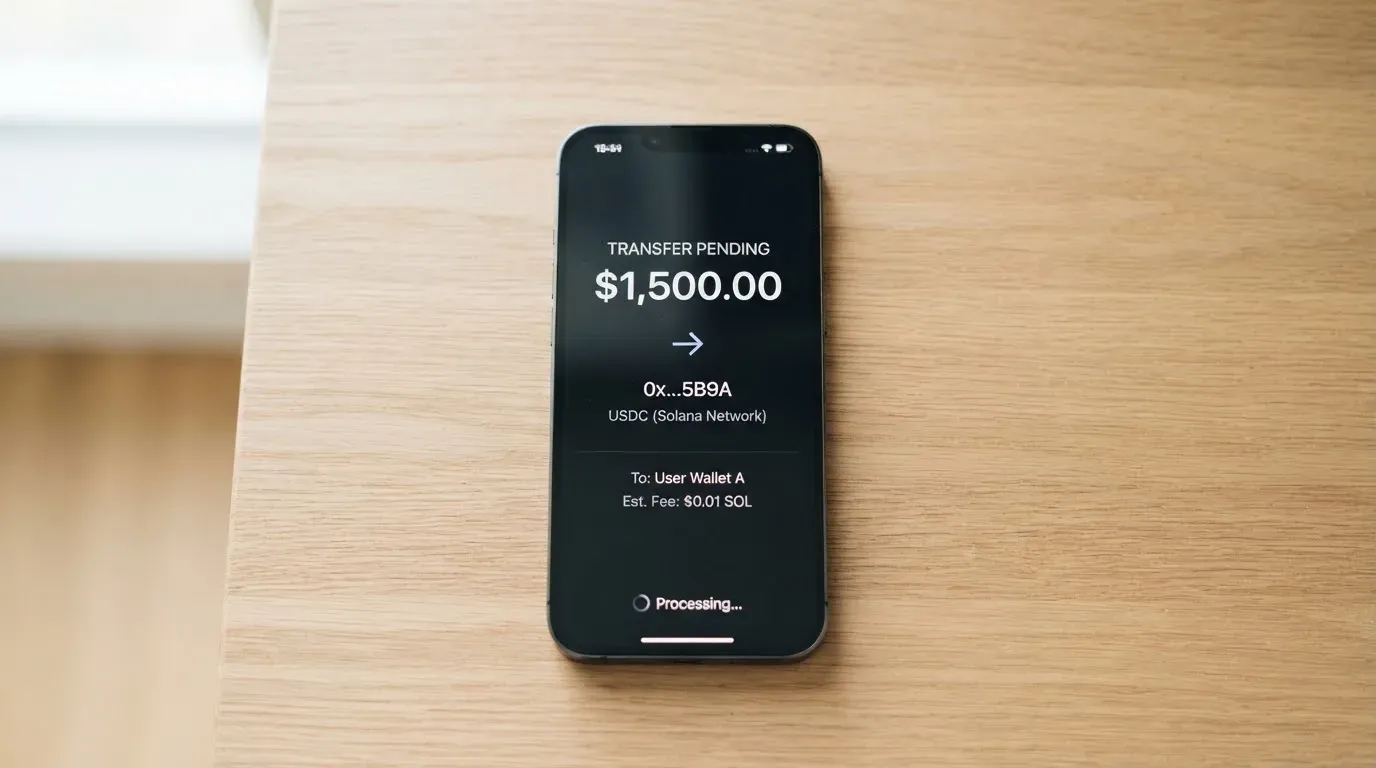
Deposits: USDC on Solana, Ethereum, Arbitrum One, Base, BNB Smart Chain, and Polygon. USDT on Arbitrum One, Solana, Ethereum, BNB Smart Chain, and Polygon. Plus a debit card and Apple Pay on iOS.
The fees on the crypto side are the friendliest part of the whole cost sheet. Deposit: no fee, no minimum balance. Stablecoin deposited in a currency other than the cardholder’s or the merchant’s: 0.5%. DeFi and yield tokens: no fee up to $1,200 per month, then 0.5%. Other cryptocurrencies such as wrapped ETH: 0.875%. Network gas is small and variable, typically $0.01. The fees for the bank card and Apple Pay deposit routes are not stated, so if you plan to add money that way, that is a question to ask the support address rather than assume it is free.
The single biggest practical risk in topping up is the network, not the fee. A transfer sent on a chain the card does not support, or to an address belonging to a different network, can simply be lost, or need manual support recovery with no guarantee. Before your first deposit, check the network list above against what your exchange or wallet offers, and check the destination format with a small amount. Blockchain transfers are irreversible; there is no chargeback button.
Paying with it every day
What works: the debit card anywhere Mastercard is accepted, virtual and physical, ATM withdrawals within the caps above, and card controls in the dashboard — you set a spending limit, you can freeze the card, and you can add or remove the wallets it draws from. Lost or stolen card is meant to be reported immediately.
What does not, or is not disclosed: the card does not currently support a PIN. At terminals that ask for a PIN, the cardholder may be able to confirm without one. If you are someone who needs to authorise with a PIN, that is a genuine limitation to weigh. Apple Pay is described for adding money, on iOS; the public pages do not disclose wallets for paying with the card, so I cannot tell you whether you can push this card into Apple Pay or Google Pay for payments. Metal rewards are worth knowing about: 3% cashback on the first $10,000 spent per year, then 1%. The rewards programme may be paused or terminated under the terms.
There is also a regional subscription perk: from 1 July 2026, card holders in Argentina, Brazil, Mexico, Colombia, and Uruguay can pay DGO and SKY+ subscriptions, and new customers in those countries could get a 25% cashback offer subject to terms. The general cashback rate is not stated.
The wallet app itself rates well where it is rated: App Store 4.6 out of 5 from 38K ratings, iPhone, iPad, and Vision. I did not read the Google Play rating.
A note on how this card looks to a shop. A card number starts with an issuer identification number of 6 or 8 digits, and merchants can look it up to see which institution and which country issued it, and may apply extra scrutiny if the issuer country differs from the billing address. That is why a card issued in one country can read as foreign to a store in another. Some merchants decline prepaid or foreign BINs on exactly that basis. It is not fraud, it is not personal, and it is not something you did wrong — but a decline is more likely than with a card issued locally by a bank your shop already recognises.
If a payment is declined, note that a declined authorisation can leave a hold on your funds for several days, typically up to seven. That is the quiet cost of a card that gets declined once.
What can go wrong
This is the section that pulled the score to where it is.
The issuer situation first, because it is the one I would not ignore. Exodus Movement completed its acquisition of Monavate Holdings (issuer Monavate Ltd, FCA-authorised) and Baanx on 1 May 2026, acquiring the shares from receivers after a loan default; the acquisition was announced at $175M in November 2025. Q2 2026 results mention a 25% workforce cut. The CEO reportedly said Monavate cannot issue cards for new European clients, following a Bank of Lithuania inspection of Monavate UAB in late 2025. Newer help material says new US card issuance is not open. Put plainly: the institution that issues this card was in receivership, is cutting staff, and is reported to be unable to serve new European customers. What that means for your card in month six is not something the documentation answers.
Complaints: on Trustpilot, exodus.com sits at roughly 4 out of 5 from about 4,380 reviews, and the company replies to 93% of negative reviews. One review reports that a debit card validation failure was fixed after escalation. The negative themes in that feedback are about the wallet, not the card — blocked transactions, high fees, unresponsive support. I found no card-specific complaint threads and no Reddit results on the card. I want to be careful with this: a high average on a review site that mostly reviews the wallet tells you the wallet is fine, not the card.
Disputes and money movement: purchases are refunded as credit to the Card Account, and that credit may be unavailable for up to five days. Liability for unauthorised transactions is limited to the face amount plus fees. Disputes with the programme manager go to arbitration under Delaware law with a class waiver — which means no class action, and a process many people will find expensive. Chargeback time frames are not stated.
Self-custody cuts both ways. The card spends value from a self-custody Exodus wallet linked to the card, and the terms describe it that way. The newer Exodus Pay balance is on Solana, where the custody wording is not stated. The upside is real: your funds stay in your wallet until the moment of payment. The downside is equally real: control belongs to whoever holds the private key or seed phrase, a seed phrase is typically 12 to 24 unencrypted words, anyone who obtains it can restore the wallet and spend the funds, and transfers are typically irreversible with no built-in recovery. Insurance is not stated. I am not going to tell you this is the safe option or the unsafe one; it is the option where you carry the risk yourself.
Support, if you need it: the terms give [email protected] for Metal and replacement, [email protected] for the issuer, and a toll-free number printed on the back of the card.
And one structural thing to know about this category generally: crypto card programmes do close. Visa terminated its global agreements with FTX on 13 November 2022 and the FTX US debit card was wound down by its issuer. WaveCrest, a Visa issuer that supplied crypto card brands, was suspended by Visa in Europe in 2018, closing all its programmes. Programme closures typically give notice, then stop spending and loading, then ask users to withdraw remaining balances. Check what your balance is before you need it.
What to take instead
If the reason you are here is that the plumbing worries you, the comparison is worth making in a table rather than in prose.
| Exodus | MetaMask | KAST | TokenPocket | |
|---|---|---|---|---|
| Score here | 6.8 / 10 | 7.1 / 10 | 6.1 / 10 | 5.8 / 10 |
| Card | Debit, Mastercard; virtual and Metal | Mastercard; virtual instantly, Metal pre-ordered | Visa, virtual and physical, up to 10 | Mastercard or Visa debit; virtual |
| Who | 42 countries incl. most of Europe, LatAm, Canada, US (except Vermont) | Sign-up in 45 listed countries, others waitlist; US/UK temporarily closed | Residence-based list shown at KYC, not published | Europe for Visa; Asia-Pacific for Mastercard |
| Free tier | $0/year | Virtual free, no annual or maintenance fee | Standard 0 USD | — |
| Paid tier | Metal $199/year | Metal $199/year | Premium 1,000 USD/year; Private 10,000 USD/year | — |
| Foreign currency fee | 1% on Free, none on Metal | No foreign transaction fee, Mastercard rate | 0.5%–1.75% depending on country and programme | Not stated |
| Cashback | 3% on first $10,000/year then 1% (Metal) | Virtual 1%; Metal 3% then 1% | Standard 1.5%, Premium 2%, Private 3% on tier caps | No cashback stated |
| Issuer or manager | Monavate Ltd, FCA; Baanx | Monavate; card provider Crypto Life | Visa programmes | Fiat24 |
Three observations from that table.
MetaMask scored 7.1 here, above Exodus, and the reason is structural rather than clever: it spends directly from the connected wallet on Linea, Base, Monad, and Solana, holds mUSD, wETH, EURe, GBPe, USDC, and USDT, has no foreign transaction fee, and its issuer is also Monavate — so it carries the same issuer risk, but with one fewer layer and no Baanx-era terms document to reconcile. Its drawback is availability: sign-up open in 45 listed countries with a waitlist elsewhere, and US and UK sign-ups temporarily closed. One card per user.
KAST is the most generous on paper and the most awkward in practice: a residence list you only see at KYC, a token list that contradicts itself in its own terms (the app shows USDT, USDC, PYUSD, RLUSD; the terms say currently USDT and USDC), and tiers at 1,000 and 10,000 USD a year that put it in a different market. Its honest strengths are zero top-up fee, zero transaction fee, zero Apple and Google Pay fee, and 0.5%–1.75% non-USD FX depending on where you live.
TokenPocket scored lowest: a 1% fee on every crypto deposit into the card, no cashback of its own, coins and networks not listed in its FAQ, and the Americas described as planned rather than live.
If you want to understand the mechanics rather than choose, one fact frames all of them: Visa and Mastercard do not issue crypto cards to consumers themselves. They license issuers, and they can suspend a programme. So the name on your card app is rarely the institution that issued it.
Who I would recommend it to
I would recommend this card to an Exodus wallet user in a supported European or Latin American country who spends domestically, wants to keep control of their own keys, and has a tolerance for a card that may be refused at an ATM that wants a PIN. The self-custody design is a real advantage and the top-up options are the best in this comparison. Read the Metal tier honestly too — at $199 a year for 3% on the first $10,000 of spend, the maths only works if you genuinely spend that much.
I would not recommend it to you as your first card if you are outside the supported list, if you are in the US and hoping to sign up today, if your ordinary bank cards are closed to you and this is your last fallback, or if you intend to hold a large balance on the card rather than in your wallet. Nor would I recommend it if you need a PIN, or if you want to be able to push the card into a mobile wallet for payments.
If you are reading this in the market for a card you cannot otherwise get, and you are weighing this because it looks like a way in — I understand the reasoning, and the KYC is the same KYC, and the issuer’s ability to serve you is now part of what you are buying.
Frequently asked questions
What is the Exodus card?
The Exodus card is a Mastercard debit card that spends the balance in your linked Exodus wallet rather than a bank account. It draws from the Exodus Pay balance on Solana, taking USDT first, then USDC, then XO Cash, and a single purchase must be covered by a single one of those assets. It is a debit card, not credit, usable wherever Mastercard is accepted, in virtual or physical Metal form.
Is Exodus a bank?
No. Exodus is a crypto wallet company, and the card is issued by Monavate Ltd, an FCA-authorised electronic money institution, with Baanx as programme manager under the EU and UK terms. Exodus Movement completed its acquisition of Monavate Holdings and Baanx on 1 May 2026. An e-money institution can issue cards and wallets but cannot lend, and its customer funds are not bank deposits.
Who owns Exodus?
The company behind the wallet and card is Exodus Movement, which acquired the card issuer Monavate Ltd and programme manager Baanx Group Ltd on 1 May 2026, with the deal announced at $175M in November 2025 after a loan default and receivership. Q2 2026 results also mention a 25% workforce cut, and the CEO reportedly said Monavate cannot issue cards for new European clients.
Does the Exodus card require KYC?
Yes. Identity verification is required for the card, for cash deposits, and for redeeming points. You need a phone number that receives a code by WhatsApp or SMS, then email verification, then an ID check in the app. Former Spend Card users migrate without re-verifying. The number of verification levels, processing times, and rejection reasons are not stated in the card’s public pages.
Is the Exodus card free?
The Free tier costs $0 a year, and that is genuinely $0. What it is not is free of fees: 1% when you spend outside your cardholder’s country, 2% at an ATM, and 0.5% on a stablecoin in a currency other than the cardholder’s or the merchant’s. The Metal tier is $199 a year and adds 3% cashback on the first $10,000 spent per year, then 1%.
How do I top up the Exodus card?
From crypto or from a bank. USDC deposits are supported on Solana, Ethereum, Arbitrum One, Base, BNB Smart Chain, and Polygon; USDT on Arbitrum One, Solana, Ethereum, BNB Smart Chain, and Polygon; and you can also add money by debit card or Apple Pay on iOS. Crypto deposits carry no fee and no minimum balance, with network gas typically $0.01. Check the network before sending — a transfer on the wrong chain can be lost.
Does the Exodus card support Apple Pay?
Apple Pay can be used to add money to the card on iOS, and that is what the card’s documentation describes. Whether you can add the card itself to Apple Pay for payments is not disclosed on the public pages, so I would not assume it. The card also does not currently support a PIN; at terminals that ask for one you may be able to confirm without it.
Is the Exodus card safe?
That depends on which risk you mean. Because it spends from a self-custody wallet, a stolen seed phrase means anyone can restore the wallet and spend the funds, and transfers are typically irreversible. The counterweight is that your crypto is not sitting with a custodian. Insurance is not stated, unauthorised-transaction liability is capped at the face amount plus fees, and disputes go to arbitration under Delaware law with a class waiver. You carry the key risk yourself.
Can I use the Exodus card in my country?
Only if your country is on the supported list: Andorra, Argentina, Austria, Belgium, Bosnia and Herzegovina, Brazil, Bulgaria, Canada, Colombia, Croatia, Cyprus, Denmark, Finland, France, Germany, Gibraltar, Greece, Guatemala, Hungary, Iceland, Ireland, Isle of Man, Italy, Jersey, Liechtenstein, Lithuania, Luxembourg, Malta, Mexico, Netherlands, Niger, Norway, Poland, Portugal, Romania, Slovakia, Slovenia, Spain, Sweden, Switzerland, USA (excluding Vermont), and Uruguay. New US card issuance is described as not open, and residency is tested.
Why is the Exodus card being rejected or declined?
There are three separate possibilities, and they are worth telling apart. First, issuance: the issuer is reported to be unable to issue cards to new European customers, and new US issuance is not open, so an application may simply not go through. Second, merchant-side: some shops decline foreign or prepaid BINs after looking up the issuer country. Third, your own account: identity checks can leave an account frozen. If you are being declined, the fastest route is the issuer contact in the terms, [email protected], or the toll-free number on the back of the card.
Wallet cards in the catalogue – cryptocardcatalog
Content created by the «cryptocardcatalog» team