
A crypto-spending card for four Latin American countries, with thin top-up support and an unclear licensing picture
 Available in US
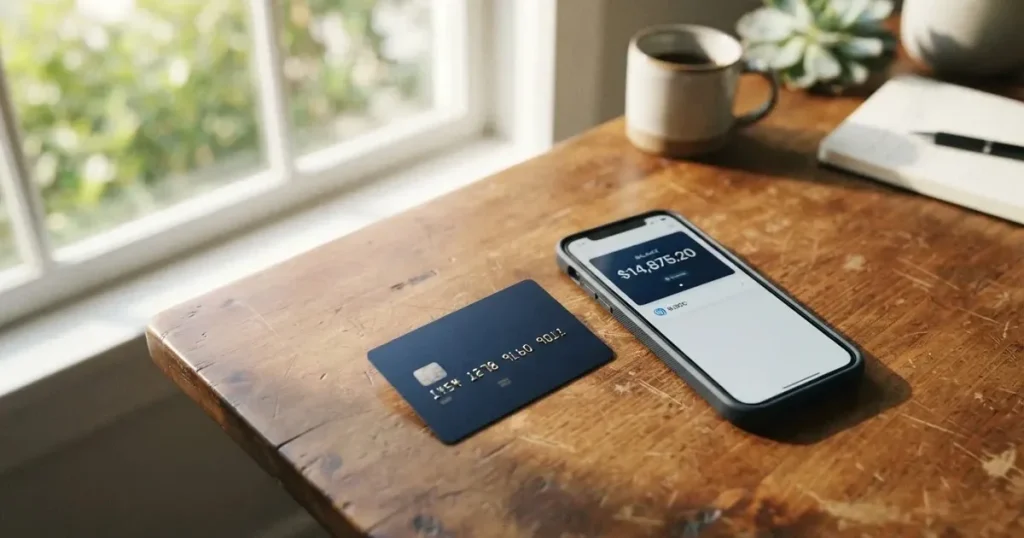
If you have trouble getting an ordinary bank card — because of where you live, what documents you hold, or simply because no bank wants you — then the ARQ card is worth putting on your short list. It is a Mastercard, virtual or physical, that spends the balance sitting in your ARQ account in digital dollars. You can add it to Apple Pay or Google Pay, and you can use it at ATMs. On the everyday-use side of the ledger, this is a well-built card: 9 out of 10.
Everything around it is thinner. The card is only issued in Mexico, Argentina, Colombia and Brazil, and the physical card is shipped only to an address in one of those four. You cannot load the card directly — money arrives by bank transfer to details shown in the app, and the card then spends whatever sits in your balance. And on the questions that decide whether a provider is safe to keep money with for years — who runs it, under which licence, what happens when an account is frozen — the public pages are quiet. The name behind the app changed from DolarApp to ARQ, the old name’s reviews are markedly worse than the new one’s, and the sample is tiny on one side and large on the other.
My score for the ARQ card is 5.4 out of 10.
| Criterion | Mark | Why |
|---|---|---|
| Who can get it | 3 / 10 | Issuance countries: Mexico, Argentina, Colombia, Brazil; the physical card is sent only to an address in those countries |
| Cost | 8 / 10 | Virtual card free; physical card $4.99 USD for delivery, no maintenance or annual fee; ATM 1% of the amount; no separate FX fee disclosed and “no hidden fees” claimed |
| Top-up options | 3 / 10 | The card cannot be topped up directly — money goes to the ARQ account by bank details, and the USDc/EURc balance backs the card; coins and networks are not disclosed |
| Reliability and complaints | 4 / 10 | Formerly DolarApp; services run through DolarApp México S.A. de C.V. and DAPP Colombia S.A.S.; licences not named; Trustpilot ARQ Finance 3.9/5 on 6 reviews, DolarApp 2.0/5 on 128 reviews; account blocks and slow support reported |
| Everyday use | 9 / 10 | Virtual and physical Mastercard, Apple Pay and Google Pay, ATMs worldwide except for cards issued in Argentina |
| Total | 5.4 / 10 | Strong spending behaviour, weak on reach, funding and transparency |
Who this suits: residents of Mexico, Argentina, Colombia and Brazil who already hold digital dollars or stablecoins, or who can move money into a bank account in one of those countries, and who want a Mastercard that works in stores, online and at cash machines. Who it does not suit: anyone outside those four countries, anyone who cannot complete identity verification, and anyone whose main worry is custody transparency — the card’s own pages do not say who holds the funds or how they are safeguarded, and I would not guess on your behalf.
Conditions are current as of October 28, 2026
Will they give you the card
Yes, but only in four countries. The country selector lists Mexico, Argentina, Colombia and Brazil, and the physical card can be sent “anywhere within Argentina, Colombia, Mexico or Brazil” to a valid address in that country. That is the whole of the geographic story. There is no virtual-card escape hatch for someone living elsewhere: the virtual card also lives inside the account, which sits behind the same country selector.
Two consequences follow, and both are worth sitting with before you install anything.
The first is that if you are reading this outside those four countries, everything below — fees, limits, bank transfer details, support — is of academic interest only. The card simply is not on offer to you. I have not found a way around that, and I am not going to describe one; country rules are country rules.
The second is that even inside those four countries, holding a valid local address is not the same as qualifying. Identity verification has to be completed before any card can exist, and the specific documents, proof of address and age requirement are not stated on the public pages. That gap matters more than it sounds: platforms in this category are required by anti-money-laundering law to verify identity and assess risk, and where that cannot be completed, EU rules require the institution to hold back from the relationship and, where necessary, end it. That is the normal reason accounts get frozen pending documents, and it is the single biggest source of complaints about providers in this space. ARQ does not publish which documents it wants. You may find out only after you upload something and wait.
The card is described as a “secured credit card backed by the balance in your ARQ account”, with the balance held in USDc — a digital dollar — and Mastercard as the network. Virtual and physical versions both exist. Nothing else about eligibility is published.
How to get it
The process is short, and I want to be precise about where the uncertainty sits.
You download the app, log in, and go to Home, then the card banner, then request a free virtual or physical card. Before any of that, though, identity verification has to be completed in the app — the card cannot be created while verification is pending or incomplete. The card’s own pages lay out these steps; what they do not lay out is what verification requires.
What I could not establish from the public pages:
- which documents qualify, and whether a proof of address is required;
- the minimum age, although prepaid and debit cards in this category are generally available to adults from 18 and some issuers set higher limits;
- whether verification is tiered, that is, whether a higher tier unlocks higher limits;
- what happens if your account is flagged on review.
On that last point there is one specific warning worth repeating: account review can temporarily block card creation, and the reasons for a rejection are not stated. So “I applied and there is no card” does not necessarily mean the decision is final, but it also does not tell you what to fix.
Delivery, if you want the physical card, is limited to those same four countries and takes 2 to 15 business days by one account, while another article on the same site says 7–10 business days. Shipping is $4.99 USD. The cost of a replacement card is not stated. That range is wide enough that I would plan around the slow end rather than the fast one.
The app itself rates well where ratings exist. On the App Store, “ARQ: Global Finance” shows 4.5/5 from 992 ratings (read 2026-10-21) on iPhone, iOS 17.0 or later. The Google Play rating I did not obtain; the official page cites 4.7 and 4.5 app ratings without a date. I would treat the store rating as a rough signal only: it measures whether people like the app, not whether their funds arrived.
Fees and what you actually pay
This is the card’s strongest area, and it deserves to be said plainly: the price side of ARQ is unusually clean, at least on paper. A free virtual card, a $4.99 USD physical card that is just a delivery charge, no maintenance fee and no annual fee. The card’s pages state there are “no hidden fees”. I found no separate FX fee or spread disclosed — which means exactly that it is not disclosed, and I would want to see the numbers in the app before I moved real money.
| Fee or limit | What the card states |
|---|---|
| Virtual card issuance | Free |
| Physical card | $4.99 USD shipping fee |
| First physical card | Free if the Main Balance is over $100 USD, or for Premium users |
| Maintenance fee | None |
| Annual fee | None |
| Conversion rate | Buy rate when adding money; sell rate when paying by card, both shown in the app before you confirm |
| Separate FX fee or spread | Not disclosed |
| ATM | ARQ fee of 1% of the amount withdrawn; the ATM owner may charge extra |
| ATM, Premium | Up to 500 USDc per month free of the ARQ commission |
| ATM availability | Worldwide with the physical card, except cards issued in Argentina, which are not allowed at international ATMs |
| Card balance currency | USDc (digital dollar); incoming payments converted to USDc or EURc; payments in any currency converted at the sell rate |
| Spend limit | Equal to the USDc balance in the account — a 100 USDc balance gives a 100 limit, so the card cannot overdraw |
| Card count | Up to 10 virtual cards per month, max 3 active, max 30 in total |
Now let me walk you through three everyday payments, because the fee table above is abstract and these are not.
A coffee. Say the coffee costs a few dollars. If your balance is in USDc and the local price is in pesos, reais or pesos argentinos, the payment is converted at the sell rate. There is no separate FX fee listed — the cost sits inside the rate. Compare the rate in the app against your bank’s rate before you commit to spending everything through the card; that gap is where the real cost lives, and it is the one number the card does not publish.
A subscription in euros. You are billed in EUR, your balance is in USDc or EURc, and the payment is converted at the sell rate. Subscriptions are where rate differences accumulate quietly, because they repeat every month and most people never look at the rate.
Withdrawing cash. ARQ takes 1% of the amount withdrawn, and the ATM’s owner may add their own charge on top. The ATM’s charge is outside ARQ’s control and varies by machine, so two withdrawals of the same size at two machines can cost different amounts. If you are a Premium user, up to 500 USDc per month of that commission is waived — but the Premium price is not stated, so I cannot tell you whether that waiver is worth anything to you.
Two limits deserve attention. First, the spend limit is simply your balance, which is a real safety feature — the card cannot go below zero — but it also means a large purchase fails unless you have loaded enough in advance. Second, there is a separate ATM limits article for Colombia accounts whose figures I did not read; if you are a Colombian user, treat the ATM limit as something you check in the app rather than something I have told you here.
How to top it up
Here is where the card gets thin, and it is worth understanding precisely what “thin” means rather than just being disappointed.
The card cannot be loaded directly. Funds are added to the ARQ account using the banking details shown in the app’s “Add” section, and the account balance in USDc or EURc is what backs the card. So the sequence is: money goes to a bank account, the account converts or holds it as digital dollars, and the card spends that balance. There is no “send USDT to this address and the card is topped up” step on the card’s pages.
What is not stated:
- which coins and which networks are supported;
- what fees apply to the deposit;
- what the minimum top-up is;
- how long a deposit takes to appear.
Those four blanks are the reason I scored top-up options 3 out of 10 rather than lower. The mechanism itself — a bank transfer — is ordinary and reversible, which is safer than an irreversible chain transfer. But it means the “instant” feel people expect from a crypto card is not here, and it means you depend on the banking rails of the country where you live.
One more constraint in this area, and it catches people out: funds cannot be sent to other cards. Any withdrawal goes to a bank account. The fees for that, and what happens to a remaining balance if you close the account, are not stated.
There is a broader reason to be careful with chain transfers in this category at all, whether ARQ’s pages discuss it or not. Blockchain transfers are typically irreversible. If you send on a network the provider does not support, or to an address belonging to a different network, the funds can be lost or need manual recovery with no guarantee attached. And stablecoins are not censorship-proof — Tether says it disables tokens in wallets on the OFAC sanctions list and has frozen funds tied to illicit activity. None of that is specific to ARQ’s bank-transfer route; it is the shape of the technology behind the digital dollars your balance is denominated in.
Paying with it every day
This is where ARQ is genuinely good, and if your use case matches the audience it was built for, it shows.
The card is a Mastercard, virtual and physical, which means it is accepted wherever Mastercard is accepted — online and in stores, domestic and abroad. Apple Pay is supported: you add it from Home via “Add to Apple Wallet”. Google Pay is supported according to the card overview, which notes the virtual card can be added to Apple Pay or Google Pay. ATMs work worldwide with the physical card, with the Argentina exception noted in the fees table above. The security controls are the standard set: 2FA in the app, instant freeze in the app, 3D Secure, PIN viewing, and block/unblock.
Whether blocked merchant categories exist is not stated. That is worth checking if gambling is relevant to you: MCC 7995 covers casinos, betting and lotteries, many issuers block it on specific cards by policy rather than by law, and the blocked list differs from one issuer to the next. Nothing in ARQ’s pages either way.
On rewards, there is essentially nothing. No reward program is described on the official card pages, and the sign-up form says reward details are sent by email. If a cashback offer matters to your choice of card, do not assume one from the outside — the public pages describe none.
Two practical points about how the card behaves, both general to this kind of product and worth knowing before a payment surprises you.
The card number starts with an issuer identification number — a BIN or IIN of six or eight digits — that tells the merchant which institution and country issued it. When that issuer country differs from your billing address, some merchants apply extra scrutiny or decline the payment outright, and some decline prepaid or foreign-issued cards simply because the lookup reveals the type. Address verification, which compares the numeric parts of the billing address you typed against issuer records, is generally unavailable for foreign-issued cards and can cause declines. So: expect occasional friction abroad, and do not read a single decline as proof the card is broken.
And a declined payment can leave a hold on your money that stays for several days, typically up to seven. On a card where your limit equals your balance, a held amount is money you cannot spend twice.
If something goes wrong, Mastercard’s chargeback route exists, but be clear-eyed about it: an investigation can take up to 120 days, opening a chargeback does not guarantee a refund, and status is in the Help Center or app with a notification and email. That is a long window to be without the money.
Support is in-app chat 24/7, with complaints and claims handled at [email protected], and the Help Center is available in Spanish, English and Portuguese.
What can go wrong
I have grouped this by how much it should worry you, starting with the things that are documented and then the things that are simply not answered.
Account blocks and frozen funds. This is the loudest theme in the reviews. Reports of accounts blocked or frozen with funds held recur across app-store and Trustpilot reviews, described by users in 2025-2026. When your card limit equals your balance, a frozen account is a frozen ability to spend — there is no fallback. This is the risk I would weigh most heavily, and it is the one the company can do most about by publishing clearer blocking and release procedures.
Slow or unhelpful support. Also recurring, in the same sources, and it compounds the first problem: a frozen account plus a slow support queue is the combination that produces the worst outcomes for a user.
Unrecognised charges. On the ARQ Trustpilot page there is one 1-star review dated 14 September 2026, a user report about an unrecognised charge on a virtual card and no support solution. One review is not a pattern, but it is the exact scenario where a virtual card’s convenience works against you — a virtual number that leaks or is misused is easily frozen, easily discarded, and hard to trace.
The rating split between the old name and the new. Trustpilot shows ARQ Finance at 3.9/5 from 6 reviews (read 2026-10-21) and the older DolarApp page at 2.0/5 from 128 reviews, undated. Read carefully, this is two things at once: the old rating is meaningful because 128 reviews is a real sample, and the new one is close to meaningless because six reviews are not. The rebrand from DolarApp to ARQ was reported by Brazilian press in 2025-2026. I found no licence or fine events, and no official incidents — the absence of documented incidents on the card’s side is worth noting, but it is a much weaker signal than a documented complaint history.
Nobody will tell you who holds your money. This is the section I would ask any reader to spend the most time on. The card is described as a secured card backed by the balance in your ARQ account, held in USDc or EURc. The custody model is not stated, and neither is safeguarding. The company’s structure is more concrete: ARQ is the former DolarApp, copyright DolarApp Inc.; in Colombia, virtual asset services are provided by DolarApp México S.A. de C.V. and credit card services by DAPP Colombia S.A.S. (NIT 901644165-9); a Mexico help page states that credit card services are provided by Pier 5 S.A. de C.V. Licences are not named.
That last sentence is the one I keep returning to. It is not automatically a warning — providers of this type routinely operate under licences held by partners, and the credit card side is regulated separately from the crypto side, so a card often depends on two licences. But when no licence is named on the public pages, I cannot check a provider against a regulator’s register, and neither can you from what is published. In the EU there is an interim public register of authorised crypto-asset service providers, white papers and non-compliant entities, and a card issuer authorised in one member state can serve the EU from that single licence. None of that infrastructure is available to verify ARQ.
The general risks of holding crypto with a provider. Control of crypto belongs to whoever holds the private key. With a custodial wallet the provider holds the credentials, so your trust is total. Custodial platforms have a genuine record of failure: Mt. Gox (about US$350 million reported stolen, 2011-2014), Coincheck (about US$400 million, 2018) and Ronin Network (US$625 million, 2022). Even holding a stablecoin is not risk-free in the abstract: a stablecoin aims to hold a stable value against a fiat currency but is not necessarily stable — TerraUSD collapsed in May 2022 and USDC temporarily lost its peg in March 2023 during the US banking crisis. On the positive side, Circle says USDC is redeemable 1:1 for USD and 100% backed by cash and cash equivalents, mostly in an SEC-registered government money market fund, with monthly reserve attestations by a Big Four firm.
Things that are simply not stated. Where the card is silent, I would rather say so than fill the gap: the custody model, the safeguarding arrangement, which coins and networks are used, deposit fees and minimums, withdrawal fees, the balance at closure, replacement card cost, blocked merchant categories, the Premium price, verification tiers, rejection reasons, and the documents required for verification.
One last structural point, general to this category and easy to forget: the card network and the company are not the same party. Visa and Mastercard route the messages and set the rules; a licensed issuer holds the card programme; the brand you download is often only a programme manager in front. Networks can end programmes — Visa said in November 2022 that it had terminated its global agreements with FTX, and the FTX US debit card was wound down by its issuer. WaveCrest, a Visa issuer that supplied crypto card brands, was suspended by Visa in Europe in 2018, closing all its programmes. Closures typically give notice, then stop spending and loading, then ask users to withdraw remaining balances. None of that is a prediction about ARQ. It is the reason I would not keep a large idle balance here.
And a housekeeping note that has nothing to do with the card’s quality: in the US the tax treatment treats digital assets as property, so exchanging them for goods, services or dollars generally produces a taxable gain or loss, measured in local fiat currency at fair market value on the transaction date — which means each card payment funded from crypto may be a separate disposal. I am not giving tax advice and I am not qualified to; I mention it only because “each swipe is a potentially taxable event” is a fact people are often surprised by. Check the treatment in your own country with a professional.
What to take instead
I want to be careful here. The alternatives below score higher overall, but each is worse for a specific reason — and for a reader outside the US or unable to open a US account, “higher score” may not mean “available to me”. Read the eligibility lines first and the scores second.
| ARQ | International Visa Card | UNi Card | Whop Cards | |
|---|---|---|---|---|
| Score | 5.4 / 10 | 6.7 / 10 | 6.1 / 10 | 5.2 / 10 |
| Who can get it | Residents of Mexico, Argentina, Colombia, Brazil | Not available to residents or legal registrants of a long restricted list, including Belarus, mainland China, India, Iran, Israel, Russia, Turkey, Ukraine, Venezuela, Vietnam; FATF grey-list countries case by case | Not stated | 31 US states for consumers, 41 for businesses; several unsupported countries |
| Card | Mastercard, virtual and physical, USDc balance | US-issued Platinum Visa, virtual only; physical “coming soon” | Multicurrency, Mastercard network | Visa; type and currency not stated |
| Issuance / monthly cost | Virtual free; physical $4.99 USD; no annual fee | $5 one-time virtual issuance; plans Classic free, Pro $9.00/month, Max $19.00/month | No annual fee; issuance not stated | “No extra fees”; no amounts listed |
| FX | Sell rate, separate fee not disclosed | Visa exchange rate + 2% FX fee | Live OTC rates, no FX fee | Not stated |
| Funding | Bank transfer to account details; coins and networks not stated | USDC or USDT into the USD account at 1:1, plus USD, EUR, SEPA, SWIFT, FedNow | Not stated | Whop balance backed by stablecoin collateral from a linked wallet |
| Rewards | None described | No cashback stated | Spend-to-Earn up to 3% | 5% cashback at select merchants, currently Uber |
The International Visa Card is the strongest of the three on paper, and its cost structure is the most transparent — a flat 2% FX fee that you can actually calculate before you spend. Its drawback is eligibility, and it is a long one: it is not available to residents or legal registrants of Belarus, mainland China, North Korea, Cuba, India, Iraq, Iran, Israel, Myanmar, Nepal, Nicaragua, Russia, Syria, Turkey, Ukraine, Venezuela or Vietnam, with FATF grey-list countries reviewed case by case with compliance approval. The rule attaches to residence or registration, not citizenship. Purchases are blocked in North Korea, Cuba, Iran, Russia, Syria, Ukraine and Venezuela. The physical card is “coming soon”, so this is a virtual card today.
UNi Card is the one whose fee promise is most aggressive: no annual fee, no foreign transaction fee, assets converted at live OTC rates, no hidden exchange fees, and spend-to-earn rewards up to 3%. Against that, its eligibility is not stated, and its funding routes are not stated either. A product that hides both of those behind a sign-up form is one I would test with small amounts before trusting.
Whop Cards I include mostly because of its US-state structure: 31 states for consumers, 41 for businesses, with unsupported consumer countries including Belarus, China (Mainland), Cuba, Hong Kong, India, Iran, Iraq, Israel, Myanmar, Nepal, Nicaragua, North Korea, Russia, Syria, Turkey, Ukraine, Venezuela and Vietnam — and it is not stated whether the basis is citizenship or residence. The 5% cashback at select merchants is the draw; the reality is that “currently Uber” is a narrow list, payout currency and conditions are not stated, and its funding runs off a Whop balance rather than straight from your wallet.
The honest summary: if you are in Mexico, Argentina, Colombia or Brazil and can hold a bank account there, ARQ’s cost structure is as good as anything in this table and its Apple Pay and ATM behaviour is better advertised than most. If you are anywhere else, none of these three is obviously open to you either, and the honest answer is that the mainstream path remains an ordinary bank card or an established regulated exchange account.
Who I would recommend it to
I would recommend ARQ to a resident of Mexico, Argentina, Colombia or Brazil who already has digital dollars or stablecoins sitting in an account, can receive a bank transfer in their local currency, and wants to spend through Apple Pay or Google Pay without touching an exchange every time. Someone whose income arrives in dollars and whose expenses are in pesos, reais or Argentine pesos gets the most out of this card: the sell rate applies, and you control when you convert rather than a merchant controlling when you pay.
I would be more cautious if any of these apply to you:
- you need the physical card quickly — delivery is quoted at 2 to 15 business days by one page and 7–10 by another;
- you are a Premium-tier shopper — the price is not published, so the free first physical card and the 500 USDc monthly ATM allowance cannot be weighed;
- you plan to hold a large balance as savings — the card limit equals your balance, which is convenient for spending and terrible as a savings product, and safeguarding is not stated;
- you travel to markets where foreign-issued cards get declined — the BIN lookup is visible to merchants and some will treat the card accordingly;
- you are in Argentina and rely on cash machines — cards issued in Argentina are not allowed at international ATMs;
- gambling is part of your spending — MCC 7995 blocking is issuer-specific and ARQ does not state its policy.
And I would tell the person who just wants a bank card to keep looking for one. ARQ is a useful instrument in a narrow band of circumstances, and outside that band the things it does not publish — custody, safeguarding, licences, funding routes, verification requirements — are exactly the things you would need in order to trust it with a large sum.
Frequently asked questions
What is the ARQ card?
ARQ is a Mastercard, available as a free virtual card or a physical card for $4.99 USD in delivery, that spends the balance held in your ARQ account. That balance is denominated in USDc, a digital dollar, with EURc also used for incoming payments. The card describes itself as a secured credit card backed by that account balance, and it is issued through DolarApp México S.A. de C.V. and DAPP Colombia S.A.S. among other entities.
Is ARQ a bank?
Not on the evidence published. The card’s pages do not describe ARQ as a bank, and they do not name any banking or payment licence. They identify corporate entities behind the services — DolarApp México S.A. de C.V., DAPP Colombia S.A.S. (NIT 901644165-9) and, on the Mexico help page, Pier 5 S.A. de C.V. for credit card services — but no licences are named. ARQ is the former DolarApp, rebranded in 2025-2026.
Who can get the ARQ card?
Only residents of Mexico, Argentina, Colombia and Brazil. The country selector lists those four, and the physical card is shipped only to a valid address in one of them, with delivery in 2 to 15 business days. Identity verification must be completed in the app before any card can be created, although the documents required, the age threshold and any verification tiers are not stated.
How do I top up the ARQ card?
You cannot load the card directly. You add money to your ARQ account using the banking details in the app’s “Add” section, and the resulting USDc or EURc balance backs the card. Deposits of coins, supported networks, fees and minimum amounts are not stated. Funds cannot be sent to other cards, so any withdrawal goes to a bank account, with fees and closure balances also not stated.
What does ARQ charge for spending and withdrawals?
The virtual card is free; the physical card costs $4.99 USD in shipping, with no maintenance or annual fee. There is no separate FX fee or spread disclosed — the card applies a buy rate when adding money and a sell rate when paying, both shown in the app before confirming. ATM withdrawals cost 1% of the amount, plus whatever the ATM’s owner charges; Premium users get up to 500 USDc per month commission-free, though the Premium price is not published.
Can I use ARQ card in Apple Pay and Google Pay?
Yes, both are supported. Apple Pay is added from Home via “Add to Apple Wallet”, and the card overview states the virtual card can be added to Apple Pay or Google Pay. Because Apple Pay stores a device-specific number rather than your card number and uses a fresh security code per payment, adding it to a phone is generally the most practical way to use the card day to day.
What are the ARQ card limits?
Your spending limit equals the USDc balance in your account, so a balance of 100 USDc gives you a limit of 100 — the card cannot overdraw. On card counts, you can create up to 10 virtual cards per month, with a maximum of 3 active at once and 30 in total. A separate article covers ATM limits for Colombia accounts, and I did not read its figures, so check those in the app.
Is ARQ card safe to keep money in?
That is the fairest question to ask and the hardest to answer from public information. The card’s own pages do not state the custody model or how customer funds are safeguarded, and they name no licences — so there is no register I can point you to in order to check them. Reports of frozen accounts and slow support recur in reviews, and the card limit equalling the balance means a block stops spending immediately.
What happens if I need a refund for a charge I do not recognise?
Mastercard’s chargeback process is the route, and it is slow. An investigation can take up to 120 days, opening a chargeback does not guarantee a refund, and you follow the status in the Help Center or app, with a notification and email. Support is in-app chat 24/7, and complaints and claims go to [email protected], with the Help Center in Spanish, English and Portuguese.
Is ARQ card worth it?
Worth it if you are in Mexico, Argentina, Colombia or Brazil, hold digital dollars or can receive a local bank transfer, and want Apple Pay, Google Pay and ATM access with no annual fee and a 1% ATM commission. Not worth it if you need to know who custodies your funds, which coins and networks are supported, what a deposit costs, or what a Premium tier charges. Those are the gaps that hold the score at 5.4 out of 10 rather than higher.
App and neobank cards in the catalogue – cryptocardcatalog
Content created by the «cryptocardcatalog» team