
A collateral-based Visa with virtual and physical options, weighed against its gaps
 Available in US

Pay3 is a payment card that spends from a crypto balance rather than a bank account. The card comes in virtual and physical form, works with Apple Pay and Google Pay, and runs on Visa rails. Because it is collateral-based, what you can spend depends on what you have posted, not on a credit line. That is the core idea behind Pay3, and it shapes almost every other question a new user will have: who can get one, what it costs, how to fund it, and where the risks sit.
This review goes through those questions in order. I look at who Pay3 accepts, how the sign-up works, what the card actually charges in everyday use, how to top it up, and what can go wrong. I also compare Pay3 against three alternatives — Sponge, Nexo and Xplace — and close with a verdict and an FAQ.
The conditions below are current as of October 28, 2026.
Verdict
Pay3 scores 6.3 out of 10. It is not a polished consumer product yet, but it is also not a closed loop. The card is open to most people outside a small group of restricted locations, it supports the mobile wallets that matter, and it does not charge to top up. What holds the score back is the gap in published information: no published list of supported countries, no stated card currency, no stated ATM fee, and inconsistent numbers in the card’s own terms ($29 in one fee table, $50 in another). For someone who can absorb that ambiguity, Pay3 is workable. For someone who needs every number on the page before signing up, it is not.
| Criterion | Mark | Why it matters |
|---|---|---|
| Who can get it | 7 / 10 | Open outside “Restricted Locations”; list not published; US users must attest they are not a US citizen |
| Cost | 5 / 10 | Issuance “starts at $5”; spend from $0.15; conversion “from 1.15%”; FX and cross-border fees up to 3% |
| Top-up options | 6 / 10 | Stablecoins or fiat into a multi-currency account; top-up fee 0%; coins and networks not listed |
| Reliability and complaints | 6 / 10 | Pay3 Limited (Hong Kong, 2024), “not a bank”; issuer Third National; no insurance; few public complaints |
| Everyday use | 8 / 10 | Virtual and physical Visa, Apple Pay and Google Pay; ATM “may support” |
| Total | 6.3 / 10 |
Who the card suits: people who already hold crypto or stablecoins and want a Visa they can spend from, including via Apple Pay or Google Pay, and who are comfortable with a newer programme where some details are not fully public.
Who it does not suit: anyone who needs a clearly stated ATM fee, a published country list, a stated card currency or a regulated bank behind the card. A US citizen, in particular, is asked to declare that they are not one — that single line should give a US-based reader pause.
Who will they give you the card
Pay3 is open to applicants outside what it calls “Restricted Locations.” The phrase covers countries under trade sanctions, export controls, or crypto and fintech prohibitions. Pay3 does not publish the list and reserves the right to change it without notice. Users who are citizens or residents of a Restricted Location are excluded.
The card terms go further. They require every applicant to attest that they are not a US citizen and that they are not blocked by OFAC, the US Office of Foreign Assets Control. That second condition is a sanctions screen applied at sign-up; the first is unusual. A US citizen who lies about citizenship to get a Pay3 card is in breach of the terms. A US citizen who tells the truth is told the card is not for them.
The reason this matters is that the card has no fallback. There is no second tier that a US citizen can apply for, no workaround route, and no separately licensed US entity to approach. If you are a US citizen, Pay3’s terms rule you out. If you are not a US citizen and you live outside the restricted locations, you are in the intended audience.
Nationality is recorded and screened separately from where you live, because sanctions policy and issuer risk are applied to citizenship and country of birth as well as to the address on your account. That is a general pattern in this category, not a quirk of Pay3 in particular. It explains why a card can refuse you even when your address is in a permitted country.
How to get it
The sign-up runs through the Pay3 app at app.pay-3.io, which is also a Telegram Mini App and a web app. There is one identity check, handled by Sumsub, a third-party verification provider. The same check is reused for the card, the account and any in-app swaps, so you do not repeat it for each product.
To start, you need to be at least 18, or the legal age in your country. You verify your identity in the app, apply for a card, and fund it. The platform may ask for an extra document such as proof of address depending on the partner provider handling your case and the region you are in. The platform does not publish processing times, what the different verification levels are, or what makes an application fail. What it does say is that a failed check can lead to your account being suspended.
Once verified, the virtual card is ready right after the application is approved. The physical card is sent out and arrives in three to five business days, according to the platform — but the platform does not say where it ships, what the shipping cost is, or what a replacement costs if the card is lost or stolen. It does say a lost or stolen card can be replaced through the account and that a new card number can be issued.
The card itself is a Visa, issued “under license from Visa” per the terms. There are virtual, physical, Apple Pay and Google Pay variants. The currency the card settles in is not stated outright; the only clue is the foreign-exchange fee, which is described as applying to “non-USD” spending, which strongly suggests the card’s base currency is USD.
Fees
Pay3’s pricing is partly published and partly missing. The headline numbers are: card issuance “starts at $5”; each card spend costs “from $0.15” per transaction; currency conversion starts at 1.15%; the foreign exchange fee on non-USD spending is up to 3%; the cross-border fee is up to 3%; and the foreign transaction fee is up to 3%. There is no monthly or annual fee stated, and no inactivity fee. The platform says fees vary by card type, currency and location, which is the language of a fee schedule that exists but is not public.
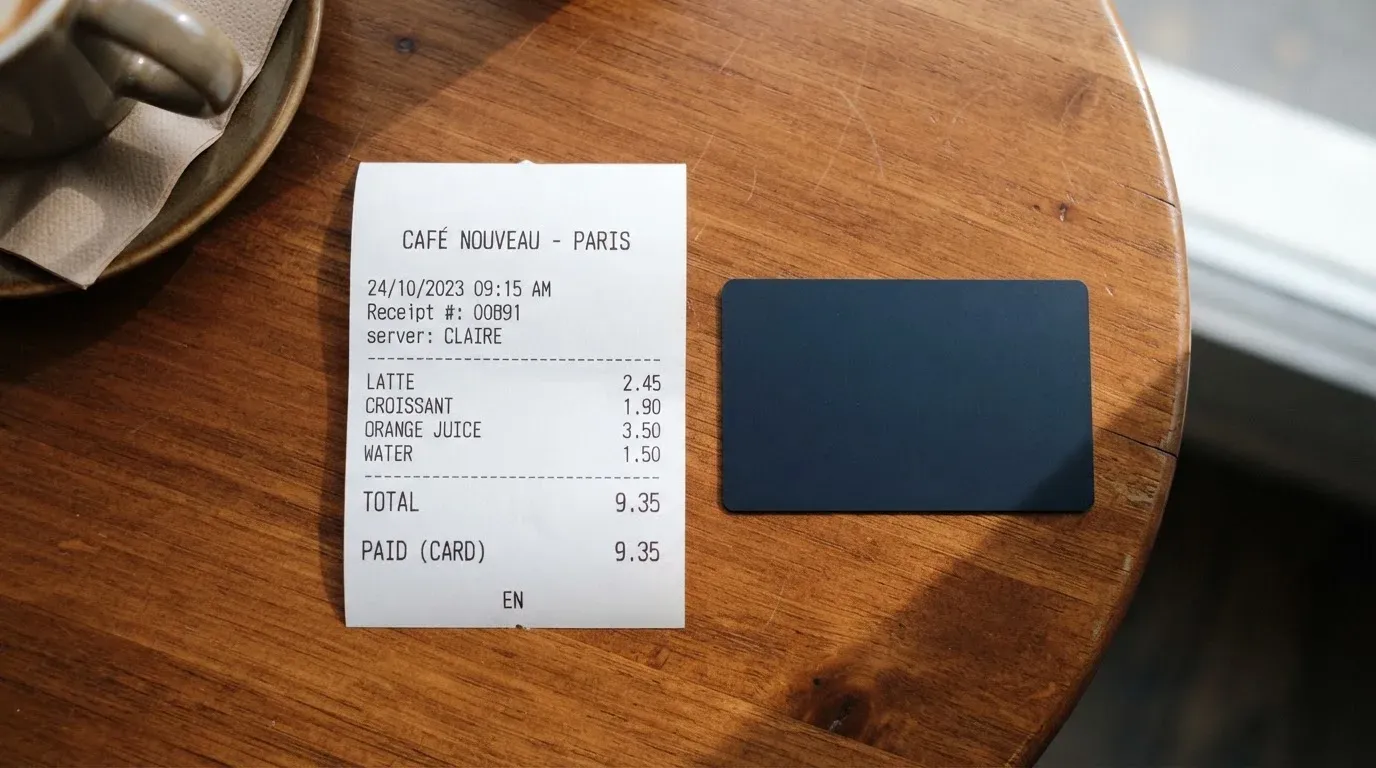
What is missing is a list of which fee applies when. A 3% figure that appears three times for FX, cross-border and foreign transactions is unusual: in most card programmes those are the same fee, or two of them are bundled. Until Pay3 publishes a fee schedule, a user has to assume the worst case — that 3% can stack on a single payment.
The card terms also contain a discrepancy: the returned-payment fee is listed as $29 in one table and as $50.00 in the terms. If a payment is returned, a user does not know in advance which figure will be charged.
| Fee or limit | Value |
|---|---|
| Issuance | “starts at $5” |
| Monthly fee | not stated |
| Currency conversion | “from 1.15%” |
| Foreign exchange (non-USD) | up to 3% |
| Cross-border | up to 3% |
| Foreign transaction | up to 3% |
| ATM withdrawal | not stated; cash advances “not available” |
| Spend limit | USD market value of posted collateral; can be changed by Pay3, including to $0 |
Cash advances and balance transfers are described in the card terms as “not available.” The platform terms say physical cards “may support” ATM cash withdrawals, subject to partner policies. Fee and allowance are not stated. So an ATM withdrawal is neither promised nor ruled out, and the cost is unknown.
To make this concrete, here are three everyday payments and how the fees apply:
- A $50 coffee in USD with a USD balance: $0.15 spend fee, no conversion, no FX. Net fee: $0.15.
- A €40 dinner in Europe from a USD balance: $0.15 spend fee, conversion of 1.15% (the floor), foreign exchange on the non-USD amount up to 3%. Net fee before FX: $0.15 + 1.15% of the converted amount; worst case before the 3% FX: about $0.61 on a $43 equivalent.
- A $200 online subscription paid to a foreign merchant from a USD balance: $0.15 spend fee, plus up to 3% cross-border, plus up to 3% foreign transaction. The 1.15% conversion fee only kicks in if the card has to convert currency internally.
The everyday-use cases that look cheapest are domestic, in-currency spends from a USD balance. The cases that look most expensive are cross-border card payments, where two 3% figures can apply on the same transaction.
Top up
Pay3 is collateral-based. The card’s spending limit is the USD market value of whatever you have posted as collateral. If that value goes up, your limit goes up; if it goes down, your limit can be cut, including to zero. The platform reserves the right to change the limit with or without notice.
Funding the card means either transferring stablecoins into the platform or moving fiat into a multi-currency account that Pay3 runs alongside the card. The card, the account and any in-app balances are shown together, with a single cash, stablecoin and card balance view. Adding funds is free — the top-up fee is 0%. The platform does not state the minimum top-up, who pays the network fee on a stablecoin transfer, or which specific coins and networks are accepted. There is no public list of supported assets or supported chains.
This is the part of the card where the missing information matters most. A stablecoin transfer to a network Pay3 does not support can be lost, or have to be recovered manually through support with no guarantee. Blockchain transfers are not reversible, and the platform does not name the addresses it provides. A reader who wants to top up should expect to confirm the deposit address and the chain in the app before sending anything of value.
The platform describes “withdrawals are available” but does not publish the fee or the process. The terms note that, on account termination, extra verification may be needed to retrieve any residual balance, which is the language of a manual review.
Paying with it every day
The card is a Visa, and that means it works wherever Visa is accepted, including online and at physical terminals. Apple Pay and Google Pay are supported, so a phone can carry the card without needing the physical piece of plastic in hand.
Mobile wallets replace the card number with a device-specific number stored in the phone’s secure element, and each payment uses a one-time dynamic code. That is the standard model for tokenised payments, and it means a leaked card number from one merchant cannot be reused on a phone that has not seen that merchant. The card issuer can also restrict a tokenised number — for example, block it for magnetic-stripe or website use, leaving only contactless in-app payments live.
What is not stated is the list of blocked merchant categories. The platform says cash-like transactions (foreign currency, crypto, money orders) may be limited, but it does not publish an MCC block list. Some issuers block gambling (MCC 7995) or specific high-risk categories; whether Pay3 does so is not in the public pages.
For online payments, the platform supports 3-D Secure — the extra step that asks the cardholder to confirm a one-time code or biometric. The platform does not state whether 3-D Secure is on by default for every transaction or only when the issuer flags the payment. Address Verification Service (AVS) is mainly offered in the US, Canada and the UK, and is generally unavailable on foreign-issued cards, which can cause declines for Pay3 cardholders shopping at US merchants that rely on AVS. Some merchants decline prepaid or foreign BINs outright, because the BIN lookup shows the card type and issuer country.
A declined authorisation can leave a hold on funds for several days, typically up to seven, even if the payment never goes through. This is a feature of how card networks settle authorisations, not a Pay3-specific quirk, but it is worth knowing if a top-up seems to have “disappeared.”
Cashback and rewards are not stated. Unofficial reporting on cryptocards.so (2026) says there is no spend cashback on the Black tier, only non-transferable P3P referral points that can be redeemed toward card issuance. Treat that as third-party information, not confirmed by Pay3.
Disputes work the standard way: try the merchant first, then report a disputed charge within 60 days of it posting. Chargebacks are started through the Pay3 account under card-network rules. If a complaint is not resolved after 60 days, the card terms refer it to arbitration at the Hong Kong International Arbitration Centre (HKIAC). For a cardholder, that is a slow and jurisdiction-specific backstop.
What can go wrong
Pay3 is a young company. Pay3 Limited was incorporated in Hong Kong in 2024. The platform describes itself as “a fintech company, not a bank,” with services delivered through licensed partner providers. The card issuer is named in the card terms as “Third National,” with no country stated. No licences are named on the public pages. The “Grow” product is listed as “coming soon” and “Autopilot” as “in development,” and there are no dated news events on the site.
That combination — young company, no named bank behind the card, no insurance or guarantee scheme, no licence references — is the central risk. A cardholder’s protections come from the card-network rules, the issuer’s compliance, and the platform’s terms. There is no deposit insurance, and the terms explicitly say so.
The platform describes itself as non-custodial: “Pay3 does not offer custody of any digital or fiat assets.” That is a strong statement, but it cuts both ways. A non-custodial model means the user holds the keys and bears the risk of losing them. It also means Pay3 is not holding a large pool of customer crypto that could be lost in a hack — the platform cannot be the next Mt. Gox or Coincheck with respect to user balances. The trade-off is that there is no central balance to insure, and the user’s recovery story is whatever their own wallet supports.
The card terms state that only the amount needed to repay a debt is liquidated, which is the language of a credit-style programme rather than a pure prepaid model. The exact mechanics of when and how collateral is liquidated are not detailed in the public pages. The platform does not state whether it offers 2FA, instant card freeze, or per-transaction limits.
Support is reachable by email at [email protected], by Telegram at t.me/pay3io, and on X at @Pay3_io. Hours are not stated. One third-party report (cryptocards.so, 2026) describes a user experience where the card fails to open with an error and support is reachable only via a Telegram bot and a help section. Community evidence is very thin — there is no Trustpilot page for Pay3.
The discrepancy in the card’s own fee table — $29 in one place, $50 in another for a returned payment — is the kind of detail that gets cleaned up by larger programmes. Its presence in Pay3’s terms is a small tell about how mature the documentation is.
Finally, a category-level reminder. Card programmes can be wound down. Visa terminated its global agreements with FTX in November 2022 and the FTX US debit card was wound down. WaveCrest, a Visa card issuer that supplied several crypto card brands, was suspended by Visa in Europe in 2018 and every programme it issued was closed. A programme closure typically gives a notice period, stops new loads, stops spending, and then asks users to withdraw remaining balances. Pay3 is too new to have a track record here, and the user bears the cost of any future programme change.
What to take instead
Three cards cover roughly the same ground as Pay3 but with different trade-offs.
| Card | Score | What it offers | Where it differs from Pay3 |
|---|---|---|---|
| Sponge | 4.9 / 10 | Virtual Visa from Rain, a Visa Principal Member; funded by USDC from a Sponge wallet | Country list not stated; no fees published; ecosystem-specific rather than a general card |
| Nexo | 6.3 / 10 | Virtual and physical Mastercard, issued by DiPocket UAB; spends from a Nexo account with 100+ assets; cashback in NEXO or BTC | EEA/UK focus; FX 0.2% weekdays in EEA/UK/CH; virtual card needs $50 to activate; physical card needs $5,000 in digital assets and Gold tier |
| Xplace | 7.7 / 10 | Virtual and physical Visa; Cash and Credit modes; deposit BTC, ETH, SOL, USDC, USDT and xStocks on Solana | Tiered annual fees ($0/$99/$249/$999); 0% FX only on Platinum; conversion fee and other tiers’ FX not stated |
Sponge is the closest in spirit: a card that spends from a crypto balance, in this case USDC moved from the Sponge wallet. It is a virtual card only, and Rain is named as the issuer, which is a clearer banking relationship than Pay3 publishes. The score is lower than Pay3’s because the country list, fees and rewards are not stated, and the platform’s terms only set a minimum age of 13, which is far below the typical cardholder age.
Nexo is a more established programme with a Mastercard (the network is named in the trademark notice, though not stated explicitly in the body text), issued by DiPocket UAB, and cashback in NEXO or BTC for Credit Mode purchases. The card spends from a Nexo account holding over 100 digital assets, and Debit Mode uses stablecoins, crypto and FiatX assets. The friction is the location focus (EEA and the UK, with a 2025-era Bulgarian police raid on Nexo’s Sofia office reported by Cointelegraph over alleged Russia-sanctions/AML violations, with no official Nexo statement on Russians found) and the cost of getting the physical card ($5,000 in digital assets plus Gold tier). FX is 0.2% on weekdays in EEA/UK/CH, which is far cheaper than Pay3’s worst case.
Xplace is the strongest score of the three. It supports virtual and physical Visa cards, with Cash mode spending a stablecoin balance and Credit mode borrowing against holdings. Annual fees are tiered (Basic free, Silver $99, Gold $249, Platinum $999), and the FX story is best read carefully: 0% FX is only on Platinum. The supported deposit assets — BTC (as cbBTC), ETH (as wETH), SOL, JitoSOL, USDC, USDT and xStocks — are listed, and the network is Solana, which is clearer than Pay3’s silence. Credit-mode cashback is paid in USDC to the wallet at settlement, with tier rates from 0.5% (Basic) to 2% (Platinum).
| Feature | Pay3 | Sponge | Nexo | Xplace |
|---|---|---|---|---|
| Network | Visa | Visa | Mastercard | Visa |
| Card form | Virtual, physical, Apple/Google Pay | Virtual | Virtual, physical | Virtual, physical |
| Issuer named | Third National (country not stated) | Rain | DiPocket UAB | not stated |
| Conversion fee floor | 1.15% | not stated | not stated (FX 0.2% EEA/UK/CH) | not stated; 0% FX on Platinum |
| Top-up fee | 0% | not stated | not stated | not stated |
| Cashback | not stated | not stated | up to 2% in NEXO/BTC by tier | up to 2% in USDC (Credit mode) |
| Country list published | no | no | partial (EEA/UK wording) | no |
Who I would recommend it to
Pay3 is best suited to a user outside the United States, outside a sanctioned jurisdiction, who already holds crypto and wants a Visa they can spend from — including through Apple Pay or Google Pay — without paying a top-up fee. The card is collateral-based, so the user should be comfortable with the platform’s right to change the spending limit, including to zero, as the value of the posted collateral moves. The user should also be comfortable with a young Hong Kong-incorporated company, an issuer named “Third National” with no stated country, and a fee schedule that is partly public and partly missing.
Pay3 is not suited to a US citizen, to a user who needs the ATM fee stated up front, to a user who needs the supported countries listed on the page, or to a user who needs the card currency stated before signing up. It is also not the right card for someone who needs a programme with a long public track record.
The honest summary: Pay3 is workable, with the asterisk that several things the user would normally read on the card’s own page are simply not there.
Frequently asked questions
What is Pay3?
Pay3 is a payment card product from Pay3 Limited, a fintech company incorporated in Hong Kong in 2024. The card is a Visa, available in virtual and physical form, that spends from a crypto or stablecoin balance rather than a bank account. It supports Apple Pay and Google Pay.
How does Pay3 card work?
The card is collateral-based: you post crypto or stablecoins, and your spending limit equals the USD market value of what you have posted. When you pay, the platform converts the collateral and settles the payment in fiat. There is no separate credit line; the card cannot spend more than the posted collateral is worth at that moment.
Is Pay3 a bank?
No. Pay3 Limited describes itself as “a fintech company, not a bank.” The card is issued by a partner called “Third National” in the card terms, with the country not stated. Card services are delivered through licensed partner providers, and no specific licences are named on Pay3’s public pages.
Who owns Pay3?
The platform’s public pages name Pay3 Limited, incorporated in Hong Kong in 2024, as the company behind the card. No parent company, founder, or ownership structure beyond that is published on the pages reviewed.
Is Pay3 card available in my country?
The platform says the card is open to users outside its “Restricted Locations” — countries under trade sanctions, export controls, or crypto and fintech prohibitions — but it does not publish the list. Restricted Locations can change without notice, so the only way to know for sure is to start the sign-up and see whether the platform accepts your country.
How do I apply for the Pay3 card?
You go to the Pay3 app at app.pay-3.io, verify your identity once with Sumsub, apply for the card, and fund it. The virtual card is ready right after the application is approved. The physical card is sent out and arrives in three to five business days, per the platform, with shipping and replacement cost not stated.
Does Pay3 card require KYC?
Yes. There is a single identity check, done through Sumsub in the app, and it is reused for the card, the account and any in-app swaps. You must be at least 18 (or the legal age in your country), and the platform may ask for an extra document such as proof of address depending on the partner provider and your region.
How do I top up Pay3 card?
You either transfer stablecoins to the platform or move fiat into Pay3’s multi-currency account. Top-up fees are 0%, but the platform does not publish which stablecoins and networks it accepts, who pays the network fee on a stablecoin transfer, or the minimum top-up. The app shows cash, stablecoin and card balances in a single view.
How much does Pay3 card cost?
Card issuance “starts at $5,” each card spend costs “from $0.15,” and currency conversion starts at 1.15%. The foreign exchange fee on non-USD spending, the cross-border fee, and the foreign transaction fee are each described as up to 3%, with no published schedule for how they stack. There is no monthly or annual fee stated.
Is Pay3 card safe?
The platform describes itself as non-custodial — “Pay3 does not offer custody of any digital or fiat assets” — and says there is no insurance or guarantee scheme covering user balances. The card is issued by a partner called “Third National” with no country stated, and the company’s own terms contain a discrepancy in the returned-payment fee ($29 in one place, $50 in another). Support is reachable by email and Telegram, and the public complaint footprint is thin.
Credit and cashback cards in the catalogue – cryptocardcatalog
Content created by the «cryptocardcatalog» team