
The convenience is real; the fee schedule is not for everyday spend
 Available in US
MaxSwap is not really a card company in the way your bank is a bank. It is a crypto wallet that hands out a virtual Mastercard number, created inside a Telegram bot, and it asks almost nothing of you before you get one. That combination — no paperwork at signup, a working card number in under a minute, and a balance you can load from two dozen different coins — is genuinely useful if you have no easy route to an ordinary bank card. It is also expensive. The card costs 50 USD the first time, loading it costs 4.5% plus 1 USD, and every payment costs 0.25 USD plus 0.4%. If you spend the card as if it were a normal daily card, the fees eat the value quickly.
I scored this card 5.2 out of 10. The middle of that number is not a shrug. The card is very good at the one thing people need when they cannot get a bank card, and quite bad at the ordinary job a payment card is supposed to do cheaply. Whether that trade suits you depends almost entirely on how much you would otherwise be spending.
The conditions described on this page are current as of October 28, 2026.
Verdict: 5.2 / 10 for a virtual crypto card paid with many coins
Let me put the score in context before the details, because the score is a summary of six things and you deserve to see which ones carried weight.
| Criterion | Mark | Why |
|---|---|---|
| Who can get it | 8 / 10 | The site claims “no geographical restrictions” and publishes no list of blocked countries; users must still follow the laws of their own jurisdiction |
| Cost | 1 / 10 | 50 USD card fee with 25 USD required as a first deposit; 4.5% + 1 USD to load; 0.25 USD + 0.4% per payment |
| Top-up options | 8 / 10 | A wide choice of coins — BTC, ETH, TRX, USDT, USDC, TON, XRP and others — though the site does not name the networks |
| Reliability and complaints | 5 / 10 | Operator MW Profit Ltd (London), issuer not named, custodial wallet; Trustpilot shows 4.6 out of 5 from 40 reviews, including one report of a lost deposit |
| Everyday use | 5 / 10 | Virtual Mastercard only, Apple Pay and Google Pay available; ATM not disclosed, unofficial: a menu item for “Premium Card with ATM USA” |
Total: 5.2 / 10.
Two marks of 8 and one of 1 is the shape of the whole thing. Eligibility is unusually open, funding options are unusually broad, and price is unusually high. That is not a flaw across the board; it is a design aimed at a specific person.
Who this card suits. You hold crypto, you cannot open or use a normal bank card easily, and you mostly need a card for online payments you control the timing of. You are comfortable that the balance sits with a provider rather than with you, and you are willing to pay for the privilege. You pay in USD and do not mind a fixed per-payment charge.
Who this card does not suit. Anyone spending from it every day. Anyone whose income arrives in fiat and who would convert part of it to crypto first — that adds a conversion cost on top of everything else. Anyone who plans to rely on cash machines, since the site discloses no ATM data. Anyone whose main worry is what happens if the operator goes out of business, because the issuer behind the card is not named and the withdrawal process is not described.
A comparison worth holding onto: the monthly cap on transactions is not stated in a currency the card publishes, and the terms say the card is governed by Seychelles law. Those are not disqualifiers on their own, but they are the kind of detail that matters if this card ever holds money you cannot replace.
Will they give you the card?
The short answer is: probably yes, and that is the strongest thing about it.
The site claims “no geographical restrictions” and publishes no closed-country list. There is no list of restricted countries either, and nothing on the page suggests that nationality is checked against a list. What the terms do say is that users must comply with the laws of their own jurisdiction (section 15.1). That is a standard clause and it is worth reading for what it is: the card will not stop you breaking your local rules, so if crypto-funded cards are restricted where you live, that is your problem to have checked, not the operator’s.
Everything else about eligibility is not stated by the card’s public pages — minimum age, proof of address, residency requirements. Those specific items do not appear.
The pattern is therefore: geography open, personal details undisclosed. If you are somewhere the card’s own site lists no restrictions, that clears one question. It does not clear the others, and you would be guessing on those.
How to get it
There is no application form. The card is created inside the MaxSwap Wallet Telegram bot — you open “Open MaxSwap Card” in the bot and the card comes into existence. The site says “no paperwork or long registration process” and the card is issued “in less than a minute”. There is nothing to be delivered, because there is no physical card: delivery does not apply.
Verification is the fuzzy part. The site’s marketing says “no complicated verification”. The Terms of Use say something narrower: users “may be required to complete a verification process” (section 3.2), with an AML policy in section 16. No verification levels, no processing time and no rejection reasons are given. So the honest reading is that verification is possible but discretionary, not that it never happens.
That gap matters more than it sounds, because regulatory verification is not a quirk of one provider. In the EU, customer due diligence covers name, address, date of birth, nationality, identity documents, a sanctions check and a politically-exposed-person check, and if that cannot be completed the institution is required to refrain from the transaction or end the relationship. In the US the customer identification programme requires name, date of birth, address and an identification number. You should not expect a card that says “no paperwork” to also promise “no verification, ever”. Expect the possibility of it.
One thing you may hear elsewhere, and I would treat with care: a third-party comparison site, cardik.duckdns.org, describes MaxSwap as a no-KYC card with one Mastercard, balance returned to USDT on closure, and monthly limits up to $2M (per cardik.duckdns.org, 2026). A Coinpedia press-release-style review says KYC is optional for some transactions. Both are unofficial and affiliate-linked. The card’s own pages do not confirm them, so I would not plan around the balance-return promise in particular.
Fees: what it really costs
This is where the card’s score goes to 1, and it is worth doing the arithmetic in your head before you commit.

Card: 50 USD, and a first deposit of 25 USD is required to get it. The total issuance cost is listed as 77.125 USD. There is no monthly fee — the card does not state one.
| Fee or limit | Value |
|---|---|
| Card issuance | 50 USD, with 25 USD minimum first deposit (total issuance 77.125 USD) |
| Monthly fee | not stated |
| Top-up fee | 4.5% + $1 |
| Payment fee | 0.25 USD + 0.4% |
| FX rate | no separate rate stated — the site says to “take into account possible fees when paying and converting currencies” |
| ATM | not stated |
| Top-up minimum | 10 USD |
| Top-up maximum | 5,000 USD per top-up; 200,000 USD per month |
| Maximum card balance | 200,000 USD |
| Maximum single online payment | 50,000 USD |
| Transaction limits | single 50,000 / daily 200,000 / monthly 2,000,000 (currency not stated) |
Three everyday payments, to make the shape of it concrete.
A 20 USD coffee. The card takes 0.25 USD + 0.4%, so about 0.08 USD on 20 — but if you are topping up to cover it, the load costs 4.5% + 1 USD, and on a 20 USD load that is 1.90 USD. If you only top up when you are about to spend, most of every small payment is load fee.
A 200 USD weekly shop. Payment fee about 1.05 USD. Loaded on its own, the 4.5% + 1 USD adds 10 USD to the same 200 USD. Loaded once a month for roughly 800 USD of shopping, the loading cost falls to about 37 USD for the month — still a large slice of a typical grocery budget, and it is why the card works better for planned, larger payments than for daily top-ups.
A 500 USD purchase abroad. Payment fee 2.25 USD, plus whatever the conversion adds, since no FX rate is published and the site only tells you to allow for possible fees. On 500 USD, a 4.5% top-up would be 22.50 USD plus 1 USD. If your money is in crypto that is not a dollar stablecoin, you are also paying to convert that coin at the exchange rate you can get, and the card tells you nothing about which rate it uses.
The pattern to hold: loading is expensive, spending is comparatively cheap, so top up rarely and in useful sizes. Two other things sit behind those numbers. Because the card is a prepaid balance model, it cannot overdraw — you are spending money you already loaded. And on-chain network fees are separate: gas or bandwidth for your deposit is charged by the blockchain, not by the card provider, so a transfer from a wallet with no gas token in it can fail even though the card’s own fee has already been calculated.
How to Top up
The method list is the best part of the offer. You load in USD, the system adds the fee of 4.5% + 1 USD, the minimum is 10 USD, the maximum is 5,000 USD per top-up and 200,000 USD per month, and the first deposit must be at least 25 USD. The money comes from your MaxSwap crypto wallet.
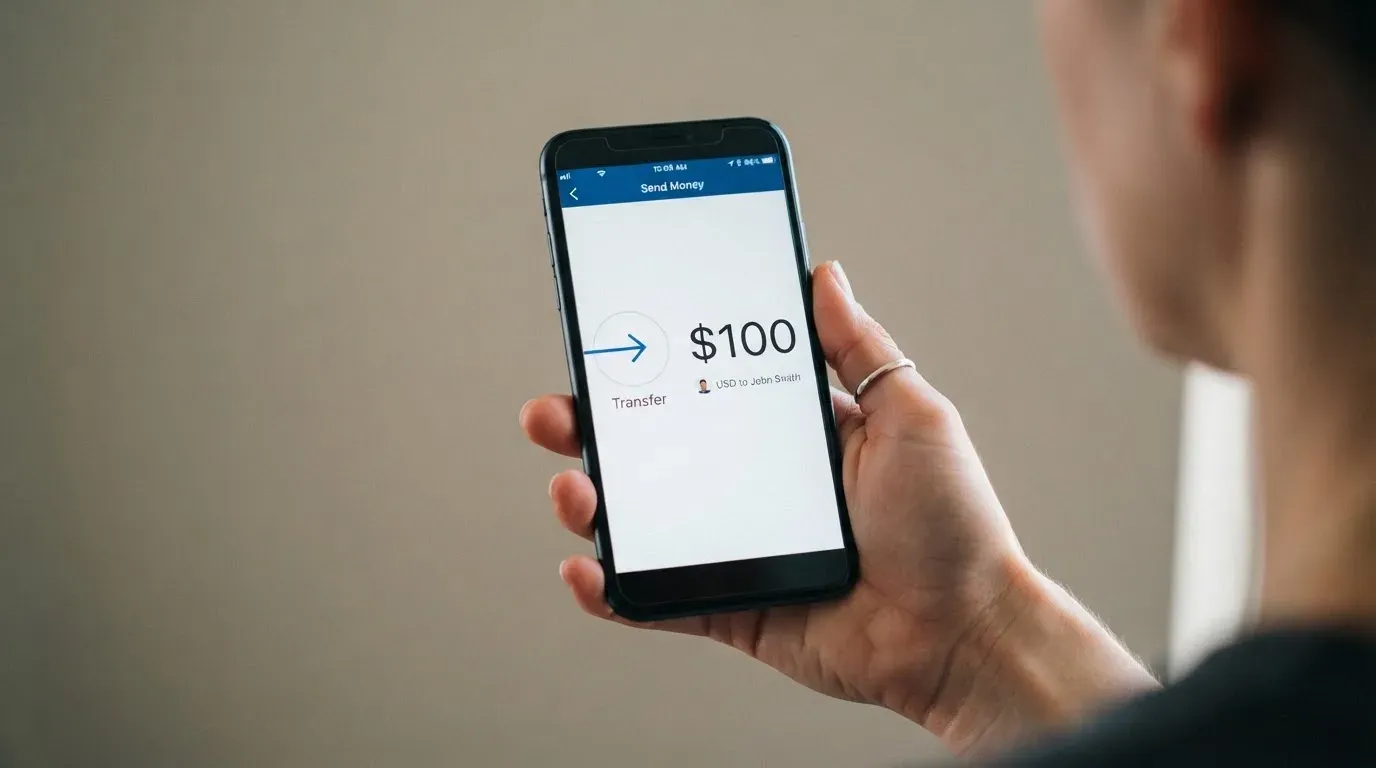
The coins the card names are ADA, ALGO, AVAX, BCH, BNB, BTC, DOT, ETH, HBAR, HT, KRRX, LINK, LTC, MATIC, NEAR, SHIB, SUSHI, TON, TRX, UNI, USDC, USDT, XLM and XRP. That is a long list, and on the evidence of the pages it is the genuine article.
But read that list carefully, because of what is missing: the networks are not stated. Coin names are not network names. USDT exists on several chains — Ethereum, Tron, Solana, Polygon, Avalanche and others — and sending the wrong one is the classic expensive mistake. Blockchain transfers are irreversible, so a deposit on a network the provider does not support, or sent to an address belonging to a different network, can be lost or need manual support recovery with no guarantee. Nothing on MaxSwap’s pages tells you which to use. That is a real gap, and it is the first thing I would resolve in support before loading anything large.
A second gap: fiat top-up is not stated. There is no bank transfer option described on the pages I read. If your plan was to put ordinary money in, that route does not appear to exist here.
And a third: withdrawing from the card is not stated. The terms say withdrawals follow platform procedures (section 9.2) and that an account may be terminated under unspecified conditions (section 11.2), but there is no described process for getting money back off a card balance, and no balance-return procedure. The unofficial cardik.duckdns.org description says the balance returns to USDT on closure — one source, affiliate-linked, not confirmed by the card. Practically, I would assume the money is hard to get back out and only load what you are willing to leave there.
One more thing about coins: the card does not name networks for them, and if you plan to send ETH, ERC-20 gas is paid only in ETH, so a wallet holding USDT with no ETH in it cannot send. On Tron, fees are paid through bandwidth and energy, often burning TRX. These are ordinary crypto mechanics, not MaxSwap rules, but they decide whether your first top-up succeeds.
Paying with it every day
Everyday use is where this card thins out. The honest summary is: online and in-app, fine; in a shop’s terminal, not an option; at a cash machine, unknown.
There is no physical card. It is a virtual Mastercard, and the card currency is not stated on the home page, though the fees are quoted in USD. For mobile wallets, the site says to add it to Apple Pay. Google Pay is set up with a code the bot sends by email, and the virtual-cards page also says a user linked it to PayPal. Which merchants are blocked is not stated — no gambling block, no adult block, no list at all.
A single virtual Mastercard is what you get. The site menu also names a “Premium Card with ATM USA” with no details whatsoever: unofficial, no fees, no limits, no explanation of how to get it. Treat it as a teaser, not a product.
There is no separate app. Everything runs through the MaxSwap Wallet Telegram bot, which the card’s own description credits with data encryption, privacy protection, instant payment notifications and balance checks. There are no App Store or Google Play ratings, because there is nothing in either store.
Rewards: not stated. No cashback is mentioned anywhere in the pages I read.
Disputes: this is the part to be most careful about. The terms say to contact MW Profit Ltd about disputes (section 12.1), and that the agreement is governed by Seychelles law. There is no procedure described, no refund policy, no time frames, and chargeback arrangements are not stated. If a payment goes wrong, you are relying on a support channel — Telegram at t.me/maxswap_support and a FAQ page — with “24/7 Support” claimed rather than documented.
That last point is worth a general warning. On a virtual Mastercard, an online payment can also be challenged through 3-D Secure, Mastercard’s version being Identity Check, which sometimes demands a one-time code. Declined authorisations can leave a hold on funds that stays for days, up to seven. And because the card’s issuer country is not disclosed, a merchant’s BIN lookup may show a card type or issuer country that does not match your billing address — prepaid and foreign BINs get declined by some merchants for exactly that reason. Add to that the fact that Address Verification Service is generally unavailable for foreign-issued cards, which can cause declines, and you can see why prepaid virtual cards from lesser-known issuers have a worse acceptance record than the marketing suggests.
What can go wrong
Let me split this into the things that happened to other people and the things that are structural.
Official incidents: none. User reports: none found in a search of public sources. That is genuinely good and I do not want to talk past it. But absence of complaints on a young service is weak evidence; it is also what you would see before the first bad month.
The informal picture is more textured. The Trustpilot page for maxswap.cc, read on 2026-10-20, showed 4.6 out of 5 from 40 reviews, 92% five-star, with two reviews in the last twelve months, and the page noting the company has not invited reviews recently. The positive themes: fast setup, sometimes without documents, and working PayPal and Apple Pay linking. The negative themes: mixed support quality. One review describes a slow reply and a lost deposit with no compensation. Another says the minimum BTC deposit was not clearly disclosed. That second one is worth sitting with, given that the site itself does not publish its networks.
The structural risks are the larger ones.
- You do not hold the keys. This is a custodial wallet: the provider holds the credentials, so you must trust it completely. Control of crypto belongs to whoever holds the private key or seed phrase, and a seed phrase — typically 12 to 24 words — is an unencrypted form of that key. Anyone who obtains it can restore the wallet and spend the funds. Cryptocurrency transfers are typically irreversible and a stolen key has no built-in recovery: the network cannot freeze or return anything. Custodial platforms have a real record of failures — Mt. Gox at about US$350 million reported stolen across 2011-2014, Coincheck at about US$400 million in 2018, Ronin Network at US$625 million in 2022. Holding funds with a custodian carries counterparty and hack risk, and that is what you are doing here.
- The issuer is not named. The operator is MaxSwap, the wallet is custodial, and the issuer or BIN sponsor is not stated. The registered company behind the Terms of Use is MW Profit Ltd, London company number 15541776, with the Terms effective 1 October 2023 and a 2026 footer; disputes are governed by Seychelles law. An unnamed issuer means you cannot check whose balance-protection rules apply to your money.
- Your account can be suspended. The terms allow suspension for suspected unlawful activity (section 11.1), with no criteria published.
- Card programmes do end. Visa and Mastercard do not issue crypto cards to consumers themselves; they license issuers and can suspend a programme. Visa terminated its global agreements with FTX on 13 November 2022 and the FTX US debit card was wound down by its issuer. WaveCrest, a Visa issuer that supplied crypto card brands, was suspended by Visa in Europe in 2018, closing all WaveCrest-issued Visa programmes. Closures typically follow a pattern: a notice period, then spending and loading stop, then users are asked to withdraw remaining balances. I found one reported 2026 closure where new loads ended 8 July 2026 and spending stopped 8 August 2026 — that is a single unconfirmed secondary source, but the shape of it is the shape you should plan for. Your card’s issuer is not named, so you cannot even check whether its programme is regulated.
- No stated safeguards. Two-factor authentication, card freeze and insurance are all not stated. The site lists data encryption, privacy protection, instant payment notifications and balance checks in the bot, which is a description of features rather than a description of key management.
- Safeguards that do exist at category level — app-based 2FA, instant freeze, spending limits, 3-D Secure confirmation, tokenised mobile wallets — are industry patterns, not claims MaxSwap makes for this card.
What I could not find, and would want before trusting this with money I cannot replace: an issuer name, a licence number, a stated withdrawal process, ATM terms, a multi-currency balance, cashback, blocked merchant policy, and any news page. The company’s news is not stated.
What to take instead
Three cards in this category, and the honest truth is that MaxSwap is not obviously beaten on any single dimension — it wins on eligibility and on coin choice, loses on price.
| Card | Score | Card cost | Top-up fee | Payment fee | Who can get it |
|---|---|---|---|---|---|
| MaxSwap | 5.2 / 10 | 50 USD + 25 USD deposit | 4.5% + $1 | 0.25 USD + 0.4% | Site claims “no geographical restrictions” |
| Azul Card | 5.3 / 10 | $20 one-time, refunded after $2,000 in spending; $5 monthly | 4% | $0.25 | Worldwide except Russia, Belarus, North Korea, Iran, Syria, Cuba, Sudan, Venezuela, Ukraine and the Crimea, Donetsk, Luhansk, Zaporizhzhia and Kherson regions; “the restrictions apply regardless of the user’s nationality” |
| Telecard | 6.1 / 10 | Standard plan $5 one-time; VIP $49 setup then $19/month; $99 minimum deposit to activate, stated as “NOT a fee” | deposit fee advertised as 0% | 1.5% conversion (non-USD); gas fee 0.50 USDT per successful transaction; FX and cross-border “up to 3% each” | Usable in over 150 countries wherever Mastercard is accepted; identity check “available in most major regions”; terms bar only users “blocked or sanctioned by the United States Government, including OFAC” |
| OnCards | 4.6 / 10 | not stated (“simple and clear fees — no hidden charges”, no amounts) | not stated | not stated | not stated |
Azul Card is the closest thing to a straight swap. Its creation fee is $20, refunded after $2,000 of spending, with $5 monthly maintenance. Top-up is 4% against MaxSwap’s 4.5% + $1, and the per-transaction charge is the same $0.25 — so on a small load, Azul is materially cheaper. Against that, it names its excluded countries in detail, and says the restrictions apply regardless of nationality, and its card balance sits in USD. Coins and networks are not named on the pages I read. Timing is the one thing it does publish: first top-up up to 10 minutes, later ones 1 to 5 minutes. No cashback, but a referral programme paying “up to 40% of our fees from every transaction made by your referrals”.
Telecard scores highest of the four, and the reason is mostly pricing structure. The basic plan is $5 one-time with no monthly fee; the VIP plan is $49 setup then $19/month, with VIP card reissuance at $15. Its deposit fee is advertised as 0%, which changes the economics completely for anyone who loads often — but it charges 1.5% on currency conversion of non-USD payments, 0.50 USDT per successful card transaction as a gas fee, and FX and cross-border fees of “up to 3% each”. Those percentages are the ones to read twice. Funding is USDT on Tron (TRC-20) or Ethereum (ERC-20), USDC on Ethereum, Polygon not supported; the main page also lists ETH and TRX, which the help page does not, and bank transfers are “coming soon”. Referral rewards are in Fiorini tokens at 1 USDT = 100 Fiorini, with the cashback rate not specified. Its terms bar only OFAC-sanctioned users, which is a much shorter list than most of these services publish.
OnCards is the one I would skip. It is virtual only, described as “a virtual Mastercard / Visa card directly in your Telegram” with the network not even fixed, funding is “USDT BEP20” only, bank transfers are not accepted, eligibility is not stated, and the fee schedule is described in adjectives without amounts. A lower score is the correct reading.
One note on choosing between these: eligibility is the axis where they genuinely differ. If you are in a country Azul excludes, Azul is not an option at all, and MaxSwap’s open stance becomes the reason it exists. If you are nowhere near any of those lists, compare prices instead.
Who I would recommend it to
I would recommend MaxSwap to someone in a fairly narrow position: you have crypto, you cannot get a normal bank card, you spend irregular amounts rather than a fixed weekly shop, and you mostly pay online or through Apple Pay and Google Pay. In that situation the 50 USD setup is annoying but survivable, the 4.5% load fee is avoidable by loading in larger sums, and the open eligibility is worth more than it would be for anyone with a banking alternative.
I would not recommend it as a primary everyday card, because 4.5% plus 1 USD on every load is not a fee structure that survives daily use. I would not recommend it if you need cash, since ATM terms are not disclosed. I would not recommend it if you plan to hold a large balance for a long time, because the issuer is unnamed, the withdrawal process is undescribed, the licence information is absent, and the terms allow suspension. I would not recommend it if the crypto has to be recoverable quickly when things go wrong, and that means transfers of the kind the network makes irreversible.
The single question I would ask support before sending anything: which network, exactly, for the coin I am about to send. The card accepts a long list of coins and names no networks at all, and irreversible transfers do not forgive a guess. Get that in writing in the bot, then load a small amount, spend it once, and see how it goes before treating the balance as money.
Frequently asked questions
What is MaxSwap card?
MaxSwap is a custodial crypto wallet that issues a virtual Mastercard created inside a Telegram bot. You load the card from crypto, the card spends a stored balance, and there is no physical card. It is operated by MW Profit Ltd, a London company registered under number 15541776, and the issuer behind the Mastercard programme is not named on the card’s public pages.
How does the MaxSwap card work?
You send crypto to the wallet, the system converts and loads a USD balance, and the virtual Mastercard spends that balance — it behaves like a prepaid card rather than a debit card. The card is created through the MaxSwap Wallet Telegram bot in under a minute, can be added to Apple Pay, and Google Pay setup uses a code the bot emails you.
Does MaxSwap card require KYC?
Not clearly. The site says “no paperwork or long registration process” and “no complicated verification”, but the Terms of Use say users “may be required to complete a verification process”. No verification levels, processing times or rejection reasons are published, so treat it as verification being discretionary rather than verification never happening.
Is MaxSwap a bank?
No — it is a crypto wallet with a payment card attached. The wallet is custodial, so the provider holds the credentials to your funds and you must trust it completely. The card is a virtual Mastercard, and no issuer, BIN sponsor or banking licence is named on the card’s public pages.
What does it cost to get and use the MaxSwap card?
The card is 50 USD with a minimum first deposit of 25 USD, listed as 77.125 USD in total, and no monthly fee is stated. Topping up costs 4.5% plus 1 USD, each payment costs 0.25 USD plus 0.4%, and any conversion or foreign-currency cost is unspecified — the site only tells you to allow for possible fees.
Can I use the MaxSwap card in my country?
The site claims “no geographical restrictions” and publishes no list of blocked countries. The terms do say users must comply with the laws of their own jurisdiction, so the card will not shield you from local restrictions on crypto-funded cards. Check the rules where you live before loading anything you would miss.
How do I top up the MaxSwap card?
You enter the amount in USD and the system adds 4.5% plus 1 USD, with a 10 USD minimum and a 5,000 USD per-top-up and 200,000 USD monthly cap. Coins named are ADA, ALGO, AVAX, BCH, BNB, BTC, DOT, ETH, HBAR, HT, KRRX, LINK, LTC, MATIC, NEAR, SHIB, SUSHI, TON, TRX, UNI, USDC, USDT, XLM and XRP — but networks are not named, and fiat top-up is not stated.
How do I withdraw money from MaxSwap?
The card’s public pages do not describe a withdrawal process. The Terms of Use say withdrawals follow platform procedures and that an account may be terminated under unspecified conditions. An unofficial third-party comparison site claims the balance returns to USDT on closure, but that is a single affiliate-linked source you should not plan around.
Is the MaxSwap card safe?
There is a good Trustpilot record — 4.6 out of 5 from 40 reviews as of 2026-10-20, 92% five-star — and no official incidents or user reports found. Against that: it is a custodial wallet, the issuer is unnamed, the network list is unpublished, two-factor authentication and card freeze are not stated, and card programmes have been wound down by networks before.
Can I add the MaxSwap card to Apple Wallet?
Yes, the site says to add it to Apple Pay, and Google Pay is also supported with a setup code the bot emails you. The virtual-cards page also describes a user linking it to PayPal. What is not stated is which merchants are blocked, so expect to find out at the till rather than in advance.
Virtual cards in the catalogue – cryptocardcatalog
Content created by the «cryptocardcatalog» team