
The cheapest crypto card to start with is also the vaguest to judge
 Available in US
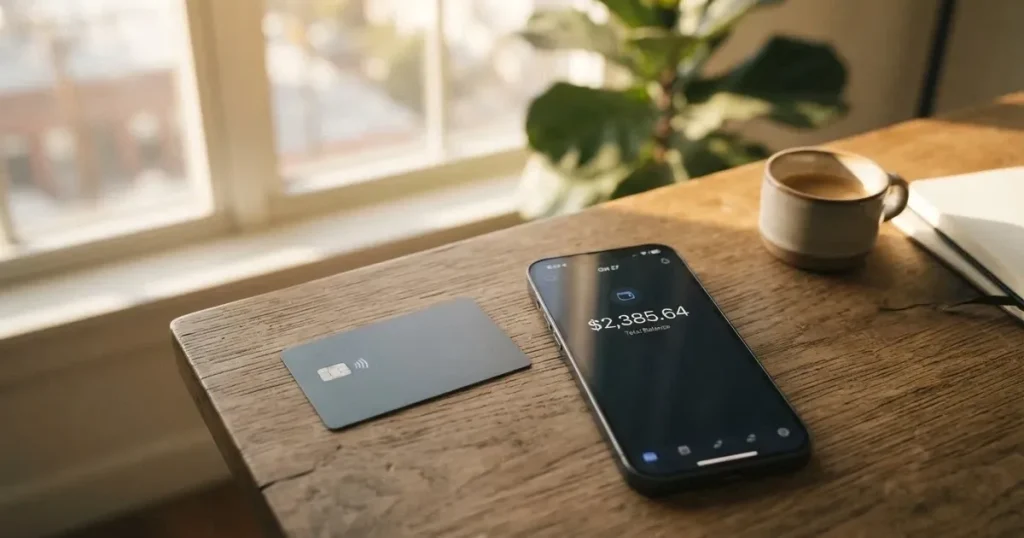
If you are reading this, the odds are that ordinary banking is not straightforward for you. Maybe there is no card at your bank, maybe your account is limited, maybe you move money in ways a standard salary account will not accommodate. A crypto-linked card promises to sidestep all of it: load money once, and the thing behaves like an ordinary payment card from then on. The idea is sound. The execution varies wildly from one provider to the next, and Vban is a good illustration of why you should read before you sign up.
Conditions are current as of October 28, 2026.
Here is what I found. Vban is a virtual, USD-denominated card that you create in an app after a Nigerian BVN check, funded from a USD account you top up yourself. Start-up cost is $2 one-time plus a $5 card funding charge, so $7 to be spending. But the pages I could see leave a lot blank: no monthly fee disclosed, no transaction or currency-conversion fee disclosed, no ATM arrangements, no card spending limits, no published list of supported countries, no mobile wallet support. On top of that, the company behind it describes itself as not a bank, runs on another company’s infrastructure, and has a Trustpilot rating of 3.2 from just 13 reviews, with the recurring themes being refused refunds and incoming transfers that never showed up.
My verdict: this is a 4.0 out of 10. The cost to start is genuinely attractive and the KYC story is short. Everything that determines whether the card is a pleasure or a headache over six months is either undisclosed or thin. For a Nigerian or West African user who already holds a BVN and just needs a spendable virtual card, it is a defensible first experiment. For anyone else, there is no published country list to even begin with, so you are guessing before you start.
The score, line by line
Here is the whole picture in one table, so you can see where the marks come from before I get into the detail.
| Criterion | Mark | Why |
|---|---|---|
| Who can get it | 2 / 10 | No country list published. Starting data points to Nigeria, Ghana and West/Central African countries, and a Nigerian BVN is required. |
| Cost | 7 / 10 | $2 one-time creation plus a $5 card funding charge, $7 total. No monthly fee or transaction fees disclosed. |
| Top-up options | 4 / 10 | Card is funded from the USD account; wallet needs at least $7. USDT and USDC named in starting data, networks not disclosed. |
| Reliability and complaints | 4 / 10 | Operated by TM Payments Limited, “not a bank”, Canada-based, running on Maplerad. Lead Bank and Bridge Ventures LLC appear in the FAQ. Trustpilot 3.2 from 13 reviews; refused refunds and missing incoming transfers in 2025–2026. |
| Everyday use | 2 / 10 | Virtual USD card only. Apple Pay and Google Pay not offered, Google Pay “may not work consistently due to region mismatch”. ATM arrangements not disclosed. |
| Total | 4.0 / 10 | Cheap and short on paper; thin on disclosure, support and everyday convenience. |
The pattern in that table is the thing to take away. Vban scores well on the one axis it fully controls, price, and poorly on every axis that depends on an outside party: an issuing bank, a network, a payments processor, a merchant’s acceptance of your BIN. The 2 out of 10 for everyday use is not a quibble about missing bells and whistles. No mobile wallet and no ATM means this is a card for online payments and for people who can carry a phone to a terminal, and that narrows its usefulness a lot for someone whose whole reason for wanting a card is that they cannot get one.
Will they give you the card?
The short answer is: probably only if you are Nigerian, or at least willing to verify with a Nigerian BVN, and I cannot tell you the full country list because Vban does not publish one.
Let me be precise about what I mean. The Vban pages I could see do not list supported countries. What the starting data suggests is a West and Central African footprint: Nigeria, Ghana, Ivory Coast, Senegal, Cameroon, Togo, Benin, Burkina Faso, Mali, Niger, Guinea-Bissau, Equatorial Guinea, Republic of the Congo, Gabon, Central African Republic and Chad. I am relaying that as starting information rather than as a published eligibility rule, so treat it as a strong hint rather than a guarantee. What is firm is the gate in front of the form: the card requires a BVN, the Nigerian Bank Verification Number. That is a Nigerian identity number tied to your Nigerian bank records, and no other country’s version will pass.
For you, the practical test is simple. If you have a BVN, you are inside the only eligibility rule the card actually states. If you do not, the application is a dead end regardless of where you live, and there is no published list that would tell you otherwise. I know that is frustrating when you are the kind of person these cards exist for. A card that would solve your problem, sold on an app, that you cannot test for eligibility without a Nigerian bank number, is a narrow product.
One more thing worth knowing about how they decide. The KYC status can sit at pending or land on rejected, with name mismatch given as a reason. That tells you the verification is an automated match against your ID rather than a manual review. It also means your name has to line up across the documents exactly as the system expects, which is where a lot of rejections in this category come from.
How to get it
The route is short, and that is genuinely a point in the card’s favour. Vban verification requires a BVN before card creation, and the BVN check is described as completing within minutes. A government blog post from the company mentions one valid government ID. Proof of address and age requirements are not stated on the pages I could see.
The three steps they lay out are these.
- Verify your BVN. The card cannot be created before this, and it is described as taking minutes.
- Hold at least $7 in your USD wallet. That figure is the minimum balance needed to move forward, and it matches the creation cost exactly.
- Create the card in the app. It is a virtual, multi-use, USD card.
A few practical notes. The card is virtual only, so there is no plastic to wait for and nothing will arrive at your door. The network is not named on the article I reviewed; the site’s FAQ says the card is issued by Lead Bank under a Visa licence, so you can reasonably assume Visa, but that is the FAQ rather than the product page. There is no tier table published, which means there is no upgrade path, no premium tier and no schedule of limits by level. You get the one thing.
If your application comes back rejected for a name mismatch, that is the status most worth asking about in support, because it is the one that tends to be fixable with the right document.
What it really costs: Fees
The start-up cost is the clearest number Vban publishes, and it is the reason the Cost mark is 7 rather than 3. There is a $2 one-time fee and a $5 card funding charge, so creating and funding the card costs $7 total. That is genuinely inexpensive next to the alternatives I looked at.
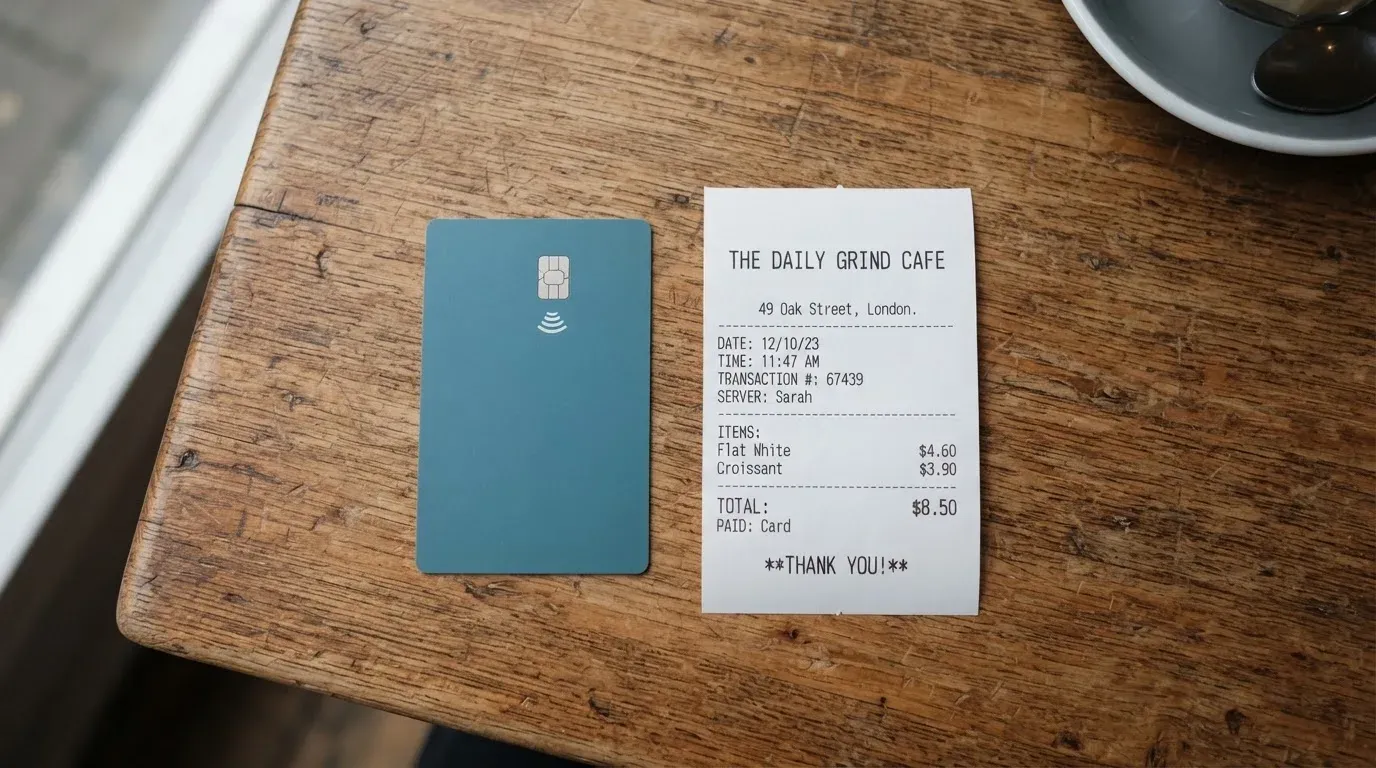
After that, the picture goes quiet. The monthly fee is not stated. Transaction fees are not stated. Currency-conversion or FX fees are not stated. ATM terms are not stated. And card spending limits are not stated, which is a separate kind of problem: you can have a card with no published ceiling, and that is either very convenient or quite worrying depending on your situation.
Here is every cost and limit item the card actually publishes.
| Fee or limit | What Vban publishes |
|---|---|
| Card creation | $2 one-time |
| Card funding charge | $5 |
| Total to start | $7 |
| Monthly fee | Not stated |
| Transaction fees | Not stated |
| Currency conversion / FX fee | Not stated |
| ATM terms | Not stated |
| Card spending limits | Not stated |
| Accounts held | USD, GBP, EUR |
| Card currency | USD |
| Tiers | Single tier |
| NGN wallet withdrawal | 20,000,000 daily, 200,000,000 monthly, 10,000,000 per transaction |
| GHS wallet withdrawal | 100,000 daily, 1,000,000 monthly, 100,000 per transaction |
The last two rows are worth pausing on, because they are the only limit numbers I found anywhere in the card’s material. They apply to wallet withdrawals in Nigerian naira and Ghanaian cedi, not to the card, and not to anything else. So what you actually have is a card with a $7 entry cost and no published running cost at all.
Let me walk through three ordinary payments so you can feel what the blank spaces mean, rather than just reading about them.
A coffee in your own currency. You tap or insert the virtual card, and the merchant charges you in whatever their local price is. If that price is not in dollars, a currency conversion has happened somewhere behind the scenes. Vban does not publish a conversion rate or an FX percentage, so you cannot know from the outside what the markup was. The category norm is that a foreign-currency purchase costs a little more than the sticker price; here, the amount is unknown.
A monthly software subscription in dollars. This is the cleanest case for a USD card, because if the merchant bills in dollars there is no conversion in the way, and your cost is the price plus whatever per-transaction fee might exist. Which brings us to the same problem: whether a transaction fee exists is not stated. If there is a small percentage fee, a dozen small payments a month quietly add up; if there is none, this card is very good value for exactly this use. You will have to work that out from your own statement.
Cash from an ATM. This is the case the card cannot help with at all. ATM terms are not stated, and a virtual-only card has no physical presence to insert anywhere. So the assumption has to be that ATM withdrawal is not supported, or at least is not something you should plan around.
When you read a pricing page like this, notice what the absence of numbers does to a reader like you. It does not mean the fees are high. It means you are the one carrying the uncertainty, and you will only learn the real running cost by spending your own money and watching. I would rather see a card that publishes a mediocre fee than one that publishes nothing, because a mediocre fee you can plan for.
How to Top up
The card is funded from your USD account, your USD wallet needs to hold at least $7, and the coins named in the starting data are USDT and USDC. The networks for those coins are not disclosed.
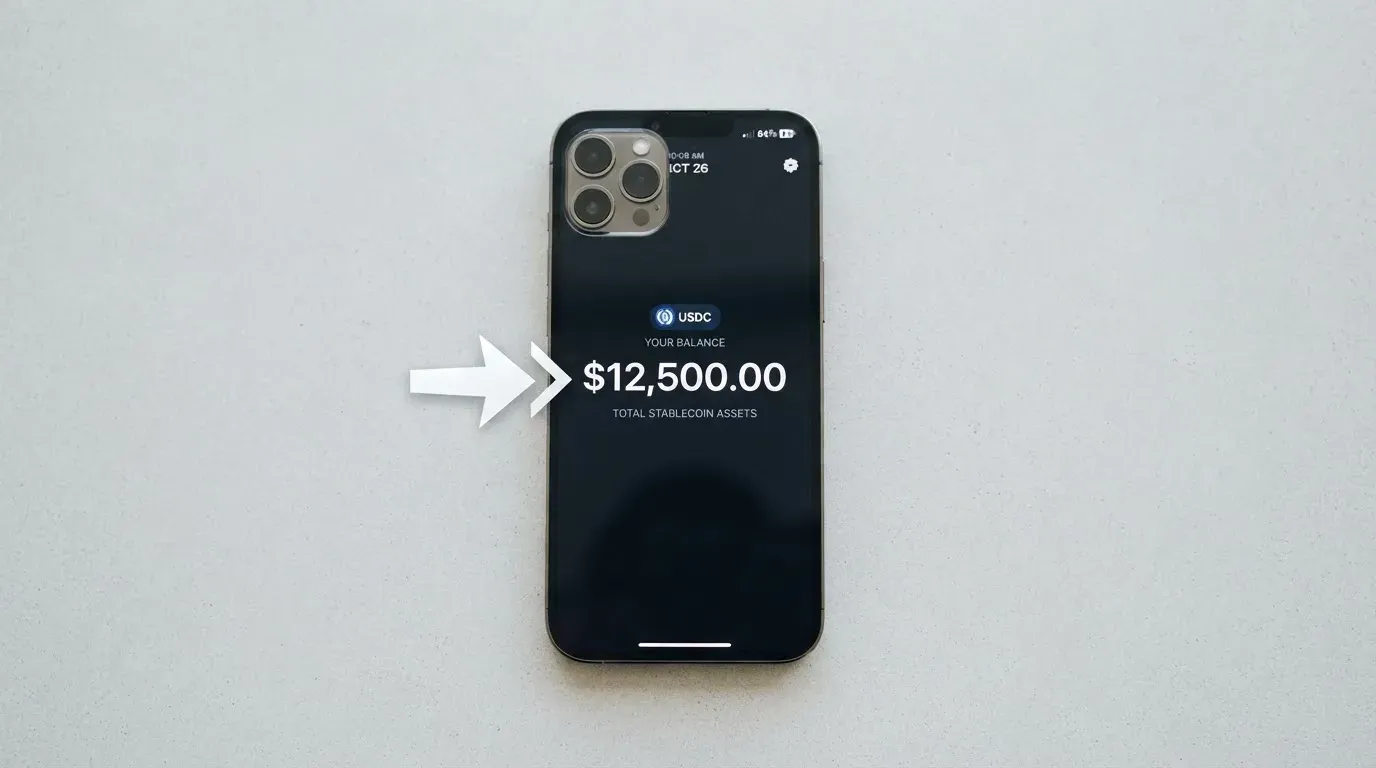
That last point is the one to sit with. When you send a stablecoin, you choose a network and the transfer has to arrive on a network the provider supports. Blockchain transfers are irreversible, so a deposit sent on a network the provider does not support, or to an address belonging to a different network, can be lost or need manual support recovery with no guarantee. Vban does not tell you which networks to use. That is not a gap I can fill from elsewhere, so the honest advice is to establish the supported network with support before you send anything, not after.
On the dollars side, the account rules are more informative. There is the $5 card funding charge, and the minimum wallet balance is $7. For direct USD deposits to the account, individuals are capped at $3,999 per deposit, with excess refunded. Businesses have no fixed limit, and amounts above $9,999 trigger extra document requirements. So an individual loading fiat tops out around $4,000 per transaction, which is a sensible anti-fraud shape and tells you something about how the account is screened.
There is also a slightly odd phrasing worth knowing about. The $5 card funding charge is described as “the minimum card withdrawal amount”. That sentence is confusing on its face, and I could not resolve it from the published pages. If you plan to move money back out to a local bank, note that cross-currency withdrawals to a local bank are supported, with the naira and cedi limits shown in the fees table above, and treat the relationship between that $5 figure and your own withdrawal as something to confirm with support.
One piece of general knowledge worth having while you top up, because it explains why a wrong-network deposit is unrecoverable. A stablecoin’s transfer is a blockchain transaction, and the network charges its own fee for it: gas on Ethereum, bandwidth and energy on Tron. That network fee comes out of your wallet separately from anything the card charges, and it is paid in the network’s own token. So a USDT balance with no ETH behind it cannot actually be sent on Ethereum. This is category-level background rather than something about Vban, but it is the mechanism behind the irreversible-loss risk I mentioned above.
Paying with it every day
Everyday use is where this card scores 2 out of 10, and the reason is simple: it is a virtual card with no mobile wallet and no confirmed ATM story. Vban does not offer Apple Pay or Google Pay as a wallet feature. The site adds that Google Pay “may not work consistently due to region mismatch”. The app itself is on the App Store and Google Play; I did not read the store ratings.
For someone whose normal payment is a phone tap, this is the whole ballgame. A virtual card number typed into a checkout works perfectly well online, but it means re-entering your card details and a billing address for anything that does not save them, and it means carrying your phone to the till for anything in person. Address verification, by the way, is generally unavailable for foreign-issued cards and can cause declines on bigger online merchants, which is a category-wide quirk rather than a Vban fault, but a USD virtual card from this issuer is exactly the sort of card those systems handle worst.
A few other everyday things are simply not stated: rewards or cashback on spend, and the dispute process if something goes wrong with a payment. The dispute line matters more than the rewards line. A chargeback is a refund a card issuer orders to settle a dispute, with reason codes like fraud, duplicate billing or goods not received, and whether you can use that route with a card like this depends on how the issuer handles it. Since Vban does not publish the process, I would not build any spending decision around being able to recover a disputed payment easily.
What you are buying, then, is a card number that spends a preloaded balance. That model has one genuine virtue: because the card draws on a stored balance rather than a credit line, it cannot be overdrawn, and there is no debt to fall into. It also means the card is only as good as the balance behind it.
What can go wrong
This is where I would slow down and read carefully, because it is the section with the least documentation and the most specific complaints.
First, the company structure. Vban states it is operated by TM Payments Limited and that it is not a bank, with an office in Richmond Hill, Ontario, Canada, and says it is “powered by Maplerad”. The site FAQ also names Lead Bank and Bridge Ventures LLC, the latter as Program Manager. Licences are not named in what I could see. So there are at least four entities in the chain: the brand you deal with, the operator, the issuing bank, and the programme manager, on top of the processor underneath. Each link is a place where your money and your card pass through someone else’s systems, and none of them is fully described in public. That is not in itself a red flag, because this is how a lot of legitimate card programmes are built. But it means the answer to “who is responsible if my payment disappears” is not written down anywhere I could find.
Second, the complaints. Trustpilot shows 3.2 out of 5 from 13 reviews, which I read on 2026-10-21. Thirteen reviews is a small sample, and a low score on a small sample is weaker evidence than the same score on hundreds. Still, the themes repeat and they are the two worst kinds: refunds refused with repeated document requests after a payment, in November 2025 and again in June 2026, and incoming funds not showing, in November 2025 and May 2026. Those dates matter. They cluster across two consecutive years, so this is not one isolated complaint. Both themes also point at the same underlying weakness I flagged earlier: documentation-driven verification and custodial balances. I found no official incident, and I want to be clear that these are user reports, not findings.
Third, what is simply not documented. Security safeguards are not stated: no mention of two-factor authentication, instant card freeze, or spending controls. Support is a Help Centre at support.vban.com, in English, with opening hours not stated, which for someone in a different time zone is a real constraint. There is no corporate news or announcements page I could see, so you have no way to track the provider’s health from outside.
To keep this in proportion, the wider category has its own history of programme closures, and it is worth knowing how they tend to run. A closure typically means a notice period, then spending and loading stop, then users are asked to withdraw remaining balances. Visa terminated its global agreements with FTX on 13 November 2022 and the FTX US debit card was wound down by its issuer. Visa also suspended WaveCrest in Europe in 2018, closing all WaveCrest-issued Visa programmes. Neither is Vban, and I am not predicting anything here. I am telling you that a crypto card’s life belongs to its issuer, not to you, and that keeping your balance small is a reasonable habit for reasons that have nothing to do with Vban’s quality.
Finally, the money question. Custodial platforms have a history: Mt. Gox, with about US$350 million reported stolen between 2011 and 2014, Coincheck at about US$400 million in 2018, and Ronin Network at US$625 million in 2022. If your balance sits with a provider, you carry counterparty and hack risk, and crypto transfers have no built-in recovery because the network cannot freeze or return funds. I am not saying Vban is any of those things. I am saying that holding funds with any custodian carries risk, and that the protection you get for e-money is safeguarding in segregated or insured accounts, which is not the same as a bank deposit guarantee.
What to take instead
I looked at three other crypto cards with published pages, and each solves a different part of what Vban does badly. None of them is a clean sweep, and none is available to everyone, so read the country rules rather than the fees.
| Card | Score | Card and currency | Cost | Fees | Who can get it |
|---|---|---|---|---|---|
| International Visa Card | 6.7 / 10 | U.S.-issued Platinum Visa, virtual, pays in USD. Physical “coming soon”. | $5 issuance, no maintenance fee. Classic free, Pro $9.00/month, Max $19.00/month. | USD use free on all plans; foreign currency is “Visa exchange rate + 2% FX fee”. Deposits free. | Not available to residents or registrants of Belarus, mainland China, North Korea, Cuba, India, Iraq, Iran, Israel, Myanmar, Nepal, Nicaragua, Russia, Syria, Turkey, Ukraine, Venezuela, Vietnam. Grey-list countries case by case. |
| UNi Card | 6.1 / 10 | Multicurrency UNi Card on Mastercard, spends the UNi.Global balance. | No annual fee. Issuance not stated. | No annual or foreign transaction fee; live OTC rates; “no hidden exchange fees”. | Not stated. |
| Whop Cards | 5.2 / 10 | Visa, works anywhere Visa is accepted. Card type and currency not stated. | “No extra fees”; no amounts listed. | Not stated. | Consumers in 31 US states, businesses in 41. Unsupported countries include Belarus, mainland China, Cuba, Hong Kong, India, Iran, Iraq, Israel, Myanmar, Nepal, Nicaragua, North Korea, Russia, Turkey, Ukraine, Venezuela, Vietnam. |
The clearest contrast is with the International Visa Card, and it is worth walking through why. Its fees are fully published: $5 to issue, no maintenance, and a stated 2% FX fee on top of the Visa exchange rate, which means you can actually calculate what a foreign purchase will cost you. It accepts USDC and USDT into a USD account, and also USD, EUR, SEPA, SWIFT and FedNow deposits, so you are not forced to hold a stablecoin to use it. Its card is also virtual-only for now, so you inherit that limitation too. And it has its own walls: sixteen named countries where residents and registrants are excluded, plus FATF grey-list countries handled case by case. So the trade is transparent pricing and broad funding against a hard country list. For many readers that is an easier trade than unknown pricing and unknown eligibility.
UNi Card is the one to look at if foreign transaction fees are your main worry, because it states no annual fee and no foreign transaction fee, with conversion at live OTC rates. It also advertises spend-to-earn rewards up to 3% with the card. What I cannot tell you is who qualifies or how you fund it, because those are not stated. That is the same disclosure problem in a different place.
Whop Cards is the odd one out and I would not lead anyone with it. It is built around a Whop balance rather than a self-custodied wallet, with pending balance usable as soon as a payment arrives. It offers 5% cashback at select merchants, currently Uber. But its fee amounts are not stated at all, and its availability is 31 US states for consumers and 41 for businesses, with a long unsupported-country list. It is a product for a specific ecosystem, not a general-purpose card.
What none of these can tell you is anything about tax, and I am deliberately not going to guess. There is a general principle worth knowing: in the US the IRS treats digital assets as property, so exchanging them for goods, services or dollars generally produces a taxable gain or loss measured in local fiat at the fair market value on the transaction date. That means each card payment funded from crypto may be a separate disposal. Treat that as a prompt to speak to a qualified adviser in your own country, not as advice.
Who I would recommend it to
I would recommend Vban to a Nigerian, or more broadly West or Central African, user who already has a BVN, who wants a virtual USD card for online payments and subscriptions, and who is comfortable treating it as a small everyday tool rather than a place to hold money. That person gets the best part of this card: $7 to start, a minutes-long verification, and a card that spends a preloaded balance and cannot overdraw. They should still put only a modest amount on it and ask support the two questions the pages leave blank, which networks to send USDT or USDC on, and what the running fees are.
I would not recommend it to several kinds of reader, and I want to be direct about each. If you are outside West and Central Africa without a BVN, the eligibility gate is closed and there is no published country list to argue with. If you need cash from ATMs or you pay mainly by tapping your phone, the virtual-only, no-wallet design works against you every day. If you are the sort of person who needs to read a fee schedule before committing, you cannot do that here. And if you are planning to hold a real balance on the card for weeks at a time, the thin trustpilot record and the missing incident history are reasons to hold less rather than more.
If you want a comparison rather than a verdict, the International Visa Card is the one I would read next, because it publishes its numbers and states its country rules plainly, including the sixteen countries where it says it will not open accounts. UNi Card is worth a look if the absence of a foreign transaction fee matters most to you. Whop Cards I would approach only if you already live inside its ecosystem.
The honest summary is this. Vban is not a bad card; it is an under-documented one. At $7 it is the cheapest way into a crypto-linked card I looked at, and for a specific West African user with a BVN that is a real deal. But a card you cannot fully price, in a market where you cannot fully check who is liable, with a 3.2 score built on complaints about missing money, is not something I would tell a reader to depend on. Read the two blank spaces, ask support, and try it with an amount you could afford to lose.
Frequently asked questions
What is the Vban card?
Vban is a virtual, multi-use card denominated in US dollars that you hold as a set of card details in an app rather than as plastic. It is funded from a USD account on the platform, and USDT and USDC are the coins named in the starting data. Creating it costs $2 plus a $5 funding charge. In short: a prepaid-style spend card connected to a crypto account, not a bank card.
How does Vban work day to day?
You create a card once, then top up the USD account and spend that balance through the card number, in stores or online. Because it draws on a stored balance rather than a credit line, it cannot be overdrawn and there is no debt. Everything behind that balance is held by the provider, which is operated by TM Payments Limited and described as not a bank, running on Maplerad infrastructure.
Is Vban a bank?
No. Vban states it is operated by TM Payments Limited and that it is not a bank. The office is in Richmond Hill, Ontario, Canada. The site’s FAQ names Lead Bank as the card issuer under a Visa licence, and Bridge Ventures LLC as Program Manager. Licences themselves are not named in what I could see, so treat the entity list as incomplete.
Who can apply for the Vban card?
The one firm rule is that a BVN, the Nigerian Bank Verification Number, is required before the card can be created, verified within minutes. Vban does not publish a country list; starting data suggests Nigeria, Ghana and a set of West and Central African countries. If you have no Nigerian BVN, the published route to a card does not exist for you regardless of where you live.
Does Vban require KYC, and what does it ask for?
Yes, and the check is short. BVN verification is required before card creation and completes within minutes, and a company blog post mentions one valid government ID. Proof of address and age requirements are not stated on the pages I could see. Verification can sit at pending or come back rejected, with name mismatch given as a reason, so get your name right across documents.
How much does the Vban card cost to start?
Seven dollars in total: a $2 one-time creation fee plus a $5 card funding charge, and your USD wallet needs at least $7 available. After that, the picture is blank. No monthly fee, transaction fees, currency-conversion fees, ATM terms or card spending limits are stated anywhere in the published material.
How do I top up the Vban card?
You fund the USD account and the card draws on it. USDT and USDC are the coins named in the starting data, but the supported networks are not disclosed, which matters because blockchain transfers are irreversible. Direct USD deposits for individuals are capped at $3,999 per deposit with excess refunded, businesses have no fixed limit, and amounts above $9,999 need extra documents.
Can I add the Vban card to Apple Pay or use it at ATMs?
Not as a supported feature. Vban does not offer Apple Pay or Google Pay as a wallet feature, and the site warns that Google Pay “may not work consistently due to region mismatch”. The card is virtual only and ATM terms are not stated, so plan for online payments and for paying by handing over your phone rather than by tapping.
Is Vban safe, and what about the complaints?
No official incident came to light, but Trustpilot shows 3.2 out of 5 from 13 reviews, read on 2026-10-21. Recurring user-reported themes across 2025 and 2026 are refunds refused with repeated document requests, and incoming funds not showing. Thirteen reviews is a small sample, so treat this as a signal to keep balances small rather than a verdict.
How do I delete my Vban account or get money out?
The published material covers withdrawals more clearly than account closure. Cross-currency withdrawals to a local bank are supported, with limits of 20,000,000 naira daily, 200,000,000 monthly and 10,000,000 per transaction, and 100,000 cedi daily, 1,000,000 monthly and 100,000 per transaction. For deleting the account itself, I found no documented process, so ask support before you need it.
App and neobank cards in the catalogue – cryptocardcatalog
Content created by the «cryptocardcatalog» team