
Tevau card review: a USDT-funded Visa with several costs hiding in plain sight
 Available in US

Tevau is a prepaid-style Visa that you fund with USDT and spend anywhere Visa is taken, in shops, online, at supported ATMs, and through Apple Pay and Google Pay. It comes in four formats (prices unofficial and not confirmed by Tevau), from a $20 virtual card to a $499 24K Gold metal card, and it is pitched at people who already hold USDT and want a familiar card shape to spend it. The pitch is simple, and on the surface the fees look reasonable. The catch is in the details: the headline top-up fee is 1%, foreign-currency spending costs 1.2% on top of whatever the network charges, and most of what the public sees about the company comes from a single third-party information site rather than from Tevau itself. If you are choosing a crypto card and Tevau is on your shortlist, this review walks through who actually qualifies, what every payment really costs, how the USDT top-up works in practice, where the card can quietly let you down, and what to use instead if any of those points are deal-breakers for you.
Conditions are current as of October 28, 2026.
Verdict
Tevau scores 6.0 / 10 in this review, with the strong points (everyday convenience, broad availability) almost cancelled out by weak ones (cost and the lack of verifiable company information). The number below is the breakdown by criterion, with the marks copied exactly as scored.
| Criterion | Mark | Why it scored this way |
|---|---|---|
| Who can get it | 9 / 10 | The card is pitched across 200+ countries, with availability that varies by region; no public list of exclusions, and the company itself does not publish country rules. |
| Cost | 4 / 10 | Card prices from $20 to $499 (unofficial; not confirmed by Tevau), a 1% top-up fee, a 1.2% non-USD payment fee, a 1.9% ATM fee, and a $3 inactivity charge after 90 days without a transaction. |
| Top-up options | 4 / 10 | USDT only, the app shows which network to use but the page does not name the networks, and no fiat top-up is documented. |
| Reliability and complaints | 4 / 10 | The company is in Hong Kong, the card issuer is not named, and a Bank of Canada registration claim from August 2026 is not independently verified; no independent complaints trail was found. |
| Everyday use | 9 / 10 | Virtual, plastic, metal and 24K Gold cards; Apple Pay and Google Pay on all of them; ATM on the physical cards. |
Total: 6.0 / 10.
The short version: Tevau is a reasonable fit for a USDT holder who wants a virtual or metal card, is comfortable paying the various fees as the cost of convenience, and accepts that the public information is thin. It is not a great fit if you want a low-fee multi-currency card, a clearly named issuer and regulator, or independent reviews you can read before you commit.
Who can get the Tevau card
Tevau states the card works in 200+ countries, with availability that “varies by region”. A country list and a list of excluded regions are not published, so whether you personally can be issued a card is something the app tells you only after you try. This is one of those cards where the eligibility question is partly answered by downloading the app and starting the sign-up, not by reading a public page.
The KYC check is mandatory, which is the same as any regulated payment product, but the level of detail is light by industry standards. Tevau runs a single KYC flow built around one government-issued ID (passport, driving licence or national ID) plus a selfie taken in the app. The minimum age is 18, there are no tiers or higher levels, and the documents required for proof of address are not stated. Processing time is not stated as a policy; blurry photos are the most common reason for re-submission, so scanning carefully the first time is the practical shortcut.
A note on the source: the KYC details above, the country claims and the card-tier descriptions on this page are taken from tevau.co, which is a third-party information site whose own FAQ page states that it is “an independent information site, not Tevau itself”. Where the third-party site and the official Tevau site disagree, the differences are flagged in the relevant section below. Treat the 200+ countries claim as the card’s marketing line, not as a confirmed fact, until you see your country accepted at sign-up.
How to sign up
There is no “pre-approval” step: you download the app, create an account and the KYC flow runs in-app. Identity verification asks for one government ID (passport, driving licence or national ID), the selfie, and the age check (18+); no further tier is required. Once KYC is approved, the virtual card is issued instantly inside the app. For physical cards, Tevau says shipping and replacement are free, but the countries the card is shipped to and the delivery time are not stated; if the card has not arrived within 14 days, the advice is to check the tracking code first, then contact in-app support. Again, these details come from the third-party information site that says it is not Tevau itself, so the timing should be treated as a guide rather than a guarantee.
A few practical things to have ready before you start:
- A valid government-issued photo ID (passport, driving licence or national ID).
- A working camera for the in-app selfie and document scan.
- USDT in a wallet you control, with enough of the network’s native token (ETH for ERC-20, TRX for Tron, and so on) to pay the on-chain transfer fee, because the gas is paid in the network’s own asset, not in USDT.
- The virtual card flow is typically fast; longer if the photo checks bounce.
Fees: what it really costs
Tevau’s fee structure is published across the third-party information site, not the official Tevau site, and the table below copies those numbers. The card says fees “can differ by card type, campaign, and region”, so the values below are the published defaults. If the official Tevau app shows you different numbers at sign-up, those are the ones you pay.

| Fee or limit | Amount |
|---|---|
| Virtual card, one-off | $20 |
| Plastic card, one-off | $100 |
| Metal card, one-off | $199 (unofficial; not confirmed by Tevau) |
| 24K Gold card, one-off | $499 (unofficial; not confirmed by Tevau) |
| Monthly fee | $0 (none stated) |
| Annual fee | Not stated |
| Top-up fee | 1% (Gold: 0.5% on up to 5 top-ups per month) (unofficial; not confirmed by Tevau) |
| USD payment fee | $0.20 + 0.5% (unofficial; not confirmed by Tevau) |
| Non-USD payment fee | 1.2% |
| ATM withdrawal fee | 1.9% |
| Small authorisation (up to $3) | First 5 per month free, then $0.20 (unofficial; not confirmed by Tevau) |
| Declined transaction | First 3 per month free, then $0.50 (unofficial; not confirmed by Tevau) |
| Close-card fee | $2 (unofficial; not confirmed by Tevau) |
| Inactivity fee | $3 after 90 days without a transaction, then $1 every 30 days (unofficial; not confirmed by Tevau) |
| Card validity | 3 years |
| Per-transaction limit (Virtual, Plastic) | $3,000,000 (unofficial; not confirmed by Tevau) |
| Per-transaction limit (Metal, Gold) | $80,000 (unofficial; not confirmed by Tevau) |
| Daily and monthly spend cap (all cards) | $3,000,000 (unofficial; not confirmed by Tevau) |
A few everyday payments, to make the table feel real.
A $100 coffee-and-croissant in Paris, paid in EUR: the FX is 1.2% (unofficial; not confirmed by Tevau) on top of the Visa rate, so the all-in cost is $1.20 plus whatever spread the network applies at the moment of capture. On a $1,000 hotel booking in Tokyo, the same 1.2% non-USD fee applies; on a $50 in-app purchase priced in USD, the fee is $0.20 + 0.5% = $0.70 (unofficial; not confirmed by Tevau). USD ATM withdrawals in a foreign city are charged the 1.9% ATM fee (unofficial; not confirmed by Tevau) on top of any fee the ATM operator adds; in local-currency USD withdrawals, the card adds no FX fee of its own but the issuing bank’s rate is what you get.
One contradiction to flag, because it will matter if you are comparing offers. A Product Hunt listing made by the maker of the card, dated 2026, states the virtual card costs $10; the third-party information site gives $20 as the published price. The lower number is unconfirmed by the official Tevau site. Until the app confirms otherwise, $20 is the safer number to budget on.
Top up: how to fund the card
Top-up is USDT only, with no fiat option documented. The app tells you which network to send on at the moment you tap “top up”, and you transfer from your own wallet to the deposit address shown in the app. The networks Tevau supports are not named on the public pages, which is unusual for a USDT-funded product; the practical rule is to send on the network the app shows you and to send a small test amount first if you have any doubt.
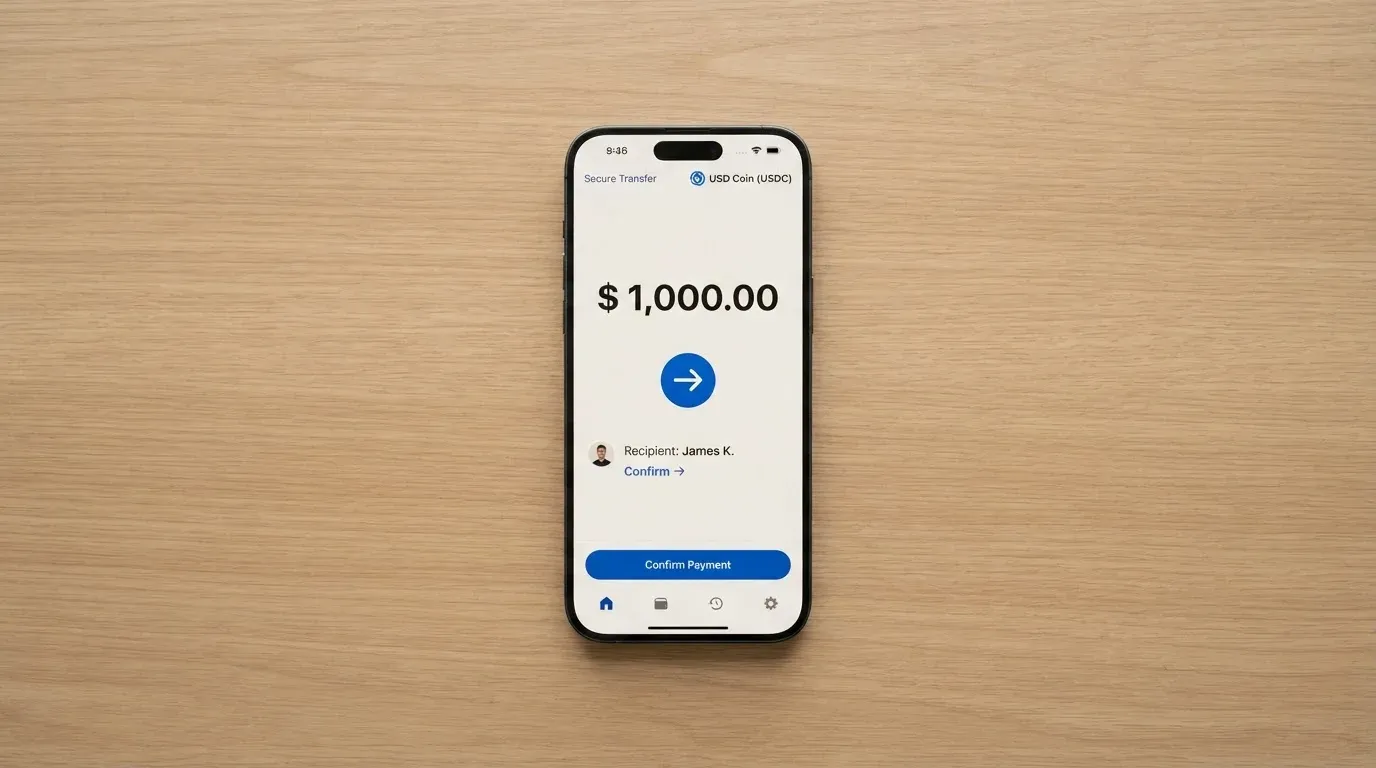
Two things tend to catch people out. First, a wrong-network transfer cannot be recovered: the FAQ on the third-party information site is explicit that funds sent on the wrong network are not recoverable, so the only safe approach is to copy the network from the in-app screen and verify it on the sending wallet before you broadcast the transaction. Second, on-chain transfer fees (gas) are paid in the network’s own asset, not in USDT. On Ethereum that means you need ETH to pay the gas, on Tron you need TRX, and so on; a wallet with USDT but no native gas token will simply fail to send. The card’s own 1% top-up fee is on top of that on-chain fee.
A Gold-card-specific note: the published guide says Gold holders get a 0.5% top-up fee (unofficial; not confirmed by Tevau) on up to five top-ups per month, against 1% for everyone else. The same page elsewhere mentions “5 waivers per month”, which is a different concept. The two lines are not consistent; the safer reading is the more specific one (50% discount on up to 5 top-ups per month), but you should confirm in-app before relying on it.
For withdrawal, USDT can be sent from the in-app wallet to any address you control. Once you have topped up the card, that balance can only be spent on the card or withdrawn at an ATM; you cannot reverse a top-up back into the wallet. Closing a card returns the remaining balance to the wallet and costs $2 (unofficial; not confirmed by Tevau), the application fee is not refunded on closure, and a closed card cannot be restored. A virtual card with no transactions for four consecutive months closes automatically.
Paying with it every day
In day-to-day use, the Tevau card behaves like a prepaid Visa. You tap in a shop, pay online, add it to Apple Pay or Google Pay, or visit a supported ATM with the physical card. Apple Pay and Google Pay are supported across all four card types, including the virtual card, which means the “no in-store tap” limitation of the virtual card is partially offset by the phone wallet. ATM withdrawals are a physical-card feature only.
A few practical patterns are worth knowing:
- Where the card works. The card works wherever Visa is accepted, which is most places that take cards. The third-party information site does not list blocked merchant categories beyond OpenAI billing, which is not supported. Gambling, dating and other commonly restricted categories are not stated; assume nothing until the first transaction confirms.
- Refunds and declines. The third-party information site notes that declines and refunds can occasionally be delayed, and that some merchants block prepaid or crypto-funded cards outright. OpenAI billing is not supported. If a merchant declines the card, it is most often the merchant’s policy, not a problem with the card.
- Rewards and cashback. Cashback is not mentioned. There is no stated points, miles or sign-up bonus programme on the public pages.
- Mobile app. The iOS app is published by Tevau Technology Limited; the listing read on 2026-10-20 shows 4.4/5 from a small number of ratings (7 in total) and a recent version dated 11 September. The Android listing exists; ratings were not shown. A low rating count is not a verdict on quality, but it does mean there is little public signal beyond the small number of reviews on the store.
- Disputes and chargebacks. The card’s dispute and chargeback process is not stated. Some merchants block prepaid or crypto-funded cards by category or BIN, and that policy is theirs, not Tevau’s.
What can go wrong
The “what can go wrong” section is where Tevau’s review has to be the most honest, because most of the public-facing information about the company comes from a third-party information site, not from the card issuer itself.
Company and issuer. Tevau is described as headquartered in Hong Kong and launched in 2024. The third-party information site states that a Payment Service Provider registration with the Bank of Canada was approved in August 2026, and an IPS News article from 22 May 2026 describes Tevau as a Hong Kong-based platform. Both points are unverified independently. The card issuer is not named, and the company registration behind “Tevau Technology Limited” is not independently confirmed. The card’s own page notes that Tevau is not a bank licensed in Japan, the US or the EU and that home-country deposit protection may not apply. Until an issuer and a regulator are confirmed in writing, the “which bank backs this card?” question does not have a public answer.
Custody and security. Tevau describes itself as custodial: assets are held by Tevau, “stored with licensed custodians” per the FAQ, with cold/hot wallet separation claimed. The card’s own page states that a 2FA method, account insurance and specific security certifications are not stated. A security update about suspicious transactions and risk-control upgrades was published on 21 August 2026. The practical advice is the same as for any custodial product: do not keep more on the card than you are prepared to leave on a single platform, and enable every available lock and freeze.
Independent complaints. No Trustpilot page, no Reddit thread and no independent review of substance were found for Tevau. The lack of complaints is not the same as a clean track record: a card launched in 2024, with a small user base and a thin English-language web presence, simply has not generated many public reviews either way. Treat the absence of complaints as “not enough data” rather than “vouched for”.
User-side risks. A locked or frozen account is re-verified personally via support, which means response time is the limiting factor. If the card details leak, the recommended steps are to lock the card in the app, then close it. Wrong-network USDT deposits are not recoverable, which is the single most common way people lose money on USDT-funded products. The inactivity fee is $3 after 90 days without a transaction, then $1 every 30 days (unofficial; not confirmed by Tevau); if you stop using the card, close it or top up and spend something to keep it active.
Programme-closure risk. Crypto card programmes have been shut down before: Visa terminated its global agreements with FTX in November 2022, and the FTX US debit card programme was wound down by its issuer. The same kind of outcome is possible for any card, and a programme closure typically gives a notice period, then stops spending and loading, then asks users to withdraw the remaining balance. The “where to withdraw” question is one to ask the support team before you load a large balance.
What to take instead
Three alternatives, in case Tevau does not quite fit, with the same scoring approach as the main review.
| Card | Score | What it is | What to weigh |
|---|---|---|---|
| Cardex | 5.6 / 10 | A multi-network crypto debit card (VERVE, Visa, Mastercard, UnionPay) for 200+ countries, with USDT, USDC and BTC wallets and a claimed “AI-Powered Conversion Rate” that picks the best rate at the moment of payment. | The card currency is Naira per the App Store listing, which is a strong signal that the product is centred on Nigeria; the fee structure is not published. |
| CardFlow | 4.9 / 10 | A virtual USD Mastercard aimed at “Nigerians and global users”, created quickly, funded with BTC, USDT, ETH or Naira bank transfer. | Creation is free per the FAQ, but the ongoing fees are not stated, and the country list and exclusions are not published. |
| HyperCard | 4.7 / 10 | A prepaid card with USD or EUR balances, accepted “in more than 176 countries” per the App Store page, with crypto (USDT, BTC, ETH) deposits converted to USD or EUR in the app. | The card network is not stated on the App Store page, the fees are not stated on the public pages, and the 176-country figure is an acceptance number, not an eligibility number. |
A few practical notes if you are choosing between them. Cardex’s “AI-Powered Conversion Rate” is a marketing claim, not a verifiable benefit, and the Naira card currency is a strong signal about where the product is most useful. CardFlow’s free creation is a real point in its favour, but the published fee schedule is thin. HyperCard’s “176 countries” is acceptance, not eligibility; the difference matters at the sign-up stage. None of the three is a clear upgrade on Tevau on fees; the choice between them is mostly about which crypto you want to fund with, which country you live in, and how much weight you give to the published fee schedule.
Who I would recommend Tevau to
Tevau is a reasonable choice for a USDT holder who already has a self-custody wallet, wants a virtual or metal card as a spending layer rather than as a long-term store, and is comfortable with the 1% top-up, 1.2% non-USD and 1.9% ATM fees as the cost of convenience. The Apple Pay and Google Pay support on all four card types is a real plus if you want the card on your phone rather than in your wallet, and the $0 monthly fee means the card does not bleed you while it is open.
Tevau is a poor choice if you want low-fee multi-currency spending (the 1.2% non-USD fee is on the high end of the category), if a clearly named issuer and a clearly named regulator are non-negotiable for you, if you need fiat top-up rather than USDT, or if you want cashback, points or any rewards programme. The lack of a public country list, the lack of independent reviews, and the not-yet-verified Bank of Canada registration claim all argue for starting small and topping up only what you intend to spend in the next few weeks.
If you decide to try Tevau, the practical path is the same as for any USDT-funded card: download the app, finish KYC, start with the $20 virtual card, send a small USDT test top-up on the network the app shows you, and confirm the balance before loading more. Add the card to Apple Pay or Google Pay, make a real purchase, withdraw a small amount from a supported ATM if you intend to use cash, and only then decide whether the fees are worth the convenience for your pattern of spending.
Frequently asked questions
What is the Tevau card?
Tevau is a prepaid-style Visa card that you fund with USDT and spend anywhere Visa is taken, in shops, online, at supported ATMs, and through Apple Pay and Google Pay. It is offered in four formats: a $20 Virtual card, a $100 Plastic, a $199 (unofficial) Metal and a $499 (unofficial) 24K Gold, with the higher tiers adding larger ATM limits and, in the Gold case, a discounted top-up fee.
How does the Tevau card work?
You sign up in the app, complete KYC with one government ID and a selfie, then top up the card by sending USDT from your own wallet to the deposit address the app shows. The app sells the USDT for the card balance, and the card spends that balance at Visa’s rate, plus the 1.2% non-USD fee if the merchant is not priced in dollars.
Is Tevau a bank?
Tevau says it is not a bank licensed in Japan, the US or the EU, and that home-country deposit protection may not apply. The card issuer is not named on the public pages, and a Payment Service Provider registration with the Bank of Canada is claimed as approved in August 2026 but has not been independently verified.
Who owns Tevau?
Tevau is described as a Hong Kong-based company called Tevau Technology Limited, launched in 2024. Company registration details, beneficial ownership and the card’s issuing bank are not stated on the public pages and have not been independently confirmed in this review.
How do I get the Tevau card?
Download the Tevau app, create an account, complete the KYC (one government ID and a selfie), and the virtual card is issued in-app. For the physical cards, shipping and replacement are free, the countries the card is shipped to are not stated, and the published advice is to check the tracking code after 14 days, then contact in-app support.
Does the Tevau card require KYC?
Yes. KYC is mandatory and runs as a single flow: one government-issued ID (passport, driving licence or national ID) plus a selfie, with 18+ as the minimum age. The processing time is not stated as a policy; blurry photos are the most common reason for re-submission, so scanning carefully the first time is the practical shortcut.
How do I top up the Tevau card?
Top-up is USDT only. Open the app, tap “top up”, and the app shows you the network to use and the deposit address; send USDT from your own wallet to that address, paying the on-chain gas fee in the network’s own asset (ETH on Ethereum, TRX on Tron, and so on). The card adds a 1% top-up fee (0.5% on up to five top-ups per month for the Gold card) (all figures unofficial and not confirmed by Tevau).
How do I add the Tevau card to Apple Wallet?
Add the card to Apple Pay or Google Pay in the app: the wallet option appears for the card once it is issued, and both phone wallets are supported across all four card types (Virtual, Plastic, Metal and 24K Gold). Apple Pay replaces the card number with a device-specific number stored in the Secure Element, never on Apple servers, and each payment uses a one-time dynamic security code.
Is the Tevau card safe?
Tevau describes itself as custodial, holds assets with “licensed custodians” per the FAQ, and claims cold/hot wallet separation. 2FA, account insurance and specific security certifications are not stated on the public pages. A security update about suspicious transactions and risk-control upgrades was published on 21 August 2026. The practical advice is the same as for any custodial product: enable every available lock and freeze, and do not keep more on the card than you are prepared to leave on a single platform.
Is the Tevau card worth it?
It depends on what you are comparing it to. For a USDT holder who wants a virtual or metal Visa, accepts the 1% top-up, 1.2% non-USD and 1.9% ATM fees, and is comfortable with the thin public information about the company, Tevau is a reasonable option. For a low-fee multi-currency card, a clearly named issuer and regulator, fiat top-up, or any kind of cashback, Tevau is not the strongest fit in the category, and one of the alternatives in the section above is worth a look.
Virtual cards in the catalogue – cryptocardcatalog
Content created by the «cryptocardcatalog» team