
Free to open, costly to load: an invite-only virtual card with unnamed backing
 Available in US
PayWide looks attractive from a distance. There is no monthly fee, the card is virtual, and you can load it from a crypto wallet you already use — 40+ tokens across six major chains, converted to dollars at Uniswap rates. That is a genuinely unusual top-up menu in this category, and it is the strongest thing about the product.
Conditions are current as of October 28, 2026.
Closer in, the picture changes. The card is issued on an invitation code handed out through Telegram, the company behind it does not publicly name its operator, its bank, its regulator or the jurisdiction that safeguards your balance, and the price of putting money on the card runs to 4% or 5% before you have bought anything at all. That combination — cheap to hold, expensive to fund, opaque about who stands behind it — is what my score of 4.6 out of 10 reflects.
This is not a card for someone who wants an ordinary spending card with lower friction. It is a card for a specific person: someone already living in Web3, holding tokens across several networks, who wants a virtual card to spend from that balance and does not mind the load fee. If that is you, the top-up section of this review is the part that matters. If you want a bank card with a normal relationship behind it, keep reading — the gaps are not small.
The conditions described here are current as of 2026.
Verdict: 4.6 out of 10
Here is the score broken down, criterion by criterion, so you can see exactly where the card earns its marks and where it does not.
| Criterion | Mark | Why |
|---|---|---|
| Who can get it | 6 / 10 | 150 countries open and 35 restricted, including the United States, United Kingdom, Germany, France and most EU members; an invitation code is required |
| Cost | 2 / 10 | Top-up of 5% on Visa and 4% on Mastercard, plus $0.35 per attempt and 1.25% per purchase on Mastercard; issuance is free |
| Top-up options | 8 / 10 | 40+ cryptocurrencies across Ethereum, Polygon, Arbitrum One, OP Mainnet, BNB Smart Chain and Avalanche, from a Web3 wallet |
| Reliability and complaints | 3 / 10 | Operator, bank and regulator are not named; Trustpilot 3.4 out of 5 on two reviews; aggregator rating 2.3 out of 5 |
| Everyday use | 5 / 10 | Virtual Visa and Mastercard; Apple Pay and Google Pay only on Mastercard 5258 and 5395; no ATM |
| Total | 4.6 / 10 | Free to hold and generous on networks, expensive to load and unclear on who backs it |
The audience the card actually serves is narrow and worth naming plainly: Web3 wallet users who top up a virtual card with 40+ tokens. If that is your situation — you hold assets across several chains anyway, you already understand network fees and token addresses, and you want a card that draws on that balance — then the top-up breadth is genuinely better than most alternatives here, and the score understates how useful it can be. If you are reading this because you cannot get a normal bank card, or because you want a card for everyday spending without thinking about crypto at all, the load fee and the unnamed operator are exactly the two things that should stop you.
Will they give you the card?
PayWide does not publish an eligibility page that states who qualifies. The card’s own site page was empty when checked, and the card does not say which applicant countries are open, what age applies, or what documents are needed. That is the plain fact, and you should hold it in mind while reading the rest: most of what follows comes from third-party listings rather than from the operator.
What those unofficial listings say is that a map on a comparison site lists 150 countries as “Available” and 35 as “Restricted”, with the restricted group including the United States, the United Kingdom, Germany, France and most EU members. Read that carefully, because it is easy to over-interpret. An “Available” label on a map describes where cards can be used or accepted, not where you may live and sign up — the listings themselves do not establish residence eligibility. If you are in France or Germany, or anywhere else in that restricted group, this map is not evidence that you can open an account.
There is one hard gate that does seem real, and it is unusual: you need an invitation code. It is distributed through PayWide’s Telegram channel, and one code is tied to one wallet. Access and support contact both run through that channel rather than through an email address or a support desk. There is no free signup path published.
| Who might be eligible | What is actually known |
|---|---|
| Countries on the unofficial “Available” list | 150 listed as available — this is not a statement of who may register |
| Countries on the unofficial “Restricted” list | 35, including United States, United Kingdom, Germany, France and most EU members |
| Applicant eligibility | Not published; the listings do not establish residence eligibility |
| Age requirement | Not stated |
| Access route | Invitation code via PayWide’s Telegram; one wallet per code |
| Support contact | Telegram channel |
So the honest answer to “will they give me the card” is: probably, if you can find an invitation code and are not in a restricted country — but you cannot verify that from anything the operator publishes, and the person who gave you the code is effectively your only route in. Ask whoever gave you the code which country they registered from and whether they have actually used the card, because that is the information the official pages do not supply.
How to get it
The application flow is not documented officially. What an unofficial walkthrough of the public flow describes is a process that does not request identity documents or proof of address, and allows an applicant to enter an alias and an existing address. An age threshold is not stated anywhere.
Let me be clear about what that means, because it is the detail most likely to be misread. A flow that does not ask for documents is not a promise of anonymity, and I would not treat it as one. Regulatory identity checks apply to the institutions behind a card programme, not only to the front-end you see: whoever holds the e-money licence is obliged to identify customers and screen them, and a card can be declined, frozen or closed at that layer no matter what the sign-up screen asked for. Anyone using this card to move money for someone else, or to work around a rule in the country they live in, is using it in a way it was not built for. Nothing in this review should be read as advice about how to do that.
What is actually known about getting hold of it:
- Access is by invitation. A code comes through PayWide’s Telegram channel, and each code maps to one wallet. This is the first and only real step in the process.
- The card is virtual. No physical card is described anywhere in the official material or in the unofficial listings. If you are holding out for a plastic card in the post, this is not it.
- You get a choice of two networks. Virtual Visa and virtual Mastercard, both prepaid and both denominated in dollars — see the costs section for the detail, because the fee difference between them is the single most important commercial fact about the card.
- No documents are requested at sign-up, per an unofficial account of the flow, which also notes an alias can be used and an existing address entered. Treat this as reported, not as confirmed by the operator.
- There is no app. The flow is web-based. That is worth noting simply because mobile wallets are a common expectation and, as it turns out, only one of the two card types can be added to one.
Put together, the picture is: you get a code, you open a web flow, you end up with a virtual dollar card that you fund from a crypto wallet. There is no delivery step, no plastic, and no published waiting period — because there is nothing to wait for.
Fees: what it really costs
This is where the card’s score drops hardest, and where a reader can most easily be misled by the word “free”. The card is free to issue. Getting money onto it is not, and on the Mastercard path you pay again at the moment of purchase.
The card’s official pages do not publish a fee schedule. The figures below come from an unofficial third-party listing, and they are the ones to plan against — but check them against whatever the operator shows you in the app before you commit meaningful sums.
| Fee or limit | What the unofficial listings say |
|---|---|
| Issuance | Free with an invitation; no monthly or annual fee listed |
| Top-up, Visa | 5% |
| Authorization, Visa | Free |
| Purchase, Visa | Free |
| Top-up, Mastercard | 4% |
| Authorization attempt, Mastercard | $0.35 per attempt, whether approved or declined |
| Purchase, Mastercard | 1.25% |
| Currency conversion | No fixed FX markup published |
| ATM | No ATM pricing shown; cards marketed as virtual |
| Limits, Classic | Up to $3,000 |
| Limits, Business | Up to $10,000, one-year validity |
| Top-up ceiling | No top-up amount limit advertised |
| Card currency | USD |
Read the Mastercard authorization line twice, because it is the one that catches people out. $0.35 is charged per attempt, “approved or declined”. If a payment is refused by the shop, you still pay. If a hotel places an authorisation for incidentals and you decline it, you still pay. On a card aimed at people who may be spending across unstable networks and unfamiliar merchants, a stream of declined attempts is a realistic scenario, and each one costs you.
Now let me follow three ordinary payments through this, because that is where the headline percentages stop being numbers and start being money.
A $30 subscription on the Visa. You top up with $100. The 5% top-up fee is $5, leaving $95 in balance. The subscription costs $30, and the purchase itself is free on Visa. You are left with $65. The cost of this payment is $5, paid up front before the purchase.
A $30 subscription on the Mastercard. You send $100 and pay the 4% fee, $4, leaving $96. The purchase takes $30 plus 1.25%, so $0.38. Total cost: $4.38. The remaining balance reflects these fees.
A $12 coffee where the terminal asks to hold $20, and you walk away. On the Mastercard the authorization attempt costs $0.35 and the purchase fee never applies because nothing was bought. On the Visa the authorization is free. If the shop retries the authorization — and some do — that is another $0.35 on the Mastercard. Three or four attempts while you talk to a cashier is a dollar and change, for a purchase that never completed.
None of this is unusual in the category — crypto cards are expensive, and load fees in the several percent range are normal. What is unusual here is the combination with an $0.35-per-attempt charge and an unpublished FX markup. That last gap matters more than it looks: your card is denominated in dollars, so any purchase not in dollars involves a conversion, and no fixed markup is published. You cannot compute your cost in advance for any non-dollar purchase, and you have no published number to argue with.
There are also three programme tiers in the unofficial listings: Classic at up to $3,000, Business at up to $10,000 with one-year validity, and an NFT programme marketed as unlimited limits whose terms are not itemised. I would treat the NFT tier’s “unlimited” as a marketing word until you see the terms.
How to top up
This is the part of the card that genuinely stands out, and it is why the top-up score is 8 out of 10.
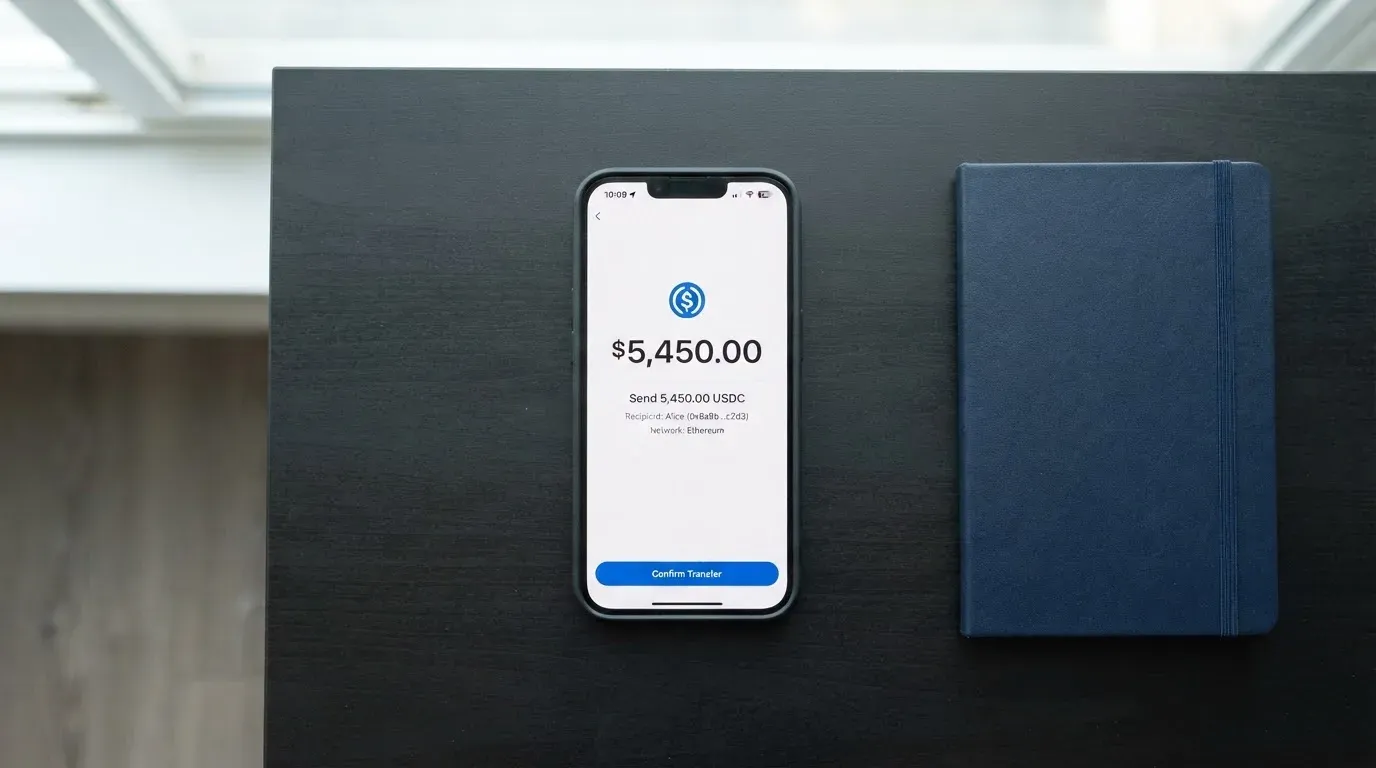
Topping up happens by connecting a Web3 wallet and sending one of 40+ cryptocurrencies, across Ethereum, Polygon, Arbitrum One, OP Mainnet, BNB Smart Chain and Avalanche. The balance is converted to dollars at Uniswap rates. That combination — many tokens, several chains, prices pulled from a decentralised exchange — is more flexible than most competing cards, which typically accept a token or two on a single chain.
An unofficial account adds that most Web3 wallets work, that MetaMask is recommended, that the 40+ tokens come from the Uniswap default list, and that funding usually takes one to three business days after payment confirmation. That last point belongs next to the fee table rather than buried here, because it changes how you plan: a transfer that lands on-chain in a minute may not be spendable for days.
| What you can load from | Detail |
|---|---|
| Asset types | 40+ cryptocurrencies, from the Uniswap default token list |
| Networks | Ethereum, Polygon, Arbitrum One, OP Mainnet, BNB Smart Chain, Avalanche |
| Price used | Uniswap rates, converted to USD |
| Wallet | Connected Web3 wallet; MetaMask recommended |
| Timing | Usually one to three business days after payment confirmation |
| Networks not supported | Sending on an unsupported network or to a wrong address can lose the funds |
The two lines in that table that are not about features are the ones I would underline. First, the network list is not a suggestion — sending USDT over Tron when the card expects a different network is the single most common way people lose money to these cards, and blockchain transfers are irreversible by design. Circle stopped supporting USDC on Tron in February 2024, so “USDC over TRC20” is not even a native option on one of the two big networks. Tether disables tokens in wallets on the OFAC sanctions list and has frozen funds tied to illicit activity, so stablecoins are not censorship-proof either. Match the network exactly, copy the address carefully, and treat any support request afterwards as a hope rather than a plan.
Second, there is no way back out. Unofficial sources state that once converted, the funded balance cannot be recovered with your wallet’s private key — which is by design: it is now a dollar balance inside someone else’s system, and that system’s operator, bank and regulator are not publicly named. Once your crypto becomes card balance, your self-custody protection ends at exactly that moment. That is the trade every custodial card makes, and PayWide makes it without telling you who is on the other side.
Paying with it every day
Day-to-day use is where the card is workable but narrow, and its 5 out of 10 reflects that.
You get a virtual card and spend it online or through a mobile wallet. Apple Pay and Google Pay are supported on the Mastercard 5258 and 5395 only — so if you add the card to your phone’s wallet, it is the Mastercard, not the Visa. On the Mastercard you also carry the $0.35 authorization fee and 1.25% purchase fee at every tap.
There is no ATM. The cards are marketed as virtual and ATM pricing is not shown, which in practice means there is no cash withdrawal to think about at all.
The practical experience of spending a foreign-issued prepaid card is worth understanding before you rely on it, because it explains a lot of declines that have nothing to do with your balance:
- The BIN is visible to the merchant. The first six or eight digits of a card number identify the issuing institution and country. Shops can look this up, and some apply extra scrutiny when the issuer country differs from the billing address. A card issued in one country can simply look foreign to a shop in another.
- Prepaid cards get declined on policy, not on funds. Some merchants refuse prepaid or foreign BINs as a category. The card type is public information before you tap.
- Address verification is mostly a domestic thing. AVS compares the street number and postcode you type with issuer records, and is mainly offered in the US, Canada and the UK. For foreign-issued cards it is generally unavailable, which causes declines on their own.
- Merchant categories can be blocked by policy, not by law. Gambling sits under MCC 7995, and many issuers block it on specific cards. The list varies by issuer.
- A declined payment can still hold your money. A failed authorisation may leave a hold that stays for several days, typically up to seven.
Two smaller things fit here. There is no app — the flow is web-based. And there is a rewards scheme in the unofficial listings: cashback on top-ups rather than on purchases, of 0.10% to 1.00% depending on your top-up volume over the previous three months, from $6,000 at Level 1 up to $100,000 or more at Level 5; a referrer gets one extra card slot and $3 after a new user makes their first top-up. Cashback on loading rather than on spending is a very different proposition from a normal rewards programme, and 0.10% does not cover a $0.35 authorization.
What can go wrong
Let us go through the failure modes in order of how likely they are to actually happen to you.
The balance sits with parties you cannot name. This is the finding that weighs most heavily on the score. The legal operator, the issuing bank, the BIN sponsor, the regulator and the safeguarding jurisdiction are not named publicly. An earlier check named “PayWide (Wage3)”, unconfirmed. No news has turned up either way. So for the person whose money it is: there is no public issuer to complain to, no regulator you can point to, and no published jurisdiction that tells you which deposit or safeguarding regime — if any — applies. Unofficial material says top-ups are “secured and insured in encrypted MPC wallets” with no insurer named, and that after conversion PayWide and undisclosed partners control the dollar balance. “Secured and insured” with no named insurer is not something I can repeat as reassurance.
Complaints are thin, and what exists is old. Trustpilot shows 3.4 out of 5 from two reviews, none in the last twelve months, read on 2026-10-21. The themes are specific: a one-star “Scam card not received” from April 2023, and a five-star note about a one-to-three-day delay for the card deposit after blockchain confirmation. A separate aggregator rate is 2.3 out of 5. No official incidents have been found. Two reviews over several years is too small a sample to draw conclusions from in either direction — it neither vindicates the card nor damns it. But it does mean you have essentially no track record to rely on, and the one negative review in it is about not receiving a card at all.
Prepaid cards have weaker protections than bank cards. In the US, debit card reversal rights come from Regulation E and credit card rights from Regulation Z; prepaid-card coverage varies and should not be assumed. If a purchase goes wrong on a prepaid card, your route to a refund is not as clear as it is with a bank account.
3-D Secure can shift liability. Online payments get an extra identity check, and Visa’s version is Visa Secure, Mastercard’s is Identity Check. Under 3-D Secure, liability for a fraudulent payment can shift from the merchant to your bank — or, as critics have argued, to you. Card details are shown once, which means if you lose them you may need support rather than a reissued card. The issuer can also restrict a tokenised number, including blocking it for phone use.
Programmes can be closed. This is not a PayWide-specific fear; it is what happens in this category. Visa terminated its agreements with FTX on 13 November 2022 and the FTX US debit card was wound down. Visa suspended issuer WaveCrest in Europe in 2018, closing all WaveCrest-issued Visa programmes. Visa and Mastercard do not issue crypto cards themselves — they license issuers and can suspend a programme. A closure typically means a notice period, then loading and spending stop, then you are asked to withdraw remaining balances. When the operator, bank and regulator are unnamed, you have no way to anticipate which regime a closure would be handled under.
Regulation is real even when you cannot see it. In the EU, MiCA has applied in stages since June 2023, with rules on e-money tokens from 30 June 2024 and crypto-asset service provider rules from 30 December 2024; e-money tokens may be issued only by a credit institution or an electronic money institution, and ESMA maintains an interim register of authorised providers that you can check. A card is regulated separately as a payment service, so a crypto card often depends on two licences. In the US, FinCEN guidance treats administrators and exchangers of convertible virtual currency as money transmitters. None of this makes the card safer or riskier — it means that if a provider is properly authorised, you can look it up, and if you cannot, you have not found it.
Taxes. I am not going to advise you here, only flag it: the IRS treats digital assets as property, so exchanging them for goods, services or dollars generally produces a taxable gain or loss, measured in local fiat currency at fair market value on the date of the transaction. That means each card payment funded from crypto can be a separate disposal. Where you live and how long you have held matter. Talk to a professional about your own position.
What to take instead
None of the three alternatives below has the same top-up breadth, and it is worth saying that up front: if six networks and 40+ tokens is what draws you, PayWide has an edge none of these match. If what you want is a card whose backer is easier to establish, or a fee you can read before you spend, these are the ones I looked at.
| Card | Score | Card type | Top-up | Fees published |
|---|---|---|---|---|
| PayWide | 4.6 / 10 | Virtual Visa (4931, 4383) and Mastercard (5258, 5395), prepaid, USD | 40+ tokens across six networks, from a Web3 wallet | Load fee 4–5%; $0.35 per authorization and 1.25% per purchase on Mastercard; FX markup unpublished |
| Cardex | 5.6 / 10 | Debit card on VERVE, Visa, Mastercard and UnionPay; virtual and physical; Naira per listing | USDT, USDC and BTC; networks not stated | Real-time conversion at payment; no fee percentage published |
| CardFlow | 4.9 / 10 | Virtual USD Mastercard, created in about 3 minutes | Bitcoin, USDT, ETH or Naira bank transfer; networks not stated | Card creation free; monthly fee not stated |
| HyperCard | 4.7 / 10 | Prepaid “HyperCard”; network not stated; balance in USD or EUR | Deposit USDT, BTC or ETH in the app; networks not stated | No fees listed on the pages available |
Cardex scores highest at 5.6 out of 10 and has the broadest card-type range — a real debit card, physical as well as virtual, across four networks including UnionPay. Its conversion story is that the site says an “AI-Powered Conversion Rate” scans global exchange rates and picks the best one when you spend, though no fee percentage is published and “AI-powered” is doing a lot of work in that sentence. It markets one crypto card in 200+ countries with no list and no exclusions, and its App Store listing is Naira-focused. If you want a physical card, Cardex is the only one here offering one.
CardFlow is aimed at Nigeria — “Nigeria’s smartest fintech card platform” and “Nigerians and global users” — and does not state a country list or exclusions. Card creation is free; a virtual USD Mastercard can be created quickly. Its top-up options are the most conventional here: Bitcoin, USDT, ETH or a Naira bank transfer.
HyperCard has the weakest published detail. The official pages give no country list, and the App Store says the card works in “more than 176 countries” — that is acceptance, not eligibility, and the distinction matters. Network not stated, no fees listed on the pages available, and the balance sits in USD or EUR.
Where each wins, briefly:
- PayWide — top-up flexibility, by a distance: 40+ tokens over six chains.
- Cardex — physical card, four networks, widest card-type range.
- CardFlow — fastest setup and a Naira bank transfer option alongside crypto.
- HyperCard — EUR balance option, if dollars are not what you want to hold.
And where each falls short: PayWide on fees and on naming its operator, Cardex on published fee percentages, CardFlow and HyperCard on how little they publish overall.
Who I would recommend it to
I would recommend this card to one specific reader. You already run a self-custody Web3 wallet across more than one chain, you are comfortable reading a network name before you send a transfer, and you want a virtual dollar card that draws on tokens you already hold — partly for online payments where a foreign prepaid card works, partly so you can add a card to Apple Pay or Google Pay without opening a bank account. You have an invitation code, you are not resident in a restricted country, and you are prepared to treat the 4% or 5% load fee as the price of that flexibility rather than as a defect. Most importantly, you accept that after you convert, your money is inside a system whose operator, bank and regulator are not publicly named — and that if that is not acceptable to you, no top-up menu makes it acceptable.
I would not recommend it if any of the following is true of you. You need a physical card. You need cash from an ATM. You want a card you can add to your phone’s wallet and use without caring which network it is — because Apple Pay and Google Pay work only on the Mastercard, and the Mastercard is the more expensive of the two at the point of purchase. You are in France, Germany, the United States, the United Kingdom or most of the EU and cannot confirm you are eligible, because nobody has published that. You plan to hold a large balance for a long time. Or you simply need to know that a named, regulated institution stands behind the money — in which case this card cannot tell you, and you should pick one that can.
A blunt way of putting it: PayWide is a reasonable tool with a real cost and a real unanswered question about custody. Judge it on that, not on the free-to-open headline.
Frequently asked questions
What is the PayWide card?
PayWide is a virtual prepaid card, available as Visa (BINs 4931, 4383) and Mastercard (5258, 5395), denominated in US dollars. You load it from your own crypto wallet and it spends that balance like an ordinary card online. There is no physical card and no ATM. The card itself is not issued by a bank or card network directly — PayWide markets it and a licensed issuer holds the programme, though that issuer is not publicly named. What the operator’s own pages state about the card is limited, so much of what is known comes from third-party listings.
Is PayWide a bank, and who owns it?
No — the published material does not describe PayWide as a bank, and the legal operator, issuing bank, BIN sponsor, regulator and safeguarding jurisdiction are all unnamed publicly. An earlier check referred to “PayWide (Wage3)”, but that is unconfirmed. Underneath a card like this there is normally a licensed e-money or banking partner, and here that layer is not disclosed. If knowing which institution holds your money matters to you, this is the single strongest reason to look elsewhere.
How does the PayWide card work?
You connect a Web3 wallet, send one of 40+ cryptocurrencies on Ethereum, Polygon, Arbitrum One, OP Mainnet, BNB Smart Chain or Avalanche, and it is converted to dollars at Uniswap rates into a stored card balance. The card then draws on that balance like a prepaid card. Two consequences follow: the card cannot overdraw, and once conversion happens your funds are no longer under your private key. Loading usually completes one to three business days after payment confirmation.
Does PayWide require KYC?
The public application flow, as described by a third party, does not request identity or address documents and lets you enter an alias and an existing address; no age requirement is stated. Do not read this as anonymity — the licensed institution behind the card is obliged to identify customers under anti-money-laundering rules, and cards can be declined, frozen or closed at that layer. There is also no way this review can help anyone use the card to move money for others or to sidestep a rule in their country.
What does it cost to use the PayWide card?
Issuance is free with an invitation and no monthly or annual fee is listed. Top-up costs 5% on Visa and 4% on Mastercard. Mastercard adds $0.35 per authorization attempt, approved or declined, and 1.25% per purchase; Visa authorizations and purchases are listed as free. No fixed FX markup is published, and your card is dollar-denominated, so you cannot calculate the cost of any non-dollar purchase in advance. These figures come from third-party listings, not the operator’s own fee page.
How do I top up the PayWide card?
Connect a Web3 wallet — MetaMask is the one recommended in third-party write-ups — and send any of 40+ tokens from the Uniswap default list across the six supported networks. Conversion to dollars happens at Uniswap rates. Check the network before you send: an unsupported network or a wrong address can lose the funds outright, because blockchain transfers are irreversible. Budget for one to three business days after confirmation before the balance is usable.
How do I withdraw money from PayWide, and can I get it back to my wallet?
You cannot. Third-party sources state that once your crypto has been converted, the funded balance cannot be recovered with your wallet’s private key — it is now a dollar balance controlled by PayWide and undisclosed partners. There is no self-custody exit described. That makes the top-up a one-way move in practical terms, which is the main reason to keep the amount you load small.
Is the PayWide card free, and is it worth it?
The card is free to issue and no monthly fee is listed, so yes on the holding side. Whether it is worth it depends entirely on what you are paying for. You are buying access to a very wide top-up menu — 40+ tokens over six chains, which is more than any alternative I looked at. You are paying 4% or 5% for the privilege of loading, plus purchase and authorization fees on the Mastercard. If you already hold tokens across several networks, that may be a trade worth making.
Can I add the PayWide card to Apple Wallet or Google Pay?
You can, but only on the Mastercard — the 5258 and 5395 cards. The Visa cards are not listed as supported in Apple Pay or Google Pay. Keep in mind that Mastercard is also the more expensive card at the point of purchase, with $0.35 per authorization attempt and 1.25% per purchase. Also note that the issuer can restrict a tokenised number, including blocking it for phone or website use.
Where can I use the PayWide card?
Online, wherever a Visa or Mastercard is accepted, subject to the usual reasons prepaid and foreign-issued cards get declined — some shops refuse prepaid or foreign BINs as a category, and address verification is largely unavailable for foreign-issued cards. There are no ATMs. A third-party map lists 150 countries as “available” and 35 as “restricted”, including the United States, United Kingdom, Germany, France and most EU members, but that map describes where cards work, not who may open an account.
Virtual cards in the catalogue – cryptocardcatalog
Content created by the «cryptocardcatalog» team