
A euro prepaid card that spends crypto, priced like a prepaid card and rated poorly by its users
 Available in US
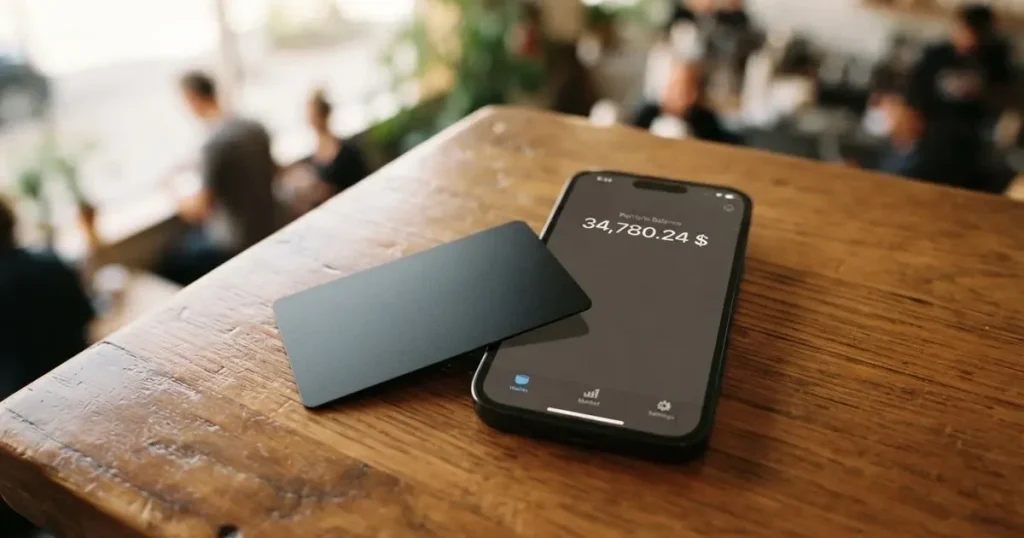
The Bitsa card is a prepaid Visa that holds euros rather than a bank account. You load it — with crypto, by card, by bank transfer, from a wallet or with a voucher — and then you spend that balance anywhere Visa is accepted. What made it interesting to me is the combination: a European IBAN, a euro balance, and a crypto top-up path that does not require you to sell through an exchange first. What held it back is a picture that is much less tidy: the issuer is not named on the pages I could read, the country list is not published by the card itself, and the user reviews I found are among the worst I have seen in this category. I scored it 5.0 out of 10, and a lot of that number is the gap between the first half of that sentence and the second.
Conditions described here are current as of October 28, 2026.
If you are shopping among crypto cards, the parts that matter most to your decision are in the last third of this page: the alternatives, my recommendation, and the questions people actually ask. But read the cost and risk sections first, because Bitsa’s problem is not that it is badly built — it is that what you are buying is a prepaid card, and prepaid cards behave nothing like the bank card you may be replacing.
Verdict: 5.0 out of 10, and the reason is trust rather than features
The headline number is 5.0/10. Let me show you how that comes apart, because the shape of the table matters more than the total.
| Criterion | Mark | Why |
|---|---|---|
| Who can get it | 5 / 10 | The card does not publish its country list; unofficial sources point to 27 EEA states, with Bulgaria, Croatia, Latvia, the UK, the US and Canada restricted |
| Cost | 4 / 10 | A physical card at EUR 20, a virtual one at EUR 2.50, plans from free to EUR 9.99 a month, plus a 1.5% top-up fee by card and 1.75–2% on payments outside the euro zone |
| Top-up options | 5 / 10 | Bitcoin, Ethereum and USD Coin are listed, along with card, SEPA, wallet and voucher — but the card does not name the networks |
| Reliability and complaints | 3 / 10 | No issuer named on the pages I read; Trustpilot at 1.3/5 across 363 reviews, 68% of them one-star, with frozen accounts as the recurring theme |
| Everyday use | 9 / 10 | Physical and virtual Visa, European IBAN, mobile wallet support confirmed in current help material, ATM abroad at EUR 0.55 + 1% |
| Total | 5.0 / 10 | A good card for spending, attached to a service that its own users are unhappy with |
Who this suits: someone in the EEA who wants a prepaid euro Visa with an IBAN, is comfortable holding money with a provider rather than a bank, and mainly spends the balance rather than parking a salary on it. If that is you, the mechanics are sound and the price is not predatory.
Who it does not suit: anyone whose income depends on the card being reliably available, anyone who needs deposit-guarantee protection on the balance, and anyone in a country the card has not clearly said it serves. The card’s own pages do not say which countries those are — that is not stated. What circulates elsewhere is a list of 27 EEA countries served and six restricted, and I treat that as unofficial rather than confirmed by Bitsa.
There is one more thing worth saying plainly before the details. Bitsa describes itself as “a prepaid Visa crypto card” managed in an iOS or Android app, with crypto converted into euros and a European IBAN attached. Prepaid means the balance is yours in the merchant’s eyes, not a claim on a bank account. That distinction will matter at three points below: on fees, on account freezes, and on what happens when a provider stops.
Will they give you the card?
The short answer is: the card does not publish a country list, so the only honest thing I can do is tell you what circulates and label it as unofficial.
From what I read on Bitsa’s public pages, eligibility is not stated. Third-party card comparison sites report that the card serves residents of supported EEA countries, with an available list of 27: Austria, Belgium, Cyprus, Czech Republic, Denmark, Estonia, Finland, France, Germany, Greece, Hungary, Iceland, Ireland, Italy, Liechtenstein, Lithuania, Luxembourg, Malta, Netherlands, Norway, Poland, Portugal, Romania, Slovakia, Slovenia, Spain and Sweden. The same sources list Bulgaria, Canada, Croatia, Latvia, the United Kingdom and the United States as restricted, with Croatia and Latvia flagged in August 2026. None of that comes from Bitsa itself, so treat it as a starting point for your own check rather than a guarantee.
That matters more than it might seem. Card availability in this category is decided by the issuer’s own risk policy as much as by the brand on the app, and the issuer is not named on the pages I could read. So even a country on a third-party list is a country someone believes is served, not one the card has committed to in writing.
What about identity checks? Also not stated on the official pages. Unofficial reporting describes proof of residence in an eligible country plus identity verification, with 16- and 17-year-olds going through a “Bitsa Young” route that requires guardian authorisation in the app. The same source says the issuer may suspend accounts for failed verification, for fraud or anti-money-laundering risk, or where source-of-funds documents are missing. That last clause is the one to sit with. It is the mechanism behind a large share of the complaints I found later in this review.
Nobody publishes prepaid card delivery times or shipping details on the pages I read either — also not stated. What you can price is the card itself: EUR 20 for a physical card, EUR 2.50 for an additional virtual one.
One general point so the rest makes sense. Prepaid and debit cards are generally available to adults aged 18 and over, and some issuers set higher limits for everyone else. If you are under 18, you are in the unofficial “Bitsa Young” territory described above, which is exactly the kind of thing that changes without notice.
How to get it
Bitsa is described as a prepaid Visa crypto card, available physically and virtually, with crypto converted into euros, a European IBAN, and everything managed in an iOS or Android app. That is the whole product in one sentence, and it is a real, functioning proposition rather than a crypto wallet pretending to be a card.
The application sequence is not described in detail on the pages I read. What I can reconstruct from the card’s own positioning is that you sign up in the app, verify identity and residence, choose a plan, and either order a physical card or start with a virtual one. Two practical points follow from that structure. First, the virtual card at EUR 2.50 is the cheap way to find out whether the service works for you before committing EUR 20 to plastic. Second, and more importantly, the account is the product: the card is just the interface to a euro balance, so any problem with the account reaches the card immediately.
I will not walk you through how to get around verification, and I would be wary of anyone who offers to. Identity checks in this category are not a formality to be edited — EU rules require institutions to establish name, address, date of birth, nationality and identity documentation, run a sanctions check, understand the purpose of the relationship and assess whether you are a politically exposed person. If those checks cannot be completed, the rules require the institution to stand aside from the transaction or relationship, and where necessary to end it. That is why accounts close or freeze pending documents. It is the law working, not a glitch to route around.
Fees: what it really costs day to day
This is the section where prepaid cards stop looking cheap. The numbers are all the card’s own where they exist; I have flagged the ones that are not.
| Fee or limit | Value |
|---|---|
| Physical card | EUR 20 |
| Virtual card | EUR 2.50 |
| Plan Free | EUR 0; Move EUR 0.99/month or 8.99/year; Pro EUR 9.99/month or 69.99/year |
| Top-up by external card (non-free plans) | 1.5% |
| International payments | 1.75% outside the euro zone; 2% elsewhere |
| Transfer commission | EUR 1 on Free and Move; free on Pro |
| ATM abroad | EUR 0.55 + 1% of the amount, minimum EUR 0.75 |
| Cash withdrawals outside Spain | maximum EUR 450 per day |
| Crypto conversion spread | not stated |
Two things jump out of that table. The first is that the conversion spread is not stated. You can see what you pay to put money in and what you pay when you spend abroad, but the cost of turning crypto into euros is not published. That is the single number I would most want to see before committing money, and unofficial reporting gives figures that vary by plan — a crypto sell fee around 2.39%, 2.14% and 1.89% for Free, Move and Pro respectively — but I would not plan a budget around those.
The second is the 1.75% and 2% international payment fee. That is not an FX markup in the old sense; it sits on top of whatever the network rate is. On a EUR 40 subscription paid from outside the euro zone that is EUR 0.70, every month, for the privilege of not being able to hold a second currency. And the unofficial detail that the account is euro-denominated, with crypto converted to EUR before spending, means you take the conversion hit too.
Now three ordinary payments, with the fees that actually apply.
A EUR 30 grocery shop in Paris, on the Free plan. No top-up fee, because you were not topping up. No international payment fee — France is in the euro zone. No conversion, because the balance is already euros. This is the cheapest way to use the card and the reason people like it.
A EUR 12 monthly SaaS subscription billed in USD. You are paying outside the euro zone, so 1.75% applies, or EUR 0.21. If the subscription has been sitting in a balance you funded with crypto, the conversion spread applies as well, and that figure is not stated. Budget a little under 3% of the transaction as a working assumption, and treat it as a reason to keep the balance in euros rather than in USD Coin where you can.
EUR 200 in cash from an ATM in Lisbon. EUR 0.55 plus 1% of EUR 200 is EUR 0.55 plus EUR 2.00, so EUR 2.55, and your bank at home may add its own charge on top. Note the ceiling: EUR 450 per day outside Spain. Unofficial figures suggest allowances of one withdrawal a day up to EUR 350 on Free, two on Move and four up to EUR 900 on Pro, with the full operator fee passed through in Spain. The same source notes a conflict in the Eurozone wording — issuer terms quoted at EUR 2.50 against a newer guide saying operator fee only — which is another reason to check your own terms rather than trust either number.
One more cost that is easy to miss: card cancellation and balance management at expiry is reported as EUR 0, but third-party transfers out are reported at EUR 1.50. And if you are on the Free or Move plans, the EUR 1 transfer commission is charged on transfers, not just card top-ups.
Top up: six ways in, and one question you must ask first
Bitsa lists Bitcoin, Ethereum and USD Coin, and also card, SEPA transfer, wallet and voucher. That is a genuinely broad set of doors. It is also where this category can quietly cost you money, so let me take them one at a time.
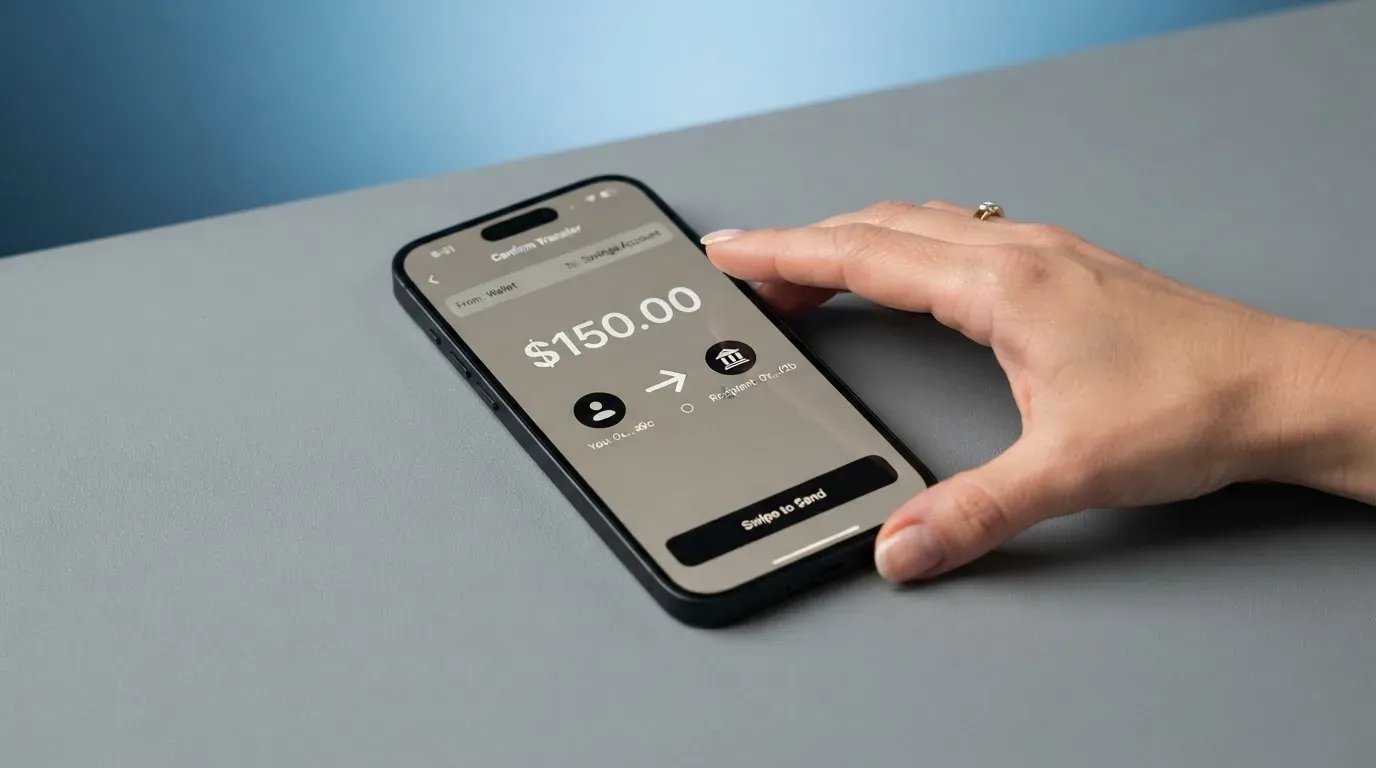
Crypto is the reason most people arrive. Bitcoin, Ethereum and USD Coin are the listed assets. Networks are not stated on the card’s pages, and that omission is the whole ballgame. A blockchain transfer sent on a network the provider does not support, or to an address belonging to a different network, can be lost or need manual recovery with no guarantee — transfers are irreversible and no network can claw them back. Unofficial sources say external-wallet top-ups explicitly accept BTC, ETH and USDC and advise generating a new address each time, and report a crypto buy fee of 0% on all plans, a top-up ceiling of up to EUR 20,000 a day, and external-card top-ups costing 1.5% once an allowance is used. I would not send a meaningful amount until the app has shown me the address and network on screen.
The USDC point deserves an extra line, because it is where people most often lose money. Circle lists USDC as natively supported on 38 networks as of 16 September 2026, including Ethereum, Solana, Base, Polygon PoS, Avalanche, Arbitrum and Stellar. Circle stopped supporting USDC on Tron in February 2024, so “USDC over TRC20” is not a native option. And on Ethereum, ERC-20 fees are paid only in ETH — a wallet holding USDT but no ETH cannot send. So the correct question is not “can I send USDC” but “which network, and do I hold the gas token for it”.
By card, SEPA, wallet and voucher, the reported figures are 1.5% after an allowance by external card, and unofficial reporting suggests 0–6% for voucher reloads, with no annual or hidden fee language elsewhere. Limits are the card’s own and worth memorising, because they differ sharply by plan:
| Plan | Crypto or card top-up limit |
|---|---|
| Free | EUR 500 per day, EUR 1,000 per month, EUR 2,500 per year |
| Move | EUR 1,200 per day, EUR 5,000 per month, EUR 15,000 per year |
| Pro | Unlimited |
Crypto reloads are capped at a maximum of EUR 20,000 a day across the service. Worth noting alongside this: unofficial reporting says the in-app crypto side is buy and sell only, and holdings cannot be sent to or received from external wallets. So for some people this is a sell-and-spend tool rather than a bridge between wallets — check that before you plan around it.
Paying with it every day
This is the part Bitsa does best, and it is why the everyday-use mark is 9 out of 10. Physical and virtual Visa, European IBAN, euro balance, accepted wherever Visa is accepted, inside and outside the euro zone. There is no crypto volatility between the moment you load and the moment you spend, because the balance is euros.
Mobile wallets are confirmed in current help material: Apple Pay and Google Pay. Samsung Pay was announced earlier but has no current setup guide, so I would not plan on it. How each one is set up is not spelled out on the official pages I read. The way these work in general: Apple Pay replaces your card number with a device-specific number stored in the Secure Element, never on Apple’s servers, and each payment carries a one-time dynamic code. Your issuer can also restrict the tokenised number — blocking it on magnetic stripe, on phone payments, or on websites — so a card that works in a shop can still be declined online.
Rewards exist but are thinly documented. Cashback up to 15% is listed among the plan services, with the Move plan mentioning cashback at favourite brands. The payout asset and the conditions are not stated. I would treat the 15% as a marketing ceiling rather than an expectation; the same official pages do not say how many merchants count as favourites.
One thing to know that is not about this card specifically. Merchants can look up the BIN — the first six or eight digits of your card number — to see which institution and country issued it, and some apply extra scrutiny when the issuer country differs from the billing address. Some decline prepaid or foreign BINs outright, precisely because that lookup reveals the card type. Address verification, which compares the numeric parts of your billing address against issuer records, is mainly offered in the US, Canada and the UK and is generally unavailable for foreign-issued cards, which can cause declines. And a declined authorisation can leave a hold on your funds for days. None of this is a Bitsa defect; it is what a prepaid card is, and it is the tax you pay for not holding a bank account.
App ratings: not stated on the official pages I read. Unofficial reporting puts it at 2.8 or 2.9 out of 5 on Google Play, with the figure differing within the same page and no number of ratings given. I am not going to build much on that.
What can go wrong
This is the section I would put at the front of the review if I could only keep one. Bitsa’s official pages record no incidents, and no Bitsa Trustpilot page or Reddit threads surfaced in my checks. What did surface is a single unverified secondary aggregator, reporting Trustpilot scores around 1.3 to 1.5 out of 5 with account freezes after deposits and unresponsive support.
Read from Trustpilot on 20 October 2026: Bitsa at 1.3/5 from 363 reviews, with 68% of them one star. The themes, in order of how much they should worry you:
- Accounts frozen or blocked with funds withheld. Reviews from September 2020 through September 2026, including several in May, July and September 2026.
- Support unresponsive for weeks or months, reported in July 2026.
- Repeated document and KYC demands, reported in 2025.
- Crypto top-ups partly or not credited, reported in May and November 2025.
- Login and app failures, reported in September 2026.
- Unexplained closure, reported in January 2025.
The company has not replied to negative reviews. Two reviewers claim regulator warnings; that is unverified. I am passing these on as user reports from an aggregate source, not as findings — but the pattern is consistent with what the card’s own structure predicts. An unofficial account of the security model says the setup is custodial after funding, with the euro card balance held inside the PecunPay programme, an SMS code plus a personal SCA secret for online purchases and sensitive changes, and cards blockable in the app. Custodial means someone else holds the credentials, so you must trust them completely. In this category that trust has a documented cost: Mt. Gox reported about US$350 million stolen in 2011–2014, Coincheck about US$400 million in 2018, and Ronin Network US$625 million in 2022.
The corporate picture has the same gap. Bitsa is described as “BITSA is a simplified joint stock company (SAS) registered in the Nice Trade and Companies Register” in France, but the card issuer or BIN sponsor is not named on the pages I fetched — the footer links to “Card issuer conditions” and “Payment service provider” exist, and I did not read them. Licences are not stated. Unofficial reporting names the issuer as Pecunia Cards EDE S.L.U. under the PecunPay programme, on Banco de España register 6707, with Bitsa SAS as programme operator. You should verify that yourself.
Why does the issuer matter so much? Because of how this business is layered. Visa and Mastercard do not issue crypto cards to consumers themselves; they license issuers and can suspend a programme. The network routes messages and sets the rules, the issuer holds the programme and is the regulated party, and the crypto brand is often only a programme manager or front end. So when something goes wrong, the people who can unfreeze your money are the issuer, not the app on your phone.
And programmes do close. WaveCrest, a Visa card issuer that supplied crypto card brands, was suspended by Visa in Europe in 2018, closing all its Visa programmes. Visa terminated its global agreements with FTX on 13 November 2022 and the FTX US debit card was wound down. Closures typically follow a pattern: a notice period, then spending and loading stop, then users are asked to withdraw remaining balances. One 2026 closure reported by a secondary source ended new loads on 8 July 2026 and spending on 8 August 2026 — a single unconfirmed source, quoted only to show what the timeline looks like.
Support channels and response times: not stated on the official pages, and unofficial sources report none published, with reviewers describing slow or absent replies. Security details, delivery, disputes and company news: not stated on the pages I read.
What none of this is: a prediction that anything will go wrong for you. It is a statement of who holds your money when the balance is in euros — a prepaid balance, safeguarded rather than banked, and safeguarded funds are not the same as deposits, so deposit-guarantee schemes may not cover them.
What to take instead
Three cards in this category scored higher than Bitsa, and the reasons are instructive. Each is useful precisely where Bitsa is weakest: clear pricing, or a named issuer and country footprint.
International Visa Card, 6.7/10. A U.S.-issued Platinum Visa, virtual only, paying in USD, with the physical card listed as “coming soon”. Eligibility is the most explicit of the three: no account or card for residents or legal registrants of Belarus, mainland China, North Korea, Cuba, India, Iraq, Iran, Israel, Myanmar, Nepal, Nicaragua, Russia, Syria, Turkey, Ukraine, Venezuela or Vietnam, with FATF grey-list countries reviewed case by case, and purchases blocked in North Korea, Cuba, Iran, Russia, Syria, Ukraine and Venezuela. Note the basis is residence or registration, not citizenship. Cost: $5 for the virtual card, no maintenance fee, plans Classic free, Pro $9.00/month, Max $19.00/month. Spending in USD is free; foreign currency costs the Visa exchange rate plus a 2% FX fee; deposits of any kind are free. No cashback stated.
UNi Card, 6.1/10. A multicurrency card on the Mastercard network, spending from the UNi.Global account balance. No annual fee, no foreign transaction fee, conversion at live over-the-counter rates and what the card calls no hidden exchange fees, plus spend-to-earn rewards up to 3%. Eligibility, issuance fee, funding routes and physical-versus-virtual status are not stated — so it wins on published pricing and loses on published detail.
Whop Cards, 5.2/10. Visa, working anywhere Visa is accepted, spending from a Whop balance that a pending payment can already fund, with stablecoin collateral from a linked wallet. The page says “no extra fees” but lists no issuance or monthly amounts, and gives no conversion or FX figures. Rewards are 5% cashback at select merchants, currently Uber, with payout currency and conditions not stated. Its footprint is US-only: 31 states for consumers and 41 for businesses, with a long unsupported-country list including Belarus, mainland China, Cuba, Hong Kong, India, Iran, Iraq, Israel, Myanmar, Nepal, Nicaragua, North Korea, Russia, Syria, Turkey, Ukraine, Venezuela and Vietnam.
Here is the comparison in one view:
| Card | Score | Cost | Fees published | Who is excluded |
|---|---|---|---|---|
| Bitsa | 5.0/10 | EUR 20 physical, EUR 2.50 virtual; plans EUR 0–9.99/month | 1.5% top-up, 1.75–2% international, EUR 0.55 + 1% ATM abroad | Country list not stated by the card; unofficial: Bulgaria, Canada, Croatia, Latvia, UK, US restricted |
| International Visa Card | 6.7/10 | $5 virtual; plans free to $19.00/month | Visa rate + 2% FX; USD spend and deposits free | 17 named countries, residence or registration basis |
| UNi Card | 6.1/10 | No annual fee; issuance not stated | No foreign transaction fee; live OTC rates | Not stated |
| Whop Cards | 5.2/10 | “No extra fees”, amounts not listed | Not stated | 17 named countries; US-only footprint |
The pattern is worth naming: the cards that scored higher than Bitsa are the ones that publish their exclusions. A short, honest “not available here” list is a better sign than a long page of feature descriptions.
Who I would recommend it to
I would recommend Bitsa to someone in a listed EEA country who has a specific reason not to be able to hold a normal euro bank account, and who treats the balance as spendable cash rather than savings. Someone paying a crypto freelancer, someone who keeps money in stablecoins and would rather not touch an exchange to spend it, someone who needs a European IBAN on a prepaid card for a subscription or a landlord. For those people the card does a straightforward job at a price that a careful spender can manage.
I would not recommend it as your primary money. The 1.3/5 across 363 reviews with 68% one-star, the frozen-accounts pattern running from 2020 to September 2026, the unnamed issuer on the pages I read, and the support picture together add up to one sentence: this is a service where people report losing access to their money and not getting answers. If you are choosing a card because your bank refused you one, an unfamiliar provider that cannot tell you who the issuer is, on what licence, is a fragile place to put a month’s income.
Two decisions would move it up my list. The first is finding out, in writing, who the issuer is and what protection your balance carries — read the issuer conditions and the payment service provider documents the footer links to, and check the issuer on the relevant national register. The second is testing with EUR 50 on the Free plan before you test with a larger amount on Pro. If a small balance moves smoothly in and out, the mechanics are sound; if it stalls, you have learned that for the price of a lunch.
And if your actual problem is getting a card at all, look at the alternatives above first. Two of the three publish their country rules openly, which makes them easier to plan around than a card that will not tell you where it works.
Frequently asked questions
What is the Bitsa card?
Bitsa is a prepaid Visa that holds euros rather than a bank account. You top it up with crypto such as Bitcoin, Ethereum or USD Coin, or by card, SEPA transfer, wallet or voucher, and the balance converts to euros that you spend anywhere Visa is accepted. It comes in physical and virtual form with a European IBAN, managed through an iOS or Android app. It is a spending tool, not a place to keep savings.
Is Bitsa a bank?
No. Bitsa describes itself as “a simplified joint stock company (SAS)” registered in the Nice Trade and Companies Register in France, but the pages I read do not name the card issuer or state any banking licence. Unofficial sources point to Pecunia Cards EDE S.L.U. and its PecunPay programme as the issuer, with Bitsa SAS as programme operator. A prepaid card draws on a stored balance, not on a bank account you hold.
Does the Bitsa card require KYC?
The card’s public pages do not say, so treat that as unstated rather than as no. Unofficial reporting describes proof of residence in an eligible country plus identity verification, with a “Bitsa Young” route for 16- and 17-year-olds needing guardian authorisation. EU rules in any case require institutions to verify identity, screen sanctions and assess politically exposed person status before serving you.
Is the Bitsa card free?
The Free plan is EUR 0, and one of the unofficial tier breakdowns gives Free a single virtual and one physical card. But the physical card itself costs EUR 20 and an additional virtual card EUR 2.50, so “free” applies to the plan, not to getting started. Top-ups by external card cost 1.5% once an allowance is used, which usually costs more than the plan.
Which countries can use the Bitsa card?
Bitsa does not publish a country list — that is not stated. Unofficial sources list 27 EEA countries served and six restricted: Bulgaria, Canada, Croatia, Latvia, the United Kingdom and the United States, with Croatia and Latvia flagged in August 2026. Because the issuer is not named publicly, treat even the unofficial list as indicative and confirm inside the app before sending anything.
Can I add the Bitsa card to Apple Wallet?
Apple Pay and Google Pay are confirmed in current help material, though the setup steps are not spelled out on the official pages I read. Samsung Pay was announced earlier but has no current setup guide, so I would not count on it. Once tokenised, the card number is replaced by a device-specific number and each payment uses a one-time code, and your issuer can still block the tokenised card on websites or in stores.
How do I top up the Bitsa card, and which network should I use?
The card lists Bitcoin, Ethereum and USD Coin, plus card, SEPA, wallet and voucher top-ups, but does not name the networks. Check the address and network shown in the app before sending, because blockchain transfers are irreversible and a wrong network can mean lost money. Circle lists USDC on 38 networks as of 16 September 2026 and stopped supporting it on Tron in February 2024, and Ethereum fees are paid only in ETH.
Is it safe to keep money on a Bitsa card?
Treat the balance as held by a provider rather than banked, and do not treat it as guaranteed. Funds safeguarded by an e-money institution are not bank deposits and may not be covered by deposit guarantee schemes. Beyond that structural point, unofficial reporting describes the balance as custodial within the PecunPay programme, and user reports on Trustpilot include frozen accounts with funds withheld, running from 2020 to September 2026. Keep only what you could lose.
Can I withdraw money from the Bitsa card?
You can withdraw at ATMs, and the card publishes the abroad fee: EUR 0.55 plus 1% of the amount, with a minimum of EUR 0.75. Withdrawals outside Spain are capped at EUR 450 per day, and unofficial figures suggest one withdrawal a day up to EUR 350 on Free, two on Move and four up to EUR 900 on Pro. Whether the card itself supports sending funds to your own bank account is not stated on the official pages, so check before you rely on it.
What should I do if the Bitsa card freezes my account?
Expect to prove who you are and where your money came from, and start early, because reviewers report repeated document requests and weeks without a reply. Freezing happens where verification is incomplete or where source-of-funds documents are missing, which is why keeping those documents ready matters. Your realistic route is the app’s support channel, then the issuer and payment service provider documents the footer links to, since Bitsa is the front end and the issuer is the party that holds the programme.
App and neobank cards in the catalogue – cryptocardcatalog
Content created by the «cryptocardcatalog» team