
OKX Money card: a closer look at availability, costs and everyday use
 Available in US
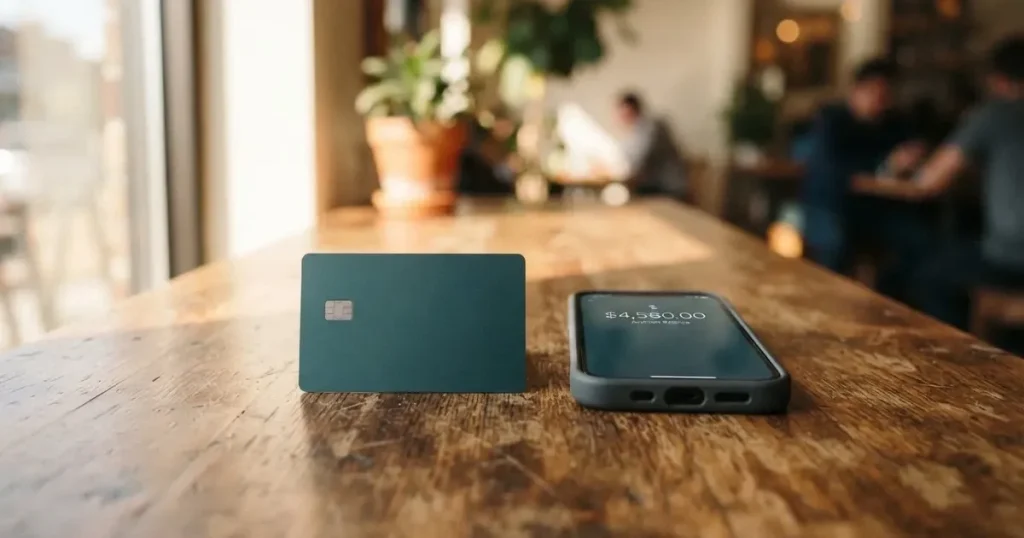
The OKX Money card is one of the newer entries in the growing field of payment cards that draw on a crypto balance instead of a bank account. It launched on 6 October 2026 as a standalone app, separate from the older European OKX Card, and is built around a simple idea: fund the app in your local currency, convert it to a dollar-backed stablecoin, and spend the result anywhere a card is accepted. The pitch is clean. The execution, as the sections below show, leaves a lot of practical questions unanswered, and that matters for anyone who is about to rely on it for daily spending.
The conditions described here are current as of October 28, 2026.
Verdict
I gave the OKX Money card 6.7 out of 10, a middling score that reflects real strengths undercut by important gaps in publicly available information. The card is strongest where it matters most for everyday users — its fee structure is genuinely competitive — but it loses points on transparency, on the narrowness of its availability, and on a lack of detail that leaves a thoughtful person guessing.

Here is how the score breaks down by criterion:
| Criterion | Mark | Why I gave this mark |
|---|---|---|
| Who can get it | 6 / 10 | Selected emerging markets in Latin America, Africa, South Asia and the Middle East; the list is not published |
| Cost | 8 / 10 | Zero foreign-exchange fee and no conversion markup; issuance and maintenance fees are not disclosed |
| Top-up options | 6 / 10 | The account is funded in 50+ currencies and converted to USDG, USDC or USDT; the supported networks are not named |
| Reliability and complaints | 6 / 10 | OKX operates under licences in 30+ jurisdictions; the card issuer is not named; no official incidents for the card; the exchange’s Trustpilot score is 1.9/5 from 1,624 reviews |
| Everyday use | 7 / 10 | Virtual or physical card from a single app; up to 10% cashback; Apple Pay, Google Pay and ATM details are not disclosed |
The card is best suited to people in the markets where it actually works — users in selected emerging economies who want to save in digital dollars and spend locally without taking a hit on currency conversion. It is not the right choice for anyone in Europe, North America or most of East Asia, because it is not offered there, and it is not the right choice for anyone who needs a card with every detail published up front.
Will they give you the card
This is the first question that matters, and it is also the one with the least public detail. OKX describes its rollout as targeting “selected emerging markets in Latin America, Africa, South Asia and the Middle East”, and says it is expanding market by market. The exact list of supported countries is not published on the official card page. That means there is no clean way to check eligibility before you sign up; you have to download the app, create an account, and see what the system tells you.
Unofficial reporting in October 2026 — for example, an article on ProPakistani dated 6 October — named South Africa, Kenya, Nigeria, Pakistan and Bangladesh as launch markets. Unofficial in this context means the information comes from a third-party outlet rather than from OKX’s own page, so I would treat the list as a strong hint rather than a confirmation. The official line is closer to “if your country is on the list, you’ll know during sign-up”.
The point of telling you this is not to be evasive. It is that eligibility is genuinely the deciding factor, and the card’s own materials do not make it easy to check. If you are in one of the named markets, the rest of this review is directly relevant. If you are elsewhere, the card is simply not an option for you right now.
How to get it
The signup flow follows the standard pattern for a regulated crypto product. New users create an account and pass identity checks before they can fund the balance, as is required under anti-money-laundering and counter-terrorism-financing rules in most jurisdictions where OKX holds licences. The specific documents the app asks for are not stated on the public page, but in practice this usually means a government-issued ID, a selfie, and a proof of address, with the exact set depending on your country and risk profile.
Once your account is verified, you can issue a virtual or physical card from the same app. The card is built into the standalone OKX Money application rather than the main OKX exchange app, which is worth knowing if you already have an OKX account — the two are separate products. The network and the card’s base currency are not stated on the official card page; one third-party source, crypto.news from October 2026, identifies the network as Mastercard. I am treating that as unofficial until OKX confirms it itself. The card’s delivery time and any tiered identity-verification levels are also not stated.
For most readers, the practical takeaway is straightforward: plan on a verification step that takes some time, expect a virtual card to be available almost immediately, and treat the physical card’s arrival as a question for the app once you have set up your account.
What it really costs
The fee story is the cleanest part of the OKX Money pitch. The official card page says OKX Money charges zero foreign-exchange fees and adds no conversion markup on purchases in another currency, and it says that converting between supported stablecoins carries no conversion fee. That is a strong statement, because most crypto cards either charge a percentage on every foreign-currency purchase, or build a margin into the exchange rate, or both.
What is not stated is just as important as what is. The page does not publish an issuance fee, a monthly maintenance fee, an annual fee, an ATM withdrawal fee, a card-replacement fee, or any tiered pricing. The only spending limits mentioned are the user-controlled ones you can set yourself in the app (per third-party reporting). The absence of disclosed numbers is not the same as “there are no fees” — it just means you won’t know what the fee is until you are looking at it inside the app.
Here is the costs summary, drawn directly from the public information available:
| Fee or limit | What the card says |
|---|---|
| Issuance | not stated |
| Monthly or annual fee | not stated |
| Currency conversion (crypto to fiat at the point of sale) | none disclosed |
| Foreign-exchange fee on purchases in another currency | zero |
| Conversion markup | none added |
| ATM withdrawal | not stated |
| Daily and monthly spending limits | no fixed amounts published; user can set their own in the app |
| Reward currency | not stated |
To make this concrete, here are three everyday payments and what fees would apply, based on what the card does and does not say:
- Coffee paid in the local currency with a balance already in USDG: the conversion from the local-currency top-up to USDG happened earlier, and there is no disclosed conversion fee; the in-store payment is in local currency, so no foreign-exchange fee applies.
- Online purchase from a foreign merchant billed in euros when your balance is in USDG: the official page says zero foreign-exchange fee and no conversion markup, so the only cost should be the spread between the market rate and whatever rate the app actually uses — a number OKX does not publish.
- Cash withdrawal from an ATM: not stated, which is the honest summary. Until OKX publishes the ATM fee and any minimum, treat every ATM use as a small unknown cost.
The bottom line on costs: the headline fee structure is genuinely user-friendly, and the 8/10 mark for cost reflects that. The deductions are for the things you cannot check in advance.
Top up: how to fund the card
Funding is where the OKX Money model differs from a lot of crypto cards. The account is funded in more than 50 supported fiat currencies and the amount is converted into dollar-backed stablecoins — USDG, USDC or USDT — held inside the app. From there, the card draws on that stablecoin balance when you spend. The currencies you can fund with cover most of what the card’s target markets would actually use, and the choice of three major dollar stablecoins is meaningful, because it lets you hold the one you trust most.
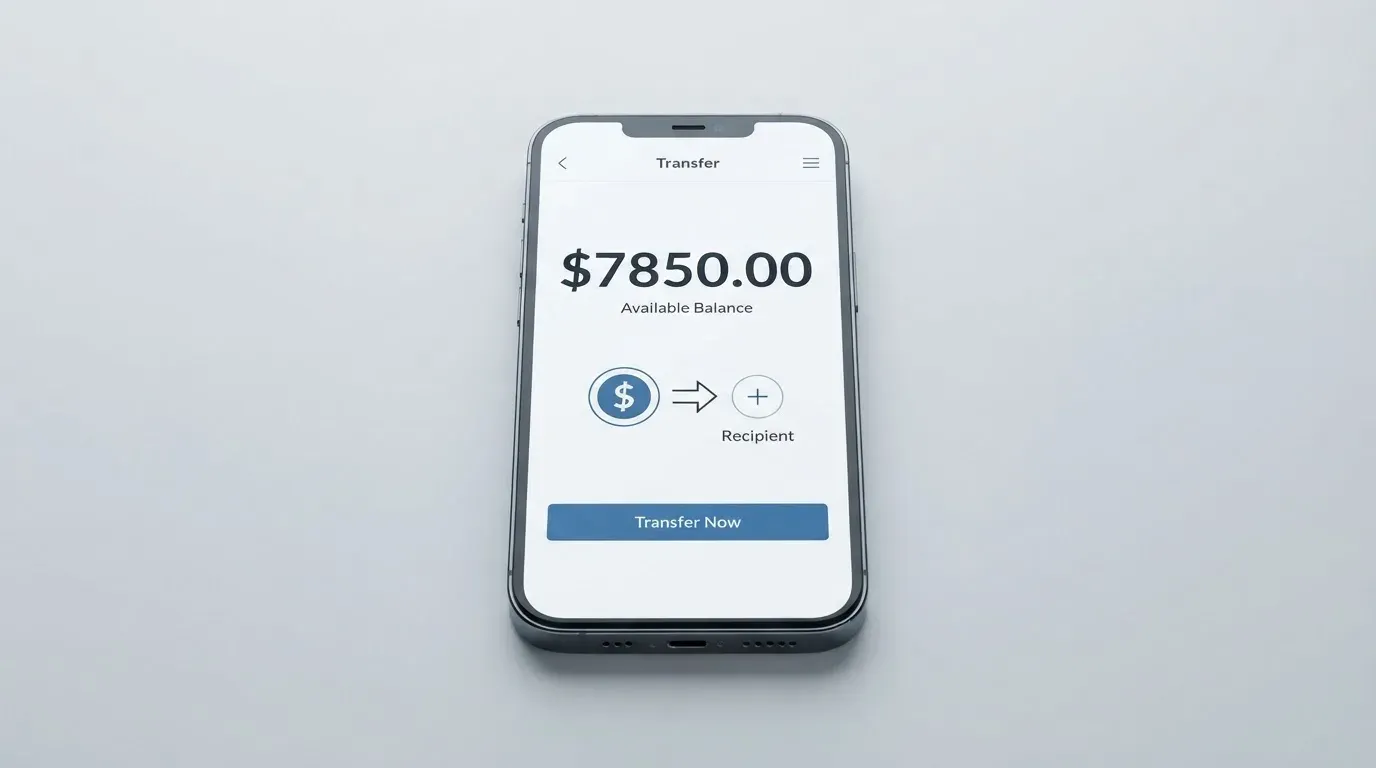
The information gap is in the details. The minimum top-up amount, the top-up fee, the maximum balance, the processing time, and the supported deposit networks for crypto top-ups are all not stated on the official page. That matters in particular for crypto-to-stablecoin transfers, because a deposit sent on a network the provider does not support is generally not recoverable. If you are funding the card with crypto from another wallet, treat the network choice as the single most important decision you make.
The withdrawal side of the equation is also not stated, so I can’t tell you how to move money back out of the card balance. That is a real gap. A payment card you can only put money into and not take money out of is, in practice, a closed loop, and the right way to think about OKX Money today is as a spending tool rather than a financial account.
Paying with it every day
Once the card is funded, the day-to-day experience is built around the standalone app, the card itself, and the rewards.
The OKX Money app is where everything happens. The card is virtual or physical, issued from the same application, and a single app manages the balance, the spending, the rewards and the limits. I have not been able to check the app’s store ratings as part of this review, so the question of how well the app works in practice is one I can’t answer from the public information alone.
The reward structure is one of the more interesting parts of the offer. OKX advertises up to 10% cashback on qualifying purchases for eligible customers, with the actual rate varying by region and eligibility. The reward is paid out in a currency that the public page does not name, which is a small but real gap — a 10% reward in a token that halves in value is not the same as 10% in a stablecoin. On top of the spending cashback, OKX also advertises up to 10% APY on eligible USDG balances held in the app and a referral commission. As with all yield figures, the small print matters: “eligible” is doing a lot of work in that sentence, and the rate you actually see in the app may be different from the rate OKX advertises broadly.
What the official page does not say is the part that will most affect your daily life: whether OKX Money works with Apple Pay or Google Pay, and what the ATM experience is like. A separate product called the OKX Card — the older European one — does support mobile wallets, but it is a different product. For OKX Money, mobile-wallet support and ATM use are simply not stated, and I would not assume they work until the app tells you otherwise.
Disputes, chargebacks and the process for a transaction you didn’t make are also not stated, which is a meaningful gap. With most regulated cards, a chargeback right exists and is well documented. With OKX Money, the public materials don’t tell you what to do if a payment goes wrong, and that is worth raising with the app’s support team before you start relying on the card for anything important.
What can go wrong
The honest answer is that I found no official incidents involving the OKX Money card itself — that is encouraging, but it is also a thin record given that the product only launched in October 2026. The wider OKX group has a longer and more complicated history.
OKX, the company behind the card, operates under licensing frameworks in more than 30 jurisdictions, and that breadth of licences is a real plus: it suggests the group has passed fit-and-proper checks in multiple regulatory regimes. The card’s issuer — that is, the bank or e-money institution that actually holds the licence to issue the card under the network’s rules — is not named on the public page. The issuer is the entity that actually has the regulatory responsibility for your money and your card, so its absence from the public materials is a real gap. The name of the issuer is the first thing I would look for in any small print inside the app.
The exchange itself has a low score on Trustpilot — 1.9 out of 5 across 1,624 reviews as of October 2026 — with recurring themes of slow support and at least one identity-theft case. The exchange’s app page fares better, at 4.5 out of 5 from 34 reviews, but the gap between the two is itself a signal: the place where money and identity meet is the place where complaints concentrate. I should be clear that these are scores for the exchange, not the card. They tell you about the parent company, not this specific product, and the two are not the same thing.
A few broader risks are worth naming because they are part of using any crypto card, not just this one:
- The funds on the card sit as a stablecoin balance inside a custodial app. The stablecoin is only as safe as the custodian and as stable as the token itself; the dollar peg has broken before, most famously in 2022.
- The card issuer can change the rules, restrict the programme, or close it. That has happened to other crypto cards in the past, sometimes with short notice.
- Identity-verification and sanctions-screening rules can lead to accounts being frozen or closed if the issuer cannot complete its checks or if your country or citizenship changes.
The security features of the card — two-factor authentication, instant card freeze, tokenised mobile wallets — are not stated in the public materials, so the question of how OKX Money protects you at the moment of payment is also one the public page does not answer.
What to take instead
The right alternative depends on what you are trying to do. None of the cards below is a perfect substitute, and the OKX Money card’s combination of zero foreign-exchange fee and emerging-market focus is unusual enough that you may not find a direct match. The comparisons below are based on an analysis of public information.
| Card | Score | Strength | Where it falls short |
|---|---|---|---|
| OKX Money | 6.7 / 10 | Zero FX fee, no conversion markup; strong emerging-market focus | Narrow availability; many details undisclosed |
| MSX | 6.4 / 10 | Comparable to OKX on the headline score | Country list, fees, funding, and rewards are not stated on the official pages I could read |
| Bybit Card | 6.0 / 10 | Wide regional coverage (Argentina, AIFC/Kazakhstan, Georgia, Australia, Mexico, Brazil, Peru, Asia Pacific); a published fee table; tiered cashback up to 10% | Not available in the EEA; complex fee structure with FX padding and Argentina taxes; many region-specific quirks |
| Young Card | 5.7 / 10 | Tiered cashback in YNG tokens, with the rate rising from 0.1% (Essential) to 3.6% (Platinum) | Cashback paid in a token, not a stablecoin; lower headline cashback; little else stated on the public page |
If you are choosing strictly on reward rate and a published fee table, the Bybit Card is the most transparent of the four, although the reward structure is region-specific and the headline cashback rate only applies to crypto-funded spending from 5 October 2026 onward. If you are choosing on simplicity, OKX Money is the cleaner story, but the simplicity comes at the cost of detail. MSX sits close to OKX on score but with even less public information. Young Card is the weakest of the four by score, and the token-denominated cashback introduces a price risk the other three do not.
Who I would recommend it to
If you are in one of the markets where OKX Money is actually available — and you are reasonably sure of that because the app told you so during sign-up — and you want a card that lets you hold digital dollars and spend them without paying a foreign-exchange fee, OKX Money is a credible option. The combination of zero FX fee and 50-plus funding currencies is a real feature, and the 10% cashback ceiling is competitive. The thing I would not do is rely on it for anything you cannot afford to have interrupted. The card issuer is not named, the dispute process is not described, and the wider group’s customer-support reputation is mixed. Keep a backup.
If you are in a country that is not on the list, the card is not a real option, and the closest alternatives are the Bybit Card — which is also regionally restricted and not available in the EEA — and the Young Card or MSX, both of which carry their own transparency problems. The honest summary is that the crypto-card market in late 2026 still has a long way to go on the basic question of telling customers, in plain language, what they are signing up for.
Frequently asked questions
What is the OKX Money card?
It is a payment card issued through a standalone OKX app, launched on 6 October 2026. You fund the app in your local currency, the app converts the amount into a dollar-backed stablecoin such as USDG, USDC or USDT, and the card spends that balance. The official materials describe it as a separate product from the older European OKX Card.
How does the OKX Money card work in practice?
You create an account, complete identity verification, top up the app balance in one of 50-plus supported currencies, and the app converts the amount into a dollar stablecoin. The card then draws on that stablecoin balance when you pay. The official page says there is no foreign-exchange fee and no conversion markup on purchases, and that converting between supported stablecoins also carries no fee.
Is OKX Money a bank?
No. OKX Money is a card product offered by OKX, which is a crypto exchange group operating under licensing frameworks in more than 30 jurisdictions. The bank or e-money institution that actually issues the card is not named on the public page, and that entity is the one with the direct regulatory responsibility for your card and your money.
Who owns OKX Money?
OKX Money is part of the OKX group (referred to in company materials as OKX INC.). The group is the entity you are entering a relationship with when you sign up to the app; the card issuer behind the programme is not separately identified on the public materials.
Is the OKX Money card available in my country?
The official line is “selected emerging markets in Latin America, Africa, South Asia and the Middle East”, with the list not published. Unofficial reporting in October 2026 named South Africa, Kenya, Nigeria, Pakistan and Bangladesh as launch markets, but that list has not been confirmed by OKX itself. The most reliable way to check is to download the app and try to sign up.
How do I get the OKX Money card?
Download the standalone OKX Money app, create an account, and complete the identity-verification step. The specific documents are not stated on the public page but typically include a government ID, a selfie and proof of address. Once verified, you can issue a virtual or physical card from inside the app.
Does the OKX Money card require KYC?
Yes. The card requires identity verification before you can fund the balance, in line with the anti-money-laundering and sanctions-screening rules that apply to regulated crypto products in the markets where OKX operates. Until verification is complete, the card cannot be used.
How do I top up the OKX Money card?
You top up the app balance in one of 50-plus supported fiat currencies, and the app converts the amount into USDG, USDC or USDT. Minimum top-up amounts, fees and the supported networks for any crypto-to-stablecoin transfers are not stated on the public page, and that is the area where the card asks the most of your trust.
Is the OKX Money card safe?
The card is part of OKX, a group that operates under licences in 30-plus jurisdictions, which is a positive signal. The card-specific security features — two-factor authentication, instant freeze, tokenised mobile wallets — are not stated in the public materials, and the card issuer is not named. The wider OKX exchange has a low Trustpilot score (1.9/5 from 1,624 reviews), with recurring themes of slow support. Treat the card as a spending tool rather than a place to hold meaningful balances.
Is the OKX Money card worth it?
For users in the supported markets who want to spend dollar stablecoins without paying a foreign-exchange fee, the fee structure is competitive and the 10% cashback ceiling is high. The trade-off is transparency: many everyday details — the issuer, the ATM fee, the dispute process, mobile-wallet support — are not stated on the public page. If those gaps matter to you, the Bybit Card is a more transparent alternative in the regions where it operates.
Exchange cards in the catalogue – cryptocardcatalog
Content created by the «cryptocardcatalog» team