
ZERO ID, reviewed: an anonymous crypto card is appealing until you read the small print
 Available in US
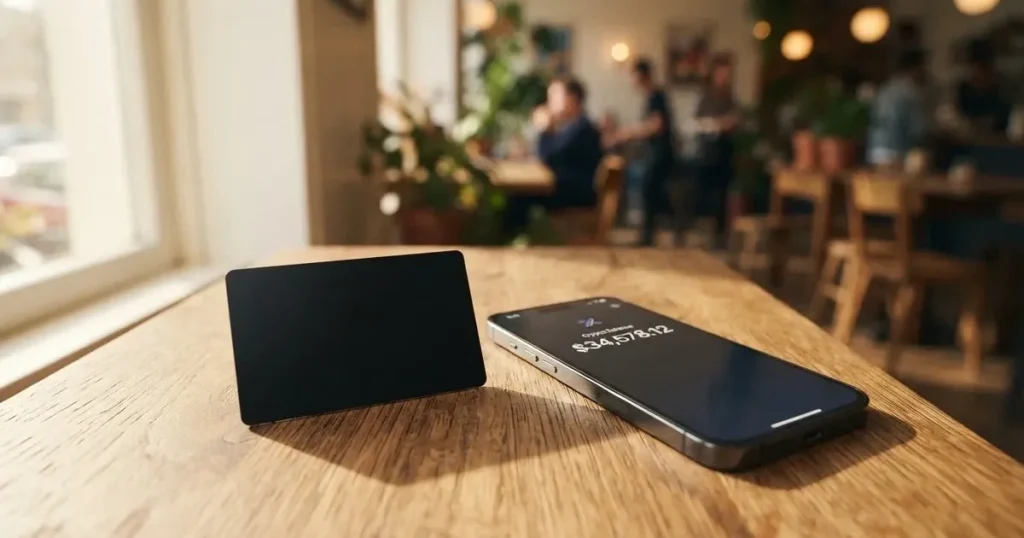
ZERO ID is a payment card that you fund with cryptocurrency and use like any other debit or prepaid card at a shop, online or at an ATM. The hook is anonymity: the issuer’s own pages say there is no identity verification, no paperwork and no KYC. You register, pick a plan, pay in crypto, and the card is activated through a web dashboard. That is the entire sign-up flow.
If you have been turned away by a regular bank, are in a country where opening a card is difficult, or simply value privacy, that pitch has obvious appeal. It is also the reason the card carries meaningful risk. The company behind ZERO ID is not a bank, no issuer is named on the public pages, no licences are listed, and Trustpilot reviews describe uncredited deposits and accounts banned when users tried to withdraw. The score below reflects that trade-off, and the rest of this review walks through what each side of it actually means in practice.
Conditions in this review are current as of October 28, 2026.
Verdict
ZERO ID earns 5.0 out of 10 in this review. It is not a bad product in the narrow sense that the card, once funded, behaves like a normal payment card. It loses marks because the package around it is thin: no named issuer, no licences, weak consumer protection, and a published right for the operator to terminate access “with or without cause”. It is the kind of card you would consider only if every regulated alternative has failed you, and only with money you can genuinely afford to lose.
| Criterion | Mark | Why it scored that way |
|---|---|---|
| Who can get it | 9 / 10 | The site says it works anywhere in the world; the Terms do not name prohibited countries, and there is no KYC. |
| Cost | 2 / 10 | Prices run from $25 for a Virtual card to $599 for Black, denominated in USDT, and the Terms mention a monthly maintenance fee; minimum top-ups start at $100. |
| Top-up options | 7 / 10 | Funding is crypto only: USDT, USDC, Bitcoin and Ethereum, and funds are added instantly after confirmation. |
| Reliability and complaints | 2 / 10 | No named issuer, no licences listed, Trustpilot score 3.1/5 across 7 reviews, and the Terms reserve the right to suspend access without cause. |
| Everyday use | 5 / 10 | A choice of virtual or metal physical cards (Core, Prime, Black), Apple Pay and Google Pay support, but no bank-name ATM partner and no card network named. |
Who this card suits
You live in a country where ordinary bank cards are hard to get, you have no formal ID, you are willing to transact only in cryptocurrency, and you understand that you are trusting an unlicensed operator with the balance on the card. If those conditions match your situation, ZERO ID does what it says on the tin.
Who this card does not suit
You want a regulated card with a named issuer, real dispute and chargeback rights, FSCS or equivalent deposit-style protection, or a known ATM network. You want a fee schedule you can plan a budget around. You want to fund the card from a bank account. In all of those cases, look at a regulated crypto card or a normal bank-issued prepaid card first.
Who will give you the card
The marketing copy on the ZERO ID site says the card “works anywhere in the world”. The Terms do not list a single prohibited country. That is unusually permissive: most crypto cards, even the no-KYC ones, publish a list of excluded jurisdictions because their issuer is bound by sanctions and AML rules. The absence of such a list is the single most important fact about who can actually get the card, and it is worth pausing on.
There is no KYC, no identity documents, no proof of address and no age check mentioned in the Terms. The page that describes sign-up simply says “zero identity verification — no paperwork, no KYC, no documents”. The Terms repeat that no KYC is required to purchase or top up the card. Age is not stated, which means in practice there is no published minimum age either; the cardholder is asked to be honest about this themselves.
If you are an adult, the card is positioned as available to you regardless of where you live. That positioning is unusual but not unique in the crypto-card space. What makes ZERO ID different from peers is that the same statement comes with no licence, no regulator, and no named issuer — so the “anywhere” claim is made by a private company about its own willingness to take your money, not by a regulated institution about its compliance perimeter.
For a reader in a country with strict capital controls, in a sanctioned jurisdiction, or under specific national rules on crypto cards, this matters more than the marketing line suggests. The card does not check; you are the one checking. A short list of the things the card’s pages do not say helps frame the choice:
- They do not say which country the issuer is in.
- They do not say which regulator, if any, oversees the programme.
- They do not name a card network (the site refers to “major card networks” without naming one).
- They do not name an ATM partner.
- They do not state a minimum age.
- They do not name the card’s base currency.
These are all facts that, on a regulated card, the issuer publishes as a matter of course. Their absence here is the point. It is also the reason the card is one of the easier ones to obtain and one of the harder ones to trust.
How to get it
The sign-up flow is short and the website does most of the work. From the public pages, the steps are:
- Register on the site.
- Pick a plan (Virtual, Core, Prime or Black).
- Pay the plan price in crypto, from a wallet you control.
- Activate the card through the web dashboard once the payment is confirmed.
There is no mobile app mentioned in the public pages, and the dashboard is described as a web tool. There is no formal identity step, no selfie, no document upload, and no address verification. The card is either virtual — usable online, no plastic — or a metal physical card, with Core, Prime and Black being the physical tiers. The site says the physical card is delivered in 7–12 business days depending on the region, and the FAQ mentions a Black-tier express replacement for lost or damaged cards, but shipping costs and replacement costs on the other tiers are not stated. The card network (“major card networks”) is not named, and the card’s base currency is not stated.
Apple Pay and Google Pay are mentioned, so a tokenised mobile wallet should work. Activation itself is described as happening in the dashboard after the crypto payment clears. There is no mention of any KYC level, because there is no KYC at all, and so no concept of “tiered” identity checks the way regulated cards describe them.
Two practical things to know before you go through with it:
- You are paying the plan price in USDT, so the cost depends on the USDT/USD rate at the moment you send.
- Because funding is crypto only and transfers are irreversible, sending to the wrong address or the wrong network can lose the money outright. This is a category risk for any self-funded crypto card, and it applies here in full.
Fees: what it really costs
The headline numbers on the pricing page are in USDT, not dollars, and they look like this: Virtual $25, Core $199, Prime $249, Black $599. The page does not say whether these are one-time or recurring. The Terms mention a monthly maintenance fee on the pricing page, which strongly implies that the prices you see on the marketing page are at least partly upfront and that the running cost is layered on top. Beyond that, the Terms say that transaction fees and FX rates depend on the card tier and on the issuer’s policy, and that no specific values are published.
That is the cost section in a sentence: the prices are visible, the running fees are not. Anything beyond the table is guesswork, so a budget that has to last a month is harder to build here than with a regulated card.
| Item | Value as published |
|---|---|
| Virtual card price | 25 USDT |
| Core card price | 199 USDT |
| Prime card price | 249 USDT |
| Black card price | 599 USDT |
| Monthly maintenance fee | Mentioned in Terms; amount not stated |
| Transaction fee | Depends on tier and issuer policy; no value given |
| FX rate / conversion fee | Depends on tier and issuer policy; no value given |
| ATM fee | Not stated |
| Shipping cost (physical card) | Not stated |
| Replacement cost (lost/damaged) | Black: express replacement stated; cost not stated; others: not stated |
| Daily and monthly spending limits | Marketing: “no daily or transaction limits”; FAQ: limits depend on plan; Terms: maximum limits depend on tier, no amounts given |
| Minimum top-up | Virtual $100, Core $100, Prime $300, Black $1,000 |
| Card currency | Not stated |
The most useful way to read this is to imagine three everyday payments and ask, in each case, where the cost comes from.
You buy a coffee for the local equivalent of $4 with a USD-pegged card at a local café. If the card is denominated in a fiat currency you already hold a balance in, this is the simplest case. The conversion fee (crypto-to-fiat) is taken at the time of top-up, not at the time of payment, and the transaction fee is whatever the Terms mean by “depends on tier”. The Terms do not give a number, so the cost is whatever the issuer chooses to charge. On a regulated card this is typically under 1% combined; here it is opaque.
You book a flight online in a foreign currency, paid with the card. On most cards this is where the FX margin shows up. The Terms say FX rates depend on the tier and the issuer’s policy, which means the rate applied to your payment is the operator’s own rate, not a network rate you can see. This is a real and material cost on a regulated card and is likely to be a real and material cost on this one as well, but you cannot predict the size of it from anything the public pages publish.
You take cash out at an ATM. The ATM fee is not stated. Some no-KYC crypto cards do not support ATM withdrawal at all; some do, with their own fee plus the ATM operator’s fee. Without a named ATM partner, it is impossible to know in advance whether your local ATM will accept the card, and at what cost.
Two extra fee-shaped risks are worth flagging because they are not on the pricing page:
- The on-chain network fee for the deposit is on you. USDT and the other supported tokens have to travel on a blockchain, and that blockchain charges its own gas or bandwidth. The Terms say the user bears the cost of the USDT transfer. If you send from a wallet with no native gas token, the transfer will fail.
- Minimum top-ups are surprisingly high. A $100 minimum on a $25 Virtual card and a $1,000 minimum on a $599 Black card mean the working capital the card expects you to commit is large relative to the headline price.
Top up: how to fund the card
Funding is crypto only. The site’s list of accepted tokens is short: USDT, USDC, Bitcoin and Ethereum. There is no fiat on-ramp — no bank transfer, no card top-up, no Apple Pay load, no PayPal. The page says funds are added instantly after the transfer is confirmed on the blockchain.
The same set of accepted tokens also limits the audience, in a way the marketing does not spell out. If you hold a different stablecoin, you have to convert into one of the four accepted ones first, paying whatever fee that conversion charges and accepting the time and price slippage that go with it. If you do not already hold any of these four assets, ZERO ID is not the place to start; you would need a separate exchange or on-ramp to acquire them.
The networks on which those tokens are accepted are not specified. This is a serious gap. USDT exists on multiple chains, including Ethereum (ERC-20), Tron (TRC-20), Solana, Polygon and others, and the deposit address you are given by ZERO ID will be specific to one of them. Sending USDT on the wrong network to a deposit address that expects another network is, in this category of product, the most common way to lose money. There is no on-chain recovery guaranteed by the operator, because blockchain transfers are irreversible. Treat the network selection as the most important decision in the funding flow, and double-check it with support before you send anything large.
The minimum top-up rules double as a kind of soft tier gate. They look like this:
| Tier | Minimum top-up |
|---|---|
| Virtual | $100 |
| Core | $100 |
| Prime | $300 |
| Black | $1,000 |
Withdrawals are not addressed on the pages I read. Funding is one-way in the sense described: you top up, you spend. If you have a balance left and want to take it back out, the Terms do not describe a withdrawal mechanism, which is unusual and not reassuring. Trustpilot reviews include reports of accounts being banned when users tried to withdraw, which I come back to in the risks section.
Paying with it every day
The everyday-use story is the part of ZERO ID that, on paper, is closest to a normal card. The marketing language refers to “tap, swipe, insert, or even cardless access” for the Core, Prime and Black physical cards, and the pricing page mentions Apple Pay and Google Pay. There is no standalone app, and the dashboard is web-based, which means card management — viewing balance, freezing the card, checking transactions — happens in a browser rather than on a phone.
The features that vary by tier are mostly soft benefits. Virtual and Core come with no cashback. Prime gets “limited cashback and reward benefits” without a percentage. Black advertises “up to 5% cashback and exclusive reward privileges”, again without a clean number. The Core card is described as a metal card, the Prime card adds a custom design and priority 24×7 support, and the Black card adds a fully custom design, a VIP concierge and the express replacement mentioned above. None of this changes the underlying card, and none of it adds the regulatory features that a normal bank card would carry.
What the public pages do not describe is more telling than what they do. There is no dispute process, no chargeback procedure and no description of how a refund would work. A separate refund policy page is linked from the site, but its content is not part of this review. There is no address verification service, no 3-D Secure, and no merchant category blocking stated. There is no description of ATM access, of contactless limits, of foreign-transaction handling, of card-to-card transfers, or of what happens to your balance if the programme is wound down. A short list of things you would expect a regulated card to tell you, and that ZERO ID does not, makes the gap concrete:
- No named card network.
- No named ATM partner.
- No stated ATM fee.
- No 3-D Secure enrolment described.
- No 2FA, freeze or instant-lock feature described.
- No dispute or chargeback process described.
- No description of MCC blocks (gambling, crypto, adult content, etc.).
- No description of how a refund would work.
The card can still be a usable everyday spending tool — millions of people use no-KYC crypto cards for online shopping, subscriptions, travel and similar — but the missing pieces mean you, the user, are the one covering the gaps that a regulated issuer would cover for you.
What can go wrong
This is the section where ZERO ID loses the most marks, and it is worth being specific.
The company. ZERO ID, Inc. is described on the site as “a privately owned subsidiary of Global Fintech Holdings”, and it is explicit that it is “not a bank”. The card is issued by “licensed financial partners” who are not named. No licences, no regulator, no jurisdiction. For a card product, that means there is no published supervisory authority you can complain to if something goes wrong. There is no deposit guarantee, no safeguarding obligation, and no ombudsman.
Trustpilot profile. The Trustpilot page for the related app.zeroid.cc (the reviews may also be intended for zeroid.cards) had a TrustScore of 3.1 out of 5 across 7 reviews at the time of reading, with 57% of those reviews giving the lowest score. The profile is unclaimed. The negative reviews, all of which I read, describe three patterns:
- A 400 USDT deposit that was never credited, with no reply from support (July 2026).
- An account banned after the user asked to withdraw 500 USD, with “features stopped working March 31” (April 2026).
- Contact only through a Telegram channel, plus repeated requests for more money from the operator (July 2026).
The positive reviews describe a working no-KYC card and good support, also dated July 2026. The signal is mixed but tilted negative, and the most serious complaints are about money access — exactly the failure mode that matters most.
These are unofficial user reports on a third-party review site. They are not confirmed by ZERO ID, and the small sample size means they should be read as indicators, not as a verdict. They are still the most concrete data point the public record offers, and they line up with what the Terms themselves say.
The Terms. Two clauses stand out. The first is the operator’s right to suspend or terminate access “with or without cause”. That phrase is the legal basis for the “banned on withdrawal” complaint above. If the operator can close the account on its own say-so, the user has very limited recourse. The second is the absence of a dispute, chargeback or refund process. On a regulated card, the issuer is the one who handles a chargeback; here, with no named issuer and no published process, that protection does not exist as a matter of policy.
Security claims. The site says the card is “secured by industry leaders”, which is a phrase that says nothing specific. There is no two-factor authentication described, no instant freeze, no spending limit you can set, and no description of how customer funds are held. On a regulated card, those features are standard and published. Their absence here is not a reason to assume they do not exist, but it is a reason not to assume they do.
Programme risk. Programme closures are a real category risk for any crypto card, including regulated ones. In November 2022 Visa terminated its global agreements with FTX, and the FTX US debit card was wound down by its issuer. In 2018, Visa’s suspension of WaveCrest in Europe closed every WaveCrest-issued programme overnight. ZERO ID’s combination of no named issuer, no licence and a self-described right to terminate “with or without cause” makes the same kind of outcome more likely, not less, and gives the user fewer ways to recover.
Network and address risk. Because the supported networks for the supported tokens are not published, sending USDT or USDC on the wrong chain to the deposit address can lose the funds. Blockchain transfers are irreversible, and there is no on-chain recovery guaranteed by the operator.
None of this is a forecast. It is a list of the things the public pages do not say, plus the complaints real users have filed. Read together, they say: the card is fine while it works, and the risks are concentrated at the moments when money is most at stake — funding, withdrawing, and the moment the programme ends.
What to take instead
The honest comparison set for a no-KYC crypto card is small, because most crypto cards do ask for some KYC. The three alternatives below are aimed at the same general reader — someone who wants to spend from a crypto balance, with friction, and without the full bank-grade identity trail. They are scored out of 10 in our reviews and should be read with the same caution: a higher score means a better overall trade-off, not a guarantee.
| Card | Score | What it is | What it costs | What it accepts |
|---|---|---|---|---|
| Cardex | 5.6 / 10 | A debit crypto card available in 200+ countries, with virtual and physical cards on Verve, Visa, Mastercard and UnionPay. | Site does not publish a fee schedule; the app store listing is Naira-focused. | USDT, USDC and BTC; networks not stated. |
| CardFlow | 4.9 / 10 | A virtual USD Mastercard, created in about 3 minutes, positioned for Nigerians and global users. | Creating a virtual card is free; other fees not stated. | Bitcoin, USDT, ETH, or Naira bank transfer. |
| HyperCard | 4.7 / 10 | A prepaid card with USD or EUR balance, accepted in 176+ countries, with crypto top-up via the app. | The app store page lists no fees. | USDT, BTC, ETH converted to USD or EUR in the app. |
A few notes on the alternatives, because the table flattens out useful detail:
- Cardex positions itself as a “one crypto card, 200+ countries” product and runs across several card networks, which is a meaningful practical difference if you want a card that works in shops in different regions. The site advertises an “AI-powered conversion rate” that picks the best exchange rate at the moment of payment; that is a marketing claim rather than a published fee. Networks for the supported tokens are not stated.
- CardFlow is a virtual-only USD Mastercard, which removes a layer of physical-card delivery and the related time and shipping risk, and it accepts Naira bank transfer as well as crypto, which makes it a more practical top-up option for users in Nigeria. The site says nothing about a physical card.
- HyperCard has the broadest published acceptance footprint of the three (176+ countries, which is acceptance, not eligibility) and a clean app-based top-up flow. It does not publish a fee schedule on the App Store page, and the card network is not named there.
If you specifically want a no-KYC card, NONE of these alternatives is a regulated replacement. If you are willing to accept some KYC, the broader crypto-card market has regulated options that score considerably higher in our reviews; those are worth a separate look if your situation allows it.
Who I would recommend this to
I would recommend ZERO ID only in a narrow situation. You have no usable bank account or ordinary card, you already hold USDT, USDC, BTC or ETH, you are happy to transact in crypto, you are not relying on the card for anything time-sensitive, and you can afford to lose the balance on it without harm. If all of that is true, ZERO ID does what it says it does, and the $25 entry price on the Virtual tier is low enough to test with a small amount before committing more.
I would not recommend ZERO ID if you need a card you can build a budget around, if you want any kind of chargeback or dispute protection, if you need a card that you can hand to a family member and trust to keep working through a dispute, or if the balance on the card represents more than a small fraction of your liquid wealth. The combination of no named issuer, no licences, anonymous Telegram-only contact in some user reports, and the right to terminate “with or without cause” is too thin to support any of those uses.
The honest summary is that ZERO ID is a useful tool in the very specific situation it is built for, and a poor one outside it. If you fit the first group, the card is worth a careful look. If you fit the second, look at a regulated crypto card first and at a normal prepaid card second; both will be slower to set up, but you will know who the issuer is.
Frequently asked questions
What is the ZERO ID card?
ZERO ID is a payment card — available as a virtual card or as a metal physical card in the Core, Prime and Black tiers — that you fund with cryptocurrency and use at merchants, online and through Apple Pay or Google Pay. The distinguishing feature is that sign-up requires no identity verification, no KYC and no documents.
How does the ZERO ID card work?
You register on the site, choose a plan, pay the plan price in USDT, and the card is activated through a web dashboard. You then top up the card balance with USDT, USDC, Bitcoin or Ethereum, and the balance is spent like that of any prepaid card. The site says funds are added instantly after the on-chain transfer is confirmed.
Is ZERO ID a bank?
No. The company’s own pages state that ZERO ID, Inc. is “not a bank” and is a privately owned subsidiary of Global Fintech Holdings. The card is issued by unnamed “licensed financial partners”, and no licence or regulator is named on the public pages.
Who owns ZERO ID?
The public site describes ZERO ID, Inc. as a privately owned subsidiary of Global Fintech Holdings. There is no information on ownership beyond that, no listed regulators, and no named jurisdiction for the parent.
Is the ZERO ID card available in my country?
The site says the card “works anywhere in the world” and the Terms do not list prohibited countries. The site does not verify your location or citizenship, so eligibility is, in practice, decided by the operator at the moment of sign-up rather than by a published list. If you are in a sanctioned jurisdiction or a country with specific rules on crypto cards, that is something to check locally before applying.
Does the ZERO ID card require KYC?
No. The Terms state that no KYC is required to purchase or top up the card, and the sign-up flow does not ask for identity documents, address or proof of funds. There are no KYC tiers because there is no KYC.
How do I top up the ZERO ID card?
You send USDT, USDC, Bitcoin or Ethereum from your own wallet to the deposit address shown in the dashboard. Funds are added instantly after the transfer is confirmed. The supported networks for each token are not specified on the public pages, and sending on the wrong network can lose the funds. Minimum top-ups are $100 for Virtual and Core, $300 for Prime and $1,000 for Black.
Is the ZERO ID card safe?
It is as safe as the operator makes it. The site claims the card is “secured by industry leaders” but does not describe two-factor authentication, instant freeze, spending limits or how customer funds are held. Trustpilot reviews (3.1/5 across 7 reviews at the time of reading) include reports of uncredited deposits, accounts banned on withdrawal, and contact only through Telegram. The Terms allow the operator to suspend or terminate access “with or without cause”.
How do I add the ZERO ID card to Apple Wallet or Google Pay?
The pricing page mentions Apple Pay and Google Pay, and the standard flow is to add the card through your phone’s wallet app once it has been activated in the web dashboard. The public pages do not describe the steps in detail, and there is no standalone mobile app — the dashboard is web-based.
Is the ZERO ID card worth it?
For a user who has no alternative way to get a card, holds one of the four supported cryptocurrencies, and treats the balance as money they can afford to lose, yes. For a user who can get a regulated card — even a basic prepaid one — the safer product will usually be a better value, because the fees, dispute rights and consumer protections are published rather than implied. The score above is 5.0 out of 10, which is a fair summary: workable in its lane, weak outside it.
Virtual cards in the catalogue – cryptocardcatalog
Content created by the «cryptocardcatalog» team