
Spending USDC from a self-custody wallet, with the fine print that comes with it
 Available in US
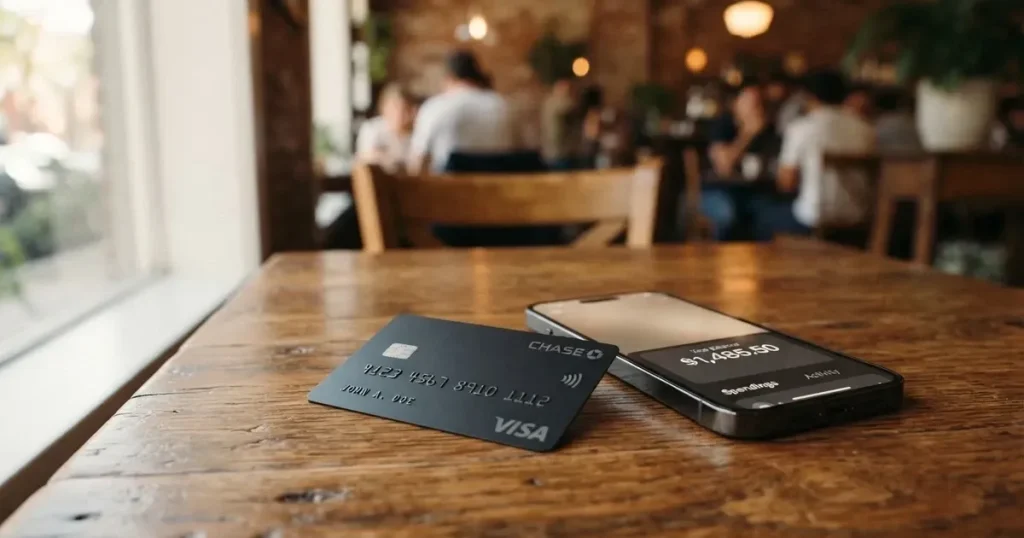
whitecryptocard.com is a payment card that pulls from a USDC balance held in the user’s own self-custody wallet. That is the short version, and it is the most important thing to know before reading the rest of this review. The brand sits between you, a Visa network, and an unnamed issuing bank. You keep your crypto; the card spends from it. Everything else in this review is about whether that arrangement is worth the fees, the limited footprint, and the unanswered questions the public pages leave open.
Conditions are current as of October 28, 2026.
Verdict: a niche tool that does one job, with a real cost to using it
I scored the whitecryptocard.com card 5.4 out of 10 after going through the card’s own pages and the alternatives people typically compare it to. The full breakdown is below; the short version is that the card does a few things well and a few things in a way that I would not recommend to most readers.
| Criterion | Mark | Why it lands there |
|---|---|---|
| Who can get it | 6 / 10 | No public country list; eligibility decided at application and tied to residence; sanctioned persons and countries excluded |
| Cost | 3 / 10 | $5 virtual card setup, $3 monthly account fee, $10 closure; 1.99% on non-USD payments; sub-$25 payments $0.20; top-up fees conflict between the fee table and the marketing copy |
| Top-up options | 6 / 10 | USDC only, on Base, Arbitrum or Ethereum; the networks themselves are named inconsistently across the site |
| Reliability and complaints | 6 / 10 | Codego Group brand, card issued by an unnamed Visa Principal Member; “not a bank”; English and Welsh law; no incidents, no Trustpilot page |
| Everyday use | 7 / 10 | Virtual Visa, Apple Pay and Google Pay; $1.50 fixed or 1%+1 ATM; no plastic; app stores show “Coming soon” |
The card is built for a narrow kind of user: someone who already holds USDC in a self-custody wallet, who wants to spend that USDC at ordinary Visa merchants without first cashing out to a bank, and who is comfortable paying a $3 monthly fee and a percentage on every non-USD purchase to get there. If that is you, the card delivers. If you are looking for a general-purpose debit card, a cashback card, or a card that works in many countries out of the box, you will be paying for things you do not use, and you will find gaps in the public information that may make you hesitate.
Who will they actually give you the card
The first thing I look for on any card page is the eligibility list. whitecryptocard.com does not publish one. Instead, the application page says eligibility is “determined during your application” and depends on where you live. Citizenship is not mentioned at all, which is unusual; most cards either ask for both or at least state which one matters. The one clear line in the rules is that sanctioned persons and countries are excluded, which is standard but worth knowing because it means a country can be technically eligible at signup and still have you rejected at the screening stage.
The wider point is that you cannot read the page and tell whether you are in. I would treat the application itself as the test. That is fine if you are happy to upload ID and wait for a yes or no, and less fine if you want to know upfront so you can compare it to alternatives whose country lists are published. The list-based approach is what you get from cards like MetaMask Card (45 countries/territories listed) or KAST (country shown at KYC). With whitecryptocard.com you give up that certainty for the chance of being approved.
How to get it
The signup path is short. You verify your identity first, then the card is issued.
What that means in practice:
- A government photo ID plus a selfie that has to match the ID on a liveness check.
- A proof of address: a recent utility bill or bank statement.
- Standard due diligence runs before the card is issued; source-of-funds checks kick in above a risk threshold; enhanced due diligence applies to higher-risk cases.
- The minimum age is not stated. The age requirement is not given on the public pages, which is itself a small flag. In the UK and most of the EU, 18 is the default for these products, but I cannot tell you what whitecryptocard.com enforces.
Processing time and rejection reasons are also not stated. A rejection usually comes from a regulator-driven rule the issuer cannot discuss in detail, and that is what I would expect here, but the page does not say so.
The card itself is a virtual Visa. The fee schedule also names Visa Infinite and Platinum/Signature tiers, but the public flow is a virtual card only. There is no physical card and no delivery story. The card currency is US dollars; any non-USD purchase carries a foreign-exchange fee on top.
What it really costs
This is where the card loses points. The headline is that you can spend USDC anywhere Visa is taken; the small print is what that costs every month and on every transaction. I laid the published fees out in one table so you can see them at a glance.
| Fee or limit | Amount |
|---|---|
| Virtual card setup | $5.00 per card |
| Account residency (monthly) | $3.00 per card, per month |
| Account closure | $10.00 one-time |
| Non-USD transactions (FX) | 1.99% |
| Transactions under $25 | $0.20 each |
| ATM withdrawal | $1.50 fixed, or 1% + $1 (both listed) |
| Auth/balance/decline attempt | $0.60 |
| Crypto conversion fee | not separately stated |
| Free ATM allowance | not stated |
| Daily and monthly spending limits | shown in the app; depend on verification tier, card type and risk profile |
| Top-up | fee table says 2%; site also says “0% deposit fees” and “No fee on USDC top-ups” |
A few things stand out. The $3 monthly fee is a fixed drag on a card you may not use every month; if your USDC spending is light, the fee is a larger share of your cost than the FX would be. The 1.99% non-USD fee is mid-range — not the cheapest I have seen, not the worst. The $0.20 fee on transactions under $25 is a real charge on small purchases: a $4 coffee in a non-USD currency costs you $0.20 plus 1.99% of $4. The $0.60 on a declined authorisation adds up quickly if a recurring charge is mis-set, so it is worth checking merchant settings and your balance before a billing date.
What that looks like in everyday payments
To make the numbers less abstract, here are three payments and which fees apply. The maths is taken straight from the published fee schedule; the only variable is the spend amount, which I am putting in as examples.
- $40 supermarket purchase in USD. This is the cheapest case. No FX fee because the merchant settles in dollars. No sub-$25 fee because the transaction is over the threshold. You pay the $3 monthly fee for the privilege, and that is it.
- $40 supermarket purchase in euros. Same purchase, same merchant category, but settled in a non-USD currency. The 1.99% FX fee applies: $0.80 on the round number. You also pay the $3 monthly fee. If you do this ten times a month, the FX cost alone is $8.
- $3 transit top-up in a non-USD currency. Below the $25 threshold, so the $0.20 small-transaction fee applies, plus 1.99% of $3 in FX (six cents). Total fees on the transaction: $0.26. Small payments in foreign currency are where this card hurts the most.
I do not mean to talk anyone out of the card with that last example. If your regular spend is in dollars and over the threshold, the card works. The point is that “1.99%” only tells you part of the story; the small-transaction and ATM charges are where these products quietly add up.
How to top up the card
Top-up is where the card is different. whitecryptocard.com takes USDC, and only USDC, as collateral. The USDC is held in your own self-custody wallet on Base, Arbitrum or Ethereum. The card spends against that collateral, which is why the brand can describe itself as non-custodial: it never holds your USDC, and your funds remain in your wallet even after the card is closed.
Two things I would pay attention to before your first transfer:
- Network choice matters. The card lists Base, Arbitrum or Ethereum on the home page, but the FAQ names only Base and Arbitrum. If you send USDC on Ethereum mainnet and the card only sees Base and Arbitrum, the deposit may not arrive. The reverse is also true. There is no confirmation prompt that I could see on the public pages, so the matching is up to you.
- Top-up fees contradict the marketing. The published fee table says 2% on all listed coins and networks. Other parts of the site say “0% deposit fees” and “No fee on USDC top-ups”. These statements are both on the public pages, and they have not been resolved. I would plan for 2% to be safe and treat anything better than that as a bonus, not a guarantee.
The user pays the on-chain gas for the transfer; that is the network’s fee, not the card provider’s. The minimum top-up is not stated. Fiat top-up is not stated; if you only have a bank account and no USDC, this is not the card to start with. You can withdraw at the end (the details are not stated), and after termination your collateral stays in your own self-custody wallet, which is the right outcome.
Paying with the card every day
The day-to-day story is mostly good. The card is a virtual Visa, so any merchant that takes Visa online takes the card. It supports Apple Pay and Google Pay at no extra cost. The card supports a per-merchant block list, instant freeze, 3-D Secure on online payments, and anti-screenshot protection, which together cover most of the standard controls a prepaid cardholder would expect. You can set your own spending limits, and the daily and monthly limits the system applies on top depend on your verification tier, the card type and your risk profile.
A few practical limits to know about:
- There is no plastic card. Everything is virtual, and a physical version is not in the public materials. If you need to tap to pay at a turnstile or hand over a card at a restaurant that does not take phone wallets, the virtual card alone may not be enough.
- The mobile app is not in the stores yet. As of 2026-10-21, the App Store and Google Play listings for whitecryptocard.com are marked “Coming soon”. Without the app, much of the controls, the spending view and the limit settings are not as accessible. This is worth checking before you sign up: the card’s usability depends on an app that the stores do not yet have.
- Blocked merchant categories are not stated in full. The public rules mention that unlicensed gambling, illegal drugs and weapons are off-limits, which is normal, but the rest of the merchant category block list is not published. If there is a category you specifically want to use — adult entertainment, cryptocurrency purchases, certain financial services — I would confirm before relying on the card.
The rewards side is also slim. There is no cashback programme. The referral programme is the only published incentive: 0.15% of referred friends’ spend, plus $10 for each friend whose spend reaches $500 in a month, paid monthly in USDC. That is a referral programme for distributors, not a cardholder reward.
For disputes, the rule is 60 days from the date the transaction posts to report an unauthorised or incorrect charge. Investigations follow Visa’s Operating Regulations. There is a $35 fee per case, charged whether the dispute succeeds or not, so I would not open one lightly.
What can go wrong
The bad outcomes with a card like this tend to fall into three buckets: the company behind it, the wallet you connect to it, and the rules you sign under. Here is how each one shapes up on whitecryptocard.com.
- The company. The brand is owned and operated by Codego Group. The actual card is issued by an unnamed Visa Principal Member, which is a licensed card-issuing partner rather than a bank, and the card’s own pages say “not a bank”. The issuer’s country is not stated. The card agreement is governed by the laws of England and Wales, so any dispute is in that jurisdiction. Codego is reported to have 350,000+ users in a 2025 company press release, but that is a self-reported number, not an independent one.
- The wallet. The card draws from a self-custody wallet you control. The wallet is governed by a 24-word recovery phrase, and if you lose the phrase, the funds are unrecoverable. Standard crypto risks apply: phishing, clipboard malware that swaps copied addresses, and irreversible transactions. None of that is specific to this card, but the card is connected to that wallet, so the security of the wallet is the security of the card balance.
- The rules. There is no published timeline for KYC review, no list of rejection reasons, and no statement of how long disputes take. I could not find a Trustpilot page for whitecryptocard.com or for Codego, which is not the same as “no complaints”, but it does mean independent reviews are not easy to come by. The fee pages say one thing about top-up fees and another, and that unresolved conflict is a small but telling gap in the public documentation.
- Regulation. The card is governed by English and Welsh law, and the issuer is a regulated Visa partner; that puts it inside a normal payments regulatory perimeter, just with a crypto front-end. Where the card sits on EU rules is less clear from the public pages, which I would expect the company to address if it is actively signing up EU residents.
What to take instead
If whitecryptocard.com does not quite fit, the cards people most often compare it to are MetaMask Card, KAST and TokenPocket. They are not the same product — none of them work the way whitecryptocard.com does, with USDC held as collateral in the user’s own self-custody wallet — but they cover similar ground for similar users.
| Card | Score | What it does that whitecryptocard.com does not |
|---|---|---|
| MetaMask Card | 7.1 / 10 | Lists 45 countries/territories; spends directly from a connected wallet on Linea, Base, Monad or Solana; cashback in mUSD (1% on Virtual, headline 3% on Metal); Virtual card is free, Metal $199/year |
| KAST | 6.1 / 10 | Country list at KYC; USD balance via stablecoin deposits at 0% spread; up to 10 virtual and physical Visa cards per user; cashback 1.5%–3% depending on tier; non-USD FX 0.5%–1.75% |
| TokenPocket (TP Card) | 5.8 / 10 | Visa or Mastercard debit for listed European countries (Visa) and APAC territories (Mastercard); runs on Arbitrum; balances in EUR24 and USD24; the 1% deposit fee is described as refundable via rewards |
A few notes to walk through those rows. MetaMask Card is the strongest of the three by score, with the clearest published country list and the cleanest fee structure for a US-based user. KAST is more expensive to enter at the top end ($10,000/year for the Private tier) but pays a real cashback rate and accepts multiple stablecoins. TokenPocket is the smallest product of the three in the public materials, and the FX fee is not stated, so the running cost depends on the issuer and the network.
If the deciding factor for you is the self-custody model — keeping the USDC in your own wallet until the moment of payment — none of the three alternatives work the same way. If the deciding factor is the lowest all-in cost, MetaMask Card on Virtual is hard to beat. If you need a physical card, KAST is the one that ships one; whitecryptocard.com and MetaMask Card Virtual do not.
Who I would recommend the card to
I would recommend the whitecryptocard.com card to a reader who already holds USDC in a self-custody wallet, lives in a country where the application is likely to be approved (which you cannot check in advance, so the application is the test), and plans to use the card mainly for dollar-denominated online spending. The card is at its best for that case: $5 to set up, $3 a month, no FX, no surprise small-transaction fees, and the USDC stays in the user’s wallet until it is spent.
I would not recommend the card to a reader who:
- Wants to know upfront whether they qualify, because the country list is not published.
- Plans to spend heavily in non-USD currencies, because the 1.99% FX fee compounds quickly.
- Needs to make many small purchases under $25 in a foreign currency, because the $0.20 fee becomes a real share of the spend.
- Wants cashback or a published rewards programme, because neither exists.
- Wants a physical card, because none is offered.
- Plans to rely on a fully-featured mobile app, because the apps in the public stores are marked “Coming soon” as of 2026-10-21.
If three or more of those describe you, the alternatives above are a better starting point. If two or fewer describe you, and you are comfortable with the small print that this review has flagged, whitecryptocard.com does the job it sets out to do.
Frequently asked questions
What is the whitecryptocard.com card?
A virtual Visa card that spends against a USDC balance held in the user’s own self-custody wallet. The brand describes itself as “not a bank” and is owned by Codego Group. The card is issued by an unnamed Visa Principal Member, and the agreement is governed by the laws of England and Wales.
How does the whitecryptocard.com card work?
You hold USDC in a self-custody wallet on Base, Arbitrum or Ethereum. The card draws on that balance at the point of payment, so the USDC stays in your wallet until you spend it. The card supports Apple Pay, Google Pay, 3-D Secure, per-merchant blocks, and instant freeze. The mobile app is marked “Coming soon” in the public stores.
Is whitecryptocard.com a bank?
No. The card’s own pages say “not a bank”. The card is issued by an unnamed Visa Principal Member, which is a licensed card-issuing partner rather than a bank. The brand that markets the card is Codego Group.
Who owns whitecryptocard.com?
The brand is owned and operated by Codego Group. The company has not been independently reviewed on Trustpilot (no page was found for the brand or the parent). A 2025 company press release claims 350,000+ users, which is a self-reported figure.
Is the whitecryptocard.com card available in my country?
There is no published country list. Eligibility is “determined during your application” and depends on residence. Sanctioned persons and countries are excluded, and citizenship is not mentioned. The application is the only way to know, which is why some readers prefer cards with a published country list.
Does the whitecryptocard.com card require KYC?
Yes. KYC requires a government photo ID with a matching selfie liveness check and a proof of address, such as a recent utility bill or bank statement. Standard due diligence runs before the card is issued; source-of-funds checks apply above a risk threshold. Age, processing time and rejection reasons are not stated on the public pages.
How do I add the whitecryptocard.com card to Apple Wallet or Google Pay?
Both mobile wallets are supported, and there is no separate fee. The standard flow is to add the card through the wallet app once the virtual card has been issued, then authenticate the way the wallet requires. The card is a virtual Visa, so tokenisation works the same as for any other Visa added to a phone wallet.
How do I top up the whitecryptocard.com card?
Send USDC from a self-custody wallet on Base, Arbitrum or Ethereum. The home page lists those three networks; the FAQ lists only Base and Arbitrum, so the safest choice is one of those two. The fee table says 2% on top-ups, but other pages say “0% deposit fees” and “No fee on USDC top-ups”. That conflict is unresolved. You pay the on-chain gas on top.
How much does the whitecryptocard.com card cost?
The published fees are: $5.00 to set up the virtual card, $3.00 per month per card, $10.00 to close the account, 1.99% on non-USD transactions, $0.20 on transactions under $25, $1.50 fixed or 1%+1 at the ATM, and $0.60 on a declined or balance-check attempt. There is no annual fee on the Standard tier.
Is the whitecryptocard.com card safe?
The card uses standard prepaid controls: 3-D Secure on online payments, per-merchant blocks, instant freeze, anti-screenshot protection, and tokenised mobile wallets. The USDC itself stays in the user’s self-custody wallet, controlled by a 24-word recovery phrase; losing the phrase is unrecoverable. The card is not a bank product, there is no public incident history, and there is no Trustpilot page to read user reviews. The unresolved top-up fee conflict is a small flag in the public documentation.
Wallet cards in the catalogue – cryptocardcatalog
Content created by the «cryptocardcatalog» team