
Kem Visa card review for residents of Kuwait, Bahrain, the UAE and Qatar
 Available in US
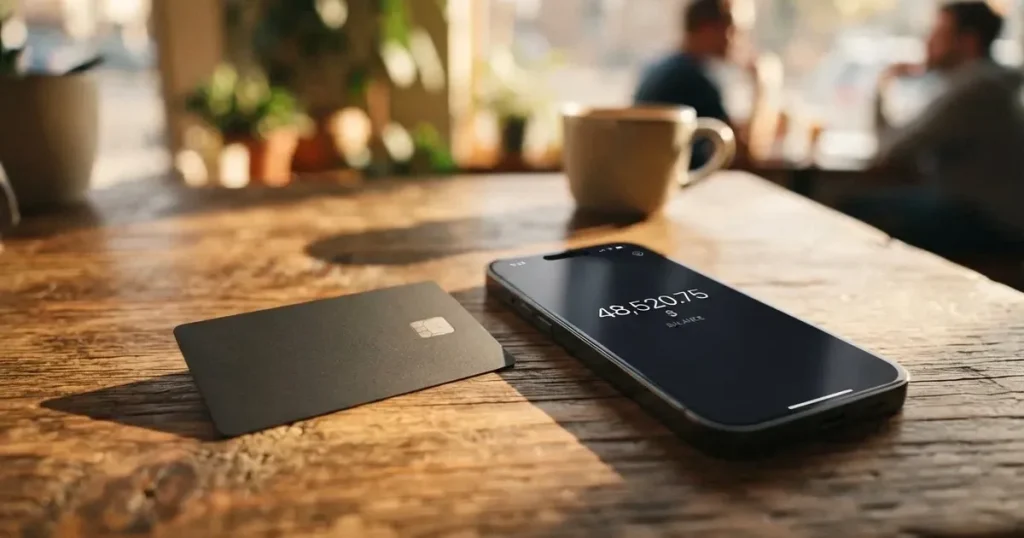
Kem positions itself as a Visa debit card for people whose banking options are limited or who want to pay directly from a stablecoin balance. The app is run by KEM TECHNOLOGIES HOLDING Ltd, an Abu Dhabi Global Market company (number 000008598), and it tells users upfront that “Kem is a crypto financial platform, not a bank.” That distinction matters: you are not opening a bank account, and your balance is held by a custodial platform, not protected by a deposit guarantee. If you are weighing Kem against an ordinary debit card, or against a more established crypto card, this review walks through what the company says, what third-party sites report, and what is simply not stated.
Conditions are current as of October 28, 2026.
The conditions described here are current as of 2026.
Verdict
Kem scores 5.8 out of 10. The card has genuine strengths for a narrow audience: it issues a Visa on the spot, advertises no issuance, monthly or annual fees, and aims its marketing squarely at residents of Kuwait, Bahrain, the UAE and Qatar who already hold Tether (USDT). For that reader, the appeal is straightforward. Outside that audience, the picture gets thinner. The card issuer and the licences under which Kem operates are not named on its public pages, the customer feedback I could verify is poor (Trustpilot sits at 2.5 out of 5 from five reviews, all one star), and the conversion fee that the starting data put at 1% is not confirmed on the official site, so you do not really know what each purchase will cost you until you try it. Google Pay support is, at best, patchy. If you live in one of the four Gulf states, already keep USDT and are comfortable with a small, lightly regulated platform, Kem is worth a look. If you do not, the cost story and the support complaints together make it hard to recommend.
| Criterion | Mark | Why it scores there |
|---|---|---|
| Who can get it | 6/10 | Visa is accepted in 150+ countries and the card is marketed to residents of Kuwait, Bahrain, the UAE and Qatar, but a list of 13 restricted countries (Belarus, China, Cuba, India, Iran, Iraq, Israel, Russia, Syria, Turkey, Ukraine, Venezuela, Vietnam) only appears in starting data, not on the blog page itself. |
| Cost | 8/10 | No issuance fee, no monthly or annual fee, “No FX fees” in the blog intro, and a stated 1% conversion fee that the public page does not actually confirm; third-party sites list ATM and top-up as free but mark the fee information as limited. |
| Top-up options | 4/10 | USDT from any wallet or exchange, plus in-app swaps from gold or other crypto into USDT, but the blockchain networks on which USDT is accepted are not named anywhere. |
| Reliability and complaints | 3/10 | The operator is named but the issuer and licences are not; Trustpilot is 2.5/5; user reports flag failed withdrawals, support silence, and KYC waits of up to four weeks. |
| Everyday use | 7/10 | The virtual card is available immediately and a physical card is available on request; third-party sources say Apple Pay works while Google Pay is generally marked as unsupported, though one user has reported Google Wallet working. |
The audience note that ties these marks together: Kem makes most sense for residents of the four Gulf states who already hold USDT and want to spend it on a Visa without first selling it into a local bank account.
Where Kem is available
Kem is a Visa, so it works anywhere Visa is taken, in the company’s words “150+ countries.” That is the broad picture. The narrow picture, who actually gets approved, is less complete. The blog page does not publish a full eligibility list. It does market the card to residents of four Gulf states: Kuwait, Bahrain, the UAE and Qatar. If you live in one of those four, the product is clearly built with you in mind.
Beyond that, the public materials do not say much. What you do see is a short restricted-country list that appears in starting data rather than on the official blog: Belarus, China, Cuba, India, Iran, Iraq, Israel, Russia, Syria, Turkey, Ukraine, Venezuela and Vietnam. Treat that list as unofficial, because the Kem blog page itself does not state it. There is no information on the public site about minimum age, proof of address, or the documents accepted for verification. If any of those details matter to you, you would have to install the app and start the sign-up before finding out.
For comparison, the alternatives in this review have published much more detailed eligibility. International Visa Card, for instance, blocks residents and legal registrants of sixteen named countries and additionally reviews FATF grey-list countries case by case; Whop Cards supports consumers in 31 US states and businesses in 41, with its own list of unsupported countries. Kem is the least transparent of the three on this point, and that is worth weighing.
Signing up for Kem
Sign-up happens inside the Kem app. You download it on iOS or Android, create an account, and then “provide your identity documents for KYC verification,” which is the company’s phrase for its know-your-customer checks. Beyond that sentence, the official page is silent on the documents accepted, the proof of address required, the minimum age, and the timeline. That is a noticeable gap compared with most regulated card programmes, which spell these out.
Third-party coverage fills in some of it. Per cryptocards.so (2026), Kem asks for email, phone, ID, proof of address and a selfie; the same source claims the setup itself takes under three minutes, but also reports that KYC has stretched to four weeks in practice. The company itself does not confirm either number, so treat both as unofficial.
Once your account is verified, the virtual card is available immediately. A physical card is “available upon request” — that is the extent of the official line. The countries it ships to, the delivery time, the cost, and the replacement policy are all not stated. If you need a physical card, plan to ask support directly rather than rely on a public policy page.
There is no published tier system: the product is a single card, the “Kem Infinity Card.” No premium version, no metal edition, no subscription upgrade. That simplicity is part of the appeal, but it also means you cannot trade up to a different fee or rewards structure later.
Kem fee structure
Kem’s cost story is the part of the pitch that looks the most attractive, and the part where the gap between marketing and documentation is widest. The blog page says there are “No issuance fees” and “no monthly or annual fees.” The blog intro also says “No FX fees.” That is genuinely better than most crypto cards, many of which charge a monthly fee or a percentage on every foreign-currency transaction. The catch is that the company does not publish a full fee schedule on its public site. The conversion fee, which starting data put at 1% on purchases, is not actually confirmed anywhere on the official page that I could find. Until Kem publishes that number itself, you are taking the 1% figure on trust.
Third-party coverage is more generous. Per cryptocards.so (2026), Kem lists monthly, issuance, ATM, FX, top-up and decline fees as all free, and marks daily, monthly and ATM limits as “Unlimited.” The same source also notes that the public fee information is limited, which lines up with what I saw directly. ATM fees are not stated on the official page, and the ATM fee that cryptocards.so reports as free is therefore unofficial.
| Fee or limit | What the official site says | What third-party sources say (unofficial) |
|---|---|---|
| Issuance | No issuance fee | No issuance fee |
| Monthly / annual | No monthly or annual fee | No monthly or annual fee |
| FX | “No FX fees” in blog intro | Free |
| Conversion (crypto to fiat at point of spend) | Not stated; starting data says 1% on purchases | Not separately published |
| ATM | Not stated | Free, withdrawals unlimited |
| Top-up | Not stated | Free |
| Daily spend limit | Not stated | Unlimited |
| Monthly spend limit | Not stated | Unlimited |
What that table means in practice depends on what you buy. Three everyday cases, walking through how the official and unofficial numbers apply:
- A coffee in dirhams or dinars paid in your card’s base currency. The conversion fee is the relevant charge, and the official site does not state it. If you trust the starting data’s 1% figure, this is the most you would pay. If you do not, the cost is genuinely unknown until you make the transaction.
- A hotel booking in euros while you fund the card from USDT. The blog says there is no FX fee, so the only cost is the same 1% conversion. That would make Kem cheaper than most cards, which typically add 1% to 3% on top of a Visa or Mastercard FX margin. Whether that holds depends on whether the conversion figure is correct.
- A cash withdrawal from an ATM. Official page says nothing. The third-party source says free with no limit, but that is a single-site claim and most banks set their own ATM charges regardless of what your card issuer says, so you would still see a fee on the ATM screen in many cases.
If you care about a clear fee table before you sign up, this is the weakest part of the Kem proposition.
Funding your Kem card
Kem is built around one funding source: Tether (USDT). The app tells you to “Deposit Tether from any wallet or exchange to your Kem balance.” You can also swap gold or other crypto held in the app into USDT before spending, which is a useful feature if you keep your balance in a different asset.
What the official page does not say is the more important half of the story. It does not name the blockchain networks on which Kem accepts USDT. USDT exists on many chains, including Ethereum (ERC-20), Tron (TRC-20), Solana, Polygon and Avalanche, and the company does not tell you which one to use. If you send USDT on a network the platform does not support, blockchain transfers are irreversible, so the funds can be lost or sit unrecovered until support intervenes. This is a meaningful risk for anyone who is not a careful reader of the deposit screen inside the app.
Other top-up details are not stated officially: the fees, the minimum deposit, who pays the network fee (you or Kem), and whether you can fund the card with anything other than USDT. The FAQ that third parties quote mentions “variable network and administrative fees” for external withdrawals, which suggests that at least the network fee on withdrawals is real. Fiat top-up by bank transfer, card or local payment rail is not mentioned on the public page. The App Store description adds that transfers and withdrawals “may be subject to review or network delays,” which is a generic risk note rather than a commitment to a timeline.
If you already hold USDT on a major network and you are comfortable checking the deposit address carefully, the top-up flow is straightforward in principle. If you do not, the missing network information is a reason to pause before signing up.
Everyday use of Kem
In normal use, the virtual card behaves like any other Visa debit card: you get a card number straight away and can use it online as soon as your KYC clears. Tap-to-pay works where the merchant has a contactless terminal. The physical card is available on request; beyond that, delivery details are not stated.
Mobile wallet support is where the everyday picture is uneven. The Kem blog does not address Apple Pay or Google Pay at all. Third-party sources say Apple Pay is supported and that Google Pay is generally marked as unsupported, although one user reports that Google Wallet does work. That split is consistent with what other small crypto cards experience: Apple Pay’s tokenisation is usually easier to enable, while Google Pay often requires extra certification that smaller issuers have not completed. If you rely on paying with your phone, the safest assumption is that Apple Pay works and Google Pay does not, and you should verify in the app before counting on either.
Block categories, the kinds of merchants that issuers sometimes lock out (gambling, adult content, cryptocurrency purchases, certain financial services), are not stated. Most card programmes publish at least a short list. Kem does not, so the only way to know whether a specific merchant will decline is to try.
The app itself is available on iOS and Android. The App Store rating, as of 2026-10-21, is 4.2 out of 5 from 31 ratings. That is a small sample but it is the most recent public signal about how the app performs day to day. The Google Play rating was not read for this review.
There is no cashback, welcome bonus or referral scheme on the official page. Per cryptocards.so (2026), Kem does not advertise cashback or a welcome bonus but does offer staking at 5.5% APR, which is a way to earn on the USDT balance rather than on card spend. Treat all of that as unofficial, because the official page does not mention any of it.
Kem risks and complaints
The risks with Kem fall into three groups: who is actually behind the card, how customer issues have played out so far, and what a custodial platform means for your money.
On the company side, the operator is named. The app is run by KEM TECHNOLOGIES HOLDING Ltd, registered in Abu Dhabi Global Market under company number 000008598. The App Store lists the seller as KEM Company for Electronic Payment and Settlement Services and the developer as KEM LLC. A PCI DSS badge is displayed on the site, assessed by ControlCase. Beyond that, the public materials do not name the card issuer, do not list the licences under which the card programme operates, and do not name a banking partner. For a regulated payment card that is an unusually thin disclosure. A separate entity, Kemfinity s.r.o. in the Czech Republic, appears in starting data and third-party sources only, not on the official site. The blog notes that Tether “has invested directly in Kem,” which is a real endorsement from the issuer of USDT, but it is not a substitute for a published banking or e-money licence.
On customer experience, the signals are not good. Trustpilot shows 2.5 out of 5 from five reviews, all one star, read on 2026-10-21. User reports collected on Google Play and review aggregators during 2025 and 2026 describe failed withdrawals and funds that became stuck, deductions taken on transactions that later failed, support that did not reply, KYC waits of up to four weeks, and physical cards that remained pending after verification. Reports of “scam” allegations appear between October 2025 and April 2026, though allegations are not findings. The contact page is at kemapp.io/contact-us, but the support hours, languages and response times are not stated anywhere I could find. If you decide to try Kem, the practical advice is to start with a small balance, test a small payment, and test a small withdrawal before you commit any significant amount.
On the structural side, Kem is custodial. Your USDT sits in the company’s balance until you spend it, which means you are exposed to the same counterparty and hack risk that has hit custodial crypto platforms in the past. The PCI DSS badge covers payment-data handling, not the safeguarding of your underlying crypto balance. Two-factor authentication, instant card freeze and customer-fund segregation are not stated on the official site, even though they are standard features on most regulated cards. If the platform were to face a programme suspension, a card-network termination, or an insolvency, the way your balance is treated would depend on the licence Kem operates under, and that licence is not named on the public page. These are the same risks any custodial card carries, but they are sharper here because so much of the surrounding disclosure is missing.
Kem alternatives
Three alternatives give a sense of what else is available at similar or higher cost. They are not direct substitutes for Kem in every case, but they show the range.
- International Visa Card scores 6.7 out of 10. It is a US-issued Platinum Visa, virtual at launch with a physical card described as “Coming soon,” and it spends in US dollars. The account is not available to residents or legal registrants of a published list of sixteen countries (Belarus, mainland China, North Korea, Cuba, India, Iraq, Iran, Israel, Myanmar, Nepal, Nicaragua, Russia, Syria, Turkey, Ukraine, Venezuela, Vietnam), and FATF grey-list countries are reviewed case by case. Virtual card issuance costs $5 once, the Classic plan is free, Pro is $9 a month and Max is $19 a month. Card use in USD is free; foreign currency carries the Visa rate plus a 2% FX fee. You fund it with USDC or USDT into a USD account at a stated 1:1, and you can also deposit USD, EUR or use SEPA, SWIFT and FedNow. No cashback is advertised. Compared with Kem it is more transparent on eligibility, fees and licences, but pricier on the higher tiers and weaker on the FX side.
- UNi Card scores 6.1 out of 10. A multicurrency Mastercard that spends from a UNi.Global account balance, with no annual fee and no foreign transaction fee, and assets converted at “live OTC (Over-the-Counter) rates.” Spend-to-Earn rewards go up to 3%. Compared with Kem, it has a clearer fee story (no annual fee, no foreign transaction fee) and a network of supported currencies, but eligibility details are not stated and the issuance fee is not published.
- Whop Cards scores 5.2 out of 10. A Visa that spends from a Whop balance, with consumers supported in 31 US states, businesses in 41, and a long list of unsupported countries including Russia and Belarus. The marketing line is “No extra fees,” though specific conversion and FX amounts are not stated. It offers 5% cashback at select merchants (currently Uber, with more planned) and can be issued to team members, which is unusual. Compared with Kem it is more transparent about which US states it serves and offers a real cashback programme, but it is far more restricted geographically.
If your priority is a clear fee schedule, a named issuer and a published licence, the International Visa Card is the strongest of the three. If you want cashback and are based in the US, Whop Cards is more rewarding. If you want multicurrency Mastercard coverage with a stated zero-FX position, UNi Card is closer to that brief. None of them perfectly mirrors what Kem offers, which is part of the reason Kem can survive in its narrow Gulf-focused niche.
Kem verdict and recommendation
Kem is a reasonable option if three things are all true: you live in Kuwait, Bahrain, the UAE or Qatar, you already hold USDT and would rather spend it directly than sell it into a local bank account, and you are comfortable using a small, lightly regulated platform for everyday spending. The lack of a monthly fee, the lack of an FX fee as advertised, and the immediate virtual card are genuinely useful in that context. Apple Pay, if you rely on it, is likely to work; Google Pay is more uncertain.
Kem is harder to recommend if you live elsewhere, if you need to fund the card from a fiat bank transfer rather than USDT, if you want a published conversion fee before you sign up, or if a clear answer on the card issuer and the licence matters to you. The customer feedback is poor in volume even if it is small in absolute terms, and the support and KYC experiences users describe suggest you should not put a large balance in the account. If any of those factors apply, the alternatives above are a safer starting point.
Frequently asked questions
What is the Kem card?
Kem is a Visa debit card linked to a custodial app that holds your balance in Tether (USDT). The app is run by KEM TECHNOLOGIES HOLDING Ltd, an Abu Dhabi Global Market company. Kem describes itself as “a crypto financial platform, not a bank,” so the balance is not a bank deposit and is not covered by a deposit guarantee.
How does the Kem card work?
You sign up in the iOS or Android app, complete identity verification, and get a virtual Visa card straight away. You fund the card by sending USDT to your Kem balance from any wallet or exchange, or by swapping other crypto or gold into USDT inside the app. At the point of payment, the app converts the USDT to the merchant’s currency and the Visa network settles the transaction.
Is Kem a bank?
No. Kem says on its own site that it is a crypto financial platform, not a bank. That means customer balances are not bank deposits and are not protected by a deposit guarantee scheme. Your funds are held by a custodial platform, so you are exposed to counterparty risk in the same way as with any other crypto custodian.
Who owns Kem?
The operator is KEM TECHNOLOGIES HOLDING Ltd, registered in Abu Dhabi Global Market under company number 000008598. The App Store seller is KEM Company for Electronic Payment and Settlement Services and the developer is KEM LLC. The card issuer, any banking partner and the licences under which the card programme runs are not stated on the public pages. The blog notes that Tether “has invested directly in Kem.”
Is the Kem card available in my country?
Kem is marketed to residents of Kuwait, Bahrain, the UAE and Qatar. A restricted-country list (Belarus, China, Cuba, India, Iran, Iraq, Israel, Russia, Syria, Turkey, Ukraine, Venezuela and Vietnam) appears in starting data but is not stated on the official blog page. The full eligibility rules, including minimum age and the documents accepted, are not published, so the only way to confirm is to start the sign-up inside the app.
How do I get a Kem card?
Download the Kem app on iOS or Android, create an account and complete the KYC verification step. The virtual card is issued immediately once your account is verified, and a physical card is “available upon request.” Countries, delivery time, replacement and any shipping cost are not stated on the public site.
Does the Kem card require KYC?
Yes. The app asks you to “provide your identity documents for KYC verification.” The official page does not list which documents are accepted, whether proof of address is required, or the minimum age. Third-party sources report a requirement for email, phone, ID, proof of address and a selfie, and KYC waits of up to four weeks; treat those as unofficial.
How do I top up the Kem card?
Send USDT to your Kem balance from any external wallet or exchange, or swap gold or other crypto held in the app into USDT before spending. The blockchain networks on which Kem accepts USDT are not named on the public site, so check the deposit screen inside the app before sending. Network fees for external withdrawals are mentioned in third-party FAQs as “variable,” and the company has not published minimums or fiat top-up options.
How do I add the Kem card to Apple Wallet or Google Pay?
Third-party sources say Apple Pay is supported and Google Pay is generally marked as unsupported, although one user reports that Google Wallet works in practice. The Kem blog does not address either wallet. The safest approach is to add the card inside Apple Wallet and confirm with a small test transaction, and to assume Google Pay may not be available until you have verified it yourself in the app.
Is the Kem card safe?
The site displays a PCI DSS compliance badge assessed by ControlCase, which covers payment-data handling, and Tether has publicly invested in the company. On the other side, the card issuer and the operating licence are not stated, customer feedback on Trustpilot is 2.5/5 from five reviews, and user reports describe failed withdrawals, deductions on failed transactions and slow support. Like any custodial crypto product, the balance carries counterparty and hack risk and is not protected by a deposit guarantee. Start small, test a withdrawal, and do not keep more in the account than you can afford to leave there.
App and neobank cards in the catalogue – cryptocardcatalog
Content created by the «cryptocardcatalog» team