
The cheapest crypto card in Europe, held together by two stablecoins
 Available in US
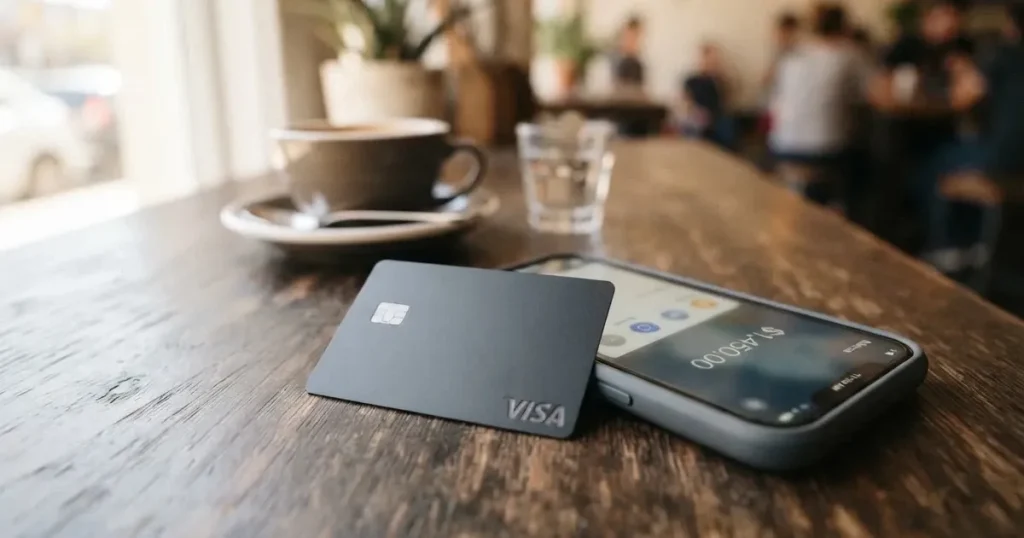
The OKX card is not really a bank card. It is a euro-denominated virtual Mastercard that sits on top of an exchange balance, and it works well only if you already hold one of two specific stablecoins. Judged on that narrow ground, it is genuinely cheap: no card fee, no transaction fee, and no foreign-exchange fee charged by OKX. Judged as a general payment tool for someone who wants to spend crypto anywhere, it is thinner than the marketing suggests, because the balance only accepts USDC or USDG, the card is virtual, and a good deal of the practical information is simply not stated anywhere public.
My score for it is 6.2 out of 10. That number sits between the very strong on cost and the very thin on everything else.
This review is written for you if you are anywhere in the world and you have had trouble getting an ordinary bank card — a declined application, a country your bank will not serve, a long wait, a closed account. If that is you, the short version is: the OKX card is for people inside the European Economic Area plus Norway who already keep USDC or USDG on OKX. Outside that region it is not available at all, and inside it you still have to pass full identity verification.
The conditions described here are current as of October 28, 2026.
Verdict: 6.2 out of 10, and the split explains itself
A 6.2 sounds like a shrug, but it is not. It is the average of one genuinely excellent category and four adequate ones. If your main question is “what does it cost me to spend stablecoins in euros”, this card answers it well. If your question is “can this replace my bank card for ordinary life”, the answer is not yet, and no amount of cashback changes that.
So who is it for? EU users holding USDC or USDG. Someone who is already inside the OKX ecosystem, already verified, already holding dollar-pegged tokens, and who wants to turn that balance into everyday euro spending without paying a spread twice or losing a percent to a conversion fee. That person will like this card a lot.
Who is it not for? Someone who holds BTC or ETH and expects to tap and pay directly — every other coin has to be converted to USDC or USDG first, which means a second trade and a second price movement before the shop even sees the money. Someone who needs a physical card. Someone who needs to use an ATM. Someone living outside the EEA and Norway. And someone who wants to know, in advance, what their monthly spending limit is, because that number is not published.
| Criterion | Mark | Why |
|---|---|---|
| Who can get it | 5 / 10 | EU plus Norway, launched 28 January 2026; Iceland and Liechtenstein excluded |
| Cost | 9 / 10 | Card with no fee, no transaction fee and no OKX FX fee; conversion spread 0.1% per the explainer, 0.4% per the press release |
| Top-up options | 5 / 10 | USDC or USDG in the OKX Pay balance via Convert or an external deposit; other coins must be converted first, networks not named |
| Reliability and complaints | 6 / 10 | OKX Europe Ltd. holds a MiCAR licence, issuer not named in the official text; unofficial: Monavate; complaints about the exchange include held assets, account restrictions, slow support |
| Everyday use | 5 / 10 | Virtual euro Mastercard, Apple Pay and Google Pay; physical card and ATM not named |
| Total | 6.2 / 10 | A cheap way to spend two stablecoins, and not yet a bank card replacement |
Notice how the cost row stands alone at the top. Nine out of ten is not a rounding error; it is the strongest single score across every card I look at in this category. Everything around it sits at five or six.
Who they will give the card to
The card is available in the European Union plus Norway, and it launched on 28 January 2026. Iceland and Liechtenstein are excluded. You will sometimes see the claim that it covers the entire EEA — an explainer on OKX’s own site draws that conclusion — but that is inconsistent with the stated country list, so I would treat “EU plus Norway, minus Iceland and Liechtenstein” as the accurate version.
The rule is about which legal entity you are dealing with, not where you happen to be standing. EEA users are served by OKX Europe Ltd., the MiCAR-licensed entity. That distinction matters more than it sounds: if you are an EEA resident who signed up on OKX’s international platform rather than through its European entity, you may be looking at the wrong account entirely.
Two things follow that people often miss. First, there is no citizenship test in the published rules — this is framed around the region and the entity, so residency and which entity holds your account are the questions that matter. Second, and more seriously, the country of the card is a separate matter from the country of your address when you later try to pay. More on that in the daily-use section.
If you are outside the EEA and Norway, this is a short section for you: the card is not available to you. If you are in the EEA but in Iceland or Liechtenstein, same answer.
How to get it
There is no application form in the traditional sense. The card is activated inside the OKX app, against an OKX Pay balance holding USDC or USDG. Full identity verification is required — a valid ID document and proof of address. The age requirement is not stated.
The card itself is a Mastercard, euro-denominated, virtual, and linked to OKX Pay. The official press release describes it that way and does not mention a physical card at all. It is issued through a European licensed payment provider which the official text does not name — reporting outside OKX names Monavate, a UK-headquartered e-money institution, but that is third-party information and OKX does not confirm it on the pages I could read.
Delivery is not stated either, which is consistent with a virtual card: there is nothing to be delivered. If you are expecting a plastic card in the post, stop here and read the everyday-use section before you apply.
There is one verification level for the card, and only one: valid ID plus proof of address. There are no tiers to climb, no additional documents for higher limits, and no published timeline or list of rejection reasons. The absence of tiers is not a criticism — a card that works the same for everyone is simpler — but the absence of a stated processing time means you should not plan around one.
So the practical sequence is short. Verify your identity with an ID and proof of address. Fund OKX Pay with USDC or USDG. Open the app and activate the card. Add it to Apple Pay or Google Pay if you want tap-to-pay.
Fees: what it really costs you
This is the section where the OKX card is strongest, and it is worth reading carefully because most of the cost of a crypto card is hidden in exactly these lines.
The headline: the card itself costs nothing. No issuance fee, no monthly fee, no annual fee. There is no per-transaction fee. OKX charges no foreign-exchange fee. What you do pay is the spread when your stablecoin is converted to euro, and that spread happens at the moment of purchase.
And here is the first thing I would want a reader to notice: the two official OKX sources disagree about that spread. The explainer says 0.1%. The launch press release says a 0.4% market spread. The explainer is the newer document — it was modified on 14 August 2026, and its fee figures are dated May 2026 — so the honest read is that OKX has narrowed the spread since launch and the 0.1% is the current number. But if you are sizing your costs, plan on the higher figure until your own purchases show you otherwise.
| Fee or limit | What OKX states |
|---|---|
| Card fee | None |
| Monthly fee | None stated |
| Transaction fee | None |
| OKX FX fee | None |
| Conversion spread | 0.1% per the explainer (May 2026); 0.4% market spread in the launch press release |
| Conversion timing | To euro at the moment of purchase |
| ATM withdrawal | Not stated |
| Daily limit | Not stated |
| Monthly limit | Not stated |
| Other crypto | Must be converted to USDC or USDG first |
Now let me walk three ordinary payments through that table, because the fees look different depending on what you are buying and how you funded it.
A EUR 30 supermarket shop, paid with USDC. The conversion to euro happens at purchase. If the 0.1% spread is what applies, the cost is 30 cents. There is no transaction fee on top and no OKX FX fee, so the total cost of the payment is roughly a tenth of one percent. If you are on a USDG balance instead, you are also in the running for cashback, so this is the cheapest version of this payment the card can produce.
A EUR 40 purchase online in a currency other than euro, with the card balance in euros. OKX charges no FX fee here, which is genuinely unusual and is the single biggest reason people use this card. Your cost is whatever your own provider or the network does to the transaction — but be careful about who that is. The euro conversion happened at purchase, so what crosses the network is a euro card, and Mastercard’s own cross-border pricing may apply. The OKX-side number is zero; the total bill is not necessarily zero.
A EUR 25 payment funded from BTC. This is the one that hurts. You must first convert BTC to USDC or USDG inside OKX. That trade has its own spread, its own price movement between the moment you decide and the moment it settles, and — critically — it means the card’s clean no-fee cost applies to a balance that already cost you something to build. The card’s fees are zero; your cost of getting into the position is not.
One more cost that is not a fee but behaves like one: cashback. Cashback depends on your OKX VIP level and applies only to USDG purchases — USDC earns nothing. The caps are monthly and in euro: Regular 2% capped at EUR 10; VIP1 4% capped at 300; VIP2 4.5% capped at 450; VIP3 5% capped at 1,000; VIP4 and above 10% capped at 1,000. Those rates are from 29 May 2026. The text describes the range as 2–5% while the table shows 10% at the top tier, which is internally inconsistent; promotions also vary, and the launch release advertised a 30-day promotion of up to 20% for VIP and 15% for regular users. Treat all of these as things that change and are not guaranteed.
One unofficial data point, offered with the caveat it deserves: a German deals forum post in 2026 says a monthly limit was raised to EUR 50 for a cashback promotion. That is from mydealz.de, unverified, and may not be the card limit at all. I mention it only because it is the only public hint about limits anywhere, and because if EUR 50 were a promotional ceiling, it would be an extremely small one. Do not plan around it.
Top up: the balance, and its one hard rule
Topping up is simple in description and narrow in practice. The OKX Pay balance accepts USDC or USDG, topped up either through Convert inside OKX Pay or by depositing USDC or USDG from an external wallet. Any other coin must be converted first. There is no automatic top-up, and if the balance is short at the moment of payment, the payment is declined.
That last sentence is the one I would underline. This is a pre-loaded balance model: you convert or deposit, and the card spends only what is there. It cannot overdraw, which is a genuine comfort, but it also means no emergency float. If you are depending on this card for groceries and your balance is empty, the shop sees a decline.
The details you would want are not stated. No deposit fee is named, which suggests there is none but does not confirm it. The minimum top-up is not stated. Network fees are not stated, and the networks themselves are not named in the official material I could read — which is a bigger omission than it first appears, because sending on the wrong network is one of the few genuinely irreversible mistakes a crypto user can make.
Where your balance actually lives matters too. Stablecoins stay in your own self-custody wallet until the moment of purchase, according to the launch release; the explainer phrases it as staying in your wallet. In practice, for the card, the spendable balance is the OKX Pay balance, not the card itself — the card is just the thing that draws down it. Withdrawal of the balance is not covered in what I could read.
So the honest picture: easy, if you are already holding the right two coins; underspecified, if you are holding something else or depositing from outside.
Paying with it every day
The everyday experience is good in the ways that matter most and thin in the ways that catch people out.
The good: Apple Pay and Google Pay tap-to-pay are both supported, per the launch press release. That matters more than it sounds — with a virtual card, adding it to a phone wallet is the difference between usable and useless, because now it taps at terminals everywhere instead of needing to be typed into a web form.
The thin: it is a virtual card. A physical card is not mentioned anywhere in the official material. No ATM withdrawal terms are stated. And the specific question I would ask if I owned this — which merchants block it — is also not stated.
That last point is not a technicality. A card number begins with an issuer identification number that identifies the issuing institution, and any shop can look that up and see which country issued it. When that country does not match the billing address, some merchants apply extra scrutiny or decline the payment outright. A euro card issued through a European licensed payment provider is on the right side of this, but the category rule still applies, and card payments can be declined for reasons that have nothing to do with your balance.
Two more everyday friction points that are worth knowing before you rely on this. Some merchants decline prepaid or foreign-issued card numbers because the lookup reveals the type. And gambling merchants carry a merchant category code that many issuers block by policy rather than by law — but OKX’s blocked list is not published, so you cannot check before you try.
The app itself is a reasonable comfort. The main OKX app has a 4.6 out of 5 on the App Store from about 23,000 ratings, read on 20 October 2026. Note what that number is and is not: it is the main OKX app listing, not a card-specific one. An unofficial mirror of Google Play data gives 4.4 out of 5 from 917,376 reviews. Neither figure tells you anything about card support specifically, and I would not treat either as evidence that a payment dispute will be handled well — dispute handling is not stated anywhere.
What can go wrong
Four risks, ordered by how likely they are to actually hurt you.
The stablecoin route is the whole product. If you want to spend ETH, you must convert it to USDC or USDG first. Every extra conversion is another spread and another moment of price exposure. And stablecoins can and do move: TerraUSD collapsed in May 2022, USDC briefly lost its peg in March 2023 during the US banking crisis. This card concentrates your exposure in exactly the instruments that are supposed to be the safe ones.
Deposits on the wrong network. Blockchain transfers are irreversible. If you send on a network the provider does not support, or to an address belonging to a different network, the funds can be lost outright or need manual support recovery with no guarantee. OKX does not name the supported networks, so you cannot check this before sending. If you are depositing from an external wallet, confirm the network with support first.
The complaints record against the exchange, not the card. This is where the reliability mark of 6 comes from. OKX Europe Ltd. is the MiCAR-licensed entity for EEA users, and the card is issued through an unnamed European licensed payment provider. Beyond that, official incident information is not stated. But the user-reported picture is clear enough to take seriously: on Trustpilot, okx.com shows roughly 1,619–1,621 reviews, and OKX Europe shows 4.3 out of 5 from 29 reviews according to an aggregator. The recurring themes are assets held with no clear reason given, account restrictions that block access to funds, withdrawal holds, and slow support. An aggregator, rfp.wiki, notes that public reviews often cite slow support and region-dependent verification and withdrawal experiences, with regional availability driving mixed card and fiat experiences. App Store reviews say the same thing.
Read that carefully: these are complaints about the exchange, not about the card. But you are putting money into the exchange to use the card, so the exchange’s behaviour is your risk.
What is missing. Support arrangements are not stated. Freeze, two-factor authentication and insurance are not stated. Disputes are not stated — and in the EU, electronic money institutions must safeguard customer funds, but that is not the same as a bank deposit and may not sit inside a deposit guarantee scheme. What that means for you is that if something goes wrong with a payment, I cannot tell you from the published pages what your remedy is, because OKX does not say.
There is one structural comfort worth naming. The launch release states that stablecoins remain in your own self-custody wallet until checkout, which means at the moment of spending you still hold the keys. With custodial balances elsewhere in the market, the history is not encouraging: Mt. Gox reported about US$350 million stolen, Coincheck about US$400 million in 2018, Ronin Network US$625 million in 2022. And 3-D Secure — Mastercard’s version is called Identity Check — can shift liability for fraudulent online payments, though critics argue that shift sometimes lands on the cardholder rather than the bank.
One broader caution: crypto card programmes do close. WaveCrest was suspended by Visa in Europe in 2018, closing all its Visa programmes; Visa terminated its global agreements with FTX on 13 November 2022. A closure typically means a notice period, then spending and loading stop, then you are asked to withdraw. So keep enough of your balance outside OKX to cover you if the programme ends.
What to take instead
I want to be careful here. The honest comparison is difficult because these cards publish wildly different amounts of information — several of them publish almost none, which is itself a finding.
Bybit Card — 6.0 out of 10, and the most fully documented card in this group, which is worth something. It offers both virtual and physical cards, and it is explicitly not for the EEA: the cards page states the product is not meant for European Economic Area customers and that all EEA participation is strictly prohibited. Regions named in the help centre are Argentina, AIFC (Kazakhstan), Georgia, Kazakhstan, Australia, Mexico, Brazil, Peru and Asia Pacific; if your country is unsupported, Bybit registers your interest. Card currency varies by country — USD, ARS, MXN, BRL, or PEN or USD in Peru.
Its costs are much higher than OKX’s. Virtual issuance is free everywhere for now; physical issuance is 29.99 USD in Australia, 5 USD or USDT in Argentina, 29.99 USDT in Georgia and Kazakhstan (AIFC), 5 USDT in Asia Pacific, and free in Brazil and Mexico. The crypto conversion fee is 0.9% on top of the One-Click Sell rate in most regions and 0.5% in Argentina. The FX fee is 2% on top of the network rate in several markets, 7% in Argentina, 1.5% in Brazil, 1% in Peru. Argentina adds VAT of 21% on foreign digital services, a 30% tax on foreign transactions and provincial gross-income tax of 1–13.2%. Its rewards are richer: from 5 October 2026 only crypto-funded transactions earn, with tiers from Base at 2.00% up to Infinite at 10%.
But here is the decisive point for you: Bybit’s card is not available to European Economic Area customers. So if you are in the EEA and cannot get a bank card, it is not an option, and OKX is.
MSX — 6.4 out of 10, slightly above OKX on my scale. I could not find official statements on who qualifies, what the card is, what it costs, how it is funded, or what it pays back. I am not going to invent an answer for those. A card whose fee structure is not published is not something I would recommend to someone whose main problem is a bank that will not open for them.
Young Card — 5.7 out of 10. Eligibility, the card itself and its costs are not stated officially. What is stated is the reward: cashback paid in YNG tokens, with rates by Club tier — Essential 0.1%, Gold 1.8%, Platinum 3.6%. Note two things a careful reader should catch. The cashback is in the platform’s own token, not euros, which is a materially different thing from a euro rebate. And two tiers, Bronze and Silver, are not stated at all.
So: in the EEA with USDC or USDG, OKX remains the best-documented cheap option. Outside it, Bybit is the one I could actually read in detail — and you should read its country list first, because it is short and excludes Europe.
Who I would recommend it to
I would recommend the OKX card to three kinds of person, and warn the rest.
Recommend it if you live in the EU or Norway, outside Iceland and Liechtenstein; you already have verified identity with OKX Europe Ltd.; you hold USDC or USDG; and you want to turn that into euro spending at a conversion cost of a tenth of one percent with no monthly fee. If that is you, this card does its job better than almost anything else in the category.
Recommend it with a caveat if you hold other crypto and are willing to convert. You will pay a second spread on the way in, and you should decide whether the convenience is worth it. A user who converts BTC to USDC to spend it is paying twice for the privilege of a clean euro tap.
Do not recommend it if you need a physical card, need an ATM, want to spend ETH directly, live outside the EEA and Norway, are in Iceland or Liechtenstein, or are trying to solve a problem that depends on predictable limits and clear dispute handling — because the published pages do not give you either, and you should not sign up for a card on the assumption that a decent arrangement exists behind the silence.
And a word to the person reading this because a bank turned you down. This card is a workaround built on a European licensed payment provider and a MiCAR-licensed exchange. That is a real regulatory footing and it is not nothing. But it is a payment tool, not an account: there is no deposit guarantee scheme behind it, no published dispute process, and a complaint record against the exchange that includes funds held without a clear reason. Put in what you can afford to have tied up for a while, and keep the rest somewhere you control.
Frequently asked questions
What is the OKX card?
It is a euro-denominated virtual Mastercard debit card linked to OKX Pay, an OKX balance. You spend from USDC or USDG you have converted or deposited into that balance, and the conversion to euro happens at the moment of purchase. It is virtual rather than plastic, and OKX’s own material does not mention a physical card. It launched in Europe on 28 January 2026.
Is OKX a bank?
No. OKX is a cryptocurrency exchange, and for European Economic Area users the licensed entity is OKX Europe Ltd., which holds a MiCAR licence. The card itself is issued through a European licensed payment provider that OKX’s official text does not name. Reporting outside OKX identifies it as Monavate, a UK-headquartered e-money institution, but that is third-party information. An electronic money institution is not a bank, and e-money funds are not bank deposits.
How do I get the OKX card?
You do not fill in an application form. You complete full identity verification with a valid ID document and proof of address, hold USDC or USDG in OKX Pay, and activate the card in the OKX app. Age is not stated. There is one verification level only, with no tiers and no published processing time or rejection reasons. Delivery is not stated, which fits a virtual card.
What does the OKX card cost to hold and use?
There is no card fee, no monthly fee, no transaction fee and no OKX foreign-exchange fee. Your real cost is the conversion spread, which OKX’s explainer puts at 0.1% while the launch press release said 0.4%. The explainer is newer, so 0.1% is the current figure. Cashback applies only to USDG purchases and depends on your OKX VIP level, with monthly caps from EUR 10 at Regular to EUR 1,000 at the top tiers.
Which countries can get the OKX card?
The European Union plus Norway, from the 28 January 2026 launch, with Iceland and Liechtenstein excluded. You will see “entire EEA” claimed on OKX’s own explainer, but that contradicts the stated country list. The rule attaches to EEA users of OKX Europe Ltd., the MiCAR-licensed entity — so which entity holds your account matters as much as where you live. Outside that region the card does not exist for you.
Does the OKX card require KYC?
Yes, full identity verification with a valid ID document and proof of address. That is one level for the card, with no higher tiers. In the EU this is not optional politeness: customer due diligence covers name, address, date of birth, nationality and identity documentation, a sanctions check, the purpose of the relationship, and whether you are a politically exposed person. If due diligence cannot be completed, EU rules require the institution to hold back or end the relationship — which is why accounts get frozen pending documents.
How do I top up the OKX card?
You add USDC or USDG to your OKX Pay balance, either through Convert inside OKX Pay or by depositing from an external wallet. Any other coin has to be converted to USDC or USDG first. There is no automatic top-up, and if the balance is insufficient the payment is simply declined. Deposit fees, minimum top-up and network fees are not stated — and the supported networks are not named either, so check with support before sending from an external wallet.
Is the OKX card safe?
The launch release states that stablecoins stay in your own self-custody wallet until checkout, which is a genuine structural comfort at the moment of payment. But freeze, two-factor authentication and insurance are not stated, nor is the dispute process. Against that, the exchange has a visible complaint record: assets held with no clear reason, account restrictions blocking access to funds, withdrawal holds and slow support, on roughly 1,619–1,621 Trustpilot reviews for okx.com. Treat it as a tool, not a vault.
Can I use the OKX card in Apple Pay and Google Pay?
Yes — both Apple Pay and Google Pay tap-to-pay are supported, per the launch press release. With a virtual card this matters more than usual, because adding it to a phone wallet is what makes it usable at a terminal instead of only in a browser. Note that blocked merchant categories are not published, so you cannot check in advance whether a particular category is declined, and gambling merchants in particular are often blocked by issuer policy.
How do I withdraw money from OKX, and what are the limits?
Limits are the weak point. Daily and monthly limits are not stated anywhere in the public material I could read, and ATM withdrawals are not stated either. The only public figure I found is unofficial: a German deals forum post from 2026 saying a monthly limit was raised to EUR 50 for a cashback promotion, which is unverified and may not be the card limit. Treat that as a warning about how thin the published information is, and ask support directly before you rely on the card for larger amounts.
Exchange cards in the catalogue – cryptocardcatalog
Content created by the «cryptocardcatalog» team