
Ezzocard promises a crypto-paid card without paperwork. The public pages mostly promise nothing at all.
 Available in US
Here is the uncomfortable truth about Ezzocard before we go any further: it is a live product that people pay money to, and the majority of its public information could not be read. When we checked the company’s own pages, the home page did not render, and the things a prospective cardholder most needs — what the card costs, what fees apply, what limits exist, who issues it — are simply not stated anywhere we could reach. What remains is a thin layer of third-party descriptions, a Trustpilot profile with 2.5 out of 5 across 368 reviews, and a set of user reports that repeat the same handful of unhappy stories.
That is not a reason to dismiss the card outright. It is a reason to read carefully, which is what this page is for. Below I walk through who the card appears to suit, what the signup flow says, what it costs (nothing, apparently, because nothing is published), how you fund it, what happens when you pay with it day to day, what has gone wrong for other people, and what I would suggest you look at instead.
The conditions described here are current as of October 28, 2026.
Verdict: 5.3 out of 10, and the score is mostly about silence
Ezzocard scores 5.3 / 10. That is a middling mark for a product that exists, works on paper, and has users — but it is not a mark you would hand a card you rely on for rent. The score is not dragged down by a single scandal. It is dragged down by an absence of published information, and by a complaint profile that reads like a running list of things going wrong.
| Criterion | Mark | Why |
|---|---|---|
| Who can get it | 8 / 10 | The home page does not read; a search summary says cards can be bought “from anywhere in the world” |
| Cost | 5 / 10 | Issuance and fees are not disclosed, and the site was returning an empty page |
| Top-up options | 7 / 10 | Crypto at checkout: Bitcoin, Ethereum, USDT, Dogecoin, Litecoin, Tron, Solana, BNB; cards are prepaid and not top-upable; networks not named |
| Reliability and complaints | 2 / 10 | Owner, registration and issuer not found; Trustpilot 2.5 out of 368 reviews — payment taken without a card, declined cards, site down and domain copies in 2025 |
| Everyday use | 4 / 10 | Virtual prepaid Visa or Mastercard, single-use and reloadable per a third-party summary; Apple Pay, Google Pay and ATM not disclosed |
Who does this suit? Someone who wants a virtual prepaid card, pays in crypto at checkout, and needs it for a one-off online payment — a subscription, a software tool, a marketplace that will not take their usual card. The intended use is narrow by design, and if that is your use, the product does appear to do that one thing.
Who does it not suit? Anyone who needs a card for daily life, anyone who needs to know what a payment costs before they make it, anyone who wants to know who is legally responsible for their money, and anyone who plans to top up repeatedly. Every one of those four wants is reasonable. Ezzocard’s public pages do not answer any of them.
Will they give you the card?
Short answer: the site says yes, everywhere, and that is as precise as it gets.
No page of the Ezzocard website that our tool could read says the cards can be bought “from anywhere in the world”. Read that sentence carefully, because it is doing a lot of work in the summaries that repeat it. It is a statement about where the card is *sold*, not a statement about who is eligible, what documents you need, or which countries are excluded. No country list exists to check against, and no exclusions are published.
You may be wondering whether this is a country restriction problem — whether you, specifically, in your specific country of residence or citizenship, can get one. That is exactly the question the card does not answer. There is no eligibility table, no list of blocked countries, no statement about residence versus citizenship. If your question is “is Ezzocard available in {country}”, the honest answer is that the card has never publicly said either yes or no to anywhere, so you cannot confirm it from anything the company has written.
There is one detail that cuts slightly the other way, and you should hear it rather than skip it: nationality and country of birth are recorded and screened separately from country of address in the wider financial system, because sanctions screening and issuer risk policy are frequently applied to citizenship and country of birth rather than to where you live. That is category background, not a claim about Ezzocard. But it is the reason a card that markets itself as worldwide can still, in principle, stop at a border. Nothing on Ezzocard’s pages tells you whether that has ever happened there.
How to get it
The signup story is short, and short is the problem.
The site says no verification is needed at card registration — neither ID nor any other document. Take that at face value and understand what it means: it is a statement about the card registration step, not about your whole relationship with the provider. It is also a statement made by a company whose owner, registration and issuer we could not find, which is a company with no obvious obligation to a regulator to be accurate.
Then there is the contradiction. One Trustpilot reviewer, in September 2025, says ID verification blocked their use of a card. So in practice, at least for some users, some identity check did happen and did cause a problem. The card’s own pages do not explain when, why, or at which step. If you are the kind of person for whom “no KYC” is the entire reason you are considering a card, understand that the statement you are relying on is contradicted by a user’s experience and unexplained by the company.
What you get, per a third-party summary, is virtual prepaid cards usable on sites that accept Mastercard or Visa prepaid cards, with single-use and reloadable options. Note how much work “per a third-party summary” is doing. That summary is not the company. The card currency is not stated.
Delivery is digital — a virtual card, with no physical delivery at all. That is worth internalising as someone who might be imagining a plastic card in a wallet. There is a user report from March 2023 of a card not arriving 1.5 days after payment; given there is nothing physical to arrive, that complaint is really about the card details never appearing in the account.
Verification levels, in the structured sense, are not stated. So the ladder you may know from banks — tier one, tier two, higher limits at higher tiers — simply does not exist publicly here. There is one further loose end: a Trustpilot review from June 2026 mentions a “$25 CAD” card. That is a single user’s report, not a published price, and I would not treat it as what you will be charged.
Fees: what it really costs, which is the question the card refuses
Here is where an ordinary review would give you a table of fees. I cannot, and neither can you, because the card does not publish one. Every cell below is the same answer, and that answer is the finding.
| Fee or limit | What Ezzocard states |
|---|---|
| Issuance | Not stated |
| Monthly fee | Not stated |
| Conversion fee | Not stated |
| FX / foreign currency fee | Not stated |
| ATM withdrawal | Not stated |
| Daily limit | Not stated |
| Monthly limit | Not stated |
Read “not stated” in the strict sense: it does not mean free, and it does not mean expensive. It means the public pages do not say. The score reflects this precisely — 5 out of 10 for cost, on the grounds that issuance and fees are undisclosed and the site was returning an empty page when we looked.
So let us take three everyday payments and run them against what we know. This is the exercise that matters, because it is what you will actually be doing.
A coffee abroad. You tap a card in a foreign country. Two things may apply that you cannot check in advance: a conversion cost, if the card converts at all and at what rate, and a foreign-currency markup. Neither is disclosed. Separately, this is where the general category behaviour bites: a merchant can look up the BIN behind your card number and see which institution and country issued it, and may apply extra scrutiny when the issuer country differs from your billing address. That is exactly why a card issued in one country can look “foreign” to a shop in another. You have no way of knowing which country this card’s BIN points to, because the issuer is not identified.
A monthly subscription. You are billed the same amount each month, which is the good case — a fixed price you can live with. But address verification can interfere: AVS compares the numeric parts of the billing address you type with the issuer’s records, it is mainly offered in the US, Canada and the UK, and it is generally unavailable for foreign-issued cards, which can cause declines. Whether this card is “foreign-issued” in that sense depends on an issuer nobody has named. Unknowable from the public pages.
A larger one-off purchase. Any declined authorisation may leave a hold on your funds, and a hold can remain for several days — typically up to seven. If the card holds a balance you have already converted, a hold is money you cannot spend. No daily or monthly limit is published, so you also cannot tell how large a purchase would even be permitted.
The honest conclusion is uncomfortable but simple: you cannot cost this card. Anyone who tells you they know what Ezzocard charges is either quoting a user report or guessing. If the fee question decides it for you, the decision is made for you.
How to Top up
The funding model here is unusual, and it is the one part of the picture that is reasonably clear.
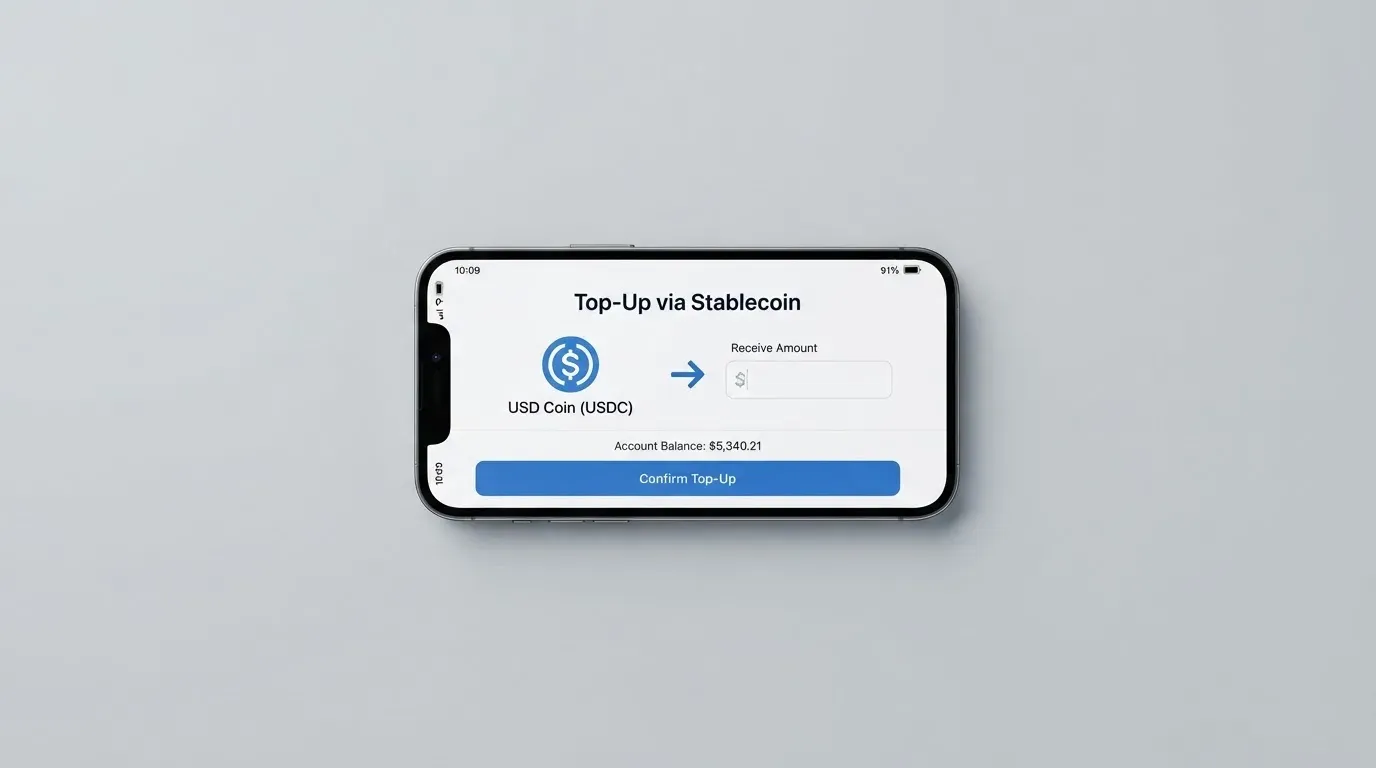
Starting data says crypto is accepted at checkout: Bitcoin, Ethereum, USDT, Dogecoin, Litecoin, Tron, Solana and BNB. That is a genuinely wide list of assets, and it is the most concrete thing anyone has published about this product. The card is prepaid and, per the same starting data, non-reloadable with crypto.
Pause on that, because it changes what kind of object you are buying. A card you fund once and cannot refill is not a wallet. It is closer to a stored-value instrument with an expiry you cannot see. Two of the third-party descriptions mention reloadable options, and the starting data says the cards are not reloadable with crypto; those two statements are not obviously compatible, and neither is from the company.
Top-up options as such are not stated, and withdrawals are not stated. There is no published answer to “how do I get money back off this card”, which is a question you should be asking before you fund it rather than after.
The networks are the sharp edge here, and this is the one real risk in the funding step that you can actually protect yourself against. Not one network is named. Sending USDT on Ethereum versus sending it on Tron are different transactions with different consequences, and if you pick the wrong one — or send to an address belonging to another network — the result is that your deposit can be lost or need manual support recovery with no guarantee. Blockchain transfers are irreversible. There is no chargeback button on a network.
Two practical background points that bear on your choice of asset. USDT and USDC are US-dollar-pegged and the BIS, in July 2025, put about 90% of stablecoin market capitalisation in these two. Circle lists USDC as natively supported on 38 networks as of 16 September 2026, including Ethereum, Solana, Base, Polygon PoS, Avalanche, Arbitrum and Stellar. Tether describes USDT as issued on networks including Ethereum, Tron, Solana, Polygon and Avalanche. So the network choice is genuinely wide — which makes the absence of a published answer from Ezzocard more costly, not less.
And one more thing about Ethereum specifically: ERC-20 gas is paid only in ETH, so a wallet holding USDT with no ETH cannot send. A small practical trap, and one of the reasons Tron- or Solana-based transfers behave differently for people with an empty native balance.
On-chain network fees for your deposit are charged by the blockchain, not by the card provider. You pay them either way.
Paying with it every day
“Every day” is doing a lot of work in this heading, because this card was not built for it.
The available evidence on everyday use: virtual prepaid Visa or Mastercard, single-use and reloadable options per a third-party summary. Apple Pay, Google Pay and ATM withdrawals are not disclosed. Wallets are not stated. Rewards are not stated. No app was found. That last point is not trivial — most of the useful things about a modern card happen in an app, and I could not find one to look at.
So here is what you would actually be doing. If the card is funded with crypto once and cannot be refilled, then “paying with it every day” is really “paying with it until the money runs out.” A prepaid card draws on a stored balance, while a standard debit card asks your bank to withdraw funds from a linked account at the moment of purchase; in the pre-loaded balance model the card spends only that balance, so it cannot overdraw. That is a genuine safety property, and it is also the definition of a card with a finite life.
Two more daily-use details are not stated and would matter to you. Disputes are not stated — the card’s pages say nothing about chargeback handling. And reviewers report refund requests pending for 12 to 54 days, in September 2025. In the wider category, a chargeback is a refund ordered by the card issuer to settle a dispute, with reason codes such as fraud, duplicate billing or goods not received; US debit card reversal rights come from Regulation E and credit card rights from Regulation Z, and prepaid-card coverage varies and should not be assumed. If the card here is prepaid, assume the weaker end of that range.
One thing that is worth checking yourself, if you get as far as using it: whether the number is accepted by Apple Pay. Apple Pay replaces the card number with a device-specific Device Account Number stored in the Secure Element, never on Apple’s servers, and each payment uses a one-time dynamic security code — that mechanism is sound. But an issuer can restrict a tokenised number, for example block it on magnetic-stripe, phone or website use. Whether this issuer does is not something the card tells you.
What can go wrong
This is the section that pulls the score down hardest, so let me give you the complaints in full rather than softened.
No official incident was found. That is worth stating plainly, because it is a real absence and it cuts in the card’s favour. What follows is user reports and third-party warnings, not confirmed regulatory findings.
Here is what Trustpilot reviewers report:
- Payment taken but no card received — March 2023, July 2026
- Cards declined by PayPal and eSIM providers — August 2023, August 2025
- Refunds delayed or unanswered — September to December 2025
- Site offline, and lookalike copy domains appearing — August to November 2025
- Requests for extra fees after an “ezzo gift card” transfer — May to June 2026
Trustpilot itself warns that the profile is unclaimed and that the company “may be associated with high-risk investments”, and reviewers claim a move to a new domain, September to November 2025. A domain migration combined with clones of your domain is the exact pattern behind a specific and unpleasant crime: you type the address you trusted, or a very similar one, and you send crypto to someone who is not the company. Domain changes are also where the disappearance of an issuer goes unnoticed.
That last point connects to the single biggest structural question here. Who is behind this? The provider named in the starting data is Ezzocard Finance, formerly Ezzocard. Owner, registration and issuer: not found. So the chain that normally stands between you and a bad outcome is missing.
In the normal case, a card payment involves several parties: the card network (Visa or Mastercard) routes messages and sets rules, the issuer is a bank or e-money institution licensed to issue under the network’s licence and holds the card programme, and the crypto brand is often only a programme manager or front-end that markets the card. Visa and Mastercard do not issue crypto cards to consumers themselves; they license issuers, and they can suspend a programme. Nobody has told you which issuer stands behind Ezzocard’s cards, which means nobody has told you which licensed institution is regulated for your money — or whether one is.
Two further absences. Security measures are not stated: no published information on 2FA, freezing, spending limits or confirmation prompts. Support is an email address; company replies are visible on some Trustpilot reviews, while most 2025–2026 negative reviews show no reply. Language support is not stated.
And the regulatory backdrop, briefly, because it bears on what a provider should be able to tell you. In the EU, an electronic money institution can issue e-money, payment cards and e-wallets but cannot lend, and must safeguard customer funds by segregating them in dedicated accounts or insuring them — funds that are not bank deposits and may not be covered by deposit guarantee schemes. MiCA took legal effect in June 2023, its stablecoin rules applied from 30 June 2024 and the remaining provisions, including crypto-asset service provider rules, from 30 December 2024; under it, e-money tokens may be issued only by a credit institution or an electronic money institution. The transitional period runs until 1 July 2026 or until a provider receives or is refused authorisation, whichever comes first. A card itself is regulated separately from the crypto side, so a crypto card often depends on two licences. Ezzocard’s pages name none.
Finally, the structural risk nobody can hedge for you: custodial platforms have a record of failure — Mt. Gox, about US$350 million reported stolen across 2011–2014; Coincheck, about US$400 million in 2018; Ronin Network, US$625 million in 2022. Where a provider holds the keys, you are exposed to the provider. And card programmes do close: WaveCrest was suspended by Visa in Europe in 2018, closing all WaveCrest-issued Visa programmes; in November 2022 Visa said it had terminated its global agreements with FTX and the FTX US debit card programme was being wound down by its issuer. Closures follow a pattern — a notice period, then spending and loading stop, then users are asked to withdraw remaining balances.
What to take instead
If your reason for looking at Ezzocard is that you want a crypto-funded card you can actually rely on day to day, then Ezzocard is not the strongest candidate in its own category, and I would want you to see the alternatives before deciding. Here is how the three I checked compare, with their own scores, which are not mine to change.
| Card | Score | What it is | Cost and fees |
|---|---|---|---|
| Ezzocard | 5.3 / 10 | Virtual prepaid card bought with crypto | Not stated |
| Cardex | 5.6 / 10 | Debit crypto card on VERVE, Visa, Mastercard and UnionPay; virtual and physical | Cost not stated; real-time crypto-to-fiat conversion, no percentage published |
| CardFlow | 4.9 / 10 | Virtual USD Mastercard, created in about 3 minutes | Creating a virtual card is completely free; monthly fee and other fees not stated |
| HyperCard | 4.7 / 10 | Prepaid card, balance in USD or EUR | Not stated |
Cardex is the closest competitor and scores marginally higher. It advertises “one crypto card, 200+ countries”, with no country list or exclusions — the same vagueness in a different wrapper, so that advantage is smaller than the number suggests. Its App Store listing is Naira-focused, with payment in Naira. It is a debit card rather than a prepaid one, on four networks including Visa and Mastercard, with both virtual and physical options. Its notable feature is conversion: real-time crypto-to-fiat conversion at the moment of payment, with the site saying an “AI-Powered Conversion Rate” scans global exchange rates and picks the best one when you spend — no fee percentage stated. Funding from USDT, USDC and BTC wallets, networks not stated.
CardFlow is aimed at Nigeria — “Nigeria’s smartest fintech card platform” and “Nigerians and global users” — with no country list or exclusions stated. A virtual USD Mastercard created in about 3 minutes. The one genuinely useful published fact in this whole comparison: creating a virtual card is completely free, per its own FAQ. Everything else, including the monthly fee, is not stated. Funded with Bitcoin, USDT, ETH or a Naira bank transfer.
HyperCard advertises no country list on its official pages, while its App Store says the card works in “more than 176 countries” — note that is acceptance, not eligibility, and the distinction is exactly what trips people up. A prepaid card whose network is not stated on the App Store page, balance in USD or EUR, funded by depositing crypto such as USDT, BTC or ETH in the app and converting to USD or EUR. No fees listed on the App Store page, and none stated on the pages I could read.
Honest comparison: every one of these has undisclosed networks, and three of the four disclose no country exclusions. What separates them is that Cardex describes a conversion mechanism, CardFlow publishes a free card creation, and HyperCard at least names a balance currency. Ezzocard’s distinguishing feature is a longer list of accepted crypto at checkout and a claim of no verification at registration — against a Trustpilot profile of 2.5 across 368 reviews, an unclaimed profile, and an unclaimed issuer. If reliability is your criterion, that ordering matters more than any score.
Who I would recommend it to
I would recommend Ezzocard to exactly one person: someone making a one-off online payment who pays in crypto, who does not care about fees because the amount is small enough that any fee is noise, and who understands they are funding a prepaid balance they cannot refill.
And I would recommend it to that person only after three checks. First, confirm at the point of purchase what you are actually paying — the amount on screen is the only cost figure you will get. Second, if a deposit is involved, confirm the network with the provider in writing before sending, because nothing is published and transfers are irreversible. Third, accept that a refund may take weeks, or not come, because disputes are not addressed on the card’s pages and reviewers report 12 to 54 days.
I would not recommend it to anyone paying rent, sending money home, or running a business account through. I would not recommend it to anyone who cannot absorb the loss of the funded amount. And I would not recommend it to anyone who chose a crypto card precisely because a licensed institution stands behind it — because we could not find that institution, and the Trustpilot profile is unclaimed.
The best compliment I can pay Ezzocard is that it may well be a working product for a narrow job. The problem for a buyer is not that it is broken; it is that it will not tell you what it costs, who issues it, or what happens to your money. When a company publishes nothing, the absence does not fall evenly — it falls hardest on the person who is about to send real money.
Frequently asked questions
What is Ezzocard?
Ezzocard is a virtual prepaid payment card that you buy with cryptocurrency rather than from a bank. Cards are described as usable on sites accepting Mastercard or Visa prepaid cards, with single-use and reloadable options mentioned in third-party summaries. Payment at checkout is said to accept Bitcoin, Ethereum, USDT, Dogecoin, Litecoin, Tron, Solana and BNB. The card is virtual, so there is no physical card posted to you, and the provider named in starting data is Ezzocard Finance, formerly Ezzocard.
How does Ezzocard card work?
The model is pre-loaded balance rather than debit. Crypto accepted at checkout is converted into a stored balance, and the card spends only that balance, which means it cannot overdraw. There is no app we could find, wallets are not stated, and the currency the card holds is not stated either. Per starting data, cards are prepaid and not reloadable with crypto, which would make each purchase a funded one-off rather than an ongoing account.
Is Ezzocard a bank?
No evidence of it. No page we could read describes Ezzocard as a bank, and the owner, registration and issuer were not found. In this category the usual chain is a network such as Visa or Mastercard, a licensed issuer holding the programme, and a crypto brand often acting only as a front end or programme manager. Ezzocard’s pages name none of these parties, so the licensed institution responsible for your balance cannot be identified from anything public.
Does Ezzocard card require KYC?
The site says no verification is needed at card registration, neither ID nor other documents. That claim is contradicted in practice: one Trustpilot reviewer in September 2025 says ID verification blocked use of a card. Verification levels are otherwise not stated, so no tier structure exists publicly. Note also that in the wider system, nationality and country of birth are screened separately from country of address.
Is Ezzocard card free, and what are the fees?
Nothing is published. Issuance fee, monthly fee, conversion fee, foreign-exchange fee, ATM fee, daily limit and monthly limit are all not stated — which is not the same as free. One June 2026 user report mentions a “$25 CAD” card, but a single review is not a price list. On-chain network fees for any deposit are charged by the blockchain, not by the provider, and those you will pay regardless of what the card says.
How do I top up an Ezzocard card?
Per starting data, cards are prepaid and non-reloadable with crypto, so the funding happens at purchase: you check out with Bitcoin, Ethereum, USDT, Dogecoin, Litecoin, Tron, Solana or BNB. Top-up options generally are not stated, and no app was found to manage them. Critically, no networks are named, so confirm the network in writing before sending, because a transfer on the wrong network can be lost with no guaranteed recovery.
Can I use Ezzocard card in my country?
You cannot confirm it from the company’s own words. The only public statement is a search summary claiming cards can be bought “from anywhere in the world”, which describes where the card is sold rather than who is eligible, and no country list or exclusions are published. Issuer risk policy and sanctions screening are often applied to citizenship and country of birth rather than residence, so an unstated exclusion is entirely possible. If eligibility decides it for you, ask in writing and keep the answer.
Is Ezzocard card safe?
Treat it as high uncertainty rather than either safe or unsafe. No official incident was found, which counts in the card’s favour. Against that: security measures are not stated, support is an email with most 2025–2026 negative Trustpilot reviews showing no reply, and the profile is unclaimed and carries a warning that the company “may be associated with high-risk investments”. Reviewers report the site offline with lookalike domain copies in 2025 — verify the domain before sending anything.
Is Ezzocard card worth it?
Worth it for one narrow case: a single online payment you fund in crypto, where the amount is small enough that undisclosed fees do not matter. Not worth it for daily spending, since a non-reloadable prepaid balance runs down and cannot be topped up. Not worth it if you need to know what a payment costs, if you need the money back quickly — reviewers report refunds pending 12 to 54 days — or if you are relying on a licensed institution standing behind the balance.
Why is the score only 5.3 out of 10?
Because the category itself is reasonable but this product is silent. Who can get it scored 8 and top-up options 7, but reliability and complaints scored 2 — Trustpilot 2.5 out of 368 reviews, an unclaimed profile, and payment-taken-without-card reports — and everyday use scored 4 with Apple Pay, Google Pay and ATM all undisclosed. The score is not a judgement that Ezzocard is a scam; it is a judgement that you cannot verify what you are buying.
Virtual cards in the catalogue – cryptocardcatalog
Content created by the «cryptocardcatalog» team