
Bit2Me card review: a Mastercard paid from a crypto balance, and what it costs to use it
 Available in US
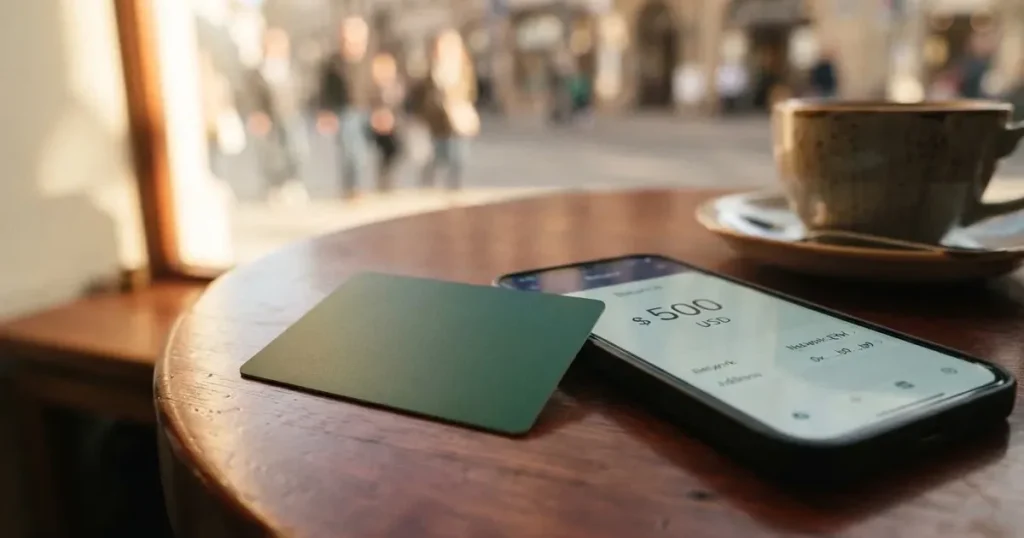
The Bit2Me card is a Mastercard that spends from a crypto platform balance rather than from a bank account, and on the everyday-use side it is about as good as this category gets: a physical card, a virtual card or both, Apple Pay and Google Pay, and cash withdrawals around the clock. The friction is not in the card. It is in who can open the account, what the balance costs when it is drawn down, and the fact that you are holding your money with a platform rather than a bank. Here is what I checked, what I could not confirm, and where I would and would not point a friend.
The conditions described here are current as of October 28, 2026.
Verdict: 6.8 out of 10
The score is 6.8 / 10. It is not a bad card; it is a card with an excellent physical experience attached to a financial service that carries the specific risks of a crypto platform. If you are an EU resident who wants a Mastercard and cares more about cashback than about custody, this is a serious candidate. If you are outside the supported countries, or you want your money held somewhere with deposit protection, it is not for you, and no amount of cashback changes that.
| Criterion | Mark | Why |
|---|---|---|
| Who can get it | 5 / 10 | The card’s own pages do not publish a country list; unofficial sources say 29 countries, mostly in the EEA, with tax residence required and several countries closed off |
| Cost | 7 / 10 | No maintenance fee, and the headline cashback is generous, but spending straight from crypto carries a conversion charge, and foreign-currency spending costs more again |
| Top-up options | 7 / 10 | Dozens of currencies, you choose which wallet pays, a stablecoin can be linked, but the full coin list is not published on the card page |
| Reliability and complaints | 7 / 10 | The card is issued by PECUNIA CARDS EDE, S.L.U. under Bank of Spain supervision and Bit2Me holds a MiCA authorisation from CNMV, but Trustpilot complaints mention withdrawal delays and account freezes |
| Everyday use | 9 / 10 | Physical, virtual or both, Mastercard, Apple Pay, Google Pay, and cash withdrawal 24/7 |
The one thing that lifts this above the category average is the cashback ladder. Unofficial reporting describes a points programme running from level 0 to level 7, taking card cashback from 0% up to 7%, and the card page itself advertises refunds of up to 7% on purchases. That is the feature to look at first if you spend on the card every day. Just remember that the ladder itself comes from third-party sources, not from the card’s public pages.
Will they give you the card?
This is the section I would read twice, because the answer is mostly not on the card’s own website. The Bit2Me card page lists no countries at all, and it does not say whether the test is citizenship or tax residence. That silence is itself information: you cannot confirm eligibility from the official material alone.
What unofficial sources say is narrower and more useful. One card directory, reading the service in August 2026, reports availability in 29 countries — mostly in the EEA, with Austria, Belgium, Germany, Poland, Spain and Sweden named among them — and a requirement to have tax residence in a supported country. Canada, Ireland, Japan, Tajikistan, the United States, Iran and Cuba are listed as restricted or closed. Another source, a competitor’s blog, describes the range as EEA tax residents excluding Ireland, plus Argentina for virtual cards only. Treat both as unofficial: they are not confirmed by the card, they may disagree with each other, and they may lag behind.
Why this matters to you is that the rule appears to run on tax residence rather than on citizenship. In the EU that distinction is routine and not objectionable on its face. But if you are a citizen of one country and live in another, the second one is what decides. If you are not a tax resident of a supported country, the answer is almost certainly no, and no amount of reading the card page will change it.
The general rule for the category, which is worth holding in mind when you compare, is that national identity and residence are screened separately: sanctions screening is applied to citizenship and country of birth as well as to the address. That is standard compliance practice everywhere, not a comment on you.
The uncomfortable truth is that you are being assessed by two different companies. Bit2Me is the platform; the card programme itself belongs to PECUNIA CARDS EDE, S.L.U., an electronic money institution supervised by the Bank of Spain and trading as PECUNPAY. Both have their own risk appetite, and only the second one actually issues the plastic.
How to get it
The card itself can be physical, virtual, or both — the platform does not force you to choose one at signup — and it is a Mastercard, so it works at any online or physical store that accepts Mastercard payments. That much comes straight from the card page. What the card page does not say is the currency the card holds or what it costs to ship the plastic, or even which countries it ships to.
On verification, the official pages I read are silent. The card does require a Bit2Me account, and third-party reporting fills in the rest: registration and verification of a Bit2Me account with tax residence in a supported country, a base tier requiring a government photo ID and a liveness check, proof of address for higher tiers, and users reporting extra document requests and manual reviews.
So the honest sequence is: open and verify the platform account, clear the identity checks, reach whatever tier supports the card, then choose physical, virtual, or both. The part you cannot plan is how many rounds of documents you will be asked for. Card directories and news coverage both describe users being asked for more than they expected, and reviews mention accounts held pending checks. That is the single most common reason a crypto card application stalls, and it is a legal obligation rather than a policy quirk: if due diligence cannot be completed, the institution must not proceed and, where necessary, end the relationship.
Fees: what it really costs
The card page is explicit about one thing and silent about most others. Explicit: there is no maintenance fee — “Don’t pay anything for the maintenance of your virtual or physical cards”. Silent: the issuance fee, the conversion fee, the foreign-exchange fee, cash withdrawal charges and free allowances, and every limit.
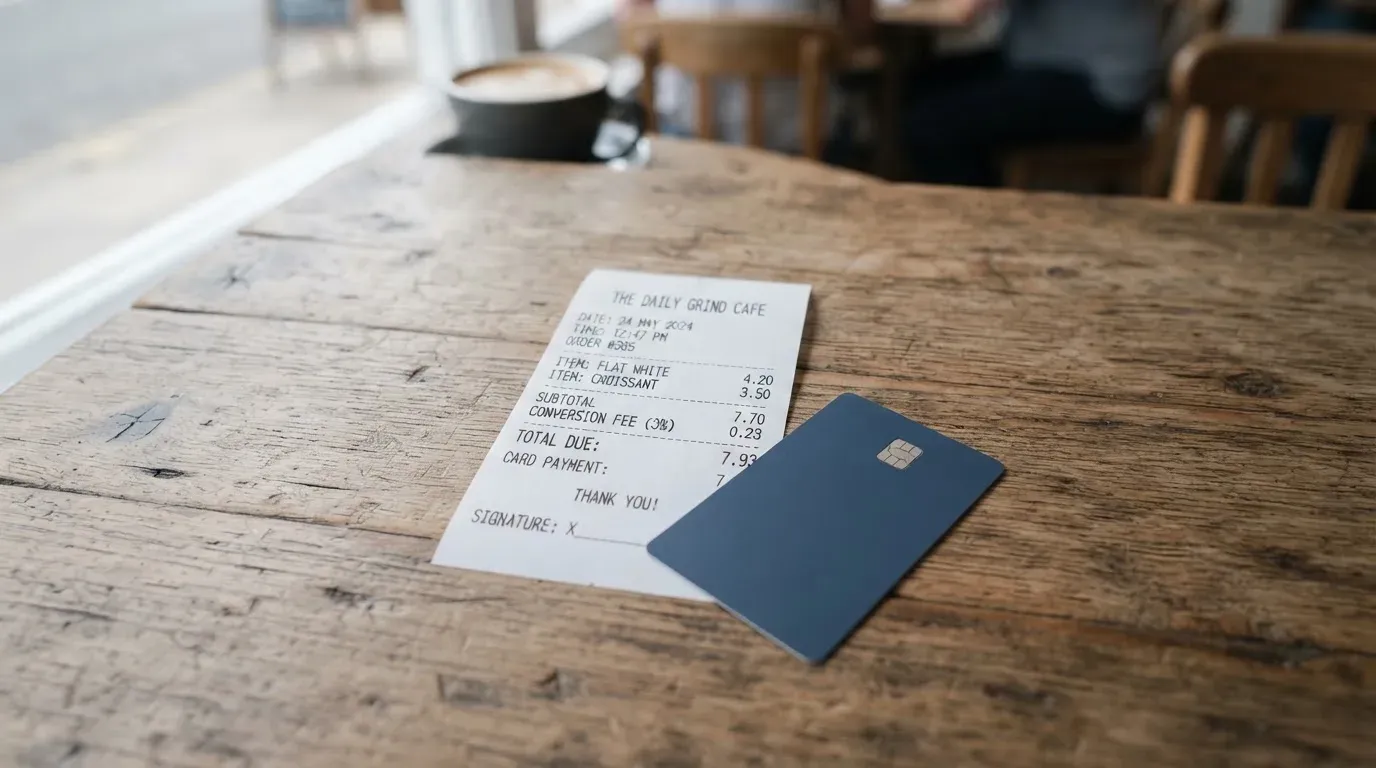
That silence is inconvenient, because the numbers below come from unofficial sources and you should treat them as a strong indication rather than a contract. I have kept the sources visible rather than blending them, because where two disagree, you should know that they disagree.
| Fee or limit | Value | Source |
|---|---|---|
| Maintenance | No maintenance fee | Card page |
| Issuance, virtual | €0 | Unofficial |
| Issuance, physical | €20 at levels 0–2, €10 at L3, €5 at L4, €0 at L5–7; plus €5 delivery outside Spain | Unofficial |
| Virtual replacement | €0 | Unofficial |
| Spending from the euro wallet | 0% | Unofficial |
| Spending converted from crypto | 0.95% | Unofficial |
| SEPA payment in a non-euro currency | 1.75% | Unofficial |
| Other foreign-currency spending | 2% | Unofficial |
| ATM, Spain | €0 from Bit2Me | Unofficial |
| ATM, rest of the Eurozone | €2.50 | Unofficial |
| ATM, outside the Eurozone | €0.55 + 1%, minimum €0.75 | Unofficial |
| ATM limits | €300/day, €3,000/month, €30,000/year; 5/day, 50/month, 150/year | Unofficial |
| Purchase limits | €2,500 per transaction and per day, €20,000 per month, €200,000 per year | Unofficial |
Three everyday payments, so the arithmetic has a shape:
- Coffee in Spain, paid from your euro wallet. No maintenance, no conversion charge, and whatever cashback your level earns. This is the cheapest way to use the card, and if your balance is already in euros it is also the most predictable.
- Anything paid straight from crypto. The 0.95% conversion charge applies. On a €40 shop purchase that is roughly €0.38 — small, but it applies to every single transaction, which is why topping up into a euro balance first and spending from that is usually cheaper.
- A purchase priced in dollars while your balance is in euros. Here you can hit two layers at once: the euro-to-crypto or euro-wallet conversion, and the foreign-currency fee of 1.75% on a SEPA payment in a non-euro currency or 2% on other foreign-currency spending. This is where the card stops being cheap, and it is worth checking which of your regular merchants bill you in dollars.
On cashback, the unofficial ladder runs from 0% at level 0 up through 0.25%, 0.5%, 1%, 2%, 3% and 5% to 7% at level 7, which reportedly needs 9,000 points, with monthly caps attached at each step — €7.50, €15, €30, €100, €175, €250 and €300. Two details there matter more than the headline: cashback is paid in B2M rather than in euros, so you are taking the reward back in a token; and certain categories are excluded, with casinos, lotteries and betting named. If you gamble, the card’s best feature does not apply to you.
Top up: how money gets onto the card
Top-ups are where this service is genuinely flexible. The card page says you can pay in “dozens of currencies” and choose which wallet pays, and you can optionally link a stablecoin. Funding is done by selecting the wallet you want to spend from — either crypto or the euro wallet — and the card page states you can pay in euros without commission. Deposit fees, minimum top-up amounts and network costs are not stated.
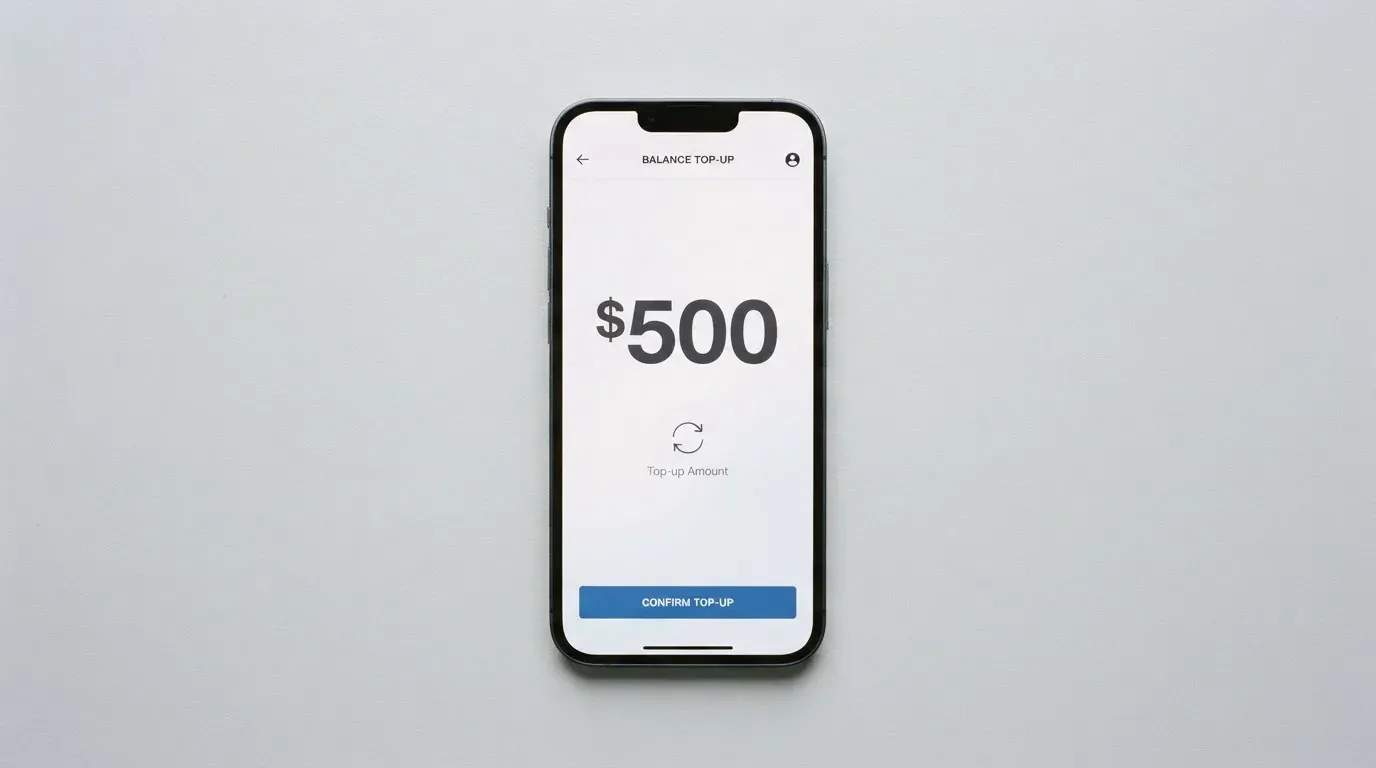
Two things I would want you to notice before you move money. First, “without commission” and “free” are not the same thing when crypto is involved: the network fee for an on-chain deposit is charged by the blockchain, not by the card company, so a transfer from your own wallet can still cost you whatever that network charges at the time. Second, network choice is not a detail. Sending a deposit over a network the provider does not support, or to an address belonging to a different network, can simply be lost, or need manual support recovery with no guarantee attached.
If you are thinking about stablecoins specifically, the mechanics are worth understanding. USDC is redeemable 1:1 for USD and fully backed by cash and equivalents, with monthly reserve attestations, and is natively supported on 38 networks — Ethereum, Solana, Base, Polygon PoS, Avalanche, Arbitrum and Stellar among them. USDT is issued across Ethereum, Tron, Solana, Polygon, Avalanche and others. Neither is automatically stable: USDC briefly lost its peg in March 2023, and TerraUSD collapsed outright in May 2022. Also note that USDC over Tron is not a native option any more, since Circle stopped supporting it in February 2024 — a detail that catches people out because USDT on Tron is still very common.
Closing and withdrawing is the gap I would flag hardest. The card page offers cash withdrawal 24/7, but it does not describe closing the account or taking a balance out. That is a different question from an ATM withdrawal, and for anyone considering this card it is the question to ask support before you commit, not after.
Paying with it every day
This is the section where the card scores highest, and it earns it. You can hold a physical card, a virtual card, or both; both are Mastercard; Apple Pay and Google Pay are supported, which is how most people will actually use it day to day; and cash is available 24/7.
The app is on iOS, iPad and Mac with an M1 or later, and on Android. The Spanish App Store listing showed 4.5 out of 5 from roughly 3.8K ratings when I read it; the Google Play listing exists but I did not read a rating for it.
The headline rewards language is worth quoting as written, because the asterisks are doing real work: “We refund up to 7%* on all your purchases”. The page also claims up to 39% cashback combined with other products, up to 7% yield on purchases when a stablecoin is linked, and up to 25% extra through Bit2Me Life at more than ten merchants. The payout currency and the conditions behind the asterisk are not explained on the page. A “refund of up to 7% on all purchases” with the exclusions and caps I described in the costs section is a different proposition from what the headline sounds like, and the difference is where you get disappointed.
What is not stated anywhere on the card page: which merchant categories are blocked. That matters more than it sounds. Providers block gambling merchants routinely — the merchant category code for casinos, betting and lotteries is a specific one, and issuers block it by policy rather than by law — and some providers restrict which countries a card will work in at all. You will not find a published list here.
One more everyday detail that catches people out: a declined payment can leave a hold on your funds for several days, typically up to seven. If you are depending on that balance, an unsuccessful attempt at a hotel or a car rental can quietly tie up money for a week.
What can go wrong
The honest list starts with custody. Whatever the card does, your balance sits with a crypto platform, not a bank, and that is a different risk from a bank deposit. The category’s history is not encouraging: custodial platforms have failed before, with Mt. Gox (around US$350 million reported stolen, 2011–2014), Coincheck (around US$400 million, 2018) and the Ronin Network (US$625 million, 2022). Note also that an electronic money institution must safeguard customer funds by segregating them or insuring them, but those funds are not bank deposits and are not covered by a deposit guarantee scheme. If you are comfortable with that, fine; if you are not, no cashback percentage compensates for it.
Then there is the complaint record, which is mixed rather than bad. Trustpilot for Bit2Me overall showed 3.9 out of 5 from 2,484 reviews when I read it, with 26% one-star and replies to 97% of negative reviews. No card-specific complaints surfaced — the rating covers the whole platform. The recurring themes are withdrawals and transfers held under review, account lockouts, slow support, and one report of high fees on a small purchase. One 1-star review from May 2025 describes an account locked with funds held for over a year, with Bit2Me replying that it prioritises security. Against that, many reviewers praise support, including phone and WhatsApp in recent months. Customer service is offered in nine languages, and the App Store listing gives [email protected] and +34 910913788.
That pattern — security holds on accounts, documents requested, balances frozen while review completes — is not the platform being unreliable. It is compliance working. In the EU, if due diligence cannot be completed, the institution is required to stand aside or close the relationship. The annoyance is the price of the licence, and it is the same price every licensed provider charges.
There is also the shutdown risk, which nobody can price. Card programmes do close. WaveCrest, a Visa issuer that supplied crypto card brands, was suspended by Visa in Europe in 2018 and all its programmes were closed. When programmes end, the pattern is a notice period, then spending and loading stop, then users are asked to withdraw remaining balances. Neither Visa nor Mastercard issues crypto cards directly; they license issuers and can suspend a programme, as Visa did with FTX in November 2022.
On the regulatory side, the good news is genuine. Bit2Me holds a MiCA authorisation from CNMV — described in press coverage as the first Spanish platform to receive one, with the registry listing 2025-10-31 and press dates in some conflict — and Bankinter joined a EUR 30 million round alongside a minority Tether stake. Under MiCA, e-money tokens may be issued only by a credit institution or an electronic money institution. And a card itself is a payment service regulated separately from the crypto side, which is why a crypto card often rests on two licences at once.
What is not covered: the card page links to a security page listing certifications that I did not read, and it does not state the custody model, two-factor authentication, card freeze, or insurance position. If those four things decide whether you use a card, ask.
And there is one thing nobody can tell you: what happens if a merchant declines your payment. Some shops refuse prepaid or foreign-issued cards because the issuer’s country is visible in the card number itself. A Mastercard issued in Spain can look foreign in a shop in another country, and the merchant is entitled to be cautious.
What to take instead
If the Bit2Me card does not fit, three alternatives came up in the same review work, and they fail in different ways.
International Visa Card — 6.7 / 10. A US-issued Platinum Visa, virtual, paying in USD; the physical version is listed as coming soon. Issuance is $5 one-time, no maintenance fee, with Classic free, Pro $9.00/month and Max $19.00/month plans. Card use in USD is free on all plans; foreign currency costs the Visa exchange rate plus a 2% FX fee; deposits of any kind are free. No cashback is stated. Availability is the trade-off: the account is closed to residents or legal registrants of a long list including Belarus, mainland China, North Korea, Cuba, India, Iraq, Iran, Israel, Myanmar, Nepal, Nicaragua, Russia, Syria, Turkey, Ukraine, Venezuela and Vietnam, with FATF grey-list countries reviewed case by case, and purchases blocked in North Korea, Cuba, Iran, Russia, Syria, Ukraine and Venezuela. The rule runs on residence or registration, not citizenship.
UNi Card — 6.1 / 10. A multicurrency Mastercard spending from a UNi.Global account balance, with no annual fee and no foreign transaction fee, assets converted at live OTC rates and, in the provider’s words, no hidden exchange fees. Spend-to-Earn rewards of up to 3%. Eligibility and funding routes are not stated.
Whop Cards — 5.2 / 10. Visa, working anywhere Visa is accepted, spending from a Whop balance — a pending balance is usable as soon as a payment arrives, standard withdrawals use settled funds, and the backing is described as stablecoin collateral from a linked wallet. 5% cashback at select merchants, currently Uber. The page says “No extra fees” without listing any, and for consumers it covers 31 US states, with 31 more for businesses.
| Bit2Me | International Visa Card | UNi Card | Whop Cards | |
|---|---|---|---|---|
| Score | 6.8 / 10 | 6.7 / 10 | 6.1 / 10 | 5.2 / 10 |
| Network | Mastercard | Visa | Mastercard | Visa |
| Form | Physical, virtual or both | Virtual; physical coming soon | Not stated | Not stated |
| Maintenance fee | None | None on Classic; $9.00/mo Pro, $19.00/mo Max | No annual fee | “No extra fees”, amounts not listed |
| FX | 1.75% SEPA non-euro, 2% other foreign currency (unofficial) | Visa rate + 2% | No foreign transaction fee | Not stated |
| Rewards | Up to 7% cashback on purchases (unofficial ladder) | None stated | Up to 3% | 5% at select merchants |
| Reach | 29 countries mostly EEA (unofficial) | Broad, with a long excluded-country list | Not stated | 31 US states for consumers |
The comparison is not close on raw numbers — 6.8 against 6.7 is a rounding difference — but the shapes differ a lot. Bit2Me is the only one of the four with a cashback ladder that rewards volume, and the only one where the card currency and top-up mechanics are both built around holding crypto. The Visa option is the most explicit about its own exclusions, which is its own kind of comfort: you know exactly where you cannot use it. Whop is narrower still. If your spending is mostly inside the eurozone and you want the cashback, Bit2Me remains the strongest of the three; if you want clarity about restrictions and a USD-denominated card with no cashback attached, the Visa option is easier to reason about.
Who I would recommend it to
I would recommend the Bit2Me card to EU residents who already hold a balance on the platform, spend most of their money in the eurozone, and want cashback rather than banking. Under those conditions it is the best everyday-use card in this review: a real Mastercard, physical and virtual, in the phone wallet, with cash available at any hour and no maintenance fee. The rewards ladder is a genuine reason to pick it, and the zero foreign-exchange cost inside the eurozone matters more than the headline number suggests.
I would not recommend it to you if you are outside the supported countries, because the official pages will not tell you whether you qualify and the unofficial list already excludes several large ones. I would not recommend it if you need deposit protection, because this is an e-money balance held with a platform, not a bank deposit. And I would think twice if your spending involves gambling merchants, since that category is excluded from the cashback and I could not confirm what else is blocked.
What I would do before committing is narrow and specific: ask support what your card currency is and what the foreign-exchange fee is, since the card page states neither; ask what happens to your balance if you close the account, since that is also unstated; and check the network you plan to deposit over before you send anything, because blockchain transfers do not reverse. None of that requires faith in the brand. It requires reading the fee schedule, which is the most useful twenty minutes you can spend on any card in this category.
Frequently asked questions
What is the Bit2Me card?
The Bit2Me card is a Mastercard that spends from your balance on the Bit2Me crypto platform instead of from a bank account. You can hold a physical card, a virtual card, or both, and both work at any online or physical store that accepts Mastercard. The card itself is issued and managed by PECUNIA CARDS EDE, S.L.U., an electronic money institution supervised by the Bank of Spain and trading as PECUNPAY. Bit2Me markets and manages the programme.
Is Bit2Me a bank?
No. Bit2Me is a crypto platform, and the card sits on an electronic money licence rather than a banking one. That distinction has a concrete consequence for you: the funds are safeguarded by segregation or insurance as e-money, not held as a bank deposit, so a deposit guarantee scheme does not cover them. Bit2Me does hold a MiCA authorisation from CNMV, and Bankinter invested in a EUR 30 million round with a minority Tether stake.
Who is eligible for the Bit2Me card?
The card’s own pages do not publish a country list and do not say whether the test is citizenship or residence. Unofficial sources say 29 countries, mostly in the EEA, with tax residence in a supported country required, and Canada, Ireland, Japan, Tajikistan, the United States, Iran and Cuba restricted. Treat that as unofficial and unconfirmed, and expect the platform to verify your identity and tax residence before issuing.
How do I apply for the Bit2Me card?
You need a verified Bit2Me account first, then you clear identity checks and choose a physical card, a virtual card, or both. Unofficial reporting says the base tier needs a government photo ID and a liveness check, with proof of address for higher tiers, and users report further document requests and manual reviews. Shipping countries, delivery time and delivery cost are not stated on the card page.
What does it cost to use the Bit2Me card?
There is no maintenance fee — the card page says outright that you pay nothing for maintenance. Unofficial figures: virtual card €0; physical card €20 at levels 0–2, falling to €0 at levels 5–7, plus €5 delivery outside Spain; spending from the euro wallet 0%; spending converted from crypto 0.95%; non-euro SEPA 1.75%; other foreign currency 2%. ATM withdrawals are reported as €0 in Spain from Bit2Me, €2.50 elsewhere in the Eurozone, and €0.55 + 1% outside it.
What are the Bit2Me card’s limits?
Unofficial figures put purchases at €2,500 per transaction and per day, €20,000 per month and €200,000 per year. ATM withdrawals are reported at €300 per day, €3,000 per month and €30,000 per year, with five a day, fifty a month and 150 a year. One source contradicts the monthly and daily ATM figures, so treat them as indicative. The card page itself states no limits at all.
How do I add the card to Apple Wallet?
Apple Pay is supported — the card page states it is compatible with Apple and Google Pay. Adding it means downloading the Bit2Me app and following the wallet prompt, after which the card number is replaced by a device-specific number stored in the phone’s Secure Element rather than on Apple’s servers, and each payment uses a one-time code. You can also block that tokenised number from phone use if a phone is lost.
Is the Bit2Me card safe?
Safety here splits into two questions. Card security is ordinary: tokenised mobile wallets, 3-D Secure on online payments and the usual issuer controls. Balance security is not ordinary, because your money sits with a crypto platform rather than a bank, and it is not covered by a deposit guarantee scheme. Custodial platforms have failed before. The card page links to a security page listing certifications but does not state the custody model, two-factor setup, freeze or insurance position.
Is the Bit2Me card worth it?
Worth it if you spend in the eurozone and want cashback: the ladder reported for the points programme runs from 0% up to 7%, and the card page advertises refunds of up to 7% on purchases. Think twice if you spend from crypto on every transaction, since conversion costs 0.95%, or if you buy in dollars, where 1.75% to 2% applies on top. Cashback is reportedly paid in B2M, not euros, and excludes casinos, lotteries and betting.
Can I close my Bit2Me account and get my money out?
That is the question I would ask before opening it, because the card page does not cover it. It describes cash withdrawals at ATMs 24/7, which is not the same thing as closing the account or withdrawing a balance, and it says nothing about either. Reviews do mention difficulties: Trustpilot complaints for the platform include withdrawals and transfers held under review and account lockouts, alongside many praises of support. Get a clear answer in writing first.
App and neobank cards in the catalogue – cryptocardcatalog
Content created by the «cryptocardcatalog» team