
A no-fee digital Visa card that spends straight from your own crypto wallet
 Available in US
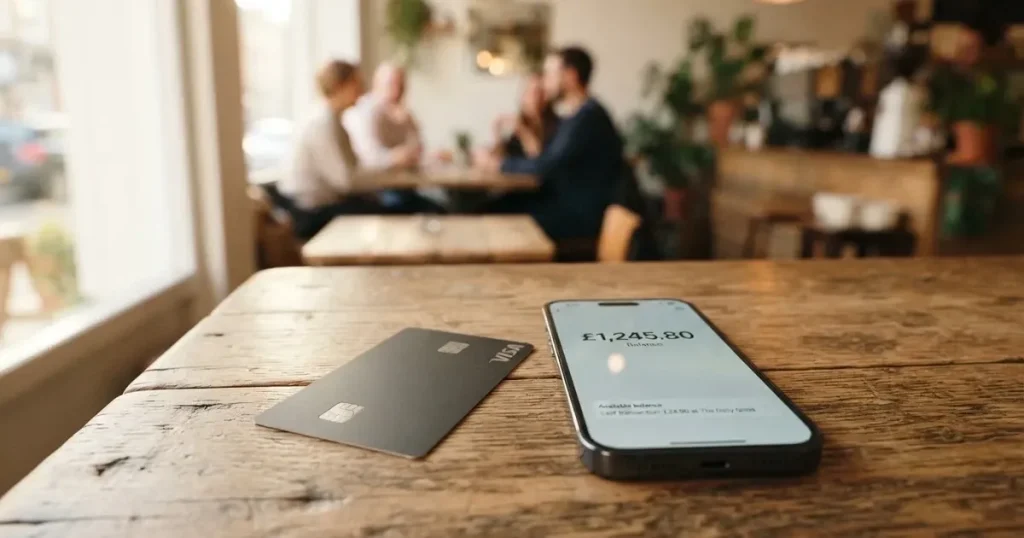
Most people arrive at a card like this from the same place: an ordinary bank card is awkward, unavailable or refused where they live, and something is needed that a shop will accept without an argument. MiniPay is worth looking at for exactly that reason. It is a digital Visa card that spends directly from a self-custodial wallet, with no issuance fee, no monthly fee and no card fee on the card’s own pages. That is a genuinely short list of virtues in this category.
It is also, in places, unusually quiet. The public pages do not publish a country list, do not itemise which coins and networks are supported, do not state spending limits, do not say what happens at an ATM, and describe identity verification only as something the app will walk you through. None of that is a scandal on its own. It is, though, the thing to weigh before you move money.
I gave it 7.4 out of 10. Here is where the score comes from and what each part means for you.
| Criterion | Mark | Why |
|---|---|---|
| Who can get it | 7 / 10 | Selected markets in the EEA, Africa, Latin America and Southeast Asia; the sign-up form lists about 80 countries plus “Other” |
| Cost | 9 / 10 | No issuance fee and no monthly fee, $0 deposit fees, no card fee; Visa exchange rates may apply to non-USD purchases |
| Top-up options | 7 / 10 | Spends directly from a self-custodial wallet; starting data lists USDT, USDC and cUSD on Celo, not itemised on the page |
| Reliability and complaints | 8 / 10 | Issuers named — Monavate Ltd (FCA, FRN 901097) and UAB Monavate (Lithuania), licensed by Visa Europe; Gnosis Pay, the programme manager, sits at 2.1 out of 24 on Trustpilot |
| Everyday use | 5 / 10 | Digital Visa only; Apple Pay and Google Pay are supported, there is no physical card, and ATMs are not covered |
The card suits self-custody wallet users who already hold stablecoins and want to spend them without handing over their funds to an exchange. If that is you — you keep your own keys, you know what Celo is, you are comfortable checking a network before you send — this is a sensible tool. If you are looking for a first card, or you want something that works in every shop, or you want a card you can hand to someone else and take back, this is the wrong shape of product, and the low score for everyday use is telling you exactly why.
The conditions described here are current as of October 28, 2026.
Will they give you the card?
Yes in selected markets — and that is the honest headline, because “selected” is doing a lot of work.
MiniPay describes its availability as “selected markets” in the EEA, Africa, Latin America and Southeast Asia. No country list is published. The sign-up form itself lists about 80 countries plus an “Other” entry, and the card’s own guidance to applicants is simple: if your country is supported, onboarding appears in the card tab of the app. So the practical test is empirical rather than theoretical. You install the app, you look, and you find out in about a minute whether the card is offered to you.
Two things the card does not say, and that you should notice. The basis of eligibility is not stated — is it your residence, your citizenship, or both? And what happens when a country is not on the list is not stated either. You may simply not see the card tab, or you may see it and stop at verification.
This is worth a moment of context, because it is not unique to MiniPay and it is not merely bureaucratic fussiness. In the EU, customer due diligence covers name, address, date of birth, nationality and identity documentation, plus a sanctions check. Nationality is recorded and screened separately from residence, because sanctions screening and issuer risk policy apply to citizenship and country of birth as well as to address. Practically, that means two people living in the same city with the same address can be treated completely differently. Card programmes in this category commonly split on exactly that line, and KAST — one of the alternatives I compare below — is blunt about it: if you live in a supported country but hold an ID from a restricted region, you may still fail verification, and holding only your own ID is required.
I am not going to tell you how to get around any of this, and I would be suspicious of anyone who does. What I will tell you is that your answer depends on facts only you and the issuer have, so it is worth checking before you rely on the card rather than after. Visa and Mastercard do not issue these cards themselves; they license issuers, and an issuer can suspend a programme. Programme closures are real and they are not hypothetical — WaveCrest, a Visa issuer that supplied several crypto card brands, was suspended in Europe in 2018 and all its Visa programmes were closed.
How to get it
The route is the app. MiniPay is a digital Visa with settlement in USD, there is no physical card at all, and therefore nothing is shipped to you. That single fact shapes more of this review than any other, so it is worth sitting with early.
Getting started runs through identity verification, and the card’s description of it is short: verification depends on your country and the card programme’s requirements, and the app walks you through it. The documents you will need, whether you must show proof of address, and what the age requirement is — not stated anywhere on the public pages. The number of verification tiers is not stated either. So I cannot tell you what to have in your hand when you start, and neither can the card, in writing.
This matters less than it sounds if the app is as guided as advertised, and a lot more if your situation is unusual. The identity requirements sit on the issuer side, not with MiniPay itself: the issuers are Monavate Ltd in England and Wales, an FCA-regulated e-money institution with FRN 901097, and UAB Monavate in Lithuania, authorised by the Bank of Lithuania under LB002139, issued under licence from Visa Europe Limited. An electronic money institution in the EU can issue e-money, payment cards and e-wallets but cannot lend, and it can serve customers across the EU/EEA from a licence granted in one member state. Those are the people who decide what proof they want and what to do when they cannot get enough of it. EU rules require them to refrain from the transaction or relationship if due diligence cannot be completed, and to end the relationship where necessary. That is why accounts get frozen pending documents, and it is not a judgement about you.
What the wallet side is, though, is stated. The wallet provider is Blueboard Limited, an Opera company, and the card arrives in the MiniPay wallet app under Opera. If your objection to centralised platforms runs through Opera’s business, that is a thing to look at on its own terms.
I found no official incident involving MiniPay and no MiniPay-specific reviews. The complaints signal I do have is about the programme manager, Gnosis Pay, and I deal with it properly in the risks section rather than burying it here.
What it really costs
This is the strongest part of the card, and the part with the least ambiguity. No issuance fee. No monthly fee. No card fee. $0 deposit fees when you fund from another wallet. That is why this section scores 9 out of 10 rather than 10: the missing tenth point is not about fees the card charges, it is about the fees the card does not talk about.
| Fee or limit | What MiniPay states |
|---|---|
| Issuance | No issuance fee |
| Monthly fee | None |
| Deposit from another wallet | $0 deposit fees |
| Card fee | MiniPay charges no card fee |
| Conversion / exchange | Visa exchange rates may apply to non-USD purchases; Gnosis Pay blog mentions a “low nominal FX fee”, amount not stated |
| ATM | Not covered on the card’s pages; Gnosis Pay blog mentions “an ATM withdrawal fee” with no amount |
| Spending limits | “Spending limits may apply”; viewable in the app, amounts not published |
| Tiers | Single tier, none described |
Let me make the currency point concrete, because it is the one that actually shows up on statements. Settlement is in USD. When you buy something priced in euros, pounds, or anything else, the Visa exchange rate may apply. So the price you see at the till and the amount that leaves your balance are not necessarily the same number, and the gap is the rate, not a MiniPay fee. The card says so plainly. Gnosis Pay’s blog, in its own words, calls it a “low nominal FX fee” and does not put a figure on it. You should assume it exists and you should not assume it is zero.
Two everyday payments, so the abstraction becomes concrete. A ten-dollar subscription in a currency the card settles as USD: no issuance or monthly fee touches it, no card fee touches it, and the only thing between you and the price is whatever rate Visa applies that day. A purchase priced in a non-USD currency from a physical shop: same structure, and note that many shops run an additional scheme fee of their own on foreign cards, which is not a MiniPay charge and not something the card’s pages mention. Where the merchant is domestic and the currency is USD, you are paying the shelf price with nothing layered on top. That is the case this card is genuinely good at.
ATM is the gap. The card’s FAQ does not cover ATM at all, Gnosis Pay’s blog refers to an ATM withdrawal fee without an amount, and MiniPay says the card is digital-only. Taken together those three statements are close to saying: do not plan to use this to get cash. Whether you can even try depends on how the digital card presents at a terminal — if it does not have a physical card, the cash withdrawal route may simply not exist for you, and the public pages do not settle it.
How to top it up
You are not topping up a card balance in the usual sense. MiniPay spends directly from your self-custodial wallet balance, and you can fund from the MiniPay balance or from any wallet, with funds spendable on arrival. Your balance stays in your wallet until the moment you pay. That is the structural difference from a custodial exchange card, and it is the reason people who value self-custody like this design.
Start from your side of the trade-off. Control of crypto belongs to whoever holds the private key or seed phrase. With a custodial wallet, the provider holds the credentials and you must trust them completely; there is a documented history of that trust failing, including Mt. Gox at roughly US$350 million reported stolen between 2011 and 2014, Coincheck at about US$400 million in 2018, and the Ronin Network at US$625 million in 2022. With a self-custody-linked card, the funds stay yours until the moment of payment — and you bear the whole responsibility. A seed phrase is typically 12 to 24 words and is an unencrypted form of the private key; anyone who obtains it can restore the wallet and spend the funds. Transfers are typically irreversible, and a stolen key has no built-in recovery because the network cannot freeze or return anything.
Now the practical part. On starting data, the coins and networks are USDT, USDC and cUSD on Celo — and that is not itemised on the page, which means the page does not present a definitive supported list. This is the part I would check twice before you move anything, and the reason is not bureaucracy. A deposit sent on a network the provider does not support, or to an address belonging to a different network, can be lost or may need manual support recovery with no guarantee. Blockchain transfers are irreversible; the chain cannot undo a mistake in the same way a bank can.
The network question is not a detail for the abstract. ERC-20 is the Ethereum token standard, and its gas fees are paid only in ETH, so a wallet holding USDT but no ETH cannot send. Tron prices fees through bandwidth and energy resources, often burning TRX. Circle stopped supporting USDC on Tron in February 2024, so “USDC over TRC20” is not a native option. Whether you are on Celo, Ethereum, Solana, Tron or elsewhere changes what you must hold to move a dollar. Verify the network and address in the app before you confirm, every time.
The other funding facts: $0 deposit fees from external wallets. Who pays the on-chain network fee for the deposit is not stated, nor is a minimum — network fees are charged by the blockchain, not by the card provider, so the cost sits on the blockchain side of the ledger. And cashing out to local currency is not something the card does: wallet withdrawals go through third-party ramp partners, with fees not stated.
Paying with it every day
Day to day, you are holding a phone. Apple Pay and Google Pay are both supported, in under a minute. That is genuinely the whole proposition: no plastic to lose, freeze and unfreeze instantly in the app, and push it to your phone’s wallet.
How it works underneath is worth knowing, because it explains some of the friction. Apple Pay replaces the card number with a device-specific Device Account Number stored in the Secure Element, never on Apple’s servers, and each payment uses a one-time dynamic security code. Your issuer can also restrict a tokenised number, for example blocking it on a phone or website. Online payments may carry a 3-D Secure identity check, where Visa’s brand is Visa Secure and the scheme either approves frictionlessly or challenges you with a one-time code or biometric.
Rewards are the most attractive published feature: up to 5% on qualifying purchases, paid in digital gold (Tether Gold) and stablecoins, paid monthly. Read the small print, because it is doing real work here. It can take 30 to 60 days. Pending, refunded, excluded-category or over-cap transactions may not qualify. Terms and conditions apply. So the headline percentage is an upper bound, not a rate you should plan a budget around. The cashback figure is not itemised by category and the excluded-category list is not stated, which means you cannot currently tell which of your usual shops would count.
Where it gets less comfortable is the ordinary frictions that prepaid and foreign-issued cards run into. A merchant category code is a four-digit number classifying a business, assigned when a business starts accepting a card — MCC 7995 covers gambling, and many issuers block it on specific cards by policy rather than by law, with the blocked list varying by issuer. MiniPay’s blocked merchant categories are not stated, so gambling is the clearest example of a category you might expect to be restricted and cannot confirm. Address Verification Service compares numeric parts of the billing address a buyer typed against issuer records; it is mainly offered in the US, Canada and the UK and is generally unavailable for foreign-issued cards, which can cause declines. Some merchants decline prepaid or foreign card numbers outright, because the BIN lookup shows the card type and the issuer country — and if that country differs from your billing address, the shop may look twice. Declined authorisations may also leave a hold on your funds that stays for several days, typically up to seven.
The MiniPay-specific app features I would actually use: freeze the card instantly, review activity, contact support through the app. On refunds, they usually return to the original card and the timing depends on the merchant and issuer. If something goes wrong, that sequence — freeze, look, contact — is the whole playbook.
What can go wrong
I found no official incident involving MiniPay. I also found no Trustpilot page for MiniPay. What I do have is about Gnosis Pay, the programme manager, and it is worth stating plainly rather than skipping: on Trustpilot (Swedish page) Gnosis Pay shows 2.1 out of 24 reviews. The complaints are about support, about KYC being handled by a third party, and about a slow fraud dispute that a user reported as unresolved, with dates not shown. That is a small sample and I am not treating it as proof of anything about MiniPay — the card and the programme manager are not the same entity. But it is the only independent signal available, and if identity checks are the thing that worries you most, this is the number to have in mind. Read on 2026-10-21.
The bigger structural risk is one the category shares. Card programmes close. When they do, the pattern is a notice period, then spending and loading stop, then users are asked to withdraw remaining balances. Visa terminated its global agreements with FTX on 13 November 2022 and the FTX US debit card was wound down by its issuer. That history is the reason I would not treat a digital wallet card as the only place your balance lives.
Self-custody cuts one risk and raises another. It removes the custodian counterparty and the hack risk that comes with them. It hands you sole responsibility for key loss, phishing, and clipboard-hijacking malware that swaps an address after you copy it. Neither MiniPay nor anyone else can reverse a blockchain transfer.
On sanctions and freezing, be clear-eyed: stablecoins are not censorship-proof. Tether says it disables tokens in wallets on the OFAC sanctions list and has frozen funds tied to illicit activity.
Then there are the open questions, which for me are the practical risk. Does two-factor authentication exist on the account? Not stated. What are the spending limits? Not stated — only that they may apply and that you can see them in the app. What are the support hours and languages? Not stated. If a payment is stuck, whether a refund is slow, or you are trying to work out whether a token is on a supported network, you are in the app or on email, with no published service level. The lost-phone procedure is concrete and worth memorising: freeze the card, and email the address given in the FAQ with the subject line “Lost Phone – Freeze Card”.
Taxes are one more thing people forget, and I am not going to advise on them here beyond the mechanism. The IRS treats digital assets as property, so exchanging them for goods, services or dollars generally produces a taxable gain or loss, measured in local fiat currency at the fair market value on the transaction date. In many jurisdictions a card payment funded from crypto is its own disposal event. Treat each purchase as potentially taxable and check your own position.
Fees, limits and the questions the page does not answer
Putting the cost picture and the gaps together, so you can weigh them at once.
What the card states plainly:
- No issuance fee and no monthly fee
- $0 deposit fees when funding from another wallet
- No card fee, though Visa exchange rates may apply to non-USD purchases
- A single tier, with none described
- Spending limits exist and are visible in the app
What is not stated anywhere on the public pages:
- The country list, and whether eligibility rests on residence, citizenship or both
- Required documents, proof of address, and minimum age
- Which coins and networks are accepted, beyond the starting data of USDT, USDC and cUSD on Celo
- Who pays the network fee on a deposit, and any minimum deposit
- ATM availability and any ATM withdrawal fee
- Blocked merchant categories
- Whether two-factor authentication is available
- Support hours and languages
- Fees for withdrawal to local currency through ramp partners
- What happens to a remaining balance if the card or programme ends
That second list is longer than the first. That is the finding, not a footnote.
What to take instead
Three alternatives came up in my comparison, and each trades something different away.
TokenPocket scores 5.8 out of 10. Its availability is a defined country list, split by card network: Visa debit for a list of European countries and territories such as Germany, France, Spain and Switzerland; Mastercard debit for Australia, Canada, Hong Kong, Japan, Taiwan, New Zealand, Singapore, South Korea and the UK, among others; the Americas are described as planned. It is a Mastercard/Visa debit card running on Arbitrum, with Fiat24 cards that are virtual and no physical card mentioned, balances in EUR24 and USD24. The costs are where it differs sharply: the NFT creation fee is partly covered by TokenPocket and you pay “a small portion”, and beyond that TP Card charges no additional fees — but 1% is charged when depositing cryptocurrency into the card, to be refunded later through rewards or reduced transaction fees. There is no cashback stated. If you want a card rather than a wallet-linked card, and you read the 1% as a loan rather than a fee, it is a different proposition.
MetaMask scores 7.1 out of 10. Sign-up is open in 45 listed countries and territories, with other regions on a waitlist, and proof of residency is required — the card’s own framing is that ineligible regions limit sign-ups, not spending, so an account can be useful even where the card is not available. US and UK sign-ups are temporarily closed per the FAQ. It is a Mastercard, virtual card issued instantly, with a metal card you can pre-order after virtual approval and one card per user; the issuer is Monavate and the card provider is Crypto Life. The virtual card is free with no annual or maintenance fee; the metal card is $199/year. Fees are described as minimal per transaction with no amount given on the pages read, no additional MetaMask fees, and no foreign transaction fee since the Mastercard rate is used. It spends directly from the connected wallet, across Linea, Base, Monad and Solana, with mUSD, wETH, EURe, GBPe, USDC and USDT named. Cashback is paid in mUSD into the Money Account at 1% on Virtual and a headline 3% on Metal, where the footnote limits 3% to the first $10,000 spent and 1% after, plus a $FLY bonus of 5X or 7X through the Blackbird dining app.
KAST scores 6.1 out of 10. It is the most explicit about eligibility, which is either its strength or its warning: it shows a residence-based list at KYC, states that if your country is not listed KAST is not available there, references a Restricted Locations list without naming countries, and says that living in a supported country while holding an ID from a restricted region may still make you ineligible, that dual citizens with an ID from a supported country may pass, that only your own ID is accepted, and that a VPN does not bypass it. It offers virtual and physical cards, up to ten per user, across Visa Platinum, Visa Infinite metal and gold plated tiers plus other designs, with a USD balance and stablecoin deposits converted 1:1 at 0% spread. The membership structure is the headline: Standard at 0 USD, Premium at 1,000 USD per year, Private at 10,000 USD per year, billed annually upfront, with an inactivity fee of 1 USD per month after 12 months and renewal fees it does not itemise. Fees are unusually clear — stablecoin top-up 0%, USD card spend 0%, transaction fee 0%, Apple and Google Pay 0% — with a non-USD FX fee of 0.5% to 1.75% depending on where you live, where the transaction happens and which card programme applies, 0.10 USD on non-USD transactions under 25 USD, 0.50 USD for a declined transaction, and possible auto-conversion of non-stablecoin tokens at a fee shown in the app. Cashback is tiered at 1.5%, 2% and 3% up to monthly caps of 2,000, 10,000 and 40,000 USD.
My read: if MiniPay’s unpublished country list is the sticking point for you, MetaMask publishes 45 and has a metal option if you want plastic. If you want the clearest published fee schedule and can afford a membership, KAST publishes it. If you want a card that is not tied to your wallet’s balances, TokenPocket’s structure is different. And if you want no fee at all and you already hold stablecoins on a chain the app accepts, MiniPay’s zero-cost structure is the best of the four.
Who I would recommend it to
To people who already keep their own keys and already hold stablecoins, and who want to spend without moving funds to an exchange first. The fee structure is the cleanest I found, the self-custody model means your balance does not sit with a provider, and freeze-and-unfreeze in the app is a real feature rather than a promise.
I would not push it at someone choosing their first payment card, at someone in a country where the card tab might not appear, or at anyone who needs cash, a physical card, or a merchant acceptance record that never wobbles. The published gaps — limits, categories, verification detail, support hours — are exactly the things you would want written down if the card were your only route to spending.
Two habits close most of the risk. Read the in-app limits and blocked categories before you rely on the card rather than discovering them at a till, and treat any balance you keep here as working money, not savings, because programmes do close and keys do get compromised.
Frequently asked questions
What is MiniPay card?
MiniPay is a digital Visa card that spends directly from a self-custodial wallet balance, with settlement in USD. It has no physical form: there is no plastic card and nothing is shipped. The wallet provider is Blueboard Limited, an Opera company, and it runs inside the MiniPay wallet app. Spending draws on your own wallet until the moment of payment rather than on a balance held by an exchange.
Is MiniPay a bank?
No, and the card is careful about the distinction. The wallet provider is Blueroad — Blueboard Limited, an Opera company — and the programme manager is Gnosis Pay, which says it is not a bank or regulated payment provider. The actual issuers are Monavate Ltd in England and Wales, an FCA-regulated e-money institution with FRN 901097, and UAB Monavate in Lithuania, authorised by the Bank of Lithuania under LB002139, under licence from Visa Europe Limited.
Who owns MiniPay?
Ownership is split across several parties rather than sitting with one company, which is normal for this category. Blueboard Limited, part of Opera, provides the wallet. Gnosis Pay manages the card programme and says explicitly that it is not a bank or regulated payment provider. Monavate Ltd and UAB Monavate are the two named issuers, and the card is issued under licence from Visa Europe Limited. Visa licenses issuers rather than issuing crypto cards to consumers itself.
Does MiniPay require KYC?
Yes. Identity verification depends on your country and the card programme’s requirements, and the app walks you through it. The card’s public pages do not state which documents are needed, whether proof of address is required, or what the minimum age is, and they do not describe any tiers of verification. In the EU, due diligence normally covers name, address, date of birth, nationality and identity documents plus a sanctions check.
Is MiniPay available in my country?
Possibly, and you can only find out empirically. MiniPay describes availability as selected markets in the EEA, Africa, Latin America and Southeast Asia, without publishing a country list, and the sign-up form lists about 80 countries plus an “Other” option. The card’s guidance is that if your country is supported, onboarding appears in the card tab of the app. Whether eligibility rests on residence, citizenship or both is not stated, and the two are screened separately.
How do I top up the MiniPay card?
You do not top up a card balance in the usual way — MiniPay spends straight from your self-custodial wallet. You can fund from the MiniPay balance or from any wallet, and funds are spendable on arrival, with $0 deposit fees from external wallets. On starting data the coins and networks are USDT, USDC and cUSD on Celo, but the page does not itemise the supported list, and who pays the network fee is not stated.
Is MiniPay card free?
Effectively yes on the card’s own charges: no issuance fee, no monthly fee, and no card fee, with $0 deposit fees from other wallets. The costs that are not free are external to MiniPay. Settlement is in USD, so Visa exchange rates may apply to non-USD purchases, and Gnosis Pay’s blog refers to a low nominal FX fee with no amount given.
Can I use MiniPay at an ATM?
Do not plan on it. MiniPay’s FAQ does not cover ATM at all, Gnosis Pay’s blog mentions an ATM withdrawal fee without stating an amount, and MiniPay describes the card as digital-only. If you need cash regularly, choose a card with a physical form — among the alternatives I compared, MetaMask’s metal card and KAST’s physical options exist precisely for that reason.
Is MiniPay card safe?
Safer in one specific way than custodial cards, riskier in another. Your balance stays in your own wallet until the moment you pay, so there is no custodian to hack — but you bear sole responsibility for key loss, phishing and clipboard-hijacking malware. The card can be frozen instantly in the app, and 2FA is not stated. For a lost phone, email the address in the FAQ with the subject “Lost Phone – Freeze Card”.
Is MiniPay worth it?
For self-custody users spending stablecoins by card, yes — the zero-fee structure is the best of the four I compared. For everyone else, the trade-offs are sharper: no physical card, an unpublished country list, spending limits visible only in the app, support through the app with no published hours, and up to 5% cashback in digital gold and stablecoins that can take 30 to 60 days and excludes pending, refunded, excluded-category and over-cap transactions.
Wallet cards in the catalogue – cryptocardcatalog
Content created by the «cryptocardcatalog» team