
A prepaid crypto card that skips the bank, with one big gap
 Available in US
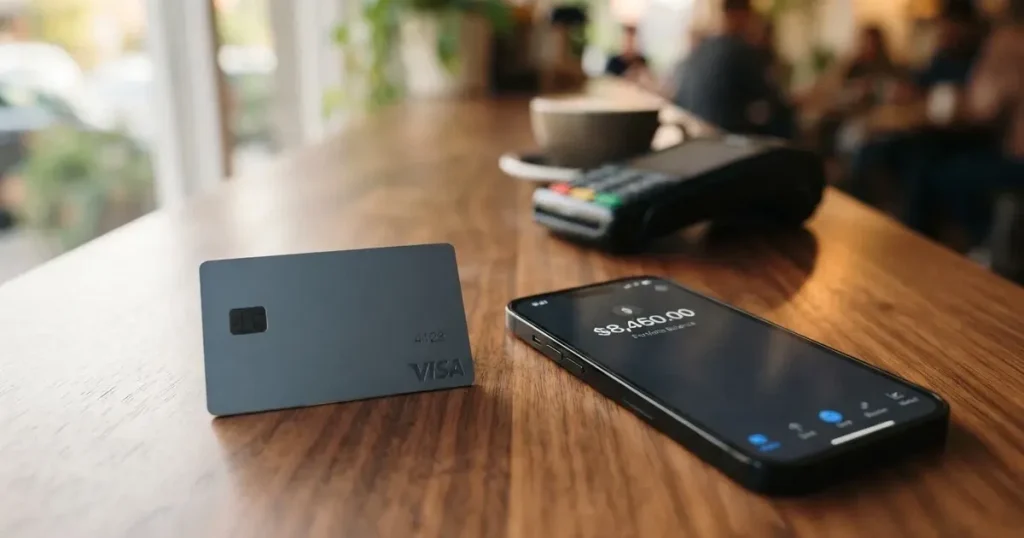
The Floki card is a prepaid payment card tied to the Floki crypto project, sold in a virtual form worldwide and a physical form in 31 European countries. You load it by sending crypto to it, it converts what arrives into a spending balance, and you spend that balance like an ordinary prepaid card. The Floki page lists a 2% fee on topping up, 0% transaction fee and 0% exchange rate fee. It also does not support converting your balance back into crypto.
That last point is what shapes everything else in this review. A Floki card is one-directional: crypto in, fiat out, spent. There is no route back through the card. Once your money has been converted, it is a card balance, not a wallet, and the only ways out are spending it, or whatever else the provider separately offers.
My overall mark for the card is 6.5 / 10. Below I walk through who it suits, who it does not, what it really costs when you use it day to day, and the parts of the offer that the official pages simply do not answer.
Conditions described here are current as of October 28, 2026.
Verdict: 6.5 out of 10
The Floki card is a competently built prepaid card from a crypto brand, aimed squarely at Europeans who want to spend a crypto balance through an ordinary payment network without opening a bank account first. It accepts an unusually wide list of coins and stablecoins, it charges nothing per transaction, and the physical card works across 31 European countries. If that is your situation, it does what it says.
It is not, however, a bank account, and it is not a self-custody card. The balance you spend is fiat held by a provider, the issuing bank is not named on the public page, the monthly fee is not disclosed, and there is no way to move the balance back to crypto. Those are not footnotes. For anyone whose priority is keeping control of their own keys or getting money back out, this is the wrong product.
| Criterion | Mark | Why |
|---|---|---|
| Who can get it | 7 / 10 | Physical cards in 31 European countries, virtual cards worldwide; not available in OFAC-sanctioned countries or where issuing banks do not permit |
| Cost | 5 / 10 | Issuance: virtual 10 EUR, physical 32 EUR; top-up 2%, transaction fee 0%, exchange fee 0%; monthly fee not disclosed, unofficial: possibly 15 EUR a month |
| Top-up options | 9 / 10 | BTC, ETH, BNB, SOL, FLOKI, DOGS, HMSTR, TON, NOT; USDT on ERC-20, TRC-20, BSC, Algorand, TON, Polygon; USDC on ERC-20, Polygon, Stellar, Algorand; EURT and XAUT |
| Reliability and complaints | 6 / 10 | Issuer not named on the page; unofficial: Global Unit Pay (GUP-CH AG), Switzerland; no official incidents or reviews found; converting the balance back to crypto is not supported |
| Everyday use | 6 / 10 | Virtual and physical; plastic in 31 countries; Apple Pay and Google Pay not officially named (unofficial: supported); ATM not disclosed, unofficial: FNT fee 0% |
| Total | 6.5 / 10 | A solid spending card for a specific user, with disclosure gaps and no exit back to crypto |
Two things I want to be straight about before anything else. First, several of the details readers most often ask about — the maintenance fee, Apple Pay, the ATM fee, who actually issues the card — are not on Floki’s own pages. Where I mention them, they come from third-party descriptions of the related FNT Crypto Card and I flag them as unofficial. Floki has not confirmed them to me. Second, absence of information is not evidence of anything bad, but it is a real cost when you are deciding whether to put money behind a card.
Who you can get the card
Floki issues two things: a virtual card and a physical one. The physical card is available in 31 European countries. The virtual card is described as available worldwide. Beyond that, the card is not offered in countries under OFAC sanctions, and not where issuing banks do not permit it.
That phrasing matters more than it first appears. “Where issuing banks do not permit” is doing a lot of quiet work. It means the card’s availability is not purely a decision by Floki — the banks behind the programme can decline particular countries, regions or merchants. So the list of 31 countries is not a promise that the card is unusable everywhere else; it is a description of where physical cards are currently placed, while virtual cards may still be usable in places where the plastic is not, subject to the same underlying permission.
One practical warning: merchants can refuse prepaid virtual cards, and some decline prepaid or foreign-issued cards by policy rather than by law. That is a category-wide issue with prepaid cards from unfamiliar issuers, not a Floki quirk, but it is the first thing you will meet if you try the virtual card somewhere unusual.
So, who is this for? In short: Europeans who want a card funded with many different coins, and who are comfortable having a provider hold the balance. If you are outside Europe, the virtual card is your route, and you should expect some merchants to look at it sideways.
How to get it
The Floki page describes the card as prepaid, in both physical and virtual form. The network is Mastercard — that comes from news coverage rather than the card page itself, which speaks more generally of “common cards”. The card currency is not stated.
The application flow is where the public information runs out. The official page does not mention KYC at all, does not state what identity documents are required, does not describe activation steps, does not state delivery times for the physical card, and does not set out any verification tiers. The card is prepaid and physical in 31 European countries, with issuance at 32 EUR, but how long it takes to arrive is not stated.
That silence is not necessarily a red flag — plenty of legitimate providers keep their onboarding flow inside the app and out of the marketing page. But it does mean that if you are someone for whom identity verification is the deciding factor, you should not take my word or the page’s silence either way. Check inside the product before you commit funds.
For the related FNT Crypto Card, third-party sources describe full KYC — passport or ID plus a selfie, through a web portal or a Telegram mini-app — before issuance. That is unofficial as far as Floki is concerned, and it concerns FNT’s card rather than Floki’s. It is worth knowing only as a reminder that crypto cards in this category are regulated instruments and identity checks are the norm, whatever the marketing page says.
Fees: what it really costs
Here is the disclosed pricing. Issuance is a one-time cost of 10 EUR for a virtual card and 32 EUR for a physical one. The top-up fee is 2%. The transaction fee is 0%. The exchange rate fee is 0%.

What is not disclosed is just as important. The monthly fee is not stated — unofficial descriptions of the FNT card suggest a possible maintenance fee of €15 a month or €150 a year, “to be verified in the app”, and Floki has not confirmed any such fee for its own card. ATM fees are not stated either; again, unofficial, the FNT card is described as charging 0% FNT fee with the ATM operator’s own fees possibly applying. No tiers or discount levels appear on the Floki page; unofficial, the FNT card is described as having discount tiers based on FNTIO holdings, from Basic at 0% through to Black at 40%.
| Item | Value |
|---|---|
| Issuance, virtual | 10 EUR, one time |
| Issuance, physical | 32 EUR, one time |
| Monthly fee | not stated |
| Top-up fee | 2% |
| Transaction fee | 0% |
| Exchange rate fee | 0% |
| Foreign currency purchases | fees “may apply”, rate not stated |
| ATM | not stated |
| Monthly limit | 20,000 USDT |
| Daily limit, physical | 10,000 USDT |
| Daily limit, virtual | 5,000 USDT |
Now the part that decides whether this is cheap or expensive in practice: three everyday payments.
A coffee bought with the physical card, in the card’s own currency. If you pay in the currency the card holds, the 0% transaction fee and 0% exchange rate fee do the work. Nothing is deducted per purchase. This is the cleanest case the card offers.
The same coffee bought in a currency other than the card’s. Here the page says foreign currency fees “may apply” and does not state the rate. This is where the card stops being predictable. You cannot compute your own cost from the published numbers, because the number that matters — the conversion margin — is the one not disclosed. Anyone budgeting tightly in a second currency has to check that rate in the app first.
A card you never spend from. The 2% top-up fee and the 32 EUR physical issuance are both one-off costs of acquiring the thing. Add the undisclosed monthly fee to that, and a card that sits unused becomes the most expensive part of your setup. This is precisely why I rate cost at 5 out of 10: the headline numbers are good, and the numbers that could hurt you are the ones you cannot see.
One more cost that is not the card’s: the network fee for your deposit. On-chain gas is charged by the blockchain, not by the card provider. If you are sending USDT on Ethereum, you pay Ethereum gas in ETH — and a wallet holding USDT but no ETH cannot send at all. That is a network rule, not a Floki rule, but it lands in the same week as everything else and it is worth planning for.
Top up: how the balance gets there
This is the card’s strongest feature, and it is why the top-up score is 9 out of 10. The list of accepted assets is long:
- Coins: BTC, ETH, BNB, SOL, FLOKI, DOGS, HMSTR, TON, NOT
- USDT on: ERC-20, TRC-20, BSC, Algorand, TON, Polygon
- USDC on: ERC-20, Polygon, Stellar, Algorand
- Also EURT and XAUT
That is the widest acceptance I have seen in this category, and it covers most of the ways people actually hold value today.
The mechanics: a 2% top-up fee is charged, and the crypto is converted to fiat at the point of top-up. So the conversion happens once, on the way in, and the balance you spend is a fiat balance. The minimum top-up is not stated, and neither is who pays the network fee — Floki does not say whether Floki covers it or you do.
The catch is irreversibility, and it is a network-level one. Blockchain transfers cannot be undone. If you send on a network the provider does not support, or to an address belonging to a different network, the deposit can be lost or need manual recovery with no guarantee of success. The long network list above is a help, not a safety net — it tells you what *is* supported, which means every entry *not* on that list is a decision you have to get right yourself.
Paying with it every day
Contactless works when the card is added to a mobile wallet. Floki does not officially name Apple Pay or Google Pay; unofficial sources say the FNT card supports both. There is no dedicated app named — Floki describes “a secure digital interface” — and no rewards or cashback scheme is stated, and no dispute process is described.
What this means practically: the day-to-day experience depends on things the public pages leave open. Whether your bank’s app or your merchant’s terminal accepts the card, whether the balance updates fast enough to spend, how a blocked transaction behaves, and what happens when you need help with a chargeback — none of that is documented in a way I can point you to.
There are also category-level friction points you will meet regardless of provider:
- Merchant category codes. Each merchant carries a four-digit code classifying its business. Gambling (MCC 7995) is blocked on many cards by issuer policy rather than by law, and the blocked list differs by issuer. Floki does not publish one.
- Address verification. The check that compares the numeric parts of the billing address you typed against the issuer’s records is mainly offered in the US, Canada and the UK, and is generally unavailable for foreign-issued cards. That causes declines on foreign cards.
- Holds. A declined authorisation can leave a hold on your funds that stays for days, in some cases as long as seven.
- Tokenised wallets. When you add a card to a phone wallet, the number is replaced with a device-specific one and each payment uses a one-time code. That is good protection, but it also means the issuer can restrict the tokenised number for phone or website use without touching your physical card.
Set against that, the card’s honest strength is that a 0% transaction fee means normal spending does not quietly erode the balance.
What can go wrong
The balance cannot go back to crypto. This is the biggest one and it is not a risk so much as a design choice. Floki answers “No” to converting the balance back to crypto — moving crypto to a fiat balance counts as selling, and there is no way to reverse it. Every euro you have loaded is a euro you can only spend.
The issuer is not named. Floki’s legal contact is Block Forge S.R.L., San José, Costa Rica, and the site says it is powered by FNT Crypto. The issuing bank is not named on the page. Unofficial sources name Global Unit Pay (GUP-CH AG), a Swiss financial intermediary affiliated with SO-FIT, a FINMA-recognised entity. You should treat that as unconfirmed and check the terms yourself. It matters, because under the usual structure for these cards the network routes the payments, the issuer holds the programme and the crypto brand is often only the front end.
Country restrictions can change. The page itself says issuing banks may restrict the card by country, region or merchant. So the 31 countries are a present-tense fact, not a durable one.
Prepaid cards can be declined. Some merchants refuse prepaid or foreign BINs. The card’s first six or eight digits identify the institution that issued it, and shops can look that up and apply extra scrutiny if the issuer country differs from your billing address.
Custodial risk. Whoever holds the credentials holds the crypto. A seed phrase is an unencrypted form of the private key, and anyone who obtains it can restore the wallet and spend the funds. Transfers are typically irreversible and a stolen key has no built-in recovery, because the network cannot freeze or return anything. This is not a Floki-specific scandal — the category has a record of custodian failures, including Mt. Gox at about US$350 million reported stolen between 2011 and 2014, Coincheck at about US$400 million in 2018, and Ronin Network at US$625 million in 2022.
Programmes can be shut down. Card programmes do close. WaveCrest, a Visa issuer that supplied several crypto card brands, was suspended by Visa in Europe in 2018, closing all WaveCrest-issued Visa programmes. Visa terminated its global agreements with FTX on 13 November 2022 and the FTX US debit card was wound down by its issuer. A closure typically means a notice period, then spending and loading stop, then you are asked to withdraw remaining balances. I found no official incident and no Trustpilot or Reddit reviews for Floki in my search — which tells you the card is either young or quiet, not that it has been tested by many users.
Your protections are thinner than with a bank card. A chargeback is a refund ordered by the issuer, with reason codes such as fraud, duplicate billing or goods not received. US debit card reversal rights come from Regulation E and credit card rights from Regulation Z, but prepaid-card coverage varies and should not be assumed. Under 3-D Secure, liability for a fraudulent online payment can shift from the merchant to your bank — or, per critics, to you.
Sanctions screening applies to nationality. Country of birth and citizenship are screened separately from address. If you hold a citizenship that is sanctioned, the card is not available to you, and the card’s own pages say so.
Support may not be card-specific. Floki’s contact is [email protected], and the Floki Telegram offers 24/7 support — but for buying and storing FLOKI, with no dedicated card channel named. If something goes wrong with a payment, you may be talking to a token support desk.
What to take instead
If any of the above is the wrong shape for your life, the alternatives below are all in the same category and none of them solve the custodial question. My scores for them are lower than Floki’s, which is why Floki remains my recommendation — but you should look at them for what they do differently, not because they are better.
| Alternative | Score | What it does differently |
|---|---|---|
| Cardex | 5.6 / 10 | Claims one crypto card for 200+ countries, no country list or exclusions stated; debit card on VERVE, VISA, Mastercard and UnionPay; virtual and physical; conversion at the moment of payment using an “AI-Powered Conversion Rate” that scans exchange rates and picks one; no fee percentage stated; funds with USDT, USDC and BTC, networks not stated |
| CardFlow | 4.9 / 10 | Aimed at Nigeria (“Nigeria’s smartest fintech card platform”) and “Nigerians and global users”; virtual USD Mastercard created in about 3 minutes; creating a virtual card is described as completely free; funds with Bitcoin, USDT, ETH or a Naira bank transfer |
| HyperCard | 4.7 / 10 | App Store says the card works in “more than 176 countries” (acceptance, not eligibility); prepaid card with balance in USD or EUR; deposit crypto such as USDT, BTC or ETH in the app and it converts to USD or EUR; network not stated |
The one genuinely different approach worth naming is a self-custody-linked card. There, your funds stay in your own wallet until the moment of payment and no provider holds the balance. The trade is that you bear sole responsibility for key loss, for phishing, and for clipboard-hijacking malware that silently swaps a copied address. For someone who already manages a hardware wallet competently, that is a reasonable exchange. For everyone else, a custodial card like Floki’s is safer, not riskier.
Who I would recommend it to
I would recommend the Floki card to a European who already holds crypto, wants to spend it in ordinary shops without opening a bank account, and is not planning to move the money back out through the card. The top-up breadth is the best in this category, per-transaction costs are genuinely zero, and the 2% entry fee is easy to accept if you load in sensible amounts.
I would not recommend it if your money has to come back out. If you are a trader, a saver, or anyone treating the card as a wallet rather than a spending tool, the one-way design is disqualifying. I would also hesitate if you spend mostly in a currency other than the card’s, because the foreign-exchange rate is not disclosed and you cannot estimate your cost from public information. And if you are outside Europe, take the virtual card as the default and expect some declines at unfamiliar merchants.
Before you commit, there are four things worth checking in the product itself rather than on the marketing page: what the monthly fee actually is, what the foreign-exchange rate is, how a dispute is handled, and who the issuing bank is. Floki’s public pages do not answer those four questions, and I would rather say so plainly than fill the gaps for you.
Frequently asked questions
What is the Floki card?
The Floki card is a prepaid payment card sold by the Floki crypto project. You send crypto to it, it converts that crypto into a fiat balance at the top-up moment, and you spend the balance like an ordinary prepaid card. It comes in virtual form, described as available worldwide, and physical form, available in 31 European countries. It is not a bank account and it is not a self-custody wallet.
How does the Floki card work?
The flow is one-directional. You send crypto from your own wallet to the card’s address on a supported network, a 2% top-up fee is deducted, the crypto is converted to fiat, and that balance sits behind the card. From then on you spend it as you would any prepaid card, with 0% transaction fee and 0% exchange rate fee. The balance cannot be converted back into crypto.
Is Floki a bank, and who owns it?
No, Floki is not a bank. The legal contact listed on the Floki website is Block Forge S.R.L., based in San José, Costa Rica, and the site says the card is powered by FNT Crypto. The issuing bank is not named on the public page. Unofficial sources name Global Unit Pay (GUP-CH AG) of Switzerland, but Floki has not confirmed that to me and you should verify it in the terms yourself.
Does the Floki card require KYC?
The official Floki page does not mention KYC, identity documents, verification tiers or activation steps at all. That silence is not the same as “no checks”. For the related FNT Crypto Card, third-party sources describe full KYC with a passport or ID plus a selfie before issuance — unofficial, and about FNT’s card rather than Floki’s. If identity verification is your deciding factor, check inside the app before sending funds.
How much does the Floki card cost?
Issuance is 10 EUR for a virtual card and 32 EUR for a physical one, charged once. Topping up costs 2%, and both the transaction fee and the exchange rate fee are listed as 0%. The monthly fee is not stated — unofficial descriptions of the FNT card suggest €15 a month or €150 a year, to be verified in the app. Foreign currency purchases may carry fees, and the rate is not disclosed.
What are the limits on the Floki card?
The disclosed limits are 20,000 USDT a month, 10,000 USDT a day for the physical card and 5,000 USDT a day for the virtual card. No reward or cashback scheme is stated. No tier structure appears on the Floki page; unofficial, the FNT card is described as having discount tiers by FNTIO holdings, running from Basic at 0% up to Black at 40%.
Can I use the Floki card in my country?
Physical cards are placed in 31 European countries and virtual cards are described as available worldwide, but the card is not offered in countries under OFAC sanctions or where issuing banks do not permit it. Issuing banks may also restrict the card by country, region or merchant, so eligibility can change. Separate from eligibility, some merchants decline prepaid and foreign-issued cards, and merchants may refuse prepaid virtual cards outright.
Can I add the Floki card to Apple Wallet?
Floki’s page says contactless works when the card is added to a mobile wallet, but it does not name Apple Pay or Google Pay. Third-party sources say the FNT card supports both, which is unofficial as far as Floki is concerned. When a card is tokenised into a phone wallet, the card number is replaced by a device-specific number and each payment uses a one-time code, and the issuer can restrict that tokenised number independently of your card.
Can I withdraw money from the Floki card back to crypto?
No. Floki’s own answer is “No” — converting the balance back to crypto is not supported, because moving crypto to a fiat balance counts as selling it. Once your money is converted it is a fiat balance and can only be spent, not withdrawn back to a coin. If the ability to reverse the direction matters to you, this card is the wrong shape for your use.
Is the Floki card safe, and what about ATM use?
I found no official incident and no Trustpilot or Reddit reviews for Floki, which means the card is young or quiet rather than proven. ATM fees are not stated on the Floki page; unofficial, the FNT card is described as charging 0% FNT fee with the operator’s own fees possibly applying. The bigger structural point is that a custodial card means the provider holds the credentials, and custodial platforms have a real history of failures and hacks.
Virtual cards in the catalogue – cryptocardcatalog
Content created by the «cryptocardcatalog» team