
Spritz card review: a prepaid Visa you fill from your own wallet, and pay for once
 Available in US
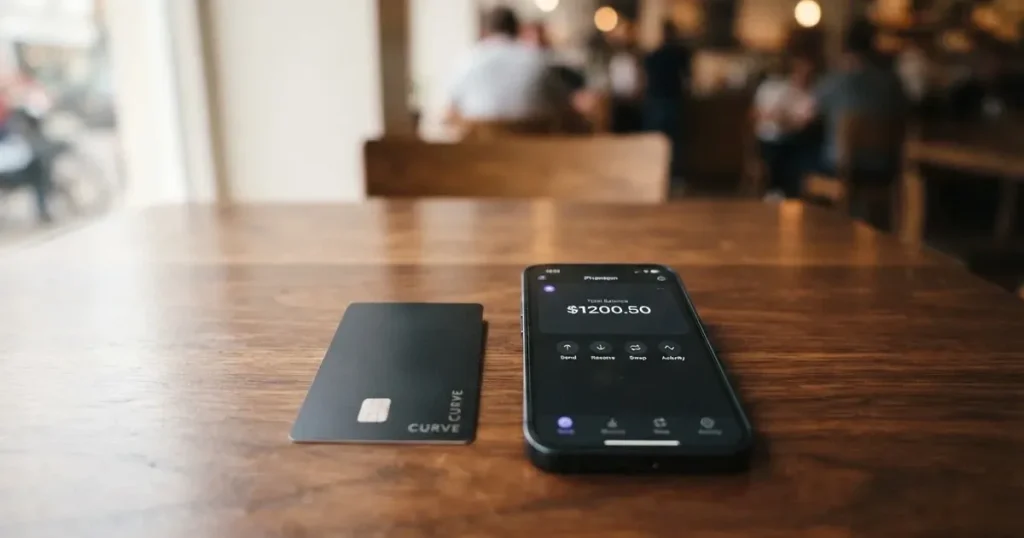
The Spritz card is a prepaid Visa Signature card that you fill with crypto from a wallet you control, and then spend like an ordinary payment card — online, in stores, and through Apple Pay or Google Pay. That is the whole idea, and it is a genuinely useful one for people who hold stablecoins on several chains and want them usable at the till. What you get for that convenience is a specific set of numbers: no fee for spending or for keeping the account, but a 1% base fee on every load with a $2 minimum, a fixed $10,000 daily limit and a $10,000 ceiling on the balance, and money that, once loaded, cannot be taken back out.
I scored it 7.4 out of 10. That is a good score for a card with no monthly fee and unusually broad token support, held back by one structural fact that is easy to miss on the pricing page and hard to unlearn later: the loaded balance is one-way. Read on before you put real money in.
The conditions described on this page are current as of October 28, 2026.
| Criterion | Mark | Why |
|---|---|---|
| Who can get it | 7 / 10 | Residence-based, not citizenship; the card says “many international countries and territories”, Nigeria needs conditional approval |
| Cost | 8 / 10 | No fees on spending or account upkeep; loading is 1% base, $2 minimum; issuance and FX not disclosed |
| Top-up options | 9 / 10 | 50,000+ tokens across 5 chains, USDC and USDT on Tron, USDC on Arbitrum, Avalanche, Base, Optimism, Polygon, Solana, plus Bitcoin, DASH, XRP, Sui |
| Reliability and complaints | 6 / 10 | Spritz Finance; issuing institution not named publicly; loaded funds cannot be returned |
| Everyday use | 7 / 10 | Apple Pay and Google Pay, virtual and physical card; the physical card is described in a limited release |
| Total | 7.4 / 10 | Strong funding breadth and no monthly fee, weighed down by a one-way balance |
The audience this card is built for is narrow and clear: someone who holds USDC across many chains, keeps their own keys, and wants a Visa number that draws on that money without handing the coins to an exchange. If that is you, the fee structure is close to the best in this category. If you are moving between a bank account and a card, or if being able to reverse a mistake matters to you, the same design is a problem, and no fee will fix it.
Will they give you the card?
Spritz approves on residence, not citizenship — the card says plainly that it “works off of your residence versus your citizenship”. That matters more than it sounds. Many people hold a passport from one country and live in another, and a citizenship test would exclude them; a residence test admits them. The catch is that “where you live” has to be a place the card supports at all.
The supported list is described only as “many international countries and territories”, with the actual list sitting in a table in the help centre. Unlisted countries are not supported. Nigeria is a special case: it needs conditional approval rather than a straightforward yes.
One important point of form, stated once here and not repeated below: several details about this card are simply not stated on Spritz’s own public pages — the issuing institution, the ATM situation, the FX fee, the physical card’s delivery terms, and the reasons an application can be refused. Where I give you numbers for those, they come from third-party sites, they are unofficial, and Spritz has not confirmed them. Where nothing is available, I would rather say so than fill the gap with a guess.
Beyond that, what is not stated on the official pages is not a small list. You should read the gaps as part of the offer rather than as an oversight.
The unofficial picture, as of August 2026 from CryptoCardHub, is that 42 countries are available including the United States in 30 states, with seven restricted: Belarus, Cuba, Iran, North Korea, Russia, Syria and Venezuela. Take that as directional, not authoritative — check the help-centre table yourself on the day you apply, because a country can be added or removed without much notice.
How to get it
Minimum age is 18, and you need a verified account. In practice that means uploading an ID document; the card also says manual verification is possible through support if the automatic route does not work for you. Once verified, you activate the card in the app at app.spritz.finance/card, and the card’s own description of the timing is “in minutes”.
What the card itself does not detail is the shape of the verification. The unofficial list, from the same August 2026 source, names government photo ID, phone number, legal name, date of birth, ID number, address and a live face check, and notes that a partner may add citizenship, passport or address checks on top. That is a reasonable picture of a standard onboarding flow, but it is not Spritz’s published specification.
There are no account tiers, which is worth saying plainly because it cuts both ways. The card describes a single “premium Spritz Card”, Visa, with Visa Signature benefits. No paid tier, no upgrade path, no premium-plus option — so nothing to upgrade to, and nothing being held back from you for a higher fee.
Two things you will be waiting on are not stated. How long verification actually takes, and what proportion of applications get refused and why, are both missing from what the public pages say. If a rejected application matters to you — because you have no other card, which is often the case for people reading about cards like this — that is a real unknown, and the only honest way to handle it is to keep your own records and be prepared to ask support directly.
There is a fair question about whether to bother at all if you are turned down. The people who apply most often are the ones with the least tolerance for a closed account, and the ones with the most cards are not the ones reading this.
Fees: what it really costs to fill and use the card
The headline is genuinely good: spending on the card and keeping the account are free. There is no monthly fee. The issuance fee is not stated, though an unofficial source says annual and monthly charges are $0. Where money comes in, the picture gets more textured.

The base load fee is 1% with a $2 minimum, and the card’s own help article breaks it down as 0.5% base plus 0.5% for loading the virtual card. On top of that base sit per-token, per-network adjustments, and the ones that are published are these:
| Fee or limit | Value |
|---|---|
| Spending on the card | No fee |
| Account upkeep | No fee |
| Issuance fee | Not stated |
| Card load fee | 1% base, $2 minimum |
| USDC on Arbitrum, Avalanche, Base, Optimism, Polygon, Solana | +0% |
| Other tokens on those networks | +0.5% |
| Ethereum, all tokens | +0.5% |
| Sui USDC | +1% |
| Sui SUI | +2% |
| BSC | +1% |
| XRP | +1.5% |
| Tron USDC | +0.5% |
| Tron USDT | +1.5% |
| Bitcoin | +1.5%, minimum $5 |
| DASH | +1.25% |
| FX fee | Not stated |
| ATM fee | Not stated |
| Daily limit | $10,000 |
| Maximum card balance | $10,000 |
| Currency of stored funds | USD |
So the cheapest routes are exactly the ones most people already use: USDC on Arbitrum, Avalanche, Base, Optimism, Polygon or Solana costs the 1% base and nothing more. Sending USDC over Ethereum adds half a point. Bitcoin, at 1.5% with a $5 floor, is the expensive one — and if you are loading from a Bitcoin wallet you probably also need to pay a network fee, which is separate.
Two promotions and one silence are worth flagging. The blog announces that loading fees are waived for the first 30 days after launch, which is a headline-grabber and, by its own logic, temporary. And the FX fee is not stated. An unofficial source says there is no Spritz fee on card purchases and that ordinary exchange rates apply abroad — which is the description of a card that is silent rather than a card that is free of currency cost. If you spend abroad often, this is the number to ask support about before you rely on it.
Let me run three ordinary payments through this, because that is where the abstract table becomes real.
A $40 lunch in your own currency, funded with USDC on Base. Base is one of the +0% networks, so the load fee was 1%. On the card side, spending carries no fee. Your effective cost on that $40 is the $2-or-1% load fee you already paid when funding — call it $2 — plus whatever the network charged for the transfer out of your wallet. Roughly $2 all in, and nothing at the till.
A $60 booking while you are abroad, paid on the same card. The $2 load fee is the same as before. What is unstated is the FX fee. If the card converts at a wholesale rate plus a markup, your $60 could cost meaningfully more than $60, and you have no published figure to plan against. This is the line item to interrogate.
A $300 purchase in a gambling-adjacent category or anywhere a merchant runs a strict fraud check. The load fee is unchanged; the risk is a decline. Spritz’s help article notes that declines can come from merchant restrictions or from 3-D Secure verification rather than from anything being wrong with your balance. This is the everyday face of the fact that a card’s BIN and issuer country are visible to merchants, and foreign-issued prepaid cards get looked at harder.
Top up: how money gets onto the card
This is the card’s strongest suit, and it is why it scored 9 out of 10 on top-up options. Funding comes from your own wallet, and the card advertises 50,000+ tokens across 5 chains. The help article names the pieces more concretely: Bitcoin, DASH, USDT and USDC on Tron, plus the networks in the fee table — Arbitrum, Avalanche, Base, Optimism, Polygon, Solana, Ethereum, Sui, BSC, Ripple, Tron, Bitcoin and DASH.
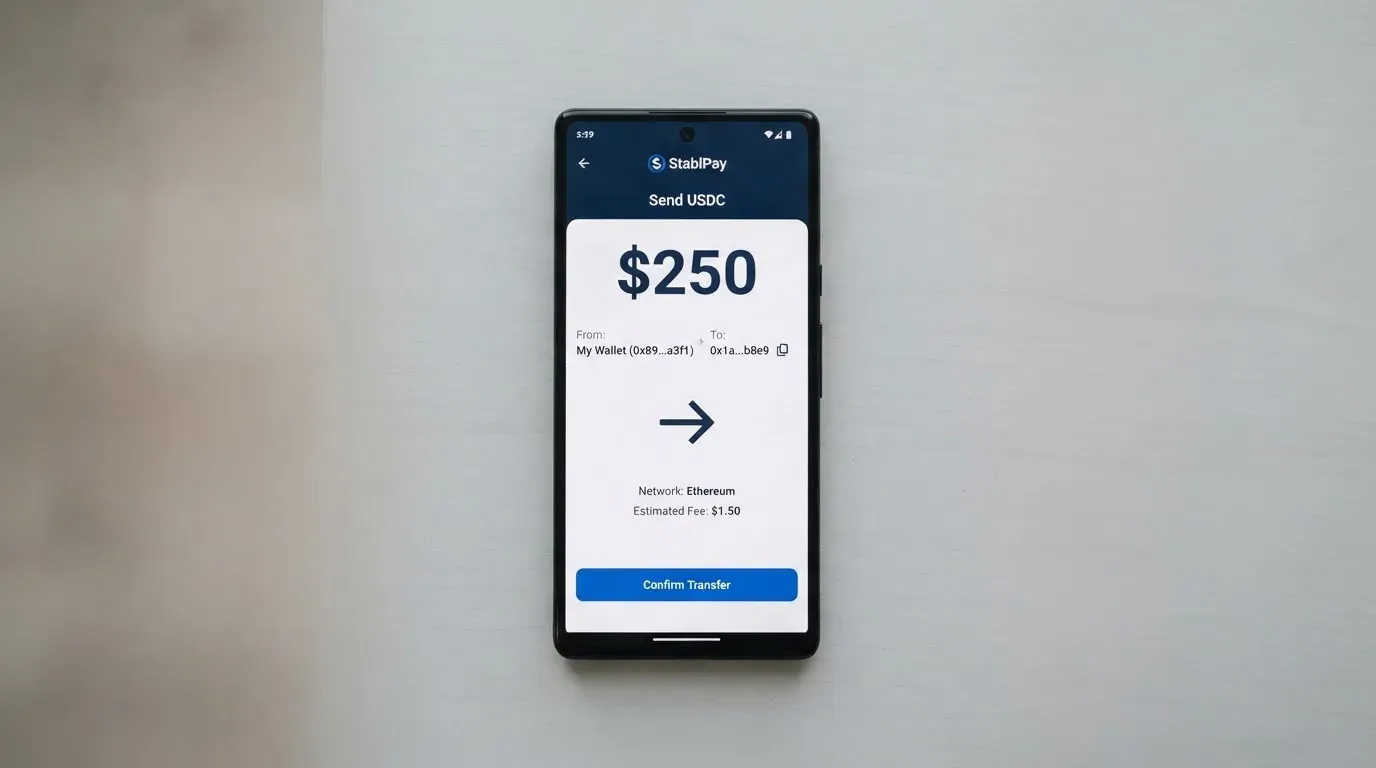
The mechanics are straightforward. Crypto goes from your wallet to the card, gets converted to USD at a quoted rate, and lands as a balance the card spends. The card calls that quote the card_deposit rail, and the result is a program balance.
Let me walk through a real one, because the network choice is the only decision you actually make. Say you hold USDC on Base and want $500 on the card. You send USDC on Base, pay the network’s own fee from your wallet, the card converts to USD at the quote it gives you, and $500 minus the 1% load fee lands as spendable balance. Base is on the +0% list, so nothing is added to that 1%. If you had sent the same USDC over Ethereum instead, you would pay an extra 0.5% for no benefit I can see.
The fees are worth keeping in two separate buckets, and the help centre is careful about this. Your network fee — gas, or bandwidth on Tron — is charged by the blockchain and is not a Spritz fee. The Spritz load fee is the 1% plus adjustments above. Gas is often the smaller number on an Arbitrum or Solana transfer and can be the larger one on Ethereum, which is another reason the Ethereum route costs more than the +0.5% suggests.
Two things about funding are not stated. The minimum load amount is not published, and so is anything about buying with fiat directly — there is no documented card top-up with a bank card or bank transfer. There is an on-ramp sold separately at a flat 1%, but that is a different product from funding the card, and I would not want you to conflate them. Some unofficial sources claim a $5,000 maximum per load; the official table says something different, and the official table is the one I have used above.
And the sentence that should govern how much you load, whenever you load: “Once funds are on your Spritz Card we cannot return or transfer them.” They must be spent. A bank off-ramp exists, but only for crypto sent through the Off-Ramp — not for money already sitting on the card. What happens to a leftover balance if you close the account is not stated. So the $10,000 ceiling and the one-way rule together mean: load what you can spend.
Paying with it every day
Daily use is the straightforward part. Apple Pay and Google Pay both work, online, in stores and on mobile. The card comes in virtual and physical forms, and the virtual one is what you use for online spending and wallets.
The physical card, though, is not a settled product. Spritz’s public pages do not state its delivery terms at all — no price, no delivery schedule, no replacement fee. An unofficial account from August 2026 describes it as a limited release with a 3,000-card Alpha allocation for US customers. So if your plan depends on holding plastic, treat that as unconfirmed. The virtual card carries the day-to-day.
On rewards, the official position is silent on cashback — not stated, which is different from “there is none”. What is official is the Visa Signature benefits: lounge access, travel insurance and purchase protection, subject to Visa’s terms. Unofficial reporting describes a “Shopping Sprees” promotion paying 5% on airlines, hotels, restaurants and travel agencies inside a three-day window, capped at $20 per merchant, $40 per spree and $80 a month, paid as withdrawable Spritz Credits. Promotions like that change; I would not build a plan on them.
The app is a web app at app.spritz.finance plus an iOS app, and I could not read the official store pages. On ratings, one figure says App Store 3.2 out of 5 from 11 ratings as of 21 October 2026, another lists 3.4 out of 5 from 10 ratings in August 2026. Both are tiny samples. I would not read much into either, but I would read something into the fact that a card depends on an app and the app has thin, low-scoring feedback.
Refunds are the one place where I would slow you down. The card says a refund should process back to the card within 7 business days, after which you contact support chat, and describes no separate chargeback process. Unofficial reporting says merchant refunds can take up to 30 business days. Since there is no separate dispute process described, a badly handled refund means the support chat, not a formal chargeback route — which is a weaker position than a normal bank’s.
One thing to know generally, because it explains a lot of declines: merchant category codes are four-digit codes classifying a business, and many issuers block categories such as gambling by policy rather than by law, with the blocked list varying by issuer. If a payment is refused, this is often the reason, and it is not a sign that your card is faulty.
What can go wrong
Start with the thing I keep coming back to, because it is structural rather than technical: you cannot get loaded funds back. The card says it outright. That single rule converts this from a payment card into something closer to a gift card you fill yourself. It also means ordinary mistakes are expensive. Load too much, or load at the wrong moment, and the correction is to spend it.
The company is Spritz Finance, and the issuing institution is not named on the card’s own public pages. An unofficial source says the Visa Signature card is powered by Rain and issued through licensed partners by jurisdiction. The distinction is not pedantry. A card programme sits with the issuer, the network can suspend it, and the brand at the front is often only a programme manager. If you want to know who stands behind the balance, that is a question to ask support and read the answer carefully — the answer is not on the site.
On safeguards, the card is decent and specific: card statuses of active, frozen, not_activated and cancelled, with cancellation permanent, and PIN and card details end-to-end encrypted. Immediate freezing is one of the most useful features a card like this can have. What is not stated is how your crypto is custodied and safeguarded while it is being converted and held — and that is exactly the question you would want answered.
Complaints: Spritz publishes no official incidents. Third-party reporting lists drawbacks — loaded funds cannot be withdrawn to crypto, Spritz Points not yet redeemable, limited cashback, physical card a limited release. On Trustpilot, one reading shows 4.0 out of 5 from 319 reviews in the review text against 3.8 out of 5 from 253 in the rating box, with recurring themes of no withdrawal of card balance to crypto, Points not redeemable and the physical card being limited. Here is the honest reading of that: the recurring complaint is the same one-way rule, so people are discovering the design after the fact. Nobody seems to be reporting fraud or failed payments as the main problem.
One more background point that bears directly on your money. Blockchain transfers are irreversible, so a deposit sent on a network the provider does not support, or to an address belonging to a different network, can be lost or need manual recovery with no guarantee. And stablecoins can depeg — USDC briefly lost its peg in March 2023 during the US banking crisis. A balance that spends like dollars is not dollars.
What to take instead
I want to be fair to the alternatives: each of these does something Spritz does not, and the right choice depends on which of Spritz’s traits is the one that bothers you.
MetaMask (7.1/10) is the closest substitute and the one I would look at first if custody is what worries you. It is a Mastercard card that spends directly from the connected wallet, so funds stay yours until the moment of payment, on Linea, Base, Monad and Solana. Sign-up is open in 45 listed countries and territories with proof of residency, and ineligible regions limit sign-ups rather than spending. The virtual card is free; the Metal card is $199 a year. Fees are a “minimal fee for each transaction” with the amount not stated on the pages read, and no foreign transaction fee, using the Mastercard rate. Cashback is paid in mUSD: 1% on Virtual, 3% headline on Metal with a footnote limiting 3% to the first $10,000 spent, and a $FLY bonus via a dining app. Two cautions: US and UK sign-ups are temporarily closed per its FAQ, and Solana-only wallets cannot withdraw credit.
TokenPocket (5.8/10) suits you if breadth of country matters more than anything else. Visa debit for a list of European countries and territories, Mastercard debit for Australia, Canada, Hong Kong, Japan, Taiwan, New Zealand, Singapore, South Korea and the UK, with the Americas planned. It runs on Arbitrum, balances are held in EUR24 and USD24, and its cards are virtual. An NFT creation fee is partly covered by TokenPocket with the user paying “a small portion”, and apart from that it charges no additional fees. A 1% fee on depositing cryptocurrency is stated, which it says will later be refunded through rewards or reduced transaction fees — read that as deferred, not waived. Coins and networks are not listed in its FAQ.
KAST (6.1/10) suits you if the fee side matters most. Stablecoin top-up 0%, card spend in USD 0%, transaction fee 0%, Apple and Google Pay 0%. The FX fee is 0.5%–1.75% depending on your residence country, transaction country and card programme, with 0.10 USD on non-USD transactions under 25 USD and 0.50 USD for a decline on insufficient balance. It runs up to 10 cards per user across Visa Platinum, Infinite metal and Infinite gold, takes USDT, USDC, PYUSD and RLUSD, and pays cashback in USD when a transaction is authorised: 1.5% on the first $2,000 a month for Standard, 2% on the first $10,000 for Premium, 3% on the first $40,000 for Private. The catch is the membership: $0, $1,000 or $10,000 a year, billed annually upfront, plus a $1 inactivity fee after 12 months. Its own terms say acceptable tokens are “currently USDT and USDC”, which conflicts with the PYUSD and RLUSD in the app.
| Spritz | MetaMask | KAST | TokenPocket | |
|---|---|---|---|---|
| Score | 7.4 | 7.1 | 6.1 | 5.8 |
| Network | Visa Signature | Mastercard | Visa, several tiers | Visa or Mastercard debit |
| Custody of your crypto | Yours until loaded | Yours until payment | Yours; balances held | Yours until loaded |
| Load fee | 1% base, $2 min, network adjustments | Minimal per transaction, amount not stated | 0% for stablecoins | 1%, said to be refunded later |
| Monthly fee | None | None | Membership from $0 to $10,000/yr | None stated |
| Withdrawable after loading | No | Yes (not on Solana-only wallets) | Yes | Not stated |
| Key limitation | $10,000 daily and balance cap | US/UK sign-ups closed | Tier pricing, FX 0.5%–1.75% | Virtual only, coins not listed |
The pattern is clear enough to state plainly: cards that let you withdraw are more flexible; cards that charge nothing to load cost more somewhere else, usually FX; and the widest token support tends to come with the strictest one-way balance. Spritz sits at the wide-support, zero-monthly-fee, one-way end.
Who I would recommend it to
I would recommend it to someone holding USDC or USDT across several chains, who keeps their own keys, who spends most of their balance rather than parking it, and who has already tried and found that an ordinary bank card is not available to them. For that person it is a good card: no monthly fee, a cheap route into a spendable balance, mobile wallets on both platforms, and card freezing in the app.
I would not recommend it to you if any of these apply. You need to be able to pull money back off the card, because you cannot. You travel and spend abroad often, because the FX fee is not published and that is not a number you can plan around. You want a physical card in your hand as a matter of course, because its availability is unconfirmed and described in one place as a limited release. You are in a country the help-centre table does not list, or in Nigeria expecting the ordinary route. Or you are simply looking for a mainstream bank card with a known fee schedule and a dispute process — Spritz describes a support chat and a 7-business-day refund expectation, which is a thinner safety net than you are used to.
And one caution for everybody, framed as information rather than advice: crypto paid into a card is a disposal for tax purposes in many places, since digital assets are treated as property and each payment funded from crypto may be a separate taxable event measured at its value on the date of the transaction. I am not qualified to tell you what that means for you, and I would not try — but if tax is on your mind, that question is worth taking to someone who can answer it properly before you load, not after.
Frequently asked questions
What is the Spritz card?
The Spritz card is a prepaid Visa Signature card that you fill from your own crypto wallet. You send coins to the card, it converts them to a US dollar balance, and you spend that balance online, in stores, or through Apple Pay and Google Pay. It runs in a virtual and a physical form, and all funds added to it are denominated and stored in USD. There is no monthly fee and no fee on spending.
How does the Spritz card work?
You hold the crypto in a wallet you control, transfer it to Spritz, and the card converts it to USD at a quoted rate into a stored balance. The card then draws on that balance like a prepaid card, so it cannot overdraw and it spends nothing you have not already loaded. Loads work from 50,000+ tokens across 5 chains, with USDC and USDT on Tron and USDC on Arbitrum, Avalanche, Base, Optimism, Polygon and Solana.
Is Spritz a bank?
No, and this matters. Spritz Finance is the company behind the card, and the issuing institution is not named on the card’s own public pages — unofficial reporting points to Rain and licensed partners by jurisdiction. A brand like this is usually a programme manager in front of a licensed issuer that actually holds the card programme. Treat the balance as stored value, not as a bank deposit, and do not assume any deposit guarantee scheme covers it.
Can I withdraw money from the Spritz card?
No, and this is the single most important fact on this page. Spritz states that once funds are on your Spritz Card they cannot be returned or transferred, and they must be spent. A bank off-ramp exists, but only for crypto sent through the Off-Ramp, not for money already loaded onto the card. What happens to a leftover balance at account closure is not stated. Load only what you can spend.
How much does it cost to use the Spritz card?
Spending and account upkeep are free. Loading costs 1% with a $2 minimum, made up of 0.5% base plus 0.5% for loading the virtual card, with per-network adjustments: USDC on Arbitrum, Avalanche, Base, Optimism, Polygon and Solana adds 0%, Ethereum 0.5%, Tron USDT 1.5%, Bitcoin 1.5% with a $5 minimum. Network gas fees are separate and paid by you. The FX fee is not stated.
What are the limits on the Spritz card?
The daily limit is $10,000 and the maximum card balance is also $10,000, for the US, Canada and all other supported countries. The card states that the limit cannot be increased at this time. One unofficial source gives a different picture — $5,000 maximum per load and no stated spending or balance cap — which conflicts with the official figures. I have used the official ones throughout.
Does the Spritz card require KYC?
Yes. You need a verified account, minimum age 18, which means uploading an ID document; manual verification is possible through support. The card does not publish the full list of what it collects. Unofficial reporting names government photo ID, phone, legal name, date of birth, ID number, address and a live face check, with a partner possibly adding further checks.
How do I add the Spritz card to Apple Wallet?
Open Apple Pay on your iPhone and add a card, then choose to add an existing card and enter the details from your Spritz app, or scan the card if the virtual card displays a QR code. Apple Pay replaces the card number with a device-specific number stored in the Secure Element, never on Apple’s servers, and each payment uses a one-time dynamic code. Google Pay works the same way. If the issuer restricts the tokenised number, the phone path can be blocked even when the card itself works.
Is the Spritz card safe?
The security controls it does publish are reasonable: card statuses for active, frozen, not activated and cancelled, permanent freezing available, and PIN and card details end-to-end encrypted. What is not stated is how your crypto is custodied while it is being converted and held, which is the question I would ask. External signals are mixed — a Trustpilot reading around 4.0 out of 5 from a few hundred reviews, with an App Store score of 3.2 out of 5 from just 11 ratings.
Why was my Spritz payment declined?
The most common causes are not a fault in your balance. The card’s own help article names merchant restrictions and 3-D Secure verification as the usual reasons. Because merchants can look up the issuer and country behind a card’s BIN, a prepaid card issued in one country and used in another attracts more scrutiny. Declined authorisations can also leave a hold on your balance for several days, typically up to seven.
Wallet cards in the catalogue – cryptocardcatalog
Content created by the «cryptocardcatalog» team