
An honest look at the Wirex card — what it costs, who can get one, and where it falls short
 Available in US
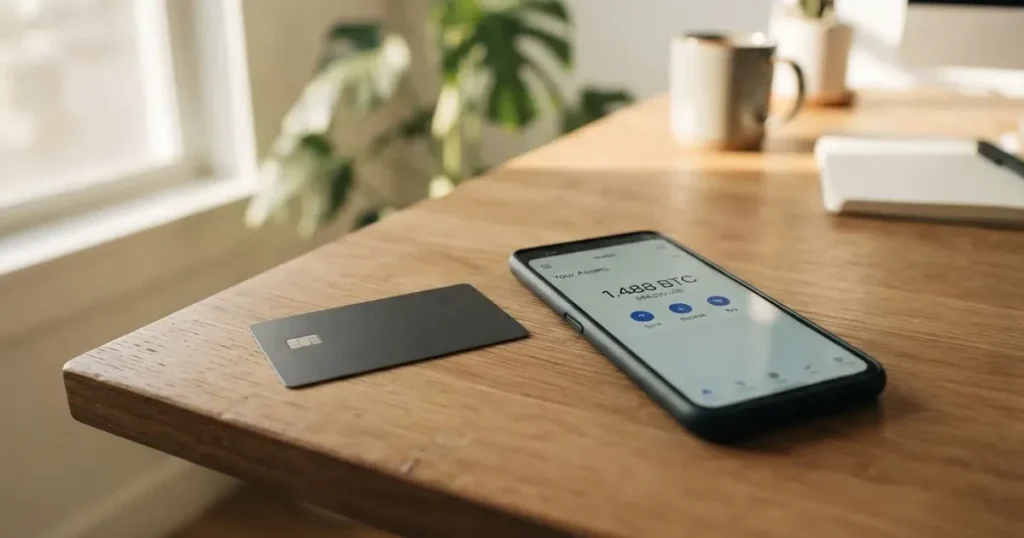
If you have ever been turned away from an ordinary bank account, or you simply want one card that spends both your regular money and your crypto without a dance of separate apps, the Wirex card is the kind of product you arrive at. It is a multi-currency account with a debit card attached that can be funded from cash, stablecoins or cryptocurrencies. That sounds simple. The reality is more interesting, and in places more complicated.
I have gone through Wirex’s public pages, its fee schedules, its delivery terms, its app listings and a set of user complaints, and I score it 6.7 out of 10. It is not a bad card; it is a card with real strengths in everyday use and real weaknesses around trust, transparency and support. This review is for anyone deciding whether Wirex fits their situation — I will tell you who it suits, who it does not, and exactly what to check first.
The conditions described here are current as of October 28, 2026.
The score: 6.7 out of 10, and who it suits
Let me start with the number, then explain it. A 6.7 is a card that works well most days but has rough edges you will notice if you look. The single strongest point is everyday use — a physical and virtual card, Apple Pay and Google Pay, ATMs on the physical card. The weakest points are reliability and how much the public pages actually tell you, and the complaints that sit underneath it.
| Criterion | Score | Why, in short |
|---|---|---|
| Who can get it | 6 / 10 | Worldwide service area (130+ countries); fees published for UK, EEA, APAC, SG, AU and “Other”; unofficial sources say 35 countries, not the US |
| Cost | 7 / 10 | Issuance free, no monthly fee, ATM free to a monthly allowance then 2%; metal card 45 GBP; the FX fee is not fully disclosed |
| Top-up options | 7 / 10 | Spend from cash, stablecoins and cryptocurrencies; exchange lists 200+ cryptocurrencies; but deposit coins and networks are not spelled out |
| Reliability and complaints | 5 / 10 | Issuer entities are named (Wirex Pte Ltd, Wirex Limited) but the UK/EEA issuer is not; complaints about held funds and limited accounts, plus outages in 2026 |
| Everyday use | 9 / 10 | Virtual and physical cards, Apple Pay and Google Pay, ATMs on the physical card but not the virtual one |
Add those together and you land on 6.7. Here is who this card genuinely suits: people based in Europe who want a single account to hold both fiat and crypto, who are comfortable with an app-first financial product and with the company holding their funds rather than a bank holding them. If you want an ordinary-looking bank card with a quiet branch relationship, this is not that. If you travel often between countries and want one card that does not fight you at checkout, the everyday-use score of 9 is real and you will feel it.
Will they give you the card?
Availability of the physical and virtual cards “depends on your region”. That single sentence from Wirex does most of the work here. The fees are published for the UK, EEA, APAC, Singapore, Australia and an “Other” bucket, and delivery fees are listed for the United Kingdom, EEA, Hong Kong, Singapore, Australia, New Zealand, the Philippines and Taiwan. The homepage describes a service area of “Worldwide (130+ countries)”, though the official country list did not open for me.
One thing to understand, because it confuses people: the rule is about where you live, not where you are a citizen. Your residence country you enter must match your ID. And the card simply is not offered everywhere — unofficial sources, not confirmed by Wirex itself, say the card is available in 35 countries (much of the EU, the UK, Switzerland, Norway, Australia, New Zealand, Hong Kong, Taiwan, Argentina and Brazil) and not in the US. Treat that as a rough map, not an official list.
There are two hard geographic rules worth knowing before you apply. Under the Singapore terms, cash withdrawals “are not permitted in Singapore” — so even if you could hold a Singapore card, the ATM is not an option there. And transactions with “Prohibited Countries” (named as Iran, Cuba, Syria “and others”) are barred. If your life or your money touches any of those places, this card is not for you.
How to get it
There is no shortcut past verification. Wirex states that “Wirex services are only available to verified users”, and verification covers your identity, your address and the source of your funds. More information may be requested by email. The process starts when you upgrade to “Starter” status, and document upload and the selfie step happen only in the mobile app. Depending on your country of residence, Wirex may also ask for Liveness Verification.
What you need to hand over:
- One of: a passport, ID card, driving licence or residence permit — the accepted types vary by issuing country.
- The document in English, in full colour, showing your full name, date of birth, photo and expiry date.
- Minimum age 18.
A Wirex account has to exist before you can order a card, so the account comes first and the card follows. Proof-of-address document types are not stated on the pages I read, so I cannot tell you exactly which of your address documents will be accepted — that is something to confirm in the app when you get there.
Verification runs in stages. The “Starter” upgrade starts identity verification; address and source-of-funds checks come after. How long each stage takes, and why a verification might be refused, is not stated publicly. Plan for a process that can take time rather than minutes.
What it really costs: Fees and everyday payments
The headline costs are genuinely good: card issuance is free in the UK, EEA, APAC, Singapore, Australia and “Other”; changing your PIN is free; and the card page says there are “no annual or foreign exchange fees”. That is marketing text, and I will come back to why I treat the foreign-exchange claim carefully. A one-off administrative fee of 30 GBP applies to accounts that violate the General Terms of Service. All fees are “subject to change”.
Let me lay the numbers out so you can see them at once:
| Fee or limit | What it costs |
|---|---|
| Card issuance | Free (UK, EEA, APAC, SG, AU, “Other”) |
| Monthly / annual fee | None stated; card page says “no annual” fees |
| PIN change | Free |
| Metal card | Order fee 45 GBP on the UK page (with free DHL Express); “only 45 EUR” delivery fee elsewhere |
| Exchange / conversion | No fixed amount; rate varies by pair and liquidity, shown in the app before you confirm |
| Foreign exchange fee | Not specified on the fee page; card page says “no foreign exchange fee” |
| ATM withdrawal | Free up to a monthly allowance, then 2%: 200 GBP (UK and “Other”), 200 EUR (EEA), 200 SGD (APAC and SG), 400 AUD (AU) |
| Administrative fee | One-off 30 GBP for terms-of-service violations |
Now the honest caveat about that exchange line. There is no fixed conversion fee amount published; the rate simply varies by the currency pair and how liquid it is, and you see the rate in the app before you confirm. The marketing line on the card page says “market-leading exchange rates” and “no foreign exchange fee”. I would not treat “no foreign exchange fee” as a promise that your money comes out at the mid-market rate. The way to protect yourself is simple and unglamorous: open the app, look at the rate and the fee it shows you for your specific pair, and compare it with the rate your bank or another service shows you that day. Do that once and you will know whether the claim holds for the currencies you actually use.
Let me walk three ordinary payments through this.
A coffee bought in your home country. If your account is denominated so the purchase needs no conversion, this is the plain case: no conversion, no FX fee, you are simply spending balance. This is where the free issuance and free spending model show themselves.
Linked currency accounts are charged, and conversion applies as described in the Fees and everyday payments section. Whether that costs you depends entirely on the pair and the rate shown in the app at that moment. There is no published fixed percentage to budget for.
A cash withdrawal from an ATM. Free up to the monthly allowance listed for your region, then 2% of the withdrawal. The marketing text elsewhere promises “up to $200” of fee-free ATM withdrawals globally, but the region-by-region figures I read are in GBP, EUR, SGD and AUD, and the two do not obviously line up for every user — so read the figure for your own region, not the global line. One hard rule: ATMs do not work on virtual cards at all.
How to top it up
You have several routes, and which ones you can use depends on where you are.
The card is a debit card linked to your Wirex account, and you can spend from “cash, stablecoins, and cryptocurrencies”. Top-up can come from another Wirex account, from another person, or via a third-party payment provider.
Fiat deposits by SEPA (EUR), Faster Payments (GBP), ACH (US) and PIX (Brazil) are free. Note that the crypto side is thinner than it sounds: which coins and networks you can deposit on is not stated. The homepage says the exchange handles “200+ cryptocurrencies”, but that is a number about the exchange, not a promise about what you can send to your card. Before you plan to fund this card with a token, confirm the coin and network are accepted — this is one of the first things I would check.
If you would rather top up from a bank card, the numbers are specific:
- Minimum 12 USD per top-up.
- Unconfirmed card: 15,000 USD per day (2,000 USD in Singapore).
- Confirmed card: 25,000 USD per day.
- Local card funding fee “0% or more”, depending on currency and country.
And if you transfer from one Wirex account to another:
- Minimum 10 USD.
- Per transaction: 10,000 USD (first-party) or 2,500 USD (third-party).
- Per month: 50,000 USD or 10,000 USD respectively.
Crypto withdrawals from Wirex to Wirex and off-chain are 0%; sending to an external wallet varies by network. That last clause matters: a transfer to your own wallet costs whatever that network charges, which is the network’s fee, not Wirex’s.
Paying with it every day
This is where the card is at its best, and it is why “everyday use” is its highest score. You get both a virtual card for online use and a physical card for point-of-sale and ATMs, and one of each at a time. Both work wherever Visa or Mastercard is accepted — the network is not fixed per region, and the Singapore card is a Visa. You can add the card to Apple Pay and Google Pay, which for most people is how they will actually use it day to day.
There is a rewards layer, called Cryptoback, paid in the token WXT: 0.5% on Standard, 3% on Premium, up to 8% on Elite, and the metal card advertises “up to 8% back in WXT”. Limits and currencies may differ for UK and US customers. Not everything counts toward it: ATM withdrawals, cash advances, crypto purchases, gambling, refunds, and a long list of merchant categories are excluded. So the headline percentage is an upper bound, and your real return depends on what you actually buy.
Two practical notes. First, gambling is excluded from Cryptoback — it is not stated as blocked by the card itself, but the rewards simply do not apply, which is worth knowing if that is a use. Second, the app you use matters. There are two listings: “Wirex: All-In-One Trading App” at 3.76 from 846 ratings, and “Wirex One” at 1.87 from 15 ratings. Wirex is moving users to a new app, Wirex One. The two apps are clearly at very different stages, and if you are new you should work out which one you are being moved into before you get comfortable.
If you also use Revolut, there is a help article on linking your card to it. And because a Wirex card is a Visa or Mastercard, adding it to a mobile wallet means the card number is replaced by a device-specific number, so your actual number is not sitting in the phone.
What can go wrong
I want to be straight with you about this section, because the card’s weaknesses live here.
Funds being held. There are user reports of money held since January 2025, of accounts being limited so crypto transfers are blocked, and of an ATM withdrawal case from July 2025 in Cyprus still unresolved. These are individual user reports, not a proven pattern, but they are consistent enough that I would treat them as a real risk. If you keep meaningful balance on the card, think about how much you would mind it being tied up while a review runs.
Outages and declines. A third-party report (Pingoru, not official) lists card payouts disabled for about 5 days from 6 May 2026, a card outage of 5 h 51 min on 25 June 2026, another 54-minute outage on 26 June 2026, unexpected declines on 13 July 2026, and a Wirex One transaction-processing incident on 3 September 2026. Any payment platform has bad days; these are worth knowing about before you rely on the card for something time-critical.
Who actually issues the card. This is the point I would ask you to sit with. The homepage says Wirex was founded in 2014 in London and is a “Principal member of Visa and Mastercard”. The Singapore card issuer is named as Wirex Pte Ltd (registration number 201731976E), a Visa issuer. The app-store seller is Wirex Limited, and a third party, Trustee Plus, names “WIREX Limited” (England, company number 09334596) as its card issuer. But the issuer for the UK and EEA programmes is not stated on the pages I read. When you cannot see clearly which regulated entity stands behind your card in your region, that is a gap. I found no regulator suspension against Wirex, which is reassuring, but “no suspension found” is not the same as “fully transparent”.
Holding your funds. The card uses account-based custody, and under the Singapore terms a merchant authorisation can hold up to 20% above the anticipated bill. Details of two-factor authentication, freeze controls and safeguarding arrangements were not stated in the pages I read, so I cannot confirm them here — check them yourself in the app.
What is not stated. Across all these pages, several things a cautious user would want simply are not disclosed: the card’s currency and validity period, the proof-of-address document types, verification processing times and refusal reasons, the balance treatment if you close your account, and the plan prices for Standard, Premium and Elite. Some of these are minor; a few are things you would want before committing. (Unofficial sources suggest Standard is free, Premium 9.99 EUR monthly or 102 EUR yearly, and Elite 29.99 EUR monthly or 306 EUR yearly, with higher Cryptoback at each tier — but that comes from a competitor’s blog and another third-party site, not from Wirex, so verify it yourself.)
Support. There is a request form, in-app chat and a Discord community. The languages and operating hours are not stated, which for a product spanning 130-odd countries is a real limitation when something goes wrong.
A note on scale. The homepage text says “7 million users” while its structured data says “8 million+”. Small inconsistency, but it is the kind of thing that tells you the public numbers are not tightly reconciled.
What to take instead
Wirex is not alone in this category, and the alternatives each trade something away. Here is how the three I looked at compare.
| Wirex | International Visa Card | UNi Card | Whop Cards | |
|---|---|---|---|---|
| Score | 6.7 | 6.7 | 6.1 | 5.2 |
| Card | Physical + virtual, Visa or Mastercard | Virtual, U.S.-issued Platinum Visa (physical “coming soon”) | Mastercard, multicurrency | Visa; virtual/physical not stated |
| Issuance | Free | $5 one-time | Not stated | Not stated |
| Monthly fee | None | None (plans up to $19/mo) | “No annual fee” | “No extra fees” |
| FX fee | Not disclosed; page says none | Visa rate + 2% FX fee | “No foreign transaction fee”, live OTC rate | Not stated |
| ATM | Free to allowance, then 2% | Not stated | Not stated | Not stated |
| Region | 130+ countries service area; ~35 with the card (unofficial) | Not for residents of ~35 listed countries | Not stated | 31 US states (consumer) |
| Rewards | Cryptoback up to 8% in WXT | No cashback stated | Spend-to-Earn up to 3% | 5% at select merchants |
A few things stand out.
The International Visa Card has the clearest fees of the four — a published 2% FX fee and a $5 issuance fee, with a free Classic plan — and it takes USDC or USDT into a USD account at 1:1. What it gives up is reach: it is not for residents of a long list of countries including Belarus, mainland China, North Korea, Cuba, India, Iraq, Iran, Israel, Myanmar, Nepal, Nicaragua, Russia, Syria, Turkey, Ukraine, Venezuela and Vietnam, and purchases are blocked in several of those. It is a virtual card only, with the physical card “coming soon”.
The UNi Card is the simplest on paper: multicurrency on Mastercard, no annual fee, no foreign transaction fee, assets converted at live OTC rates, up to 3% back. But it tells you less — who can get one is not stated, and how you fund it is not stated — so I could not judge it as closely as the others.
Whop Cards is the narrowest: a Visa that spends from a Whop balance, aimed squarely at US consumers in 31 states, with 5% cashback at select merchants. If you are in the US, that is a real market to be in; if you are not, it is not for you.
My read: if you are European and want one account for fiat and crypto, Wirex remains the most complete of these for everyday use — it has the physical card, the ATMs and the mobile wallets. If you are outside that orbit and value published, predictable fees over breadth, the International Visa Card may be easier to reason about. None of these remove the underlying question of who holds your money.
Who I would recommend it to
I would recommend the Wirex card to someone who: is based in Europe; wants a single account for fiat and crypto rather than juggling two providers; will use the physical card, Apple Pay or Google Pay most days; accepts that an app company, not a bank, holds the balance; and treats the card as a convenient spending tool rather than a place to park large sums.
I would steer it away from someone who: needs a card issued in a country outside the ~35 where it is offered; is in the US; lives or transacts with Prohibited Countries; wants cash in Singapore; plans to keep a large balance on it; or wants fully published FX economics without opening an app to find out. If any of those describe you, one of the alternatives above — or a conventional bank card — will serve you better.
Before you apply, check three things: that the card is offered where you live and your residence matches your ID, that the coin and network you plan to deposit on is accepted, and what rate and fee the app actually shows for the currency pair you spend in. Those three answers decide most of this.
Frequently asked questions
What is Wirex?
Wirex is a multi-currency account with a payment card attached. The card is issued on the Visa or Mastercard network and draws on your Wirex balance, which you can fund with cash, stablecoins or cryptocurrencies. The idea is one place to hold and spend both ordinary money and crypto, rather than keeping a bank account and a separate crypto account.
Is Wirex a bank?
No. Wirex describes itself as founded in 2014 in London and as a “Principal member of Visa and Mastercard” — a principal member is an entity that can sponsor other members, not a deposit-taking bank. Your balance is e-money-like and safeguarded rather than a bank deposit, so it is not covered by a bank deposit guarantee scheme in the way an ordinary current account would be.
How do I get the Wirex card?
You need a Wirex account first, then upgrade to “Starter” status, which starts identity verification. You upload a passport, ID card, driving licence or residence permit in English and full colour, and take a selfie — both in the mobile app. Verification covers identity, address and source of funds, and you must be 18 or over.
What are the Wirex card fees?
Issuance is free and there is no monthly fee. ATM withdrawals are free up to a monthly allowance (200 GBP in the UK, 200 EUR in the EEA, 200 SGD in APAC and Singapore, 400 AUD in Australia) and 2% after that. The metal card costs 45 GBP on the UK page or “only 45 EUR” delivery fee elsewhere. The FX fee is not disclosed as a fixed amount.
Does Wirex require KYC?
Yes. Wirex says services are “only available to verified users”. Verification covers your identity, your address and the source of your funds, more information may be requested by email, and depending on your country of residence they may ask for Liveness Verification. This is standard for regulated financial services and is not something you can skip.
How do I top up the Wirex card?
From another Wirex account, from another person, or via a third-party payment provider. Fiat deposits by SEPA, Faster Payments, ACH and PIX are free. From an external bank card the minimum is 12 USD, up to 15,000 USD per day unconfirmed or 25,000 USD confirmed. Crypto can also be deposited, but which coins and networks are accepted is not stated publicly.
Can I use the Wirex virtual card in Apple Pay?
Yes. Wirex supports Apple Pay and Google Pay, and the card can be added to either from the app. The virtual card is for online use and does not support ATM withdrawals; for cash you need the physical card. Your actual card number is replaced by a device-specific number on the phone.
Is the Wirex card safe?
It is a regulated-looking product with Visa/Mastercard membership and standard verification, but it is not a bank and the balance is e-money-like. There are user reports of funds being held, limited accounts blocking crypto transfers, and an unresolved ATM case. Treat the card as a convenient spending tool and avoid parking large sums on it.
Is the Wirex card free?
The standard card is free to issue with no monthly fee, and changing your PIN is free. Some things cost money: a metal card, ATM withdrawals above the monthly allowance (2%), delivery, and a 30 GBP administrative fee if you breach the terms. Cryptoback rewards reach up to 8% in WXT on Elite tiers, but many purchases are excluded.
Can I use the Wirex card in my country?
The service area is described as “Worldwide (130+ countries)”, but the card itself “depends on your region” and unofficial sources say about 35 countries, not including the US. Your residence country must match your ID, cash withdrawals are not permitted in Singapore, and transactions with Prohibited Countries are barred. Check availability for your specific country before you apply.
App and neobank cards in the catalogue – cryptocardcatalog
Content created by the «cryptocardcatalog» team