
A practical look at a crypto-funded payment card built for European wallets
 Available in US

If you have crypto in your own wallet and want a card that actually lets you pay with it, Confidopay is one of the quieter options in that corner of the market. It is licensed in the European Union, the card is issued by an Estonian bank, and it accepts a small but useful set of coins. The catch, as with most cards in this category, is the eligibility net: this is a card for people the system can easily verify, not for anyone who needs to stay invisible.
In this review I walk through who can get the card, what it costs in plain euros, how topping up actually works day to day, and where the edges are. Conditions are current as of October 28, 2026.
Verdict: 7.6 out of 10
Confidopay lands at 7.6 / 10 in my assessment, and the breakdown below shows where the marks come from. The headline is that this is an honest, regulation-first product for EEA residents who hold crypto in their own wallet and want a card they can tap at the supermarket. It is not a card for global nomads, and it is not trying to be one.
The card suits you if you live in the EEA or Switzerland, you already self-custody some BTC, ETH, USDC or BNB, and you want a debit-style card that converts at the moment of payment. It is less suitable if you sit outside Europe, if you need to pay with USDT (it is not listed), or if you want cashback and rewards — there is no rewards programme on offer here. Card payments are not available to Russian citizens without EU, EEA or Swiss citizenship.
Score breakdown
| Criterion | Mark | Why it scored that way |
|---|---|---|
| Who can get it | 5 / 10 | EEA or Swiss citizenship or residency; payment cards only to EEA residents; Hungary onboarding suspended; Russia excluded for card payments |
| Cost | 8 / 10 | Both physical and virtual card creation free; crypto exchange 0.1% + €1; monthly fee and FX fee not stated |
| Top-up options | 7 / 10 | BTC, BTC Lightning, ETH, USDC (ERC20), USDC on Polygon, BNB on BNB Smart Chain; USDT not listed |
| Reliability and complaints | 9 / 10 | Card issued by Wallester AS in Estonia under licence; crypto services by a licensed Estonian VASP; no incident or complaint pages found |
| Everyday use | 10 / 10 | Virtual card available immediately after verification; physical card also available; Apple Pay and Google Pay supported for both; ATM up to €3,000/month and €350/day |
| Total | 7.6 / 10 |
Will they give you the card
Confidopay is built for people the regulator already knows how to identify. The base requirement is that you are a natural person with citizenship or residency in an EEA state or Switzerland. The product narrows further for the payment card itself: payment cards are issued only to EEA residents, regardless of how many passports you hold. If you live in Switzerland but are a citizen of, say, Brazil, you can sign up for the account but the physical or virtual payment card is not part of the deal.
Hungary is the one country inside the EEA where onboarding is currently suspended. The card does not say when that started, only that it is the case right now, so a Hungarian reader should not assume access will return on a particular timetable. If your residency sits there, you will need to wait.
Card payments are not available to Russian citizens unless they also hold EU, EEA or Swiss citizenship. That last phrase matters: a Russian passport plus a French one is fine, a Russian passport alone is not. Card payments are also blocked in a list of jurisdictions that includes Russia, Belarus, Ukraine (in part), the UAE and Türkiye, so even if you can be issued a card, using it as a payment instrument in those places is not the design.
The honest framing is that this is a card for European residents who pass standard identity checks without friction. It is not a card built for the underbanked or for travellers hopping jurisdictions. If your situation is straightforward, you will move through it quickly; if it is not, the onboarding wall comes up early.
How to get it
You start by creating an account, then complete the first level of identity verification. At Tier 1, EEA and Swiss citizens upload an ID card or a passport plus a selfie. Citizens of third countries who live in the EEA or Switzerland use a passport and add a residence permit; the company may also ask for proof of address. The list of accepted documents is what you would expect from any EU-regulated onboarding flow, and the bar is set by anti-money-laundering law rather than by Confidopay specifically.
Once verification clears, a virtual card is available immediately. A physical card is also available, though the issuer does not state which countries it ships to, how long delivery takes, or what replacement costs. That is a real gap in the public information; if delivery to your country is a deciding factor, you have to ask support before paying anything — but there is nothing to pay for the card itself.
The second tier kicks in once €15,000 of virtual asset has flowed into your account, or your total activity reaches €25,000. At that point you upload a proof of address — a utility bill or bank statement issued within the last three months, mobile bills not accepted — and a source-of-funds explanation. You have 30 days to complete it, and full access continues in the meantime. The card does not publish its processing time or the specific reasons it rejects an application, so the only signal you have is whether the documents are accepted.
Tier 1 is enough to use the card for everyday spending within the published limits. Tier 2 raises the card-payment cap. There are no paid tiers; the levels are regulatory, not commercial.
Fees: what it really costs
Issuance is the easy part. The physical card costs €0 to create and the virtual card costs €0 to create. There is no monthly or annual maintenance fee listed, which puts Confidopay on the cheaper end of the European crypto-card shelf.

The number that matters is the conversion fee when you pay. The site states that card-spend conversion is 0.1% plus €1 per transaction, and the same 0.1% plus €1 applies to crypto deposits and to bank transfers in. Withdrawing crypto costs the same 0.1% plus €1 plus whatever the underlying network charges; withdrawing in fiat by bank transfer is 0.1% plus €1. There is no FX fee listed for spending in a non-EUR currency, which is something to watch if you travel, because the card-quoted currency is not stated and any conversion between your euro balance and a foreign currency is not described.
ATM use is available with the physical card, up to €3,000 a month and €350 a day, but the ATM fee itself is not published. That is a meaningful gap; if you withdraw cash regularly you have to test it once and see what the receipt says.
All fees on the card are quoted in euros.
Costs at a glance
| Fee or limit | Amount |
|---|---|
| Physical card creation | €0 |
| Virtual card creation | €0 |
| Monthly fee | Not listed |
| Crypto exchange (card spend) | 0.1% + €1 |
| Crypto deposit | 0.1% + €1 |
| Bank transfer in | 0.1% + €1 |
| Bank transfer out | 0.1% + €1 |
| Crypto withdrawal | 0.1% + €1 + network fee |
| FX fee | Not listed |
| ATM fee | Not listed |
| Card payments (Tier 1) | €10,000 / day, €10,000 / month |
| Overall outbound (Tier 1) | €10,000 / month |
| Card payments (Tier 2) | €10,000 / day, €15,000 / month |
| ATM | €350 / day, €3,000 / month |
Three everyday payments and where the fees fall
A €40 supermarket shop on the virtual card. You convert crypto to euro balance at the moment of payment, so 0.1% plus €1 applies. That is about €1.04 on a €40 basket. A coffee for €3.50 costs you €1.04 in fixed fee plus €0.0035 in percentage, which is a much heavier proportional hit. The card is at its cheapest on larger tickets, and at its most expensive on small ones.
A €120 restaurant bill paid with Apple Pay. Same mechanics: one card-spend conversion of 0.1% plus €1, so about €1.12. The mobile wallet does not add a fee of its own, but any FX margin would apply here if the merchant settles in a non-euro currency. That margin is not disclosed, so this is the part where you need to keep an eye on your statement.
A €200 cash withdrawal from an ATM with the physical card. The 0.1% plus €1 conversion is still there, and the ATM operator’s own surcharge is on top. The card’s own ATM fee is not listed, so the worst-case extra cost is whatever the machine charges you plus the network fee if you funded the withdrawal from a crypto balance that had to be sold and withdrawn.
Two practical takeaways. First, batching small purchases into a single monthly top-up and one larger spend reduces how often the €1 fixed element bites. Second, ask support for the FX margin and the ATM fee in writing before you rely on the card abroad or for regular cash, because the public pages do not say.
Top up: how to fund the card
Topping up starts with sending crypto to a deposit address the app gives you, or with a bank transfer in. Confidopay accepts six deposit routes: BTC, BTC Lightning, ETH, USDC on Ethereum (ERC20), USDC on Polygon and BNB on BNB Smart Chain. There is no native USDT support, which is the most common omission readers ask about, and there is no support for Tron-based tokens. If your stack lives in USDT on Tron, this is not the card for you, and converting first costs you a network fee on top of whatever spread you eat on the way in.
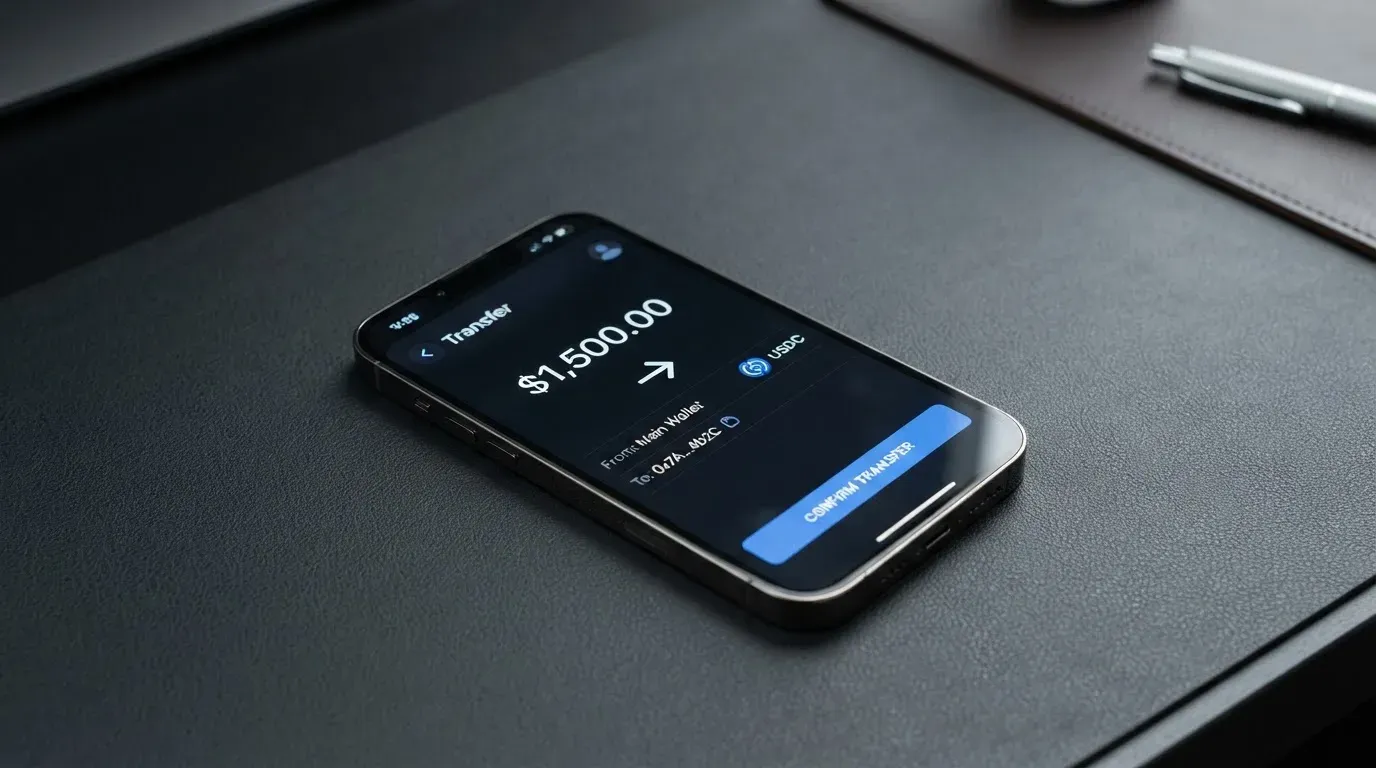
A few points are worth understanding before your first deposit. First, the network you send on has to match what the app shows. Sending USDC on the wrong chain, or BNB to an Ethereum address, is the most common way users lose funds in this category, and crypto transfers cannot be reversed. Second, every crypto deposit and every bank transfer in costs 0.1% plus €1. Third, the minimum deposit is not stated publicly, so small test sends are the way to avoid surprises.
Lightning is the interesting option for BTC because it settles in seconds and the network fee is essentially zero. For larger sums, on-chain BTC or USDC on Polygon are usually cheaper than ERC20 USDC once gas is included. If you mostly hold ETH, you will pay Ethereum gas for every deposit, which is a meaningful consideration when the card converts at 0.1% plus €1 on top.
Once the funds land you can either convert to euro balance and spend from there, or hold the crypto and let the card convert at the moment of payment. The card-spend conversion runs at the same 0.1% plus €1, so the choice is mostly about how exposed you want to be to price moves between deposit and spend.
Paying with it every day
Once the card is in your wallet, the experience is unremarkable in the best sense. Both the virtual and physical cards support Apple Pay and Google Pay, so you can add the virtual card to your phone the moment verification clears and start tapping. The card works anywhere Visa or Mastercard is accepted (the network is not specified publicly), and the spend limits at Tier 1 are €10,000 a day and €10,000 a month on card payments, with an overall outbound ceiling of €10,000 a month. Tier 2 raises the monthly card cap to €15,000 and removes the overall outbound limit.
ATM access requires the physical card. You can pull out €350 a day and €3,000 a month at Tier 1, and the same limits apply at Tier 2. The card does not publish a list of blocked merchant categories, so gambling, adult content and similar categories are not pre-emptively restricted on the public information; that is a contrast with several competitors that publish a long block list.
There is no cashback programme and no rewards scheme. If you want a card that pays you back a percentage of your spend, this is not it; if you want a card that does the spending part without fanfare, this is.
The app is listed on Google Play and the App Store. The card does not surface app ratings or download counts on its public pages, so the user reviews you would normally scan are not aggregated for you — you have to read them on the stores yourself.
On disputes, the company says it acknowledges complaints within two business days and aims to resolve them within seven to ten business days. It does not address chargebacks in the same material, which is a real gap: a chargeback is a refund the issuer orders after a dispute, and the way this card handles that is not described. If a delivery never arrives or a merchant double-charges you, the path is not laid out, and that is something to clarify with support before you rely on the card for large online orders.
What can go wrong
The good news on this front is that I could not find a Confidopay incident page, and there is no Trustpilot or Reddit thread for the brand that surfaces in a clean search. That is not proof of perfection, but it is a starting point.
The corporate structure is straightforward and EU-anchored. Confidopay UAB is the operator, registered in Vilnius, Lithuania. Cards are issued by Wallester AS, an Estonian company. Crypto and virtual-IBAN services are run by Lightspark Payments Europe AS, which holds an Estonian VASP licence (FVT000546). The card describes the usual safeguards: encryption, multi-factor authentication, PCI DSS processing, real-time monitoring and instant notifications. It does not describe the custody model, meaning it does not say whether your deposited crypto is held in a pooled custodial wallet, segregated accounts, or your own self-custody address, and it does not say what “safeguarding” means in this context. That is a meaningful gap in a category where the answer matters a lot.
Support is reachable at [email protected], with live chat Monday to Friday 9:00 to 17:00 CET, and email replies within 24 to 48 business hours. The company may close accounts with 30 days’ notice, immediately in cases of fraud. There is no public description of how a balance is returned to the user on closure, so if you plan to use this as a long-term store of value rather than a spending tool, that uncertainty should give you pause.
Two smaller things to watch. First, the Hungary suspension is undated, so it could lift next quarter or stay for a year. Second, the absence of a published FX fee and ATM fee is not the same as the absence of those fees, and that is the kind of detail that tends to surface on a statement, not in the marketing.
What to take instead
The honest comparison here is with other crypto-funded cards that target a similar reader. I have looked at three.
| Card | Score | Card network and currency | Card type | Issuance | Monthly fee | Conversion / FX | Cashback | Funding coins | Big eligibility constraint |
|---|---|---|---|---|---|---|---|---|---|
| Confidopay | 7.6 / 10 | Visa or Mastercard (not stated); EUR | Virtual + physical | €0 | Not listed | 0.1% + €1 spend conversion; FX not listed | None | BTC, BTC Lightning, ETH, USDC (ERC20), USDC (Polygon), BNB | EEA residents; Hungary suspended |
| International Visa Card | 6.7 / 10 | Visa; USD | Virtual (physical “coming soon”) | $5 one-time | Classic free, Pro $9.00, Max $19.00 | USD spend free; non-USD at Visa rate + 2% FX | None stated | USDC, USDT (free at 1:1 into USD account); USD, EUR, SEPA, SWIFT, FedNow | Not available to residents of Belarus, mainland China, North Korea, Cuba, India, Iraq, Iran, Israel, Myanmar, Nepal, Nicaragua, Russia, Syria, Turkey, Ukraine, Venezuela, Vietnam |
| UNi Card | 6.1 / 10 | Mastercard; multicurrency | Not stated | Not stated | None | “No foreign transaction fee”; live OTC rates | Up to 3% Spend-to-Earn | Not stated | Not stated |
| Whop Cards | 5.2 / 10 | Visa; not stated | Not stated | “No extra fees” | “No extra fees” | Not stated | 5% at select merchants (Uber so far) | Stablecoin-backed balance from a linked wallet | 31 US states for consumers; 41 for businesses; many countries unsupported |
A few observations. The International Visa Card is the closest analogue in terms of audience — a US-issued, USD-denominated card that spends from a crypto-funded balance — but its eligibility list is longer and stricter, and its free plans still sit behind a $5 issuance. The UNi Card is the only one in this set that publishes a real cashback (up to 3% Spend-to-Earn) and explicitly waives the foreign transaction fee, but it is the most opaque on funding and eligibility. Whop Cards leans heavily into a US consumer market and a 5% cashback at a narrow set of merchants, with a long unsupported-country list that overlaps with Confidopay’s.
If your home base is in the EEA and you want low fees and Apple Pay, Confidopay is the strongest of these four. If you are US-based and want cashback, Whop Cards is the more interesting trade. If you live outside Europe and need a multicurrency card, the International Visa Card or UNi Card are the ones to read in full before you apply.
Who I would recommend it to
Confidopay is a card I would point at EEA residents who already self-custody some BTC, ETH, USDC or BNB and want a clean way to convert-and-spend. It is for the person who values a regulated European stack — an Estonian issuer, a Lithuanian operator, a licensed Estonian VASP — over a slicker US-based app with cashback. It is for the person who is comfortable paying 0.1% plus €1 per conversion and who does most spending in euros.
It is not the card for Russian citizens without an EU, EEA or Swiss passport, for a Hungarian resident waiting out the onboarding freeze, for a frequent traveller who needs published FX margins, or for someone whose stack is in USDT. It is also not the card for anyone who needs chargeback rights spelled out in advance, because the public material does not describe them.
If that profile is you, the card does the job it sets out to do, and it does it cheaply. If it is not, one of the alternatives above will fit better.
Frequently asked questions
What is the Confidopay card?
The Confidopay card is a Visa or Mastercard payment card issued by Wallester AS in Estonia that lets you spend from a crypto balance held with the platform. It comes as a virtual card available right after verification and as a physical card, and both support Apple Pay and Google Pay. The card is operated by Confidopay UAB in Lithuania, with crypto and virtual-IBAN services provided by Lightspark Payments Europe AS under Estonian VASP licence FVT000546.
How does the Confidopay card work?
You create an account, complete identity verification, and you receive a virtual card immediately. You fund the card by sending BTC, BTC Lightning, ETH, USDC on Ethereum, USDC on Polygon or BNB on BNB Smart Chain to a deposit address, or by bank transfer. At payment time the platform converts the crypto or balance to euros at 0.1% plus €1 per transaction, and the merchant is paid in fiat through the card network.
Is Confidopay a bank?
No. Confidopay UAB is a Lithuanian operator, the card is issued by Wallester AS, an Estonian e-money institution, and the crypto side runs through Lightspark Payments Europe AS, a licensed Estonian VASP. The product sits in the e-money and payment-services category rather than the full banking category, so deposit guarantee protection does not apply in the same way as at a licensed credit institution.
Who owns Confidopay?
The operating company is Confidopay UAB, registered in Vilnius, Lithuania under company number 306414477, at Mėsinių g. 5. The card programme is run through Wallester AS in Tallinn (registry code 11812881) and the crypto and virtual-IBAN services are provided by Lightspark Payments Europe AS in Estonia. The card does not publish the identity of individual shareholders or ultimate beneficial owners on its public pages.
Is the Confidopay card available in my country?
The card is available to natural persons with citizenship or residency in an EEA state or Switzerland, with payment cards restricted to EEA residents. Onboarding from Hungary is currently suspended. Russian citizens are excluded from card payments unless they also hold EU, EEA or Swiss citizenship, and card payments are blocked in Russia, Belarus, Ukraine (in part), the UAE and Türkiye. If your situation is not on the welcome list, the account can be opened but the payment card will not be issued to you.
Does the Confidopay card require KYC?
Yes. Tier 1 requires an ID card or passport (EEA or Swiss citizens) or a passport (third-country nationals in the EEA or Switzerland) plus a selfie, and third-country nationals also need a residence permit. A proof of address may be requested. Tier 2, triggered at €15,000 of virtual-asset inflow or €25,000 of total activity, adds a recent utility bill or bank statement and a source-of-funds explanation, with 30 days to complete.
How do I top up the Confidopay card?
You send one of the six accepted coins — BTC, BTC Lightning, ETH, USDC on Ethereum, USDC on Polygon, or BNB on BNB Smart Chain — to the deposit address shown in the app, or you initiate a bank transfer in. Every crypto deposit and every bank transfer in costs 0.1% plus €1. The minimum deposit is not stated publicly, so a small test send is the safe way to start.
How do I add the Confidopay card to Apple Wallet?
Both the virtual and physical cards support Apple Pay, so once the card is visible in your Confidopay app you can add it through the standard Apple Wallet flow. The same applies to Google Pay. The card number stored on the device is a tokenised device account number rather than the real card number, which is the security design Apple Pay uses by default.
Is the Confidopay card safe?
The platform describes encryption, multi-factor authentication, PCI DSS processing, real-time monitoring and instant notifications as its safeguards, and the crypto side runs through a licensed Estonian VASP. The public pages do not describe the custody model or how customer funds are safeguarded, which is a real gap if you plan to hold a meaningful balance. No incident or complaint pages were found in an open search, which is a positive but inconclusive signal.
How do I close my Confidopay account?
The card states that the company may close accounts with 30 days’ notice, immediately in cases of fraud, but it does not describe the process a user follows to close an account themselves, nor how a remaining balance is returned. The fastest way to get a clear answer is to write to [email protected] during the live-chat hours of Monday to Friday 9:00 to 17:00 CET and ask for the closure procedure in writing before you move any meaningful balance.
App and neobank cards in the catalogue – cryptocardcatalog
Content created by the «cryptocardcatalog» team