
VantaCard does the basic job cheaply to load and fast to issue, and leaves an unusually lot of the fine print unsaid
 Available in US
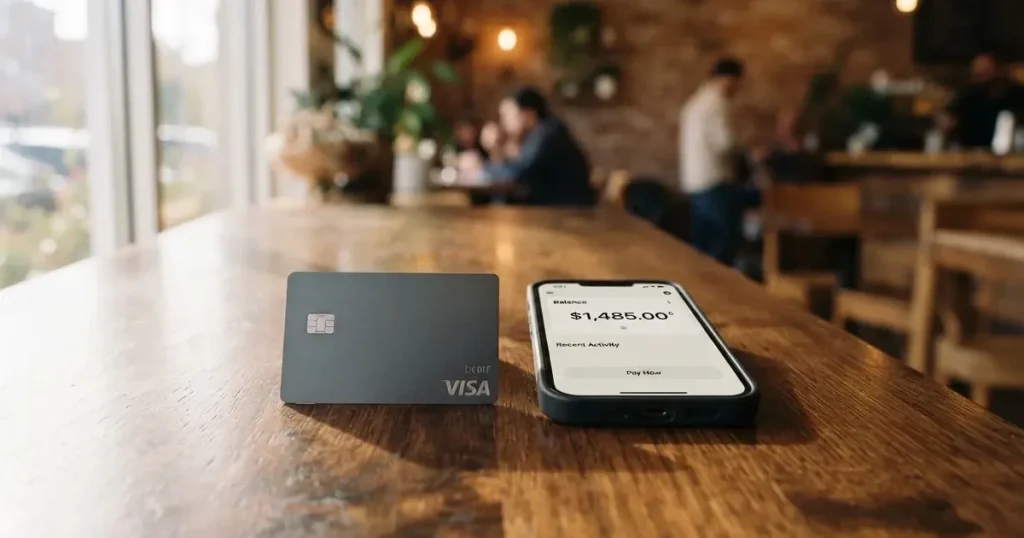
VantaCard is a crypto payment card: you load it with digital assets, it converts them into a USD balance, and you spend that balance through a Visa card number that behaves like an ordinary payment card. What makes it unusual is not the crypto part — plenty of cards do that — but the shape of the service. There is no separate app. Everything happens inside a Telegram bot. There is no physical card in the picture at all as far as the public pages describe. And the company behind it names its card-issuing partners rather than the issuer itself. Those three facts tell you most of what you need to know before you start, and they are also the reasons the score lands where it does.
I scored this card 5.9 / 10. That is a middling mark, and I want to be clear that it is not a verdict on crypto cards as a category. It is a verdict on this one product as it is publicly described: a genuinely good thing on top-ups, a real Visa with fast issuance, and a set of unanswered questions around cost, support and what happens to your money if something goes wrong.
The conditions described here are current as of October 28, 2026.
The score, criterion by criterion
| Criterion | Mark | Why |
|---|---|---|
| Who can get it | 6 / 10 | Not available to residents of “certain countries and territories”; the list is shown inside the app, and the number of countries is not disclosed |
| Cost | 3 / 10 | Issuance 20 USDT (Online) or 125 USDT (USD + ATM), top-up 1 USD + 3.8% or 4.5%; monthly fee and conversion fee not disclosed |
| Top-up options | 9 / 10 | 14 cryptocurrencies across 38 deposit networks (BTC, ETH, USDT named), balance updates automatically |
| Reliability and complaints | 6 / 10 | Vanta Group Ltd, England and Wales, company number 16546788; issuer named only as “card issuing partners”, licences not disclosed; no complaints or Trustpilot page found, placeholders left in the terms |
| Everyday use | 7 / 10 | A real Visa, issued in about 2 minutes, Apple Wallet and contactless; cash machine only on the USD + ATM tier, up to 750 USD a day; the app is a Telegram bot |
| Total | 5.9 / 10 | — |
Read that table as a profile rather than a ranking. The 9 for top-ups is the standout. The 3 for cost is the drag: the card’s two most important numbers for a daily spender — what a month costs and what converting a non-dollar payment costs — are both blank. The 7 for everyday use reflects a card that genuinely works as a Visa, minus the ATM, minus the app, plus the fact that everything depends on one company’s willingness to keep a Telegram bot running.
Who this suits: someone already living inside Telegram who wants a USD Visa quickly, pays mostly online or in Apple Pay, and loads the card from crypto they already hold. Who it does not suit: someone who needs a cash machine, someone who wants to see a fee schedule before committing, someone who needs a named issuer and a real complaint record, or anyone who plans to hold a balance on the card for long.
Who gets the card
The public position is this: the card is not available to residents of “certain countries and territories”, and that list is “shown inside the app”. That is the whole of it. I want to be careful here about what I am and am not telling you. I am telling you that a restriction exists, that you will only see which countries once you have the bot open, and that nobody — not the site, not the marketing — discloses how many countries are on the list or which direction the list runs. It might be a short list of sanctioned jurisdictions, or it might be considerably longer.
If you are in a country that turns up on that in-app list, this card is not for you, and you will not find out by reading the website first. If you are elsewhere, you still have the second gate, which is described further down.
There is also a question of who the card is issued to versus who can use it. Some comparable cards in this category draw a distinction between citizenship and residence — one rival card states explicitly that its restrictions apply regardless of the user’s nationality, so the card cannot be used in those places by anyone. VantaCard’s public pages do not make that distinction, and I am not going to infer one that is not written down. What is written is a residence-based exclusion. Treat citizenship as an open question and ask inside the bot before you move money.
How to get it
The route runs through Telegram. You open the dashboard, which is a Telegram bot rather than a standalone application, and a “quick identity check” follows. Issuance is “subject to identity verification and eligibility”.
Two products sit behind that one flow:
- Online & Apple/Google Pay — a USD virtual card, priced at 20 USDT to issue.
- USD + ATM — priced at 125 USDT to issue, and the only tier that includes cash machine withdrawals.
Both are described as “A real Visa card”, both are denominated in USD, both come in 16 designs, and both are valid for 36 months. Whether the ATM tier also gives you something you can physically hold is not stated, and given that no shipping is mentioned anywhere, I would plan on the card living in your phone wallet rather than your pocket.
Issuance is quick. The card is issued in about 2 minutes, and there is no delivery to wait for; it is usable once it is funded. That speed is real, and it is the single most practical thing about this product — if you are travelling, if a card has just been declined, or if your account at a normal bank has been frozen for reasons you cannot fix from your side, a card that exists two minutes after a Telegram check is worth more than it sounds.
What the public pages do not tell you is the shape of the check itself. Which documents are accepted, what age you must be, how long verification takes when it does not go smoothly, and what verification level you end up at are all not stated. In this category that matters more than it looks: identity checks that look quick can still sit unresolved for days, and an unresolved check means a card number you cannot use.
Fees: what it really costs
Here is where I have to be blunt. This card’s public pricing has two clear numbers and several conspicuous blanks, and the blanks are the ones you would use most often.
| Fee or limit | Online & Apple/Google Pay | USD + ATM |
|---|---|---|
| Issuance | 20 USDT | 125 USDT |
| Monthly or annual fee | not stated | not stated |
| Top-up fee | 1 USD + 3.8% | 4.5% |
| Conversion / FX fee | not stated | not stated |
| ATM fee | not applicable | not stated |
| Start balance | 3 USD | not stated |
| Minimum top-up | 20 USD | 5 USD |
| Per-transaction limit | $10,000 | $50,000 |
| Monthly spend limit | $150,000 | $100,000 |
| ATM withdrawal limit | — | up to $750 a day |
| Card currency | USD | USD |
Three observations, in order of how much they should worry you.
The top-up fee is disclosed and it is high. 1 USD plus 3.8% on the Online tier, 4.5% on the ATM tier. That is a real drag on a card you are meant to load regularly, and it applies every single time you load. This is where the distinction between the two tiers starts to look odd: the ATM tier charges more to load, gives a higher per-transaction limit, but a *lower* monthly spend limit. For anyone spending more than 100,000 USD a month — almost nobody reading this — the Online tier is the better card. For everyone else, you are paying more per load for the option of cash machines, whose own fee is also not stated.
The monthly fee is not stated. Not “zero” — not stated. A card you keep for 36 months has 36 occasions on which a monthly charge could appear, and I cannot tell you whether one does. You may well find that there is none. You cannot plan on that.
The conversion fee is not stated. This is the one that will actually bite you. A USD card spent on a euro subscription, a local supermarket, or anything priced in anything other than dollars has to convert at some point, and the spread on that conversion is not published. In this category a conversion fee anywhere from nothing to around 3% is normal, and the difference between those two outcomes on a few hundred dollars of monthly spending is not trivial. Ask inside the bot for the number in writing before you start spending in anything but dollars.
Now, three everyday payments, with the fees that actually apply to them, using only the published numbers:
- A 30 USD subscription paid online in USD. No conversion applies, so the only cost is whatever your top-up fee came to when you loaded. If you loaded 100 USD, you paid 1 USD plus 3.8% at the time. The purchase itself adds nothing disclosed.
- A 30 USD restaurant bill in a country that charges in euros. The card converts, and the conversion fee is not stated, so the true cost of this 30 USD is 30 USD plus an unknown spread. This is the payment to think about when you decide whether the card is cheap for you.
- A 100 USD cash withdrawal on the USD + ATM tier. Permitted, up to 750 USD a day. The ATM fee is not stated. You also paid 4.5% to load the balance that withdrawal came from, so a single ATM trip is the most expensive thing most people will do with this card.
There is one cost that never appears on the card’s price list but that you will meet anyway: the blockchain network fee for your own deposit. That is charged by the network, not by the card provider — the two are separate bills.
How to top up
This is the strongest part of the product, and I want to say so plainly rather than burying it.
You can fund the card with 14 cryptocurrencies across 38 deposit networks. BTC, ETH and USDT are named in the public material. The balance updates automatically, which matters more than it sounds: on cards where you have to press a refresh or submit a proof of payment, the gap between sending and spending is the main source of friction, and VantaCard describes none.
The mechanics are the standard ones. You send crypto to an address on a network the card supports, the provider credits it, and your USD balance rises. The two things to get right are the network and the address, because blockchain transfers are generally irreversible: a deposit sent on the wrong network, or to an address belonging to another network, can be lost or need manual recovery with no guarantee attached to that recovery.
Minimums are tiered, and the difference is worth noting because it inverts the pricing story. The Online tier wants a minimum of 20 USD per top-up and starts you at a 3 USD balance. The ATM tier wants only 5 USD. So small, frequent loads are cheaper on the ATM tier by the minimum, and expensive by the percentage.
Adding cash by bank transfer is not stated, so I would treat crypto as the only documented route in. USDT is the coin most obviously named, and it exists on many networks — Ethereum, Tron, Solana, Polygon, Avalanche among others — which is exactly why the 38-network figure is useful: it means the card can take the network you already use rather than forcing a bridge. If your stablecoin is USDC, be aware that Circle stopped supporting USDC on Tron in February 2024, so the “USDC over TRC20” route is not a native option anywhere.
One more thing about balances, and it matters more than any single fee. The card says your “balance held in your name”, which is a good phrase. But the terms also allow the provider to suspend or terminate access, and they do not say what happens to the balance in that case. I could not find a withdrawal path — back to crypto, back to a bank account — described anywhere on the public pages; withdrawing is not stated. That does not mean you cannot withdraw. It means the thing you would most want to know, in the moment when the card has just stopped working, is not something I can tell you from the published material.
Paying with it every day
In use it is a Visa. That is the point, and it largely delivers. You can add the card to Apple Wallet or your phone wallet and pay contactless, and Apple Pay handles it the way Apple Pay handles everything: the card number is replaced on your device by a device-specific token stored in its Secure Element, never on Apple’s servers, and each payment carries a one-time code.
Contactless is where most of a crypto card’s real life happens — a coffee, a taxi, a supermarket — and VantaCard is set up for that. Two things are missing from the picture. There is no stated list of blocked merchant categories, so you cannot tell from the outside whether gambling, adult content, fuel dispensers, or ticketing will be declined at the till; some issuers block whole categories by policy, and the list varies between issuers. And there is no rewards programme, cashback or referral scheme stated at all, which is not unusual in this category but does mean the only return you get is the card working.
The app situation deserves a second look because it shapes everything. There is no separate app; the bot *is* the interface. That is genuinely convenient — no download, no store listing, nothing to update — and it is also a single point of failure with a single point of support. If you are already a Telegram user, you will not notice the absence. If you are not, you are now depending on a messaging app for your payment card’s controls.
There is one more silence worth naming, and it is the one that follows you home. The card states that “crypto and card transactions are generally irreversible once confirmed”, and describes no dispute process. No process, no chargeback route, no reason codes, no timeframe. So if a charge goes through for something you did not buy, or never arrives, the published material gives you nothing to work with. Cards in this category often lean on 3-D Secure for online payments, where liability for fraud can shift; this card does not say whether it uses it. Do not assume the protections that come with a normal bank card in the country where you live.
What can go wrong
No official incident against this card came to light, and my search for third-party discussion — reviews, forum threads, the usual consumer-complaint databases — found nothing about VantaCard at all. Read that carefully. It is not a clean bill of health; it is closer to a company that has not yet built a track record, either good or bad. A card with no public complaints may simply be a card nobody has used long enough to complain.
The concrete risks, in the order I would weigh them:
Who actually issues the card. The company behind VantaCard is Vanta Group Ltd, registered in England and Wales, company number 16546788, at 17 Montgomery Road, Newark, NG24 4HA. The issuer is described only as “card issuing partners” — not named — and licences are not stated. That is the single largest gap. When you hold a card, several parties are involved: the network (Visa) routes the transactions and sets the rules, an actual licensed issuer holds the card programme, and the brand you recognise is often just a programme manager or front-end on top. Here the front-end is named and the issuer is not. You are being asked to trust a partnership rather than a bank.
Nobody can find the terms. The terms still contain placeholders. The contact route is a placeholder. A provider whose published documents are partly unfilled has not finished the job that a regulated payments business is expected to do, and that shows up as a real problem precisely when you need it — a disputed charge, a frozen account, a balance you cannot get back.
Support is a Telegram message. Support means asking inside the app. That is fine for a small question at two in the morning. It is not fine for a frozen balance during European business hours.
The issuer can be switched off underneath you. Visa and Mastercard do not issue crypto cards themselves; they license issuers, and they can suspend a programme. This has happened in this category more than once. One major crypto card’s agreements with Visa were terminated in November 2022 and its US debit programme wound down. A card issuer was suspended by Visa in Europe in 2018, closing all the Visa programmes it had issued. Programme closures typically mean a notice period, then loading stops, then spending stops, then you are asked to withdraw whatever is left — and given that this card does not publish a withdrawal route, that final step is the one to press about.
Your balance and your keys. The card says your balance is held in your name, and that is the good version of this arrangement: the provider holds the credentials, so you are trusting it entirely. That is the custodial model, and custodial platforms have a real history — an exchange reported losing about US$350 million in 2011-2014, another about US$400 million in 2018, and a bridge about US$625 million in 2022. Nothing suggests VantaCard is in that category; the point is structural. Whoever holds the private key holds the money, and blockchain transfers have no built-in reversal. The card also does not state whether it offers two-factor authentication or an instant freeze, both of which are standard safeguards elsewhere.
Sanctions and screening. Whatever the in-app country list turns out to contain, expect it to be reinforced at the funding end. Major stablecoin issuers screen wallets against sanctions lists and have frozen funds tied to illicit activity, so a stablecoin is not censorship-proof even though its issuer is private.
Declines. A declined authorisation can leave a hold on your funds for several days, sometimes up to seven. Address verification, which compares the street number and postcode a shop types in against the issuer’s records, is generally unavailable for foreign-issued cards — and a Visa issued through an English company is foreign to most of the world’s merchants. Some shops decline prepaid or foreign-issued cards outright for the same reason. This is not specific to VantaCard; it is the general experience of cards in this category, and it is worth internalising before you decide the card is unreliable.
One last thing that is not a risk so much as an absence of clarity: withdrawal is not stated. Back to crypto, back to a bank account — the public pages describe neither. Ask.
What to take instead
I looked at three other cards in this category so the comparison is real rather than a rhetorical one. Scores are on the same ten-point scale, with the same method.
| Card | Score | Card type | Issuance | Ongoing fees | Top-up | Cash machines |
|---|---|---|---|---|---|---|
| VantaCard | 5.9 / 10 | USD Visa, issued via Telegram bot | 20 USDT (Online) / 125 USDT (USD + ATM) | monthly fee and FX not stated | 1 USD + 3.8% / 4.5%, 14 coins, 38 networks | up to $750/day on ATM tier only |
| Telecard | 6.1 / 10 | Virtual Mastercard | $5 one-time standard; VIP $49 setup then $19/month | 1.5% on non-USD payments, 0.5 USDT per successful transaction | USDT (TRC-20, ERC-20), USDC (ERC-20), Polygon not supported; $99 minimum deposit to activate, stated as “NOT a fee” | none |
| Azul Card | 5.3 / 10 | Virtual Mastercard | $20 one-time, refunded after $2,000 in spending | $5 monthly maintenance, 4% crypto top-up, $0.25 per transaction | crypto sent in Telegram, coins and networks not named | none |
| OnCards | 4.6 / 10 | Virtual Mastercard or Visa in Telegram | not stated | not stated | USDT BEP20 only, no bank transfers | none |
Telecard scores highest, at 6.1, and the reason is disclosure. Every number a daily spender needs is on the table: 1.5% on non-USD payments, 0.5 USDT per successful card transaction, up to 3% each for FX and cross-border. That does not make it cheap — it makes it *knowable*, and knowable is worth a lot when you are deciding what to keep in your wallet. Its downsides are different in kind: there is no physical card at all, no cash machines, and the VIP tier at $19 a month is steep. Its $99 activation minimum is described as not a fee because the money stays in your wallet, which is a fair framing and still a large amount to have sitting there.
Azul is the honest-budget option, at 5.3. $5 a month is published, 4% on crypto top-up is published, $0.25 per transaction is published. What it lacks is breadth: virtual only, no physical card available yet, and no coins or networks are named in its public pages. It also has the clearest geographic stance in the group — usable worldwide except a named list of countries and regions, with the restrictions applying to anyone regardless of nationality.
OnCards is the thinnest offering, at 4.6. It says there are no hidden charges and shows no amounts, funds only by USDT on BEP20, and does not accept bank transfers. There is almost nothing to evaluate, which is itself the finding.
Against all three, VantaCard’s advantages are specific and real: the widest funding network in the group by a distance, a named issuing bank card rather than a virtual-only product, and issuance in 2 minutes. If your weight is on loading flexibility rather than on published fee schedules, VantaCard wins this comparison. If your weight is on knowing what you pay, Telecard wins it.
One thing worth understanding about the whole category, because it explains why several of these products look similar. A card number starts with an issuer identification number of 6 or 8 digits that tells the merchant which institution and country issued it. Merchants can look that up and may apply extra scrutiny when the issuer country differs from your billing address. So a card issued through an English company can look “foreign” in a shop almost anywhere, and that is a structural property of cards like this — not a defect of any one provider.
Who I would recommend it to
I would recommend VantaCard to someone in a specific and fairly narrow shape: a Telegram user who already holds crypto, wants a USD Visa quickly, spends most of it online or through Apple Pay, and treats the card as a spending tool rather than a place to keep money. For that person this is a good card. It is fast, it is real Visa, and the funding network is the broadest I found in this category — 14 coins across 38 networks means you can send what you have over the network you already use, without a bridge and without thinking about it.
I would recommend it more cautiously, and with questions answered first, to anyone who will spend outside the US dollar. Ask for the conversion fee in writing before you rely on it. If the answer is a normal figure, the card probably works for you. If the answer is vague, you are paying an unknown spread on every single purchase and you will only find out in your statement.
I would not recommend it to someone who needs a bank-grade picture before committing. The monthly fee is not published, the issuer is not named, licences are not stated, the terms have placeholders in them, there is no published dispute process, and there is no published way to withdraw. Each of those might be perfectly fine in practice. None of them are things I can tell you are fine.
And I would not recommend it to anyone who needs cash machines, or who needs to raise a formal dispute, or who wants a card they can hold in a wallet as an object. Buy the USD + ATM tier only if the 125 USDT and the higher 4.5% loading fee are worth the option, and note that its monthly spend limit is lower than the Online tier’s.
Two final practicalities, offered as things to think about rather than as advice you should take from me. First, eligibility: prepaid and debit cards in this category are generally for adults, and the card’s own age requirement is not stated, so do not assume. Second, tax: in several countries digital assets are treated as property, which means every payment funded from crypto can be a separate taxable disposal measured at that day’s value. That is a question for a qualified adviser in your own jurisdiction, not one I can answer.
Frequently asked questions
What is VantaCard?
VantaCard is a USD Visa payment card funded from cryptocurrency rather than from a bank account. You send digital assets to an address the provider gives you, the balance converts into a spendable USD amount, and you pay with a card number that works at ordinary shops and online merchants. Everything is managed through a Telegram bot rather than a dedicated app. Vanta Group Ltd, the company behind it, is registered in England and Wales.
How does VantaCard work in practice?
The flow is: open the Telegram bot, complete a “quick identity check”, get a card issued in 2 minutes, then fund it. You can load 14 cryptocurrencies across 38 deposit networks, with BTC, ETH and USDT named, and the balance updates automatically. You then spend the USD balance through the card or your phone wallet. There is no physical card in the setup as described, and no shipping step.
Is VantaCard a bank?
No, not as far as the public pages describe. The company behind it is Vanta Group Ltd, registered in England and Wales under company number 16546788. The actual issuing institution is described only as “card issuing partners” and is not named, and licences are not stated. So the Visa is real and operates on Visa’s network, but the entity that actually holds the card programme is not identified to you.
Who can get VantaCard?
Issuance is subject to identity verification and eligibility. The card is not available to residents of “certain countries and territories”, and that list is only “shown inside the app” — the number of countries is not disclosed anywhere public. Required documents and minimum age are not stated either. If your country matters to you, open the bot and check the list before sending anything.
What does VantaCard cost to issue and to load?
Issuance is 20 USDT on the Online tier and 125 USDT on the USD + ATM tier. Loading costs 1 USD + 3.8% on the Online tier and 4.5% on the USD + ATM tier. Minimum top-ups are 20 USD and 5 USD respectively, and the Online tier comes with a 3 USD start balance. No monthly or annual fee is stated, and no conversion or foreign-exchange fee is stated.
How do I top up VantaCard?
You send crypto to the address the bot gives you, on one of the 38 supported networks, and the balance updates on its own. 14 currencies are supported, with BTC, ETH and USDT named in public material. Bank transfer as a top-up method is not stated, so treat crypto as the only documented route. Getting the network right matters, since blockchain transfers are generally irreversible once confirmed.
Does VantaCard work with Apple Pay?
Yes — the Online and Apple/Google Pay product is built for it, and the card can be added to Apple Wallet or your phone wallet for contactless payments. Apple Pay stores a device-specific token in the phone’s Secure Element rather than the card number, and each payment uses a one-time dynamic code. There is no stated list of blocked merchant categories, so some categories may be declined without warning.
Can I use VantaCard at cash machines?
Only on the USD + ATM tier, which costs 125 USDT to issue and 4.5% per top-up. Withdrawals are limited to up to 750 USD a day. The ATM withdrawal fee is not stated, so the true cost of taking cash out is unclear — you would be paying the loading fee on the balance plus an unknown amount per withdrawal. The Online tier has no ATM facility at all.
Is VantaCard safe?
There is no public record either way. I found no official incident and no third-party reviews, forum discussion or consumer-complaint pages about VantaCard at all, which is more likely to mean the card is young than that it is clean. What the card does state: the balance is held in your name, support runs through the Telegram bot, the terms contain placeholders, and the issuer is unnamed. Ask about withdrawal and dispute routes before you rely on it.
Is VantaCard worth it?
It depends on which of two questions you are asking. If you want breadth in funding — 14 coins, 38 networks, automatic crediting, a card in 2 minutes — it is hard to beat in this category, and the USD Visa is a genuine plus. If you want a published fee schedule, a named issuer, a formal dispute process and a documented way to get your balance back, the published pages do not give you any of those, and a rival card with a slightly higher score does publish them.
Virtual cards in the catalogue – cryptocardcatalog
Content created by the «cryptocardcatalog» team