
Volet card review for anyone weighing a crypto-funded payment card
 Available in US

Volet markets itself as a global e-wallet with a payment card attached. The pitch is straightforward: keep crypto in one place, convert it to dollars or euros, and spend it with a Mastercard or Visa that works wherever those networks are accepted. Whether that promise holds up depends a lot on where you live, how you plan to load the card, and how much the layered fees will eat into your balance.
In this review, I walk through who Volet actually issues cards to, what it costs to get and use one, how the top-up flow works in practice, and where the gaps and risks sit. The card scored 6.0 out of 10 in my assessment. I’ll explain that mark at the end of the verdict and break it down criterion by criterion.
Conditions are current as of October 28, 2026.
Verdict
Volet earns a 6.0 out of 10. It is a functional crypto-to-card product with genuinely wide geographic reach, but the fee structure, the lack of disclosed information about who actually issues the card, and the absence of cashback or meaningful rewards hold it back from the top of the category.

The card suits people who already have a reason to hold a Volet e-wallet, want a regional Mastercard or Visa, and live outside the typical set of well-served Western markets where mainstream crypto cards from bigger brands operate. It also suits users who specifically want a digital card issued in 150+ countries, or a plastic card for the Asia-Pacific region. The crypto card is most attractive if you keep funds in USDT, USDC, BTC, or ETH and are willing to convert them to a fiat balance before spending.
It does not suit people looking for cashback or staking rewards, since Volet mentions no cashback programme and lists a referral scheme as “coming soon.” It also does not suit users who need transparent ATM fees or who want to know up front which institution is issuing their card, because the card issuer is not named on Volet’s public pages. If you want a low-cost everyday spending card with clear terms, a major brand with a named banking partner, and a rewards layer, you will likely do better elsewhere.
| Criterion | Mark | Reason |
|---|---|---|
| Who can get it | 8 / 10 | Service in 180+ countries; Global digital Mastercard in 150+ countries, regional cards for Asia-Pacific and Europe |
| Cost | 4 / 10 | Issuance fees plus 1–2.5% load fees plus $1 flat fees; auto-conversion to USD/EUR adds a $1 charge on stablecoins |
| Top-up options | 6 / 10 | Card reloads only from the Volet fiat wallet; crypto (USDT, USDC, BTC, ETH, others) is deposited then converted; networks not named |
| Reliability and complaints | 5 / 10 | Issuer and legal entity not named, regional agreements; Trustpilot 4.1/5 from 965 reviews, complaints about high fees, verification limits, undelivered cards |
| Everyday use | 7 / 10 | Digital and plastic Mastercard and Visa cards; Apple Pay and Google Pay on some cards; ATM fees not officially disclosed |
| Total | 6.0 / 10 | Functional and wide-reaching, but opaque on issuer, stingy on rewards, and adds up on fees |
Who will they give you the card
Volet says its service is available in “180+ countries.” That figure covers the e-wallet itself. The card is a narrower product, and where you live decides which card you can actually hold.
The Global digital Mastercard is the most widely available, listed for 150+ countries. If you want a physical card, your options depend on region. Asia-Pacific residents can get a plastic Mastercard in USD. European residents (plus Switzerland, Norway, Turkey, and Israel) can get a Virtual or Plastic card on either the Visa or Mastercard network, in USD or EUR.
Unofficial sources, which I have not confirmed against Volet’s own pages, list 29 restricted countries including the US, UK, Puerto Rico, Cuba, Iran, Syria, and North Korea. The same third-party sources list 51 countries where the card is available and break down the Asia-Pacific programme to Australia, Cambodia, Japan, Malaysia, New Zealand, the Philippines, Singapore, South Korea, Thailand, and Vietnam. If you live in the US, in particular, expect the card not to be available to you, even though the e-wallet itself might be.
Volet’s pages speak of “region” rather than distinguishing residence from citizenship. That matters because KYC, sanctions screening, and the issuing partner’s risk policy all tend to look at both your address and the passport you hold. If you are a citizen of a restricted country but resident elsewhere, the card programme may still refuse you. Volet does not say so explicitly, so the safest assumption is that your application will be assessed on both.
A practical note: if you are somewhere in Africa, Latin America, or Southeast Asia where mainstream crypto cards from Western brands refuse to issue, Volet’s Global digital Mastercard is one of the few remaining routes. That reach is the single biggest reason the “who can get it” score is high.
How to get it
The signup path differs depending on what you intend to use Volet for. The e-wallet itself is open: you can register and use basic functions without completing KYC. That gets you a custodial account where you can hold crypto and move small amounts.
To get a card, or to unlock higher limits and full withdrawal features, you need to complete verification. Volet says this “usually takes only a few minutes.” The page does not specify which documents you will be asked for; an unofficial guide, which I have not confirmed, suggests identity documents, a selfie or liveness check, proof of address, and source-of-funds information depending on the programme. Asia-Pacific applicants may also be asked for proof of residential address in a named country, per that same third-party source.
Once verified, you choose a card type. The Global digital Mastercard in USD is the quickest to get, since there is no shipping involved. The Europe Virtual card costs 1 USD or 1 EUR to issue. The Europe Plastic card costs $5 or €5. The Asia-Pacific plastic Mastercard costs $5 to issue. Delivery for the plastic cards is described as “free or express,” but neither the timeframe nor the express price is stated on Volet’s pages. Unofficial sources suggest replacement fees of $19.95 for the Digital card, around $1 for Europe virtual or $5 for Europe plastic, and $120 for Global Plus, though I have not verified those figures.
Basic functions without KYC, full verification for cards and higher limits. Documents, proof of address, and minimum age: not stated by Volet. Rejection reasons are not stated either. If you want certainty, treat the application as best-effort and have a backup plan.
What it really costs
The headline number on the cost front is that Volet does not charge a monthly fee. The FAQ explicitly says there are no monthly fees, and the cost row on its pages does not list one. What it does charge, and what makes the “cost” score low, is a layered set of one-off and per-transaction fees that can stack up quickly.
Issuance: the Global digital Mastercard costs $5. The Asia-Pacific plastic Mastercard costs $5. The Europe Virtual card costs 1 USD or 1 EUR. The Europe Plastic card costs $5 or €5.
Loading the card from the Volet e-wallet: 2.5% plus $1 on the Global digital Mastercard, 1.5% plus $1 on the Asia-Pacific card, 1% plus 1 USD or EUR on the Europe card. POS (point-of-sale) transactions and foreign exchange carry no extra fee, the Global card uses the Mastercard rate and the Europe card is listed as “no POS fee.”
Crypto deposits to the Volet crypto wallet are free. Auto-conversion to a fiat or stablecoin balance costs $1 for USDT and USDC, and is free for BTC, ETH, and other listed coins. If you fund the e-wallet with a fiat Visa or Mastercard, there is a 3.5% top-up fee.
ATM fees: not stated by Volet. Unofficial sources cite €/$1.99 for domestic-region withdrawals in Europe, €/$2.99 outside, $2.99 for Asia-Pacific ($1.99 in Australia), and $2 plus 1% for Global Plus with another 2% for non-USD. I have not confirmed these figures and treat them as unofficial.
Limits on the Global digital Mastercard: up to $50,000 per purchase. The Asia-Pacific card: up to $22,000 per purchase and $6,500 load per day. Europe: not listed. Monthly caps are not stated on official pages. Unofficial sources cite ATM limits of $500 per withdrawal and $2,000 per month for the Digital card, €/$500 per withdrawal and €/$2,500 per day for Europe, $550 per withdrawal and $1,650 per day for Asia-Pacific, and $1,000 per withdrawal and $20,000 per month for Global Plus. Monthly purchase caps of $200,000 and loading caps of $150,000 for Digital, €/$20,000 funding for Europe, and $22,000 loading for Asia-Pacific appear in third-party guides but have not been confirmed against Volet’s own pages.
| Fee or limit | Digital global | Asia-Pacific plastic | Europe Virtual | Europe Plastic |
|---|---|---|---|---|
| Issuance | $5 | $5 | 1 USD or EUR | $5 or €5 |
| Monthly fee | None stated | None stated | None stated | None stated |
| Load from e-wallet | 2.5% + $1 | 1.5% + $1 | 1% + 1 USD/EUR | 1% + 1 USD/EUR |
| POS / FX | No extra fee (Mastercard rate) | No extra fee | No POS fee | No POS fee |
| Auto-conversion USDT/USDC | $1 | $1 | $1 | $1 |
| Auto-conversion BTC/ETH | Free | Free | Free | Free |
| Per-purchase limit | $50,000 | $22,000 | Not stated | Not stated |
| Daily load limit | Not stated | $6,500 | Not stated | Not stated |
| ATM fee | Not stated | Not stated | Not stated | Not stated |
The everyday scenarios below show how the fees compound in practice.
A $100 online subscription paid with the Global digital Mastercard: load fee 2.5% + $1 = $3.50 in fees to move $100 onto the card, leaving $96.50 to spend. The card then charges no POS fee, so the subscription clears at face value. Effective cost: 3.5%.
A €200 grocery shop in Europe using the Europe card: load fee 1% + €1 = €3 to move the money across, plus the crypto-to-fiat conversion cost ($1 if you used USDT or USDC, free if you used BTC or ETH). POS fee is none, so the full €200 is available. Effective cost (based on unofficial estimates): about 2% on a USDT-funded card, about 1.5% on a BTC-funded card.
A $500 ATM withdrawal in Asia-Pacific (unofficial fees): the $1.5% + $1 load fee of $8.50 to fund the card, plus the unofficial $2.99 ATM fee. Effective cost on the $500 you walk away with: the $8.50 load fee plus the unofficial $2.99 ATM fee, before any foreign-exchange difference between the card’s USD balance and the local currency.
Volet does not publish figures for monthly caps, ATM fees, or SEPA and bank top-up fees. Anything I have written about those comes from third-party guides and is unofficial, not confirmed by Volet.
How to top up the Volet card
The top-up flow has a fixed order of operations: you fund the Volet e-wallet first, then you load the card from the e-wallet. The card itself does not accept direct top-ups from your bank or from a card.
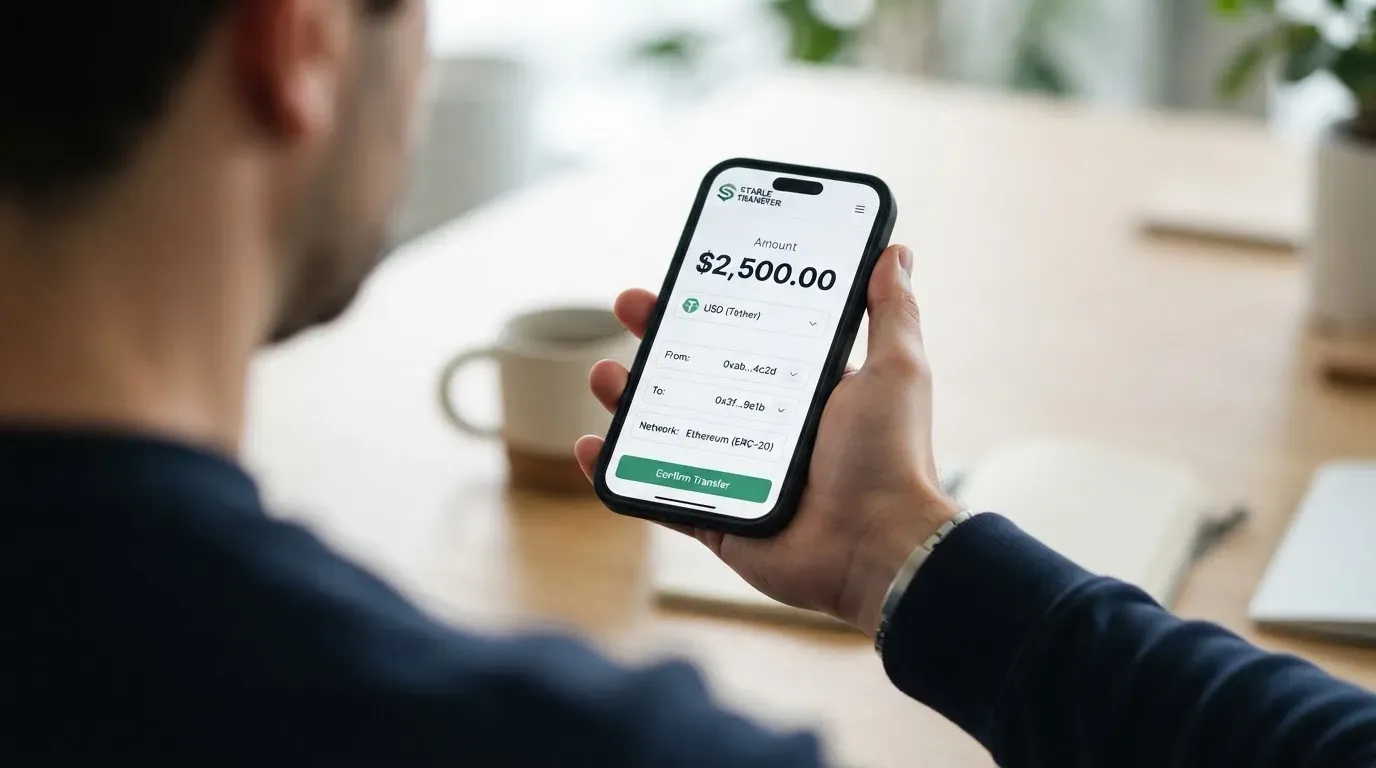
Crypto top-up: deposit USDT, USDC, BTC, ETH, or other supported coins to the Volet crypto wallet. The networks are not stated on Volet’s pages, which is a real gap. Once the crypto is credited, you either hold it or convert it to a USD or EUR balance on the e-wallet. Auto-conversion to a stablecoin or fiat balance costs $1 for USDT and USDC, and is free for BTC, ETH, and others.
Fiat top-up: you can fund the e-wallet with a Visa or Mastercard at a 3.5% fee. SEPA and local bank top-up fees are not stated, nor is the minimum top-up. Once the fiat is on the e-wallet, you load the card from that balance at the load fee for your card type.
Withdrawal from the Volet e-wallet: to a Volet card from 1%, to a Visa or Mastercard from 3%, SWIFT 1% + $25, SEPA from 1%, local bank from 1%, P2P free. Crypto withdrawals from the crypto wallet: USDT on TRC-20 at 3.5 USDT, USDT and USDC on other chains at 0.5, BTC and ETH at the network fee. Crypto withdrawals from the fiat/stablecoin balance: USDT on TRC-20 at 0.5% + 3.5 USD, other chains at 0.5% + 0.5 USD.
The network gap matters. If you send USDT on a chain Volet does not support, or to an address for a different network, the deposit may be lost or require manual support intervention with no guarantee of recovery. Blockchain transfers are irreversible by design. Before sending, check the deposit page in your Volet account for the exact address and network, and send a small test transaction first.
Stablecoin choice: USDT on Tron is the cheapest crypto-to-card path on paper, but it carries the network’s own fees and a $1 auto-conversion charge. USDC has no such network advantage here. BTC and ETH have free auto-conversion but pay the network’s gas fee. Which is cheapest depends on the amount and the network you choose.
Paying with it every day
Once loaded, the card behaves like any other Mastercard or Visa prepaid card. You tap or insert at a shop, enter the card details online, or add it to a mobile wallet. Volet shows Google Pay and Apple Pay badges on its pages, but the support is card-specific. Unofficial guides say Apple Pay and Google Pay work on the Digital and Spend Virtual cards, are not advertised for Europe, and are not supported for Asia-Pacific or Global Plus. I have not confirmed this against Volet’s own documentation, so treat it as unofficial.
There is no cashback programme and no staking rewards. The only incentive mentioned is a referral programme listed as “coming soon,” with 2 USD or EUR per activated digital card and 5 USD or EUR per activated plastic card. As of the date of this review, that programme is not yet live.
Blocked merchant categories: not stated. The card may or may not work at gambling sites, dating apps, or other high-risk MCCs; you will only find out by trying or by contacting support. If a particular category matters to you, ask before you load a large balance.
Mobile app: Google Play and App Store badges are shown, but the iOS app is listed as “coming soon.” Store ratings are not stated. If you are on iPhone, the app may not be available to you yet, which limits your ability to freeze the card, set spending controls, or push it to Apple Pay from the app.
Card freeze, spending controls, and 2FA: Volet mentions “multi-layer security, encryption, access controls and continuous monitoring” and lists PCI-DSS, GDPR, SSL, and ISO badges. Specific features like instant card freeze in the app, 2FA on every login, and per-transaction spending limits are not stated on the public pages. Treat security as adequate but verify what is actually available in your account settings.
One practical point on acceptance: a card issued by an institution in a country different from the merchant’s may face extra scrutiny or be declined by some online shops, especially those that use Address Verification Service (AVS) and only run it in the US, Canada, and the UK. If you frequently shop on US stores, expect the occasional decline and have a backup card.
What can go wrong
The biggest gap is that the card issuer is not named on Volet’s public pages. The footer says “Volet,” and the card pages refer to regional agreements like “Agreement Canada” and “Agreement Costa Rica,” which suggests the contracting entity differs by region. Unofficial sources say Volet is formerly ADVcash, and that the card issuers are “not publicly named.” If you cannot identify who is actually liable for the funds on your card, you cannot easily assess their financial strength, their regulator, or what happens to your balance if the programme shuts down.
Licences are not stated. Volet does not list which regulator supervises it, which e-money or payment-services licence it operates under, or which authority oversees the card programme. In the EU, a card programme depends on a payment-services or e-money licence; the lack of a named issuer makes that hard to verify. Users in the EU can check ESMA’s interim register of authorised crypto-asset service providers, but a card programme may sit outside the CASP perimeter.
Complaints on Trustpilot sit at 4.1 out of 5 from 965 reviews, with 72% five-star and 16% one-star. Recurring themes include high fees, especially a February 2026 review that calculated an 11% effective cost from wallet to card; verification and withdrawal limits, with a September 2026 user from the UK unable to fully verify; transactions blocked from India without justification in January 2026; funds sent to an old wallet address in August 2026; cards not sent in September 2026; and a bank-statement PDF rejected as proof of address in March 2025, with Volet saying the issuing partner decides.
Programme closure risk: Visa terminated its global agreements with FTX in November 2022, and the FTX US debit card programme was wound down by its issuer. WaveCrest, a Visa card issuer that supplied crypto card brands, was suspended by Visa in Europe in 2018, closing all WaveCrest-issued Visa programmes. Crypto card programmes can shut down with notice, and the safer practice is to keep only what you need to spend in the coming month on the card and the rest in a wallet you control.
Custodial risk: the Volet e-wallet is custodial, meaning the provider holds the credentials and you trust them with the funds. Custodial platforms have a record of failures, including Mt. Gox, Coincheck, and the Ronin Network hack. Holding large balances on a custodial e-wallet carries counterparty and hack risk that a self-custody wallet does not.
Sanctions and account freeze: Tether has said it disables tokens in wallets on the OFAC sanctions list and has frozen funds tied to illicit activity. If your account triggers a sanctions match or an AML flag, funds can be frozen pending review, and EU rules require the institution to end the relationship if due diligence cannot be completed. There is no built-in recovery for an account frozen in this way.
Stablecoin depeg: stablecoins are not necessarily stable. USDC temporarily lost its peg in March 2023 during the US banking crisis. If you hold a stablecoin balance on Volet and it depegs, the value of your card top-up can drop before you spend. Volet does not insure stablecoin balances against depeg.
What to take instead
If Volet does not fit, three other cards cover similar ground, with different trade-offs.
Cardex is a debit crypto card on the Verve, Visa, Mastercard, and UnionPay networks, with virtual and physical cards. The company says the card works in 200+ countries, though no country list or exclusions are published. Cardex markets an “AI-Powered Conversion Rate” that scans global exchanges at the moment of payment and picks the best rate; no fee percentage is stated. The card supports USDT, USDC, and BTC wallets, with networks not stated. Score: 5.6 out of 10. The advantage is multi-network support and the conversion model; the disadvantage is opacity on fees and lack of a country list.
CardFlow is a virtual USD Mastercard aimed at Nigeria, with the app store listing focused on paying in Naira. Card creation is free per the FAQ, and the card supports Bitcoin, USDT, ETH, and Naira bank transfer funding. Networks are not stated. Score: 4.9 out of 10. CardFlow is essentially a Naira-focused card with a global virtual layer; it is useful if you are in Nigeria, less so if you are not.
HyperCard is a prepaid card with USD or EUR balances, listed as working in “more than 176 countries” on the App Store (acceptance, not eligibility). The card network is not stated on the App Store page, and no fees are listed. Funding is by USDT, BTC, or ETH deposit in the app, converted to USD or EUR on the card. Score: 4.7 out of 10. HyperCard is the simplest of the three but the most opaque.
| Card | Score | Networks | Currencies | Funding | Best for |
|---|---|---|---|---|---|
| Volet | 6.0 / 10 | Mastercard, Visa | USD, EUR | USDT, USDC, BTC, ETH, others, fiat | Regional cards in 150+ countries |
| Cardex | 5.6 / 10 | Verve, Visa, Mastercard, UnionPay | Naira (per listing) | USDT, USDC, BTC | Multi-network acceptance |
| CardFlow | 4.9 / 10 | Mastercard (USD virtual) | USD | BTC, USDT, ETH, Naira | Nigeria-based users |
| HyperCard | 4.7 / 10 | Not stated | USD, EUR | USDT, BTC, ETH | Simple crypto-to-card top-up |
If the deciding factor for you is geographic reach, Volet is ahead of all three. If you want the lowest published fees, none of the four is great, and you may be better served by a major brand with a named issuer and a published fee schedule. If you want cashback or staking rewards, none of the four offers that today.
Who I would recommend it to
Volet makes sense for a fairly specific reader. If you live in a country where the major crypto cards from bigger Western brands refuse to issue, and you need a Mastercard or Visa you can load from a crypto balance, Volet is one of the few remaining options, and the Global digital Mastercard’s 150+ country footprint is genuinely wide. The card also fits if you want a regional plastic card in Asia-Pacific or Europe and you are willing to pay the issuance fee plus the load fee.
It does not make sense if you need cashback, staking rewards, or any kind of rewards layer at all. It also does not make sense if transparent ATM fees, a named card issuer, or a clearly stated regulator are non-negotiable for you, because Volet publishes none of that. If you are in the US or the UK, the card is unlikely to be available to you at all, and you should look at US- or UK-issued prepaid and debit products instead.
The honest summary: Volet is a working crypto card for a global user base, with a fee structure that adds up if you are not careful, and a level of corporate disclosure that lags behind what a regulated e-money institution would normally publish. The 6.0 out of 10 reflects that balance. The product does what it says, but it does not go out of its way to be cheap, transparent, or rewarding.
Frequently asked questions
What is the Volet card?
The Volet card is a prepaid Mastercard or Visa payment card linked to a Volet e-wallet. You hold crypto or fiat in the e-wallet, convert it to USD or EUR, and load the card from that balance. The Global digital Mastercard is the most widely available; plastic cards are sold for Asia-Pacific and Europe.
How does the Volet card work?
You fund the Volet e-wallet with crypto (USDT, USDC, BTC, ETH, others) or with a fiat card top-up. You then load the card from the e-wallet balance at the load fee for your card type. The card spends that balance at merchants that accept Mastercard or Visa, with no extra POS fee.
Is Volet a bank?
Volet does not present itself as a bank. It is an e-wallet and card programme. The card issuer is not named on Volet’s public pages, and Volet is not listed as a bank. Treat it as a payment service, not as a deposit-taking institution, and do not assume your balance is covered by any deposit guarantee scheme.
Who owns Volet?
Volet does not publicly disclose its ownership on its card or personal pages. Unofficial third-party sources describe Volet as formerly ADVcash, but I have not confirmed that against Volet’s own statements. Licences and regulators are not stated.
Is the Volet card available in my country?
The e-wallet service is available in 180+ countries; the card is narrower. The Global digital Mastercard is listed for 150+ countries, and plastic cards are regional. Unofficial sources list 29 restricted countries, including the US, UK, Puerto Rico, Cuba, Iran, Syria, and North Korea. If you live in a restricted country, expect the card not to be available to you.
Does the Volet card require KYC?
Basic e-wallet functions work without KYC. Cards, higher limits, and full withdrawals require verification, which Volet says “usually takes only a few minutes.” Documents, proof of address, and minimum age are not stated on Volet’s pages.
How do I top up the Volet card?
The card is loaded from the Volet e-wallet only. Fund the e-wallet with crypto (USDT, USDC, BTC, ETH, others) or with a fiat card top-up at 3.5%, then load the card at the load fee for your card type. The networks for crypto deposits are not stated; check the deposit page in your account for the correct address and chain before sending.
Is the Volet card free?
The FAQ says there are no monthly fees. Issuance costs $5 for the Global digital and Asia-Pacific plastic cards, 1 USD or EUR for the Europe Virtual, and $5 or €5 for the Europe Plastic. Load fees of 1% to 2.5% plus a $1 flat fee apply on top of every card reload, and converting USDT or USDC to a fiat balance costs an extra $1.
How do I add the Volet card to Apple Wallet?
Unofficial sources say Apple Pay and Google Pay work on the Digital and Spend Virtual cards, are not advertised for Europe, and are not supported for Asia-Pacific or Global Plus. The iOS app itself is listed as “coming soon,” so the in-app push to Apple Wallet may not be available yet. I have not confirmed any of this against Volet’s own pages.
Is the Volet card safe?
Volet lists PCI-DSS, GDPR, SSL, and ISO badges, and mentions encryption and continuous monitoring. The e-wallet is custodial, so the provider holds the funds. The card issuer is not named, and the licence under which Volet operates is not stated. Treat security as adequate but not independently verifiable, and keep only what you need on the card.
Virtual cards in the catalogue – cryptocardcatalog
Content created by the «cryptocardcatalog» team