
Gpayvcc in plain English: cheap to open, thin on detail
 Available in US
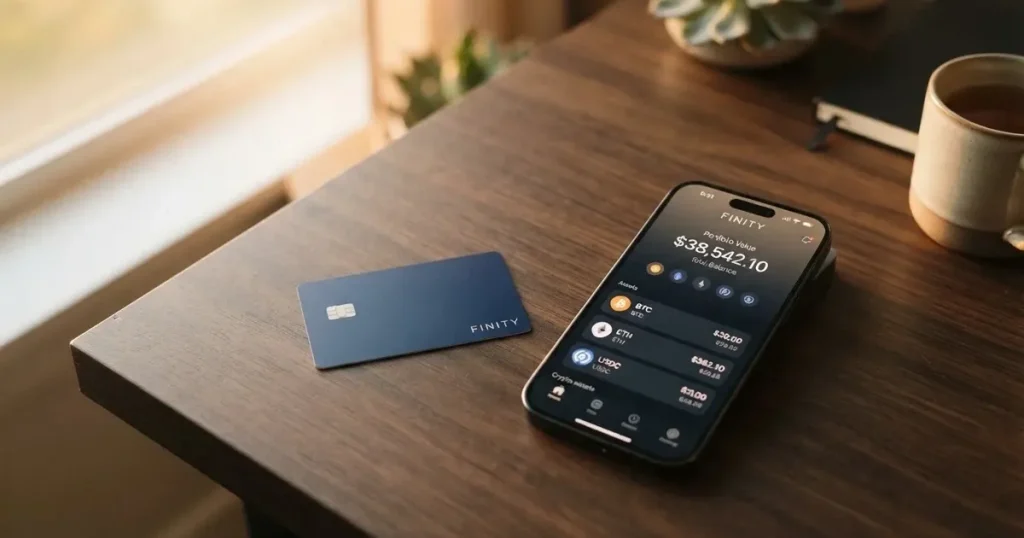
The first thing to understand about Gpayvcc is what kind of thing it is. It is not a bank. It is not a normal debit card either. It is a shelf of virtual prepaid cards — Visa and Mastercard, 28 types across four networks by the site’s own count — that you pay for with cryptocurrency and then spend like an ordinary card online, at the till, or in a phone wallet. You are buying a stored balance with crypto attached to it. That single sentence explains most of what follows: what it does well, where it is thin, and what it will feel like on the day something goes wrong.
Conditions are current as of October 28, 2026.
For someone who cannot open an ordinary bank card, or who lives somewhere a bank card is awkward to get, this is a real product with real appeal. You sign up with an email address, a name and a phone number; no bank account is needed; you pay in crypto; and five minutes later the card number, expiry date, CVV and billing address arrive in your inbox. No plastic ever comes in the post, because there is no plastic. If you have been declined by a bank, or you are new to a country, or you simply do not want a credit file touched, that is genuinely useful.
If you want a physical card in your hand, a card that works at a cash machine, or a card with a monthly plan and a support desk that answers for months — this is not that. It is virtual-only, it has no ATM, and the company’s own pages are quiet on a great deal that matters once money is involved. Buy it for online spending and phone wallets. Do not buy it as your only route to money.
The conditions described here are current as of October 2026.
Gpayvcc works as a payment card spent from a crypto balance
Here is how I scored it, criterion by criterion, so you can see where the marks came from rather than taking a number on trust.
| Criterion | Mark | Why |
|---|---|---|
| Who can get it | 8 / 10 | No country list given, no excluded countries listed; sign-up is by email, name and phone number |
| Cost | 7 / 10 | Issue fee is $5 on most cards ($15 on Visa Platinum); no monthly fee and no inactivity fee; unofficially, a “high crypto-to-fiat conversion spread” |
| Top-up options | 8 / 10 | USDT, BTC, TON and more; earlier notes list USDT, BTC, ETH, BNB, Solana, TON, TRX, LTC, BCH; networks not disclosed |
| Reliability and complaints | 6 / 10 | Not a bank, cards issued by partners, licences not named; Trustpilot 4.7 from 56 reviews, 92 % five-star; unofficially, “No refunds on card balances” |
| Everyday use | 5 / 10 | Virtual only, details by email five minutes after payment; Apple Pay and Google Pay; no plastic and no ATM |
| Total | 6.9 / 10 |
A 6.9 is a “works, with caveats” card, not a “set and forget” one. The audience note that fits it best, in my view, is users buying prepaid virtual cards with many coins — people who already have crypto sitting on-chain and want it spendable without a banking relationship. If that is you, the deal is fair. If you are hoping for something that behaves like the card in your wallet, the gap between expectation and reality is wide.
Verdict: who it suits, and who it does not
It suits you if: you hold USDT, BTC, TON or similar; you spend mostly online or in a phone wallet; you want a card open in minutes rather than a branch appointment; you are comfortable sending an irreversible blockchain transfer to an address and getting the details by email.

It does not suit you if: you need cash from a machine; you need a card you can hand over; you want predictable, published fees on every transaction; you want a named, licensed institution you can point to in a dispute; or you are putting your rent on it.
Will they give you the card?
This is the part most virtual card sites leave vague, so I appreciate that Gpayvcc at least publishes a form of the answer — even though the answer is thin.
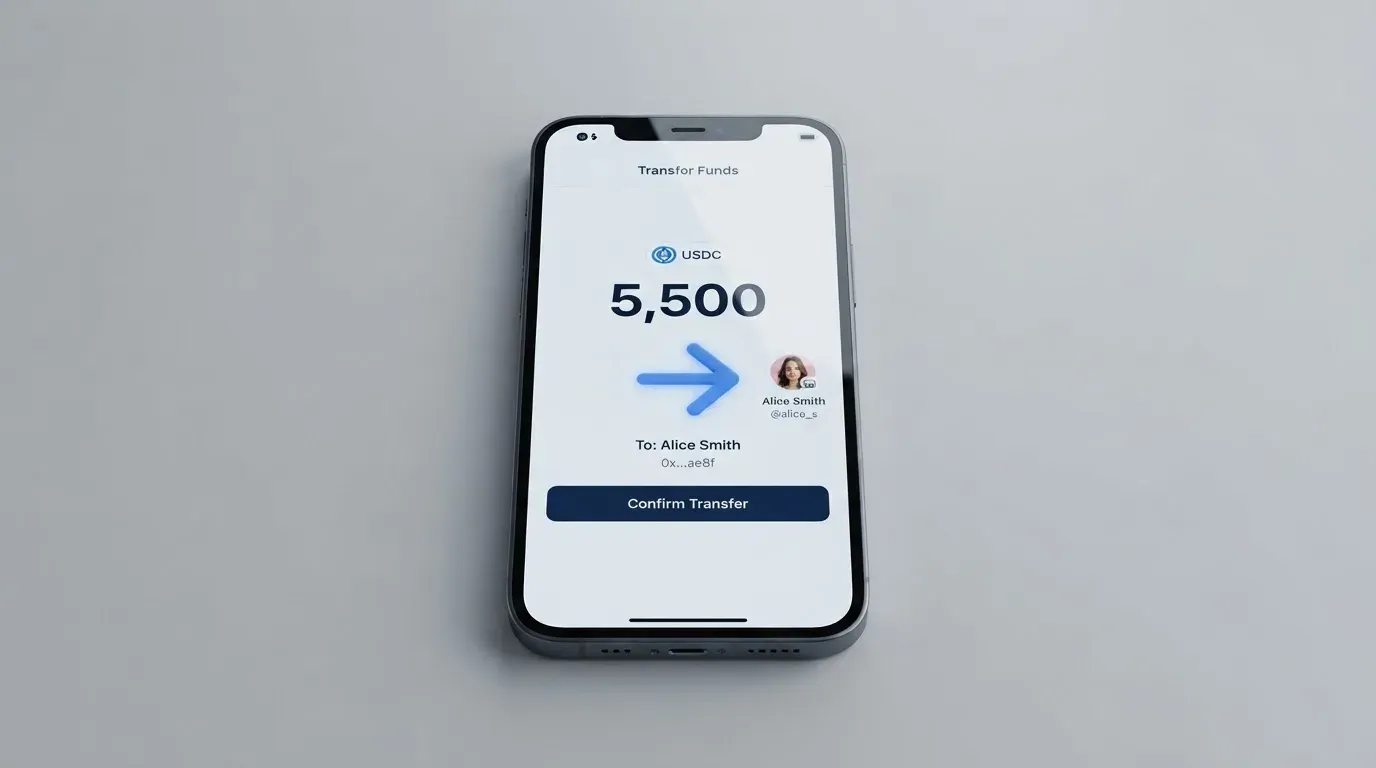
The country list is not stated. There are no excluded countries listed either. That is a double-edged fact. On one hand, nothing on the public pages says “not available in your country.” On the other, nothing promises it either. My read: the doors are probably open more widely than with a bank-issued card, but “no list of exclusions” is not the same as “open to everyone.” Country and citizenship rules are told here exactly as the card states them, and what the card states is silence.
The one signal that matters more than the country list is that this is a non-bank. The company says plainly that it is not a bank and does not issue cards; the cards come from third-party issuing partners. That has a concrete consequence for you: the entity whose name is on your card, and the entity you would approach in a dispute, is the partner, not the brand you typed in. Registration details and licences are not stated on the pages I could read.
So: eligibility looks broad, but the “who am I actually banking with” question has no clean answer in public. If a country restriction bit you, or if you need to know the licence, ask support before you send anything — that is a conversation, not a workaround, and support will tell you what they will tell you.
How to get it
The sign-up is deliberately light. You register with your email address, name and phone number; no bank account is needed. The company notes that more information may be required for legal and issuer reasons. Steps, as the site presents them: sign up, choose your card, pay in crypto, and the details arrive by email.
The card you get is a virtual prepaid Visa or Mastercard, and the site says there are 28 card types across 4 networks. Each card is denominated in its own currency — for example an Argentine Peso Card exists — and there is no multi-currency feature stated.
After your crypto payment confirms, the card details — number, expiry date, CVV and billing address — reach you five minutes later by email. That is the whole delivery story: virtual, no postal step, no courier, no waiting weeks.
The KYC question — what level of verification applies — is not stated on the official pages. Unofficially, a third-party site lists this as Level 1, email only, with no phone, ID or selfie required. Treat that as unofficial and unconfirmed by the card. What the official site does say is that it collects a phone number and may ask for more “for legal and issuer reasons,” which is the issuer’s right, not a promise you will never be asked.
One thing to check before you click: the card type you pick is also the currency you are spending. A peso card is not a dollar card. Pick the one whose currency you actually intend to spend, not the one with the most impressive-sounding name.
What a Gpayvcc payment costs depends on the conversion and conversion fees
The headline number is friendly. The costs table is where you find out what “friendly” is standing on.
| Fee or limit | What Gpayvcc states |
|---|---|
| Issuance fee | $5 (most cards), $15 (Visa Platinum) |
| Monthly fee | None |
| Inactivity fee | None |
| Conversion fee | Not stated |
| FX fee | Not stated |
| ATM fee | N/A (virtual only) |
| Daily limits | Not stated |
| Monthly limits | Not stated |
Read that table twice. There is a clear, low, published price to open the card — $5 on most of them, $15 on the Visa Platinum — and then a long silence. Conversion fees: not stated. FX fees: not stated. ATM: there is no ATM, because there is no plastic. Daily and monthly limits: not stated.
That silence is not automatically bad. A card with no monthly fee and no inactivity fee, funded by crypto you already hold, can be genuinely cheap in the way that matters. But “cheap to open” and “cheap to use” are different claims, and only the first one is documented. Unofficially, third-party listings say the monthly, ATM, FX, top-up and decline fees are “Free” while flagging a high crypto-to-fiat conversion spread as a con. So the unofficial picture is: no drip of small fees, but a cost that shows up inside the exchange rate instead of on a line item. That is a real pattern with crypto cards — the money comes out of the conversion, not the invoice.
Note also that unofficially one site lists card issuance at $200, which conflicts with the official $5 issue fee for the Virtual Visa Reloadable. Where an unofficial figure contradicts the card’s own published price, the card wins; treat the $200 figure as noise.
Two more costs to price in your head. On-chain network fees for your deposit are charged by the blockchain, not by the card provider — on Ethereum, for example, a wallet holding USDT but no ETH cannot send. And if you pick up crypto on a network the provider does not support, or send to an address on the wrong network, the transfer is irreversible; it may be lost or need slow manual recovery with no guarantee. For most of the coins Gpayvcc lists — USDT, BTC, TON, and on an earlier check ETH, BNB, Solana, TRX, LTC, BCH — the provider says nothing about which networks it accepts. That is the single most important gap on this page for me, because it is the gap that can cost you money in one step.
What three everyday payments would cost
I cannot quote a total for these, because the card does not publish a conversion or FX percentage, and I will not invent one. But I can show you which line items would apply if you do the arithmetic on your own amounts.
A $20 online subscription in dollars. No issue fee — you paid that once at signup. What bites is the crypto-to-fiat conversion: your crypto is turned into dollars at whatever rate the provider’s partner applies, and the unofficially-reported “high conversion spread” sits inside that rate. FX is only in play if the card’s own currency is not dollars; a peso card paying a dollar subscription adds a second conversion on top. No monthly fee, no inactivity fee. Result: one payment, one conversion, no drip.
A $60 restaurant bill, card currency matching. Same structure: the balance must cover the payment, and any decline-fee question comes down to a fee the official pages do not list. If the restaurant declines prepaid cards outright — merchants are allowed to, and some do — you have no cash fallback, because there is no ATM on this card.
A cash withdrawal. You cannot do this one. There is no physical card and no ATM access, full stop. Unofficially, one site lists ATM as “Unlimited,” which cannot be right for a product with no plastic; ignore it.
The pattern across all three: the cost lives in the conversion rate, not in the fee schedule, and the fee schedule is mostly blank. If you spend heavily, that spread is the number that decides whether this card is cheap or expensive to you.
Topping up Gpayvcc starts with a transfer to the right network
Top-up is where this card is at its best, and also where the sharpest edge is.
You fund with USDT, BTC, TON and more — on an earlier check, the list was USDT, BTC, ETH, BNB, Solana, TON, TRX, LTC, BCH. The networks are not disclosed, which is the caveat I would not skip. The model is: deposit to your account balance, then buy the card from that balance.
If you hold a reloadable card, you can top it up again. The fee, the minimum top-up, and who pays the network fee on the transfer are all not stated. So the cost of moving money in is something you learn by doing it once, not by reading the schedule first.
Withdrawal from the balance is not stated either. This one deserves a beat of thought. The card is a one-way spending instrument as described: crypto in, card balance out. I am not going to tell you what to do if you need your money back — I do not know, and neither does the page. Ask support before you rely on this for anything you might need to reverse.
Why the undisclosed-network thing matters so much: blockchain transfers are irreversible. Send on a network the provider does not support, or to an address belonging to a different network, and the money can be gone or stuck behind a support ticket with no promise of return. With USDT you have several chains to choose from — Ethereum, Tron, Solana, Polygon, Avalanche and others — and the provider does not say which ones it wants. Get that answer in writing, from support, before your first deposit. It is a legitimate question about how to use the product as offered; it is not a way around anything.
One more habit worth building in: Tether says it disables tokens in wallets tied to the OFAC sanctions list and freezes funds linked to illicit activity. Stablecoins are not censorship-proof, and neither is this. Use it the way it is meant to be used.
Paying with it every day
Day-to-day, Gpayvcc is competent and unexciting. Apple Pay and Google Pay are both supported — that is the part of the daily experience most people will actually feel, because it means you are not retyping a 16-digit number into every checkout.
The card is virtual only, and that shapes everything:
- No plastic, ever. No ATM, no cashier handing you a physical card, no tipping with a tap on a counter.
- Blocked categories are not stated. The category rules that issuers apply — gambling is the usual one — are simply not described in public.
- Merchants may refuse prepaid cards. This is the single most likely day-to-day friction. Some shops and some payment processors decline prepaid or foreign-issued cards on principle.
- No cashback is stated by the official site.
- No app is mentioned. There is no mobile app in what I could read, which also means no app-based freeze and no app-based limits.
- Refunds are not stated. Unofficially, one site lists “No refunds on card balances” as a con. Unconfirmed, but it is worth assuming until you know otherwise.
- Security features are not stated — no published detail on 2FA, freeze or spending caps.
None of that is disqualifying for online spending. All of it is a reason to keep the balance small and the card as a spending tool rather than a store of value. Think of it as the card you tap in a phone wallet for a subscription, not the card you are happy to have hold five thousand dollars.
What can go wrong
Let me be blunt, because this is where a 6.9 comes from.
You are not dealing with a bank. The company says it is not a bank and does not issue cards; third-party partners issue them. Registration and licences are not stated. When something goes wrong, the party who can actually reverse a payment is the issuing partner, whose name and regulatory status are not on the page you signed up on. In the EU this kind of card usually depends on two licences — one for the crypto side and one for the payment card — and I could not confirm either here.
User reports are mixed but not alarming. Trustpilot, read on 21 October 2026, shows 4.7 from 56 reviews with 92 % five-star. Two caveats the Trustpilot page itself flags: several reviews use similar wording, and there are no replies to negative reviews. That pattern is common on review pages and is not evidence of anything in particular — but it is also not nothing. Separately, one detailed user complaint describes a card failing repeatedly at checkout and a slow refund needing repeated follow-up. The only visible complaint on the review page is minor: lag on the details page on mobile, 23 August 2026. No official incidents are recorded.
A decline can leave a hold. A declined authorisation can leave a hold on your funds for several days, typically up to seven. With a card whose balance is small this is an inconvenience; on a large balance it is money out of action with no cardholder service in the traditional sense.
A foreign-looking card gets looked at twice. Merchants can look up the BIN and see which institution and country issued a card, and may apply extra scrutiny if the issuer country differs from your billing address. Address verification — comparing the street number and postcode you type against issuer records — is mostly a US, Canada and UK thing and generally unavailable for foreign-issued cards, which can cause declines. A virtual card from an unnamed partner is, structurally, exactly the kind of card that trips this. It is also why a virtual prepaid card fails at some checkouts and not others.
The category can close. Card programmes do end. Visa terminated its global agreements with FTX on 13 November 2022 and the US debit card was wound down; WaveCrest, a Visa issuer that supplied crypto card brands, was suspended in Europe in 2018 and all its Visa programmes closed. Closures typically mean a notice period, then spending and loading stop, then you are asked to withdraw remaining balances. A 2026 closure reported by a secondary source ended new loads on 8 July 2026 and spending on 8 August 2026 — single source, unconfirmed, but the shape of it is what to expect.
Balances, not deposits. An electronic money institution must safeguard customer funds, but those funds are not bank deposits and may not sit under a deposit guarantee scheme. Unofficially, one site says there are no refunds on card balances. I would hold small sums.
Taxes are yours. In the US the IRS treats digital assets as property, so spending crypto on goods and services generally produces a taxable gain or loss, measured in local currency at fair market value on the date — which makes every card payment funded from crypto potentially its own disposal. Elsewhere the detail differs. This is not advice; it is a reminder that the tax treatment is yours to check, not the card’s to explain.
What to take instead
If Gpayvcc does not fit — virtual-only, no ATM, thin on fees and licences — these are the alternatives I looked at, and none of them is dramatically better. All three scored lower in my review, which tells you something about how thin the category is on published detail.
Cardex — 5.6 / 10. A debit card on four networks, with virtual and physical options, in a Naira-focused listing. Its distinguishing feature is conversion: it converts at the moment of payment and says an “AI-Powered Conversion Rate” scans global exchange rates and picks the best one when you spend. No fee percentage is published, and networks for funding are not stated. Attractive if you want a physical card; its App Store listing is Naira-centric.
CardFlow — 4.9 / 10. Aimed squarely at Nigeria (“Nigeria’s smartest fintech card platform”) and “Nigerians and global users.” Virtual USD Mastercard created in three minutes, and creating one is described as completely free. Funds with Bitcoin, USDT, ETH or a Naira bank transfer. Fees not stated. If you are in Nigeria, the free virtual card and local funding are the pitch.
HyperCard — 4.7 / 10. A prepaid card with a balance in USD or EUR, funded by depositing USDT, BTC or ETH in the app and converting to the card currency. The App Store page says it works in more than 176 countries — that is acceptance, not eligibility. Network not stated on that page, no fees listed.
| Gpayvcc | Cardex | CardFlow | HyperCard | |
|---|---|---|---|---|
| My score | 6.9 / 10 | 5.6 / 10 | 4.9 / 10 | 4.7 / 10 |
| Card form | Virtual prepaid, 28 types, 4 networks | Debit; virtual and physical | Virtual USD Mastercard | Prepaid, virtual |
| Issue fee | $5 on most, $15 Platinum | Not stated | Free to create | Not stated |
| Funding | USDT, BTC, TON and more; networks not stated | USDT, USDC, BTC; networks not stated | BTC, USDT, ETH, Naira transfer | USDT, BTC, ETH in app |
| Notable | Apple Pay and Google Pay | Conversion at point of payment | Built for Nigeria | USD or EUR balance |
| Main gap | No plastic, no ATM, fees not stated | Fees not stated | Fees not stated | Network and fees not stated |
None of the four publishes a clean fee schedule. That is the category talking, not these four companies alone — and it is why the fee table above is as much “not stated” as it is numbers. If a clean, published fee breakdown is your top priority, an established e-money or bank card in your own country will beat all of these on transparency, even if it is harder to open.
Who I would recommend it to
I would recommend Gpayvcc to someone in this situation, and I would think twice for anyone else.
Recommend it if you already hold USDT, BTC or TON; you spend mainly online or through Apple Pay and Google Pay; an ordinary bank card has been refused to you, or you would rather not open one; and you can live with the fact that the conversion rate, not the fee list, is your real cost. Buy the $5 reloadable card, keep a modest balance on it, top it up when you need it, and treat it as a spending instrument. If it works for you, the low entry cost means you find out for almost nothing.
Think twice if you need cash, need plastic, need your rent or salary to run through it, or need someone who will answer a chargeback question with a name and a licence. Also think twice about the amount: unofficially flagged as a high conversion spread, this card is not where you park meaningful value. And if you are in the US, remember every crypto-funded purchase can be its own taxable disposal.
The general shape of this product is worth holding onto, because it explains the card. A crypto card is not issued by Visa or Mastercard themselves — the networks license issuers and can suspend a programme — and the crypto brand is often just the front end and programme manager. When you hold a Gpayvcc card, the number on it belongs to a partner you did not choose and cannot see. That is why “is Gpayvcc safe” is really two questions: is the money okay, and is the payment instrument okay? They are answered by different entities, and only the second one is fully visible to you. Under MiCA — the EU’s markets-in-crypto-assets regulation, in legal effect since June 2023, with its token rules applying from 30 June 2024 and its provider rules from 30 December 2024, and a transitional period running until 1 July 2026 — a crypto card typically leans on two licences: one for the crypto side and one for the payment card. I could not confirm either for this card from its public pages, so I will not pretend otherwise.
Frequently asked questions
What is the Gpayvcc card?
Gpayvcc is a platform selling virtual prepaid payment cards — Visa and Mastercard, 28 card types across four networks by the site’s count. You pay in cryptocurrency, and five minutes later the card number, expiry date, CVV and billing address arrive by email. Each card has its own currency, for example an Argentine Peso Card. It is not a bank account and there is no physical card.
Is Gpayvcc a bank?
No. The company states plainly that it is not a bank and does not issue cards; the cards are issued by third-party partners. Its registration details and licences are not stated on the public pages I could read. That matters because the party who would reverse a disputed payment is the issuing partner, not the brand you signed up with.
Who can get a Gpayvcc card?
The country list is not stated and no excluded countries are listed, so eligibility looks broad on paper. Registration needs an email address, name and phone number, and no bank account. The company notes more information may be required for legal and issuer reasons, so do not treat the light sign-up as a guarantee that nothing further will be asked.
How much does a Gpayvcc card cost?
Most cards cost $5 to issue: the Virtual Visa Reloadable, Visa Gold, Visa Virtual Universal and Mastercard Reloadable Classic. The Visa Platinum costs $15, and the starting price is $100. There is no monthly fee and no inactivity fee. Conversion, FX, top-up and ATM fees are not stated officially.
Which coins can I use to fund a Gpayvcc card?
USDT, BTC and TON are named, with more available; an earlier check listed USDT, BTC, ETH, BNB, Solana, TON, TRX, LTC and BCH. The networks are not disclosed, which is the detail to settle with support first — an irreversible transfer on the wrong network can be lost or need slow recovery with no guarantee.
Does Gpayvcc require KYC?
The official pages do not state a KYC level. Unofficially, a third-party site describes it as Level 1, email only, with no phone, ID or selfie — that is unconfirmed by the card. The official sign-up does collect a phone number, and more information may be required for legal and issuer reasons, so treat the unofficial description as a floor rather than a ceiling.
Can I use the card at an ATM or pay in cash?
No. Gpayvcc is virtual-only, with no physical card, so there is no ATM access and no way to hand a card to a cashier. Unofficially, one site lists ATM as “Unlimited,” which cannot be right for a product with no plastic. If you need cash, this is not the card for it.
Is Gpayvcc safe to use?
The card is virtual and pays through unnamed issuing partners, and registration and licences are not stated, so I would keep only a modest balance on it. Trustpilot showed 4.7 from 56 reviews with 92 % five-star when I looked, though the page itself flags similar-wording reviews and no replies to negative ones. Balance protections are thin, and refunds are not stated.
Why is my payment being declined at checkout?
Several ordinary reasons, none of them unusual. Merchants may refuse prepaid cards outright. A virtual card from a foreign-looking issuer can attract extra scrutiny, and address verification — the street number and postcode check — is mostly a US, Canada and UK service that often does not work for foreign-issued cards. Blocked spending categories are not stated. Some merchants simply decline prepaid or foreign BINs as policy.
Is the Gpayvcc card worth it?
Worth it if you already hold crypto, spend mainly online or in Apple Pay and Google Pay, and want a card open in minutes rather than a bank appointment — the $5 entry cost makes it cheap to try. Not worth it if you need plastic, cash, published fees or a named institution behind disputes. Unofficially flagged as a high crypto-to-fiat spread, it is a card to keep small and spend from, not to hold value in.
Virtual cards in the catalogue – cryptocardcatalog
Content created by the «cryptocardcatalog» team