
Gekkard promises a euro IBAN and a prepaid Mastercard, but publishes neither its fees nor its issuer
 Available in US
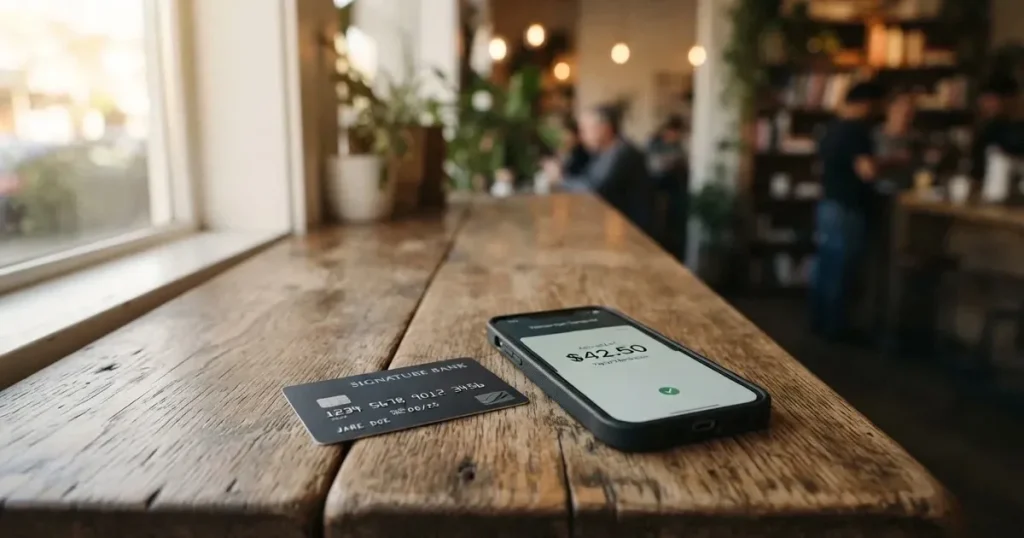
Gekkard is a prepaid Mastercard paired with a euro IBAN account and a crypto app, aimed at Europeans who want a card that spends from a balance they load themselves. That is a real product for a real situation, and on paper the card does the basic things: you get a plastic or virtual Mastercard, you top it up over SEPA or with a stablecoin called Gekkoin Europe, and you spend. What I cannot do is give you the numbers you would need to compare it with anything else. The card’s fees are not stated on its public pages. Its issuer and licences are not stated either. Its crypto partner stopped taking new clients in July 2026. Those are not quibbles — they are the difference between a card you can evaluate and one you have to take on trust. My score is 4.7 out of 10.
Conditions are current as of October 28, 2026.
Verdict: 4.7 out of 10, and the gaps are the story
The score is not a judgement that Gekkard is a scam. It is a judgement that a payment card is a product you evaluate on published numbers, and Gekkard’s are largely absent. The issuer is not named on the pages I could read, the fee schedule is not there, the limits are not there, and support channels are not stated. A card that is live and being used by real people can still be a card I cannot recommend to someone who wants to compare before committing.
Who it suits, on the evidence available: a European, or a resident of an EEA country or Switzerland, who wants a euro-denominated IBAN with a prepaid Mastercard behind it, is comfortable holding money with a custodial app rather than in their own wallet, and is willing to ask support directly for the fee schedule before they load significant money. Who it does not suit: anyone choosing on price, anyone who needs to know in advance what a foreign-currency purchase will cost them, anyone who needs a fully published claim-handling process, and anyone whose country of residence is uncertain under the new registration option.
| Criterion | Mark | Why |
|---|---|---|
| Who can get it | 5 / 10 | Card offered to residents of EEA countries and Switzerland; version 1.0.6 added registration outside the EEA, plastic mailed “to any address worldwide” |
| Cost | 5 / 10 | Fees not disclosed — the site was unreadable due to a certificate error; the app claims 3% on EURG and a 1% purchase bonus |
| Top-up options | 4 / 10 | SEPA, Gekkoin Europe (EURG), access to Bitcoin, Ethereum, Monero via partner AtlantEX OÜ; no stablecoins or networks listed, new-client onboarding paused |
| Reliability and complaints | 4 / 10 | Papaya Ltd; issuer and licences not read; custodial app per WalletScrutiny; App Store 3.0 from 4 ratings, another storefront 2.6 from 15 |
| Everyday use | 5 / 10 | Prepaid Mastercard, plastic or virtual, limits and freeze in the app; wallets and ATM not disclosed |
Who Will Give You the Card
The card was offered to residents of EEA countries and Switzerland. Version 1.0.6 widened this: registration for clients outside the EEA was added, and a physical card can be mailed “to any address worldwide” — the site’s own words. That is a genuinely unusual thing for a small card programme to offer, and it is the single most appealing fact in the whole file.
Read it carefully, though. “Outside the EEA” and “any address worldwide” describe where the card is *sent*. Whether a resident of, say, Nigeria or Brazil is eligible to *hold* the account is a different question, and one I could not find answered. The version history of the app is not the same document as an eligibility policy, and a shipping line is not a residency line. If you live outside Europe, the honest position is that the card’s terms for your country are not published.
What the card’s public pages also do not say is what identity verification looks like. How much you will be asked for, whether there is a document check, how long it takes, and what happens if your documents don’t match are all not stated. That is normal for a small provider’s marketing site, but it is not normal for you — you will find out at application time, and that is a poor moment to discover the process.
One more thing worth flagging here rather than later: who actually issues the card is not named in what I could read. The developer listed on the App Store is Papaya Ltd, and the crypto services are provided by AtlantEX OÜ. The issuer of the Mastercard programme itself — the institution whose licence makes the card work, and which you would deal with in a dispute — is not stated. You are being asked to trust a brand whose plumbing is not fully labelled.
How To Get It
The card itself is a prepaid Mastercard, available as plastic or virtual according to the FAQ. The physical card is delivered by international mail to any address worldwide; how long that takes and what it costs are not stated. Additional cards can be ordered. The account comes with a European IBAN in EUR.
Two things stand out. First, plastic or virtual as a choice is normal and good — a virtual card generated quickly is useful if you want to start spending before a parcel crosses a border. Second, the EUR IBAN is not a minor detail. A European IBAN means you can be paid by SEPA transfer like any other account, which is a different thing from a card that merely draws down a crypto balance. If your problem is “I cannot get a normal bank card”, the IBAN is arguably the more useful half of this product and the part that survives after the app disappears.
What is missing from the process is the verification detail. Registration steps, the documents required, the review time, and the acceptance or rejection criteria are not stated. I would not want to guess at them, and I would not want you signing up on a promise I cannot verify. My practical advice is narrow and non-technical: before you load anything, ask the provider, in writing, what documents it requires and how long it takes, and keep the answer.
What It Really Costs: Fees
Here is the honest core of my review. Issuance fee: not stated. Monthly fee: not stated. Conversion fee: not stated. FX fee: not stated. ATM: not stated. Daily and monthly limits: not stated. Card currency: not stated, though the account is a EUR IBAN and multi-currency transfers appear in the version history. The listing mentions cash top-up locations in its version history, but that is a changelog line, not a service description.

| Item | What is published |
|---|---|
| Issuance fee | not stated |
| Monthly fee | not stated |
| Conversion fee | not stated |
| FX / foreign currency fee | not stated |
| ATM withdrawal | not stated |
| Daily limit | not stated |
| Monthly limit | not stated |
| Spending limits | settable in the app |
| Card currency | not stated (EUR IBAN account) |
The reason for the gap is partly mundane: when I checked, the site was not readable because of a certificate error. That is a technical fault, not a policy, and it may well be fixed by the time you read this. But the effect on a reader is the same as a policy of silence — you get nothing.
Let me show you what that means concretely, with the fees the card does name, which are the only ones I have. Three everyday payments:
A coffee in a eurozone country. You pay a small amount in EUR. The card is a euro IBAN account, so if the merchant charges you in euros there may be no conversion at all — but “may be” is doing heavy lifting, because the card currency is not stated and neither is the FX fee. This is the cheapest, most likely, best case.
A hotel in a non-euro country. You are quoted an amount in a local currency. What lands on your account depends on the network exchange rate and any markup the issuer adds, and neither figure is published. This is the payment where an undisclosed fee hurts, because it is the one where the card is doing something you specifically cannot do yourself.
A subscription billed in dollars. Same problem, and worse: a small monthly charge carries a fixed fee just as large as a percentage, so an undisclosed markup here can erase the value of the 1% purchase bonus the version history mentions. This is the payment I would want a written fee schedule before making.
That is what “not stated” means in practice. It does not mean expensive, and I am not claiming it does. It means you cannot tell, and for a product whose entire job is moving money across a border, that is disqualifying for anyone who compares.
On the earnings side: the listing claims 3% interest on EURG holdings and, in version history, a 1% card purchase bonus. The official site reportedly says the service is not an investment product. The conditions were not read. So I would treat the 3% as something to ask about in writing rather than something to plan around — a bonus described as not being an investment product is doing careful work.
How To Top Up
Two routes are named. The first is SEPA, which is the obvious one given the EUR IBAN: you transfer euros into the account the way you would to any European account. The second is buying or selling Gekkoin Europe (EURG), which the card describes as pegged 1:1 to the euro, plus access to Bitcoin, Ethereum and Monero through the partner Gekkoin. The crypto services themselves are provided by AtlantEX OÜ, described as a licensed exchange.
So the funding model is: euros in over SEPA, or crypto in through a partner exchange. There is also a mention of cash top-up locations, in the version history, which I would treat as a lead to ask about rather than a feature. Fees and minimums for top-ups are not stated — meaning, again, that you do not know what the SEPA transfer or the Gekkoin purchase takes out.
The gap in the list is as informative as what is in it. There are no stablecoins and no networks named. No USDC on Solana, no USDT on Ethereum, no Polygon, no Tron. For a card whose audience clearly includes people holding crypto, that is a narrow funding surface: you are not choosing your network, the card has chosen for you. And this is the exact point where the background knowledge becomes dangerous rather than merely theoretical. Blockchain transfers are irreversible, and a deposit sent on a network the provider does not support, or to an address belonging to a different network, can be lost outright — a fact worth holding in your mind before you send anything, because support may not be able to undo it.
And the thing that worries me most here is not the network list but the pause. AtlantEX has paused onboarding of new clients from 1 July 2026, during MiCA licensing. If your onboarding depends on the crypto partner, and that partner is not currently taking new clients, then the top-up route you are reading about may simply be closed to you today. The app version I could see was 1.0.9, dated 04/08/2025. That is a real gap between the product described and the product’s last visible update.
Withdrawing money is not stated. That is the item I would ask about first.
Paying With It Every Day
The everyday mechanics are simple in the way a prepaid card is always simple, and that simplicity has a specific meaning here: the card draws on a stored balance rather than a bank account, so it cannot overdraw. You spend only what you have loaded. If you are used to a bank card with a buffer, do not expect one.
The app does the things a modern card app should do. You can set spending limits. You can see transactions. You can freeze the card temporarily. The version history adds biometric confirmation for online purchases, which is the right shape of protection. Block-and-unblock from the phone is, in practice, the single most useful fraud control a card can offer.
What is not disclosed is the unglamorous half that determines whether daily life is smooth. Wallet support — whether the card goes into Apple Pay or Google Pay — is not stated, so I cannot tell you whether tap-to-pay on your phone works. ATM access is not stated, which means cash is an unknown. Merchant categories, gambling blocks, and similar policy choices are not stated either. Address verification, which many merchants run on online payments, behaves differently for foreign-issued cards and can cause declines you did not expect.
On the app itself: iPhone app “Gekkard: Prepaid Card & Wallet”, version 1.0.9, rated 3.0 out of 5 from 4 ratings. A Google Play listing exists as com.papaya.gekkard, “Gekkard: Banking Alternative”, with the rating not readable. Those are tiny sample sizes — four ratings tell you almost nothing statistically, but they do tell you the app is barely rated, which means the first users’ experiences have not accumulated the way a mature app’s would. Use it as an early signal and nothing more.
What Can Go Wrong
The central risk is structural, and it is worth understanding before you look at the details.
Control of crypto belongs to whoever holds the private key or seed phrase. With a custodial wallet, the provider holds those credentials and you must trust them completely. Per WalletScrutiny, this is a custodial app and it is not verifiable. The seed phrase — typically 12 to 24 words, an unencrypted form of the private key — can restore a wallet and spend its funds, so anyone who obtains it has everything. Transfers are typically irreversible, and a network cannot freeze or return stolen funds; there is no built-in recovery.
And this is not hypothetical for the category. Mt. Gox reported about US$350 million stolen across 2011–2014. Coincheck lost about US$400 million in 2018. Ronin Network lost US$625 million in 2022. Holding funds with a custodian carries counterparty and hack risk that does not exist when the funds sit in a wallet you control — where, in exchange, you bear sole responsibility for key loss, phishing, and malware that swaps a copied address on your clipboard.
Then there is the closure risk, which is the one that has ended cards before. Programme closures typically run in a fixed order: a notice period, then spending and loading stop, then users are asked to withdraw remaining balances. Visa terminated its global agreements with FTX on 13 November 2022 and the FTX US debit card was wound down by its issuer. WaveCrest, a Visa issuer that supplied crypto card brands, was suspended by Visa in Europe in 2018, closing every WaveCrest-issued Visa programme. A crypto card brand is often only a programme manager or a front end; the issuer holds the actual programme and can end it. With Gekkard, the issuer is not stated — so you cannot even check whose licence programme you would be inside.
Specific to this card: no official incidents were readable, and no Trustpilot page was found. That is not the same as a clean record — absence of evidence at a small provider with a thin online footprint tells you mainly that nobody has posted publicly. Another App Store storefront listing shows 2.6 out of 5 from 15 ratings. AtlantEX’s pause on new-client onboarding from 1 July 2026 sits inside the MiCA picture: the EU’s transitional grandfathering period lets providers operating under national law continue only until 1 July 2026 or until they receive or are refused a MiCA authorisation, whichever comes first. That is the deadline being crossed, right now, by the exchange that provides this card’s crypto services.
Support channels are not stated. Which is the reason my advice is what it is.
Finally, the rewards are not what they look like. The official site reportedly says the service is not an investment product, and the conditions were not read. And on taxes: I am not advising you here, but be aware that every card payment funded from crypto can be a separate taxable disposal in many jurisdictions, measured at fair market value on the date of the transaction. Take your own advice on that.
What To Take Instead
Here are three cards I have scored, so you can hold Gekkard against something concrete rather than against an impression.
International Visa Card — 6.7 / 10, the strongest of the three. Not available to residents or legal registrants of Belarus, mainland China, North Korea, Cuba, India, Iraq, Iran, Israel, Myanmar, Nepal, Nicaragua, Russia, Syria, Turkey, Ukraine, Venezuela or Vietnam; FATF grey-list countries are reviewed case by case with compliance approval. The rule follows residence or registration, not citizenship. It is a US-issued Platinum Visa card, virtual, paying in USD, with physical “coming soon”. Issuance is $5 one-time and there is no maintenance fee; plans are Classic free, Pro $9.00/month, Max $19.00/month. Card use in USD is free on all plans; foreign currency costs the “Visa exchange rate + 2% FX fee”. Deposits are free at 1:1 for USDC or USDT, and USD, EUR, SEPA, SWIFT and FedNow are also accepted. No cashback stated. Note the contrast: its FX fee is *published*. That is what a card that expects to be compared looks like.
UNi Card — 6.1 / 10. A multicurrency card on the Mastercard network, spending from the UNi.Global account balance; physical or virtual is not stated. “No annual fee”, no foreign transaction fee, assets converted at live OTC rates, and the site claims “no hidden exchange fees” — though since eligibility and funding are not stated, I would ask rather than assume. Its differentiator is the fee structure, which is exactly what Gekkard does not offer you.
Whop Cards — 5.2 / 10. Visa, working anywhere Visa is accepted online and in stores, spending from a Whop balance — pending balance becomes usable as soon as a payment arrives, while standard withdrawals use settled funds. Starting data is stablecoin collateral from a linked wallet, with coins and networks not stated. For consumers it covers 31 US states and for businesses 41; unsupported consumer countries include Belarus, mainland China, Cuba, Hong Kong, India, Iran, Iraq, Israel, Myanmar, Nepal, Nicaragua, North Korea, Russia, Syria, Turkey, Ukraine, Venezuela and Vietnam. It claims “no extra fees” with no amounts listed, and 5% cashback at select merchants, currently Uber, with payout currency and conditions not stated.
The pattern across all three is worth naming. Each publishes at least some of its economics, even when that means publishing an unflattering number like 2%. Gekkard publishes none. On fees, availability and the regulatory footing of the crypto partner, none of the three is obviously better in every respect — but each of them is legible, and Gekkard is not. That is the whole comparison.
Who I Would Recommend It To
Three groups, and I want to be specific about why each one is different.
A European resident — in an EEA country or Switzerland — who cannot open an ordinary bank account, who wants a euro IBAN they can be paid into over SEPA, and who is comfortable treating the balance as money left with a company rather than money in a wallet. Add: someone who has checked the fee schedule directly with support and got a written answer they believe.
Someone already inside the system who has tested the small amount. I am not suggesting you load a large balance; I am saying that if you are going to try this card, the amount you risk should be one whose loss would annoy you, not ruin you. Freeze it between uses. Set low limits. Keep your own records of what you loaded and what you spent — with a provider whose support channels are not stated, your own records may be the only ones you have.
What I would not do: hold meaningful savings on this card on the strength of an advertised 3% rate on EURG that the official site reportedly says is not an investment product; assume a USDC transfer on your favourite network will work, since no networks are named and transfers are irreversible; or treat a 4.7 as a rounding error against a regulated bank’s card with a published fee schedule and a named issuer.
I keep coming back to the unnamed issuer. In this category that matters more than a fee. The card network, the issuer, and the crypto brand are separate parties, and the brand you see is often the least regulated of the three. If you are choosing where to keep money, the question is not “is this app nice” but “which institution is behind this, and who do I complain to”. Gekkard’s pages do not let me answer that. That is why the score is 4.7 rather than higher.
Frequently asked questions
What is the Gekkard card?
The Gekkard card is a prepaid Mastercard offered alongside a European IBAN account in euros and a crypto app. You load money yourself and the card spends that balance, so it cannot overdraw. It comes as plastic or virtual, according to the card’s FAQ. Its developer is listed as Papaya Ltd, and its crypto services come from partner AtlantEX OÜ. The app listing calls the product a prepaid card and wallet.
Is Gekkard a bank?
Not on the evidence available. Gekkard does not describe itself as a bank, and I could not find the card issuer or its licences named on the public pages. That distinction matters, because a bank deposit and an e-money balance are not the same thing — e-money funds must be safeguarded but are not bank deposits and may not be covered by a deposit guarantee scheme. So treat Gekkard as a payment account from a provider, not as a bank.
Who owns Gekkard?
The App Store lists Papaya Ltd as the developer of the app, under the Gekkard brand. The crypto side is handled by AtlantEX OÜ, described as a licensed exchange and named as the crypto services provider. The entity that actually issues the Mastercard is not stated in what I could read, so I cannot tell you who holds the card programme.
Does the Gekkard card require KYC?
The card’s public pages do not say. What identity verification means, which documents are required, how long review takes, and what happens on a mismatch are all not stated. Under EU anti-money-laundering rules, a regulated provider must check your name, address, date of birth, nationality and identity documents, run a sanctions check, and assess whether you are a politically exposed person — so expect a check, but confirm the specifics yourself.
Is Gekkard card free?
I cannot tell you, and that is the point. The issuance fee, any monthly fee, and the conversion and foreign exchange fees are all not stated on the public pages — when I checked, the site itself was unreadable due to a certificate error. The listing does mention a 1% card purchase bonus in its version history, but a bonus is not a fee schedule. Ask support in writing before loading money.
Can I use the Gekkard card in my country?
If you live in an EEA country or Switzerland, that is the base territory the card was offered to. Version 1.0.6 added registration for clients outside the EEA, and a physical card can be mailed “to any address worldwide”. But that line describes shipping, not eligibility, so check your own country with the provider. At a shop abroad, be aware that merchants can look up the issuing country and may treat a card as foreign.
How do I top up the Gekkard card?
Two routes are named: SEPA payments into the EUR IBAN account, and buying or selling Gekkoin Europe (EURG), described as pegged 1:1 to the euro, with access to Bitcoin, Ethereum and Monero through partner Gekkoin. Crypto services are provided by AtlantEX OÜ. Cash top-up locations appear in the version history. Top-up fees and minimums are not stated, and no stablecoins or networks are named.
Is the Gekkard card safe?
Safety depends on who holds your money, and that is not fully disclosed here. Per WalletScrutiny the app is custodial, meaning the provider holds the keys — the same model behind past exchange failures worth very large sums. The card itself offers sensible controls: spending limits, transaction tracking, a temporary freeze, and biometric confirmation for online payments. What I would want is the issuer’s name and its licence.
Is the Gekkard card worth it?
Worth it depends on whether an alternative exists for you. If a normal bank card is available to you, an unnamed issuer with unpublished fees is unlikely to beat it. If a normal bank card is not available to you, a prepaid Mastercard plus a euro IBAN is a real convenience and Gekkard’s prices may well be competitive — you just cannot verify that from public sources. My advice: test with a small amount you could afford to lose, and set low limits.
Why is AtlantEX onboarding paused and what does it mean for me?
AtlantEX paused onboarding of new clients from 1 July 2026, during MiCA licensing. That falls exactly on the EU’s grandfathering deadline, after which providers operating under national law must have received a MiCA authorisation or be refused one. Practically: the crypto top-up route depends on a partner that is not currently taking new clients, so if your funding plan relies on it, ask what is available to you now.
App and neobank cards in the catalogue – cryptocardcatalog
Content created by the «cryptocardcatalog» team