
A zero-fee crypto Visa whose missing details matter more than its low prices
 Available in US
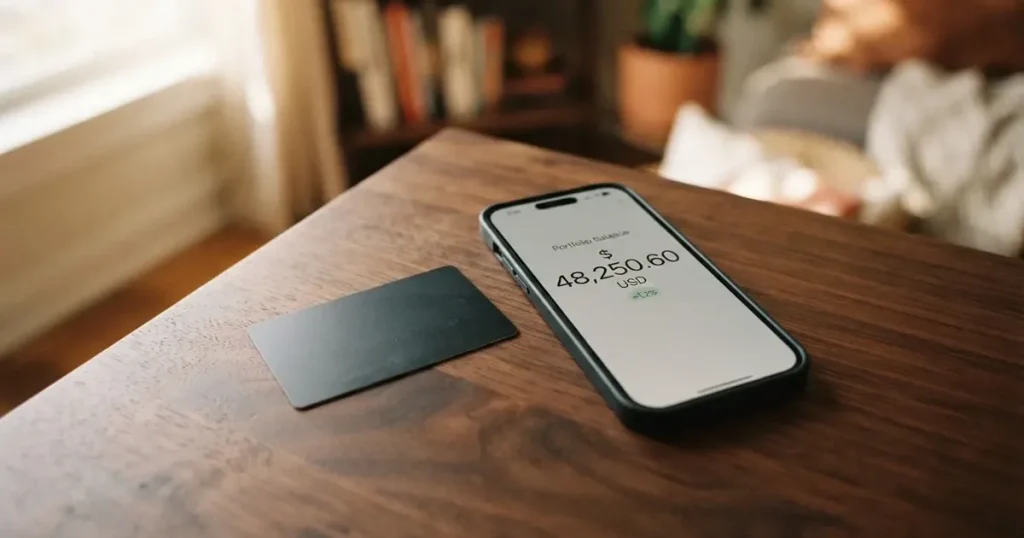
The Avalanche Card is a Visa card, virtual and physical, that spends a balance funded by crypto rather than by a bank account. On the things it publishes plainly — issuance, monthly fee, delivery, the exchange-rate fee — it is one of the cheapest crypto cards on the table: zero to open, zero to keep, zero to send you the plastic, and 1% on currency conversion. If that is the whole picture you need, the numbers are genuinely good.
But the review that matters is the one about the parts the card does not publish. Where I looked, the Avalanche Card site is silent on its ATM policy, its daily and monthly spending limits, the currency the card holds, its cashback or points, how disputes work, whether two-factor authentication exists, and what its support channels are. Those are not pedantic gaps. For a card that is one route around having an ordinary bank card, they are the gaps that decide whether it works for you. I have marked clearly below which facts come from the card’s own pages and which come from third-party sites that the card has not confirmed.
My score for the Avalanche Card is 6.9 out of 10. The conditions described here are current as of October 28, 2026.
Verdict: 6.9 out of 10
The card suits you if you live in a supported country, already hold USDC on the Avalanche chain or are willing to hold it there, want a Visa that costs nothing to keep open, and are comfortable verifying your identity with an SSN or national ID, a government document, a selfie and a phone number. On that description it does the job at a price almost nothing else matches.
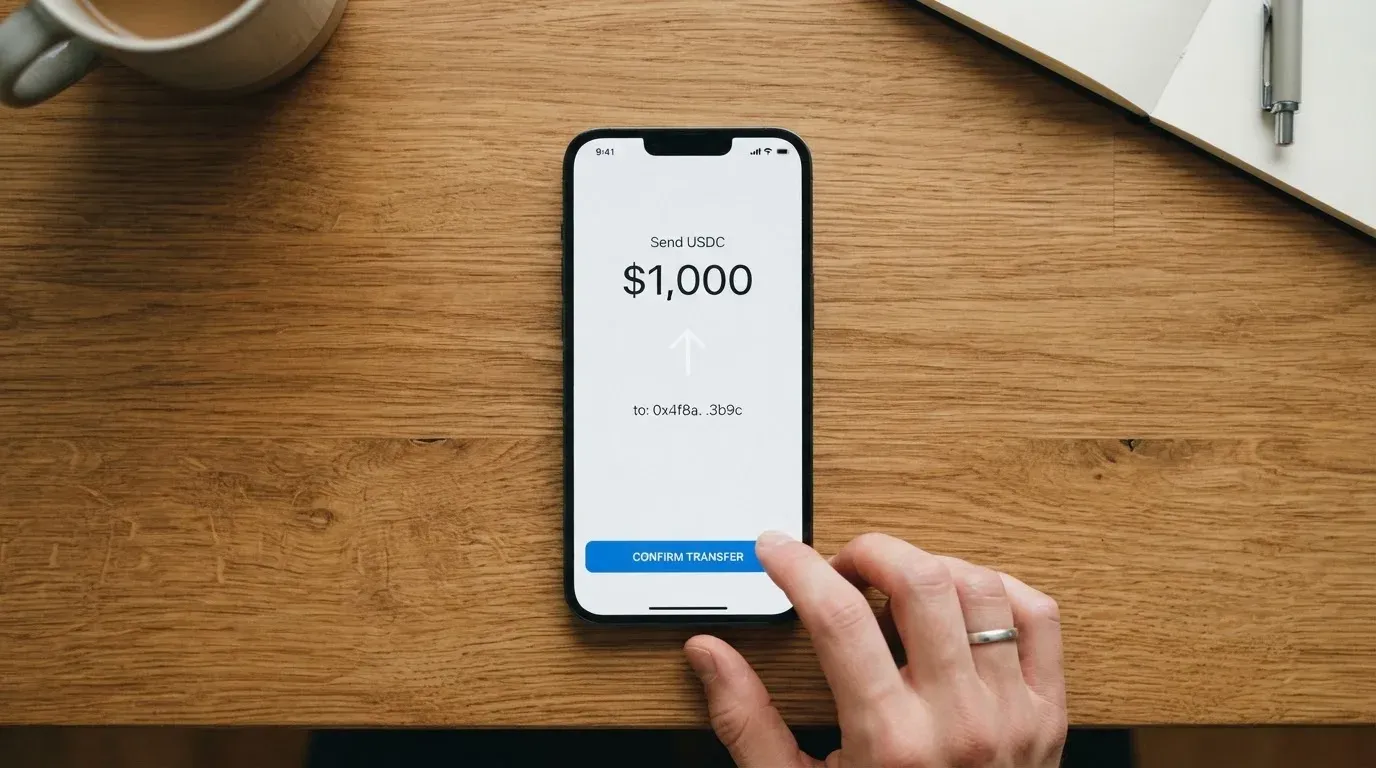
It does not suit you if you need a card you can withdraw cash from, if you need to know in advance exactly how much you can spend per day or per month, if you are outside the Latin American and Caribbean footprint and the listed US states, or if you would rather not hand your identity documents to a fintech that describes itself as “not a bank”. The zero-fee story is real, and so is the silence around the rest.
| Criterion | Mark | Why |
|---|---|---|
| Who can get it | 7 / 10 | Many US states plus Latin America and the Caribbean, and the list is expanding; 18 countries and 16 US states are closed out |
| Cost | 8 / 10 | Virtual issuance, physical card, delivery and the monthly fee are all $0, FX is 1%; unofficial sources quote 2% and up to 3% on other documents |
| Top-up options | 6 / 10 | USDC, USDT, AVAX, WAVAX as collateral on the Avalanche network; Ava Labs is adding sAVAX |
| Reliability and complaints | 6 / 10 | Runs on Rain Liquidity, the issuing bank is not named directly, no official incidents found; App Store 3.1/5 from 22 ratings; unofficial reports of slow support |
| Everyday use | 7 / 10 | Virtual and physical Visa, Apple Wallet and Google Pay; unofficial sources say cash machines are not part of the product and disagree with each other |
The audience the card is really built for, as far as I can tell, is Latin American and US residents who already hold USDC on Avalanche. That is not a criticism so much as a reading of the launch: it went live first in Latin America and the Caribbean, with a waitlist, and the collateral list is the Avalanche-native one. If you fall inside that circle, this is a card built around your situation. If you are outside it, you are using a product built for someone else.
Who will they give the card to
You can apply if you are 18 or older and your legal residence is in a supported country or region. The card’s own wording is “many U.S. states, Latin America, and the Caribbean”, and it says the list is expanding. There is no citizenship condition published on the site, only a residence condition — but be aware that identity screening in this industry usually records nationality separately from address, so a residence-based sign-up does not guarantee approval if your documents are from an excluded country.
Eighteen countries are excluded: Belarus, Cuba, India, Iran, Iraq, Israel, Mainland China, Nepal, Nicaragua, Nigeria, North Korea, Russia, Sri Lanka, Syria, Turkey, Ukraine, Venezuela and Vietnam. Sixteen US states are excluded as well: AZ, DE, GA, ID, LA, MD, NV, NM, ND, OH, OR, RI, SD, VT, WA and WI. Add your own state or country to that list before you spend an afternoon filling in a form.
One unofficial source, a comparison site called CryptoCardHub reporting on 11 August 2026, puts availability at about 172 countries with the same 18 restricted — including China, India, Russia, Turkey and Vietnam — and the same 16 unavailable US states. It agrees with the card on Russia and Turkey. Treat the 172 figure as an estimate from a third party, not something the card confirms.
How to get it
Applying means one identity check, not a tiered ladder. You give your legal name, email, date of birth, an SSN or a national ID number, a government-issued ID, a selfie and a valid phone number. Expired documents and P.O. boxes are rejected. Approval usually takes seconds; the card’s own worst case is 72 hours. Whether you need proof of address is not stated anywhere on the public pages, so if you expect to be asked for one, be ready to send it.
Two ways to be careful. First, “usually seconds” and “up to 72 hours” is a wide corridor, and it is the corridor where declined applications live. Second, the residency rule is a legal-residence rule, and an excluded country is excluded whether you are there on holiday or not.
You can hold up to three virtual cards and one physical card per account, with one of each active at a time. The physical card ships free, and most people receive it in 14 to 30-plus business days depending on where they are. Cards ship to the same countries as the eligibility list, nothing wider. Replacement cost for a lost or stolen physical card is not stated. The currency the card holds is also not stated — which, as the cost section explains, matters more than it sounds.
The virtual card is issued after approval, so you can be spending before the plastic arrives.
Fees: what it really costs
The published numbers are the strong point. Monthly account fee $0. Virtual issuance $0. Physical card $0. Delivery $0. And the card says plainly that “No gas fees or conversion fees are charged by Avalanche Card” — though you may pay the network’s gas yourself if you move funds on-chain. The exchange-rate fee is 1%.

Then the silence. ATM fees are not stated. Daily and monthly spending limits are not stated. There is a single tier with no variants to compare; the only limit-like fact on the site is the three-virtual-one-physical card cap. Multi-currency balances are not described, and again the card currency is not stated.
Third-party documents tell a different, more expensive story than the 1% on the public FAQ, and I want you to see the gap rather than pick a number. The U.S. disclosure reportedly charges 2% FX, and the international agreement reportedly goes up to 3%; the same report adds a late payment of up to 2% of the outstanding balance and a $10 statement copy in the U.S. DefiLlama quotes up to 3% globally. On ATM, CryptoCardHub says withdrawals and cash advances are not part of the current product; cryptocards.so lists ATM as unlimited with a $0 fee; DefiLlama says the terms are not disclosed. These are user-report and aggregator level, not confirmed by the card, and they disagree with each other. On spending power, the same report says Rain may apply daily or monthly limits, reduce them, or set spending power to zero, and that U.S. terms allow spending up to 100% of the value for stablecoins and up to 50% for AVAX and wAVAX. Dollar limits are not published.
| Fee or limit | Official figure | Notes |
|---|---|---|
| Monthly account fee | $0 | Single tier, no tiers described |
| Virtual card issuance | $0 | Up to 3 virtual cards per account |
| Physical card | $0 | One physical card per account |
| Delivery | $0 | Typically 14 to 30+ business days; replacement fee not stated |
| FX fee | 1% | Public FAQ; unofficial documents quote 2% and up to 3% |
| Conversion fee | None charged by the card | Users may pay network gas directly |
| ATM | Not stated | Unofficial sources disagree on whether ATMs exist at all |
| Daily limit | Not stated | Unofficial: Rain may cap or reduce spending power |
| Monthly limit | Not stated | Unofficial: up to 100% of stablecoin value, up to 50% for AVAX/wAVAX in U.S. terms |
Two or three everyday payments, and which of those fees apply:
- Buying a coffee in your own currency, in the country the card was issued in. No FX fee, because no conversion. No conversion fee. You spend the balance.
- Buying the same coffee while travelling, so the shop charges in a foreign currency. Here the 1% applies — or 2% or up to 3% if the document you actually signed says so. This is the fee that decides whether the card is cheap for you.
- Pulling cash out. Whether you can at all is the unresolved question. The card site is silent; one unofficial source says ATMs are not part of the product, another says unlimited and free. If cash is a routine part of your life, this is the point where you should contact the card’s support before you rely on it.
How to top it up
You fund the card with crypto, not with a bank transfer. The homepage lists USDC, USDT, AVAX and WAVAX as collateral, held on the Avalanche network. The FAQ mentions only USDC and AVAX, which does not match. Ava Labs’ own help material lists Avalanche-native USDC, USDT, AVAX and Wrapped AVAX at launch, on the Avalanche blockchain, with more assets planned, and Rain’s launch article adds sAVAX. So the honest list is: USDC, USDT, AVAX, WAVAVAX, with sAVAX coming or present depending on when you read this.
Inside the app you can add and withdraw funds, and close cards at any time. The card charges no gas or conversion fee on top-ups, though a network gas cost may still be yours. The minimum top-up is not stated, and neither is a withdrawal fee.
The practical warning is about networks. A transfer sent on a chain the provider does not support, or to an address belonging to another network, can be lost or need manual support recovery with no guarantee — blockchain transfers are irreversible. Send a small test amount first, on the network the card names. Avalanche-native USDC is not the same token as USDC on another chain even when the ticker matches.
Paying with it every day
You get a virtual Visa you can add to Apple Wallet or Google Pay, plus the physical card when it arrives. That covers most of daily life: tap to pay in a shop, pay online, pay in an app. Virtual cards go into the phone wallets immediately; the physical card takes its 14 to 30-plus business days.
What you will not find stated: which merchant category codes are blocked. Cards in this category commonly block gambling (MCC 7995) and similar categories by policy rather than by law, and the list varies by issuer — but the Avalanche Card does not publish one. If gambling or similar merchants matter to you, ask.
Cashback is not mentioned on the card site. An unofficial source describes “Avax Points” rather than cashback, with the earn rate visible only inside the app, redeemable at 1 cent per point for travel or 0.7 cent as a statement credit. The card site itself says nothing about cashback, so treat any points scheme as unconfirmed.
Disputes are also unstated on the public site. An unofficial reading of the U.S. agreement says liability for unauthorised use is capped at $50 before you give notice and at nothing after you give prompt notice, and that disputed transactions do not earn points.
The app is on the Apple App Store as “Avalanche Card – Pay Anywhere” from Rain Liquidity LLC, rated 3.1 out of 5 from 22 ratings. That is a small sample and a mediocre score, and it is the only user-rating signal I found. Google Play was not read.
One practical note on declines: a failed authorisation can leave a hold on your funds for several days, sometimes up to seven. A card that lets you freeze a virtual card in the app is a real convenience, but it does not help with a hold already placed.
What can go wrong
Start with the honest bit about who is behind it. The card is powered by Rain Liquidity, described as “a financial technology company and not a bank”, and the cards are “issued by partners licensed in their respective jurisdictions” — the bank is not named on the card’s page. Rain’s own site footer says its debit cards are issued by Cross River Bank, Member FDIC, with Rain Products, Inc. as programme manager, but that line is not tied to the Avalanche Card explicitly, so I would not assume it covers this card.
On the asset side you are holding your own keys: the site says users own and custody their assets and that Rain Liquidity is not a custodian. Recovery is by iCloud backup or by PIN. Two-factor authentication is not mentioned anywhere I looked — that is a gap, not a feature. And the Ava Labs help page is explicit that neither Avalanche, nor the card, nor any cryptocurrency is FDIC insured. Nothing here is a bank deposit.
History is worth a moment. Card programmes in this category do close. Visa terminated its global agreements with FTX on 13 November 2022 and the FTX US debit card was wound down by its issuer. Visa suspended WaveCrest in Europe in 2018, closing all WaveCrest-issued Visa programmes. Closures typically mean a notice period, then loading and spending stop, then you are asked to withdraw what is left. None of that is a prediction about this card. It is a reminder that the card’s existence is a business decision, not a permanent fact.
On support: the card points to contact options on its site, but does not list channels, languages or hours. Ava Labs does not support the card — Rain handles issues. I found no Trustpilot or Reddit pages for the Avalanche Card (searches for “Rain” turned up an unrelated earned-wage app), and no official incident reports. One user report describes slow or generic support on withdrawal and access problems. The app’s 3.1 rating is consistent with that, though 22 ratings is too few to lean on.
Finally, the regulatory and tax frame. In the US, the IRS treats digital assets as property, so exchanging them for goods or dollars generally produces a taxable gain or loss measured in local currency at the transaction date — meaning each card payment funded from crypto may be its own taxable disposal. I am not giving you tax advice; I am telling you the expense exists so it does not surprise you at filing time. Where you live may also put the provider under money-transmission rules (in the US, FinCEN guidance treats administrators and exchangers of convertible virtual currency as money transmitters) or, in the EU, under MiCA, with e-money tokens issuable only by a credit institution or an electronic money institution.
What to take instead
Three cards I looked at, each with its own shape.
TokenPocket (5.8/10). A Mastercard/Visa debit on Arbitrum. Visa debit for a list of European countries — Germany, France, Spain, Switzerland among them; Mastercard for Australia, Canada, Hong Kong, Japan, Taiwan, New Zealand, Singapore, South Korea, the UK and others; the Americas were “planned for Q2 2025”. Fiat24 cards are virtual, with EUR24 and USD24 balances. NFT creation is partly covered by TokenPocket and you pay “a small portion”; beyond that no extra fees. A 1% fee is charged on depositing crypto, said to be refunded later via rewards or reduced transaction fees. FX is not stated.
MetaMask (7.1/10). A Mastercard from issuer Monovate, card provider Crypto Life. Sign-up open in 45 listed countries and territories — Andorra, Argentina, Brazil, Canada, Mexico, Germany, France, Spain, Uruguay among them — with other regions on a waitlist; proof of residency required; US and UK sign-ups temporarily closed. A virtual card is issued instantly, a metal card costs $199/year. It spends directly from the connected wallet on Linea, Base, Monad or Solana. Cashback in mUSD is 1% on Virtual, 3% on Metal up to the first $10,000 then 1%, plus a $FLY bonus via Blackbird. Its trade-off is that “ineligible regions limit sign-ups, not spending” — a different shape of problem.
KAST (6.1/10). Visa, with a real tier structure: Standard at $0/year, Premium at $1,000/year, Private at $10,000/year, all billed annually. Up to 10 cards. Cashback is the reason to look — 1.5% to $2,000/month on Standard, 2% to $10,000 on Premium, 3% to $40,000 on Private, plus KAST Points on the paid tiers. Stablecoin top-ups are 0%, USD spend 0%, and the FX fee is 0.5%–1.75% depending on where you live and transact. It is stricter on identity: the country list is not published, a Restricted Locations list exists, and holding only an ID from a restricted region can make you ineligible even in a supported country.
The comparison comes down to this. If cost at zero is your priority and you live in the supported footprint, the Avalanche Card is hard to beat on fees. If you want published cashback and tiered rewards, KAST publishes more. If you want to spend directly from a self-custody wallet without pre-loading, MetaMask does that. If you want a debit for Europe, TokenPocket lists those countries explicitly. What none of the four publishes completely is everything.
Who I would recommend it to
I would recommend the Avalanche Card to someone in Latin America or the Caribbean, or in a supported US state, who already holds USDC on Avalanche, wants a second or everyday Visa without a monthly fee, and is content to accept that the limits, the ATM question and the cashback question are ones you may have to ask support about rather than read. It is a low-cost, low-friction card for someone the mainstream banking system already under-serves.
I would not be the one to recommend it to someone whose cash flow depends on withdrawals, whose budget depends on a known monthly spending cap, or who needs certainty about dispute handling before they put a month’s income on it. Those are not small things to leave undefined.
Before you apply, I would do three things. Confirm your own country and, if you are in the US, your own state, against the exclusion lists. Ask support directly what the card currency is, whether you can use ATMs, and what your daily and monthly limits are — those three answers would move my score more than anything else. And test a small top-up on the Avalanche network before committing real balance.
Frequently asked questions
What is the Avalanche Card?
It is a Visa card, offered both virtual and physically, that spends a balance you fund with crypto rather than one linked to a bank account. It is powered by Rain Liquidity, which describes itself as a financial technology company and not a bank, and the issuing bank is described only as “partners licensed in their respective jurisdictions”. You can hold up to three virtual cards and one physical card per account.
How does the Avalanche Card work in practice?
You hold crypto — USDC, USDT, AVAX, WAVAX on the Avalanche network — and the card converts or uses that as its spendable balance. The card itself charges no conversion fee and no gas fee, though you may pay the network’s gas directly. From there it behaves like an ordinary prepaid-style Visa: you tap in shops, pay online, and add it to Apple Wallet or Google Pay.
What does the Avalanche Card cost to open and keep?
Nothing on the card’s published figures. Monthly account fee $0, virtual issuance $0, physical card $0, delivery $0. The FX fee is 1% on the public FAQ. Unofficial documents quote 2% under the U.S. disclosure and up to 3% internationally, so the real number depends on which document you actually signed.
Do I need to pass KYC to get the Avalanche Card?
Yes, and it is one process, not tiers. Legal name, email, date of birth, SSN or national ID, a government-issued ID, a selfie and a valid phone. Expired IDs and P.O. boxes are not accepted. Approval is usually seconds and at worst 72 hours. Whether proof of address is required is not stated on the public pages.
Is the Avalanche Card available in my country?
It depends on legal residence, not citizenship. Many US states, Latin America and the Caribbean are eligible and the list is expanding. Eighteen countries are excluded, including India, Russia, Turkey, Vietnam and Mainland China, along with sixteen US states. Check your own country and state against the lists before you apply.
Can I get cash out with an ATM?
That is genuinely unclear, and I would not guess. The card’s own pages do not say. One unofficial source says ATM withdrawals and cash advances are not part of the current product; another lists ATM as unlimited with a $0 fee; a third says the terms are not disclosed. If cash matters to you, ask support before you rely on it.
What are the spending limits on the Avalanche Card?
Not stated on the card’s public pages. Unofficial information says Rain may apply daily or monthly limits, reduce them, or set spending power to zero, and that U.S. terms allow spending up to 100% of stablecoin value and up to 50% of AVAX or wAVAX. Actual dollar limits are not published anywhere I could find.
Is the Avalanche Card safe to use?
Self-custody is the strong point: you own and custody your assets and Rain Liquidity is not a custodian. Recovery is by iCloud backup or PIN. But two-factor authentication is not mentioned, and the help material is explicit that neither Avalanche, nor the card, nor any cryptocurrency is FDIC insured. Rain is a fintech, not a bank, and card programmes in this category can close.
Does the Avalanche Card offer cashback?
Not according to the card’s own site, which mentions no cashback. An unofficial source describes an “Avax Points” scheme rather than cashback, with the earn rate visible only in the app, redeemable at 1 cent per point for travel or 0.7 cent as statement credit. That is unconfirmed by the card, so I would not count on it.
Is Avalanche Card free?
Yes, as far as the published figures go — $0 monthly, $0 for a virtual or physical card, $0 delivery. The catch is not a hidden fee so much as the undisclosed ones: no stated limits, an unresolved ATM policy, no published dispute terms, and no mention of two-factor authentication. Free to hold is not the same as fully specified.
Wallet cards in the catalogue – cryptocardcatalog
Content created by the «cryptocardcatalog» team