
A crypto card wrapped around an NFT, with a 1% deposit fee and a support record that raises questions
 Available in US
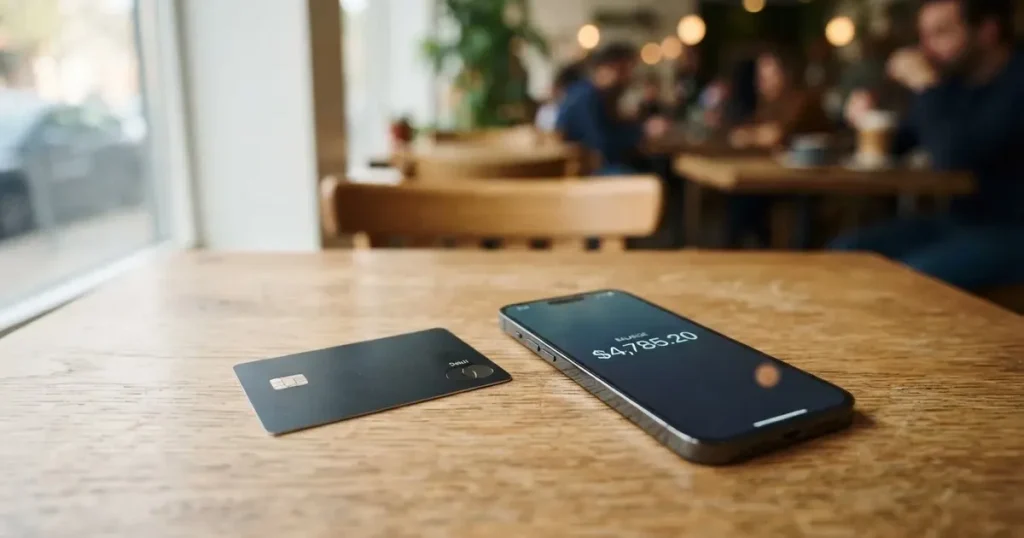
The TokenPocket card is one of the more unusual things in the crypto card catalogue. Instead of applying for a card in an app and passing identity checks against a document, you mint an account NFT, and holding that NFT is what makes you a customer. Everything else follows from that design decision: which countries you can use it in, what happens when you lose your key, and who you have to argue with when a payment is stuck. I went through the card’s own published pages and the issuer-side service that appears to sit behind it, and this is what I found. The score is 5.8 out of 10.
TokenPocket card conditions described here are current as of October 28, 2026.
The verdict: 5.8 out of 10
Let me say up front who this card fits and who it does not.
It fits you if you already live in a listed European or Asia-Pacific country, you hold crypto you want to spend, you are comfortable managing an Arbitrum wallet, and you treat this as a secondary spending tool rather than the card your salary lands on. The card’s design is aimed squarely at TokenPocket users spending crypto in Europe and Asia-Pacific, and it does that job competently enough. Spending works through the mobile wallets you probably already use, and the flat fee structure is genuinely simple: one 1% fee on crypto deposits, and the card’s own words are that there are no additional fees.
It does not fit you if the absence of a normal bank card is your main problem and you need something that has been tested by an ordinary bank’s compliance department for a decade. Here is the problem I keep coming back to: the FAQ does not name the issuer. The card is described as being built jointly with a compliant financial institution, and support emails point to Fiat24, but the FAQ never states who issues the card. That is not a cosmetic gap. The issuer is the entity that holds your money, decides whether to freeze your account, and answers a chargeback. When you cannot name it from the card’s own pages, you are being asked to trust a chain of parties you cannot see. And the party you can see has a poor public record: on Trustpilot, Fiat24 sits at 2.2 out of 5 from 8 reviews, read 21 October 2026, all of them one star.
Here is how the score breaks down.
| Criterion | Mark | Why |
|---|---|---|
| Who can get it | 7 / 10 | Visa debit for a list of European countries and territories such as Germany, France, Spain and Switzerland; Mastercard debit for Australia, Canada, Hong Kong, Japan, Taiwan, New Zealand, Singapore, South Korea, the UK and others; the Americas are “planned for Q2 2025” |
| Cost | 7 / 10 | NFT creation is partly covered by TokenPocket and the user pays a “small portion”, amount not disclosed; a 1% fee on crypto deposits, and no other fees charged |
| Top-up options | 4 / 10 | Crypto deposits from a TokenPocket wallet on Arbitrum; the FAQ names no specific coins or networks beyond that, and balances sit in EUR24 and USD24 |
| Reliability and complaints | 4 / 10 | Issuer not named in the FAQ, support sits with Fiat24; Fiat24’s Trustpilot score is 2.2 from 8 reviews, all 1-star, with complaints about silent support and delayed funds |
| Everyday use | 6 / 10 | Apple Pay, Google Pay, Samsung Pay, Alipay and WeChat Pay are supported; the cards are virtual, and plastic and ATM access are not disclosed |
| Total | 5.8 / 10 | A workable tool for an existing TokenPocket user in a supported country, held back by thin disclosure and a weak support record |
Will they give you the card
The list is long and it is the first thing to check. A Visa debit card is offered for a list of European countries and territories, with Germany, France, Spain and Switzerland given as examples. A Mastercard debit card is offered for Australia, Canada, Hong Kong, Japan, Taiwan, New Zealand, Singapore, South Korea and the UK, among others. For the Americas, the FAQ says support is “planned for Q2 2025”. I found no later dated announcement either way, so if you are in the United States, Canada outside the listed set, or Latin America, treat this as not available to you today. A launch date that has already passed in the wording of the page is worth reading carefully rather than optimistically.
What the pages do not say matters here. The verification level is not stated, and there is no separate document list: you verify through your on-chain wallet. If that sounds lighter than a bank KYC, understand what it actually means. Under EU anti-money-laundering rules, customer due diligence covers name, address, date of birth, nationality and identity documentation, a sanctions check, the purpose of the relationship, and whether you are a politically exposed person. In the US, the customer identification programme requires name, date of birth, address and an identification number. And nationality is screened separately from residence, because sanctions screening and issuer risk policy often apply to citizenship and country of birth as well as to country of address.
So the absence of a document list is not the absence of screening. It means the screening happens somewhere behind the scenes of an on-chain wallet check, and the card does not tell you where. If you are in a sanctioned jurisdiction, the honest answer is that this card is not for you, and no product structure changes that.
There is one more structural detail that most people miss, and it is the key to everything else. The card is a Mastercard or Visa debit card that runs on Arbitrum, and balances are held in EUR24 and USD24. Fiat24 cards are virtual, so no physical card is mentioned, and details of physical delivery are not stated. If you have been holding out for a plastic card to post to you, this is not it. If you need one because a merchant somewhere refuses virtual cards, you will hit that wall.
How to get it
The sequence the card describes is short, and it is unusual in a way worth pausing on. You download TokenPocket, you create or import an Arbitrum wallet, you mint an account NFT, you complete registration, and the card arrives in the app. Verification happens via the on-chain wallet. There is one account NFT per wallet.
Read that third step again. Minting an NFT means paying a blockchain transaction fee, and it means creating a non-fungible token that represents your customer relationship. That token is not decoration. When you lose your key, the recovery procedure is to move the NFT and your funds to a new Arbitrum wallet, so the token is effectively your account. This design has one clear upside: you hold the thing that represents your access, rather than renting it from an institution’s database. It also means you hold the thing that represents your access, with all the key-management consequences that follow.
Because the minting costs gas, it helps to know what Arbitrum is and why it is here. Arbitrum is a network where transaction fees are paid in ETH, so a wallet with a stablecoin balance but no ETH cannot send anything. That constraint follows from ERC-20, the Ethereum token standard proposed in November 2015: gas is paid only in ETH. If you are new to this, that is the detail most likely to cost you money on day one.
For anyone used to a normal application, one thing is not disclosed: where identity documents come into the process, if at all. The card’s pages say verification is via the on-chain wallet and stop there.
What it really costs: Fees and everyday payments
The cost structure is the friendliest part of this card, and I want to be precise about why. NFT creation is partly covered by TokenPocket; the user pays “a small portion”, and the amount is not disclosed. Beyond that, the card’s words are that it charges no additional fees. Separately, a 1% fee is charged when depositing cryptocurrency into the card. That fee is described as refunded to users later through rewards, reduced transaction fees and similar mechanisms. No cashback rate is stated.

So the honest summary is: one percentage charge, at the moment you load, and no monthly or annual drip afterwards. Compare that with a typical bank card that charges nothing at all, and you will see the real question is not whether TokenPocket is cheap but whether spending crypto you would not otherwise spend is convenient enough to be worth 1% plus whatever the blockchain charges.
What is not stated is as important as what is. Here is the full disclosure position:
| Fee or limit | What the card says |
|---|---|
| Account NFT minting | Partly covered by TokenPocket; the user pays a “small portion”, amount not stated |
| Card issuance | not stated |
| Monthly or annual fee | not stated; the card states no additional fees beyond the items listed here |
| Crypto deposit fee | 1%, described as refunded later through rewards or reduced transaction fees |
| Currency conversion fee | not stated; extra fees can arise from inter-institution settlement |
| ATM withdrawal | not stated |
| Daily and monthly limits | not stated |
| Card tiers | not stated |
| Wire withdrawal | credited generally within 1 to 2 business days; fees not stated |
Three everyday payments, so you can see which of these actually bite.
- A EUR 40 lunch in Berlin. You loaded the card from crypto and paid a 1% fee at the top-up. On this purchase the card states no further fee of its own. If any extra cost appears, the card’s own explanation is inter-institution settlement. Your practical exposure to a bad day here is low.
- A EUR 25 subscription bought while you are travelling outside the euro area. You pay with the EUR24 balance, so the card is not converting currencies for you at this moment. Whether a conversion happened when you deposited, and at what cost, is not stated.
- A cash withdrawal. You cannot price this from the card’s pages. The ATM fee is not stated, and there is no information about how many ATMs are reachable. The card’s own pages do not answer this.
On balances, one useful fact: EUR24 and USD24 can be transferred to another registered account-NFT holder. In practice that makes the balance transferable between people who hold the NFT, which is not a bank transfer and should not be read as one.
A last cost that never appears on a card’s fee table: the network fee. On-chain network fees for your deposit are charged by the blockchain, not by the card provider. Your 1% is the card’s charge. Gas is separate.
How to Top up the card
Top-up is crypto-only. Deposits come from the TokenPocket wallet, into the Arbitrum wallet, and the FAQ names no specific coins or networks beyond that. There is no bank transfer in, no card link, no cash register. The minimum, who pays the network fee, and whether fiat top-ups exist are all not stated. This is a narrower funnel than most competitors offer, and it is the single biggest practical limitation after the issuer question.
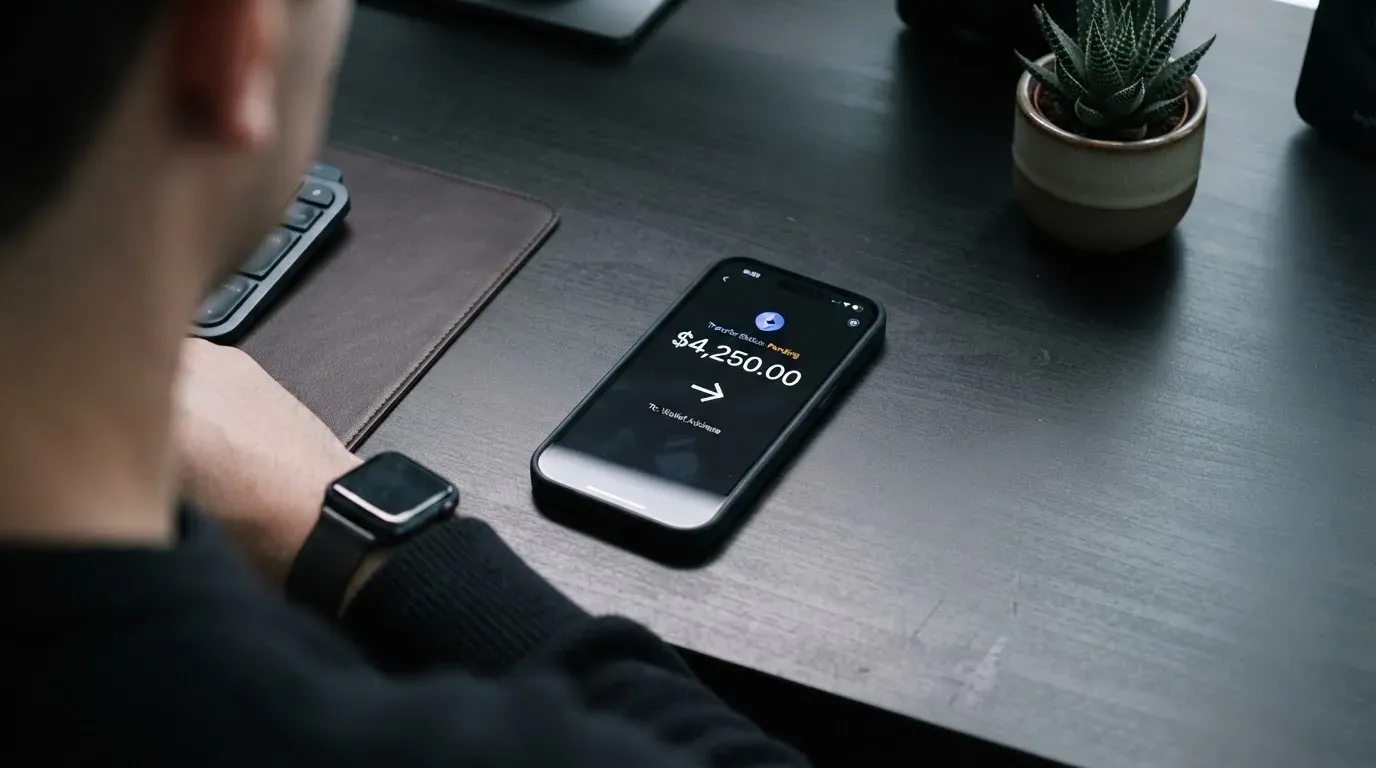
The mechanics carry real risk that has nothing to do with the card. Blockchain transfers are irreversible, so a deposit sent on a network the card provider does not support, or to an address belonging to another network, can be lost entirely or need manual support recovery with no guarantee of success. Before you send anything, match the network on the sending side to the network on the receiving side. Then check what you actually hold: sending a token with no gas balance in the native asset is a dead end, whether you are on an ERC-20 chain or on Tron, where fees are paid through bandwidth and energy and often burn TRX.
If you are holding dollars, you are probably holding USDT or USDC, and the network choice matters more than the coin. USDT has been issued on Ethereum, Tron, Solana, Polygon, Avalanche and others. Circle lists USDC as natively supported on 38 networks as of 16 September 2026, including Ethereum, Solana, Base, Polygon PoS, Avalanche, Arbitrum and Stellar. Circle stopped supporting USDC on Tron in February 2024, so “USDC over TRC20” is not a native option and using that route anyway is asking for trouble.
The chain of custody matters too. Tether says it disables tokens in wallets on the OFAC sanctions list and has frozen funds tied to illicit activity. Stablecoins are convenient and widely used, but they are not censorship-proof.
Paying with it every day
For spending, the card behaves like any virtual card. Apple Pay, Google Pay, Samsung Pay, Alipay and WeChat Pay are supported for offline spending, and the card is managed inside the TokenPocket app. That is a genuinely useful list, because it means you can pay in a shop without handling a card number at all, which is exactly the point of tokenising it: Apple Pay replaces the card number with a device-specific Device Account Number held in the Secure Element, never on Apple’s servers, and each payment uses a one-time dynamic security code.
Where the everyday experience gets rough is refunds. Refunds are credited 15 to 30 business days after the merchant completes its refund process, and chargeback rules are not stated. That is a long window. If a shop takes the money and stalls, you may be waiting more than a month, with no published dispute procedure to lean on.
Some declines are structural and have nothing to do with this card’s quality. A payment card number starts with a six or eight digit issuer identification number that identifies the card-issuing institution, and merchants can look it up to see the institution and country. If the issuer country differs from your billing address, some shops apply extra scrutiny. That is why a card issued in one country can look foreign to a shop in another. Address Verification Service, which compares the numeric parts of the billing address you type with the issuer’s records, is mainly offered in the US, Canada and the UK and is generally unavailable for foreign-issued cards, which can cause declines. Online payments may also trigger 3-D Secure, where the issuer assesses risk and either approves frictionlessly or challenges you with a one-time code or biometric; Visa’s version is Visa Secure and Mastercard’s is Identity Check. Card numbers can also be restricted by the issuer, for example blocked on magnetic-stripe, phone or website use. And a declined authorisation can leave a hold on your funds that stays for days, typically up to seven.
Blocked merchant categories are not stated for this card. That matters if gambling is on your radar, for instance: MCC 7995 covers casinos, betting and lotteries, and many issuers block that category by policy rather than by law, with the blocked list varying by issuer. You will not find out until you try.
What can go wrong
There is no official incident I could find involving the card itself. What I did find was a pattern on the issuer side, and I want to describe it accurately rather than dramatically.
Fiat24 is the customer service of record: [email protected] handles frozen accounts, refunds and lost or stolen keys. The user-side record is poor. Trustpilot for Fiat24 shows 2.2 out of 5 from 8 reviews, read 21 October 2026, every one of them a single star. The complaints logged are unresponsive support between December 2024 and May 2026, funds held or delayed between April 2024 and May 2026, and failed payments or transfers in November 2024 and February 2026. I checked for a Trustpilot page for TP Card itself and found none, which means the absence of complaints about the card is not evidence of a good record; it means nobody has written them.
The company structure adds to the opacity. TokenPocket says it works jointly with a compliant financial institution, described as a Swiss-compliant bank, but licences are not named. Two lines that sound reassuring and are not answers: the entity described as compliant is not identified, and the regulator is not identified. For context on why that matters: an electronic money institution in the EU can issue e-money, payment cards and e-wallets but cannot lend, and MiCA’s rules on e-money tokens applied from 30 June 2024 with the remaining provisions including crypto-asset service provider rules from 30 December 2024, while under Article 48 e-money tokens may be issued only by a credit institution or an electronic money institution. A crypto card often depends on two licences, and the card does not tell you which it holds. Under the EU’s transitional period, providers already operating under national law could continue only until 1 July 2026 or until a MiCA authorisation decision, whichever came first. That date has passed. ESMA keeps an interim register of authorised entities, and that is where I would look before funding anything.
Key loss is the scenario the NFT design handles, and it handles it better than most. Your credentials are Web3 wallet keys rather than an account and a password. If you lose the key, Fiat24 verifies your identity, locks the account and resets it by moving the NFT and the funds to a new Arbitrum wallet; a small fee may apply. If the key is stolen, lock the card and move the funds if you are still logged in, then contact Fiat24. The custody model and whether two-factor authentication exists are not stated.
The general lesson stands regardless of this card. A seed phrase is typically 12 to 24 words and is an unencrypted form of your private key; anyone who obtains it can restore the wallet and spend the funds. Transfers are typically irreversible, and a stolen key has no recovery because the network cannot freeze or return money. Custodial platforms have a real record of failure: Mt. Gox, with about US$350 million reported stolen between 2011 and 2014, Coincheck at about US$400 million in 2018, and the Ronin Network at US$625 million in 2022. And programmes do get shut down. Visa terminated its global agreements with FTX on 13 November 2022 and the FTX US debit card was wound down by its issuer; WaveCrest, a Visa issuer that supplied several crypto card brands, was suspended by Visa in Europe in 2018. A closure typically means a notice period, then spending and loading stop, then you are asked to withdraw what is left. Visa and Mastercard do not issue crypto cards to consumers themselves; they license issuers and can suspend a programme.
And a caution about the part of the money question nobody asks. Digital assets are treated as property for tax purposes in the US, so exchanging them for goods, services or dollars generally produces a taxable gain or loss, measured in local currency at the value on the date of the transaction. Every payment you fund from crypto can be a separate disposal. I am not going to tell you what your obligations are, because that depends on where you live and I am not qualified to advise on it; I am telling you that the tax question exists and that paying with crypto all day creates a long list of small disposals.
What to take instead
None of these is a recommendation, and each comes with its own trade-offs. They are the alternatives I would weigh against TokenPocket, and the comparison is mostly about disclosure, cost structure and how wide the top-up funnel is.
| TokenPocket | MetaMask | KAST | Zeal | |
|---|---|---|---|---|
| Score | 5.8 / 10 | 7.1 / 10 | 6.1 / 10 | 6.1 / 10 |
| Network | Visa in listed European countries and territories, Mastercard across listed Asia-Pacific countries, the UK, Canada and Australia | Mastercard | Visa, virtual and physical, up to 10 cards | Visa, virtual, Apple Pay |
| Issuer named on the pages | not stated | Monovate, card provider Crypto Life | not stated | Gnosis Pay for the programme |
| Entry cost | NFT minting, partly covered, user pays a “small portion” | Virtual free; Metal $199/year | Standard $0, Premium $1,000/year, Private $10,000/year billed annually upfront | not stated |
| Onboarding | Mint an account NFT | Sign-up open in 45 listed countries and territories, proof of residency; US and UK sign-ups temporarily closed per FAQ | Residence shown at KYC, ID from a supported country matters, dual nationals may pass, VPN does not bypass | Issuance depends on eligibility and regional availability; programme live in the EU, UK, Brazil, Colombia, Mexico, Japan, Singapore, the Philippines, Indonesia and Thailand |
| Cashback | none stated; the 1% deposit fee is said to be refunded later through rewards or reduced transaction fees | Virtual 1% in mUSD; Metal headline 3% with a footnote limiting 3% to the first $10,000 then 1%; $FLY bonus 5X and 7X | Standard 1.5% on the first $2,000 a month, Premium 2% on the first $10,000, Private 3% on the first $40,000 | up to 4% in GNO, paid on Gnosis Chain, requires holding GNO in the card Safe |
MetaMask is the one I would look at first, simply because it publishes the most and scores highest. Its weakness is access right now: US and UK sign-ups are temporarily closed per its FAQ, and other regions join a waitlist. Its fees are described as a minimal per-transaction charge with no additional MetaMask fees and no foreign transaction fee, and it names its networks and tokens, which is more than TokenPocket does.
KAST publishes its fee schedule in detail, including a 0.5% to 1.75% foreign exchange fee depending on residence country, transaction country and card programme, a 0.10 USD charge on non-USD transactions under 25 USD, and a 0.50 USD declined-transaction fee. That transparency is worth something even where its tier pricing is steep. Its KYC logic is also unusually explicit about citizenship, dual nationals and the fact that a VPN does not bypass restrictions.
Zeal publishes no fee schedule at all, which is the same problem in a different form. In its favour: no additional FX fee from Zeal itself and conversion at the Visa wholesale rate, with Gnosis Pay fees such as ATM still possible.
Who I would recommend it to
If you already run a TokenPocket wallet on Arbitrum, you live in one of the listed countries, and you want to convert crypto into everyday spending without opening another exchange account, this card does a reasonable job. The 1% load fee is easy to model, the wallet support is broad, and the key-loss recovery route exists, which is more than many cards in this category can say.
If you are choosing a card for the first time because a bank declined you, I would not start here. The unnamed issuer, the unstated limits, the unstated ATM and plastic situation and the weak support record add up to a product where the thing you most need to know is the thing the card does not tell you. MetaMask, KAST or Zeal each publish more about who they are and what you pay, even where their own gates are shut.
Before you fund it, do three things. Check that your country and your citizenship are both acceptable, not just your address. Confirm which network your tokens sit on and whether the card supports it. And send a small amount first, because the difference between a documented refund process and a support inbox is exactly what the complaints describe.
Frequently asked questions
What is the TokenPocket card?
It is a virtual Mastercard or Visa debit card tied to a TokenPocket crypto wallet on Arbitrum. Instead of a normal application, you mint an account NFT that acts as your customer record, and your balance sits in EUR24 or USD24. The card spends that balance through Apple Pay, Google Pay, Samsung Pay, Alipay and WeChat Pay. It is best understood as a crypto balance wrapped in a payment card.
How does the TokenPocket card work?
You download TokenPocket, create or import an Arbitrum wallet, mint an account NFT, complete registration and the card appears in the app. You load it with crypto from your wallet, paying a 1% fee, and then spend the fiat balance as you would from any debit card. The NFT is the account: there is one per wallet, and it is what gets moved if you recover from a lost key.
Is TokenPocket a bank?
Not as far as its public pages say. It describes working jointly with a compliant financial institution, referred to as a Swiss-compliant bank, but it does not name the issuer and does not name any licence. TokenPocket is the wallet brand and programme front end; the issuer is the party that would hold your balance and handle disputes. That entity is not identified on the pages I read.
Who owns TokenPocket?
The card is delivered under the TokenPocket name, and customer service is handled by Fiat24 at [email protected] for frozen accounts, refunds and lost or stolen keys. The FAQ does not name Fiat24 as the issuer. Beyond that, ownership of the card programme is not stated on the public pages, which is worth asking about directly before you load it.
Does the TokenPocket card require KYC?
Registration and verification happen on-chain through your wallet rather than through a document list, which the card does not state. Treat that as screening by another route, not as an absence of it. EU rules require name, address, date of birth, nationality, identity documents, a sanctions check and a politically exposed person check. Your citizenship is screened separately from where you live.
What countries can I use the TokenPocket card in?
A Visa debit card is offered for a list of European countries and territories, with Germany, France, Spain and Switzerland as examples. Mastercard covers Australia, Canada, Hong Kong, Japan, Taiwan, New Zealand, Singapore, South Korea and the UK, among others. For the Americas the FAQ still says “planned for Q2 2025”. If you are elsewhere, assume it does not apply to you today rather than waiting for an announcement.
How much does the TokenPocket card cost?
There is one clear percentage charge: a 1% fee when you deposit cryptocurrency, described as refunded later through rewards or reduced transaction fees. Creating the account NFT is partly covered by TokenPocket and you pay a “small portion” that is not disclosed. The card states no additional fees. Currency conversion fees, ATM fees, wire fees and all daily and monthly limits are not stated.
How do I top up the TokenPocket card?
With crypto, from your TokenPocket wallet on Arbitrum. No bank transfer, card link or cash option is described, and the FAQ names no specific coins or networks. Check the network on both sides before sending, because blockchain transfers are irreversible and a deposit on an unsupported network can be lost. Also keep some ETH in the wallet: gas is paid in ETH, not in your stablecoin.
Is the TokenPocket card safe?
There is no official incident I found involving the card, but the issuer side carries real complaints: Fiat24 shows 2.2 out of 5 on Trustpilot from 8 reviews, all one star, covering silent support, delayed funds and failed transfers. If you lose your wallet key, Fiat24 verifies your identity and moves the NFT and funds to a new Arbitrum wallet, with a small fee possible. The custody model and two-factor authentication are not stated.
Is the TokenPocket card worth it?
For someone already spending crypto on Arbitrum in a supported country, the flat 1% load fee and broad wallet support make it a reasonable second card. For anyone choosing a first card, or choosing after a bank declined them, the unnamed issuer, unstated limits and weak support record make it a harder sell. MetaMask, KAST and Zeal each disclose more, though each has its own access gates.
Wallet cards in the catalogue – cryptocardcatalog
Content created by the «cryptocardcatalog» team