
Plasma One looks generous on the surface, but the country list, the locked-token tiers and the limited complaint history deserve a close read
 Available in US
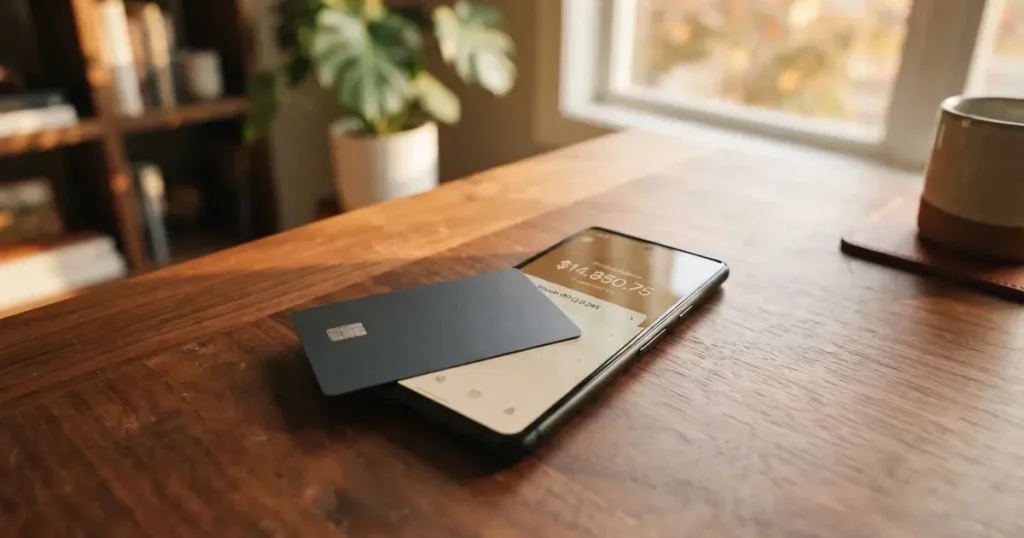
Plasma One is a Visa debit card that spends from a dollar balance, gives cashback in the XPL token and lets you pay from a phone through Apple Pay or Google Pay. The card comes in three tiers: a free Lite tier, a paid Core tier and a top Platinum tier that is unlocked by locking XPL rather than paying a subscription. The headline pitch is straightforward — “add local currency, get dollars” — and the issuer is Rain, with account services provided by Bridge.
The card suits people who already hold stablecoins or XPL, who like the idea of XPL-denominated rewards, and who live somewhere that ordinary bank cards are hard to get. It does not suit readers who are outside the published country list, who want a free ATM allowance, who expect consumer-deposit protection, or who are unwilling to lock a sizeable bag of XPL for a year.
Conditions on this page are current as of October 28, 2026.
Verdict
Plasma One earns 7.1 out of 10. It is a competent crypto card for the right reader, but the geography rules, the locked-token top tier and the thin public complaint history stop it from scoring higher. The score below breaks down how the card performs on each axis.

| Criterion | Mark | Why it matters |
|---|---|---|
| Who can get it | 7 / 10 | Eligibility is decided by where you live, and the country list is restrictive: Belarus, India, Israel, China, Russia, Turkey, Ukraine and Vietnam are out, and so are Cuba, Iran and North Korea |
| Cost | 8 / 10 | Lite is free with the card at $0 and the company states it “does not charge any additional fees”; cross-border is 0%, foreign exchange up to 1% for non-USD, and Core/Platinum are paid or require an XPL lock |
| Top-up options | 7 / 10 | Local currency tops up into a dollar balance; unofficial sources list USDT, USDC and USDG on several networks plus USD, EUR, GBP, MXN, BRL and COP fiat rails, with withdrawals to a bank or wallet |
| Reliability and complaints | 6 / 10 | Card is issued by Rain under Visa, account services by Bridge, and Plasma is not a bank; collateral can be liquidated after non-payment; Trustpilot shows about 3.4 to 3.5 from only two reviews, with a complaint about changed terms |
| Everyday use | 7 / 10 | Virtual and physical Visa, Apple Pay and Google Pay supported; unofficial sources say the physical card is only on Platinum, and the ATM position is not publicly stated |
The total of 7.1 puts Plasma One roughly on par with MetaMask Card (also 7.1) and a notch above TokenPocket’s TP Card (5.8). The audience that gets the most out of it is the reader who keeps a dollar balance anyway, wants XPL cashback, and is willing to lock tokens for the better tiers.
Who will they give you the card
The card is open to adults, but eligibility is decided by where you live, and the country list is not as wide as the marketing pages might suggest.
The official Terms of Service say “geographic, regulatory, and other eligibility limits apply, and are subject to change,” and split account services by residence: US residents, EEA residents and everyone else are each served by a different Bridge entity. Plasma One is built so that residence — not citizenship — drives which Bridge company opens the account, but the Terms of Service Appendix I goes further and lists the jurisdictions where users “located in or connected to” them may be restricted. The list is not presented as exhaustive. Restricted jurisdictions include Afghanistan, Belarus, Bosnia and Herzegovina, the Central African Republic, China (Mainland), DR Congo, Guinea, Guinea-Bissau, Haiti, India, Iraq, Israel, Libya, Mali, Myanmar, Nepal, Nicaragua, Russia, Somalia, South Sudan, Sudan, Syria, Turkey, Ukraine (outside the Crimea, Donetsk, Luhansk, Kherson and Zaporizhzhia carve-out), Venezuela, Vietnam, Yemen and Zimbabwe, plus Cuba, Iran and North Korea. No citizenship rule is published; the International Card Terms simply ask you to attest that you are not a US citizen.
Unofficial sources, mostly crypto-card comparison sites, give a rosier picture but disagree with each other and with the official list. One site says the card is available in 188 countries and restricted in seven (Cuba, Iran, North Korea, Russia, Syria, Ukraine, Venezuela), with Belarus, China, India, Turkey, Vietnam and Nigeria possibly qualifying with proof of residence in a supported country. The same site says access is invite-only, that 31 US states are covered, and that DefiLlama lists only the United States. Another comparison site says 150+ countries excluding the US. The official list above is the one to trust: it places Russia, Belarus and Turkey as restricted, which directly contradicts the more generous unofficial claims. Take the unofficial coverage figures as marketing, not confirmation.
For most readers the practical question is: is my country in the restricted list, and can I prove I live somewhere that is not? If yes, sign-up is open. If no, the card is not for you.
How to get it
The official flow is short. Plasma One describes the path as “get a card you can add to your wallet in minutes,” and the steps end with a virtual card you can use immediately. The company says to “complete identity verification,” set the age bar at 18 or older, allow one Card Account per person, and require that the applicant is not under US, UK or EU sanctions. The exact KYC levels, processing time and the reasons an application might be rejected are not stated on the public pages.
Unofficial reporting (CryptoCardHub, August 2026) fills in the typical KYC document set: legal name, date of birth, government-issued ID, residence and address, a liveness video, and a proof of address in some countries. The same source says automated checks usually finish in under five minutes, with a human review path on request. None of this is confirmed by Plasma One, so it should be treated as a description of what to expect, not a guarantee.
The card itself is a Visa issued by Rain, a Visa Principal Member. Accepted in 180+ countries, the card is a virtual card by default with a physical card available. The default account is a USD account, so even if you top up in another currency, what you spend against is dollars.
The official pages do not describe physical-card delivery: which countries it ships to, how long it takes, what it costs, and what a replacement costs. Unofficial sources say the physical card is currently a Platinum feature and that the Core physical card has not been confirmed as live. The Terms of Service do say that cards are activated through the Plasma One app and that replacement cards may carry new numbers. If a physical card matters to you, do not assume it ships to you: ask support first.
The card is live, in the sense that virtual issuance happens in minutes. Beyond that, the timeline for a physical card in your hand is unclear.
What it really costs
The fee story is split between what Plasma One publishes and what comparison sites report. Plasma One’s own line is that “Plasma One does not charge any additional fees,” and the three tiers — Lite, Core and Platinum — adjust the “fee level” (standard, reduced or none added) rather than the base rate. The Lite card costs $0; the Core and Platinum prices are not stated on the public pages.
Unofficial sources disagree on the Core price. CryptoCardHub (August 2026) says Core is $199 per year, or a 12-month lock of 20,000 XPL, and that Platinum is a 12-month lock of 100,000 XPL (rising to 150,000 XPL after a launch-rate window). Bleap (2026, undated) gives an annual fee range of $0 to $120 per year or an XPL lock. Until Plasma One publishes Core’s price, treat the $199 figure as the more widely cited unofficial number and the $0 to $120 figure as a separate claim.
On the foreign-exchange side, the International Card Terms say non-USD foreign exchange is up to 1% and cross-border is 0%, with 0% APR on purchases, and Platinum “covers the FX fee.” Unofficial reporting gives a more granular table: FX markup Lite 1%, Core 0.5%, Platinum 0%; the Visa network’s own FX charge of about 1% may still apply; USDT and USDG deposits are free; USDC deposits are free up to $30,000 per transaction; USD ACH onramp $1.00 / $0.50 / $0.50 by tier; wire $15 / $15 / $10; USD ACH offramp 0.75% / 0.35% / 0.10% plus an ACH fee. Bleap (2026) gives a different number, saying the FX fee is about 2% on non-USD spend. The fees you actually see in the app are the ones that bind, because the International Card Terms make partner fees visible before you confirm.
The ATM position is the weakest published part. The official terms do not state an ATM fee or allowance. The official terms do say that ATM withdrawals earn no Rewards and that Spending Credit cannot be applied to them. Unofficial sources say ATM fees, withdrawal allowances and limits are not published for any tier, and that the virtual-only Lite card cannot be used at ATMs. DefiLlama notes that limits are not publicly disclosed.
Spending limits are set by Plasma based on collateral and “can be changed or reduced to $0 at any time.” No dollar maximums are published, and cash-like transactions may be restricted.
| Fee or limit | Amount |
|---|---|
| Card issuance, Lite | $0 |
| Annual fee, Core | $199/yr (unofficial) or lock 20,000 XPL for 12 months |
| Tier unlock, Platinum | Lock 100,000 XPL for 12 months (rises to 150,000 XPL after launch) |
| Foreign exchange, non-USD | Up to 1% (Platinum covers the FX fee) |
| Cross-border fee | 0% |
| APR on purchases | 0% |
| ATM fee | Not stated in terms |
| Spending limits | Set by Plasma, reducible to $0 at any time; no dollar maximums published |
Three everyday payments
A coffee in a London café, paid in GBP from your USD account. The conversion is non-USD to USD and the rate includes the up-to-1% FX fee, plus any Visa network FX. If you are on Platinum, the FX fee is covered, but you still see the underlying conversion on your statement.
A Netflix subscription in US dollars, paid with the card directly. No FX fee, no cross-border fee, and 0% APR on the purchase, so the cost is the subscription price plus whatever cashback the tier earns.
A flight booking in euros, paid with a Platinum card. The card statement shows a 0% cross-border fee, no added Plasma FX fee, and the Platinum “up to $600 per year flight cashback” benefit, which offsets some of the cost over the year. The “up to” wording matters: the benefit is capped, and the actual return depends on how you spend across the year.
The takeaway is that on a Lite card, the main avoidable cost is FX, and on Platinum the main avoidable cost is whether you use the card for the categories the rewards actually pay out on. Everyday use is otherwise a standard Visa debit experience.
Top up
The official wording is short: “add local currency, get dollars.” Withdrawals to a bank or wallet are available “anytime” through in-app off-ramps, with the rails depending on your region. The card also mentions USDT for transfers, but does not publish the networks on its public pages.
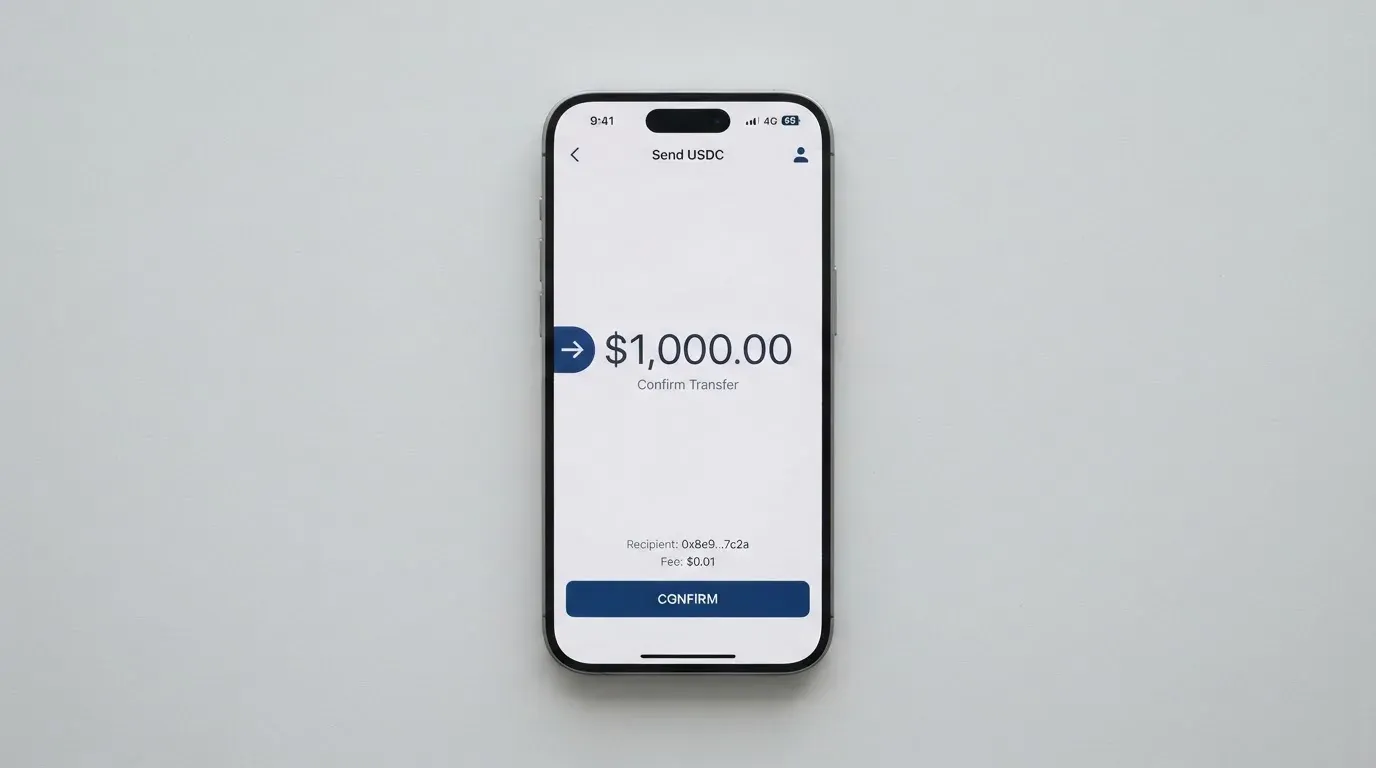
Unofficial sources fill in the network picture. CryptoCardHub (August 2026) says you can deposit USDT, USDC and USDG on listed networks, usually within 5 minutes, and that fiat virtual accounts in USD, EUR, GBP, MXN, BRL and COP convert into the dollar balance. The same source adds that New York residents cannot use the fiat rails. Network-by-network minimums, fees and processing times are not stated officially, and partner fees for FX and bank withdrawal are shown in the app before you confirm. The Cash Out page says withdrawals “may carry processing fees and minimums,” without specifying the amounts.
The locked-tier mechanic affects top-up flexibility, not top-up itself, but it is worth flagging here: the Core and Platinum tiers are unlocked by locking XPL for 12 months, locked XPL cannot be unlocked early, and the account cannot be closed while a lock is active. So if you are topping up to chase a tier, the lock and the lock-up period are real costs to plan around.
For most readers the practical top-up path will be: choose your local currency or stablecoin, pick the supported network, send the funds, wait for them to land (often under five minutes by unofficial report), and spend from the resulting dollar balance. The risks are network-specific: send on the wrong network and the deposit can be lost, because blockchain transfers are not reversible.
Paying with it every day
Apple Pay on iPhone and Google Pay on Android are supported, with availability depending on the region. The card works wherever Visa is taken, and the merchant experience is a normal Visa debit transaction; blocked categories are not published.
Cashback is paid in XPL, the project’s token. The base rates are 2% on Lite, 3% on Core, 4% on Platinum, with an “AI cashback” boost on Core (5%) and Platinum (10%). Platinum also includes up to $600 a year of flight cashback. Rates can change, and the rates that matter are the ones shown in the app for your tier at the time of the transaction.
The mobile app is published on the App Store and Google Play. App store ratings and the number of ratings are not stated on the Plasma One site and were not found in the public pages read for this review, so I cannot tell you how the app is rated on either store. If app quality matters to you, check the store listing for your country before you commit.
If something goes wrong, the team helps dispute unauthorised charges and issues a replacement card. A disputed charge has to be reported within 60 days of the charge posting to the statement. After that window, the dispute path closes. Keep an eye on your statement and on the email tied to the account.
What can go wrong
The first risk is the country list. If your country is on the restricted list — Russia, Belarus, Turkey, Ukraine (with regional carve-outs), China, India, Israel, Vietnam and others — the card is not for you. The official Terms present the list as non-exhaustive, so “not on the list” is not a guarantee; “on the list” is closer to a hard no.
The second risk is that Plasma is not a bank. The company describes itself as a “financial technology company” and says it is “not a regulated financial institution, bank.” Account services are powered by Bridge; the card is issued by Rain under Visa. Stablecoin balances are not bank deposits and not covered by FSCS or FDIC, and the card is a collateral-backed account where collateral can be liquidated after non-payment. The “self-custody” line in the FAQ says “you do” custody — Plasma does not custody assets — so the private-key responsibility sits with you, not the platform.
The third risk is the complaint history. Official incidents: none found. Trustpilot for Plasma One sits at about 3.4 to 3.5 out of 5, from only two reviews; the company has not invited reviews. One critical review says the terms and the arbitration body changed after the reviewer raised issues, and that advertised Platinum-tier benefits are not in the current published tier. A positive review from July 2026 praises the cashback, low fees and virtual card but notes that no physical card had arrived yet and that access was via a private beta with an access key. No Reddit threads were found on the topic. Two reviews are not a representative sample, but the critical review’s point about Platinum benefits not being in the current published tier is worth checking against the latest tier description yourself.
The fourth risk is the tier lock. Locked XPL cannot be unlocked early, and the account cannot be closed while a lock is active. If you change your mind about Platinum, you sit with the lock for the rest of the 12 months, and you cannot wind down the account until it ends. The Core subscription is more conventional: you pay for the year, you keep the benefits, and you do not have to keep the account open.
The fifth risk is the dispute window. Sixty days from the statement date is the official cut-off for reporting a disputed charge, after which the issuer has no obligation to refund. Set a reminder, and keep the receipt.
The sixth risk is the Visa-level risk that affects every Visa crypto card. The card-issuing bank can suspend the programme, change the terms, or wind the card down. Visa’s 2018 suspension of WaveCrest, which closed every WaveCrest-issued crypto programme in Europe, and the November 2022 termination of FTX’s global Visa agreements are two historical examples. Neither affects Plasma One today, but they are reminders that the card lives inside someone else’s licence.
What to take instead
If Plasma One does not quite fit, three cards cover the same ground with different trade-offs.
MetaMask Card scores 7.1 out of 10, the same as Plasma One. Sign-up is open in about 45 listed countries and territories, with proof of residency and a waitlist elsewhere; US and UK sign-ups are temporarily closed per the FAQ. The card is a Mastercard, with a virtual card issued first and a Metal card available for $199 per year. Spending draws directly from the connected wallet on Linea, Base, Monad or Solana, with named tokens including mUSD, wETH, EURe, GBPe, USDC and USDT. The headline cashback is 1% on Virtual and 3% on Metal (footnote: 3% capped at the first $10,000 spent, then 1%), paid in mUSD into the Money Account, with a Blackbird dining bonus on top. FX uses the Mastercard rate with no added MetaMask fee.
KAST scores 6.1 out of 10. Residence decides access, with the country list shown at KYC rather than published; the rules also turn on ID, and a VPN does not bypass the check. The card is a Visa with virtual and physical options and up to 10 cards per user, and the account runs in USD with stablecoin deposits converted 1:1 at a 0% spread. The annual membership is $0 for Standard, $1,000 for Premium and $10,000 for Private. FX is 0% on USD spend, with 0.5% to 1.75% on non-USD depending on residence, transaction country and card programme. Cashback is 1.5% on Standard up to $2,000 a month, 2% on Premium up to $10,000 and 3% on Private up to $40,000, paid in USD when the transaction is authorised.
TokenPocket’s TP Card scores 5.8 out of 10. It runs on Arbitrum, offers a Visa debit for a list of European countries and a Mastercard debit for Australia, Canada, Hong Kong, Japan, Singapore and others, with the Americas “planned for Q2 2025” at the time of writing. Balances are EUR24 and USD24, and the card is virtual (no physical mentioned). The headline is that there is “a 1% fee when depositing cryptocurrency” which is later refunded through rewards, and the FAQ notes that extra fees can come from inter-institution settlement. There is no published cashback.
A quick comparison:
| Card | Score | Issuer | Key cost | Best for |
|---|---|---|---|---|
| Plasma One | 7.1 | Rain (Visa) | $0 Lite, $199/yr Core (unofficial), XPL lock for Platinum | Dollar-balance users who like XPL cashback |
| MetaMask Card | 7.1 | Monovate (Mastercard) | Free Virtual, $199/yr Metal | Wallet-first users who want to spend from self-custody |
| KAST | 6.1 | Visa | $0 / $1,000 / $10,000 a year | Heavy stablecoin users with USD cashback |
| TP Card | 5.8 | Visa / Mastercard | 1% deposit fee, refunded later | TokenPocket wallet users on Arbitrum |
If you want a wallet-first experience with self-custody, MetaMask Card is the closer match. If you want higher USD cashback and are willing to pay a tier fee, KAST is the better fit. If you are already inside the TokenPocket wallet on Arbitrum, the TP Card is the lowest-friction choice.
Who I would recommend it to
Plasma One fits a specific reader well. If you keep a dollar balance anyway, want cashback in XPL, are happy to lock XPL for 12 months to unlock Core or Platinum, and live in a country that is not on the restricted list, this is a competitive card. The 0% cross-border fee and 0% APR on purchases are a clean baseline, and the Platinum tier’s covered FX fee plus flight cashback is genuinely useful if you travel.
I would not recommend it to readers in the restricted list, to readers who need a free ATM allowance (there is no published ATM fee or allowance for any tier), to readers who expect their balance to be covered like a bank deposit (it is not), or to readers who are not willing to lock a meaningful bag of XPL for the better tiers. For those readers, MetaMask Card, KAST or TP Card will be a better fit.
Before you sign up, check three things against the latest public pages: confirm your country is not in Appendix I, look at the current published Core fee in the Help Center, and read the dispute and closure sections of the Terms of Service so you know what happens if your account is closed while a lock is active.
Frequently asked questions
What is the Plasma One card?
The Plasma One card is a Visa debit card that spends from a dollar balance, gives cashback in the project’s XPL token, and is available in three tiers: Lite (free), Core (paid or XPL-locked) and Platinum (XPL-locked). The card is issued by Rain, with account services powered by Bridge, and is available as a virtual card that you can add to Apple Pay or Google Pay within minutes.
How does the Plasma One card work?
You add local currency or a supported stablecoin to the card, the platform converts it into a USD balance, and the card spends from that balance. Cashback is paid in XPL, and you can withdraw your balance to a bank or wallet through in-app off-ramps where available. The card behaves like a pre-loaded Visa debit, so it cannot overdraw.
Is Plasma One a bank?
No. Plasma describes itself as a “financial technology company” and says it is “not a regulated financial institution, bank.” Account services are powered by Bridge and the card is issued by Rain, a Visa Principal Member. Stablecoin balances are not bank deposits and are not covered by FSCS or FDIC.
Who owns Plasma One?
Plasma operates the card programme, with account services by Bridge and card issuance by Rain. The Terms of Service name Third National in the defined terms and Rain in a footnote, which is consistent with the Visa Principal Member arrangement. The wider ownership of Plasma as a company is not described on the public pages read for this review.
Is the Plasma One card available in my country?
Eligibility is decided by where you live, and the restricted list in the Terms of Service Appendix I includes Afghanistan, Belarus, Bosnia and Herzegovina, the Central African Republic, China (Mainland), DR Congo, Guinea, Guinea-Bissau, Haiti, India, Iraq, Israel, Libya, Mali, Myanmar, Nepal, Nicaragua, Russia, Somalia, South Sudan, Sudan, Syria, Turkey, Ukraine (outside the regional carve-out), Venezuela, Vietnam, Yemen and Zimbabwe, plus Cuba, Iran and North Korea. The list is not exhaustive. If your country is not on the list and you can prove residence, you are likely eligible; if it is, the card is not for you.
How do I top up the Plasma One card?
The official line is “add local currency, get dollars.” Unofficial sources say you can deposit USDT, USDC and USDG on listed networks, usually within 5 minutes, or top up via fiat virtual accounts in USD, EUR, GBP, MXN, BRL and COP. Withdrawals go to a bank or wallet through in-app off-ramps where available, and partner fees are shown in the app before you confirm.
Does the Plasma One card require KYC?
Yes. The official pages say to “complete identity verification” and to be 18 or older, and the International Card Terms ask you to attest that you are not a US citizen. Unofficial reporting describes the typical document set as legal name, date of birth, government ID, residence and address, a liveness video and a proof of address in some countries.
How do I add the Plasma One card to Apple Pay or Google Pay?
Apple Pay is supported on iPhone and Google Pay is supported on Android, with availability depending on the region. The card is added through the wallet app on the device, using the virtual card you receive in the Plasma One app. If your region is not covered, the wallet will not offer the card.
Is the Plasma One card free?
The Lite tier is free at the card level ($0 issuance) and the company says it “does not charge any additional fees,” with cross-border at 0%, non-USD foreign exchange up to 1% and 0% APR on purchases. The Core and Platinum tiers are paid or require an XPL lock; unofficial sources give Core as $199 per year or a 12-month lock of 20,000 XPL, and Platinum as a 12-month lock of 100,000 XPL (rising to 150,000 XPL after launch).
Is the Plasma One card safe?
Self-custody is built in: the FAQ says “you do” custody, and Plasma does not custody assets, so the private-key responsibility sits with you. The platform publishes a PCI DSS v4.0.1 Level 1 Service Provider status and offers instant card freeze, in-app account lock, 24/7 support and 3-D Secure where applicable. The risks to weigh are the lack of deposit protection (stablecoin balances are not FSCS- or FDIC-covered), the collateral-liquidation mechanic on non-payment, and the dispute cut-off at 60 days from the statement date.
Wallet cards in the catalogue – cryptocardcatalog
Content created by the «cryptocardcatalog» team