
HostFi card, read carefully before you load it
 Available in US

HostFi is a fintech app that advertises a virtual Visa or Mastercard, fundable with fiat or with digital assets, with an emphasis on the Nigerian market. The idea is simple: a card you can mint inside an app, top up from your balance or your wallet, and spend wherever a Visa or Mastercard is accepted. If you live somewhere an ordinary bank card is hard to get, that pitch is genuinely attractive. The trouble is that the public information about the product is thin. The card detail page on the site carries a “Coming soon” badge as of late October 2026, the App Store listing is in the Nigerian storefront, and the public pages do not publish a fee schedule, an issuing bank, a list of supported coins or networks, an ATM policy, country eligibility, or how disputes are handled. This review walks through what is on the public record, what is simply not stated, and where that leaves a careful reader.
Conditions are current as of October 28, 2026.
Verdict
HostFi scores 4.3 out of 10 in our rating. The number is not a verdict on whether the team is sincere; it is a verdict on how much of what a cardholder needs to know is actually published. For a payments product the things that matter most are the things HostFi does not say: the cost of issuing the card, the cost of spending it, the cost of converting crypto to fiat, ATM access, daily and monthly limits, country eligibility, the issuing bank, the licence, and the dispute path. Without that, anyone thinking of putting meaningful money in is being asked to take a real risk on a “Coming soon” label.
The card fits a narrow profile. If you are a Nigeria-based user, comfortable with virtual cards only, prepared to fund the balance with Naira from a Nigerian bank or with crypto that the app will convert for you, and you are happy to accept that several material terms are not public, then HostFi is in the running. If you are outside Nigeria, if you need a physical card, if you want published fees, an explicit licence, a known issuer, or a chargeback policy you can read before you sign up, then this is not the card for you.
| Criterion | Mark | Why it scored this way |
|---|---|---|
| Who can get it | 4 / 10 | Only “Some products are available only in selected countries” is published; App Store and terms are Nigeria-focused. |
| Cost | 5 / 10 | No fee schedule is published; nothing about issuance, conversion, FX or ATM. |
| Top-up options | 4 / 10 | “Fiat or digital assets” is the only line; coins and networks are not named. |
| Reliability and complaints | 5 / 10 | No licences or issuing bank are published; no complaints found; App Store rating 4.3 from 89 ratings (Nigeria). |
| Everyday use | 3 / 10 | Virtual cards only, Visa or Mastercard; wallets, ATM and rewards programme are not in the open. |
| Total | 4.3 / 10 | Limited public information for a payments product, and the card is still labelled “Coming soon” on the site. |
Who HostFi will issue a card to
The official site says only that “Some products are available only in selected countries”, and does not list which countries those are. The legal terms are governed by the laws of Nigeria. The App Store listing for the iOS app is the Nigerian storefront, and the release notes mention Naira virtual cards. Taken together, the public record points to Nigeria as the primary market; the site does not confirm or deny availability elsewhere.
For anyone outside Nigeria, the honest answer is that the public pages do not say. The signup form is not something I tested end to end, because the card detail page is still marked “Coming soon” and the company has not published a country list. If you are a non-Nigerian reader, do not assume the product is open to you just because you can install the app; assume the opposite, and only change your mind if HostFi confirms in writing during onboarding.
The App Store description says the app lets users create several cards and fund them with fiat or digital assets. It does not say what identity documents, proof of address, age checks or KYC steps are required to actually obtain a card, and the company has not published a KYC policy on its site. So eligibility, beyond the country question, is also not stated on the public pages.
The bottom line is that the parts of the answer that should be easy are not. The card could be excellent for a Nigerian user with a bank account and a small crypto balance, and closed to everyone else; we simply do not know from the public record.
How to get a HostFi card
The flow as described by the App Store listing is: install the HostFi app on iOS or Android, sign up, complete any checks the app asks for, choose between a virtual Visa or a virtual Mastercard, choose your preferred currency, and the card is created in the app. There is no physical card option. There is no mention of card delivery because there is nothing to deliver.
The things the official pages do not say include:
- whether KYC documents are required, and which ones
- the age threshold (typical industry default is 18+ for prepaid and debit cards, but HostFi does not state this)
- whether there are KYC tiers, with different limits for verified and unverified users
- what the activation steps are after the card is generated
- whether the card is single-use, multi-use or capped at a small number
For a person reading this page, the practical consequence is that you cannot plan in advance how long sign-up will take, what you will need to hand over, or what your first card will look like in terms of features. You can only install the app and find out. That is fine for a low-value experiment and is not fine for a card you intend to depend on.
What a HostFi card really costs
The honest answer here is that the public pages do not say. There is no fee table on the site, no pricing page, and no schedule of conversion or FX fees. The App Store listing does not list fees either. So when this review walks through the everyday costs you would want to budget for, every line in the cost table is published as “not stated”. That is itself a finding: a card whose issuer has chosen not to publish its prices is a card you have to test in small amounts.
| Fee or limit | What HostFi publishes |
|---|---|
| Card issuance | Not stated |
| Monthly fee | Not stated |
| Crypto-to-fiat conversion fee | Not stated |
| Foreign-exchange (FX) fee on non-card-currency spend | Not stated |
| ATM withdrawal fee | Not stated |
| Daily spending limit | Not stated |
| Monthly spending limit | Not stated |
| Card currency | “Choose your preferred currency” (currencies not named); Naira virtual cards mentioned in App Store release notes |
| Tiers | Not stated |
Three everyday situations show why the missing numbers matter.
- Paying a Naira bill from your Naira balance. This is the simplest case. The app converts a held Naira balance into a card authorisation, and the merchant is paid. The fee should, in a well-disclosed product, be the spread between the app’s internal rate and the interbank rate, plus any flat fee. HostFi does not state the spread or the flat fee, so you cannot tell in advance whether paying rent from the app is cheaper or more expensive than paying it from a regular bank app.
- Paying a US-dollar subscription from a USDC balance. If the app does support USDC, the card will need to convert USDC to USD at the time of authorisation. The fee would normally be a conversion percentage plus any card-network FX margin. HostFi does not state either. If the spread is, say, unknown, that is a difference a month and a year, and HostFi gives you no way to check the number before you commit.
- Paying in a third currency while the card holds USD or Naira. This is the path that involves both a conversion and an FX step. Both fees are unpublished. Card-network FX is typically a small percentage added to a wholesale rate, and a crypto-to-fiat spread sits on top of that. With nothing published, you cannot budget the cost, and the only way to find out is to spend and inspect the statement.
A reader thinking of relying on this card for regular bills should treat the cost as unknown and put a small amount of money through it first, looking carefully at each receipt, before loading anything substantial.
How to top up a HostFi card
The App Store description is the only place a top-up method is described, and it is brief: you can fund cards with fiat or with digital assets. The site does not list which coins, which networks, or which fiat rails are supported, and does not name a minimum or maximum top-up. The release notes mention Naira virtual cards, which is consistent with Naira being a supported funding currency, and they mention Naira withdrawals to bank accounts, which suggests the app also has a banking-side flow that runs alongside the card.
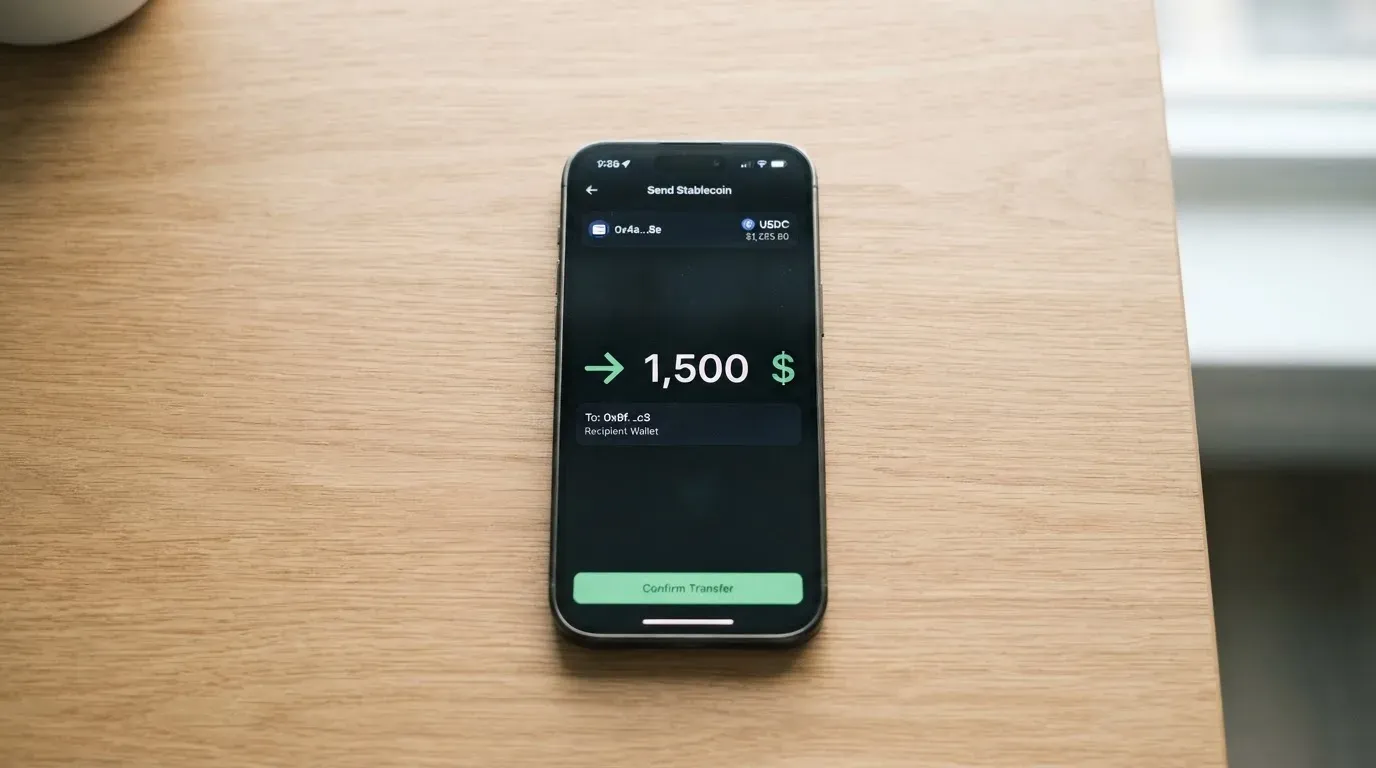
For someone funding with crypto, the implications are important. The official pages do not name coins such as USDT, USDC, BTC or ETH, and they do not name networks such as Ethereum, Tron, Solana, Polygon, Base or Arbitrum. If you fund with a coin or on a network the app does not recognise, the funds can be lost or stuck in manual recovery, because blockchain transfers are irreversible by design. A reader should not send crypto to a HostFi address until the app has clearly told them which coin, which network and which address to use, and should not paste a copied address without checking the first and last characters against the app.
For someone funding with fiat, the same caveat applies in a softer form. The supported bank rails, the speed of the credit, the minimum top-up and any fee on the way in are not published. If you are topping up from a Nigerian bank account in Naira, the most likely path, expect to confirm the rails inside the app rather than from the website.
A practical rule for any top-up is to send a small test amount first, confirm it is credited and available to spend, and only then load the amount you actually intended. That is good practice with any provider that has not published network and fee details, and it is especially important with one whose card detail page still says “Coming soon”.
Paying with HostFi day to day
The published story for daily use is small. You get a virtual Visa or a virtual Mastercard in the app, with a currency you choose at creation time. Naira is the only card currency the App Store release notes mention by name. The site mentions a points-based rewards programme and a referral programme (“Invite friends to HostFi and earn rewards”), but it labels the rewards block “Coming soon”. There is no published cashback percentage, no published merchant category exclusions, no published tokenisation support for Apple Pay or Google Pay, no published 3-D Secure behaviour, and no published ATM access because there is no physical card.
For the person reading this, that means the everyday surface area is narrow. You can spend online and, in many cases, in physical stores where a virtual card can be added to a mobile wallet and used at the terminal, provided the app supports tokenisation. Whether the HostFi app does support tokenisation is not stated on the public pages. If it does, you can pay at contactless terminals with the card behind your phone or watch. If it does not, you are limited to entering the card number at checkout on websites and apps. There is no indication either way in writing.
The App Store rating is 4.3 out of 5, from 89 ratings in the Nigeria storefront, read on 21 October 2026. That is a small sample, and storefront ratings are not a substitute for a published fee schedule, but it is the only public signal we have on how the existing user base experiences the product. The Google Play rating is not stated on the public pages, so for Android users there is no parallel data point to look at.
Help is available through a help centre and a contact email link on the site. Hours, languages and response-time targets are not stated.
What can go wrong
There are five risk areas worth taking seriously, and the first three are not hypothetical; they are direct consequences of what is and is not published.
- Unpublished fees. A card without a fee schedule lets the provider change its terms in a way you cannot predict. You can only find out the cost by spending and looking at receipts. The mitigation is to keep the balance low, and to reconcile every statement line by line.
- No published licence or issuing bank. HostFi Services Ltd, trading as Host Finance, is named in the footer. The site lists an address in Wilmington, Delaware, and the App Store developer is “HostFi Services Limited”. The terms are governed by Nigerian law. No card licence and no issuing bank are named. That means a cardholder has no clear regulator to escalate to, and no public BIN to trace the card’s issuer through. For a card that holds real money, that is a meaningful gap.
- “Coming soon” label. As of 21 October 2026, the cards section on the HostFi site is marked “Coming soon”. The App Store describes a working product, but the discrepancy between the public website and the app listing is itself a risk signal. Either the card is generally available, in which case the label is wrong, or it is still in limited release, in which case the reader should know that.
- Counterparty risk on a custodial platform. HostFi holds the balance and runs the conversion. The site describes platform-wide security as “Cold storage, multi-factor authentication, and advanced encryption”. That is the kind of language every custodial platform uses, and the wording tells you nothing about whether customer funds are segregated, whether they are insured, who the custodian is, or what happens in a wind-down. Without a published safeguarding or segregation policy, a reader has to assume the worst.
- No complaints history, but also no public track record. A targeted search on 21 October 2026 for HostFi reviews on Trustpilot and Reddit returned no relevant results, only the unrelated brand “HostFaddy”. There is no Trustpilot page for HostFi. The card is too new, or too small, to have a public complaint pattern. That is not the same as a clean record; it is the absence of one.
- No dispute path published. The public pages do not describe how to dispute a charge, what evidence to send, how long the process takes, or whether the card is covered by chargeback rules at all. A cardholder who needs to recover money from a failed merchant has no procedure to follow.
For a person who is a Nigeria-based user with a small balance, comfortable with the idea that the product is still in the “Coming soon” phase, the risk picture is one of incomplete information. For a person who intends to load a salary’s worth of funds, the risk picture is one of unmitigated exposure.
What to take instead
If HostFi’s gaps are deal-breakers, three cards in a similar space are worth a look. None of them is a perfect substitute, because none of them is a perfect product, but they each publish more than HostFi does.
| Card | Score | Form factor | Networks | Funding | Notable for |
|---|---|---|---|---|---|
| Cardex | 5.6 / 10 | Virtual and physical | VERVE, Visa, Mastercard, UnionPay | USDT, USDC, BTC wallets (networks not stated) | Wide network coverage; AI-marketed real-time conversion rate, fee percentage not published |
| CardFlow | 4.9 / 10 | Virtual USD Mastercard | Mastercard | BTC, USDT, ETH or Naira bank transfer | Free card creation; Nigeria-focused, aimed at Nigerians and global users |
| HyperCard | 4.7 / 10 | Prepaid HyperCard | Network not stated | USDT, BTC, ETH converted to USD or EUR on the card | Acceptance in more than 176 countries; Google Play/App Store coverage |
What this comparison shows is that, even in this corner of the market, very few products publish full fee schedules or licensing details. Cardex markets a real-time conversion rate but does not publish the percentage fee. CardFlow says creating a card is free, but does not publish the spending fees. HyperCard’s App Store page lists no fees at all. HostFi is unusual mainly in that it does not even publish the “free to create” line. The other three at least let you compare the headline cost, and that is what most readers will use to narrow their shortlist.
If your priority is a published fee schedule and a known issuer, look beyond these four. Larger crypto-card programmes from regulated issuers publish terms in long-form, name their banking partner, and disclose their licence. They tend to be more expensive and more invasive on KYC, but the trade is real.
Who I would recommend HostFi to
HostFi is worth a look if you are based in Nigeria, you already have the app installed, you are comfortable with a virtual-only card, and you want to fund it with Naira from your bank and, occasionally, with crypto that you already hold. Treat the card as a small-balance spending tool rather than a primary card, keep enough Naira or stablecoin in the balance to cover a couple of weeks of spending, and reconcile every statement against the app’s transaction history so that you have your own private fee record while the company does not publish one.
HostFi is not for you if you are outside Nigeria and the company has not confirmed availability in your country, if you need a physical card, if you want a published fee schedule you can compare against alternatives, if you need an explicit dispute and chargeback policy, if you want a named issuing bank and a named regulator, or if the “Coming soon” label on the site makes you uncomfortable. In any of those cases, pick one of the alternatives above, or pick a larger, more established programme with a published terms document.
The most important thing to do before loading meaningful funds is to read the in-app terms at the moment of sign-up, because the public site does not contain them. If the in-app terms are not detailed, treat that as a signal, not as a green light.
Frequently asked questions
What is the HostFi card?
The HostFi card is a virtual Visa or Mastercard created inside the HostFi app, with a currency you choose at sign-up. The site describes it as fundable with fiat or with digital assets, and the App Store describes the app as Nigeria-focused. The cards section on the official site carries a “Coming soon” label as of late October 2026, so treat the product as still in limited release.
How does the HostFi card work?
You install the HostFi app on iOS or Android, create a virtual card, choose Visa or Mastercard, choose your preferred currency, fund the card from a bank account or from crypto, and then spend where Visa or Mastercard is accepted. The exact mechanism for tokenisation, ATM access, mobile wallet support and dispute resolution is not published, so the practical experience is shaped by what the app does at sign-up.
Is HostFi a bank?
HostFi is not described as a bank. The site names HostFi Services Ltd, trading as Host Finance, and the terms are governed by the laws of Nigeria. No bank licence, e-money licence, payment-institution licence or card-issuer licence is named on the public pages, and the issuing bank for the card is not stated. Treat the company as a card programme manager, not as a bank, until the company says otherwise.
Who owns HostFi?
HostFi Services Ltd, trading as Host Finance, is named in the site footer. The App Store developer is “HostFi Services Limited”. The site lists an address at 1007 N Orange St, 4th Floor, Wilmington, DE 19801, and the legal terms are governed by Nigerian law. The ownership structure behind the company is not published.
Is the HostFi card available in my country?
The official pages do not publish a country list. The site says only that “Some products are available only in selected countries”, the App Store listing is in the Nigerian storefront, and the legal terms are governed by Nigerian law. If you are outside Nigeria, assume the product is not available to you unless HostFi confirms in writing during onboarding.
Does the HostFi card require KYC?
The site does not publish a KYC policy, the App Store description does not list required documents, and the company has not stated an age threshold. Most regulated prepaid and debit cards require identity documents and an address check, and most set the minimum age at 18, but those are industry defaults, not HostFi statements. Confirm in the app at sign-up.
How do I top up a HostFi card?
According to the App Store, you can fund cards with fiat or with digital assets. The site does not name specific coins, networks, banks or minimums. The release notes mention Naira virtual cards and Naira withdrawals to bank accounts. Until the in-app funding flow tells you the specific coin, network and address to use, do not send crypto to the platform, because blockchain transfers are irreversible.
Is the HostFi card free?
The site does not publish a fee schedule. The App Store description does not list fees either. The cost of issuance, the cost of conversion, the FX margin and any ATM or inactivity fee are all not stated. The only safe assumption is that there is some cost, and that you should keep the balance small and reconcile every statement until you have your own fee record.
Can I add the HostFi card to Apple Pay or Google Pay?
The public pages do not say. There is no published statement that HostFi supports tokenisation, and there is no published statement that it does not. If tokenisation is supported, the card can be added to Apple Pay or Google Pay for in-store contactless payments through the phone. If it is not, spending is limited to online checkouts where the card number is entered manually. The in-app card detail screen is the place to check.
Is the HostFi card safe?
The site describes platform-wide security as “Cold storage, multi-factor authentication, and advanced encryption”. There is no published statement on whether customer funds are segregated, who the custodian is, whether funds are insured, or how disputes are handled. The product is new enough that there is no public complaint history. Treat the product as a small-balance spending tool until the company publishes a safeguarding policy and a dispute procedure you can read.
Virtual cards in the catalogue – cryptocardcatalog
Content created by the «cryptocardcatalog» team