
The virtual card that markets itself to ad buyers, and answers almost nothing about itself
 Available in US

Leading is a virtual payment card aimed at media buyers and advertisers who need card numbers for ad platforms and online services. The card is easy to find, the feature list is short, and most of the things you would want to check before spending money — who issues it, what it costs, which coins it accepts, whether you have to prove who you are — are either missing from the public pages or only available from third-party sites that the company has not confirmed. That is the core of my experience reading this card: not that it is obviously bad, but that it is hard to check.
I scored it 4.4 out of 10.
The conditions described here are current as of October 28, 2026.
Verdict: 4.4 out of 10, and the low score is mostly about missing information
| Criterion | Mark | Why |
|---|---|---|
| Who can get it | 5 / 10 | No countries named; the platform presents itself as being for media buyers and advertisers; eligibility rules are not disclosed |
| Cost | 3 / 10 | Unofficial figures: $6 issuance, $5 a month per card, 4.2% on crypto deposits, free FX, $0.2 decline fee — none of it confirmed by the card |
| Top-up options | 5 / 10 | Cryptocurrency, SEPA, SWIFT and wire transfers; the coins themselves are not named on the page (an earlier check found BTC and USDT) |
| Reliability and complaints | 5 / 10 | Owner, registration and issuer are not named; Trustpilot shows 4.3 from 11 reviews, including one account closed with a high balance in May 2025 |
| Everyday use | 4 / 10 | Virtual only; Apple Pay is mentioned, Google Pay is not, and one third-party source says neither works |
| Total | 4.4 / 10 |
Who this suits: someone who already runs ad accounts, already moves crypto, and needs a card number that appears in a merchant’s system today rather than a card they will use for years. If your whole workflow is buying ads, a virtual number is genuinely the right shape of product, and Leading sells exactly that.
Who it does not suit: anyone choosing a card for ordinary spending, anyone who cannot get a normal bank card and needs a fallback that is dependable, and anyone who cares about chargebacks. A virtual-only card with no named issuer and no published fees is a tool, not a safety net. That distinction is the whole review, and the sections below are the evidence for it.
Will they give you the card?
The card’s own public pages do not say who is eligible. No countries are listed, and there is no explanation of who owns Leading, where it is registered, or which institution issues the card. That matters more than it sounds. Issuers differ sharply in how they handle risk, and if a card is issued under a bank’s or e-money institution’s licence, some of that licence’s protections travel with it — none of which you can read here.
The platform describes its own audience as media buyers and advertisers who need virtual cards for ads. That is the clearest statement of purpose anywhere on the site, and it is a coherent one: ad platforms often reject prepaid or unfamiliar BINs, and a card number created instantly with a custom billing address solves a specific, annoying problem.
That framing also explains what you do not find. There is nothing about everyday banking, no savings, no credit, no physical card. If you were hoping for something in the gap left by a declined bank application, this is not that.
For a broad background point that is worth holding on to: a card number begins with a 6- or 8-digit BIN that identifies the issuing institution, and merchants can look that code up to see the issuer and its country. A card issued in one country can therefore look foreign to a shop in another, and some merchants decline on that basis alone. When you are evaluating any card whose issuer is unnamed, this is exactly the information you are missing.
How to get it
Sign-up runs through a form on the site, and the footer links a “KYC & AML Policy” whose content I did not read. That link existing tells you the provider recognises the concept; it does not tell you what you will be asked for. The card’s public pages do not state what identity checks apply, at what level, or whether any exist beyond that policy document.
This is the single biggest open question in the review, so let me put it plainly. A third-party site, cryptocards.so, undated and not confirmed by the card, lists no KYC at all — no email, no phone, no ID, no proof of address, no selfie. I cannot verify that, and I would not treat it as a promise. It is one unconfirmed source describing a product I could not inspect directly. The company’s own policy link, which I did not read, is the more authoritative document and it points the other way.
You may also be in a different position depending on where you are from. In the EU, customer due diligence covers name, address, date of birth, nationality and identity documentation, a sanctions check, the purpose of the relationship, and politically exposed person status. In the US, the customer identification programme requires name, date of birth, address and an identification number. Nationality is screened separately from residence, because sanctions screening is often applied to citizenship and country of birth as well as address. None of that is card-specific, and it is why “no KYC” claims deserve scepticism: a provider that wants to work with regulated institutions is usually constrained by what those institutions will accept.
What I can confirm about the card itself: it is virtual, with instant issuance, a custom billing address, 3-D Secure support, and what the page calls more than 50 reliable BINs. A third party describes the network as Visa. A physical card is not mentioned, and neither is any tier structure.
Fees: what this card costs, and what nobody has published
Here is the honest summary: Leading’s official pages do not state its costs. No issuance fee, no monthly fee, no conversion percentage, no ATM policy, no limits — none of it appears. Everything below is from an unofficial source and none of it is confirmed by the card.

| Fee or limit | Value | Source |
|---|---|---|
| Issuance | $6 | Not confirmed by the card (cryptocards.so, undated) |
| Monthly fee | $5 per card | Not confirmed by the card |
| Crypto deposit | 4.2% | Not confirmed by the card |
| Currency exchange (FX) | Free | Not confirmed by the card |
| Declined payment | $0.2 | Not confirmed by the card |
| ATM | Free | Not confirmed by the card |
| Daily, monthly and ATM limits | “Unlimited” | Not confirmed by the card |
I am including this table precisely because it is unreliable, and you should read the numbers as a starting point for questions rather than as a price list. A third-party page that lists a product’s fees usually does so because somebody asked; it is not obliged to stay accurate, and a provider can change pricing without updating anyone else’s site. My advice: before you fund anything, write down the fee you believe you are paying and check it against what the platform shows you at the point of deposit.
Three everyday payments, to show you where the numbers bite:
A €20 subscription. This is the case the card is built for, and it is also the case where the monthly fee hurts most. If $5 a month is right, then paying five times a year costs the same as one of those subscriptions. A card that is cheap per transaction and expensive per month only works if you use it every month. Ask whether you will.
A $200 ad spend from a crypto balance. The 4.2% deposit fee, if it applies, would be $8.40 on that deposit — which sounds tolerable until you notice it is charged on the way in and the money is already converted by the time you see it. Whether the FX fee being free offsets this depends on the pair you are converting from, and the card does not name the coins, so you cannot model it in advance.
A payment that gets declined. The $0.2 decline fee is small. But a declined payment is often a signal, and a card that charges you for the signal is a card that charges you for the category of problem you are most likely to have — the unfamiliar BIN, the foreign billing address, the prepaid card the merchant does not accept. The fee is not the cost. The retries and the frozen funds are the cost. A declined authorisation can leave a hold on your balance that stays for days, typically up to seven.
The limits line deserves its own scepticism. “Unlimited” daily, monthly and ATM limits are plausible for a virtual card with no ATM, and they are also the kind of claim that turns out to mean “no limit published”. Either way, an unpublished limit is not a promise you can rely on when a large ad budget is running through the account.
Two more things are simply not stated: the currency the card holds and any tier structure. If you are budgeting in euros or naira and the card runs in dollars, your own bank’s conversion cost lands on top of everything above.
Top up: four rails, unnamed coins
Leading accepts cryptocurrency, SEPA, SWIFT and wire transfers. That is the funding list. The specific coins are not named on the page; an earlier check I made found BTC and USDT, which I can offer as context but not as a confirmation. A 4.2% fee on crypto deposits is reported by the third-party source and not confirmed by the card.
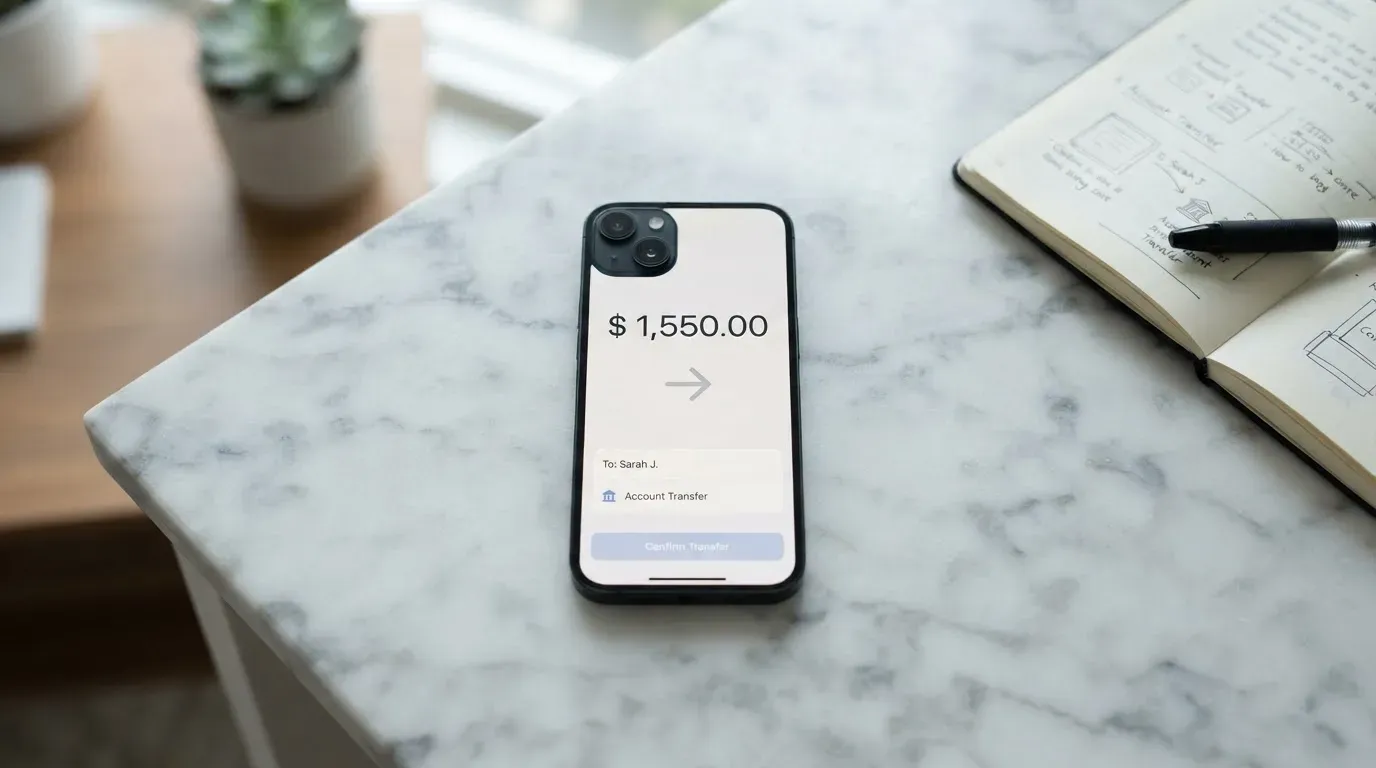
If the SEPA, SWIFT and wire options matter to you — and for someone who cannot get a normal card, they often do — then this card is more flexible than a typical crypto-only card. Bank rails mean you are not forced to hold crypto to spend money. That is a real advantage over most of the field, and it is the part of the pitch I find most convincing.
It also raises the question you should ask first: which currency do the wire rails arrive in, and what does the provider do with them once they land? An electronic money institution in the EU can hold balances across the region under one licence and must safeguard customer funds in segregated accounts or insure them — but safeguarded e-money is not a bank deposit and may not sit inside a deposit guarantee scheme. And crypto cards routinely depend on two licences rather than one: MiCA covers the crypto side of custody and transfer, while the card itself is regulated separately under e-money and payment-services law. I found no evidence either way about Leading’s structure, which is itself the point.
On the crypto side, the network question is the one that quietly loses people money. Blockchain transfers are irreversible, so a deposit sent on a network the provider does not support, or to an address belonging to a different network, can be gone and may need manual recovery with no guarantee. Fees on the network itself are charged by the blockchain, not by the card. If you are paying in USDT, note that gas is paid only in ETH on Ethereum, and that USDC over Tron is not a native option since Circle stopped supporting it there in February 2024.
Paying with it every day
The card is virtual only. There is no physical card mentioned, so “every day” here means card numbers typed into checkout forms, subscriptions, and ad platforms — not a card in a wallet at a supermarket.
On mobile wallets the picture is contradictory, and you should treat it as unresolved. The card’s page mentions Apple Pay, so cards can be linked to Apple Pay. Google Pay is not mentioned. But the third-party source says Apple Pay and Google Pay are not supported at all. I cannot reconcile these from the outside. If a phone wallet matters to you, assume it does not work until you see it working in your own account.
Three other everyday features are simply not stated: rewards (an unofficial source says cashback at 0%, which is nothing), the app experience, and the dispute process. That last one is the one I would want to know most about. A chargeback is a refund ordered by the issuer, with reason codes for fraud, duplicate billing or goods not received, and prepaid-card coverage varies widely and should not be assumed. If the card’s balances are custodial and you are dealing with an ad platform that takes your money and delivers nothing, your route to a refund depends entirely on an issuer whose name the site does not publish.
What is confirmed in your favour: 3-D Secure support. That adds an identity check to online payments, where the issuer assesses risk and either approves silently or challenges you with a one-time code or biometric. Visa’s version is called Visa Secure, Mastercard’s is Identity Check.
What is quietly working against you, and always is with this kind of card: address verification. The service compares the numeric parts of a billing address the buyer typed — street number, postcode — against issuer records. It is mainly offered in the US, Canada and the UK and is generally unavailable for foreign-issued cards, which causes declines. If your billing address does not resemble the issuer’s records, expect friction at exactly the moment you are trying to pay for something time-sensitive.
What can go wrong
The account-closure report. I found no official incidents. What I did find is a user report: a 1-star Trustpilot review dated 26 May 2025 says an account was monitored and then closed with a high balance still on it, over claimed prohibited merchant spend — “firstbilling activity”, in the company reply of 29 May 2025. One review is not a pattern, and a reply from the company suggests they engaged with it. But this is the shape of failure that should worry you most on a custodial card: not a failed payment, a frozen balance.
The trustpilot picture is thin and the sources disagree. The Austrian-language page for leadingcards.media, read on 21 October 2026, shows 4.3 out of 5 from 11 reviews. The Swiss-language page shows 4.2 out of 5 from 24 reviews. Those cannot both describe the same review pool, so at least one is out of date or aggregating differently. Either way, this is a small sample — a dozen or two reviews is not a track record. There is also a cost remark, “a bit pricey”, dated 8 June 2026, which is a user’s impression and not a fee schedule.
Nobody is named. The site refers to “LeadingCards”. The owner, the registration and the issuer are not stated. When a card’s provider cannot tell you which institution stands behind it, you cannot check that institution’s register, you cannot see who to complain to, and you cannot tell whether a programme is a regulated product or a marketing front end.
Custodial risk is the default. Control of crypto belongs to whoever holds the key. If the provider holds it, you must trust it completely — and the history of custodial platforms includes Mt. Gox at roughly US$350 million reported stolen between 2011 and 2014, Coincheck at about US$400 million in 2018, and the Ronin Network at US$625 million in 2022. One third-party source notes “no deposit insurance”, which is consistent with a custodial structure.
Programmes end. Visa terminated its global agreements with FTX on 13 November 2022 and the FTX US debit card was wound down by its issuer. WaveCrest, a Visa issuer that supplied crypto card brands, was suspended by Visa in Europe in 2018, closing every programme it had issued. Closures follow a pattern: a notice period, then loading and spending stop, then you are asked to withdraw. I saw a report of a 2026 closure with new loads ending 8 July and spending stopping 8 August — a single unconfirmed source, but the sequence is the one to expect.
Nobody is checking that you are you. A “Dedicated support team” is offered, reachable on Telegram, WhatsApp or the sign-up form, with languages and hours not stated. Fine for a question; not a substitute for a compliance department.
The regulatory clock is running. Under MiCA, e-money tokens may be issued only by a credit institution or an electronic money institution. The transitional period lets providers operating under national law continue only until 1 July 2026, or until they receive or are refused a MiCA authorisation, whichever comes first — a date that has already passed as of this review. ESMA maintains an interim register of authorised CASPs, white papers and non-compliant entities, and it is the first place to look for any provider. Separately, stablecoins are not censorship-proof: Tether says it disables tokens in wallets on the OFAC sanctions list and has frozen funds tied to illicit activity.
And the balances are not deposits. Where an EMI holds customer funds, it must safeguard them, but those are not bank deposits and may not be covered by a deposit guarantee scheme. That is a category fact, not a claim about Leading, and it is worth remembering before you leave a large balance sitting there.
What to take instead
I am comparing on the same basis: what the pages say, and what they leave out. All three alternatives below also lack named issuers in places, and none of them is a recommendation — the point is to show which questions each one answers.
| Leading | Cardex | CardFlow | HyperCard | |
|---|---|---|---|---|
| Score | 4.4 / 10 | 5.6 / 10 | 4.9 / 10 | 4.7 / 10 |
| Who it’s for | Media buyers and advertisers | “One crypto card, 200+ countries” | “Nigeria’s smartest fintech card platform”; Nigerians and global users | Official pages name no countries; App Store says acceptance in 176+ |
| Card | Virtual, instant issuance, custom billing address, 50+ BINs | Debit card on VERVE, VISA, Mastercard, UnionPay; virtual and physical | Virtual USD Mastercard, about 3 minutes | Prepaid; network not stated on the App Store page |
| Cost | Not stated officially | Not stated | Virtual card creation free | Not stated |
| Conversion | Not stated | Real-time crypto-to-fiat at payment, “AI-Powered Conversion Rate” picks a rate; no percentage given | Not stated | Not stated |
| Top up | Crypto, SEPA, SWIFT, wire | USDT, USDC, BTC wallets; networks not stated | Bitcoin, USDT, ETH or Naira transfer | Crypto such as USDT, BTC, ETH in the app |
Cardex scores highest here, at 5.6. Its advantage is real: it publishes a conversion mechanism — real-time conversion at the moment of payment, with a stated scan of global exchange rates to pick the best one — and it offers both virtual and physical cards across four networks. Its gaps are eligibility (“200+ countries” with no exclusions list) and an App Store listing that is Naira-focused, which suggests a much narrower practical audience than the marketing line implies.
CardFlow, at 4.9, is the most concrete on price: creating a virtual card is free, per its own FAQ. It aims at Nigeria and at “Nigerians and global users”. What it does not publish is the monthly fee, fees generally, or networks for its Bitcoin, USDT, ETH and Naira funding routes.
HyperCard, at 4.7, is the quietest of the four. Its pages state no fees at all and no country list; the App Store listing describes a prepaid card in USD or EUR working in 176+ countries, which is acceptance, not eligibility. Crypto deposited in the app is converted to USD or EUR on the card.
The honest summary of the comparison: no card in this set publishes its full price. Leading at least lists bank rails alongside crypto. Cardex publishes the most about how conversion works. CardFlow publishes the clearest single number, and it is zero. If your blocker is bank access rather than crypto, weight Cardex and CardFlow more heavily than I have here, because both state an audience in plain terms.
Who I would recommend it to
I would recommend Leading to someone in a narrow and identifiable position: you buy advertising, you already hold crypto or a bank account you can wire from, you need a card number today, and you treat the balance you leave on it as spending money rather than savings. In that position, a virtual card with instant issuance, a custom billing address, 50-plus BINs and four funding rails including SEPA and wire is a competent tool, and the missing fee schedule matters less because you will cycle the balance rather than hold it.
I would not recommend it as your only card, and I would think twice if any of these apply:
- You cannot get an ordinary bank card. This card is the thinner of the two options, not the safer one.
- You plan to keep a meaningful balance on it. There is no named issuer, no deposit insurance mentioned, and one report of an account closed with a high balance in May 2025.
- You rely on chargebacks. Prepaid-card coverage varies and the dispute process is not stated.
- You need a physical card or a phone wallet you know works. Virtual only, and the wallet information contradicts itself.
- You are in the EU or the US and the KYC question matters to you. The card’s own policy link is unread; the “no KYC” claim comes from one undated third-party source.
Before you fund it: read the KYC & AML Policy in the footer, check the fee at the point of deposit rather than trusting any table including mine, confirm which coins and networks are supported before sending anything irreversible, and look the provider up on ESMA’s interim register. If the answers to those four are not clear to you, that is not a reason to abandon the idea — it is a reason to ask, and to hold a small balance until the answers come.
Frequently asked questions
What is the Leading card?
Leading is a virtual payment card marketed to media buyers and advertisers who need card numbers for ad platforms and online services. The card page lists instant issuance, a custom billing address, 3-D Secure support and more than 50 BINs. It is virtual only — no physical card is mentioned — and its owner, registration and issuing institution are not stated on the public pages.
Is Leading a bank?
Not on the evidence available. The site refers to “LeadingCards” but does not name an owner, a registration or an issuer, so there is no bank or e-money institution you can point to. A crypto card usually depends on two licences rather than one: one for the crypto side and one for the payment card itself. Leading’s public pages describe neither.
How do I get a Leading card?
Sign-up is a form on the site, with a “KYC & AML Policy” linked in the footer whose content I did not read. That link tells you the provider recognises identity rules exist, but not what you will be asked for. Before you commit, read that policy yourself — it is the most authoritative document available and it is the one the card does not summarise.
Does the Leading card require KYC?
I cannot confirm either way. The card’s own pages do not state what identity checks apply or at what level. One third-party site, cryptocards.so, undated and not confirmed by the card, lists no KYC at all — no email, phone, ID, proof of address or selfie. I would treat that as one unconfirmed claim, not as a promise.
What does a Leading card cost?
The official pages state nothing. Unofficial figures, from cryptocards.so and not confirmed by the card, are $6 issuance, $5 a month per card, 4.2% on crypto deposits, free FX, and $0.2 for a declined payment. Check the real number at the point of deposit before you rely on any of these, including my table.
How do I top up the Leading card?
Leading accepts cryptocurrency, SEPA, SWIFT and wire transfers. The specific coins are not named on the page; an earlier check found BTC and USDT. The bank rails are the notable part if you would rather not hold crypto to spend. Whichever you choose, confirm the network first — blockchain transfers are irreversible and a deposit on an unsupported network can be lost.
Can I add the Leading card to Apple Wallet?
Possibly, and I would not count on it. The card’s page mentions Apple Pay, so cards can be linked to it, and Google Pay is not mentioned at all. But the same third-party source that gives me the fees says Apple Pay and Google Pay are both unsupported. The two statements contradict each other and only your own account can settle it.
Is the Leading card safe?
I would not call it unsafe, but I would not call it well documented, and those are different things. There is 3-D Secure support and a stated dedicated support team. Against that: no named issuer, custodial balances with no deposit insurance mentioned, a Trustpilot page with a dozen or two reviews, and one 1-star review from 26 May 2025 reporting an account closed with a high balance.
Is the Leading card available in my country?
The card’s public pages do not say. No country list and no exclusions are published, which means eligibility rules are undisclosed rather than open. Compare that with the alternatives: Cardex claims 200+ countries without publishing exclusions, and CardFlow names Nigeria explicitly. For Leading, the only reliable route is to apply and find out.
Is it worth it?
Worth it for a narrow case — buying ads, already holding crypto or a bankable balance, needing a card number now. Not worth it as your only card, as a place to keep money, or if you depend on chargebacks. A $5 monthly fee only makes sense if you use the card every month, and I would hold only a small balance until you have read the KYC policy and confirmed the fees, coins and networks yourself.
Virtual cards in the catalogue – cryptocardcatalog
Content created by the «cryptocardcatalog» team