
The card that skips the paperwork, and the prices that come with it
 Available in US

KYC.RIP is one of those services that solves a specific problem for a specific person with a blunt instrument. If you cannot get an ordinary bank card — because you have no documents you are willing to upload, because you live somewhere the banks are not interested in you, because you would rather not hand your identity to a stranger for a payment card — then a card that issues itself in a few minutes, without a document check, is genuinely useful. That is the appeal, and it is not a fake appeal.
What you get, though, is narrow. The open product is a virtual Visa, reloadable, valid three years, issued through a partner network whose name the public pages do not give. There is no physical card in the open product. The second product, a USD prepaid card, is listed as under maintenance, and a reloadable card is marked as coming soon. So the question is not whether this is a good bank. It is not a bank. The question is whether a virtual Visa with no identity check and a 3.5% top-up fee is worth having as a spending tool, and what happens to you when the merchant, the network or the issuer takes a dim view.
My score for it is 5.2 out of 10. That is not a dismissal. It is the sum of one genuinely good idea — accessible to anyone, no documents — sitting on top of a thin product and a fee schedule that adds up faster than most people expect.
The conditions described below are current as of October 28, 2026.
| Criterion | Mark | Why |
|---|---|---|
| Who can get it | 8 / 10 | A global card with no published country list; application takes any name and a PIN, no documents |
| Cost | 2 / 10 | Opening costs 50 USDT, top-up 3.5%, purchase 1.5%, ATM 4% with a 25 HKD minimum, 50 HKD a year after the first year free |
| Top-up options | 8 / 10 | More than 200 cryptocurrencies including XMR, BTC, ETH, USDT, SOL and LTC through non-custodial exchanges; 20 USDT minimum |
| Reliability and complaints | 5 / 10 | Issuing entity and issuer unnamed; no complaints or reviews found; card data encrypted with RSA-2048 |
| Everyday use | 3 / 10 | Virtual Visa only, freezable from the dashboard; Apple Pay and Google Pay not named; ATM fee 4% |
| Total | 5.2 / 10 | A generous front door with a narrow, costly room behind it |
Who it suits: someone who has hit a wall with ordinary banking, who holds crypto, and who needs a virtual card number today for subscriptions, travel booking or online payments that will not accept an unfamiliar name. Who it does not suit: anyone whose plan involves daily spending in the physical world, anyone who wants a card in their hand, and anyone who expects the protections of a regulated bank account — because a no-document card is precisely the sort of instrument that gets declined, frozen or closed without much recourse.
Will they give you the card?
Yes. This is the strongest part of the offer, and it is worth being precise about how strong it is. The card is described as global, and no country list is published — no list of countries where it is accepted, no list of countries whose applicants are turned away. If you can read the site and set a PIN, you can apply.
The application asks for a name and a PIN. There are no documents and no selfie. That is the whole point: identity verification is not part of the flow. The tradeoff is obvious and the service is upfront about the mechanism rather than pretending otherwise — the name you type is not checked against anything.
So the honest answer to “will they give me the card” is: almost certainly yes, because almost nothing stands between you and it. The more useful question is what you get once it is issued. You get a virtual Visa, reloadable, valid for three years. It is issued through a partner network, and the partner is not named on the public pages. The card number is a Visa number and will be treated as one by merchants, but the institution behind it is not something you can read off a public page.
Delivery of a physical card is not stated, and there is no physical card in the open product to deliver. KYC tiers are also not stated, because there is no KYC tier structure — that is the design, not an omission.
If your situation is that you have been refused a bank card, this is a real answer to a real problem. If your situation is that you are choosing between cards, the missing issuer name is something to weigh on its own, and I come back to it under risks.
How to get it
The path is short. You pick the no-KYC virtual Visa — the one product marked open — and apply with a name and a PIN. No documents, no selfie, no waiting period described. Personal data you enter is auto-deleted after 30 days, which is a genuinely strong privacy promise on paper: it means the record of you does not sit in a database indefinitely.
The card that comes out of this is virtual and reloadable, valid for three years. Three years is a longer life than most people expect from a no-KYC product, and it suggests the issuing partner expects the card to be kept and reloaded rather than burned and replaced.
Beyond the virtual Visa, the site lists a USD prepaid card in the $25 to $1500 range, marked under maintenance, and a reloadable card marked soon. Neither is something to plan around today. If you are waiting for the physical or reloadable version, the honest timeline is that the page does not give one — only a status word.
On activation: the public pages do not describe a separate activation step, so the practical picture is that the card exists in your dashboard once issued, with 3-D Secure codes delivered there, and you can freeze and unfreeze it from the same place. If you need a card for something time-sensitive, test it on a small payment before you depend on it.
Fees: what it really costs
This is where the card is weakest, and it deserves the plainest treatment I can give it. Opening the card costs 50 USDT. The monthly fee is free. The annual fee is 50 HKD, with the first year free. On top of that sit the transaction costs, and they stack.
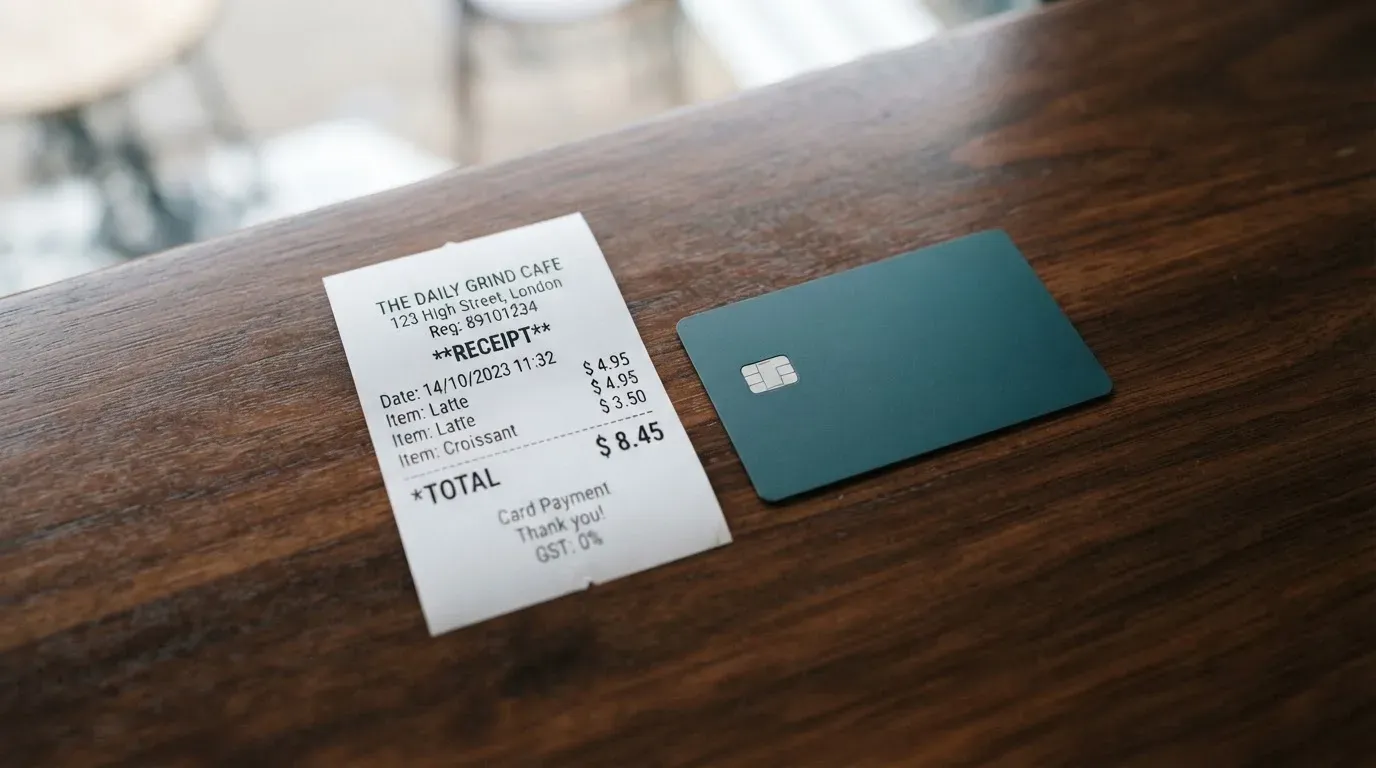
Top-ups are charged 3.5% by the platform. Purchases carry 1.5%. A cross-border refund costs 2% from the issuer. ATM withdrawals are 4% with a minimum of 25 HKD. And because top-ups are converted through non-custodial exchanges, the spread on that conversion is not stated — meaning there is a conversion cost you cannot see on the price list.
The minimum top-up is 20 USDT. Minimums matter more than percentages with a card like this, because they tell you where the card makes sense. 3.5% of a 20 USDT top-up is 0.70 USDT. 3.5% of a 200 USDT top-up is 7 USDT. The percentage is the same either way, but the fee as a share of your life is not.
| Fee or limit | Value | Note |
|---|---|---|
| Card opening | 50 USDT | Charged to get the card |
| Monthly fee | Free | No monthly charge |
| Annual fee | 50 HKD | First year free |
| Top-up fee | 3.5% | Charged by the platform |
| Purchase fee | 1.5% | On card spending |
| Cross-border refund | 2% | Charged by the issuer |
| ATM fee | 4% | Minimum 25 HKD |
| ATM withdrawal allowance | not stated | No figure published |
| Daily and monthly limits | not stated | No figure published |
| Minimum top-up | 20 USDT | Floor for a single top-up |
| Conversion spread | not stated | Top-ups converted via non-custodial exchanges |
Now three everyday payments, so you can see which of these apply and when.
A €30 subscription. The purchase fee of 1.5% is 0.45. That is the only card fee, but you had to put money in first — if that €30 came from a single top-up, add 3.5% of it, another 1.05, and the cost of the top-up fee is spread across everything else you will ever spend from that balance.
An ATM withdrawal of 500 HKD. The 4% is 20 HKD, above the 25 HKD minimum floor, so the percentage bites. Add whatever the operator charges you, which the card does not cover, and consider that cash is the most expensive way to use this card.
A refund on a cross-border purchase of 100. The 2% issuer fee takes 2 off the amount returned to you. Note this is on the refund, not the purchase, so it is a second bite at a transaction that already cost you the purchase fee and the top-up fee.
Add the network fee on your deposit, which the blockchain charges and the card does not, and the picture is complete: a portion of your money is consumed before it reaches a merchant, and cash costs more. For a card you use often, that is the number that decides everything.
Top up: how to fund it
This is the best part of the card after access, and here the offer is unusually broad. More than 200 cryptocurrencies are accepted, including XMR, BTC, ETH, USDT, SOL and LTC, converted through non-custodial exchanges.

Non-custodial is the meaningful word here. Your crypto does not sit in the provider’s wallet for you to trust; the conversion happens through exchanges that do not hold your funds in the way a custodial platform does. That removes one large category of counterparty risk, though not all of it — the exchange doing the conversion is still someone else’s operation.
The top-up fee is 3.5%, and the minimum top-up is 20 USDT. Networks are not stated, and this is the single most consequential gap in the funding section. Blockchain transfers are irreversible. If you send on a network the provider does not support, or to an address belonging to a different network, the money can be gone or need manual support recovery with no guarantee. Before your first deposit, find out which networks are supported — from the dashboard, from support, from the address itself — and do not assume that sending USDT the way you always send it will work. With USDT in particular, the same token exists on several chains, and one of them being wrong is an expensive lesson rather than a small one.
Withdrawal from the card is not stated. That matters if you think of this as a place to hold money: it is a spending balance, and the public pages do not describe taking it back out.
Paying with it every day
Daily use is the card’s weakest area, and I score it 3 out of 10 without much hesitation.
It is virtual only. There is no plastic in the open product. That is fine for online payments and hopeless for the shop counter, the restaurant, the parking meter and anything else where you tap or insert. The reloadable card is listed as coming, and the USD prepaid card as under maintenance — neither available today.
You can freeze and unfreeze the card from the dashboard, and see the live balance there. That is a genuinely useful pair of features in a card without physical controls: it is the whole of your card security if something goes wrong. Apple Pay and Google Pay are not named, so I would not plan around tapping a phone. Card data is encrypted with RSA-2048, and 3-D Secure codes are delivered to the dashboard.
Wallets are not named, rewards are not stated, the app’s details are not stated, and the dispute process is not stated. That last one deserves your attention. A chargeback is a refund ordered by the card issuer, and the strength of your ability to get one depends on the issuer and the scheme. The public pages do not set out how you dispute a payment on this card.
Two category facts explain why even a virtual card with a working dashboard can be declined at the till. Merchants can look up the card’s issuing institution and country from the number and may apply extra scrutiny when the issuer country differs from the billing address — a card issued in one country can look foreign to a shop in another. And some merchants decline prepaid or foreign-issued cards precisely because the lookup reveals what they are. Also worth knowing: a declined authorisation can leave a hold on your balance that stays for days, sometimes up to seven, so a card with a small balance can be blocked from spending it for a while even after the declined payment itself never went through.
For ordinary daily use, a virtual Visa with a 4% ATM fee, no named mobile wallets and no published limits is not a primary card. It is a second card, for specific online payments, kept funded deliberately.
What can go wrong
The biggest thing that can go wrong is not a fee. It is that you do not know who you are dealing with. The company behind the service is not named, and neither is the issuing entity — the card is issued through an unnamed partner network. That single gap shapes how much weight every other unknown can bear.
Here is the honest sequence of concerns.
The unnamed issuer and partner. When you hold an unnamed card, you cannot check who stands behind it, which scheme rules bind it, or who you complain to when it stops working. Licence status cannot be checked against a public register because the entity is not named. Every question below gets harder because of this one.
The absence of track record. No official incidents were found, and — worth saying plainly — no official reviews or user feedback are available. No Trustpilot page, no reviews. That is not a clean bill of health. It is an absence of evidence, and for a young, unnamed service it is exactly what you would expect either way. Do not read “no complaints” as “many happy customers”.
The product’s shape. A virtual-only card with a card that is listed but not delivered, an ATM fee at 4%, an annual fee of 50 HKD after year one, and an opening cost of 50 USDT, all sit awkwardly with the idea of an everyday card. The card can also be frozen or closed by the issuer for reasons it never has to publish, and a programme can end — that is what happened to other crypto card programmes, which were shut down by their network or issuer with notice periods and withdrawal requests afterwards.
Money you cannot get back. Withdrawal is not stated. So is the dispute process. So is support. If a payment goes wrong, the pages do not tell you who answers, how long they take, or what happens to the balance while they decide.
The daily deletion promise. Personal data is auto-deleted after 30 days, which cuts both ways. It is excellent for privacy and it means there is no long record if you ever need one to prove a transaction was yours.
The sanctions reality. Tether says it disables tokens in wallets on the OFAC sanctions list and has frozen funds tied to illicit activity, so stablecoins are not censorship-proof. Whatever else this card is, it is not outside the system it plugs into.
And a note on taxes, because it applies to everyone reading this: if you fund the card from crypto, the disposal itself may be a taxable event, measured in local currency at fair market value on the date of the transaction. Each card payment funded from crypto can be a separate disposal. That is not advice — it is a fact worth knowing before you convert your holdings into spending.
What to take instead
None of these is a rescue for someone who cannot pass KYC, because that is the space KYC.RIP occupies and the others do not. They are the alternatives if your problem is a crypto card that works day to day, not identity.
Cardex scores 5.6 out of 10, the closest of the three. It is described as one crypto card for 200+ countries, with no country list or exclusions published, though its App Store listing is Naira-focused and pays in Naira. It is a debit crypto card on the VERVE, Visa, Mastercard and UnionPay networks, with virtual and physical cards. Its distinctive claim is real-time crypto-to-fiat conversion at the moment of payment, with an “AI-Powered Conversion Rate” that scans global exchange rates and picks the best one when you spend — no fee percentage is stated on the site. Funding is from USDT, USDC and BTC wallets. Costs and rewards are not stated.
CardFlow scores 4.9 out of 10 and is aimed at Nigeria — “Nigeria’s smartest fintech card platform” and “Nigerians and global users” — with no country list or exclusions stated. It is a virtual USD Mastercard, created in about 3 minutes. Creating a virtual card is free; the monthly fee and the transaction fees are not stated. Funding is Bitcoin, USDT, ETH or a Naira bank transfer.
HyperCard scores 4.7 out of 10. The official pages state no country list; the App Store says the card works in more than 176 countries — that is acceptance, not eligibility, and the distinction matters. It is a prepaid card whose network is not stated on the App Store page, with the balance in USD or EUR. No fees are listed. You deposit crypto such as USDT, BTC or ETH in the app and it is converted to USD or EUR on the card.
| KYC.RIP | Cardex | CardFlow | HyperCard | |
|---|---|---|---|---|
| Score | 5.2 / 10 | 5.6 / 10 | 4.9 / 10 | 4.7 / 10 |
| Identity check | None | not stated | not stated | not stated |
| Card form | Virtual only | Virtual and physical | Virtual | not stated |
| Networks | Visa | VERVE, Visa, Mastercard, UnionPay | Mastercard | not stated |
| Card currency | USD | Naira per listing | USD | USD or EUR |
| Funding | 200+ cryptocurrencies | USDT, USDC, BTC wallets | BTC, USDT, ETH, Naira transfer | USDT, BTC, ETH in app |
| Fees published | Yes, detailed | not stated | Free to create only | not stated |
| Reward or cashback | not stated | not stated | not stated | not stated |
Two honest observations from that table. First, nobody in this corner publishes much, and KYC.RIP is the only one of the four with a real price list — which is a point in its favour precisely where you would want one, and a point against it where you would rather a regulated issuer were named. Second, if you want a card you can hold in your hand, only Cardex among these offers a physical card today. If you do not need documents to be checked, all four are options; if you do, only KYC.RIP is.
Who I would recommend it to
I would recommend this card to someone in a specific situation, and I want to be precise rather than encouraging.
Recommend it if you have crypto, you cannot get an ordinary card, and you need a Visa number for specific online payments — a subscription, a booking, an account that will not accept an unfamiliar name. In that situation KYC.RIP does the job cleanly, quickly and without handing over documents, and the 3.5% top-up is a price worth paying for access you have nowhere else to get. I would also recommend it to anyone who simply prefers not to be on a KYC list, as a low-stakes secondary card, keeping only what you are willing to experiment with on it.
I would not recommend it as your main card. A virtual-only card with a 4% ATM fee, an annual fee, no published limits, no named mobile wallets, no stated withdrawal route and no stated dispute process is not built for daily life. Nor would I recommend it to anyone with meaningful money to move, because the unnamed issuer and the absent review record mean you would be trusting a service that has left its own name off the page. And if you are in a jurisdiction where crypto-card use is regulated, treat this as something to check against local rules before you touch it, not after.
Set it up, keep small balances in it, use it for what it is good at, and move on.
Frequently asked questions
What is the KYC.RIP card?
KYC.RIP is a virtual Visa card that you apply for without submitting documents. You give a name and a PIN, receive a reloadable card valid for three years, and load it with crypto converted to a fiat balance. The card is issued through a partner network that the public pages do not name, and the product is virtual only — there is no physical card in the open offering.
Does KYC.RIP require KYC?
No — that is the defining feature. The application takes any name and a PIN, with no documents and no selfie, and personal data is auto-deleted after 30 days. The tradeoff is that nothing about your identity is verified, which is precisely why the issuer and company behind the service are never named to you in a way you can check.
How much does a KYC.RIP card cost?
Opening the card costs 50 USDT and the annual fee is 50 HKD, though the first year is free and the monthly fee is zero. On top of that: a 3.5% top-up fee, 1.5% per purchase, 2% on a cross-border refund, and a 4% ATM fee with a 25 HKD minimum. Realistically, you are paying multiple fees before a merchant sees anything.
What crypto can I use to top up the card?
More than 200 cryptocurrencies, with XMR, BTC, ETH, USDT, SOL and LTC named among them, converted through non-custodial exchanges. The minimum top-up is 20 USDT and the fee is 3.5%. Networks are not stated on the public pages, so confirm which chain to send on before your first transfer.
Is KYC.RIP a bank, and who owns it?
No, it is not a bank. The company behind the service is not named on the public pages, and the card is issued through an unnamed partner network, so neither the operator nor the issuer is something you can look up in a public register. That is the single most important thing to understand before you put money in.
Can I use the card in my country?
There is no published country list, and the card is described as global, which is why it applies to applicants almost everywhere. The catch is on the other side of the transaction: merchants can look up the issuing country and country, and some decline prepaid or foreign-issued cards outright, so acceptance is not guaranteed anywhere.
Can I add the card to Apple Pay or Google Pay?
Neither is named in the public materials, so I would not plan on it. The open product is a virtual Visa with freeze and unfreeze and live balance in the dashboard, and 3-D Secure codes delivered there — but there is no stated mobile wallet support, and there is no physical card to link.
Is KYC.RIP safe to use?
There are real safeguards — card data encrypted with RSA-2048, 3-D Secure codes, instant freeze, live balance — and the 30-day data deletion is a genuine privacy commitment. Against that, the issuer is unnamed, withdrawal is not stated, the dispute process is not stated, and no reviews or Trustpilot page exist for the service. Treat any balance you put here as at risk.
How do I withdraw money from the card?
Withdrawal is not stated on the public pages. KYC.RIP presents itself as a way to spend, not a place to hold funds, so do not park money on the card expecting to take it out. If being able to move your balance back matters to you, that gap is a reason to keep this as a small secondary card rather than your main one.
How do I delete my KYC.RIP account?
The pages do not describe a deletion process — what is stated is that personal data is auto-deleted after 30 days. That is a strong statement about how long your details are kept, but it is not the same as closing an account, so if you want the account itself gone, ask support directly and keep the answer.
Virtual cards in the catalogue – cryptocardcatalog
Content created by the «cryptocardcatalog» team