
HexaCard Review: A Promising Virtual Card with Concerning Complaint Patterns
 Available in US
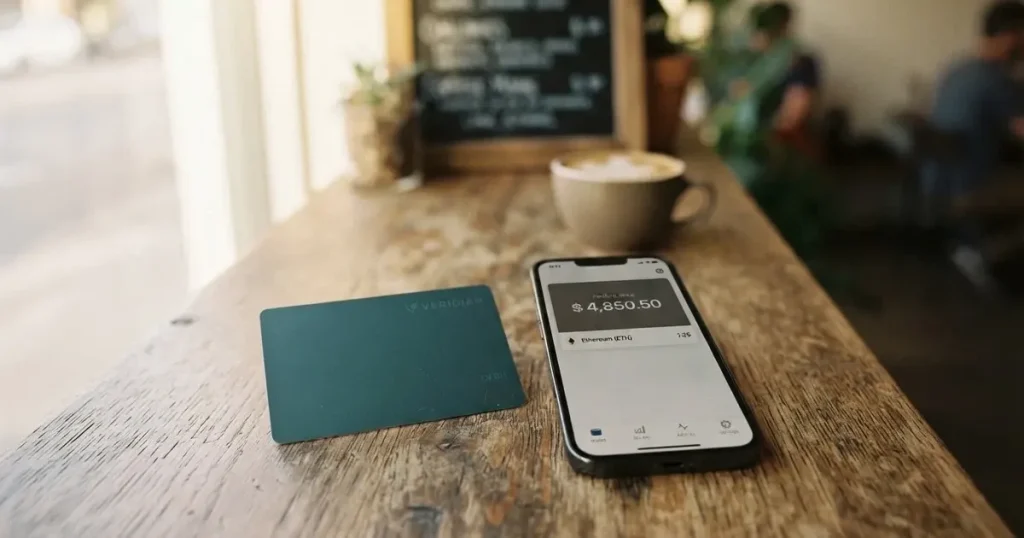
HexaCard is a crypto payment card available in virtual and physical form, accepting cryptocurrency deposits and fiat via major payment networks. After reviewing the card’s public pages, agreements, and user feedback, it scores 4.6 out of 10 — placing it below many competitors in the category. This review examines what HexaCard offers, its real costs, how to fund it, everyday usage, reported problems, and whether it’s worth your attention.
The conditions described here are current as of October 28, 2026.
Verdict: 4.6 out of 10 — Below Average for a Crypto Card
HexaCard falls short of the standard I’d expect from a trustworthy crypto payment solution. It offers reasonable virtual and physical card options with support for major cryptocurrencies and networks, but its complaint history and unclear corporate structure significantly undermine confidence. The appeal is straightforward: Georgia, Turkey, and Canada residents needing quick cards — people who want immediate access to crypto funds without traditional banking hurdles.
Who does it suit? Users in the supported countries who value cryptocurrency flexibility over banking integration, who don’t mind managing their own risk with a custodial-style setup. Who should avoid it? Anyone seeking the transparency of a regulated institution, strong customer support reliability, or predictable fee structures. The score breakdown below shows exactly where the card succeeds and where it falls short.
| Criterion | Score | Reasoning |
|---|---|---|
| Who can get it | 4/10 | FAQ lists six countries (Georgia, Canada, Germany, United Kingdom, Turkey, United States); claims “over 25 BINs in various GEOs” but country eligibility rules are unclear |
| Cost | 5/10 | Virtual $14.99 + $10 first top-up; physical $29.99 + $10; top-up fees “various and low” with no amounts disclosed; reviews mention $15–$25 replacement charges |
| Top-up options | 7/10 | Supports USDT, ETH, BTC, LTC, SOL and others; fiat deposits via Apple Pay, Google Pay, Visa, Mastercard — though networks are not specified |
| Reliability and complaints | 2/10 | Company and issuer unnamed in pages; Trustpilot shows 2.0/17 reviews with 82% one-star, reports of closed cards, zeroed balances, support silence, and Papara/Turkey link |
| Everyday use | 6/10 | Virtual and physical formats; ATM access on physical; Apple Pay/Google Pay as top-up methods; wallet provisioning and blocked categories not clearly described |
This score reflects what I could verify from public sources. The strong top-up variety and reasonable entry costs are offset by serious reliability concerns and regulatory ambiguity.
Will They Give You the Card?
Eligibility rules are not clearly stated on HexaCard’s public pages. The official FAQ lists six countries where the card is available: Georgia (spelled “Gerogia” in their documentation), Canada, Germany, United Kingdom, Turkey, and United States. The site also claims they have “over 25 BINs in various GEOs” — meaning they work with multiple banking identification numbers across different regions.
However, there’s no clear explanation of whether you need to be a resident of these countries, simply have a billing address there, or meet other criteria. The multiple BINs suggest they’re working around regional restrictions, but how that affects your specific situation isn’t obvious. If you’re outside these six countries, your eligibility is uncertain.
The company itself is not clearly identified on the marketing pages — no parent company name, issuing bank, or regulatory license is prominently displayed. The User Agreement mentions “Hexacard Business Corporation” under New York law, and the Card Agreement references a “Celtic Bank Privacy Policy” for issuer data, though the issuer isn’t named directly. The contact address is in Manchester, UK.
How to Get It
The application process is straightforward based on what’s publicly documented. According to the Card Agreement, HexaCard asks for:
- Your name and street address
- Your date of birth
- Other identifying information
- Potentially a driver’s licence or other ID documents
The agreement doesn’t specify KYC levels, processing times, or rejection reasons — you’re not told upfront what documents are mandatory versus optional, how long approval takes, or what might cause denial.
You can choose between two formats:
- Virtual card — issued through the app
- Physical card — mailed to you
Both run on major card networks. The site claims support for “28 currencies” and “32 different currency units” (both statements appear in their materials), plus compatibility with Visa, Mastercard, or American Express networks.
Delivery details are not stated — no information about which countries receive physical cards, delivery time, shipping cost, or replacement card costs. The only price given is the card purchase itself.
Fees and Costs: What It Really Costs
Here’s what HexaCard charges based on their published pricing and user agreements:
| Fee/Limit | Amount | Details |
|---|---|---|
| Virtual card issuance | $14.99 | Plus $10 initial top-up ($24.99 total) |
| Physical card issuance | $29.99 | Plus $10 top-up ($39.99 total) |
| Monthly fee | not stated | No information provided |
| Top-up fees | “Various and low” | Exact amounts not disclosed |
| Conversion fees | not stated | Crypto-to-fiat conversion costs unclear |
| FX fees | not stated | Foreign exchange charges unknown |
| ATM fees | not stated | Physical cards can withdraw at ATMs worldwide; costs/allowance unknown |
| Spending limits | not stated | Card Agreement says limits set by account holder’s administrator or HexaCard; no amounts given |
| Card replacement | $15 or $25 | Based on user reports |
Daily spending scenarios: If you buy a $30 lunch with your virtual card funded by USDT, you avoid explicit top-up fees but face undisclosed conversion costs. A $500 purchase might trigger limits or verification holds (not stated). ATM withdrawal abroad — the physical card works, but you have no idea what it’ll cost since the fee isn’t published.
The core issue: you cannot calculate your true cost because conversion fees, FX spreads, and ATM charges aren’t disclosed. The Card Agreement states limits are set by either your account administrator or HexaCard, but gives no actual numbers. Reviewers report paying $15 or $25 for replacement cards — a charge that appears nowhere in the official pricing.
How to Top It Up
HexaCard accepts multiple funding methods:
Cryptocurrency:
- USDT
- ETH
- BTC
- LTC
- SOL
- And other cryptocurrencies
Important complication: The networks aren’t specified. If you send USDT on the wrong network, your deposit could be lost — blockchain transfers are irreversible. The Card Agreement doesn’t clarify which networks are supported for each coin.
Fiat deposits work through:
- Apple Pay
- Google Pay
- Visa
- Mastercard
Minimum top-up confusion: Their homepage says “$10 initial top-up required,” but the FAQ states “The minimum amount to top up your balance is $20” — two different values on official pages.
Deposit methods (per FAQ) include bank cards, direct transfer, wire transfer, and cryptocurrency, “depending on region.” Fees are described as “various and low” without specifics. It’s not stated whether you pay blockchain network fees for crypto deposits, or who absorbs those costs.
Withdrawal limitations: The Card Agreement warns “The card fee cannot be refunded after purchase.” HexaCard can cancel or restrict cards at any time, with some cancellations being “automatic and irreversible.” Cards auto-cancel after six consecutive failed transactions or three consecutive failed withdrawals. What happens to your balance if the card closes is not explained in the documentation.
Paying With It Every Day
Card provisioning to wallets: Apple Pay and Google Pay are mentioned only as top-up methods, not as ways to add your card to a mobile wallet. Whether you can push the HexaCard into Apple Pay for contactless payments is not stated.
Blocked categories: The site doesn’t clarify whether gambling, adult content, or other restricted merchant categories are blocked. This matters because card issuer policies vary widely, and merchant category codes (like MCC 7995 for gambling) are often blocked at the issuer level.
Cashback rewards are available on physical cards only, for:
- Spotify
- Steam
- Google Play Store
The cashback rate isn’t specified. Virtual card users get no rewards program.
Mobile app: iOS and Android apps are available. Unofficial data (from mwm.ai, read October 20, 2026) shows the iOS app at 3.6/5 from 17 ratings, version 1.2.7, first released December 13, 2023.
Dispute resolution follows a formal process per the User Agreement (last updated January 4, 2024):
- Informal resolution attempt (30 days)
- Binding individual arbitration (AAA, New York) if unresolved
- No class actions permitted
- 30-day opt-out window after accepting terms
During third-party provider disruptions, “refunds cannot be processed” (section 17). Chargeback time frames aren’t specified. Credit card rights under Regulation Z, or prepaid-card protections, may or may not apply depending on how the card is structured.
What Can Go Wrong
Complaint patterns from user reports:
The Trustpilot data (read October 20, 2026) shows a TrustScore of 2.0 from 17 reviews, with 82% one-star and 18% five-star ratings. Early 2026 reviews describe specific problems:
- Turkish-linked virtual cards closed with balances showing 0.00 and funds seized
- Support silence for weeks (November 2025 – July 2026)
- Funds tied to Turkish issuer/Papara dispute, reported losses of $60–100 (November 2025 – October 2026)
- Replacement card fees of $15 or $25 demanded (November 2025 and June 2026)
- Suspected fake five-star review bursts — one reviewer noted 10 five-star reviews posted within hours (November 2025)
The company’s response claimed these issues were “not directly controlled by us” and blamed Turkish authorities’ decisions. One reviewer lost almost $100. Company replies appear on 61% of negative reviews.
Fund safety architecture: Whether HexaCard is custodial or self-custody is not stated. The site claims transactions are monitored “24/7,” 3D Secure codes are available via app or SIM, and cards can be deactivated in the app. The Card Agreement notes that holds reduce card limits until released. Insurance or safeguarding arrangements are not disclosed.
This matters because custodial platforms have a documented failure history: Mt. Gox (~$350 million stolen, 2011–2014), Coincheck (~$400 million, 2018), and Ronin Network ($625 million, 2022). Holding funds with a custodian means accepting counterparty and hack risk.
Regulatory standing: No licenses are claimed on the pages reviewed. Company statements on Trustpilot (a third-party site) indicate:
- November 2, 2025: Services “fully active,” restrictions are compliance updates
- February 26, 2026: Turkey/Papara disruption is provider-side, restoration depends on the provider
- July 3, 2026: Some top-up methods may be region-limited
No regulator warnings or enforcement news were found.
Security features listed:
- 24/7 transaction monitoring
- 3D Secure via app or SIM
- Card deactivation in-app
- Tokenized mobile wallet support
What safeguards aren’t disclosed: whether funds are segregated, whether deposit insurance applies, what happens to your balance during a dispute, or who bears loss if cards are fraudulently used.
Customer support: Contact form with departments (Business/Personal/Support/Others), Help Center at Bartle House, Oxford Court, Manchester M2 3WQ. Email is obfuscated on-site but company replies on Trustpilot use [email protected]. Unofficial data shows the App Store seller as TransferEasy Limited (per mwm.ai, October 20, 2026).
What to Take Instead
If HexaCard’s unclear fees and complaint history concern you, here are alternatives with higher scores and clearer terms:
Cardex — Score 5.6/10
Pros:
- One crypto card serving “200+ countries” (no exclusions listed)
- Multiple networks: VERVE, VISA, Mastercard, UnionPay
- Virtual and physical options
- Real-time crypto-to-fiat conversion with “AI-Powered Conversion Rate” claiming best rates
- Supports USDT, USDC, BTC
Cons:
- App Store listing is Naira-focused (pay in Naira)
- Card fees not stated
- No rewards program mentioned
- Conversion fee percentage not disclosed
Best for: African users, especially those transacting in Naira, who want broader network acceptance.
CardFlow — Score 4.9/10
Pros:
- Aimed at Nigeria (“Nigeria’s smartest fintech card platform”)
- Virtual USD Mastercard created in ~3 minutes
- Creating a virtual card is “completely free” (per site FAQ)
- Accepts Bitcoin, USDT, ETH, or Naira bank transfer
Cons:
- Fees not stated beyond free card creation
- No rewards mentioned
- Focus on Nigerian market may limit flexibility elsewhere
- Networks for crypto deposits not specified
Best for: Nigerian users needing quick, free virtual card creation.
HyperCard — Score 4.7/10
Pros:
- Prepaid card accepting deposits in USD or EUR
- Supports crypto deposits (USDT, BTC, ETH) in the app
- App Store claims acceptance in “more than 176 countries”
Cons:
- Card fees not stated
- Network not specified on App Store page
- Country eligibility unclear (acceptance ≠ eligibility)
- No rewards program mentioned
- Networks for crypto deposits not specified
Best for: Users wanting a straightforward prepaid card with crypto deposits and USD/EUR balances.
Why These Might Serve You Better
Each alternative offers clearer positioning (Cardex’s global reach, CardFlow’s Nigerian focus, HyperCard’s multi-currency approach) and higher scores. However, all three share common gaps: undisclosed fees, unspecified crypto networks, and no rewards programs. The fundamental crypto card category remains plagued by transparency issues.
Who I Would Recommend It To
HexaCard makes sense if:
- You’re a resident of Georgia, Turkey, or Canada needing a card quickly
- You already hold crypto and want to spend it without converting through a traditional bank
- You accept custodial risk and understand the complaint history
- You’re comfortable managing your own security and monitoring transactions
- You don’t rely heavily on credit or dispute protections
Skip HexaCard if:
- You need predictable, itemized fees — the conversion and FX costs are undisclosed
- You require regulatory clarity or deposit insurance — neither is stated
- You’re in Germany, the UK, or the US expecting the same terms as Georgia or Turkey residents
- You need reliable customer support — complaints describe weeks of silence
- You’re affected by the Papara/Turkey disruption — the resolution timeline is unknown
- You plan significant spending — limits are discretionary and unstated
- You need strong dispute resolution — the AAA arbitration requirement is burdensome
The honest assessment: HexaCard solves a real problem for specific users in specific regions — fast access to crypto funds without traditional banking. But the combination of undisclosed fees, unclear corporate structure, poor complaint resolution, and regulatory ambiguity makes it unsuitable as a primary payment method. If you must use it, treat it as a convenience tool with small balances, not a financial account.
Frequently Asked Questions
What is HexaCard card?
HexaCard is a cryptocurrency payment card available in virtual and physical formats. It lets you load crypto or fiat funds and spend them like a regular debit card at merchants worldwide. The card runs on major networks like Visa, Mastercard, or American Express, supports multiple cryptocurrencies including USDT, BTC, and ETH, and offers cashback on physical cards for specific services like Spotify and Steam.
How does HexaCard card work?
You fund the card by depositing cryptocurrency or fiat currency, then spend that balance at any merchant accepting major card networks. Virtual cards work through the app immediately; physical cards also work at ATMs worldwide. The Card Agreement notes that spending limits are set by HexaCard or your account administrator, though specific amounts aren’t publicly disclosed.
Is HexaCard a bank?
No, HexaCard is not a bank. The User Agreement references “Hexacard Business Corporation” under New York law, and the Card Agreement points to a “Celtic Bank Privacy Policy” for issuer data without naming the issuer directly. The marketing pages don’t prominently identify any banking license or regulatory registration, which is a significant concern given the custody of user funds.
Who owns HexaCard?
The public pages don’t clearly state ownership. Unofficial data (from mwm.ai, October 2026) lists the App Store seller as TransferEasy Limited. The User Agreement names “Hexacard Business Corporation” as a New York entity, and the contact address is in Manchester, UK. The actual issuing institution remains unnamed in accessible documentation.
Does HexaCard card require KYC?
Yes, according to the Card Agreement, HexaCard requests your name, street address, date of birth, and other identifying information. They may also ask for a driver’s licence or other ID documents. The agreement doesn’t specify which documents are mandatory, processing times, or rejection criteria. EU regulations require customer due diligence including sanctions screening, but HexaCard doesn’t specify which tier applies to you.
Is HexaCard card free?
No. The virtual card costs $14.99 plus a $10 initial top-up ($24.99 total). The physical card is $29.99 plus $10 ($39.99 total). Top-up fees are described as “various and low” but not disclosed. User reviews mention $15–$25 replacement card charges that aren’t in official pricing. No monthly fee information is published.
How to top up HexaCard card?
You can deposit USDT, ETH, BTC, LTC, SOL, or other cryptocurrencies, though the supported networks aren’t specified. Fiat deposits work through Apple Pay, Google Pay, Visa, and Mastercard. The FAQ lists bank cards, direct transfer, wire transfer, and crypto as methods “depending on region.” Minimum top-up amounts conflict between pages—$10 on the homepage versus $20 in the FAQ.
Is HexaCard card safe?
The site claims 24/7 transaction monitoring, 3D Secure codes via app or SIM, and card deactivation controls. However, whether funds are custodial or self-custodied isn’t stated, no insurance or safeguarding arrangements are disclosed, and Trustpilot shows 2.0/17 with 82% one-star reviews describing closed cards, seized balances, and support silence. The card fee is non-refundable after purchase.
Can I use HexaCard card in my country?
The official FAQ lists six countries: Georgia, Canada, Germany, United Kingdom, Turkey, and United States. The site claims “over 25 BINs in various GEOs” but doesn’t clarify eligibility rules. If you’re outside these six countries or aren’t a resident there, your eligibility is uncertain. The cards claim to work at merchants worldwide and at ATMs globally, but acceptance isn’t the same as eligibility.
How to add HexaCard card to Apple Wallet?
The public documentation doesn’t state whether you can provision HexaCard into Apple Pay or Google Pay. Apple Pay and Google Pay appear only as top-up methods in the materials, not as ways to add the card to a mobile wallet for contactless payments. If wallet provisioning is important to you, this remains unclear and would need direct confirmation from HexaCard support before relying on it.
Is HexaCard card worth it?
For users in Georgia, Turkey, or Canada who need quick crypto-to-fiat access and accept custodial risk with undisclosed fees, it may serve as a convenience tool. However, the combination of poor complaint resolution, unclear regulatory standing, non-disclosed conversion and FX costs, and non-refundable card fees makes it unsuitable as a primary payment method or for significant balances. Treat it cautiously with small amounts only.
Virtual cards in the catalogue – cryptocardcatalog
Content created by the «cryptocardcatalog» team