
The card that pays you back in crypto, and the fine print behind it
 Available in US
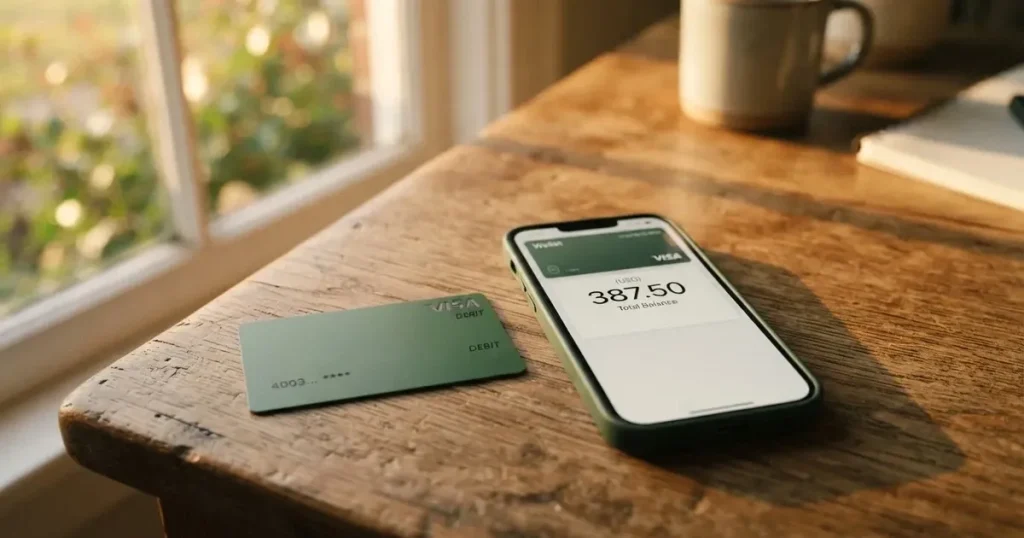
If you have ever wanted a normal-looking payment card that spends from a crypto balance and gives you something back, the Greencart card is built for exactly that. It is a Visa card powered by Gnosis Pay, issued by a UK e-money institution, and its headline feature is cashback paid in B3TR — its own token — on everyday purchases. On paper that is an attractive pitch: no monthly fee, no foreign-exchange fee, no fee on deposits or withdrawals, and a guaranteed floor of 0.5% back on every purchase.
But underneath that pitch sits a set of choices you have to understand before you start, and most of them are not about fees at all. The money you spend from lives in a self-custodial wallet that you control, and the terms are explicit that your account is “not a regulated product or service,” that the terms contain no safeguarding commitment, and that liability is capped at £100. That is a different proposition from a bank debit card, and this review is written to help you decide whether it is a different proposition you want.
The conditions described here are current as of October 28, 2026.
Verdict: 6.9 out of 10
My score for this card is 6.9 / 10. That number is not a verdict on the company’s honesty — it is a verdict on how the card serves an ordinary person who just wants to pay for things. The fee side is genuinely excellent; the risks side is genuinely unusual. Add them together and you land in the middle, and the middle is where most people should sit and think before applying.
| Criterion | Mark | Why |
|---|---|---|
| Who can get it | 7 / 10 | EEA plus Argentina, Bolivia, Brazil, Colombia, Mexico per Gnosis Pay’s eligible-countries list, though that list page did not open when I checked |
| Cost | 9 / 10 | “No hidden, monthly, or annual fees”; no fees stated for withdrawals, transfers, deposits or FX; virtual card free, physical may carry a one-off fee; optional Greencart+ at USD $7.99 monthly |
| Top-up options | 5 / 10 | Top up from a bank account or a crypto wallet, fiat or crypto — but no coins or networks are named |
| Reliability and complaints | 7 / 10 | Issuer is Monavate Limited (FCA-registered EMI, FRN 901097) under a Visa Europe licence; the Greencart account itself is “not a regulated product” with liability capped at £100 |
| Everyday use | 5 / 10 | Virtual card is free and a physical one exists, apps for iOS and Android, but Apple Pay and Google Pay are not stated |
The audience that fits this card is narrower than “everyone looking for a crypto card.” It suits people who already hold crypto, believe in it enough to accept a token reward rather than cash back, and want a card that spends from their own wallet without giving up control of the private keys. It suits the eco-minded European reader who wants their card spending to route back into a climate-adjacent token. If you are that person, the cost side of this card is hard to argue with.
It does not suit you if you want a bank debit card with deposit-guarantee protection and a complaints route that ends at a bank ombudsman. It does not suit you if you want predictable cashback denominated in dollars or euros rather than in a volatile token. And it does not suit you if you are the kind of person who will lose sleep over a £100 liability cap, because this contract has one.
Will they give you the card?
Eligibility is where a lot of disappointment with these products lives, so let me be precise about what Greencart and Gnosis Pay actually say.
The card is offered in the EEA countries plus Argentina, Bolivia, Brazil, Colombia and Mexico, according to Gnosis Pay’s eligible-countries list. One caveat I want to be honest about: that list page did not open for me when I checked, so I am passing on what Gnosis Pay publishes rather than what I saw rendered.
Which legal entity you contract with depends on where you live. Gnosis Pay’s terms split this into two groups: EEA residents contract with Gnosis P. Tech, Unipessoal Lda, while residents of the listed non-EEA countries contract with Gnosis Pay Co Ltd. Which entity you land with matters more than it might seem, because that is the company you would complain to if something goes wrong.
You must be 18 or older. And you cannot be on a sanctions list, nor be “located in, controlled from, or a national or resident of sanctioned countries.” That last clause is broader than just “living in a banned country” — it reaches nationality and control. If you hold a passport from a sanctioned jurisdiction, this is a hard stop, and no workaround is one I would look for or tell you to try.
Note that your country of citizenship and your country of residence are treated separately. Screening is applied to citizenship and country of birth as well as to your address, which is standard practice but catches people out who moved years ago.
How to get it
The application runs through third-party compliance providers. This is normal — it is how KYC gets done in this category — but it does mean your identity documents, address and source-of-wealth information are collected by a company that is not necessarily Greencart itself.
The onboarding asks for identity, address and source-of-wealth information, confirms you are 18+, and makes clear that the account is personal only. You cannot open an account for a company, a shared wallet, or on behalf of someone else.
Once you are through onboarding, what you get is a Visa card powered by Gnosis Pay. There is a virtual card, which is free, and a physical card, which may carry a one-off administration fee. The card’s currency is not stated on the card page — I could not find it, and you should assume you will be spending whatever Gnosis Pay’s balance is denominated in until you see otherwise. Delivery timings are also not stated.
There is one more thing I could not find: the KYC level. Some providers require only a light check for small balances and a full document check for larger ones. If that distinction exists here, it is not published where I looked, and it is worth asking support directly before you commit.
Fees: what it really costs
This is the part of the review that is unambiguously good, and I want to give it the emphasis it deserves because it is unusual.

The site’s plain statement is “No hidden, monthly, or annual fees.” No fees for withdrawals, transfers, deposits or FX. For a card whose entire job is converting between crypto and fiat, that is a strong claim and it is the right one to test against reality — which is what the next few sections do.
| Fee or limit | What Greencart and Gnosis Pay state |
|---|---|
| Issuance | Virtual card free; physical card may carry a one-off administration fee |
| Monthly fee | “No hidden, monthly, or annual fees” |
| Conversion | Site states no fees for withdrawals, transfers, deposits or FX; unofficial sources say no transaction fee and no FX markup beyond Visa’s rate |
| FX | Stated as no fee |
| ATM | Not stated on the card page; cash withdrawals appear among the categories that earn no cashback |
| Daily limits | Not stated on the card page |
| Monthly limits | Not stated on the card page |
On top of that sits the optional paid tier. Greencart+ is USD $7.99 per month, or $79.99 for the year, with $4.99 for the first two months. The App Store also lists a “Greencart Max” at $350.00, though the card site does not describe what that tier gives you. Think of the subscription as buying status and perks, not as a requirement: the card works without it.
Now let me put that table to work on three ordinary payments, because a fee schedule is only useful if you can see it bite.
Coffee at a local café, paid in your home currency. No conversion happens, so no FX fee is involved. If the purchase falls in an ordinary retail category, it earns the 0.5% B3TR floor. Nothing is charged beyond the price of the coffee.
An online subscription priced in dollars, while you think in euros. Here is the first place the conversion question matters. The site states no FX fee. Gnosis Pay’s help material, unofficial as it is — I could not open that page, so treat it as a third-party account of the position — describes no transaction fee and no FX markup beyond Visa’s own rate. In practice, what you would be paying is Visa’s rate, not a rate Greencart sets on top. If you rely on that, verify it on a small purchase before you rely on it for a large one.
A cash withdrawal at an ATM. This is the least clear area. The card page does not state ATM fees at all, and it lists cash withdrawals among the 48 merchant categories that earn no cashback. Third-party descriptions describe Gnosis Pay’s card as allowing five free withdrawals per month, or 200 in EURe, GBPe or USDCe, whichever comes first, and then 2% after that; however, these figures are unofficial and not confirmed by Greencart. Limits, likewise, are unofficial: 250 per ATM withdrawal and 500 per day at the ATM, and spending of 5,000 per transaction and 8,000 per rolling 24 hours.
One fee the category cannot avoid: if you top up via a blockchain, the network charges its own fee for your deposit — gas on Ethereum, or the equivalent on other chains. That is charged by the blockchain, not by Greencart, and it comes out of your deposit.
How to Top up
Topping up is the part of this card that is conceptually simple and practically underspecified, and I want to be honest about which half it is.
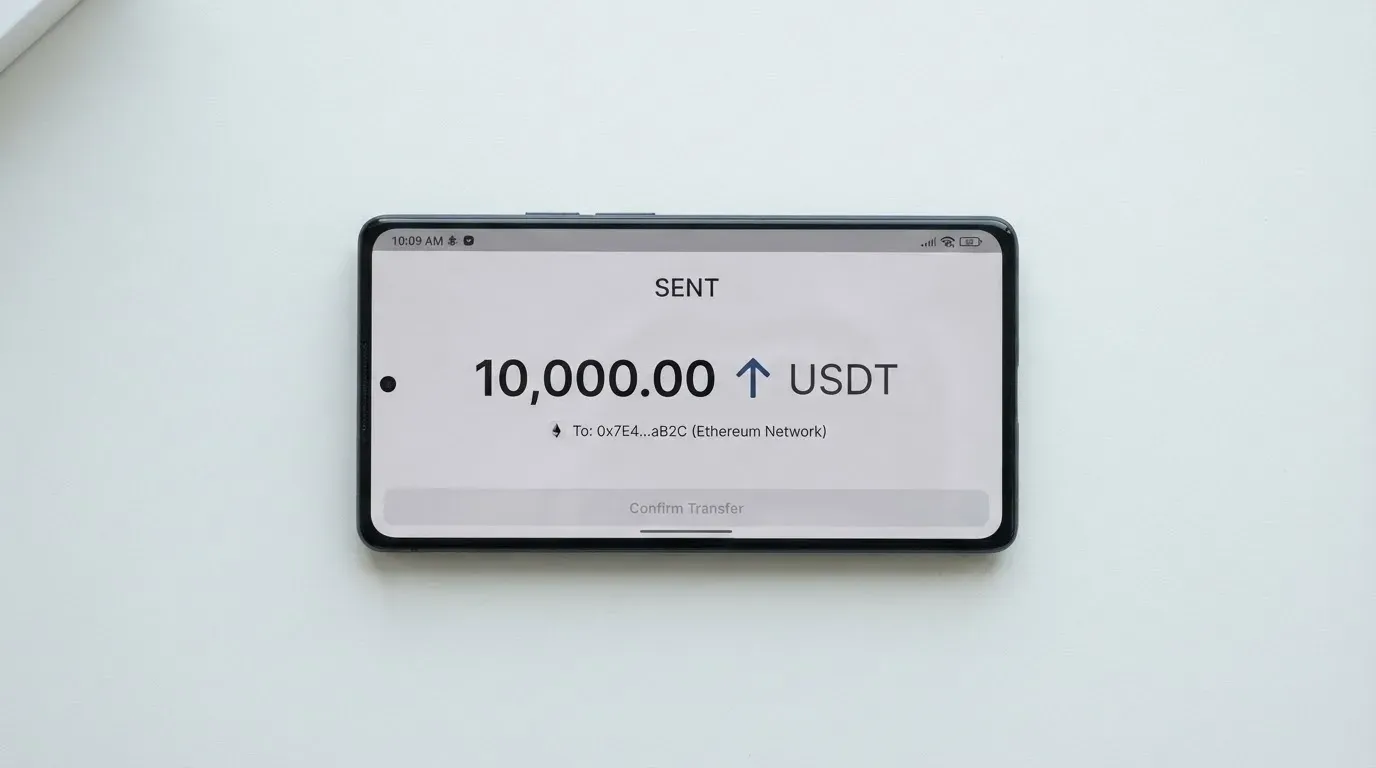
The mechanism: you recharge from a bank account or a crypto wallet, in fiat or in crypto. The money lands in a self-custodial Gnosis Pay Safe, and the card spends from that Safe. The key words are *self-custodial*. The keys are yours. Nothing about the balance can be moved, frozen or clawed back by Greencart — which is a real protection, and also a real responsibility.
The problem: Greencart’s own pages do not name the coins or networks they support. That is not a detail. If you are holding USDT on Tron and the card expects a deposit on a different network, the transfer can be lost — blockchain transfers are irreversible, and a deposit sent on an unsupported network or to a mismatched address may need manual support recovery with no guarantee of success. Minimum deposit, who pays the network fee, and which fiat rails are supported: none of these are stated either. The site does state no fees for deposits, which is helpful but does not answer the practical questions.
If I were setting this card up, the first thing I would do is ask support which networks are live and get a small test transfer in before committing real balance. Not because anything is wrong, but because “not stated” here has genuine consequences.
On the way out, the site states no fees for withdrawals or transfers. Gnosis Pay’s terms say you can end the relationship by written notice to [email protected], and that you then have 60 days of platform access to move your assets out of the Safe. That is a reasonable exit clause, and it is worth reading, because it tells you what “closing your account” actually means for money you hold yourself.
Paying with it every day
Day-to-day use is where I have the most doubts about this card, and the reasons are mostly about things that are not stated rather than things that are wrong.
What is there: a virtual card that is free, a physical card that may carry a one-off fee, and apps for both iOS and Android. The App Store in the US shows 4.86 from 44 ratings. That is a thin number of reviews, which cuts both ways — there is little evidence of widespread complaint, and also very little independent testing. I did not read the Google Play listing.
What is not there: Apple Pay and Google Pay support is not stated. For a card whose main appeal is everyday convenience, that is a significant gap. Until I can confirm otherwise, plan on tapping the physical card or typing the virtual card number, not on waving your phone.
The rewards are the interesting part, and they are also where the card’s own marketing contradicts itself. The site says a guaranteed floor of 0.5% in B3TR on every purchase, rising with staked B3TR and with Greencart+ up to a 4% ceiling, capped at $40 per transaction and $40 per month, with 48 categories earning nothing. The App Store text says “up to 8% cashback” and partner purchases up to 15%. I would plan on the site figures — the lower ones — because they are the more specific and the more constrained.
The exclusion list is long enough that you should read it before you assume any purchase earns. Cash withdrawals, transfers, gambling, taxes and insurance are all excluded, and 48 categories in total earn nothing. That is a meaningful design choice: a card that rewards spending but not saving, and that will not be usable for some of the transactions people most expect a card to handle.
The app shows a “My Level” that is recalculated weekly based on holding B3TR and in-app activity, with the paid Greencart+ plan and lounge access “coming soon.”
What can go wrong
Start with the part that is most likely to hurt you, because it is not the part people expect.
Key loss is unrecoverable. The funds sit in your own Safe. If you lose your credentials, there may be permanent loss. Gnosis Pay is explicit that lost credentials may mean permanent loss of funds, and that it “does not offer a crypto-asset wallet” — so there is no wallet-side safety net to fall back on. There is also no seed-phrase escrow, because the whole design is that you are the only holder.
Your account is not a regulated product. The terms say so in those words. There is no safeguarding commitment in the terms, and liability is capped at £100. Compare that with an e-money account elsewhere in the EU, where customer funds must be safeguarded — segregated in dedicated accounts or insured. Those funds are not the same as bank deposits and may not sit under a deposit-guarantee scheme, and Greencart’s structure goes further: this is not a safeguarded balance at all. If you are reading that as “the worst can happen is I lose £100,” you have read it correctly.
The B3TR reward is volatile. Cashback arrives in a token, not in dollars. Whatever the 0.5% to 4% is worth on the day you receive it is not fixed, and the 0.5% floor is a floor in B3TR, not in your own currency.
Stablecoin and network risk sit upstream. Even though the reward is a token, most balances of this kind are held in stablecoins, and stablecoins are not stable by definition. USDC briefly lost its peg in March 2023; TerraUSD collapsed in May 2022. If the asset you deposit with slips, your card does not protect you from that.
Declined payments and holds. A declined authorisation can leave a hold on your funds that stays for several days, typically up to seven. And a prepaid or foreign BIN can simply be declined by merchants, because the merchant can look up the card’s issuing country and apply extra scrutiny if it differs from the billing address. That is why a card issued in one country can look foreign to a shop in another.
Disputes have their own gap. The terms specify no time frame for chargebacks. Transactions funded from the Safe can be disputed and fraud reported through the platform; complaints are acknowledged within 24 hours, resolved within 15 working days, with a final response no later than 35 working days, and escalation to Monavate. Those are reasonable commitments. The absence of a chargeback time frame is notable, and it is exactly the kind of thing that matters on a $200 payment rather than a $2 one. Note that chargeback terms in this category are often restricted and not confirmed as guaranteed by the issuer.
The card is new and the track record is short. In March 2026 the company reported the app passing 1 million users and more than $1.2 million in crypto rewards distributed, and a debit card paying cashback in B3TR launched recently. That is real traction, and it is also a young programme in a category where programmes have shut. Visa terminated its global agreements with FTX in November 2022 and the FTX US debit card was wound down. WaveCrest was suspended by Visa in Europe in 2018, closing every programme it had issued. Closure typically means a notice period, then loading and spending stop, then you are asked to withdraw what remains.
On the reviews front, I found nothing either way. A search for Trustpilot and Reddit reviews turned up no Trustpilot or Reddit reviews for this card, and there is no Trustpilot page for greencart.ai. Absence of complaints from a thin base of 44 App Store ratings is weak reassurance, not strong. And as with any card in this category, 3-D Secure can shift liability for fraudulent online payments toward you rather than the merchant, which cuts against the general intuition that online fraud is someone else’s problem.
On the people behind it. Greencart’s company is Linfa Inc., a Delaware corporation at 850 New Burton Road, Suite 201, Dover, Delaware 19904, US. The card issuer is Monavate Limited, an FCA-authorised electronic money institution (FRN 901097) under licence from Visa Europe Limited. Gnosis’s contracting entities are Gnosis P. Tech, Unipessoal Lda for EEA residents and Gnosis Pay Co Ltd for the listed non-EEA countries. A Delaware holding company is not a red flag in itself — plenty of legitimate fintech sits there — but it does mean the entity you deal with is not the entity regulated by the FCA. The regulated entity is the issuer, and that is where complaints ultimately escalate.
Support is reachable at [email protected] or [email protected], with Gnosis Pay reachable at [email protected] and through an in-app chat bot. Greencart+ gets priority support. Languages and hours are not stated, and in a card that might have to deal with a frozen balance, that omission is worth pressing on.
What to take instead
I want to be careful here. None of these are better in every way; they are better at different things, and I have scored them on the same 10-point scale. Gemini scores lowest of the four, and I will explain why rather than let the number hide the reason.
| Card | Score | Cost story | Rewards |
|---|---|---|---|
| Greencart | 6.9 / 10 | No hidden, monthly or annual fees; optional Greencart+ at USD $7.99 monthly | 0.5% floor in B3TR, up to 4%, capped $40 per transaction and $40 per month |
| Lava | 7.1 / 10 | “No annual fees”; “no FX fees, and no FX spread”; no exchange fees or spread on Bitcoin buy/sell | “Earn up to 5% back in bitcoin on every purchase” — conditions not stated |
| GoMining Card | 6.6 / 10 | Not stated; opening a card grants a free 1 TH miner | Cashback paid in mining power, rate rises with VIP level, “up to 5% cashback” |
| Gemini | 4.9 / 10 | No annual fee; issuance fee not stated; no foreign transaction fees | 4% on gas, EV and transit (first $300/month), dining 3%, groceries 2%, other 1%, paid in Bitcoin or 50+ cryptos |
Lava scores highest at 7.1, and if you are choosing purely on cost and rewards rate, it is worth a look. It advertises spending at 150 million merchants in 150+ countries, no annual fees, no FX fees and no FX spread, no exchange fees or spread on Bitcoin buy/sell, and up to 5% back in bitcoin. The two words “conditions not stated” do a lot of work in that summary — the network, whether it is physical or virtual, and the conditions attached to 5% are all absent from the card page I reviewed. Deposits can be made in local currency or stablecoins; networks are not stated. Who can get one is not stated either.
GoMining Card at 6.6 is a different proposition: the reward is mining power, not a token you can spend, and it rises with your VIP level. A free 1 TH miner comes with opening the card. Costs are not stated at all, and it is virtual now with a physical card “coming soon.” The page warns that products “may not be available in your jurisdiction” and that eligibility and regional availability apply. You can top up with BTC, USDT, GOMINING and other coins.
Gemini at 4.9 is a credit card, not a prepaid or crypto-balance card, and that changes what it is for. It is a Mastercard World Elite credit card with no annual fee and no foreign transaction fees, paid off in fiat rather than funded from crypto, with rewards paid in crypto — instant, in Bitcoin or 50+ cryptos, changeable at any time. Its category rates are the most detailed of the four: 4% on gas, EV and transit for the first $300 a month, 3% dining, 2% groceries, 1% everything else, plus 10% Vault Rewards at some merchants and a referral structure of $50 in crypto each, $250 per five referrals, up to 50 a year. Who can get it is not stated on the card page, and the form — virtual, physical, metal — and currency are not stated.
The honest summary: if you want to spend from crypto you hold, Greencart, Lava and GoMining are all in that world and Greencart is the one with the clearest published fee promises and the most unusual risk profile. If you want an ordinary credit card that happens to pay in crypto, Gemini is a different category entirely, and its reward rate is more predictable in your own currency.
Who I would recommend it to
I would recommend this card to someone who has already decided they are holding crypto long-term, who is comfortable being their own custodian, and who wants a card that spends from that holding without handing over the keys. I would recommend it with the caveat that the reward is a token and the account is not a safeguarded one.
I would recommend it specifically to the reader who cares where their money goes: if the idea of routing everyday card spending back into a token rather than into a bank is the point, that is a coherent position and this card serves it well at a low cost.
I would not recommend it to someone whose main problem is that they cannot get an ordinary bank card, unless they have read the liability cap and the self-custody terms and accept them. Those two groups overlap far more than either would like. If you are in that overlap, the honest thing to say is that this card solves the access problem and creates a custody problem in the same step, and you should decide whether you are comfortable with that trade before you apply rather than after your first deposit.
And I would not recommend it to anyone who wants cash back in dollars, has a large balance relative to £100, or needs a chargeback framework with a stated time limit. There are better-fitting options for all three.
Frequently asked questions
What is the Greencart card?
Greencart is a Visa payment card that spends from a crypto balance rather than from a bank account. It is powered by Gnosis Pay, the app runs on iOS and Android, and there is a free virtual card plus a physical card that may carry a one-off administration fee. Its distinguishing feature is cashback paid in B3TR, its own token, rather than in dollars or euros.
How does the Greencart card work?
You top up from a bank account or a crypto wallet, in fiat or in crypto, and the money sits in a self-custodial Gnosis Pay Safe that you control. When you pay, the balance is converted and spent from that Safe. Because the keys are yours, nobody else can move your funds — but equally, nobody can recover them for you if you lose your credentials.
Is Greencart a bank?
No. Greencart’s company is Linfa Inc., a Delaware corporation, and the card itself is issued by Monavate Limited, an FCA-authorised electronic money institution with FRN 901097, under licence from Visa Europe. An e-money institution can issue cards and wallets but cannot lend. Greencart’s own terms state plainly that your account is “not a regulated product or service.”
Who owns Greencart?
Greencart is operated by Linfa Inc., registered in Delaware at 850 New Burton Road, Suite 201, Dover, Delaware 19904, US. The card programme is powered by Gnosis Pay, whose contracting entity depends on your residence: Gnosis P. Tech, Unipessoal Lda for EEA residents, or Gnosis Pay Co Ltd for residents of the listed non-EEA countries.
Is the Greencart card available in my country?
It is offered in the EEA countries plus Argentina, Bolivia, Brazil, Colombia and Mexico, per Gnosis Pay’s eligible-countries list — though that page did not open when I checked, so confirm before you apply. You must be 18 or older, and you cannot be on a sanctions list or be a national or resident of a sanctioned country. Screening applies to citizenship and country of birth as well as address.
Does the Greencart card require KYC?
Yes. Onboarding runs through third-party compliance providers who collect identity, address and source-of-wealth information. The account is personal only. The specific KYC level required is not stated on the card page, so if the size of your balance matters to you, ask support directly.
What fees does Greencart charge?
Greencart states “no hidden, monthly, or annual fees,” and no fees for withdrawals, transfers, deposits or FX. The virtual card is free while a physical card may carry a one-off administration fee. An optional Greencart+ subscription is USD $7.99 monthly or $79.99 yearly. ATM fees and transaction limits are not stated on the card page.
How do I top up the Greencart card?
You can recharge from a bank account or a crypto wallet, in fiat or in crypto, and Greencart states there is no deposit fee. However, the coins and networks supported are not named, nor are the minimum deposit or which party pays the network fee. Because blockchain transfers are irreversible, confirm the correct network and address with a small test transfer before committing real balance.
Is the Greencart card safe?
Safe is relative here. The self-custodial design means nobody can move your funds without your keys, but Gnosis Pay states lost credentials may mean permanent loss. The terms say your account is not a regulated product, contain no safeguarding commitment, and cap liability at £100. I found no Trustpilot or Reddit reviews, so independent user evidence is thin rather than reassuring.
Is the Greencart card worth it?
Worth it if you already hold crypto, want to keep control of it, and are content to be paid back in a volatile token. The 0.5% floor rises with staked B3TR and Greencart+ to a 4% ceiling, capped at $40 per transaction and per month, with 48 merchant categories earning nothing. Not worth it if you want dollar-denominated cashback, deposit-guarantee protection, or a stated chargeback time frame.
Credit and cashback cards in the catalogue – cryptocardcatalog
Content created by the «cryptocardcatalog» team