
Zero fees, one stablecoin, one network problem
 Available in US
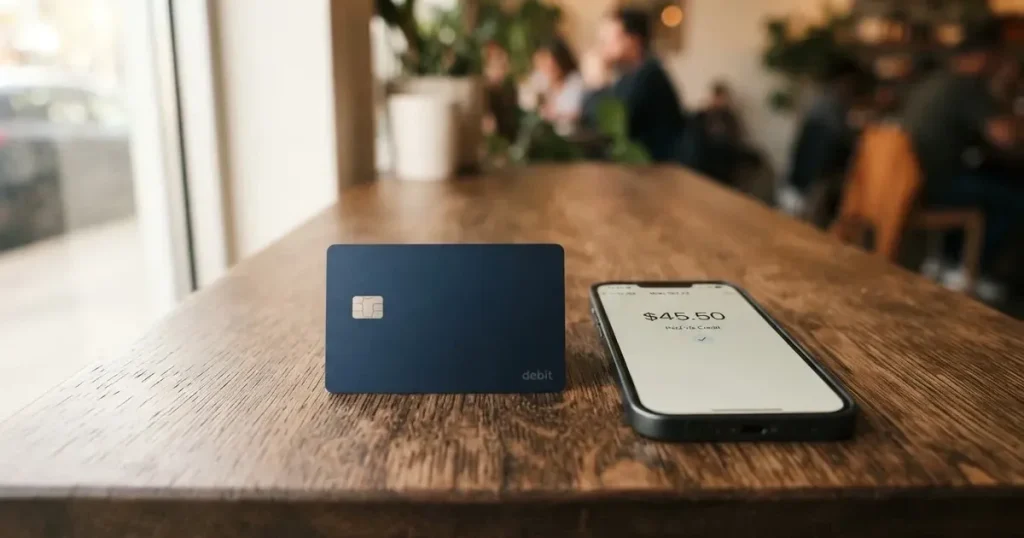
The Fuse card is a virtual Visa debit card that spends USDC, and almost everything interesting about it follows from that one design choice. There is no annual fee, no monthly fee, no inactivity fee, and no foreign transaction fee on the card itself. There is also no physical card, no cash machine, no Google Pay, no Apple-only debate to have, and exactly one way to load money: move USDC from your Main Account to your Card Account inside the app. Whether that trade suits you depends almost entirely on where you live, what you are already holding, and whether you need a card that works everywhere or only online.
I scored it 6.3 out of 10. That is not a verdict of “avoid” — it is a card with real strengths (cost, transparency, a regulated US issuer) sitting next to real limits (single-asset funding, no cash, virtual-only, Apple-only app). Read on and decide whether the strengths are the ones you need.
The conditions described here are current as of October 28, 2026.
Verdict
The Fuse card gets 6.3 / 10 because it is exceptionally cheap to hold and cheap to spend across borders, and frustrating to live with day to day. It is built for a narrow, specific person: someone in the Americas who already holds USDC, wants a USD card that costs nothing to keep, and does not need to draw cash or hand a physical card over.
| Criterion | Mark | Why |
|---|---|---|
| Who can get it | 5 / 10 | Issued in 18 jurisdictions: the US (except New York and Alaska), Argentina, Brazil, Colombia, Mexico, Ghana, Nigeria and other Latin American countries |
| Cost | 9 / 10 | Issuance $0, monthly fee $0.00, inactivity $0; FX on international transactions 0%; the crypto conversion fee is not disclosed |
| Top-up options | 4 / 10 | Only USDC, moved from Main Account to Card Account; networks not disclosed |
| Reliability and complaints | 8 / 10 | Issued by Lead Bank under a Visa U.S.A. licence, Bridge Ventures LLC runs the programme; one complaint about a closed account with $600 stuck; no Trustpilot presence |
| Everyday use | 4 / 10 | Virtual Visa only; Apple Pay available, Google Pay not mentioned; no cash machine |
| Total | 6.3 / 10 | Cheap and clean, but narrow |
Two numbers deserve to sit in front of you before anything else. First, the 9/10 on cost is real: there is genuinely nothing to pay for holding this card. Second, the 4/10 on everyday use is where the friction lives, and it compounds — no physical card means no cash, no card-present habits, and one fewer way to pay when a terminal is fussy.
Who it suits: residents of the listed countries who hold USDC, who want a spending balance they can top up instantly, and who are comfortable with a single-asset, app-only arrangement. Who it does not suit: anyone who needs cash, a physical card for a shop that wants to swipe something, Android, more than one stablecoin, or a card they can load from a bank account in local currency.
Will they give you the card
Eligibility is residence-based, and the list is long but specific. Fuse issues cards to residents of the United States excluding New York and Alaska, and to residents of Argentina, Bolivia, Brazil, Colombia, Costa Rica, the Dominican Republic, Ecuador, El Salvador, Ghana, Guatemala, Honduras, Mexico, Panama, Nigeria, Paraguay, Peru and Uruguay. Eighteen jurisdictions in total.
What the card’s public pages do not say is the citizenship rule. Whether you need a passport, national ID or residence permit from that country, or whether an EU or US citizen living in Brazil qualifies, is simply not stated on the pages I checked. If your citizenship differs from where you live, that is the first thing to raise with support before you invest an afternoon in the flow.
Note the shape of the list: Latin America plus Ghana and Nigeria plus most of the US outside two states. If you are in Europe, the UK, Australia or Asia, there is no card here for you on the evidence available — not “coming soon” in any published sense, just absent from the list.
How to get it
The application is three steps and it starts in the app. You verify in the Fuse app, create the virtual card, then move USDC from your Main Account to the Card Account. There is no physical card to wait for, because no physical card is mentioned anywhere.
You must be 18 or older. Identity verification is carried out through Bridge and every applicant has to pass it — this is not optional and there is no way around it, which is normal and also the reason a card like this can exist under a bank licence. The information required is your name, address, date of birth and government ID number. The card adds that further documents, such as a driver’s licence, may be requested at any time — that word “any time” is worth noticing, because it means your file is not closed after approval.
What the pages leave open: which documents are required at the outset, whether proof of address is needed, how long processing takes, and on what grounds an application can be refused. Those are not stated. There are also no tiers to work through — no bronze, silver or gold — which cuts both ways. Simpler is easier to reason about, but it also means you cannot move up a level to unlock higher limits; you can only adjust limits inside settings.
The card itself: a virtual Visa debit card in USD. The agreement calls it a prepaid debit card. That wording matters more than it looks — a prepaid card draws on a stored balance, whereas a debit card asks a bank to withdraw from a linked account at the moment of purchase — and here it is the former, funded by stablecoin.
Fees: what it really costs
The cost section is the strongest thing about Fuse, and you should read it as the headline rather than the footnote. Issuance is $0. The monthly fee is $0.00. There is no annual fee listed. The inactivity fee is $0. The international transaction and FX fee is 0% of the USD amount, and there is no per-purchase fee.
| Item | Value |
|---|---|
| Card issuance | $0 |
| Monthly fee | $0.00 |
| Annual fee | not listed |
| Inactivity fee | $0 |
| FX / international transaction | 0% of the USD amount |
| Per-purchase fee | none |
| Top-up fee | none; support says no top-up or card transaction fees, but the agreement says fees may apply |
| Crypto conversion fee | not stated |
| ATM | not available — cards cannot be used at ATMs; the agreement lists ATM withdrawal and balance inquiry as n/a |
| Default daily spending limit | $2,000 |
| Daily spending limit (maximum) | $2,000, adjustable in settings; the FAQ says it may increase after usage |
| Per-transaction limit | $2,000 |
| Monthly limit | not stated |
The row to keep an eye on is the crypto conversion fee. It is not stated. The funding mechanism works by selling a stablecoin at the point of purchase, and the Platform Provider or Program Manager may charge separate fees for stablecoin sales. So the card side is free and the conversion side is a question mark — and the conversion side is the one you actually touch every time you load money.
Now three ordinary payments, with the fees that apply to each:
- A $30 supermarket shop in your own country. No FX fee, because it is domestic. No per-purchase fee. What you lose is whatever the stablecoin sale costs you, since funding runs through USDC.
- A $60 online subscription billed from an overseas merchant. FX fee 0% of the USD amount. No per-purchase fee. Same caveat: the spread or fee on the USDC sale is not disclosed.
- $100 in cash at a cash machine. Not possible. Fuse Cards cannot be used at ATMs currently, and the agreement lists ATM withdrawal and balance inquiry as not applicable. This is not a fee; it is the absence of a capability.
Top up
There is one route, and it is inside the app. You transfer USDC from your Main Account to the Card Account. Only the USDC sitting in the Card Account can be spent, and the funds are ready immediately. You can move USDC back from the Card Account to the Main Account, subject to a five-minute security time lock.
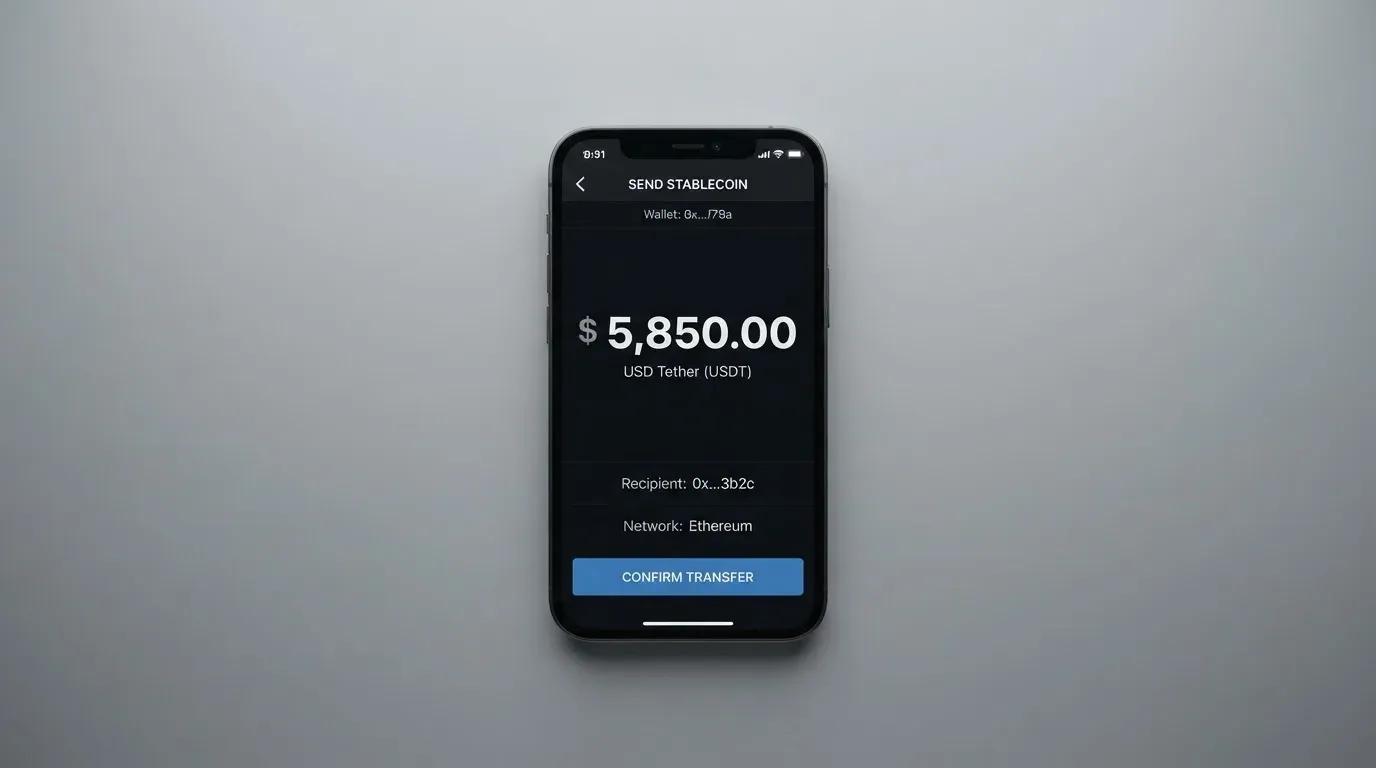
There are no top-up fees and a cash reload of $0, with no minimum listed. Support states there are no top-up or card transaction fees, though the agreement leaves room by saying fees may apply. Importantly, the Platform Provider or Program Manager may charge separate fees for stablecoin sales — so topping up is free on the card’s side and potentially not free on the crypto side.
What is not stated: which networks the USDC transfer uses. The wallet is positioned on Solana, but these pages do not confirm it. That matters more than it sounds. Blockchain transfers are irreversible, so a deposit sent on a network the provider does not support, or to an address belonging to a different network, can be lost or need manual support recovery with no guarantee. If you are holding USDC across several chains, you would want that answered before your first transfer, not after.
Fiat top-up options — bank transfer, card, ACH — are also not stated. If your thinking is “I will convert dollars to USDC somewhere and top up from there,” the conversion venue is your choice, not Fuse’s, and that venue sets its own fees.
On closure, the remaining balance is returned to the Platform Provider wallet as a stablecoin, with no fee. The bank may refuse to return balances under $1.00, and a closure can be blocked by a pending transaction, an open dispute, an amount owed or a hold. That last clause is the one to remember if you ever decide to close: closing is not instantaneous, and it is not unconditional.
Paying with it every day
Day-to-day use is where this card is thinnest, and the 4/10 is not a matter of opinion.
You spend USDC, in USD, on a virtual Visa. Apple Pay is supported for in-person payments. Google Pay is not mentioned — and since the app itself is iPhone-only, that omission stops being surprising the moment you look at the store listing, which is for iOS 16.4 and up and shows no rating (“not enough ratings”). One unofficial figure from a third-party aggregator puts the App Store aggregate at about 4.5–4.6 from roughly 35 ratings, with no date attached; the Fuse app’s own listing shows nothing, and I have not checked Google Play.
Blocked categories: no merchant category codes are listed, which is unusually permissive on paper. What is stated is that the card cannot be used for illegal transactions, nor for cash back at a point-of-sale terminal. No cashback or rewards of any kind are offered — no cashback is stated at all.
Points to keep in mind about card payments generally, since they bite crypto cards harder than ordinary ones. A merchant can look up the issuer identification number at the front of your card number and see which institution and country issued it; if that country differs from your billing address, the merchant may apply extra scrutiny. That is why a card issued in one country looks “foreign” in another. Address verification, which compares the numeric parts of the billing address a buyer types against issuer records, is mainly offered in the US, Canada and the UK and is generally unavailable for foreign-issued cards, which can cause declines. Some merchants decline prepaid or foreign-issued cards precisely because the lookup reveals the card type and issuer country. And a declined authorisation may leave a hold on your funds that can remain for several days.
If a payment does go wrong, Fuse’s rules are conventional and worth reading once. Report unauthorised use within two business days and your liability is capped at $50; report later and it can reach $500. Report errors within 60 days. The bank aims to decide in ten business days, extending to 45, with credit within ten business days if extended; up to 90 days applies to point-of-sale, foreign and new-card errors. You are told the outcome within three business days of the investigation ending. Stop payments are not allowed on card purchases. Merchant disputes go to the merchant first, and refunds are credited to the wallet as a stablecoin; there is no provisional credit for goods-and-services disputes. Pending amounts “become available in 24 hours” after clearing.
What can go wrong
The three structural risks here are single-asset concentration, custody, and a company structure with more than one name in it.
One asset, one route. If USDC loses its peg, your spending balance loses it with you — stablecoins are not necessarily stable, and USDC itself temporarily lost its peg in March 2023 during the US banking crisis. There is no second coin to fall back on within this card. If Circle’s operations or your access to the network stalls, you cannot spend.
Custody, not your keys. Control of crypto belongs to whoever holds the private key or seed phrase, and here the platform holds them. That is the ordinary trade for a card that works in shops, but it means you are trusting a counterparty — and custodians have a documented history of failure, including Mt. Gox at about $350 million reported stolen between 2011 and 2014, Coincheck at about $400 million in 2018 and the Ronin Network at $625 million in 2022.
Three companies. The card is issued by Lead Bank, a Missouri state-chartered bank, under a Visa U.S.A. licence. Bridge Ventures LLC is the Program Manager. Squads Labs Inc. is the Platform Provider and is not a bank. That structure is normal for this category — the network routes the messages, the bank holds the programme, the crypto brand markets it — and it means your agreement, your app and your banking relationship may all be with different legal entities.
The complaint that exists. There is one reported user account of a closed account leaving about $600 inaccessible, plus an X user reporting unanswered emails. Both come via a third-party aggregator with no date shown, and they are unofficial. No Trustpilot page was found for Fuse, and no Reddit threads. No official incident was found. The card agreement contains a binding arbitration clause with a class-action waiver, which is standard but does mean you give up the option of joining a group lawsuit.
One further detail from the agreement: fiat in transit during conversion is not FDIC insured. Funds in the wallet are not FDIC insured either, and there is no overdraft.
Controls you do get. In settings you can freeze and unfreeze the card, set and reset a PIN, set the daily spending limit up to $2,000, and use “smart account enforced spending limits”. The bank may block or cancel a card it suspects of fraud. Two-factor authentication is not mentioned anywhere, which for a wallet holding your money is the gap I would ask about.
If you need help: email [email protected], phone 833-237-8104. Hours are not stated; the agreement refers to business days, Monday to Friday excluding holidays.
What to take instead
If Fuse’s narrowness is the problem, these are the alternatives worth comparing — all in the same general family, all with their own trade-offs.
| Card | Score | Card type | Headline cost | Funding | Where it fits |
|---|---|---|---|---|---|
| Fuse | 6.3 / 10 | Virtual Visa, USD | $0 issuance, $0.00 monthly, 0% FX; conversion fee not stated | USDC only, networks not stated | Americas residents already holding USDC |
| TokenPocket | 5.8 / 10 | Visa/Mastercard debit, virtual | NFT creation fee partly covered, user pays “a small portion” (amount not stated); no other fees | Crypto deposits into the TP Card; 1% fee on deposit, refunded later via rewards | Europe on Visa, Asia-Pacific on Mastercard |
| MetaMask | 7.1 / 10 | Mastercard, virtual then optional metal | Virtual free, no annual or maintenance fee; Metal $199/year | Spends directly from connected wallet across Linea, Base, Monad, Solana | Broadest country list of the three, plus real rewards |
| KAST | 6.1 / 10 | Virtual and physical, Visa tiers | Standard $0/year, Premium 1,000 USD/year, Private 10,000 USD/year | USDT, USDC, PYUSD, RLUSD on several chains | People who want a physical card and cashback tiers |
TokenPocket covers a different map: Visa debit across European countries and territories, Mastercard debit for Australia, Canada, Hong Kong, Japan, Taiwan, New Zealand, Singapore, South Korea and the UK, with the Americas planned for Q2 2025. Balances sit in EUR24 and USD24, cards are virtual, and it runs on Arbitrum. The awkward part is the 1% fee on depositing cryptocurrency into the card, which the company says is refunded later through rewards or reduced transaction fees — a promise about later, not a lower price now.
MetaMask scores highest of the four at 7.1/10, and the difference is mostly breadth. Sign-up is open across 45 listed countries and territories, with a waitlist elsewhere; US and UK sign-ups are temporarily closed per the FAQ. You spend straight from a connected wallet on Linea, Base, Monad or Solana, across tokens including mUSD, wETH, EURe, GBPe, USDC and USDT. It charges a minimal per-transaction fee (amount not stated on the pages read) with no additional MetaMask fees and no foreign transaction fee. Rewards are the best in the group: 1% cashback in mUSD on the virtual card, a Metal headline of 3% capped by the footnote to the first $10,000 spent and 1% after that, plus $FLY bonuses through a dining app. The catch: Metal costs $199 a year, one card per user, and Solana-only wallets cannot withdraw credit.
KAST is the one to look at if you want a physical card and cashback on the side. It offers virtual and physical cards, up to ten per user, from Visa Platinum Standard to Visa Infinite metal and gold-plated tiers, plus Pengu, Solana and Bitcoin designs. Stablecoin top-up, USD card spend, transaction fee and Apple/Google Pay are all 0%; the non-USD FX fee is 0.5%–1.75% depending on your country of residence, the transaction country and the card programme. It accepts USDT, USDC, PYUSD and RLUSD on Ethereum, Solana, Polygon, Arbitrum and TRON, converts stablecoin deposits 1:1 at 0% spread, and pays cashback in USD when the transaction is authorised — 1.5% on the first 2,000 USD a month at Standard, rising with tier. The membership costs are real, though: 1,000 USD a year for Premium and 10,000 USD a year for Private. A Standard physical card is free with 40 USD delivery, and there is a 1 USD a month inactivity fee after 12 months. Its KYC gate is strict in a way worth reading twice — a Restricted Locations list is referenced but no countries are named, and holding an ID from a restricted region can make you ineligible even if you live in a supported country.
Two general points about this whole category, while we are comparing. First, crypto programmes do close: Visa terminated its global agreements with FTX on 13 November 2022 and the FTX US debit card was wound down, and WaveCrest had all its Visa programmes closed when Visa suspended it in Europe in 2018. Closures typically mean a notice period, then loading and spending stop, then you are asked to withdraw what is left. Second, a card is a payment service regulated separately from the crypto side, so a crypto card often rests on two licences at once — in the EU, MiCA (Regulation (EU) 2023/1114, in legal effect from June 2023, with its token rules applying from 30 June 2024 and the remaining provisions from 30 December 2024) covers custody and transfers, while e-money and payment law covers the card. You can check whether a provider appears on ESMA’s interim register of authorised crypto-asset service providers.
Who I would recommend it to
I would recommend Fuse to a resident of one of the eighteen listed jurisdictions who already holds USDC, pays most of their spending in USD or online, does not need cash, and wants a card with no ongoing cost at all. For that person it is a genuinely good deal: $0 to open, $0.00 a month, 0% abroad, money available immediately after a transfer, and an issuer that is a real Missouri bank rather than an offshore entity.
I would not recommend it as a first crypto card. Someone new to this has enough to learn about stablecoin pegs, networks and irreversible transfers without also discovering that there is no physical card, no Android app and no cash machine. The undisclosed conversion fee and the undisclosed network are poor things to meet for the first time on a transaction you care about.
And if you are outside the Americas, outside the US minus New York and Alaska, or anywhere on this list would be a stretch rather than a description — the honest answer is that Fuse is not for you, and the four criteria that cost it points (who can get it, top-up options, everyday use) are not going to improve with patience. MetaMask, with a score of 7.1/10 and the widest country list of the four, or KAST, if you want a physical card and cashback, are where I would look next.
Frequently asked questions
What is the Fuse card?
The Fuse card is a virtual Visa debit card denominated in US dollars that spends USDC held in your app rather than money in a bank account. It is issued by Lead Bank, a Missouri state-chartered bank, under a Visa U.S.A. licence, with Bridge Ventures LLC as Program Manager and Squads Labs Inc. as Platform Provider. There is no physical card — only the virtual one, plus Apple Pay for contactless payments.
How does the Fuse card work in practice?
You hold USDC in a Main Account inside the app and move it to a Card Account; only USDC in the Card Account can be spent. The card then behaves like an ordinary prepaid Visa debit in stores and online, drawing down that stored balance. Money you move back from the Card Account to the Main Account has a five-minute security time lock on it.
Is Fuse a bank?
No. Fuse is not a bank. The card is issued by Lead Bank, a Missouri state-chartered bank, which is the institution that actually holds the card programme under Visa’s licence. Fuse itself operates through Bridge Ventures LLC as Program Manager and Squads Labs Inc. as Platform Provider, and the Platform Provider is explicitly not a bank.
What does it cost to keep a Fuse card?
Issuance is $0, the monthly fee is $0.00, no annual fee is listed, and the inactivity fee is $0. The FX or international transaction fee is 0% of the USD amount and there is no per-purchase fee. The one gap is that the crypto conversion fee is not stated, and the Platform Provider or Program Manager may charge separately for stablecoin sales.
Can I use a Fuse card in my country?
Only if you live in one of the eighteen listed jurisdictions: the United States excluding New York and Alaska, Argentina, Bolivia, Brazil, Colombia, Costa Rica, the Dominican Republic, Ecuador, El Salvador, Ghana, Guatemala, Honduras, Mexico, Panama, Nigeria, Paraguay, Peru or Uruguay. Residence is the criterion; the citizenship rule is not stated on the card’s public pages, so ask if your nationality differs from where you live.
Does the Fuse card require KYC?
Yes, and it is mandatory. Identity verification runs through Bridge and every applicant must pass it. The information required is your name, address, date of birth and government ID number, and further documents such as a driver’s licence may be requested at any time. Processing time and grounds for refusal are not stated on the public pages.
How do I top up the Fuse card?
The only method described is transferring USDC from your Main Account to your Card Account inside the app, and the funds become available immediately. No top-up fee is charged and there is no minimum listed, though fees may apply to the stablecoin sale itself. Which networks the transfer uses is not stated on these pages, so confirm that before your first transfer — a wrong-network transfer can be lost.
Can I get cash or use it with Google Pay?
No cash: Fuse Cards cannot be used at ATMs currently, and the agreement lists ATM withdrawal and balance inquiry as not applicable. Apple Pay is supported for in-person payments; Google Pay is not mentioned. The app itself is iPhone-only, requiring iOS 16.4 or later, with no Google Play listing checked.
Is the Fuse card safe, and is my money insured?
Your funds are not FDIC insured and there is no overdraft. Fiat in transit during a conversion is not FDIC insured either. What you do get is a freeze and unfreeze control, PIN set and reset, spending limits up to $2,000 a day, and the issuer’s right to block a card it suspects of fraud. Two-factor authentication is not mentioned, and disputes are settled through binding arbitration with a class-action waiver.
Is the Fuse card worth it?
If you live in a listed jurisdiction, already hold USDC, want a USD card with zero monthly and zero FX fees, and never need cash or a physical card, then yes — the value is hard to argue with. If you need a physical card, cash, an Android phone, several stablecoins or local-currency bank funding, then no: those are exactly the criteria that pull the score down to 6.3 out of 10.
Wallet cards in the catalogue – cryptocardcatalog
Content created by the «cryptocardcatalog» team