
A no-KYC Visa Platinum you can top up with BTC, ETH, SOL or stablecoins — and a few questions the marketing page does not answer
 Available in US
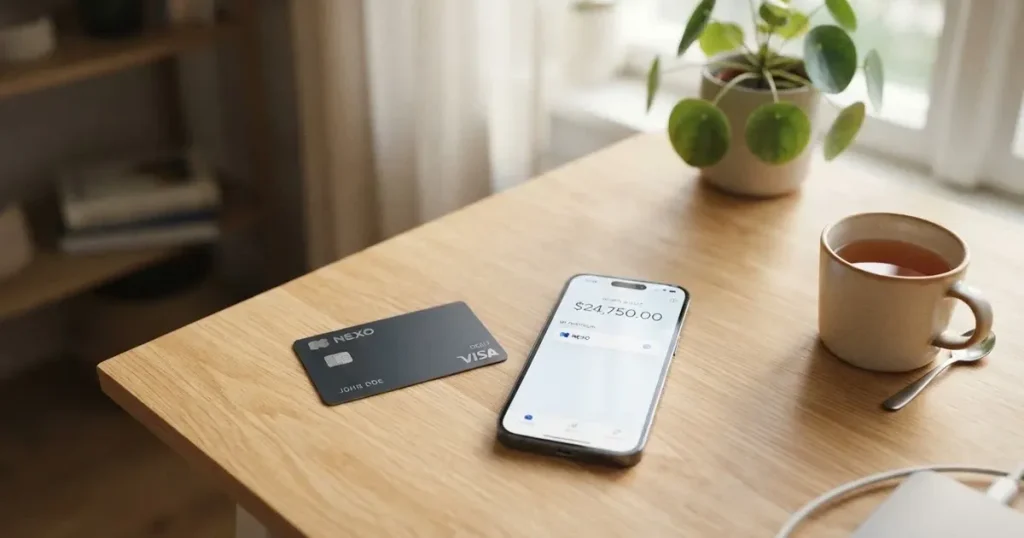
AnomaCard is a Visa Platinum debit card, virtual by default with an optional physical version, that draws on a crypto balance you control from your own wallet. There is no identity check, no passport scan and no utility bill: you sign in with MetaMask or Phantom, or a username and password, and the card is issued in under a minute. You can tap to pay with Apple Pay or Google Pay in 180-plus countries, get 2% cashback on purchases, and avoid a foreign-transaction markup on the card’s own side. The marketing pitch is unusually clean for a crypto card. The catch is that the company behind it is unusually hard to read.
This review is written for someone who is choosing a payment card and finds ordinary bank cards hard to obtain, or who simply wants to spend crypto without handing over a passport. I will walk you through who can get one, what it really costs day to day, how topping up works, where the everyday experience holds up, and what genuinely can go wrong. The information below is current as of October 28, 2026.
Verdict
AnomaCard lands at 7.8 out of 10 in my scoring, and that score reflects two things pulling in opposite directions. The product side is strong: a real Visa Platinum, a working Apple Pay and Google Pay rollout, no KYC at all, no monthly fee, and a deposit fee that drops with VIP tier from 0.60% to 0.30%. The company side is the weak point. The operator is named “AnomaCard Protocol” with a 2026 copyright, and the issuer, BIN sponsor, licences and country of registration are not stated. Information on terms and the FAQ is not available on the public pages. I could not find a Trustpilot page or Reddit thread with complaints either, which sounds reassuring but is really just silence: a young product with no public reputation yet.
| Criterion | Score | Why it matters |
|---|---|---|
| Who can get it | 9 / 10 | Marketed as “Global”; no country, citizenship or residency exclusions are stated; Apple Pay and Google Pay reach 180+ countries. |
| Cost | 8 / 10 | Activation 0%, $0 monthly fee, deposit fee 0.60% (Starter) down to 0.30% (Elite), no hidden FX markup; physical card is $120 once. |
| Top-up options | 8 / 10 | BTC, ETH, SOL, USDT (ERC-20 and SPL) and USDC (ERC-20 and SPL) live; Arbitrum, Polygon and BNB Chain “coming soon”. |
| Reliability and complaints | 5 / 10 | Operator is “AnomaCard Protocol”; issuer, BIN sponsor, licences and place of registration are not named; terms and FAQ not available on public pages; no complaints found, but no public track record either. |
| Everyday use | 9 / 10 | Virtual Visa Platinum plus a physical card, Apple Pay and Google Pay, worldwide ATM withdrawals on the physical card, 2% cashback. |
| Total | 7.8 / 10 | Strong product, thin disclosure. |
If you are topping up with BTC, ETH, SOL or stablecoins and you specifically want a card that does not ask for your ID, this is one of the more usable options I have looked at. If a regulated issuer and a published licence are non-negotiable for you, keep reading — the alternatives section compares three other no-KYC-leaning cards, and the risks section explains what “not stated” actually means in practice.
Will they give you the card
The card is positioned as global. The product page describes online use “wherever Visa or Mastercard is accepted”, and the Apple Pay and Google Pay tap-to-pay feature is described as working in 180-plus countries. I could not find a list of excluded countries, a list of blocked regions, or any rules around citizenship or place of residence on the public pages. That is unusual for a Visa-branded product, where issuers normally publish eligibility criteria. Read it as “no stated exclusions today”, not as “no exclusions anywhere, ever”.
There is no identity check at any tier. The signup flow is a Web3 wallet sign-in — MetaMask or Phantom — or a username and password with optional two-factor authentication. The minimum age is not stated on the public pages, which is a small but real gap; in most jurisdictions prepaid and debit cards are only issued to adults, and a card product that does not name an age is one where you have to assume 18+ and behave accordingly. If you are under 18, treat the product as not for you until the company publishes a number.
The headline point is the absence of paperwork. No ID scans, no passports, no utility bills, no selfie check. That is the central reason someone would choose AnomaCard over a regulated card, and it is the central reason a regulated bank’s compliance team would not.
How to get it
The signup is built to be quick. You connect a Web3 wallet, or you create an account with an email and a password, and the system issues a virtual Visa Platinum debit card in what the page advertises as under 60 seconds. You can stop there with the virtual card, or order a physical card. The card is described as Visa Platinum in the main product text, and “Visa & Mastercard” is mentioned in some places on the same site, which is a small inconsistency I will come back to in the risks section.
There are no KYC tiers. Instead there are VIP tiers that affect pricing rather than eligibility: Starter, Explorer, Voyager and Elite. They differ on deposit fee (from 0.60% down to 0.30%) and on cashback cap (from $500 up to over $10,000). The way you climb a tier is by deposit volume, not by uploading more documents. That is part of the design.
The physical card is paid for up front: a one-time $120.00 fee for issuance and shipping, taken from your crypto balance, and the countries it ships to and the delivery time are not stated. If a physical card matters to you, that is one of the things you will want to confirm by emailing support before you pay the fee.
What it really costs: Fees
Cost is where the picture is cleanest. There is no activation fee, no monthly maintenance fee, no inactivity fee, and no foreign-transaction markup that the page admits to. The deposit fee — the one number that moves — is tiered and clearly stated, and the $50 minimum deposit to unlock the full card is a one-time threshold rather than a recurring charge. The only large fixed cost is the physical card.

| Fee or limit | Amount |
|---|---|
| Activation | 0% |
| Monthly maintenance | $0.00 |
| Inactivity fee | None |
| Deposit fee, Starter tier | 0.60% |
| Deposit fee, Explorer tier | 0.50% |
| Deposit fee, Voyager tier | 0.40% |
| Deposit fee, Elite tier | 0.30% |
| Foreign transaction / FX markup | None stated |
| Physical card (one-time) | $120.00 issuance and shipping |
| Minimum deposit to unlock full card | $50 |
| Daily spending limit | $5,000 |
| Monthly spending limit | $20,000 |
| ATM fee | Not stated |
| ATM allowance | Not stated |
Two things to keep in mind when you read the table. First, “no FX markup” refers to the card’s own markup. On-chain network fees for your deposit are charged by the blockchain, not by AnomaCard, and you pay those on top. Second, the ATM fee and the monthly ATM allowance are not stated on the public pages, which is unusual for a card that advertises worldwide ATM withdrawals. Treat that as a question to ask support before you rely on the card at an ATM, especially abroad.
To make the fees feel real, walk through three everyday situations.
Buying coffee with Apple Pay, paid from a USDC balance. You tap your phone, the merchant is charged in their local currency, the network converts it, and your USDC is sold at the moment of payment. On the card’s side, there is no FX markup and no transaction fee. What you pay is the deposit fee you already paid when you topped up (0.30% to 0.60% depending on tier) plus the Ethereum or Solana network fee for that top-up. If you are topping up in small dribbles, the network fee per top-up will eat a noticeable share of a coffee.
Paying a hotel in euros with the physical card, paid from a USDT-on-Ethereum balance. The same logic applies: no FX markup on the card, no transaction fee, just the upfront deposit fee and the network fee for the top-up. The $5,000 daily and $20,000 monthly caps are unlikely to bite for a hotel, but the merchant may run a pre-authorisation that is larger than the final bill and is held for several days — that is how card networks work, not a fee, but it is worth knowing.
Withdrawing local currency from an ATM abroad. This is the one I would test with a small amount first. The card page advertises worldwide ATM withdrawals, but the fee and the allowance are not stated. You are likely to face the ATM operator’s own surcharge, and on top of that there may be a card-side ATM fee that the public page does not publish. If you travel frequently, ask support for the number before you leave.
How to top it up
Top up is the moment this card feels different from a bank card. You do not move money from a bank account; you send crypto to a deposit address.
The live list is short and well-defined. You can deposit BTC, ETH, SOL, USDT on Ethereum (ERC-20) or on Solana (SPL), and USDC on Ethereum (ERC-20) or on Solana (SPL). Three more networks are listed as “coming soon”: Arbitrum (ARB), Polygon (POL) and BNB Chain (BNB). Each network has its own generated deposit address, and the funds unlock after one blockchain confirmation. The deposit fee — 0.30% to 0.60% by tier — is taken at deposit time, and the $50 minimum deposit to unlock the full card is a threshold you only cross once.
| Network | Token | Status |
|---|---|---|
| Bitcoin | BTC | Live |
| Ethereum | ETH | Live |
| Solana | SOL | Live |
| Ethereum (ERC-20) | USDT | Live |
| Solana (SPL) | USDT | Live |
| Ethereum (ERC-20) | USDC | Live |
| Solana (SPL) | USDC | Live |
| Arbitrum | ARB | Coming soon |
| Polygon | POL | Coming soon |
| BNB Chain | BNB | Coming soon |
A few practical warnings. Blockchain transfers are irreversible, and a deposit sent on a network the card does not support, or to an address of another network, can be lost or stranded. The same is true if you send USDT on Tron: Tron is not in the live list, and sending USDT-TRC20 to an Ethereum deposit address is one of the classic ways to lose money. If you are topping up with stablecoins, send on the exact network named in the dashboard.
For withdrawals, the FAQ states that you only pay standard blockchain network fees, which is the same as saying “the cost of the transfer is the cost of the network”. The withdrawal procedure and the closure balance are not stated, so if you need to empty the card to close it, ask support first.
Fiat top-up — meaning a bank transfer or a card top-up in euros or dollars — is not stated on the public pages. The product is built around crypto in, crypto out, with the card in the middle. If you need to add funds from a bank account, this is not that product.
Paying with it every day
In normal use, the card behaves like a prepaid Visa. You load a balance in crypto, the system converts to fiat at the moment of payment (or holds a stablecoin balance and spends that), and the merchant sees a normal Visa transaction. The virtual card works online wherever Visa is accepted, and the physical card works in shops and at ATMs.
The two features that make everyday use easier are the mobile wallets. Apple Pay and Google Pay are supported for both online and in-person payments, and they work in the 180-plus countries the page advertises. Tokenised payments through Apple Pay replace your card number with a device-specific number stored in the Secure Element, and each payment uses a one-time dynamic security code, which is the standard way of making a card tap-to-pay safer than swiping. The card issuer can also restrict the tokenised number — for example, blocking it on certain merchant categories — and those controls are not stated, so again ask if you need a specific use case.
The 2% cashback on purchases is the other daily-life feature. The page is emphatic that it requires “no staking or lockup”, which is the answer to the usual crypto-card objection of “you only get the rewards if you lock your tokens for six months”. The catch is that the cashback is paid in something, and the page does not say what. Cashback paid in a volatile token is not the same as cashback paid in USDC, and until the company publishes the asset, treat 2% as an upper bound, not a guaranteed yield.
There is no native mobile app. The product is a web dashboard plus Apple Wallet and Google Wallet. If you are used to checking balances and pushing notifications from a phone app, the absence is felt, and it is also where blocked merchant categories and dispute procedures are not stated, so for those two questions you have to email [email protected] and wait for the under-two-hours average response the page claims.
What can go wrong
This is the section I would read first if I were choosing a card, and the place where AnomaCard’s score loses the most points.
The company is a half-said name. The operator is “AnomaCard Protocol”, with a 2026 copyright. The issuer, the BIN sponsor, the licences held, and the country of registration are not stated. Visa and Mastercard cards are issued by licensed institutions, and the licence is the bit that gives you a regulator to complain to if something goes wrong. A page that names a Visa Platinum but not the bank behind it is asking you to take the issuer on trust.
Some public links are dead. The terms and FAQ pages are not available on the public site. A card that handles real money should have working terms. If you cannot read the conditions at the moment you sign up, you have not actually agreed to known conditions.
“No FX markup” is what the page claims, not what the regulator guarantees. A regulated issuer is bound by a regulator’s view of what counts as a fair FX margin. A self-described protocol is not. If a 1% or 2% margin shows up at the moment of payment, your recourse is the support inbox.
Crypto deposits are irreversible. Send USDT on the wrong network, send to a deposit address for the wrong token, or fall for a clipboard-hijacker that swaps the address you copied, and the funds are gone. The card cannot refund you because the blockchain cannot refund you.
Self-custody has a learning curve. The non-custodial model means you hold the keys, and that is good for privacy and bad for mistakes. A seed phrase, once exposed, is a permanent loss. A phishing site that mimics MetaMask is a permanent loss. The card does not protect you from any of that.
There is no public track record. I searched for complaints and could not find a Trustpilot page or a Reddit thread for AnomaCard. A clean search result on a brand-new product is not the same as a clean reputation; it is the absence of a reputation. As the user base grows, complaints will surface. Today, the only evidence you have is the marketing.
Cashback is paid in something unspecified. If that something is a volatile token, 2% cashback can be a smaller number in dollar terms by the time you spend it.
Disputes, freezes and spending controls are not stated. Most regulated cards publish their dispute process and the list of merchant categories that are blocked. AnomaCard does not.
The physical card ships from somewhere, and that somewhere is not stated. A $120 fee for a card that may or may not reach you, with no delivery time and no country list, is a real consideration.
In short: the product side is honest about what it does, and the company side is not honest about what it is. For a small monthly spend in stablecoins, that trade is reasonable. For your salary, it is not.
What to take instead
Three cards worth a look if AnomaCard’s missing disclosure is a deal-breaker for you. None of them is a perfect substitute, and the scores are from the same scoring framework I used above.
| Card | Score | Who it suits | Where it falls short |
|---|---|---|---|
| AnomaCard | 7.8 / 10 | Crypto-native users with their own wallet who want a Visa Platinum with no KYC and no monthly fee. | Operator disclosure is thin; ATM fees, dispute process and delivery terms not stated. |
| Cardex | 5.6 / 10 | Users in Nigeria and across 200+ countries who want a single card on Verve, Visa, Mastercard and UnionPay. | App Store listing is Naira-focused; fees, monthly cost and cashback not stated. |
| CardFlow | 4.9 / 10 | Nigerians and global users who want a free virtual USD Mastercard in 3 minutes. | Country list and exclusions not stated; monthly fee, fees and rewards not stated. |
| HyperCard | 4.7 / 10 | Users in 176-plus countries who want a prepaid USD/EUR balance loaded from crypto in an app. | Network, fees, monthly cost and rewards not stated on the App Store page. |
Cardex is the broadest in network reach: Verve, Visa, Mastercard and UnionPay, virtual and physical, in 200+ countries. The trade is that the app store listing is Naira-focused, the fees and the cashback are not stated on the public pages, and the conversion rate is described as “AI-Powered” — marketing for “we pick a rate at the moment of payment”, which is not the same as a guaranteed best rate.
CardFlow is built for Nigerians and global users, with a free virtual USD Mastercard created in 3 minutes. The simplicity is real; the disclosure is thinner than AnomaCard’s, with monthly fees, transaction fees and cashback all unstated.
HyperCard is a prepaid card in USD or EUR, accepted in 176-plus countries, loaded from crypto such as USDT, BTC or ETH in the app. The trade is that the network, fees, monthly cost and rewards are not stated on the App Store page, so you cannot compare it on price before you sign up.
If your priority is “no KYC, and the company is at least named in full”, AnomaCard is still the strongest of the four in my scoring. If your priority is “I want to read the terms before I send money”, none of the four is great, and you should look at a regulated European EMI-issued card with a published CASP authorisation.
Who I would recommend it to
AnomaCard is a good fit if you already keep crypto in your own wallet, you specifically want a card that does not ask for an ID, and you are comfortable sending funds to a deposit address on a specific network. The 2% cashback, the no-monthly-fee structure, and the Apple Pay and Google Pay rollout make it a usable daily card once it is loaded. The Elite tier, at 0.30% deposit fee and a cashback cap over $10,000, is the version that makes sense for serious users.
It is not a good fit if you need a card for your salary, if you want a published licence you can verify on a regulator’s register, if you need a clear dispute and chargeback process, or if you want a physical card shipped to a specific country with a delivery time you can plan around. For those, the alternatives above are worth a look, and a regulated EMI-issued card with a MiCA CASP authorisation is the safer default.
The honest summary: the product is good, the disclosure is thin, and the choice is yours.
Frequently asked questions
What is AnomaCard?
AnomaCard is a Visa Platinum debit card — virtual by default with an optional physical card — that is funded from a crypto balance in your own Web3 wallet. It is operated by “AnomaCard Protocol” and is described on its public pages as a global product.
How does AnomaCard work?
You sign in with MetaMask or Phantom, or a username and password with optional 2FA, and a virtual card is issued in under a minute. You send BTC, ETH, SOL, USDT or USDC on Ethereum or Solana to a generated deposit address, and the balance is available to spend online, in shops, in Apple Pay and Google Pay, and at ATMs on the physical card.
Is AnomaCard a bank?
No. AnomaCard describes itself as a “protocol” and does not name a banking partner, an e-money institution, or a regulator. The card rides on the Visa network, which means a licensed issuer exists, but the issuer is not named on the public pages.
Who owns AnomaCard?
The public pages name the operator as “AnomaCard Protocol” with a 2026 copyright. The corporate owner, the registered entity, the country of registration, and the issuer are not stated.
Is AnomaCard available in my country?
The product is described as “Global” and Apple Pay and Google Pay as working in 180-plus countries, but the public pages do not publish a list of supported countries, a list of excluded countries, or rules around citizenship or residency. Treat it as “no stated exclusions today”.
How do I apply for AnomaCard?
You connect a Web3 wallet or create an account with a username and password, the card is issued in under a minute, and you can order a physical card for a $120.00 one-time fee. There is no identity check and no document upload.
Does AnomaCard require KYC?
No. The product page says there are no ID scans, no passports and no utility bills. There are no KYC levels. The only tiers are VIP tiers that affect the deposit fee and the cashback cap, not the documents you upload.
How do I top up AnomaCard?
You send BTC, ETH, SOL, USDT (ERC-20 or SPL) or USDC (ERC-20 or SPL) to the deposit address shown in your dashboard for that network. The funds unlock after one blockchain confirmation, and a 0.30% to 0.60% deposit fee is taken at that point depending on your VIP tier.
Is AnomaCard free?
There is no activation fee, no monthly fee and no inactivity fee. The deposit fee is 0.30% to 0.60% by tier, the physical card costs $120.00 once, and a $50 minimum deposit is required to unlock the full card. Network fees for the deposit are charged by the blockchain, not by AnomaCard.
Is AnomaCard safe?
It uses a non-custodial wallet address model, optional 2FA at login, and a published “Privacy & Zero-Log Architecture Policy”. The unresolved safety questions are the unnamed issuer, the missing licence information, the dead terms/FAQ links, the unspecified cashback asset, and the absence of a public complaint record. Treat the product as a young one without a track record.
Virtual cards in the catalogue – cryptocardcatalog
Content created by the «cryptocardcatalog» team