
Fiwind is a free virtual Mastercard aimed at Argentines and Brazilians, with real costs hiding in the conversion and a 1.5% foreign-processing fee
 Available in US
Fiwind is a virtual Mastercard you load and spend like a prepaid card, built by an Argentine fintech whose heart is clearly in Argentina and Brazil. Issuance and maintenance cost nothing, card payments are advertised as commission-free, and the top-up side is the strongest part of the offer: pesos, dollars or crypto, across a very long list of networks. But the picture is not as clean as “free” suggests. International purchases carry a 1.5% processing charge, merchants are always paid in Argentine pesos, crypto transfers cost 0.50% plus a fixed amount, and there is no physical card and no described ATM use — so cash simply is not part of the offer.
Conditions are current as of October 28, 2026.
The conditions described here are current as of 2026.
My score for the card is 5.8 out of 10. That is not a condemnation; it is a card with one genuinely excellent dimension (top-up) sitting next to several thin ones.
| Criterion | Mark | Why |
|---|---|---|
| Who can get it | 3 / 10 | Argentine fintech, focused on Argentina and Brazil (Pix); country list not disclosed, card works at merchants worldwide |
| Cost | 7 / 10 | Issuance and maintenance free, card payments commission-free; 1.5% for processing payments abroad; USDT/USDC transfers 0.50% + 0.50 USD (ACH) |
| Top-up options | 9 / 10 | Pay in pesos, dollars or crypto; networks include Bitcoin (incl. Lightning), Ethereum ERC20, XRP Ledger, BNB BEP20, Arbitrum, Optimism, Cardano, Solana, Polygon, Stellar, TON, Polkadot, World Chain, Tron |
| Reliability and complaints | 6 / 10 | PSAV registration No. 75 at CNV, with the site noting this is not a licence; issuer unnamed; Trustpilot one review at 1 star, App Store Argentina 4.9 from 9.6K ratings |
| Everyday use | 5 / 10 | Virtual Mastercard only, Apple Pay and Google Pay with NFC; ATM not described |
Who this suits: an Argentine or Brazilian who already holds crypto or pesos in the platform, wants to spend it at ordinary shops and online sites, and is comfortable with a card that exists only in the phone. Who it does not suit: anyone who needs a physical card, needs cash from an ATM, is travelling with heavy foreign-card spending, or is outside the two markets the product was clearly built around.
Will they give you the card?
The short answer is: probably yes if you are in Argentina or Brazil, and you will not find out from a published country list, because there isn’t one.
Fiwind’s own pages don’t state which countries can open an account. The company is Argentine, the support material is in Spanish, and Pix support points at Brazil as the second market. The card itself, once issued, works at merchants worldwide — but “works worldwide” is a statement about where the card can be *spent*, not about who can be *approved*. I would plan on the card being an Argentina-first and Brazil-first product, and check inside the app before you count on anything else.
Two more things worth knowing before you try. The legal entity behind the brand is not named on the card pages, and neither is the card issuer. The company is registered as a PSAV (virtual asset service provider) No. 75 in the CNV registry, dated 6 September 2024, and the site itself says that registration “no implica licencia ni supervisión” — it implies neither a licence nor supervision. Read that as: the registration is real, and it is not a guarantee standing behind your card.
How to get it
The application is described in two verifications inside the app, plus one choice you make yourself. You confirm your current address and your phone number, and you choose a payment currency. After that the card is described as usable right away, once address and phone verification are done — the card is “completamente virtual”, on the MasterCard network, and there is no physical version.
The documentation requirement is the part I cannot tell you. The public pages do not say what documents are needed; they only say you complete “los datos requeridos”. That gap matters, because it is the difference between a signup that takes a minute and one that stalls for weeks.
There is, however, a tier structure that reveals how the company thinks about verification, and it is genuinely useful to understand before you start:
- Gold — reached by completing account verification. This is the base level.
- Platinum — reached by providing proof of address.
- Black — reached by providing income documents. The company does not promise Black exceeds Platinum; treat it as a status, not a guarantee of bigger numbers.
Limits are denominated in USD. The annual limit renews on 1 January, with a monthly cap inside it, and the actual amounts are not shown on the page. So you cannot read a number off the site and budget from it — you will have to look inside the app. The card request itself requires address and phone verification, and neither the processing time nor the reasons for rejection are stated.
Fees: what it really costs
Free is the headline, and in two specific places it is literally true. There is no issuance cost and no maintenance cost, and card payments with Fiwind carry no commission. Buying and selling crypto inside the platform is also described as commission-free. That is a better starting position than most cards in this category offer.
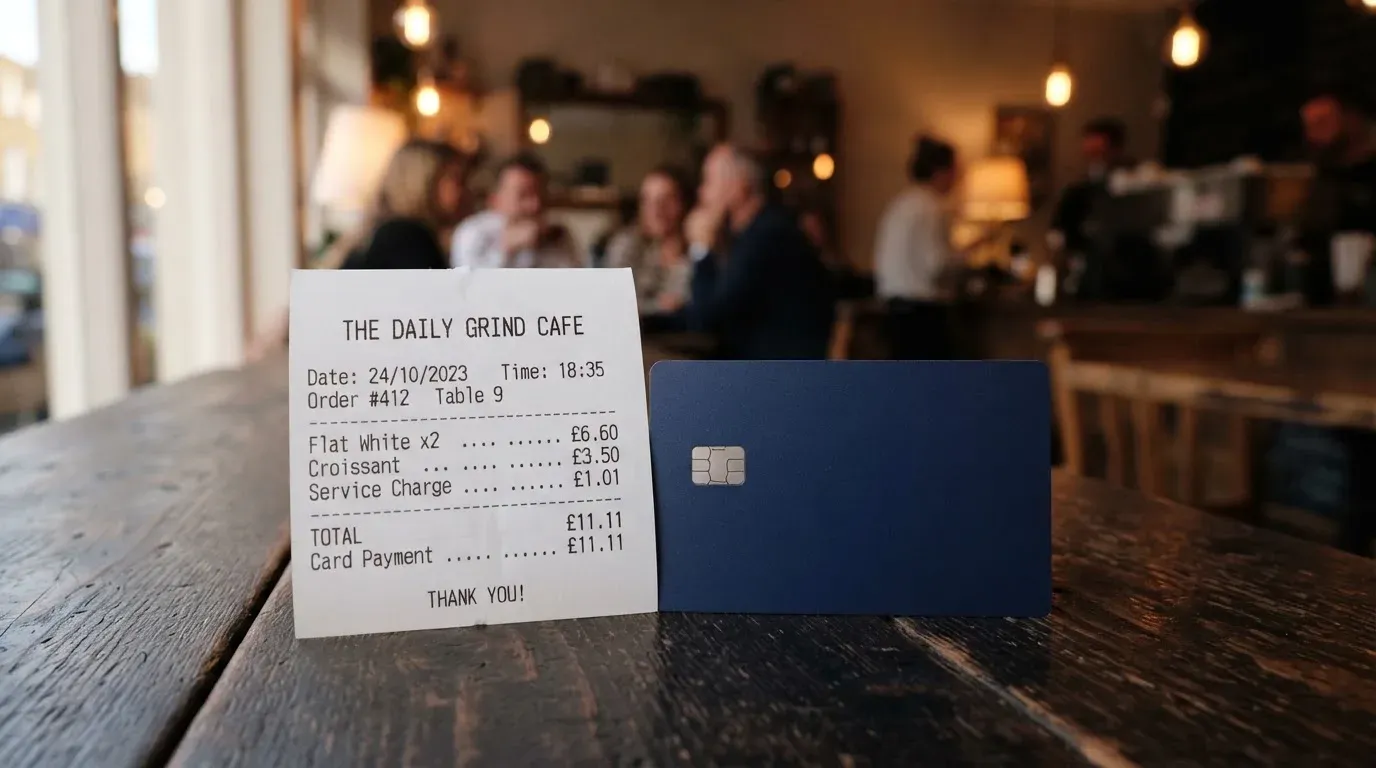
Then come the charges that the headline does not mention.
| Fee or limit | What the card’s pages say |
|---|---|
| Issuance | Free — “sin costo de emisión” |
| Monthly maintenance | Free — “ni mantenimiento” |
| Card payments | No commission |
| Buying/selling crypto | No commission |
| International purchases | 1.5% fee for processing payments abroad |
| Crypto transfers | USDT/USDC: 0.50% + 0.50 USD (ACH); 0.50% + 20 USD (wire) |
| Conversion | Fiwind’s own buy rate for ARS to USD, Mastercard’s rate for USD to the merchant currency; a payment can involve up to three currencies |
| Card currency | Chosen in the app, changeable from the card menu |
| ATM withdrawal | Not stated |
| Daily and monthly limits | Card has no payment limits of its own, but uses the account’s monthly operating limits; you can set your own daily cap in the app |
Three everyday payments show what that means.
A coffee in Buenos Aires. Domestic purchase in pesos, no commission on the card itself. The 1.5% is described as a charge for payments abroad, and a separate article about a surcharge on domestic purchases exists on the site but I have not read it — so I cannot tell you whether a domestic purchase carries anything extra. That is an honest gap, and it is one worth closing yourself in the app before you rely on the card for small domestic spending.
A hotel in Lisbon. This is where the 1.5% lands, on top of the conversion itself. International purchases “procesan en dólares americanos (USD)”, and a single payment can involve up to three currencies: your balance, USD, and the merchant’s currency. Fiwind applies its own buy rate for ARS to USD; Mastercard applies its own rate from USD to the merchant’s currency. Both are rates you do not choose and cannot see in advance. On top of that sits the 1.5% processing charge. If you spend abroad heavily, this is where the “free card” framing stops describing your experience.
Moving USDT to the platform. 0.50% plus 0.50 USD over ACH, or 0.50% plus 20 USD over a wire. If you move meaningful amounts often, the wire figure is not a rounding error. Note also that on-chain network fees for a crypto deposit are charged by the blockchain, not by the card provider — that cost is separate from anything on this table, and who pays it for crypto deposits specifically is not stated.
How to Top up
This is the part Fiwind does best, and it is why the card scores 9 out of 10 on top-up options rather than sitting in the middle.
You can fund in pesos, in dollars, or in crypto. The supported networks are the longest list I have seen on a card page in this category:
- Bitcoin, including Lightning
- Ethereum ERC20
- XRP Ledger
- BNB BEP20
- Arbitrum, Optimism
- Cardano
- Solana
- Polygon
- Stellar
- TON, Polkadot, World Chain, Tron
Deposits and withdrawals in ARS and USD are available 24 hours a day, “at no cost” and “instantly”. Crypto buy/sell inside the platform is commission-free. And the important structural point: the card pays out from your pesos balance, your dollars balance, or your crypto balance — so you are not forced to convert to a single intermediate currency just to spend.
What is not stated is the minimum top-up, and who bears the network fee on a crypto deposit. Withdrawals of ARS and USD are described as free and instant; how crypto withdrawals and sends are treated, and what happens to a balance at closure, is not stated on the fee page. The help centre has 20 articles under “Depósitos y retiros” that I have not read, and that is where those answers most likely live.
One warning that belongs here rather than in the abstract: blockchain transfers are irreversible. Send on a network the provider does not support, or to an address belonging to a different network, and the funds can be lost or need manual recovery with no guarantee. Getting the network right is the single most important thing to do when topping up.
Paying with it every day
Everyday use is where this card is at its thinnest. It is 100% virtual, on MasterCard, and it can be linked to Apple Pay and Google Pay with NFC contactless payments. That combination covers most daily spending: online checkouts and taps in shops, through your phone’s wallet.
What it does not cover is cash. ATM withdrawal is not described, and the official description of the card mentions online use and NFC with the mobile wallets only. If you need notes in hand, this card does not present that option.
On the app: iOS and Android. The App Store listing in Argentina shows 4.9 out of 5 from 9.6K ratings, sold by FINANCEWIND S.A., version 1.107.0. The Google Play rating was not read; the listing is com.fiwind.app. One rating from one country’s store is encouraging and not conclusive, and the trust you place in it should match that.
There is a set of card promotions in the help centre — 30% saving on international purchases with the card, 50% off Cabify, 100% cashback on colectivos, 40% cashback at Hard Rock Café Boca Jrs., 10% cashback in App YPF. These are help-centre promotions, undated in the listing and published around 2026. Treat them as useful, not as a reason to switch: the international 30% saving in particular is doing work against that 1.5% foreign-processing charge, and it may not be permanent.
Two things I could not find: the blocked merchant categories, and any dispute or chargeback process. The card collection in the help centre has no dispute or chargeback article; the articles there cover taxes and fees. That absence matters more than it looks — if a payment goes wrong, there is no documented path in front of you on the company’s own pages.
What can go wrong
The company side first. Financewind S.A. is registered as a PSAV with the CNV (No. 75, 6 September 2024), and Fiwind Capital S.A. is an ALYCI (CNV No. 2231). I found no licence loss and no fines. The Help Centre is in Spanish at help.fiwind.io/es with 12 collections, plus social and community channels (X, Instagram, TikTok, LinkedIn, Discord, Telegram, Facebook, YouTube), but no support hours and no direct contact channel.
Then the practical risks.
- Nobody is publicly named as the card issuer. For a virtual card, that means the entity standing behind your payment rights is not something the public pages tell you.
- The registration is explicitly not a licence. The company’s own wording says so.
- Your balance is custodial. This is a custodial platform account, so the credentials sit with the provider, not with you. Custodial platforms have a real history of failure — Mt. Gox (about US$350 million reported stolen, 2011–2014), Coincheck (about US$400 million, 2018), Ronin Network (US$625 million, 2022). Holding funds with a custodian carries counterparty and hack risk. Neither that history nor Fiwind’s place in it tells you what will happen here; it tells you what kind of risk you are accepting.
- Complaints are thin but not clean. Trustpilot shows one review: 1 star, 4 May 2026, in Spanish, reporting an application rejected on a claim that data had been altered, and no real support. No Reddit or card-specific complaint pattern was found. One review is not a track record — it is a single data point, and a single 1-star review is as weak as a single 5-star one.
- Insurance and safeguarding are not stated. Whether customer funds are segregated, insured, or otherwise protected is not something the public pages say. Do not assume deposit-guarantee protection exists.
- Security tooling exists but is unread. The app’s card menu lets you pause the card, set a maximum daily spend, and change payment currency. The “Seguridad” collection has four articles on 2FA and linked devices that I did not read. Use the pause switch and the daily cap regardless — they cost you nothing to set.
- Tax treatment is on you. In the US the IRS treats digital assets as property, so exchanging them for goods or services generally produces a taxable gain or loss, measured in local fiat currency at the fair market value on the transaction date — meaning each card payment funded from crypto may be a separate disposal. I am not giving tax advice; I am flagging that a payment is a disposal, not a neutral tap.
- Foreign cards get scrutinised. Merchants can look at the BIN to see which institution and country issued a card and may apply extra scrutiny when the issuer country differs from your billing address. Address verification is mainly offered in the US, Canada and the UK and is generally unavailable for foreign-issued cards, which can cause declines. A card issued in Argentina will look foreign almost everywhere you might use it.
What to take instead
Three alternatives came up in the same category. Here is how they compare on the things that matter, with their scores.
| Fiwind | International Visa Card | UNi Card | Whop Cards | |
|---|---|---|---|---|
| Score | 5.8 / 10 | 6.7 / 10 | 6.1 / 10 | 5.2 / 10 |
| Who can get it | Country list not stated; Argentine, Pix for Brazil | Not available to residents or legal registrants of Belarus, mainland China, North Korea, Cuba, India, Iraq, Iran, Israel, Myanmar, Nepal, Nicaragua, Russia, Syria, Turkey, Ukraine, Venezuela, Vietnam; FATF grey-list countries reviewed case by case | Not stated | 31 US states for consumers, 41 for businesses; unsupported countries include Belarus, mainland China, Cuba, Hong Kong, India, Iran, Iraq, Israel, Myanmar, Nepal, Nicaragua, North Korea, Russia, Syria, Turkey, Ukraine, Venezuela, Vietnam |
| Card | Virtual MasterCard, 100% virtual | U.S.-issued Platinum Visa, virtual; physical “coming soon” | Multicurrency on MasterCard; physical/virtual not stated | Visa, works anywhere Visa is accepted; type and currency not stated |
| Issuance and monthly | Free, no maintenance | Virtual card $5 one-time, no maintenance; plans Classic free, Pro $9.00/month, Max $19.00/month | No annual fee; issuance not stated | “No extra fees”, no amounts listed |
| Foreign exchange | 1.5% foreign-processing charge plus two conversion rates | Visa exchange rate + 2% FX fee | No foreign transaction fee; live OTC rates, “no hidden exchange fees” | Not stated |
| Funding | Pesos, dollars, crypto across supported networks | USDC or USDT at 1:1 free, also USD, EUR, SEPA, SWIFT, FedNow | Not stated | Whop balance, backed by stablecoin collateral from a linked wallet |
| Rewards | Help-centre promos incl. 30% off international | No cashback stated | Spend-to-Earn up to 3% | 5% cashback at select merchants, currently Uber |
The honest reading:
- International Visa Card scores highest at 6.7 and has a published, harsh eligibility list. Its 2% FX fee is worse than Fiwind’s 1.5%, but its $5 issuance and free USD spending are plain, and it takes bank rails (SEPA, SWIFT, FedNow) as well as stablecoins. Its hard country exclusions may rule you out entirely.
- UNi Card at 6.1 has no annual fee and no foreign transaction fee at all, converting at live OTC rates, plus up to 3% back. Its eligibility and funding details are not stated on the pages I read, which is the problem.
- Whop Cards at 5.2 is the weakest of the four on transparency: fees not stated, funding structure unclear, eligibility tied to US states. Its 5% cashback at select merchants is real but narrow.
Fiwind’s genuine edge over all three is reach and funding: it is the only one of the four where I can see pesos, dollars and crypto top-ups and a long network list, and the only one explicitly built around Argentina and Brazil. If that is where you are, Fiwind may be the only one of these you can actually use.
Who I would recommend it to
I would recommend Fiwind to an Argentine or Brazilian who already keeps money in the platform, spends mostly domestically or online, and is happy for the card to live in their phone. The free issuance, the free maintenance and the free crypto buy/sell are real advantages, the top-up networks are the best in this comparison, and the app rating in Argentina is strong. For that person, this is a sensible second card.
I would not recommend it as your only card. There is no physical card, no described ATM access, and the foreign-spend cost is 1.5% on top of two conversion rates you do not control. Nor would I recommend it to anyone who cannot read Spanish support material, or who needs to know the name of the entity that issues the card and stands behind a dispute.
Before you commit, do three things inside the app: read your actual daily and monthly operating limits, because the amounts are not published; check whether domestic purchases carry any surcharge beyond the stated 1.5% foreign charge; and set the pause switch and a daily cap before your first real payment, not after. And if you are spending crypto you cannot afford to lose, remember this is a custodial balance, not a wallet you hold the keys to.
Frequently asked questions
What is Fiwind card?
Fiwind is a virtual Mastercard issued through an Argentine fintech platform, and it works like a prepaid card rather than a bank debit card. You load it from pesos, dollars or crypto and it spends only what is loaded. It is 100% virtual — there is no physical card — and can be added to Apple Pay and Google Pay for contactless payments. Merchants are always paid in Argentine pesos.
Is Fiwind a bank?
No — and this distinction matters more than it sounds. Fiwind describes itself as an Argentine fintech registered as a PSAV (virtual asset service provider) No. 75 in the CNV registry as of 6 September 2024, and the company’s own site says that registration implies neither a licence nor supervision. A separate entity, Fiwind Capital S.A., is an ALYCI (CNV No. 2231). The card issuer is not named publicly.
How much does the Fiwind card cost?
Issuance and maintenance are both free, and Fiwind states that payments with the card carry no commission, as does buying or selling crypto in the platform. The charges that do apply: 1.5% for processing payments abroad, and 0.50% plus 0.50 USD (ACH) or plus 20 USD (wire) for USDT/USDC transfers. Conversion uses Fiwind’s rate for ARS to USD and Mastercard’s for USD to the merchant currency.
Is the Fiwind card available in my country?
The public pages do not publish a country list, so you cannot answer this from the website. What is clear is that Fiwind is built around Argentina, with Pix support for Brazil, and that its support material is in Spanish. The card works at merchants worldwide once issued, but that describes spending, not eligibility to open an account. Check inside the app.
Does Fiwind require KYC?
Some verification is clearly required — a card request needs two verifications in the app, your current address and your phone number, plus a chosen payment currency. The account structure implies a tiered approach: Gold on account verification, Platinum with proof of address, Black with income documents. What document requirements apply is not stated on the pages I read.
Can I use the Fiwind card at an ATM or get cash?
Not as far as the public pages describe. The card is virtual and its official description covers online use and NFC through Apple Pay and Google Pay; ATM withdrawal is not stated, and no cash use is described anywhere in the card’s own material. If you need physical cash regularly, treat this card as unable to provide it rather than as uncertain.
How do I top up the Fiwind card?
You can pay in Argentine pesos, in dollars, or in crypto. Supported networks include Bitcoin (including Lightning), Ethereum ERC20, XRP Ledger, BNB BEP20, Arbitrum, Optimism, Cardano, Solana, Polygon, Stellar, TON, Polkadot, World Chain and Tron. ARS and USD deposits and withdrawals are free and instant, 24 hours a day.
What are the Fiwind card’s limits?
The figures are not published. The card itself has no payment limits of its own, but paying with crypto or dollars draws on the account’s monthly operating limits, denominated in USD. The annual limit renews on 1 January with a monthly cap inside it. You can set your own daily cap in the app, and crypto payment limits are determined by the sale limit.
Is Fiwind safe and is my money protected?
Be careful how you answer that yourself. It is a custodial platform account, so the credentials sit with the provider and you must trust them completely; blockchain transfers are also irreversible. The app lets you pause the card, set a maximum daily spend and change payment currency, and there are security articles on 2FA and linked devices. But insurance or safeguarding of customer funds is not stated, so do not assume deposit-guarantee protection.
Is the Fiwind card worth it?
For an Argentine or Brazilian spending mostly domestically or online from a balance they already hold, the free issuance, free maintenance and free crypto trading make it a reasonable second card, and the top-up network support is excellent. It is weaker as a sole card: no physical version, no described ATM use, a 1.5% foreign-processing charge on top of two conversion rates, and only one Trustpilot review (1 star, 4 May 2026) about a rejected application and no real support.
App and neobank cards in the catalogue – cryptocardcatalog
Content created by the «cryptocardcatalog» team