
A USDT-funded virtual Mastercard with real Mastercard reach but thin fee margins
 Available in US

The EMCD Payment card is a virtual Mastercard you fund with USDT from inside your EMCD account and spend like an ordinary payment card online. It works wherever Mastercard is accepted outside a long exclusion list, it plugs into Apple Pay and Google Pay, and it comes in two tiers called Plus and Premium. What it does not do is anything physical: no plastic, no ATM, no 3-D Secure, no card-number top-ups, and no cash-out route back to your EMCD balance while the card is open.
I scored it 5.3 out of 10. That is not a dismissal. It is a card that does one job competently — turning stablecoin into everyday online spending — while charging you on almost every movement of money and holding back part of your first deposit as a reserve. If you spend USDT online regularly and you live in a country where an ordinary bank card is hard to get, this is a workable tool. If you want cash, if you want to pay with a card in a shop in person, or if fee transparency is your first question, it will frustrate you.
The conditions described here are current as of October 28, 2026.
Verdict: who this card is for
The EMCD Payment card is built for one reader in particular: someone already holding USDT in EMCD who wants to spend it online without waiting for an international wire or a card issuer to accept crypto. If that is you, the card does its job. Top up from the internal USDT wallet, get a virtual Mastercard number, add it to Apple Pay or Google Pay, and pay. The whole loop takes minutes.
It is not built for you if any of the following sound familiar. You need cash from an ATM. You want to pay in a physical shop by handing over a card. You plan to pay in a currency other than US dollars and want to know the exact cost in advance. You want to earn cashback. Or you are in one of the excluded countries below — the card will not work there. And if you are choosing a crypto card mainly because your own bank declined you or you have no banking history, understand that this card also runs identity checks and can be closed: the same review that got you here should warn you that a virtual prepaid card is not a second chance at banking.
Here is how the card scored against the things that actually matter when you pick one of these.
| Criterion | Score | Why |
|---|---|---|
| Who can get it | 9 / 10 | Works wherever Mastercard is accepted, except a long list of sanctioned or high-risk countries |
| Cost | 2 / 10 | $19-25 issuance, $5/month, 1.5% top-up, 1.5% + $0.50 per purchase |
| Top-up options | 5 / 10 | Only from the internal USDT wallet; networks not named; no top-up by card number |
| Reliability and complaints | 5 / 10 | Card run by a partner operator under EMCD’s brand; issuer country and licences not stated |
| Everyday use | 5 / 10 | Virtual only; Apple Pay and Google Pay work; no ATM, no 3-D Secure |
| Total | 5.3 / 10 | A narrow but competent tool with expensive edges |
The score is not an average of the parts — it is the card’s overall mark, and the table shows how it adds up. Note that “Who can get it” scores highest and “Cost” scores lowest. That is the shape of this card in one line: easy to reach, expensive to run.
Will they give you the card?
Broadly, yes — the eligibility list is one of the more generous in this category. The card works wherever Mastercard is accepted, except in Afghanistan, Belarus, Cuba, Iran, North Korea, Syria, Venezuela, Russia, Myanmar, Somalia, Ukraine, Yemen and China. That exclusion list comes from EMCD’s own help centre. Whether it applies to your citizenship, your residence, or both is not stated in the card’s public pages, so if you hold a passport from one country but live in another, ask support before you rely on it.
There is also a market-focus signal worth knowing. EMCD’s February 2026 press release describes the card as “available to eligible users in Latin America” — but no country list is attached to that line, and the help-centre list is much wider. In practice, treat the help-centre list as the operative rule and the press release as marketing emphasis, not as a second eligibility test.
The one hard gate is age and identity: you must be old enough to hold a card and you must pass verification. There is no stated proof-of-address requirement and no stated age figure beyond the general rule that prepaid cards go to adults. If you are under 18, or if you cannot produce a valid government-issued ID, this card is not for you.
How to get it
The application path is short, and the order of steps matters more than usual here.
- Fund your EMCD account from the internal USDT wallet. The card cannot be issued before the account has money in it.
- Issue the card. You choose Plus or Premium at this point.
- Complete identity verification with a valid government-issued ID.
That third step is the one people misjudge. Verification is not something you do at sign-up; it is completed after your first top-up, which means you can hold a live card balance before your ID is confirmed. If your document is rejected, retry with a different document. If verification is taking longer than about 30 minutes, contact support. Normally it completes in minutes.
Two details about the card you are choosing between, both set out fully in the Fees and Top up sections but worth knowing now: there is only a virtual card — the help centre says “Currently, we only offer virtual cards — Plus and Premium” — and up to two cards can be active on one account at once. The card is Mastercard, denominated in USD, and valid for two years.
If you have seen the older Light card mentioned anywhere, note that it is closed to new issuance. Only Plus and Premium can be issued today.
Fees: what it really costs
This is where the card earns its lowest mark, and the number that should stop you cold is the monthly fee. For a virtual card you cannot hold in your hand and cannot use at an ATM, $5 a month is a lot to ask. Add 1.5% on every top-up, 1.5% plus $0.50 on every purchase, and a possible 3% conversion fee when you pay in anything other than US dollars, and the arithmetic gets unfriendly fast.
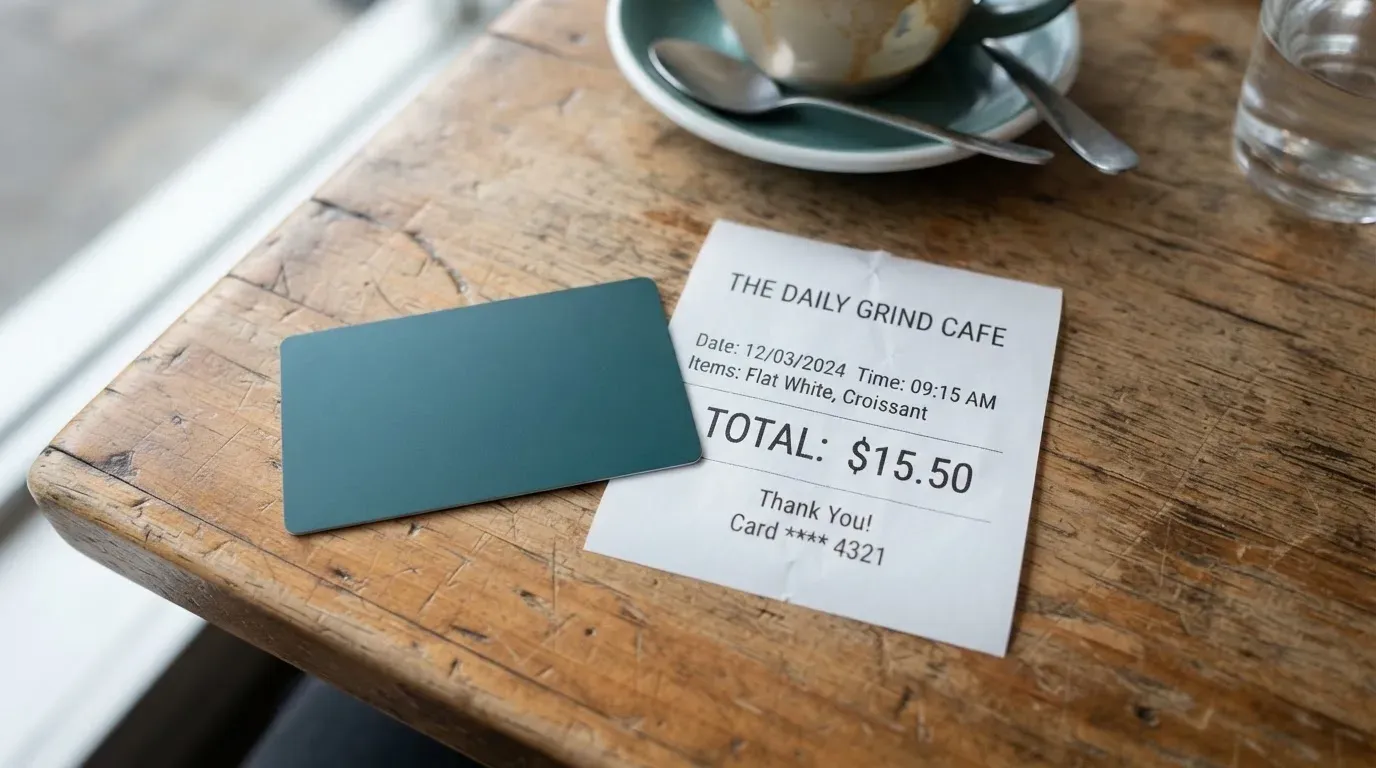
Before the table, one honest note about the sources. EMCD’s February 2026 press release states “Issuance is free, with no monthly maintenance fee”. EMCD’s own help centre says the opposite: Plus costs $19 to issue and Premium $25, with $5 monthly maintenance on both. When a company’s marketing and its help centre disagree, believe the help centre, because that is what gets charged. Budget for the paid version.
| Fee or limit | Plus | Premium |
|---|---|---|
| Issuance | $19 | $25 |
| Monthly maintenance | $5 | $5 |
| Top-up | 1.5% | 1.5% |
| Purchase | 1.5% + $0.50 | 1.5% + $0.50 |
| Declined payment | $1.50 | $1.50 |
| Refund | $0.50 | $0.50 |
| Reversal | $2.00 | $2.00 |
| Chargeback | $35 | $35 |
| Closure | $15 | $15 |
| Currency conversion | 3% may apply on non-USD purchases | 3% may apply on non-USD purchases |
| ATM / cash withdrawal | Not available | Not available |
| Per transaction | $1,000 | $10,000 |
| Per day | $3,000 | $50,000 |
| Per month | $10,000 | $400,000 |
The two legacy Light fees are worth a footnote for anyone comparing against older reviews of EMCD: Light charged 2.5% per top-up and $0.25 per purchase, and $0.02 to link Apple or Google Pay. So on the two fees people hit most often — top-up and purchase — Plus and Premium are cheaper than the old card was.
Now three everyday payments, so the percentages become real numbers.
- A $30 subscription in US dollars. You pay 1.5% of $30 ($0.45) plus $0.50, so $30.95 comes out of your card balance. Straightforward.
- A EUR 30 subscription. Same 1.5% plus $0.50 on the dollar amount, and then a 3% conversion fee may apply because the purchase is not in USD. If the 3% applies to the converted dollar value, add roughly another dollar to the same purchase. The card converts automatically and does not show you the rate in advance, so you cannot know this cost before you tap.
- Your first $100 top-up. 1.5% comes off at the top-up, so $98.50 lands as balance — and of the first deposit, $15 of the $20 minimum is held back as a security reserve until your total spending passes $2,500. Practically, a small first top-up leaves very little spendable money.
Stack those and you will see why the cost mark is 2. If you spend $1,000 a month in mixed currencies, you are paying the purchase fee fifteen to twenty times, the top-up fee each time you load, possibly a conversion fee each time the currency is not USD, and $5 for the privilege. None of these fees is hidden, and all of them are listed in the table above — but they are also all multiplied by how often you use the card, and that is where this card is expensive.
Top up: how the money gets in
There is one route, and it is narrower than it sounds: a manual top-up from EMCD’s internal USDT wallet, done from the card menu inside the app. The USDT converts to US dollars and becomes card balance. You cannot top up by card number, and the card’s public pages do not name which blockchain networks are accepted for the transfer.
That “networks not stated” point deserves emphasis rather than a shrug. Sending USDT on the wrong network is the classic way to lose money in this category: blockchain transfers are irreversible, the network cannot freeze or return a mistaken send, and recovery is a manual support request with no guarantee. So the practical sequence for you is: read the network in the app at the moment of transfer, do not copy an address from elsewhere, and if you are unsure, ask support before sending rather than after.
The other top-up facts you need:
- Minimum first top-up is $20, of which $15 is held as a security reserve until your total spending exceeds $2,500.
- Top-up fee is 1.5% on Plus and Premium.
- Speed — top-ups and card issuance typically take three to five minutes.
- Network fee payer — not stated. On-chain fees for a deposit are charged by the blockchain itself, not by the card provider, so budget for that separately.
- Fiat top-up — not available. This card is funded with USDT only.
That last point is the one to sit with. You cannot load this card from a bank account, so if you have no crypto and want a card, this is not your route. And you cannot withdraw the balance back to your EMCD account either. The only way money comes back out is if you close the card: the remaining balance is refunded as USDT, and closure costs $15. The bank may also close cards holding $20 or less, or after 30 days of inactivity — a rule described in the help-centre article about the legacy Light card, so read it as a sign of how dormancy is treated rather than a confirmed Plus/Premium term.
Paying with it every day
Here is the daily reality. You have a virtual Mastercard number and two mobile wallets. Apple Pay and Google Pay are both supported: you add the card through the wallet app, choose email verification, and if the wallet asks for a phone call instead, you contact EMCD support. This is the intended way to pay — a virtual card number typed into a checkout works, but tap-to-pay in a physical shop does not, because you have nothing to tap.
What does not work, stated plainly:
- No ATM, no cash. Cash withdrawals and ATM use are not supported at all. If you need physical money, this card is the wrong instrument entirely.
- No 3-D Secure. The card does not support it, so any merchant that requires a 3-D Secure check will decline the payment. In practice this means some online shops, and a fair share of European card authorisations, simply will not go through. It is the single most likely reason a card like this gets refused at a checkout you expected to work.
- No cashback. No cashback is mentioned anywhere in the card’s help articles or the press release. Do not assume any rewards exist.
Two more operational notes. Spending-limit controls — the in-app sliders that let you cap daily or per-transaction spending — are not yet available, which is worth knowing if you are nervous about a compromised card number. And blocked merchant categories are not stated, so you should not assume gambling or similar high-risk categories are closed off by policy.
The card balance sits separately from your main EMCD account and is not a bank account. Treat it like cash you are carrying, not like a current account.
What can go wrong
I want to separate the ordinary risks of this product category from the specific things that worry me about this one.
The operator is not the brand you sign up with. EMCD itself states it “does not issue cards, process payments, or convert crypto to fiat”. The card is operated by a partner, KazeFi, under its own regulatory authorisations. EMCD’s own help centre says the same thing in plain terms: EMCD does not issue the cards. The press release is datelined Hong Kong, and the app developer is Emcd Tech Limited. The country of registration, the name of the issuing bank, the country it issues from, and the specific licences are not stated in the public material I could read. For you, that means: if something goes wrong with your card, you are dealing with two organisations, and the one you have a relationship with says it is not the one that issued it.
That is not a theoretical concern in this category. Card programmes do get shut down. Visa terminated its global agreements with FTX in November 2022, and the FTX US debit card was wound down by its issuer. Visa suspended WaveCrest in Europe in 2018, closing every WaveCrest-issued Visa programme. Closures follow a pattern — a notice period, then loading and spending stop, then users are asked to withdraw what is left. EMCD has already done a version of this itself: the Light card is closed to new issuance, with cards issued before July 2025 as the survivors. A new card launch in February 2026, and a prior version already retired, is a company still changing its programme.
Verification and account blocks. On EMCD’s own Trustpilot page — which is for the company, not the card — there are 190 reviews, 83% five-star and 11% one-star, and the overall rating is not shown (“rating unavailable due to a breach of our guidelines”). Reading the reviews as a user report, the recurring themes are accounts being blocked after KYC or bonus checks (November 2025, March 2026), slow verification (November 2025), and missing bonuses (November 2025). Not one of the reviews I saw complains about the card itself. So the pattern is not “the card is bad” — it is “the account can get frozen around verification.” That is a real risk for you specifically if you are someone a bank has already turned away, because it means the freeze risk lives here too.
A missing reserve and no safety net. The card balance is separate from your main account and is not a bank account. The custody model and how funds are safeguarded are not stated. Two-factor authentication and an in-app card freeze are not stated either. E-money balances in this category are normally safeguarded in dedicated accounts or insured, but they are not bank deposits and should not be assumed to carry deposit-guarantee protection. If you are in the EU, be aware that e-money institutions are required to safeguard customer funds, and that this is a separate regime from bank deposits.
Where your USDT sits. EMCD’s internal wallet is custodial: the provider holds the credentials, so you must trust the provider with the funds. Crypto platforms have a poor record here — Mt. Gox (about US$350 million reported stolen, 2011-2014), Coincheck (about US$400 million, 2018), and Ronin Network (US$625 million, 2022). Transfers out are irreversible, and a stolen key has no built-in recovery because the network cannot freeze or return funds.
If a payment goes wrong. The fee schedule tells you what disputes cost, which is itself a warning: a refund is $0.50, a reversal is $2.00, and a chargeback is $35. No time frames are stated. If USDT was deducted but the card was never credited, contact support with the last four digits of the card, the date and the amount.
I will not tell you this card is safe or unsafe. Anyone who does, from the outside, is guessing. What I can tell you is which risks are documented and which remain unaddressed in the card’s official documentation — and for this card, that list is long.
What to take instead
Three alternatives came up in the same category. None of them is dramatically better, and the honest summary is that this is a thin field.
| EMCD Payment | Cardex | CardFlow | HyperCard | |
|---|---|---|---|---|
| Score | 5.3 / 10 | 5.6 / 10 | 4.9 / 10 | 4.7 / 10 |
| Card type | Virtual Mastercard | Debit crypto card, virtual and physical | Virtual USD Mastercard | Prepaid “HyperCard” |
| Networks | Mastercard | VERVE, VISA, Mastercard, UnionPay | Mastercard | Not stated |
| Issuance | $19 / $25 | Not stated | Free | Not stated |
| Monthly fee | $5 | Not stated | Not stated | Not stated |
| Main funding | Internal USDT wallet | USDT, USDC, BTC wallets | BTC, USDT, ETH or Naira transfer | Crypto deposit in-app |
| Rewards | None mentioned | Not stated | Not stated | Not stated |
| Geography | Long exclusion list | “200+ countries”, no exclusions listed | Aimed at Nigeria | “176+ countries” acceptance |
Cardex scores marginally higher than EMCD, at 5.6. It offers something EMCD does not: physical as well as virtual cards, and four network options including UnionPay. Its conversion is described as happening in real time at the moment of payment, with an “AI-Powered Conversion Rate” that scans exchange rates and picks one — though no fee percentage is published, which is its own answer to the question. Its listing is Naira-focused, and its cost is not stated anywhere I could read.
CardFlow scores 4.9. It is aimed squarely at Nigeria and “Nigerians and global users”. Its virtual USD Mastercard is created in 3-5 minutes, and creating one is free, with no monthly fee stated. You can fund it with Bitcoin, USDT, ETH or a Naira bank transfer. Its fee schedule is not stated.
HyperCard scores 4.7, the lowest of the four. It is a prepaid card with a balance in USD or EUR, fundable with crypto deposited in the app, and its App Store page claims use in “more than 176 countries” — though that is acceptance, not eligibility, and no country list appears on the official pages. Network not stated, fees not stated.
The pattern across all three is worth naming: not one of them publishes a clear, complete fee table, and not one of them names the networks for crypto deposits. That is the category, not a quirk of EMCD. EMCD is arguably the most transparent of the four on fees — it at least lists them — which is why it still scores 2 on cost. If your alternative criteria are “physical card” or “UnionPay”, Cardex is the one to look at. If your criteria are “free to start”, CardFlow. If EMCD’s exclusion list does not cover you and you spend USDT online, staying put is reasonable.
Who I would recommend it to
I would recommend the EMCD Payment card to a reader who is spending USDT online and wants a Mastercard number to do it with — someone whose crypto already sits with EMCD, who pays in subscriptions and services, and who is comfortable paying a 1.5% + $0.50 toll per transaction plus $5 a month for the convenience. For that reader it is a genuine, working tool.
I would not recommend it to someone who needs cash, who pays a lot in non-dollar currencies, who is sensitive to a $5 monthly fee, who expects cashback or 3-D Secure compatibility, or who wants to know exactly which bank issued their card and under which licence — because EMCD does not say. And I would be cautious for anyone drawn here specifically because normal banking has been hard: this card needs identity verification too, its balances are not a bank account, and its operator’s country and licences are not published. It is a spending tool funded by crypto, not a substitute for banking.
Before you commit, do three things in this order: check that your country is not on the exclusion list, read the Plus-versus-Premium limit table and pick against how much you actually spend monthly, and confirm which network the app wants your USDT on before you transfer anything.
Frequently asked questions
What is the EMCD Payment card?
The EMCD Payment card is a virtual Mastercard that you spend from a crypto balance. You load US dollars onto it from USDT held in EMCD’s internal wallet, then pay with that balance online or through Apple Pay and Google Pay. It is virtual only, denominated in USD, valid for two years, and you can hold up to two active cards. There is no physical card, no ATM access and no cash withdrawal.
How does the EMCD Payment card work?
You fund your EMCD account from the internal USDT wallet, the USDT converts to dollars, and that dollar balance sits behind a Mastercard number. When you pay, the balance is drawn down and the purchase fee applies. The card is virtual, so the usual way to use it is to add the number to Apple Pay or Google Pay from your phone. It does not support 3-D Secure, which means merchants requiring that check will decline it.
Is EMCD Payment a bank?
No. EMCD says outright that it “does not issue cards, process payments, or convert crypto to fiat” — the card is operated by a partner, KazeFi, under its own regulatory authorisations. The card balance is separate from your main EMCD account and is not a bank account, so it does not carry the protections of ordinary deposits. The issuing bank, the country of issuance and the specific licences are not stated in the public material.
Who owns EMCD Payment?
EMCD is the brand, with Emcd Tech Limited listed as the app developer on the App Store, and its February 2026 press release is datelined Hong Kong. The card programme itself is run by KazeFi under EMCD’s brand rather than by EMCD directly. The country of registration is not stated. That split matters practically: it means two organisations are involved if you have a card problem, and one of them tells you it is not the issuer.
Can I use the EMCD Payment card in my country?
The card works wherever Mastercard is accepted, except in Afghanistan, Belarus, Cuba, Iran, North Korea, Syria, Venezuela, Russia, Myanmar, Somalia, Ukraine, Yemen and China. Whether that exclusion is decided by citizenship or by residence is not stated. The February 2026 press release describes the card as available to eligible users in Latin America, but attaches no country list, so the help-centre list is the rule to plan around.
Does the EMCD Payment card require KYC?
Yes. Identity verification with a valid government-issued ID is mandatory, but it is completed after your first top-up rather than at sign-up — so you can hold a card balance before your ID is confirmed. If a document is rejected, retry with a different one; if verification runs past about 30 minutes, contact support. Whether proof of address is required is not stated. Accounts have been reported blocked after KYC checks.
How do I top up the EMCD Payment card?
The only way is a manual top-up from EMCD’s internal USDT wallet, done from the card menu in the app, with the USDT converting to dollars. You cannot top up by card number, and only USDT is accepted — no fiat. The minimum first top-up is $20, of which $15 is held as a security reserve until your total spending passes $2,500. Top-ups usually take three to five minutes and cost 1.5%.
Can I withdraw money from the EMCD Payment card?
Not while the card is open. There is no withdrawal of the card balance back to your EMCD account, and cash withdrawals and ATM use are not supported at all. Money comes back to you only if you close the card, when the remaining balance is refunded as USDT — and closure costs $15. The bank may also close cards holding $20 or less, or after 30 days of inactivity.
Is the EMCD Payment card safe?
The card itself has no 3-D Secure and no stated in-app freeze or two-factor authentication, and its balance is not a bank account. Custody arrangements and fund safeguarding are not stated in the public pages. On the company side, EMCD’s Trustpilot page shows 190 reviews with recurring reports of account blocks after KYC and slow verification, though no card-specific complaints. Treat the balance as cash, not as savings.
Is the EMCD Payment card worth it?
Worth it if you spend USDT online regularly, need a Mastercard number, and value convenience more than cost — the fee load is 1.5% per top-up, 1.5% plus $0.50 per purchase, a possible 3% conversion fee outside USD, and $5 a month. Not worth it if you need cash, pay mostly in other currencies, or want cashback or a physical card. At those volumes the fees add up faster than most people expect.
Virtual cards in the catalogue – cryptocardcatalog
Content created by the «cryptocardcatalog» team