
What I found when I read Agora's fees, KYC rules and country list line by line
 Available in US
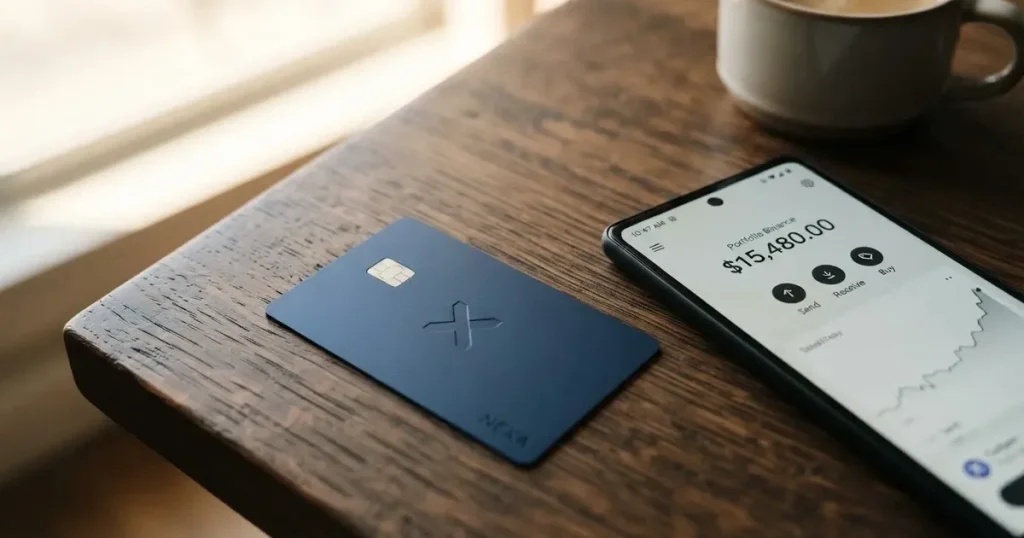
I went through the Agora card the way I go through any of these — page by page, fee by fee, and with the parts other reviewers skip. Here is the honest version: a card with a genuinely attractive everyday-use profile (virtual and physical, Apple Pay and Google Pay, large limits) wrapped around a price structure that is expensive and a company story that is hard to verify. It scores 5.4 out of 10. That middle number is not a fence-sit; it is exactly what I found when I added up what works against what does not.
Who is it for? Privacy-minded users who want a no-KYC virtual card, and who are comfortable funding it from stablecoins and living with the fees. Who is it not for? Almost everyone who wants a cheap everyday card, anyone who needs their money protected by a named bank or a clear licence, and anyone who plans to spend heavily — because the numbers add up fast and a physical card costs five hundred dollars.
The conditions described here are current as of October 28, 2026.
The score in one table
Here is how the ten-point score breaks down, criterion by criterion, with the reason I gave each one. The total is 5.4 / 10.
| Criterion | Mark | Why |
|---|---|---|
| Who can get it | 9 / 10 | 26 countries and regions are closed, including Russia, Belarus, Ukraine, Iran, North Korea, Cuba and Venezuela; the rest of the world is open |
| Cost | 1 / 10 | Virtual Basic $90, Plus $100, physical $500 issuance; top-up 2%, transaction $0.35 + 1.5%, FX 1.5%; the page totals 5.0%; ATM 2% |
| Top-up options | 6 / 10 | USDT and USDC; networks not disclosed, no other coins named |
| Reliability and complaints | 3 / 10 | Issuer and licences not named, company founded April 2026 (unofficial); unofficial review lists no legal documents or terms, anonymous structure; Trustpilot 4.4 from about 10 reviews (unofficial) |
| Everyday use | 9 / 10 | Virtual Basic and Plus and a physical card, Apple Pay and Google Pay, ATM 2% on the physical card |
Five criteria, and they pull in opposite directions. That is the whole story of this card in miniature: the experience of using it is good, and the cost and the paperwork behind it are not.
Will they give you the card
The first question is eligibility, and the card’s own country list is both its strength and its sharpest edge. Agora states plainly: “Due to regulatory requirements, we cannot currently serve the following regions.” Behind that sentence sits a long exclusion list. Not served are Somalia, Central African Republic, DR Congo, Guinea-Bissau, Libya, Mali, South Sudan, Sudan and Zimbabwe; Afghanistan, Iran, Iraq, Lebanon, Myanmar, North Korea, Syria and Yemen; Belarus, the Russian Federation and Ukraine; Cuba, Haiti and Nicaragua; and Venezuela.
That is the 26 closed countries and regions behind the 9/10 mark. Read it the way a reader should: if you are in one of the excluded regions, this card is not for you — not now, and the page gives no route to become eligible later. But for the overwhelming majority of people reading this — in Europe, North America, much of Latin America, most of Asia and Oceania — the door is open, and that openness is why this criterion scores as high as it does.
One thing I wish the page said and does not: whether the rule is based on your citizenship or on where you live. For a lot of people the two are not the same, and the card’s public pages do not say. If you are, say, a citizen of one of the closed countries living somewhere open, you have no way to tell from the card itself which rule applies to you. That is a genuine gap, not a technicality — it is the kind of thing that decides whether the card is usable at all for you, so it deserves an answer you can rely on.
How to get it
The signup path is short, and the reasons it is short are worth understanding before you commit money.
Agora offers three products: Virtual Card Basic, Virtual Card Plus and Physical Card. The network — Visa or Mastercard — is not stated, and neither is the card currency. If knowing which network your card runs on matters to you (some merchants and some payment apps behave differently by network), you will not find that here.
On identity checks, the official page is silent: KYC requirements are not stated there. Unofficial sources say “No KYC verification required (Level 0)”, listing email, phone, ID, proof of address and selfie as not required. I want to be careful with that line, because it is exactly the kind of claim people act on and then regret. It comes from a third-party review site, not from Agora, and the card itself does not confirm it. Treat it as something to verify with support, not as a promise.
The other signup detail that matters is delivery. The page offers “48–72h priority delivery via EU and US warehouses”. GoDarkEU is named as an official distributor of the physical card, and cards can be customised on request. What is not stated is the cost of a replacement card, which is one of those numbers you find out about at the worst possible moment if you do not ask.
So the practical sequence is: you register on the web, you choose a card, you pay the issuance fee, and if you want the physical version it arrives in a few days. No documents appear anywhere in that sequence, according to the unofficial description. Whether that stays true for larger balances or for certain countries is not something the public pages promise.
Fees: what it really costs
Cost is where this card loses hardest, and the 1/10 is not a rounding error — it is the single most important thing to understand before you buy anything here.
First the one-time fees. Virtual Basic is $90, and it includes $10 of credit with a validity of 3 years. Virtual Plus is $100, also including $10 credit, with 4 years validity. The Physical Card is $500, valid 4 years. A monthly fee is not stated on the official page; one unofficial source says the monthly fee is free and issuance is $90, which lines up with the Basic card but does not cover Plus or the physical version. I would not bank on “free” — the card’s own pricing is the authority, and it does not promise it.
Then the ongoing fees, which is where a card that “feels free” becomes expensive. Top-up is 2%, or 2.5% on Plus. A transaction on a virtual card costs $0.35 plus 1.5%; on the physical card, $0.10 plus 1.5%. FX is 1.5%. On a virtual card the page totals this to 5.0% (5.5% on Plus); on the physical card, 5.0%, rising to 7.0% if you use an ATM. An ATM withdrawal on the physical card is 2%, and virtual cards have no ATM access at all. No free allowance is stated.
Let me make those numbers real with three ordinary payments, because that is where fees hide.
A $20 coffee on the virtual Basic card. The transaction fee is $0.35 plus 1.5% of $20, which is $0.30, so $0.65 on a $20 spend — before the top-up fee that loaded the balance. That is a meaningful fee on a small transaction, and the page’s own 5.0% total says the full stack, including loading, lands near a fifth of the amount. A $20 coffee is not a large sum, but the point is that on small everyday spends the fixed $0.35 does the damage, and the top-up fee taxes every dollar you load.
A $200 flight or hotel, paid in a currency other than the dollar. Transaction is $0.35 plus 1.5% ($3.00), and if your card balance is dollar-denominated you add 1.5% FX on top of whatever the network rate does. So roughly $3.35 to $6.35 on $200 depending on the FX component. Again not ruinous, but it is a fifth to a third of the top-up fee stack the card itself advertises, and it is charged on a purchase you cannot avoid converting.
A $100 cash withdrawal at an ATM. That is only possible on the physical card, and only because you paid $500 for it. The withdrawal fee is 2%, plus 2% if the ATM charges its own fee on top — a figure the card does not control and I will not invent. So the cheapest cash out is $100 for $2 of card fee, on a card that already cost half a thousand dollars, and it eats into the ATM allowance.
All of that is why Cost is 1 out of 10. The fees are not hidden — they are stated — but they stack, and the issuance price, especially $500 for the physical card, is far above where crypto cards usually sit.
| Fee or limit | Value |
|---|---|
| Virtual Basic issuance | $90 (includes $10 credit, 3-year validity) |
| Virtual Plus issuance | $100 (includes $10 credit, 4-year validity) |
| Physical issuance | $500 (4-year validity) |
| Monthly fee | Not stated on the official page (unofficial: free) |
| Top-up fee | 2% (2.5% with Plus) |
| Transaction fee, virtual | $0.35 + 1.5% |
| Transaction fee, physical | $0.10 + 1.5% |
| FX fee | 1.5% |
| ATM withdrawal | 2% (physical only) |
| Page’s total cost | Virtual 5.0% (5.5% Plus); physical 5.0% (7.0% with ATM) |
| Virtual Basic limits | $240,000 daily; $900,000 monthly; $20,000 per transaction |
| Virtual Plus limits | $900,000 daily; unlimited monthly; $60,000 per transaction |
| Physical limits | $240,000 daily; $900,000 monthly; $20,000 per transaction; ATM $1,500 daily, $15,000 monthly |
| Currency of the card | Not stated |
Read the limits at the bottom as a range, not a promise. The headline numbers are large — $900,000 a day on Plus, unlimited monthly — but per-KYC-level limits are not stated, and it is the KYC level that usually decides which ceiling actually applies to you.
Top up: how to fund the card
Topping up is where this card keeps things simple, and then quietly leaves out the part that matters.
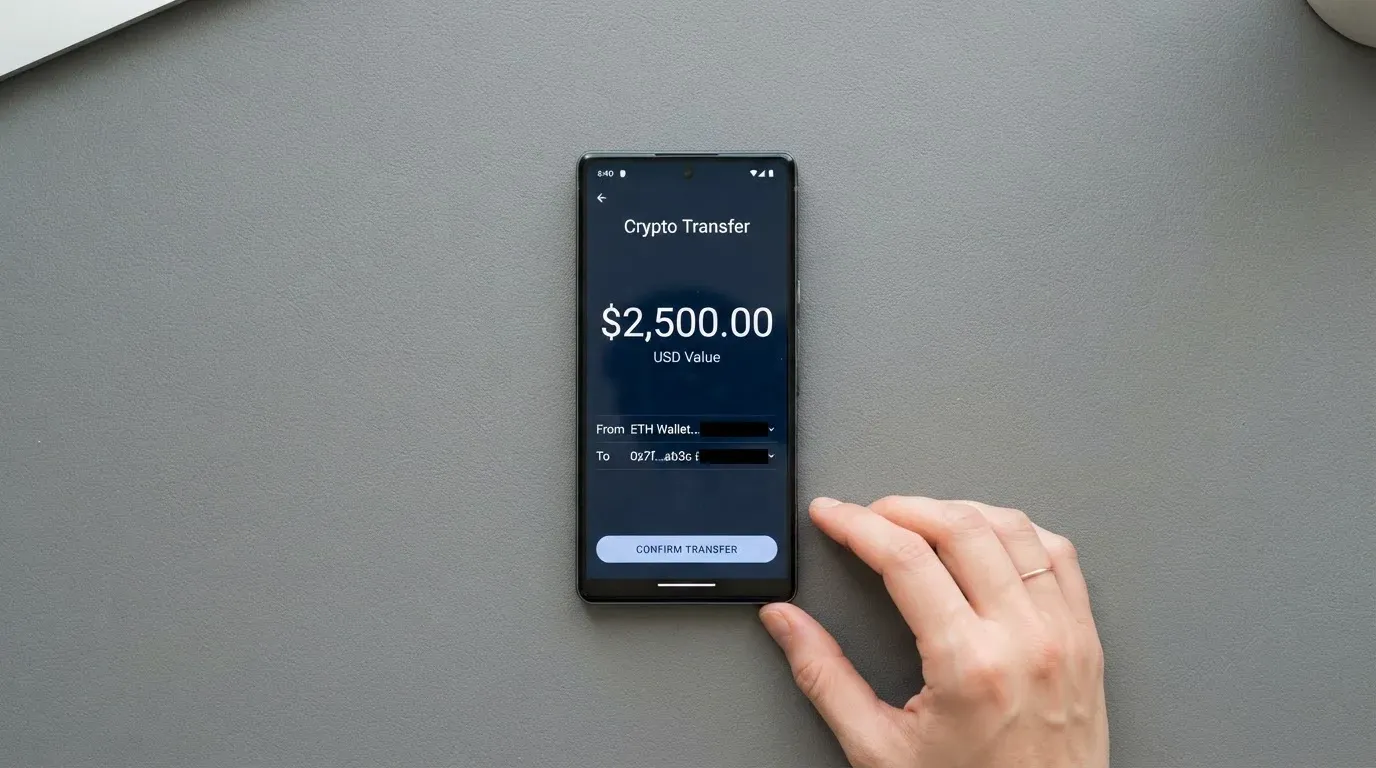
What is supported is stated: “USDT & USDC Supported”. Two dollar-pegged stablecoins. The networks are not stated, and no other coins are named — so if you hold bitcoin, ether, or anything outside those two, you are converting to USDT or USDC first, at whatever rate and cost that conversion costs you. One unofficial review lists “flat blockchain network fees on every top-up” as a con, which fits what is already known: the network fee for your deposit is charged by the blockchain, not by the card.
The top-up fee itself is 2%, or 2.5% if you are on Plus. The minimum top-up is not stated, it is not stated who pays the blockchain network fee, and fiat top-up options are not stated. Withdrawal from the card back out is also not stated — a real gap, because “I can get money in” and “I can get money out” are different questions and this card only answers the first on its public pages.
There is also a strange internal tension on the page worth flagging. The service calls itself “Self-Custodial”, while at the same time saying funds are held by “licensed and regulated custodian partners”. Those are close to opposite descriptions of who controls your money, and the page does not reconcile them. I will not pretend to know which is operationally true; I will say that a reader who cares about custody — who genuinely wants their funds under their own control, or genuinely wants a licensed custodian to be responsible for them — cannot tell from this page which one they are getting.
So the top-up flow is: transfer USDT or USDC to the address the card gives you, on a network you have confirmed the card supports, pay 2% (or 2.5% on Plus) plus the blockchain’s own fee, and the balance loads. The one rule that protects you is a general one about stablecoins, not about this card: blockchain transfers are irreversible, so a deposit sent on the wrong network, or to an address belonging to a different network, can be lost or need manual recovery with no guarantee. Check the network before you send.
Paying with it every day
This is the card’s best side, and it is why Everyday use scores 9 out of 10.
Both Google Pay and Apple Pay work on the virtual and the physical card. That is the modern baseline for a payment card and its presence here means you are not forced to slide plastic into a terminal or tap a strip. The physical card also works at ATMs, at 2%. Between the two virtual tiers and the physical card, there is a product for most spending styles, and the limits table above shows how far apart the tiers sit.
Some spending is off-limits, and the list is specific: gambling, cryptocurrency purchases, sports betting, petrol, military supply, gaming credits, non-profit organisations and government agencies. That covers a lot of ground — betting and crypto buying are out, which will rule the card out for some people entirely, and petrol being excluded is an unusual one to see.
Two things you will look for and not find. There is no cashback on the page, so Rewards is not stated. And there is a referral scheme: $5 per virtual card sale, $30 per physical card sale — note how steeply that incentive favours the expensive physical card. Finally, the practicalities: no native app is named, login and card purchase run through app.agora.cards and cards.agora.supplies on the web, and store ratings are not stated. How disputes are handled is also not stated, which quietly matters if a charge ever goes wrong.
What can go wrong
Two risks deserve more than a line each, because they are the ones that decide whether you should hold this card at all.
The first is that you cannot fully verify the company behind it. The brand is “Agora Cards”, said to be incorporated in Singapore on starting data, but the official page does not name the legal entity, the issuer, or any licence. Unofficial sources say the operator is Agora Cards, established in April 2026 — a company six months old at the time of this review. I found no official incidents, and I want to be clear that “no incidents found” is not the same as “verified as safe”; with a young operator, the record simply may not exist yet. What an unofficial review does raise is a “complete lack of legal documentation or Terms of Service” and “high counterparty risk due to anonymous company structure”. That second point is the one to sit with. The service describes itself as self-custodial, which would normally mean your funds are your responsibility; but it also says funds are held by licensed custodian partners. When a page says both, the protection to your money is genuinely unclear.
The second risk is the security and support layer, where the card is thin on specifics. Two-factor authentication, instant freeze and spending controls — the everyday tools that let you react if a card number leaks — are all not stated. What is stated is support: “Real human agents available around the clock”, over Signal, SimpleX Chat, Telegram and X. Round-the-clock human support is a genuine plus and rare in this category, and it is the main practical answer to “who do I turn to when something goes wrong”. But it is support, not security guarantees.
A smaller point on complaints: a Trustpilot rating of 4.4 from roughly 10 reviews as of mid-2026 comes via a second-hand aggregator — I did not read Trustpilot itself — so treat it as indicative only. The same report praises the card for privacy, easy top-up and helpful support, and notes no widespread reports of chargebacks or frozen funds. It also notes much of the forum chatter about the card is vendor-linked, which is worth keeping in mind when you go looking for independent opinions.
Finally, the generic risk that applies to any card in this space: a crypto card runs on someone else’s licence, and programmes do get shut down. There is precedent — a wave of crypto card programmes has been wound down after their backing failed or a network suspended them. If you load a large balance and the programme ends, the usual sequence is a notice period, then spending and loading stop, then you are asked to withdraw what remains. That is a process, not a guaranteed outcome, and it is one more reason to keep only what you need on a card like this.
What to take instead
If Agora’s price or its paperwork bothers you, there are three other crypto cards I looked at. None of them is dramatically better in every respect, and honestly none of them has the same country-list clarity — but they set a useful baseline on cost and clarity.
The strongest of the three on score is Cardex, at 5.6 / 10 — fractionally above Agora, which tells you how close the field is. Cardex advertises “One crypto card, 200+ countries” with no exclusion list, and runs on the VERVE, Visa, Mastercard and UnionPay networks with virtual and physical cards; its App Store listing is Naira-focused. On cost, what stands out is its conversion: crypto is converted to fiat at the moment of payment, with an “AI-Powered Conversion Rate” that scans exchange rates and picks one, and no fee percentage stated. Funding is by USDT, USDC and BTC. The catch is that cost is not stated at all, so “cheap to use” is a claim I cannot verify either.
CardFlow comes in at 4.9 / 10 and is aimed squarely at Nigeria — “Nigeria’s smartest fintech card platform” and “Nigerians and global users”. Its virtual USD Mastercard can be created in 3 minutes and creating one is “completely free”, which is the lowest upfront cost of anything I looked at. Fees are not stated. You fund it with Bitcoin, USDT, ETH or a Naira bank transfer. If free creation is your main criterion, this is the card to look at.
HyperCard scores 4.7 / 10. It is a prepaid card with a balance in USD or EUR, works in “more than 176 countries” per its App Store listing — though that is a statement about acceptance, not about who is eligible, and no country list is given. Fees and cost are not stated on the pages I could read. You deposit crypto such as USDT, BTC or ETH in the app, and it converts to dollars or euros onto the card. Multi-currency balance is its distinguishing feature.
| Card | Score | Upfront cost | Fees stated? | Networks / card |
|---|---|---|---|---|
| Agora | 5.4 / 10 | $90–$500 | Yes, in detail | Virtual + physical; network not stated |
| Cardex | 5.6 / 10 | Not stated | Conversion rate only, no % | VERVE, Visa, Mastercard, UnionPay |
| CardFlow | 4.9 / 10 | Free to create virtual | Not stated | Virtual USD Mastercard |
| HyperCard | 4.7 / 10 | Not stated | Not stated | Prepaid, USD or EUR balance |
The honest summary of this table: Agora is the only one of the four that tells you its fees clearly — and that same clarity is what makes them look expensive. The others are cheaper on paper or silent, which is not the same as cheaper.
Who I would recommend it to
I would recommend Agora to a specific person, and I would be honest with that person about what they are getting. You are someone who values privacy, who wants a virtual card that opens without handing over documents, and who is comfortable holding and moving USDT or USDC yourself. You are spending in a way that suits a prepaid balance — day-to-day, not large transfers — and you are at peace with paying a few percent on every load and purchase in exchange for that setup. If that is you, the card does what it says, and the support being real humans around the clock is a genuine, underrated plus.
I would not recommend it to you if any of the following is true, and I want to be direct rather than diplomatic. If the price is the problem — $500 for a physical card and a 5% all-in cost is real money, and this is not the cheap option — go elsewhere. If you need to know a named bank or a specific licence stands behind your balance, this card does not give you that, and no amount of good usage will change it. If you are in one of the 26 closed countries or regions, there is no version of this that works for you right now. If you plan to buy crypto directly with the card, or gamble, or fill a petrol car, the prohibited-use list rules those out. And if you are the kind of person who keeps a large balance on a card for convenience — do not, here. Keep only what you need for the week, because the protection around that balance is the least clear thing about this service.
The score of 5.4 is not me refusing to decide. It is me saying the good half and the weak half are almost exactly the same size.
Frequently asked questions
What is Agora?
Agora is a crypto payment card that lets you spend a stablecoin balance as if it were a bank card. It comes as a virtual Basic card, a virtual Plus card and a physical card, and it works with Apple Pay and Google Pay. The card loads from USDT or USDC and spends a fiat balance from that.
Does Agora require KYC?
The official page does not say. Unofficial reviews describe it as “no KYC (Level 0)”, with no email, phone, ID, proof of address or selfie needed. That claim comes from third-party sites, not from Agora, so treat it as something to confirm with their support rather than a guarantee — especially if you plan to hold a large balance.
Is Agora a bank?
No, it presents itself as a card programme, not a bank. The brand is “Agora Cards”, reported as incorporated in Singapore, but the official page names no legal entity, no issuer and no licence. The page also describes the service as both “self-custodial” and as holding funds with “licensed and regulated custodian partners” — a contradiction it does not resolve.
Which countries can use Agora?
Around 26 countries and regions are excluded, including Russia, Belarus, Ukraine, Iran, North Korea, Cuba, Venezuela, Afghanistan, Iraq, Syria, Yemen, Sudan, Mali, Libya and Zimbabwe. The card states this is “due to regulatory requirements”. The rest of the world is, in principle, open — though whether the rule follows citizenship or residence is not stated.
How much does an Agora card cost?
Issuance is $90 for the virtual Basic card, $100 for the virtual Plus card and $500 for the physical card. Basic and Plus each include $10 of credit. On top of that: top-up is 2% (2.5% on Plus), a virtual transaction is $0.35 plus 1.5%, FX is 1.5%, and the card’s own page totals the cost at 5.0% for a virtual card and 5.0%–7.0% for the physical card with ATM use.
How do I top up an Agora card?
You send USDT or USDC to the address the card provides, then pay a 2% top-up fee (2.5% on Plus) plus the blockchain’s own network fee. Which networks are supported is not stated, and no other coins are named. Because transfers are irreversible, confirm the network matches before sending anything, or the deposit can be lost.
Is Agora card safe?
There is no confirmed record of fraud or frozen funds, and support is real people around the clock. But the issuer and licences are not named, an unofficial review describes an anonymous company structure and no published terms, and the two-factor authentication, freeze and spending controls are all not stated. It was established in April 2026, so a short track record is not proof of anything either way.
Can I add the Agora card to Apple Wallet?
Yes. Apple Pay works on both the virtual and the physical card, as does Google Pay. That is one of the card’s real strengths — you can pay by phone without handling the card. Note that the merchant must accept the card’s network, which the official page does not state.
Where can I use the Agora card?
In most countries outside the excluded list, and with virtual and physical versions for online and in-person spending. But certain categories are blocked outright: gambling, sports betting, crypto purchases, petrol, military supply, gaming credits, non-profits and government agencies. It has no ATM access on the virtual cards; the physical card charges 2% per withdrawal.
Is Agora worth it?
Only if you specifically want a no-KYC-style virtual card and can afford the fees. At $90–$500 to open and around 5% all-in, it is not a cheap everyday card, and it suits people who value privacy over cost. If you want something cheaper or something with a clearly named institution behind it, a free-to-create virtual card from another provider may serve you better.
Virtual cards in the catalogue – cryptocardcatalog
Content created by the «cryptocardcatalog» team