
CoinW card: a direct USDT card from an exchange with a patchy public record
 Available in US
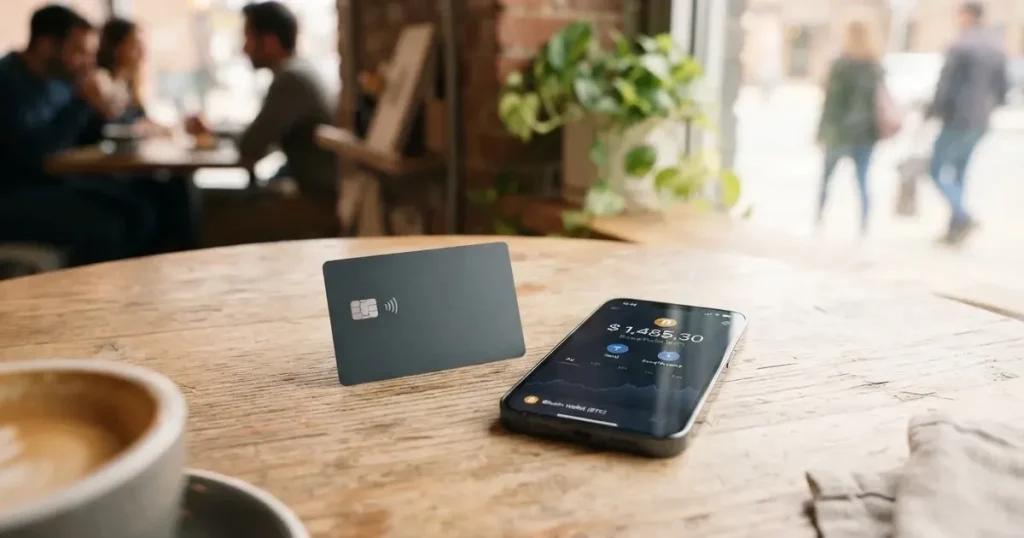
The CoinW card is a payment card attached to a CoinW exchange account. It is denominated in Singapore dollars, it spends USDT directly without a manual withdrawal step, and the virtual version was free at launch with a 50% discount on the physical one. The headline numbers are appealing, and the card does some things well: it is one of the few products that lets you tap to pay in a shop while holding a stablecoin balance, and the ATM ceiling of US$20,000 per transaction is unusually generous.
What pulled the score down to 5.2 out of 10 in my reading is the gap between the launch announcement and the public record. The legal entity behind the programme is not named on the pages I could read, KYC steps are not described, and the independent reviews of the CoinW exchange it sits on top of are poor. On Trustpilot the exchange carries 1.7 out of 5 from 143 reviewers at the time I checked, with frequent complaints about frozen withdrawals and profit rollbacks. The card itself is too new for a meaningful body of card-specific reviews, so a reader has to take the exchange’s track record as a proxy.
This page is for anyone who already holds USDT on CoinW, or who is considering it because an ordinary bank card is hard to get, and who wants a clear-eyed view before signing up. I will walk through who is likely to be approved, what the card really costs in practice, how the top-up path works, where the everyday experience is solid and where it stumbles, and finally who I would steer toward this product and who I would not.
Conditions are current as of October 28, 2026.
Verdict
My overall score is 5.2 out of 10. I weighed the card’s reach and convenience against the thin disclosure and the exchange’s reputation, and the result is a product that is genuinely useful in a narrow case and harder to recommend for general use.
| Criterion | Mark | Why |
|---|---|---|
| Who can get it | 7 / 10 | Global reach (176+ countries) but US, UK, Canada, mainland China excluded; iPay variant limited to 45 regions |
| Cost | 6 / 10 | Virtual card free at launch, monthly fee 0; unofficial sources put physical at US$98 and 1–2% transaction fees |
| Top-up options | 4 / 10 | Spends USDT directly, which is excellent; unofficial top-up fee of 2% eats into the advantage |
| Reliability and complaints | 2 / 10 | Issuer entity not named; Trustpilot 1.7 of 5 (143 reviews) for the exchange, with frozen accounts and profit rollbacks reported |
| Everyday use | 6 / 10 | Virtual and physical, ATM up to US$20,000 per transaction; Apple Pay and Google Pay support not disclosed |
The card fits a particular reader: a CoinW exchange user who already holds USDT, wants to spend it without a separate withdrawal step, and accepts the exchange’s risk in exchange for that convenience. If you are not already a CoinW customer, the math changes. You can get a more established card from a better-disclosed programme for similar money, and the trust deficit matters more when you are about to load funds onto the card for the first time.
I would not recommend it to anyone who needs their card to work first time, every time, on a trip abroad, or to anyone whose primary concern is dispute resolution and consumer protection. A traditional bank card, or a crypto card from an issuer with a public licence and a published complaints procedure, is the safer pick for those readers.
Who they will give the card to
The honest answer is that the official pages I could read do not state eligibility. What I can piece together is from the launch announcement, third-party summaries and the exchange’s published restricted list, and the picture is partial.
Starting data, as published by CoinW, describes the card as global: 176 or more countries are said to be covered. The iPay Card variant is described in the same release as limited to 45 regions. This unverified figure aligns with the broader pattern in the market, where a programme’s wide geographic footprint depends on partner banks that have their own licensing footprint, and a tighter sub-product reflects one partner’s reach.
What is clearer is who is excluded. The CoinW exchange does not open accounts for residents of the United States, the United Kingdom, Canada, mainland China and a number of other exchange-restricted jurisdictions. A reader who lives in any of those places will not be able to get a CoinW account, and without an account the card is not available.
A few practical implications follow. Country of residence matters for card eligibility because the issuing bank needs a regulatory basis to issue in that country, and that basis depends on cross-border payment rules and the bank’s own licence. The card’s fiat currency, Singapore dollars, also comes from the issuing bank being Singapore-based, which has knock-on effects I will get to in the costs section.
The card is not described as having different tiers for different users. There is no public mention of a higher-limit tier, a corporate tier or a youth tier, and the Fast-Track Access Program that the release ties to fee discounts is not described in enough detail to compare.
For the reader in general, the practical filter is: are you in one of the 176-plus eligible countries, do you have a CoinW account in good standing, can you complete the verification the exchange asks for. The exchange is not explicit about what that verification is, and that is one of the gaps I will return to under risks.
How to get it
The signup path is also not described in full. What is in the public record: you start as a CoinW exchange user, you complete whatever verification the exchange requires, and you then apply for a card through the same app. The card can be virtual, free at launch, or physical, with up to 50% off during the launch period per the August 2025 release.
Beyond that, the specifics are not stated on readable official pages. KYC steps are not stated. Whether the card is Visa or Mastercard is not stated in the official release. A third-party site, cryptocards.so, says the card is Visa or Mastercard and is issued by a Singapore bank; I have marked that as unofficial, and the date of the source is not shown so I cannot say whether the detail is still current. The exchange being Singapore-linked is consistent with an SGD-denominated card, but the network on the front of the card is a separate question that the official material does not answer.
Delivery times for the physical card are not stated. Activation steps are not stated. KYC levels (basic versus enhanced) and the document list behind them are not stated. If you need to know what to expect before you sign up, the answer today is: expect to verify with the exchange first, expect the card to be either virtual or physical, and expect the rest to be communicated inside the app once you are past the exchange’s own checks.
This is a meaningful gap. With a fully disclosed card programme you can read the eligibility page, the fee schedule, the KYC list and the dispute process before you sign up. With CoinW, you sign up to find out. For a reader who is comfortable with that pattern, the convenience of spending USDT directly may justify it. For a reader who is not, this is a reason to look elsewhere.
Fees: what it really costs
The headline cost story is friendly, and the unofficial details are less so. I am going to lay out both, and then walk through three everyday payments so you can see how the numbers land in practice.
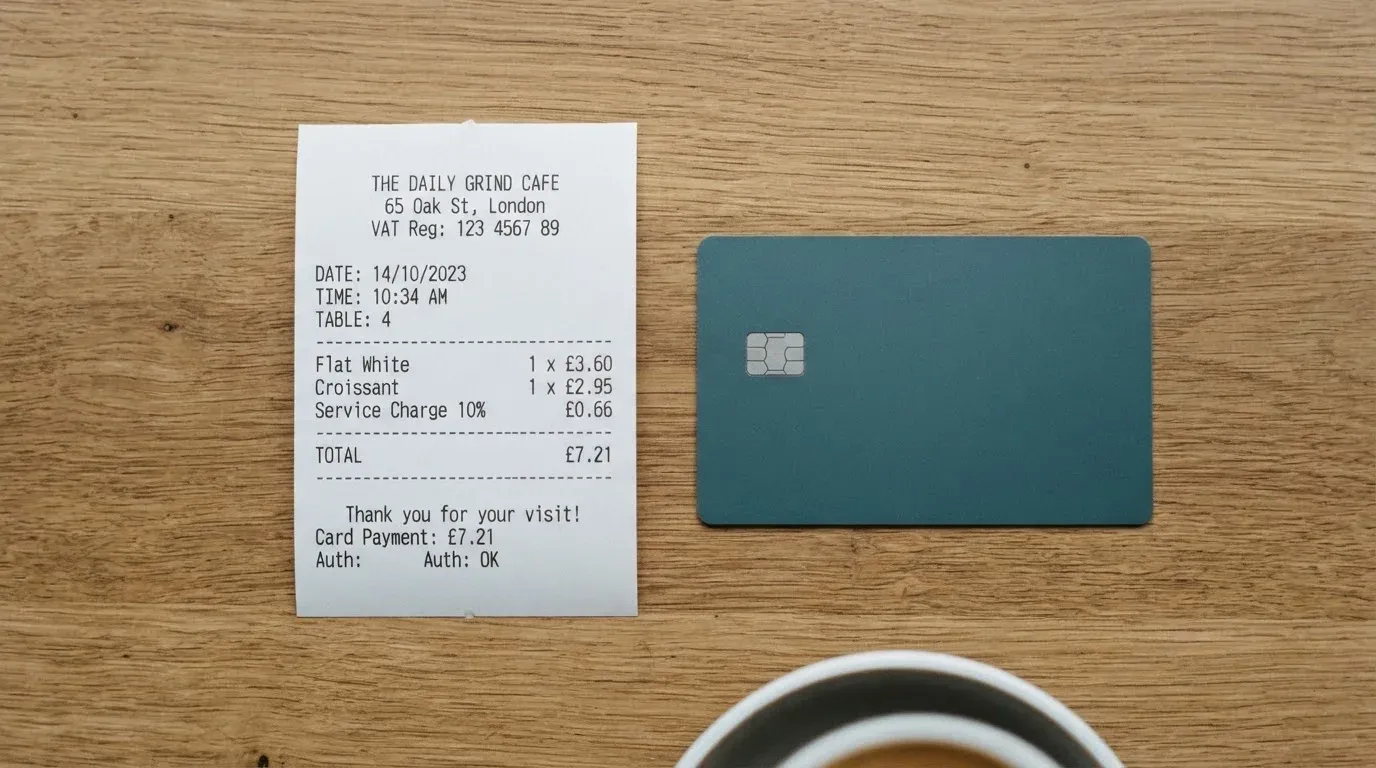
| Fee or limit | Value |
|---|---|
| Virtual card issuance | Free (per August 2025 release) |
| Physical card issuance | Not stated officially; unofficial source says US$98, with 50% launch discount |
| Monthly fee | 0 |
| Transaction fee | Not stated officially; unofficial source says 1% |
| Non-USD transaction fee | Not stated officially; unofficial source says 2% |
| FX margin | Not stated officially |
| ATM fee | Not stated; limit up to US$20,000 per transaction |
| Daily limit | Not stated |
| Monthly limit | Not stated |
| Card fiat currency | Singapore dollars (SGD) |
The official line and the unofficial line conflict on the virtual card price. The release says free; cryptocards.so says US$15. I would treat the release as more current, but flag that the third-party site disagrees.
Three examples make the cost pattern concrete.
A coffee at a local café: you tap the card, the merchant settles in its local currency, the network converts to SGD behind the scenes, the exchange converts your USDT to SGD at its rate, and the 1% unofficial transaction fee lands on top. The on-chain gas for any prior top-up is paid once, in the network’s own asset, when you move USDT in. The result is a small loss to fees on a small purchase, which is true of most cards in this category and is rarely a reason not to use the card.
A US$200 online purchase from a foreign merchant: the 2% non-USD fee (unofficial) applies on the conversion, plus the network’s own FX spread, plus any markup the exchange charges. If the unofficial numbers are right, the cost is the 1% transaction fee plus the 2% non-USD fee, which is competitive with mid-range crypto cards.
A US$500 ATM withdrawal abroad: the per-transaction ceiling of US$20,000 means you are well inside the limit, and the official material does not list an ATM fee. That silence is not the same as a confirmation that there is no fee; with this card, the official fee schedule is genuinely thin, and I would be cautious about counting on a zero ATM fee until the exchange publishes one.
A few things to check first. The fee discount tied to the Fast-Track Access Program is not fully described, so a reader who is considering the card for its fee structure should ask the exchange, before signing up, what tier they would be in and what discount they would actually get. The card’s Singapore dollar denomination matters for anyone who does not live in Singapore, because every non-SGD purchase carries a conversion on top of any fee the card charges, and the SGD/USDT path the exchange uses is not publicly described.
If you already live in Singapore, the SGD denomination is neutral and the picture is the cleanest. If you live elsewhere, the implicit cost of the FX path is the single most important number to verify, and the official pages do not give it to you.
Top up: how to fund the card
The card’s defining feature is that it spends USDT directly. The release describes this as a no-manual-withdrawal model: USDT held on the exchange is the source of funds at the moment of payment, and the exchange handles the conversion in the background.
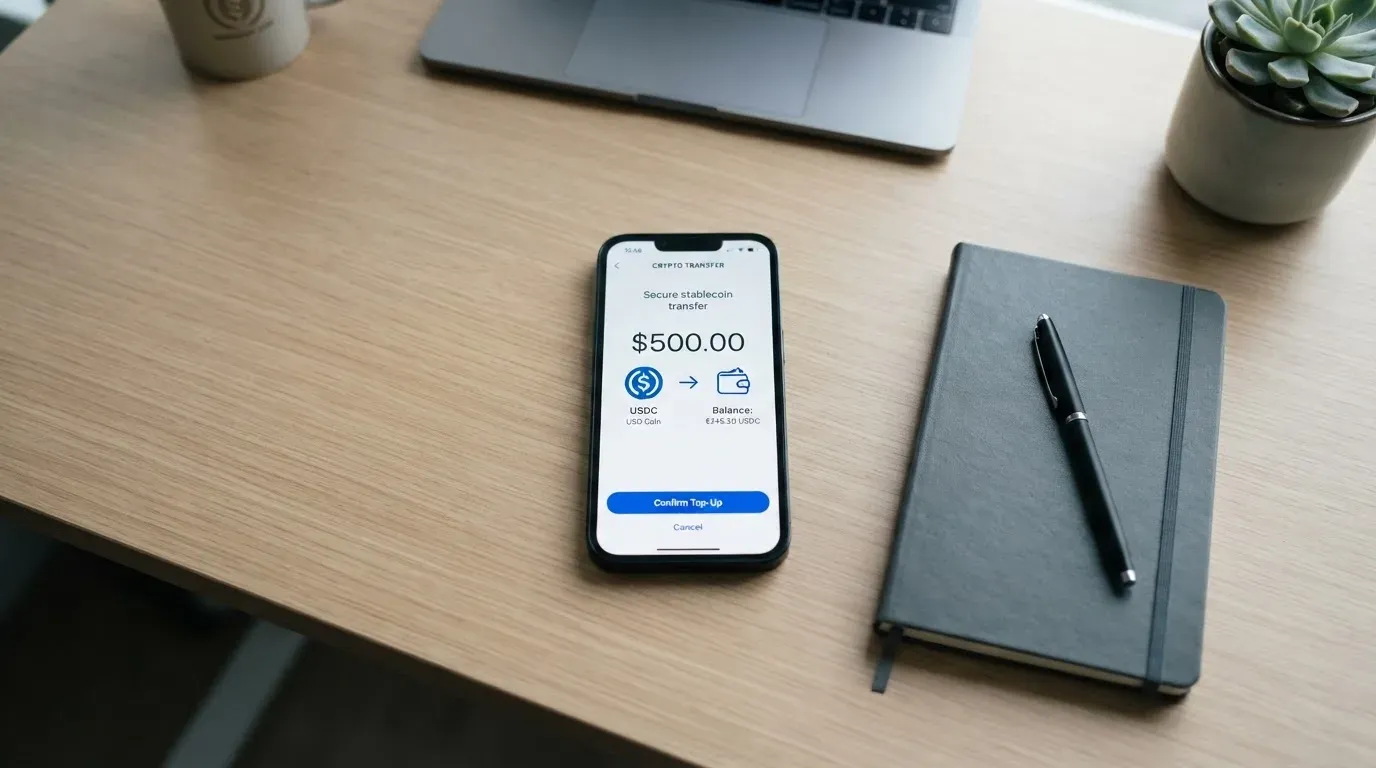
This is a real benefit if you already hold USDT on CoinW. The pain that other crypto cards impose, transferring from a self-custody wallet, paying gas, waiting for confirmations, sometimes waiting for support, is reduced to whatever time the exchange’s own payment engine takes. The release is not specific about that time, but the architecture suggests it is short, because the funds are already on the exchange’s books.
The unofficial side has a top-up fee of 2% according to cryptocards.so. I have not seen this confirmed in an official schedule, and it matters a great deal. If 2% is the real top-up number on top of any 1% transaction fee, the card stops being a low-fee option and becomes a mid-fee one, and the case for using it depends almost entirely on the convenience of the direct-spend model.
A few practical questions are not answered by the public material. Which networks does the exchange accept for incoming USDT? The release is silent. Tether is issued on many chains, and the wrong network is a common source of lost deposits, so the only safe assumption is that you must check the deposit screen inside the app and send on the network the exchange shows you. Sending on any other network, or to any other chain’s address, is the kind of error that crypto transfers do not let you undo.
A second open question is whether the card can be funded with anything other than USDT. The release talks about USDT specifically. Bitcoin, Ethereum, USDC and other coins are not mentioned in the card material, even though the exchange trades them. A reader who holds USDC rather than USDT should expect to convert on the exchange first, with whatever fee and spread that implies, before spending.
A third is what happens on a sell. The card converts USDT to the merchant’s currency, or to SGD, at the exchange’s rate at the moment of payment. That rate is not described, the spread on it is not described, and the time at which it is locked is not described. With a well-disclosed card, the rate is published, the spread is published, and the user can compare. With this card, the rate is whatever the exchange shows you at the moment you tap.
The 3-D Secure flow, where the issuer can ask for an extra confirmation on a risky online payment, is a network feature, not a card feature, and applies here as it does elsewhere. A reader who has it switched on will get an extra prompt on unfamiliar merchants.
Paying with it every day
The everyday use case is where the card is most concrete. The release is clear on the headline numbers: a virtual or physical card, denominated in SGD, ATM withdrawals worldwide up to US$20,000 per transaction, and a direct USDT spend model that removes a manual step.
What the release does not say is also revealing. Mobile wallet support, whether Apple Pay or Google Pay, is not described. That does not mean it is not supported; it means the public pages do not commit to it, and a reader who plans to add the card to a phone wallet should expect to discover support, or its absence, only at the moment of trying. With most crypto cards today, mobile wallet support is the norm, and the absence of a public statement is more often a sign of an immature product page than of an absence of the feature, but it is still a gap.
The ATM ceiling is unusually high. US$20,000 in a single transaction is well above the typical US$1,000 to US$5,000 ceiling of mid-range crypto cards, and is high enough that liquidity at the ATM is more likely to be the binding constraint than the card’s own limit. The fee on that ATM withdrawal is not published, which is the relevant gap.
Online acceptance depends on the card network and the merchant. If the unofficial description is right and the card is Visa or Mastercard issued by a Singapore bank, the card will work at any merchant that takes that network. The standard caveats apply: foreign-issued cards can be declined by merchants who screen on issuer country, and AVS, the address verification system that many US and Canadian merchants use, is generally unavailable for foreign-issued cards, which can cause online declines. Address Verification Service compares the numeric parts of a billing address to the issuer’s records, and if the card is not on a US, Canadian or UK rail, the check returns nothing and the merchant may reject the transaction.
In a shop abroad, the card should work as a standard contactless or chip-and-PIN card. In an online shop, the experience is whatever the merchant’s risk rules allow, plus whatever 3-D Secure step the issuer applies. 3-D Secure is the network’s extra confirmation step on online card payments, and when the issuer turns it on, the user is asked for a one-time code or a biometric prompt before the payment goes through.
Spending limits beyond the ATM ceiling are not stated. Daily, monthly and per-transaction limits for point-of-sale payments are not published, and a reader who plans large purchases should expect to ask inside the app.
Rewards, cashback, points, lounge access, any kind of day-to-day benefit, are not stated. The release ties fee discounts to the Fast-Track Access Program, but the rewards side of the programme is not described in the pages I could read. With a card that has no public rewards schedule, the case for using it rests on the direct USDT spend and the ATM ceiling, not on earning anything back.
The mobile app experience is also not described, which is unusual for a card in 2026. Most issuers have an app that shows transactions, freezes the card, sets limits and handles disputes. Whether CoinW’s app does all of that for the card specifically is not clear from the public material.
What can go wrong
This is the section that pulls the score down. The card is too new for a meaningful body of card-specific complaints, so the evidence I can lean on is the exchange’s track record and the disclosures it has not made. Both point the same way.
The most concrete numbers come from Trustpilot. The CoinW exchange, the platform the card sits on top of, holds 1.7 out of 5 from 143 reviewers at the time I checked. Seventy-six percent of those reviews are one star. The themes that come up repeatedly are frozen or restricted accounts and withdrawals, particularly between June and October of 2026, profit rollbacks and clawbacks reported in September 2025 and March 2026, and delayed withdrawals stretching from weeks to two months in August 2025 and February 2026. The company replies to all negative reviews, and replies typically point users to [email protected] or in-app chat. The substance of the resolution is harder to read from the page.
These are exchange-level complaints, not card-level complaints, and a fair reading is that the card programme is a different product with its own rails. An equally fair reading is that a card on top of a problematic exchange inherits the exchange’s friction, because if your exchange account is frozen, your card funding is frozen with it. The launch announcement and the public pages do not address this, and a reader who is considering the card for the first time should weigh it.
The legal entity behind the card programme is not named on the pages I could read. The exchange is described in third-party sources as founded in 2017 in Dubai, and a hack in 2023 is mentioned in the same sources without a date. The release calls the card an “iPay Card” variant and ties it to 45 regions, which suggests a partner programme, but the partner is not identified. For a reader who is choosing a card on the basis of who stands behind it, that is a real gap.
Security features of the card itself are not stated. Two-factor authentication, instant freeze, spending limits, 3-D Secure toggles, tokenised mobile wallets; the public material does not describe any of these for the card. The exchange’s own account security is a separate question and is presumably the baseline, but the card-specific layer is not described.
Disputes and chargebacks are not described either. A chargeback is a refund ordered by the card issuer to settle a dispute, with reason codes such as fraud, duplicate billing or goods not received. The reader protections that come with a card, who you contact when a merchant charges you twice, who pays when a delivery never arrives, are governed by the issuing bank’s procedures and the network’s rules. Without the issuer’s name, the procedure is not findable. Prepaid cards in particular have thinner statutory protection than credit cards, and a reader should not assume the rights of a credit card on a prepaid crypto card.
Sanctions, frozen accounts and profit rollbacks are a real risk. The user reports describe AML risk flags triggering freezes, and reversals of profit on completed trades. For a card user, the same AML machinery is in play at the funding step and at the moment of every card payment. The exchange is under no obligation to explain a freeze in real time, and the public record suggests the templated support replies are often the end of the conversation.
A few things to check first. Look up the exchange’s Trustpilot and read the recent reviews, not the older ones. Read the exchange’s restricted-country list to confirm your country is eligible. Try the support channels before you sign up to see how fast they respond and how substantive the answer is. And read the card’s fee schedule inside the app, since the public schedule is the thinnest part of the documentation.
What to take instead
If the gaps above give you pause, here is how the alternatives compare. I picked three cards that sit in a similar space and that have different trade-offs: Young Card, MSX and Bybit Card. The numbers below come from their own official pages where stated and from third-party summaries where I have marked them as such.
| Card | Score | Best for | Key trade-off |
|---|---|---|---|
| CoinW | 5.2 / 10 | CoinW exchange users who already hold USDT | Thin disclosure, exchange track record |
| Young Card | 5.7 / 10 | Token-economy users who want cashback in YNG | Cashback paid in a volatile token; rates by Club tier, with Essential at 0.1% and Platinum at 3.6% |
| MSX | 6.4 / 10 | Readers who can get the card and want a higher overall score | Eligibility, cost, fees and funding not stated on readable official pages |
| Bybit Card | 6.0 / 10 | Readers in Argentina, AIFC, Georgia, Kazakhstan, Australia, Mexico, Brazil, Peru, or Asia Pacific who want tiered cashback | Region-locked; cashback only on crypto-funded spending from 2026-10-05 |
Young Card’s distinctive feature is that its cashback is paid in YNG tokens, and the rate is set by Club tier. The tiers that are stated are Essential at 0.1%, Gold at 1.8% and Platinum at 3.6%, with Bronze and Silver not stated. A reader who is bullish on the token can do well; a reader who is not is paid in a volatile asset they may not want.
MSX scores higher than CoinW on the same scoring sheet I used, but a lot of its facts are not stated on readable official pages. Eligibility, card form factor, cost, fees and funding are all gaps. The score reflects the parts I could read; the reader should expect to read the same gaps and ask the same questions before signing up.
Bybit Card is the most fully disclosed of the three. The card is available in Argentina, AIFC, Georgia, Kazakhstan, Australia, Mexico, Brazil, Peru and Asia Pacific, with the application asking for a country of residence; if the country is not supported, Bybit says it will register interest. The page is explicit that the product is not meant for European Economic Area customers, and EEA participation is prohibited. Bybit’s fiat-service restricted list, which covers deposits, withdrawals and One-Click Buy rather than the card as such, includes Belarus, the Russian Federation, Serbia, China and the United States.
Bybit’s cost structure is more granular than CoinW’s. Virtual card issuance is free in all regions “until further notice”, and physical issuance ranges from free in Brazil and Mexico to US$29.99 in Australia, with VIPs holding an Australia, Kazakhstan, Georgia or Asia Pacific physical card paying no issuance or replacement fee. The crypto conversion fee is 0.9% in most regions, 0.5% in Argentina, and the FX fee is 2% on top of the network rate in most regions, 7% in Argentina, 1.5% in Brazil, 1% in Peru.
The card has no balance of its own; it draws on the Funding Account and the Flexible Easy Earn balance, in fiat first, and if fiat is insufficient, crypto is sold at the One-Click Sell rate plus the 0.9% conversion fee. Supported cryptos are BTC, ETH, XRP, USDT, USDC and GRAM, with a default priority of USDT, USDC, GRAM, BTC, ETH and XRP that the user can reorder.
Bybit’s rewards programme is detailed enough to plan around. From 2026-10-05 only crypto-funded transactions earn points or cashback; fiat-funded spending does not. The tier ladder runs Base 2.00% with a US$5 monthly cap, Beta 2% with US$50 and a US$500 monthly spend to unlock, Alpha 4% with US$150 and US$3,500, Apex 6% with US$250 and US$9,500, Omega 8% with US$400 and US$12,500, and Infinite 10% with US$600 and US$25,000. Points are pending for four calendar days, then cashback in USDT equals points times 0.002. There is a welcome offer of 10% cashback up to 110 USDT in the first 30 days, a 100% cashback on must-have subscriptions for VIPs and Alpha and above, and a 20 USDT or 10 USDT referral bonus.
For a reader who is in a Bybit-supported region and is happy with the FX cost, the tiered cashback and the detailed fee schedule make Bybit a more legible option. For a reader who is not in those regions, or who needs EEA support, the comparison does not apply.
Who I would recommend it to
A short, honest summary. The CoinW card is a sensible pick for the CoinW exchange user who already holds USDT, who values the direct-spend model, and who is comfortable with an exchange-level risk profile. The card is also a defensible choice for a reader who has been refused by mainstream programmes because of where they live, and whose realistic alternative is not a better card but no card at all.
The card is not a sensible pick for a reader who is choosing on fee levels alone, because the unofficial fee stack is mid-range and the conversion path is not published. It is not a sensible pick for a reader who needs a track record of consumer protection, because the issuer is not named and the dispute process is not described. It is not a sensible pick for a reader who needs Apple Pay or Google Pay with confidence, because that support is not disclosed. Finally, it fails for a reader who plans to load a large balance and leave it on the card, because the ATM ceiling and the published limits do not extend to point-of-sale spend, and a frozen exchange account would freeze the card funding with it.
If you are a first-time crypto-card user, start somewhere with a published fee schedule, a named issuer and a public dispute process. The cost difference is smaller than the trust difference.
Frequently asked questions
What is the CoinW card?
The CoinW card is a payment card tied to a CoinW exchange account. It comes as a virtual or physical card denominated in Singapore dollars, and it spends USDT held on the exchange directly at the moment of payment, with the exchange handling the conversion in the background. The virtual version was free at launch, the physical version was discounted up to 50% during the launch period, and ATM withdrawals on the physical card are advertised up to US$20,000 per transaction. The card is too new for a meaningful body of card-specific reviews, and the legal entity behind the programme is not stated on the public pages I could read.
How does the CoinW card work?
The card is a prepaid-style product: USDT on the CoinW exchange is the source of funds, and at the moment of a purchase the exchange converts USDT to the merchant’s currency, or to SGD, at its own rate. The card draws on that converted balance through the card network. The official release describes this as removing the manual withdrawal step that other crypto cards impose, and the ATM ceiling on the physical card is up to US$20,000 per transaction. Fees, conversion spreads and the rate at which USDT is converted are not fully published, and a reader should expect to discover them inside the app rather than on the public pages.
Is CoinW a bank?
CoinW is a cryptocurrency exchange, not a bank. The card is a payment product on top of the exchange, and the public pages do not name the bank that issues the card, although a third-party summary describes the issuer as a Singapore bank. A bank is a regulated deposit-taking institution, and an exchange is a crypto trading venue, and the legal difference matters for dispute procedures and for whether your funds are protected by any deposit guarantee scheme. The card programme appears to be a partner programme between CoinW and an issuing bank, but the partner is not publicly identified.
Who owns CoinW?
The public pages I could read do not name the legal entity behind CoinW or the people who own it. A third-party source describes the exchange as founded in 2017 in Dubai, and the same source mentions a hack in 2023 without a date. The card programme is described in the launch release as an iPay Card variant, suggesting a partner arrangement, but the partner is not identified. For a reader who is choosing a card on the basis of who stands behind it, the absence of a public owner is a real gap and worth raising with the exchange directly.
Is the CoinW card available in my country?
The exchange’s published restricted list excludes the United States, the United Kingdom, Canada, mainland China and a number of other jurisdictions, and a resident of any of those places will not be able to open a CoinW account. Beyond that, the launch release describes the card as global, covering 176 or more countries, and the iPay Card variant as limited to 45 regions. The application itself is the only reliable check, and the safest path is to start an account, complete the exchange’s verification, and let the card page inside the app tell you whether your country is on the supported list. The pages I could read do not state country-level eligibility for the card.
How do I get the CoinW card?
The signup path is not described in detail on the public pages. The general flow is to register as a CoinW exchange user, complete whatever verification the exchange requires, and then apply for the card through the same app. The card is offered as virtual, which was free at launch, or physical, which was up to 50% off during the launch period. KYC steps, expected documents, processing time and delivery time for the physical card are not stated on readable official pages, and a reader should expect to learn the specifics inside the app once they have started the process.
Does the CoinW card require KYC?
The card is tied to a CoinW exchange account, and the exchange is a regulated crypto venue in at least some of the countries it serves, which means KYC is a near-certainty. The exchange’s own KYC list, the documents required, the verification levels and the time it takes are not described in the card material I could read. As a general rule, regulated crypto businesses verify customer identity, residence and source of funds, and they monitor transactions for AML risk, and an account can be frozen pending documents. A reader who plans to load a non-trivial balance should expect the verification to be the gating step.
How do I top up the CoinW card?
The card’s defining feature is that it spends USDT held on the exchange directly, so in the normal case there is no separate top-up step. You hold USDT on CoinW, you tap or insert the card, and the exchange converts the USDT at its own rate. The networks on which the exchange accepts incoming USDT, the minimum and maximum top-up amounts, and any top-up fee are not stated in the public material. A third-party source describes a 2% top-up fee, which I have not seen confirmed officially and which would significantly change the cost picture. A reader who plans to transfer USDT in from another wallet should check the deposit screen inside the app and send only on the network the exchange shows.
Is the CoinW card safe?
The honest answer is that the safety case has gaps. The card is too new for a body of card-specific reviews to exist, and the most relevant safety evidence is the exchange’s track record. On Trustpilot the CoinW exchange carries 1.7 out of 5 from 143 reviewers, with frequent reports of frozen accounts and withdrawals, profit rollbacks and delayed withdrawals. The legal entity behind the card programme is not named, the security features of the card itself are not described, and the dispute procedure is not published. None of this means the card is unsafe, but it does mean the safety case rests on the exchange’s own procedures and the reader’s own comfort with them, and a cautious reader should weigh that before loading funds.
Is the CoinW card worth it?
It depends on who you are. For a CoinW exchange user who already holds USDT and values the direct-spend model, the card is a reasonable way to turn a balance into everyday payments without a manual withdrawal step, and the ATM ceiling is unusually generous. The trade-offs are the unofficial fee stack, the thin public disclosure and the exchange’s track record. For a reader who is choosing a card for the first time, or who needs a strong dispute procedure, or who is sensitive to FX costs, the calculus is less favourable, and a better-disclosed alternative such as Bybit Card in a supported region, or Young Card if the YNG token economics suit you, will be the better pick. The right framing is: this is a niche product that does its niche well, and a poor fit for general use.
Exchange cards in the catalogue – cryptocardcatalog
Content created by the «cryptocardcatalog» team