
A Crypto Debit Card From Costa Rica, With More Questions Than Answers
 Available in US

CoinPay is a Costa Rica-based financial app that issues a Mastercard debit card — both physical and virtual — and lets you spend from a balance held in cryptocurrencies or in fiat such as US dollars or Costa Rican colones. On paper, that makes it sound like a straightforward option for anyone who already holds crypto and wants a card to spend it. The reality, after going through the card’s own pages and public documents, is more uneven. The card is a real product, it does work, and you can hold both crypto and fiat on the same account. But the published material leaves large blanks: there is no public fee schedule, no list of supported coins or networks for top-up, no named card issuer, and the company is small enough that outside reviews are scarce. This review walks through what is actually confirmed, what is simply not stated on the site, and how the card holds up against realistic alternatives.
Conditions and figures in this review are current as of October 28, 2026.
Verdict
The CoinPay card scores 5.3 out of 10. That is a middling mark, and it reflects a real split: the product itself is functional and lives on a trusted network (Mastercard), but the lack of published fees, the limited transparency around funding, and the absence of an identifiable card issuer make it hard to recommend without caveats. It is best understood as a card for users in Costa Rica and the surrounding region who already keep a balance in the CoinPay app and want a Mastercard for everyday spending and ATM withdrawals. It is not a card to choose as your first or only crypto card if you live elsewhere or if clear, published terms matter to you.
| Criterion | Score | Why it matters |
|---|---|---|
| Who can get it | 6 / 10 | Card works anywhere Mastercard is accepted, but verification is refused for people from a long list of countries, including the US, Canada, Russia, Belarus, Cuba, Iran, Syria, North Korea, Pakistan, Iraq, Serbia, and others |
| Cost | 5 / 10 | Issuance, monthly, conversion, FX and ATM fees are not stated on the public site |
| Top-up options | 4 / 10 | Balance can be in crypto, dollars, colones, or other fiat, but specific coins and networks are not listed |
| Reliability and complaints | 5 / 10 | Operator is Raw Industries CCM S.R.L. in Costa Rica, a registered Virtual Asset Service Provider; card issuer is unnamed; no Trustpilot or Reddit footprint was found |
| Everyday use | 6 / 10 | Both physical and virtual Mastercard, ATM withdrawals supported; Apple Pay and Google Pay support is not confirmed |
The audience that fits best is people in Costa Rica and Latin America who want a Mastercard that pulls from a mixed crypto and fiat balance, and who are comfortable with a smaller operator. For anyone outside that picture — particularly users in the United States, Canada, Russia, Belarus, Cuba, Iran, Syria, or North Korea — the card is unavailable at the verification stage, which is a hard stop rather than a soft one.
Who They Will Give the Card To
CoinPay’s card works wherever Mastercard is accepted, which is most of the world. There is no per-country whitelist of where the card can be used; the limit is on who can get one in the first place, and that limit is set at the identity-verification step.
The company states plainly that it does not accept verification requests from people in the following countries: Cuba, Pakistan, North Korea, Iran, Syria, Crimea, the United States, Canada, Ethiopia, Iraq, Serbia, Sri Lanka, Trinidad and Tobago, Tunisia, Vanuatu, Yemen, Russia, and Belarus. If you live in or hold citizenship of one of these places, you cannot pass the checks needed to get a card. The site does not specify whether the rule applies to citizenship, residence, or both, so it is worth contacting support before assuming either way.
Outside the excluded list, the card is open to residents of most other countries, and the underlying Mastercard acceptance means the card can be used for online and in-store payments worldwide, subject to merchant policies. The verification process is also where CoinPay decides whether to issue a card at all. The site says that for Level 2 accounts (the level required for card issuance), CoinPay can adjust operational limits on a case-by-case basis, which means even an approved user may face tighter spending caps depending on the documents provided.
There is no published minimum age beyond the standard “adult” expectation for prepaid and debit cards, no specific accepted-document list, and no timeline for verification or for the physical card to arrive. These are not edge cases — they are the basic details a reader needs to know whether to apply, and they are missing from the public site.
How to Get the Card
The path to a CoinPay card runs through the app, which is installable as a Progressive Web App (PWA). The site does not currently list a native app in the Apple App Store or Google Play, and no ratings for such an app were found.
The sign-up is structured around verification tiers:
- Level 1 — basic identity checks. There are no preset monetary limits at this level, but cards are not issued until you reach Level 2. Level 1 is essentially the account you can use to hold and move balance, not to spend on a card.
- Level 2 — enhanced due diligence covering identity, residence, and the origin of your funds, with a CoinPay approval step. Card issuance is gated behind this level.
What “enhanced due diligence” means in practice is not spelled out: accepted identity documents, proof-of-address requirements, minimum age, and processing time are all not stated on the public pages. The only clue is the general phrasing that Level 2 covers identity, residence, and income or fund origin, with final approval resting with CoinPay.
Once Level 2 is approved, the app lets you request a virtual Mastercard immediately and a physical Mastercard delivered to your address. Delivery countries, shipping times, replacement procedures, and the issuance fee are all not stated. The company is incorporated in Costa Rica and operates primarily in Spanish, English, and Portuguese, so the realistic assumption is that physical card delivery is most reliable within Costa Rica and neighbouring countries.
Because no card issuer is named on the public site, the card is best understood as a programme managed by CoinPay with an unnamed bank or e-money institution behind it. That is not unusual in the crypto-card world — many programmes run that way — but it does mean the user has no direct relationship with the regulated entity that issues the card, and that the regulator is not the regulator of a major bank.
Fees: What It Really Costs
This is the section where the review has to be honest about what is and is not published. The CoinPay site says only that “service costs are charged, including the sending and distribution of cards.” Beyond that, there is no published fee schedule: no issuance fee, no monthly or annual fee, no conversion fee, no foreign-exchange (FX) fee, no ATM withdrawal fee, and no daily or monthly cap. The company also states that you can set your own spending limits inside the app, but that is a feature, not a fee.

Because the fees are not stated, the table below reflects what is publicly known. Anything not listed there is simply not disclosed.
| Fee or limit | Amount |
|---|---|
| Card issuance | Not stated |
| Monthly or annual fee | Not stated |
| Conversion fee (crypto to fiat) | Not stated |
| Foreign-exchange (FX) fee | Not stated |
| ATM withdrawal fee | Not stated |
| Daily spending limit | Not stated (user can set in app) |
| Monthly spending limit | Not stated (user can set in app) |
To make this concrete, here is what a typical day of spending would look like under the available information, and where the fees would bite if they exist at all.
A coffee in a Costa Rican café paid in colones from a colones balance. In a fully paid-in-local-currency scenario, no FX or conversion fee should apply, but the conversion fee (if any) is what would apply if the underlying balance is held in a different asset and is converted at the moment of payment. The site does not say whether conversion happens at point of sale or only at top-up, and that detail matters, because point-of-sale conversion typically means a worse rate and an extra spread.
A subscription paid in US dollars from a dollar balance. If the card balance is already in dollars, no FX is needed, and the only fee that could apply is a card-use fee. If the balance is in a different currency, an FX fee would apply, and the rate used is not disclosed.
An ATM withdrawal in a foreign currency. ATM withdrawals are supported, but the fee and the monthly allowance are both not stated. ATM fees in the crypto-card industry are typically the most expensive line item, with a flat fee plus a percentage, and the absence of a number here is a real gap.
The honest read is that the fee profile of CoinPay is unknown, not zero. Until the company publishes a schedule, anyone using the card should assume there is some cost and check their statements.
Top Up: How to Fund the Card
Funding the card is described in broad terms. The card is spent from the CoinPay account balance, and that balance can be held in cryptocurrencies, US dollars, Costa Rican colones, or other fiat. The site does not list which cryptocurrencies are supported, which networks they are accepted on, or what the deposit fee is. It also does not explain whether a deposit is a transfer of crypto that is then sold for fiat, or whether the card can spend crypto directly at the point of sale.
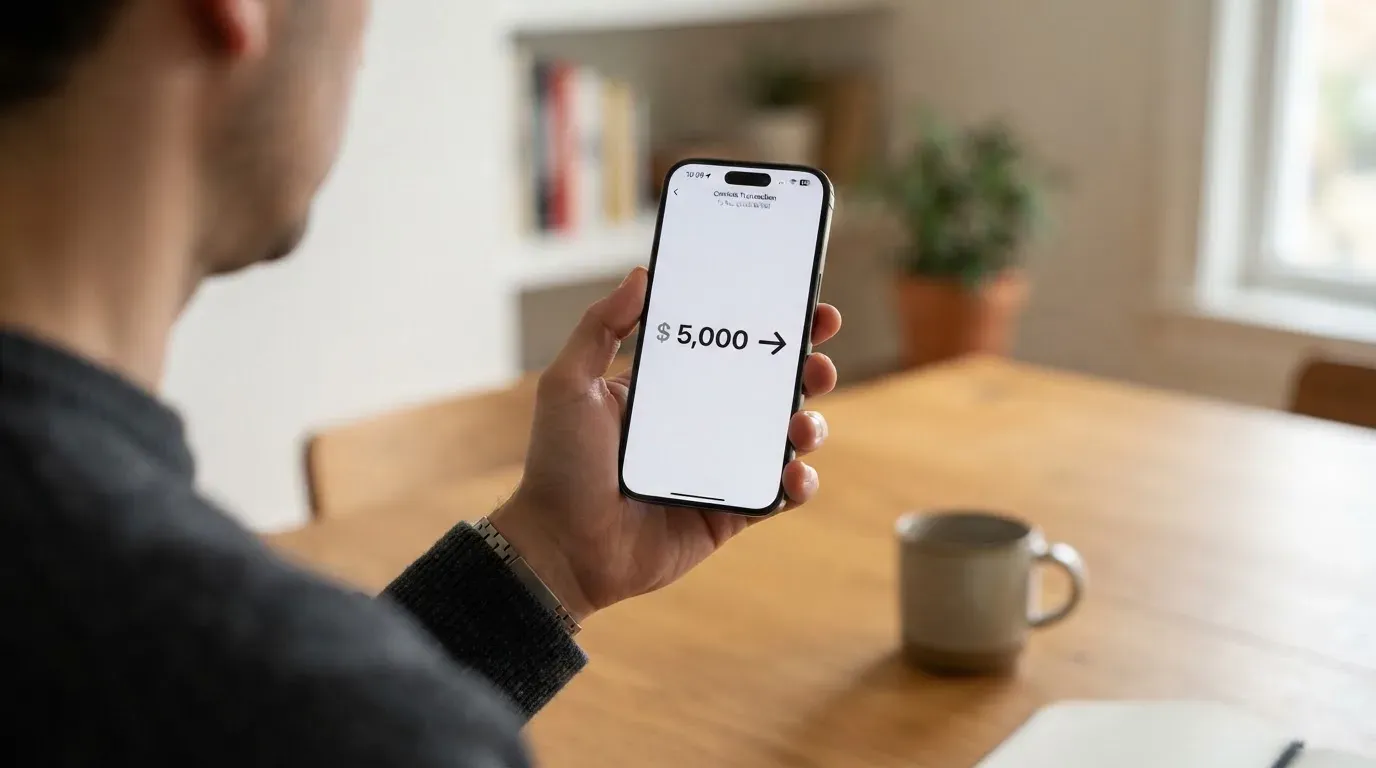
What this means in practice is that before topping up, a user has to ask CoinPay support which coins and networks are accepted, because sending the wrong coin or using the wrong network can mean the funds are not credited. Blockchain transfers are typically irreversible, and a deposit sent on an unsupported network is usually lost or stuck in manual recovery. That is a meaningful risk on a card that does not publish its supported assets.
A separate “Reception and withdrawal” service is listed, which suggests that withdrawing from a CoinPay account to an external bank is a distinct product with its own terms. Those terms are not stated on the public pages either.
For comparison, the category norm is for a card to publish a clear list of supported coins and networks, because that is the single biggest source of lost deposits in the industry. CoinPay’s silence on this point is a practical concern for anyone planning to fund the card from an exchange or self-custody wallet.
Paying With It Every Day
The card is described as an international Mastercard debit card, available as both a physical and a virtual card. The virtual card is issued on request in the app, which is the more useful of the two for online shopping and subscriptions.
ATM cash withdrawals are supported. Whether that includes international ATMs or only ATMs in Costa Rica and the surrounding region is not stated, and the fee and the monthly allowance are not published.
Apple Pay and Google Pay support is not confirmed in the public material. The site does not say that the card can be tokenised into a mobile wallet, and because the card issuer is not named, there is no way to confirm from a third-party database either. This is a meaningful gap: tokenised mobile wallets are how many users pay in stores today, and a card that does not work with them is at a real disadvantage.
Cashback, rewards, and staking-related perks for the card are not stated. The site does not advertise a rewards programme for card spending, so users should not expect to earn anything back on purchases.
In-app features that are confirmed include instant card blocking, PIN change, user-set spending limits, and real-time notifications. Those are standard safety features, and they are the kind of thing a reader should expect any card to offer.
The card is built on the Mastercard network, which means it benefits from Mastercard’s acceptance at roughly 100 million merchant locations worldwide, and from Mastercard’s Identity Check (the 3-D Secure equivalent for Mastercard) for online payments. Where the card sits within that network in terms of issuer country, fraud controls, and merchant category code restrictions is not disclosed.
What Can Go Wrong
The product is run by Raw Industries CCM S.R.L., the technology operator incorporated in Costa Rica, with financial services provided by JPC Solutions S.R.L. Both are Costa Rican companies, and the operator is registered as a Virtual Asset Service Provider under Costa Rican law. No licence numbers are published on the public site, and the card issuer behind the Mastercard programme is not named.
No public complaints about CoinPay are visible in the public record. There is no Trustpilot page for CoinPay.cr, no dedicated Reddit thread, and the search results that come up for the name are for unrelated companies. The absence of complaints is not the same as a clean record, especially for a smaller operator; it usually means the customer base is small and the product is too new to have generated a public review footprint. The reader should treat silence here as “not enough signal,” not as “verified safe.”
The terms state that the operator does not hold or custody user funds — financial providers do. That is a familiar line in the crypto industry, and it cuts both ways. On the positive side, it means the operator itself is not a custodian in the Mt. Gox or Coincheck sense; the funds sit with a separate financial provider. On the negative side, the user has to identify who that financial provider actually is, and on the public site, that is not made clear.
Standard safety features are present: in-app instant block, PIN change, user-set spending limits, and real-time notifications. Support is offered through WhatsApp, Instagram, Facebook Messenger, and in-app chat, with stated response times of “within a few minutes.” Hours of operation, escalation paths, and dispute procedures are not stated. The site’s terms limit liability to the fees paid for the transaction, which is a narrow commitment, and the public material does not address chargeback or dispute procedures for card purchases.
For context, here is how CoinPay’s published safety profile stacks up against the rest of the crypto-card category:
- No custody by the operator — the same line used by most non-custodial or hybrid card products. It shifts risk, but only as far as the named financial provider carries it.
- Instant block and user-set limits — these are now table stakes across the industry, including at major custodial card programmes.
- No public dispute process — unusual. Most card programmes, even smaller ones, publish at least a high-level description of how disputes are handled.
- No named card issuer — also unusual. Visa and Mastercard programmes are public, and most operators name the issuer on their site or in their terms.
The net effect is that the safety posture is “industry standard for the basics, silent on the harder questions.”
What to Take Instead
CoinPay is one option in a category that includes several other cards with different trade-offs. The three below are realistic alternatives for a reader who is choosing between crypto cards and wants to compare published fees, supported features, and country coverage. They are presented in descending order of their overall review score.
International Visa Card — 6.7 / 10
A USD-denominated virtual Visa card, with a physical card described as “coming soon.” Card use in USD is free across all plans, and deposits of any kind carry no fee. Foreign-currency spending uses the Visa exchange rate plus a 2% FX fee. Three plans are available: a free Classic tier, Pro at $9 per month, and Max at $19 per month. Virtual card issuance is a one-time $5.
Country restrictions are extensive and applied by residence or registration: Belarus, mainland China, North Korea, Cuba, India, Iraq, Iran, Israel, Myanmar, Nepal, Nicaragua, Russia, Syria, Turkey, Ukraine, Venezuela, and Vietnam are unsupported, with FATF grey-list countries reviewed case by case. Purchases are blocked in North Korea, Cuba, Iran, Russia, Syria, Ukraine, and Venezuela. There is no rewards programme.
This is the stronger alternative for a reader who wants published fees, a clear plan structure, and a USD balance. It is weaker for anyone who lives in one of the listed restricted countries.
UNi Card — 6.1 / 10
A multicurrency Mastercard that spends from a UNi.Global account balance. No annual fee and no foreign-transaction fee are stated, and assets are converted at live over-the-counter rates with no hidden exchange fees. Card type (physical, virtual, or both) is not stated, and funding details are not published.
The standout feature is a “Spend-to-Earn” rewards programme of up to 3% on card spending, which CoinPay does not offer. Country availability is not stated on the public site, so a reader would need to confirm with the provider before applying.
This is the better pick for someone whose main concern is avoiding FX fees and earning a small cashback. It is weaker for a reader who needs certainty about which countries are supported.
Whop Cards — 5.2 / 10
A Visa card backed by stablecoin collateral from a linked wallet, with consumer availability in 31 US states (Alabama, Alaska, Arkansas, California, Colorado, Connecticut, Florida, Hawaii, Illinois, Indiana, Iowa, Kansas, Kentucky, Maine, Massachusetts, Michigan, Minnesota, Montana, Nebraska, New Hampshire, New Jersey, New York, North Carolina, Oklahoma, Pennsylvania, South Carolina, Texas, Utah, Virginia, West Virginia, and Wyoming) and business availability in 41 states. Unsupported consumer countries include Belarus, mainland China, Cuba, Hong Kong, India, Iran, Iraq, Israel, Myanmar, Nepal, Nicaragua, North Korea, Russia, Syria, Turkey, Ukraine, Venezuela, and Vietnam.
Fees are described as “no extra fees” without further detail, and the conversion or FX mechanics are not stated. The card offers 5% cashback at select merchants (currently Uber, with more planned), which is the strongest reward on this list. Whether the card is physical, virtual, or both, and the card currency, are not stated.
This is the right pick for a US-based reader who can use the 5% Uber cashback and lives in one of the 31 supported states. It is the wrong pick for a reader outside the United States or in a non-supported state.
For a quick comparison, the three alternatives sit at different points on the same trade-off curve as CoinPay:
| Alternative | Network | Published fees | Rewards | Best fit |
|---|---|---|---|---|
| International Visa Card | Visa | Yes | None | USD balance, clear fee structure |
| UNi Card | Mastercard | Partially (no FX, no annual) | Up to 3% | FX-free spending with small cashback |
| Whop Cards | Visa | Not stated | 5% at select merchants | US residents, Uber-heavy spending |
CoinPay is best understood as the regional, mixed-balance option on this list. None of the three alternatives is a perfect substitute — each has its own country restrictions and gaps — but all three publish more information about fees than CoinPay does.
Who I Would Recommend It To
If you live in Costa Rica or another Latin American country not on the excluded list, if you already keep a balance in the CoinPay app, and if you want a Mastercard for everyday spending and ATM withdrawals without setting up a separate card, CoinPay is a reasonable choice. The card works, the network is Mastercard, and the app’s safety features are standard. The risk you accept is that the fee schedule, the supported coins and networks, and the dispute process are not publicly documented, so you have to discover those things by asking support or by using the card.
If you live in the United States, Canada, Russia, Belarus, Cuba, Iran, Syria, North Korea, Pakistan, Iraq, Serbia, Sri Lanka, Trinidad and Tobago, Tunisia, Vanuatu, Yemen, Crimea, or Ethiopia, you cannot get the card at all, so this is not a review to act on — the door is closed at verification.
If you live elsewhere and are choosing between crypto cards, the alternatives above give you more published detail, a clearer fee structure, or a rewards programme that CoinPay does not match. The honest read is that CoinPay is a workable regional card, not a category leader.
Frequently Asked Questions
What is the CoinPay card?
The CoinPay card is a Mastercard debit card — both physical and virtual — issued in connection with the CoinPay app. The card is spent from an account balance that can be held in cryptocurrencies or in fiat such as US dollars or Costa Rican colones. The card works anywhere Mastercard is accepted, which covers most merchants worldwide. The technology operator is Raw Industries CCM S.R.L., a Costa Rican company registered as a Virtual Asset Service Provider.
How does the CoinPay card work?
The card is a standard Mastercard debit card. When you pay, the card draws from your CoinPay account balance. If that balance is in a different currency from the merchant’s, the card converts at the point of sale. The exact conversion mechanic, fee, and exchange rate are not published on the public site. The virtual card is available on request inside the app, and the physical card is delivered to the address on file.
Is CoinPay a bank?
No. CoinPay is not a bank. The technology operator is a Costa Rican Virtual Asset Service Provider, and financial services are provided by a separate Costa Rican company. The actual card-issuing bank or e-money institution is not named on the public site, which is unusual for a card programme. Users should understand that they do not have a direct relationship with a major bank through this product.
Who owns CoinPay?
The card is run by Raw Industries CCM S.R.L., the technology operator, with financial services provided by JPC Solutions S.R.L. Both are Costa Rican companies. Ownership beyond that is not disclosed in the public material, and no parent company or major investor is named.
Is the CoinPay card available in my country?
The card works wherever Mastercard is accepted, but who can get one is a separate question. CoinPay does not accept verification requests from people in Cuba, Pakistan, North Korea, Iran, Syria, Crimea, the United States, Canada, Ethiopia, Iraq, Serbia, Sri Lanka, Trinidad and Tobago, Tunisia, Vanuatu, Yemen, Russia, or Belarus. The site does not specify whether the rule is by citizenship, residence, or both. For any other country, the answer depends on passing the Level 2 verification, which is not described in detail.
How do I get a CoinPay card?
You start by installing the CoinPay app as a Progressive Web App and creating an account. You complete Level 1 verification, then submit the enhanced Level 2 documents for identity, residence, and fund origin. Once Level 2 is approved, you can request a virtual card in the app and order a physical card for delivery. The exact accepted documents, processing time, and issuance fee are not stated on the public site.
Does the CoinPay card require KYC?
Yes. CoinPay uses a two-level verification system. Level 1 covers basic identity and has no preset spending limits but does not allow card issuance. Level 2 is enhanced due diligence, covering identity, residence, and fund origin, and is required to get a card. CoinPay reserves the right to set operational limits on a case-by-case basis at Level 2.
How do I top up the CoinPay card?
You top up the card by funding your CoinPay account balance. The balance can be in cryptocurrencies, US dollars, Costa Rican colones, or other fiat, but the supported coins and networks are not listed on the public site. The safest approach is to ask CoinPay support which coins and networks are accepted before sending any deposit, because sending the wrong asset or using the wrong network typically results in lost or stuck funds.
How do I withdraw money from CoinPay?
The card supports ATM cash withdrawals. The fee and the monthly allowance are not stated on the public site. A separate “Reception and withdrawal” service is also offered, which allows withdrawals to an external bank account, but its terms and fees are not published either. The card currency itself is not disclosed, so it is not clear whether ATM withdrawals are made in local currency or in a single card currency that is then converted at the ATM.
Is the CoinPay card safe?
The card offers the standard in-app safety features: instant block, PIN change, user-set spending limits, and real-time notifications. The operator states that it does not custody user funds itself, which shifts the custody risk to a separate financial provider, but the provider is not named in the public material. The terms limit liability to the fees paid for a transaction, and the dispute and chargeback process is not described. No public complaints or reviews were found, but that is a thin signal rather than a verified clean record. The card is best treated as a regional product from a small operator, not as a category leader on safety.
App and neobank cards in the catalogue – cryptocardcatalog
Content created by the «cryptocardcatalog» team