
A crypto card that hides its own price tag — and asks you to fund it before telling you how much
 Available in US

COCA pitches itself as a crypto-native payment card on the Visa network, with a non-custodial wallet, stablecoin cashback, and a generous 50% rebate on streaming subscriptions. The pitch is attractive, but the published material leaves unusually large holes. The card issuer is not named on the page, the cost of a physical card is not stated, the FX markup is not stated, and most ATM and limit figures have to be read from third-party sites. I went through every section of the COCA site, the terms, the App Store listing, and the Trustpilot reviews, and I want to walk you through what I found, what I can confirm, and what you would have to take on trust if you applied.
The headline score is 6.4 out of 10, and that number reflects a product with a strong everyday-use story weighed down by transparency problems. The card itself works, the wallet is genuinely non-custodial, and the cashback structure is interesting. What pulls the score down is the gap between what COCA markets and what COCA publishes in writing.
Conditions current as of October 28, 2026.
Verdict
COCA sits in an awkward middle. The non-custodial design and the 50% subscription cashback are not common in this category, and the UK/EEA/Asia/South America/Middle East/Africa footprint is broad. At the same time, the official page is silent on the most basic questions a card applicant would ask: how much is the card, what is the FX markup, what are the daily limits, who issues it. Most of those answers exist only on unofficial sites, and the gap is what costs the card points.
If you already hold stablecoins, value holding your own keys, and want a card that rewards streaming subscriptions heavily, COCA is worth a look. If you want a card whose fees you can read on a single page before you apply, this is not it yet.
Here is the score table, with the criteria, the mark, and my one-line reason for each.
| Criterion | Mark | Why |
|---|---|---|
| Who can get it | 8 / 10 | Broad footprint across UK, EEA, Asia, South America, Middle East and Africa, with a clear restricted-jurisdiction list |
| Cost | 6 / 10 | App Store confirms no maintenance fee; COCA’s own pages do not publish the card price, FX or ATM fees |
| Top-up options | 5 / 10 | IBAN in EUR or USD, other cards, or stablecoins, but the specific coins and networks are not named on COCA’s site |
| Reliability and complaints | 4 / 10 | Trustpilot is 2.8/5 over 31 reviews, with multiple reports of funds stuck after app updates and a closed account |
| Everyday use | 9 / 10 | Physical and virtual Visa, no documented merchant blocks, and unofficial sources report Apple Pay and Google Pay support |
| Total | 6.4 / 10 | A usable card wrapped in unusually thin paperwork |
Stablecoin holders who want high cashback on subscriptions are the audience that fits this card best. If you are the kind of person who keeps USDT or USDC in a self-custody wallet and pays for Netflix and Spotify from it, the 50% subscription rebate is meaningful and you can stomach the missing fee schedule because you are not relying on COCA to be your primary fiat account. If instead you want a card you can hand to a family member, use for a mortgage payment, or rely on for travel across a dozen countries, you will want a card that publishes more.
Who will they give you the card
COCA states that the card is currently available in the UK, EEA, Asia, South America, the Middle East and Africa. The exact country list is not pasted on the public pages; the app is the place where the eligibility check happens, and the terms define the restricted jurisdictions by naming them: Afghanistan, Iran, Iraq, Cuba, Syria and others. That phrasing, “and others,” is the first place where COCA is less specific than most rivals. Cards that score higher in this section publish the full country list, not a partial one with an open-ended tail.
The legal entity behind the card is CCA Labs – FZCO, registered in Dubai Digital Oasis, UAE, under number DSO-FZCO-31557. That is the operating company, not the card issuer. COCA does not name the bank or e-money institution that actually issues the Visa programme on its public pages, and that is unusual. Most crypto card programmes name the issuer somewhere in the terms or footer, and several third-party sites suggest the issuer is Wirex; the package name on Google Play is com.wirex.wallet, and at least one Trustpilot review from 2024 describes Wirex accounts being migrated to the Coca Wallet app. None of that is on COCA’s own pages, and I am writing it as unofficial.
If you are reading this from one of the restricted countries, the answer is no. If you are reading from anywhere else inside the listed regions, you are probably eligible, but the app will be the source of truth.
How to get it
The signup story has two parts: the wallet, and the card.
The wallet is what COCA describes as having “no KYC hassles.” Read that more carefully. The terms require you to cooperate with provider requests, and the FAQ describes the wallet as using Multi-Party Computation so that no single party — including COCA — holds your full key. There is no seed phrase in the marketing sense, though the terms do refer to a “Recovery Phrase” and note that COCA cannot recover access for you if you lose it. So the wallet side is light-touch at signup, but it is not anonymous in the way the marketing line might suggest to a casual reader.
The card is a different process. The KYC documents and the verification time are not stated on COCA’s pages. Third-party guidance says you choose the country of the KYC ID and pass the issuer’s identity check; the specific documents are not detailed. I would plan on standard KYC: government-issued ID, proof of address, and a selfie or video check, but you should not apply expecting a frictionless flow.
You can apply for both a physical and a virtual Visa. The card currency is not stated on COCA’s pages. Delivery time and shipping cost for the physical card are not stated on COCA’s pages; one Trustpilot reviewer called delivery fast, and a third-party source (penchan.co, October 2026) says the time frame is not stated there either. The age requirement, drawn from the terms, is 18+.
The most practical thing I can say is that you should not try to time a specific need, like a trip, against a COCA application. The information you would need to plan around — when the card arrives, what the card costs, what the issuer will require of you — is simply not on the page. You will find out at the app.
Fees
This is the section I have the least to give you from official sources, and I want to be transparent about that.
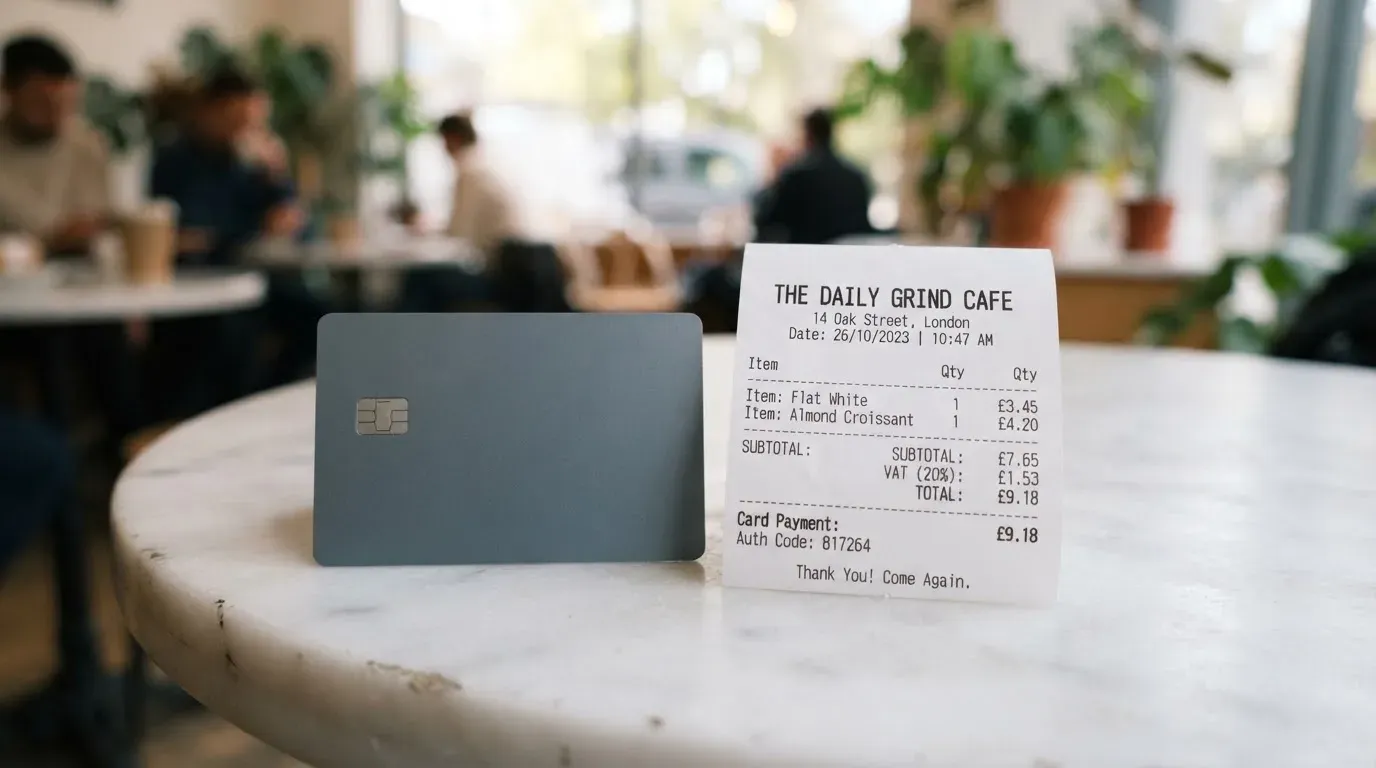
The COCA terms state that fees are “disclosed at the time you access the Service,” which means you see them in the app, not in the marketing. The footer advertises “fee-free swaps,” and a November 2024 press release advertised zero FX for a limited time. The App Store listing, which is closer to the public side of the marketing, says no maintenance fees and free ATM withdrawals up to $250 per month. That is what COCA’s own surface confirms.
The physical card has a catch that I only saw on unofficial sources: a first top-up of EUR 50 is required, and the card production and shipping costs are deducted from that top-up, with the remainder staying as balance. The amount of the production and shipping cost itself is not stated.
Here is the costs table, with the values that come from COCA’s own pages or, where noted, from the App Store listing. Anything from a third party is marked UNOFFICIAL.
| Fee or limit | Amount | Source |
|---|---|---|
| Card issuance | Not stated | COCA pages |
| Monthly maintenance | Free (App Store) | Official App Store listing |
| Physical card price | Not stated; first top-up EUR 50 required | UNOFFICIAL (penchan.co) |
| Conversion / swap | “Fee-free swaps” advertised; Nov 2024 promo: zero fees for a limited time | Official footer + press release |
| FX markup | Not stated; Nov 2024 promo: zero for a limited time | Official press release |
| FX markup (current) | 0.5–1.5% by currency; USD and EUR 0% | UNOFFICIAL (penchan.co) |
| ATM withdrawals | Free up to $250/month | Official App Store listing |
| ATM above allowance | 2% above the allowance, allowance amount not stated | UNOFFICIAL (penchan.co) |
| Annual fee | US$0 (per third-party aggregator) | UNOFFICIAL |
| Daily spending limit | EUR 30,000 with unlimited transactions (single source) | UNOFFICIAL (cryptocardhub.com) |
| Cashback claim range | US$15–350 a month by tier | UNOFFICIAL (penchan.co) |
Now, what does this look like in three everyday situations? I want to walk through them, because that is the part you actually feel.
Paying for a coffee in EUR with a USDC balance. The card settles in fiat, so your USDC has to be converted at the moment of payment. COCA’s own footer says “fee-free swaps,” which would mean the conversion is free in the app. The FX markup is the question, and COCA’s pages do not say. If the unofficial 0% for USD and EUR figure is correct, the coffee is essentially free of card-side cost beyond the network gas you paid when the USDC arrived in the wallet. If you are converting from BTC or another volatile asset, the swap cost depends on the spread, and one Trustpilot reviewer in September 2026 said the cost is “in the spread.” Translation: even when the app says 0% fee, the price you get on the conversion is the fee.
Paying for a Netflix subscription. This is COCA’s flagship use case, and the card gives up to 50% cashback on subscriptions like Netflix and Spotify. The 50% rate depends on your tier, which depends on how much $COCA token you hold in your wallet, and there is a monthly cap on the higher rate. Above the cap, you fall back to 1%. The Basic tier is automatic; higher tiers require $COCA in your wallet; the exact thresholds, caps, and named tiers live in a document called “Tier System Terms & Conditions” that I could not pull the numbers from. So the headline is real, but the conditions for unlocking it are partially off-page.
Withdrawing cash from an ATM abroad. Up to $250 a month is free per the App Store. Above that, the third-party source says 2%. If you are travelling, that $250 is about one ATM visit in a high-cost city, and once you cross it the math gets unfriendly. The currency conversion path matters too: if the local currency is not USD or EUR, the FX markup layer is back in play, and the official number is not published.
The honest summary is that the everyday cost will be small for a light user, and that the heavy users — people who would actually make the cashback worth chasing — are the ones who need the missing fee schedule the most.
Top up
Funding is where the COCA experience starts to feel more like a wallet than a card account.
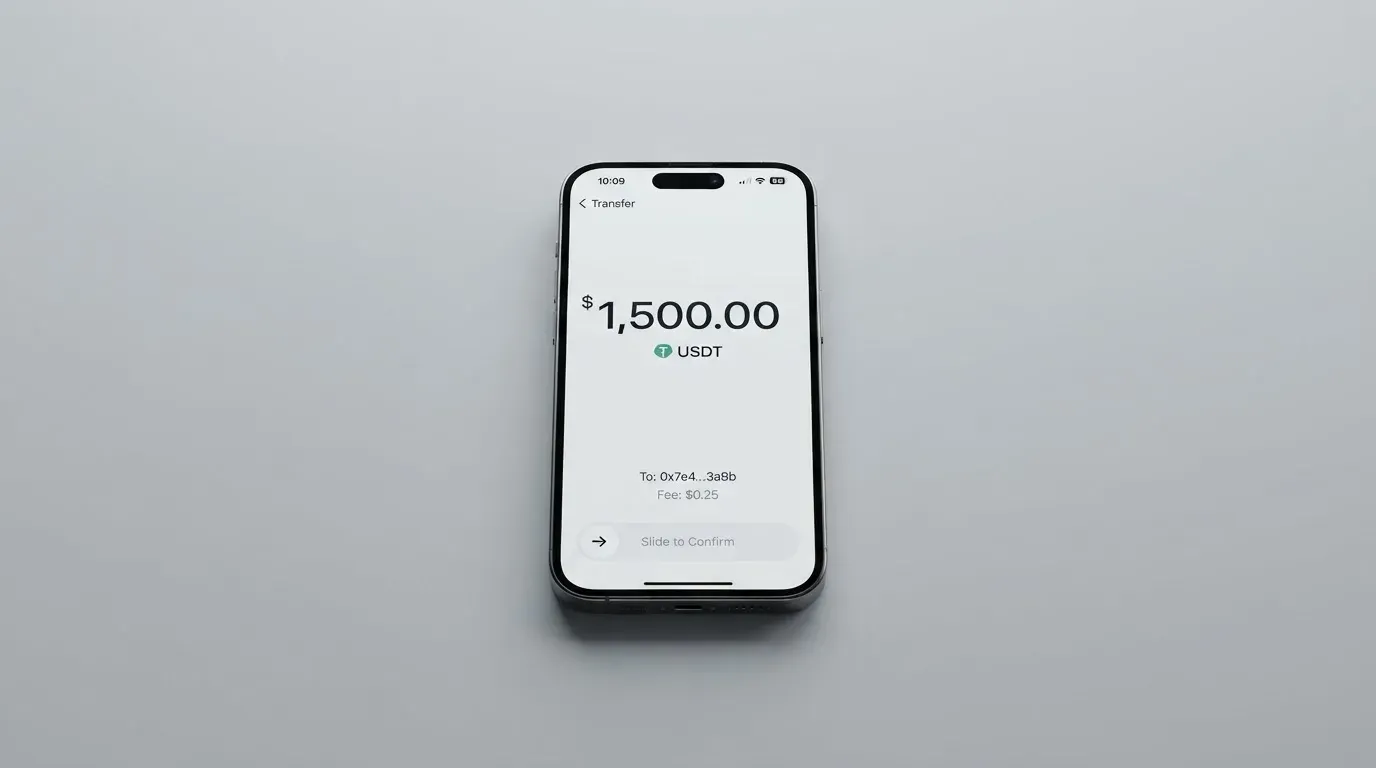
The official documentation says funding happens in three ways: an IBAN in EUR or USD, other cards, or stablecoins. The docs.coca.xyz page repeats those three. The catch is that COCA’s own pages do not name the specific stablecoins or the networks, and the terms describe the funds as being transferred to a third-party linked smart contract wallet at the moment of fiat payment. That is a normal non-custodial pattern — the crypto does not leave your wallet, the wallet generates a transaction that pulls the right amount into a payment contract — but it is also the kind of detail you want to read in the public docs, not infer.
If you are topping up from a bank account, an IBAN in EUR or USD is straightforward. The minimum, the fee, and who pays the SEPA or SWIFT charges are not stated on COCA’s pages. If you are topping up from another card, the same questions apply. If you are topping up with stablecoins, the missing coin and network list is the real risk. Send USDC on the wrong network and the deposit is, in the words of one Trustpilot reviewer, simply lost: an August 2026 review described a deposit on the correct network that was still missing after more than a week of ticket exchanges; a September 2026 review described two USDC transfers via X Layer that were not refunded.
Blockchain transfers are irreversible in general, and COCA’s own documentation reflects that: the terms say transactions cannot be cancelled or modified once submitted. That is a category fact, not a COCA-specific fact, but it is worth holding in mind.
Withdrawing is the mirror of funding. The terms describe account closure as a withdrawal of assets, and the wallet is non-custodial. If COCA withdraws the wallet itself, the terms say it will “endeavor to give” two months’ notice, and fees are not refunded on termination. Withdrawal fees are not stated.
Paying with it every day
Once the card is loaded, the experience is closer to a regular Visa than to a crypto product, and that is the part COCA does well.
The card is physical and virtual, on the Visa network. The card currency is not stated. Merchant category blocks are not stated. The cashback structure is the headline: up to 8% cashback in stablecoins on card spend, with up to 50% on subscriptions like Netflix and Spotify at higher tiers. The Basic tier is automatic; higher tiers need $COCA in the wallet; above the tier’s monthly cap, you earn 1%. There is a 30-day grace on downgrades, which means you do not lose your tier the moment your $COCA balance dips below the threshold.
The cashback ranges in third-party sources, between US$15 and US$350 a month depending on the tier, give a sense of the design, but COCA’s own pages do not publish the cap and tier numbers. The most that I can say from the official text is that cashback is paid in stablecoins, that subscriptions are heavily rewarded, and that holding $COCA improves the rate.
Apple Pay and Google Pay are not mentioned on COCA’s own pages, but two third-party sources (penchan.co, October 2026; spendnode.io) list both as supported. I am writing this as unofficial. If both are supported, the everyday experience is significantly smoother: tokenised card numbers through the Secure Element, with one-time dynamic security codes, and the issuer able to restrict a tokenised number independently of the physical card.
The app situation is mixed. The iOS app requires iOS 17.0 or later (with visionOS 1.0+ support), is at version 3.10.0, and the App Store rating is 3.9 out of 5 from 37 ratings as of 20 October 2026. The English-only language support is also worth noting if you do not read English. The Google Play package is com.wirex.wallet, and the rating was not retrievable. The presence of a Wirex package name is consistent with the unofficial reports of Wirex as the issuer, but it is also a fact that COCA’s own pages do not acknowledge.
Disputes are the section I find most worrying on the consumer-protection side. The terms do not mention chargebacks. Disputes are under English law, individual claims only, and time frames are not stated. If you have a US-style expectation of consumer protection on a debit card, this is not it. The category context matters too: in the US, debit card reversal rights come from Regulation E, credit card rights from Regulation Z, and prepaid-card coverage varies and should not be assumed. So a dispute path is, in practice, your email and the company’s response.
What can go wrong
A card review that only talks about the happy path is not useful, so I want to walk you through what I found on the complaint side.
On Trustpilot, the COCA page at ch.trustpilot shows 2.8 out of 5 from 31 reviews as of 20 October 2026. The shape of the reviews is unusual: 78% are five-star, 16% are one-star, and most of the early reviews are from the wallet launch in 2024. Other country pages show a slightly higher 3.5 out of 5 from 27 reviews. The five-star reviews cluster around USDT spending and the support team; the one-star reviews cluster around lost funds, account closures, and slow resolution.
The user reports I want to highlight, because they are concrete and recent:
- A January 2024 one-star review reported lost funds after a Wirex account was moved to the Coca Wallet app; the company asked for details and the case was unresolved at the time of writing.
- A June 2026 user reported funds and a card becoming inaccessible after an app update, lasting three months.
- An August 2026 review described a deposit on the correct network that was lost, with the support ticket open for more than a week.
- A September 2026 review described two USDC transfers via X Layer that were not refunded.
- Another September 2026 review described an account being closed after a months-long wait, with only part of the balance returned.
- An August 2026 review described a EUR 20 internal SEPA transfer being held for compliance confirmation.
- A September 2026 review called the “0% FX” marketing line misleading, with the real cost in the conversion spread.
The company responds to about 50% of the negative reviews, almost always asking for a ticket number. That is a reasonable operational response, and the volume of unresolved cases in the public reviews is what is concerning rather than the tone of the responses.
Two structural risks sit behind the user reports. The first is the non-custodial design. The wallet is yours, the keys are yours, and that means the safety net you might expect from a bank is not there. The terms explicitly say COCA cannot recover access for you if you lose the Recovery Phrase. The second is the lack of a named issuer in the public material, which makes it harder to identify which regulator or licence is actually standing behind the card programme.
The licence question is broader. Under MiCA, the EU’s markets-in-crypto-assets regulation, e-money tokens may be issued only by a credit institution or an electronic money institution; the MiCA transitional period lets providers already operating under national law continue only until 1 July 2026 or until they receive or are refused a MiCA authorisation. COCA’s own terms are dated 4 November 2023, and a check of the news from late 2025 and 2026 turned up no licence or issuer changes I can confirm. ESMA keeps an interim register of authorised CASPs, and that is the first place I would look if I were deciding whether to trust a specific provider.
The category-level risks are worth keeping in mind. Custodial platforms have a record of failures; the card networks have shown they will terminate programmes (Visa did so with FTX in November 2022 and with WaveCrest in 2018); and stablecoins, despite the name, are not necessarily stable. If you are funding a COCA card with stablecoins, the card’s published cost numbers are only part of the picture; the coin’s peg risk is the other part.
What to take instead
If COCA’s missing fee schedule or the Trustpilot pattern is a deal-breaker for you, here are three alternatives I have looked at for comparison. The numbers below are from the same kind of source mix you have just read: official where the official page states them, and third-party where it does not.
International Visa Card — 6.7 / 10. A US-issued Platinum Visa card, virtual for now with a physical version “coming soon.” Spends in USD. Card use in USD is free on all plans; foreign currency is the Visa exchange rate plus a 2% FX fee. Plans: Classic free, Pro $9.00/month, Max $19.00/month. Virtual card issuance is a one-time $5. Country rules are stricter: not available to residents or legal registrants of Belarus, mainland China, North Korea, Cuba, India, Iraq, Iran, Israel, Myanmar, Nepal, Nicaragua, Russia, Syria, Turkey, Ukraine, Venezuela, Vietnam; purchases are blocked in North Korea, Cuba, Iran, Russia, Syria, Ukraine, Venezuela; the rule is by residence or registration, and FATF grey-list countries are reviewed case by case. The card does not advertise cashback, so it is a simpler product, and the fee schedule is fully published.
UNi Card — 6.1 / 10. A multicurrency Mastercard that spends from the UNi.Global account balance. No annual fee, no foreign transaction fee, assets converted at “live OTC rates.” Spend-to-Earn rewards up to 3%. The country list, the card type (physical or virtual), the issuance fee, and the funding details are not stated in the public material. This is the closest competitor to COCA in spirit, with a published “no FX fee” line, but with much less detail behind it.
Whop Cards — 5.2 / 10. A Visa that works anywhere Visa is taken, with consumer availability in 31 US states, business availability in 41 states, and a long unsupported-country list (Belarus, mainland China, Cuba, Hong Kong, India, Iran, Iraq, Israel, Myanmar, Nepal, Nicaragua, North Korea, Russia, Syria, Turkey, Ukraine, Venezuela, Vietnam). Spends from a Whop balance backed by stablecoin collateral from a linked wallet. 5% cashback at select merchants (Uber at launch, more planned). The page says “no extra fees,” and no issuance or monthly amounts are listed. This is a US-shaped product; if you are outside the US, it is unlikely to be relevant.
A quick comparison table for orientation:
| Card | Score | Issuer named | FX fee published | Cashback | Country breadth |
|---|---|---|---|---|---|
| COCA | 6.4 | No | Not stated | Up to 8% on spend, up to 50% on subscriptions | UK, EEA, Asia, South America, Middle East, Africa |
| International Visa Card | 6.7 | Yes | 2% on foreign currency | None | Limited (see above) |
| UNi Card | 6.1 | Not in public material | “No FX fee” (live OTC) | Up to 3% | Not stated |
| Whop Cards | 5.2 | Not in public material | “No extra fees” | 5% at select merchants | 31 US consumer states |
If the deciding factor for you is the published fee schedule, the International Visa Card wins on transparency. If the deciding factor is cashback, COCA wins on headline rate, particularly on subscriptions. If the deciding factor is non-custody, COCA and Whop Cards are the only two of the four with a clear self-custody wallet behind the card.
Who I would recommend it to
Putting the sections together, my recommendation narrows to a specific kind of reader.
I would recommend COCA to a stablecoin holder who already runs a self-custody wallet, who values keeping their own keys, who is happy to use the app as the source of truth for fees, and who spends meaningfully on streaming subscriptions. The 50% subscription cashback, if your tier and monthly cap line up, is the genuine upside of the card, and the non-custodial design is a real differentiator from the prepaid-style cards that dominate the category.
I would not recommend COCA to a first-time crypto card user, to anyone who needs a card with a clear written fee schedule before they apply, to anyone whose primary use case is foreign travel with frequent ATM withdrawals above the $250 monthly free allowance, or to anyone who needs a strong chargeback path for online purchases. The dispute terms do not name chargebacks, the issuer is not named in the public material, and the Trustpilot pattern of unresolved cases is a real signal even at small sample size.
The middle ground is the reader who is curious but cautious. If that is you, the move I would make is to set up the wallet first, fund it with a small amount of stablecoins, and test the card on a low-stakes subscription before you commit more. You will see the real conversion path, the real cashback math, and the real support response time without putting meaningful money at risk.
Frequently asked questions
What is the COCA card?
COCA is a Visa payment card linked to a non-custodial crypto wallet. You can spend stablecoins and fiat from the wallet at any merchant that takes Visa, and the card is available in physical and virtual form. The card is operated by CCA Labs – FZCO, a company registered in Dubai, and the bank or e-money institution that actually issues the Visa programme is not named on COCA’s public pages.
How does the COCA card work?
You fund a non-custodial wallet with stablecoins, fiat via an IBAN in EUR or USD, or transfers from other cards. At the moment of payment, the wallet signs a transaction that pulls the right amount into a third-party linked smart contract wallet, which then settles the payment in fiat through the Visa network. Cashback is paid in stablecoins. The specifics of which stablecoins and which networks COCA supports are not published on COCA’s own pages.
Is COCA a bank?
No. COCA is operated by CCA Labs – FZCO, a Dubai company, and the actual card issuer is not named on the public pages. The wallet is non-custodial, which means you hold the keys, and the terms do not describe deposit insurance or a banking licence.
Who owns COCA?
The operating company is CCA Labs – FZCO, registered in Dubai Digital Oasis, UAE, under number DSO-FZCO-31557. The shareholders behind that entity are not stated on the public pages.
Is the COCA card available in my country?
COCA states that the card is currently available in the UK, EEA, Asia, South America, the Middle East and Africa. The terms name restricted jurisdictions including Afghanistan, Iran, Iraq, Cuba and Syria, with “and others” as an open-ended tail. The app is the place where the actual country check happens.
How do I get the COCA card?
You download the COCA app, create a wallet, complete the card KYC, and request a physical or virtual card. The KYC documents, verification time, and rejection reasons are not published on COCA’s pages. Third-party guidance suggests you pick the country of your KYC ID and pass the issuer’s identity check, but the specific documents are not detailed.
Does the COCA card require KYC?
The wallet is described as having “no KYC hassles,” but the terms require you to cooperate with provider requests. The card itself requires a KYC check, the details of which are not stated on COCA’s own pages. You should expect a standard identity and address check at the card stage.
How do I top up the COCA card?
You can top up by IBAN transfer in EUR or USD, from other cards, or with stablecoins. The specific stablecoins and the networks are not named on COCA’s pages. The terms say transactions cannot be cancelled or modified once submitted, so an incorrect network or address is at your own risk.
Where can I use the COCA card?
Anywhere Visa is accepted, online and in stores, subject to the merchant category blocks the issuer applies. COCA’s own pages do not list any blocked merchant categories. Third-party sources say Apple Pay and Google Pay are both supported, but this is not confirmed on COCA’s pages.
Is the COCA card safe?
The wallet uses Multi-Party Computation, which means no single party holds the full key, and COCA cannot recover access for you if you lose your Recovery Phrase. The card issuer is not named in the public material, the dispute terms do not mention chargebacks, and Trustpilot shows a 2.8 out of 5 from 31 reviews, with several reports of funds stuck after app updates and one of a closed account after a months-long wait. “Safe” depends on whether you are comparing to a fully regulated bank card or to other crypto cards; on the second comparison, COCA’s non-custodial design is a meaningful plus, and on the first, the missing issuer name and dispute path are real concerns.
App and neobank cards in the catalogue – cryptocardcatalog
Content created by the «cryptocardcatalog» team