
A thin virtual card with a Nigerian accent and a lot of silence
 Available in US

CardFlow is a virtual USD Mastercard aimed at Nigeria and at “Nigerians and global users”, and on the evidence I could gather it is one of the thinnest card products I have reviewed. The promise is simple: create a virtual card in about 3 minutes, fund it with crypto or naira, spend it anywhere Mastercard is accepted. The catch is not that the card is bad — it is that the card’s own pages say almost nothing about the things that decide whether a card is usable: what it charges, who you are dealing with, what happens when a payment is disputed, and where it is actually allowed.
My score for it is 4.9 out of 10. That number is not a verdict on the product’s intentions; it is a measure of how much a person can responsibly rely on what has been published. If you want a card you can understand before you commit money to it, this is not the place to start. If you want a virtual Mastercard that a Nigerian user can fund with naira or USDT, keep reading, because there are two specific things this card does appear to do.
*The conditions described below are current as of October 28, 2026.*
The score, criterion by criterion
| Criterion | Mark | Why, in short |
|---|---|---|
| Who can get it | 5 / 10 | Aimed at Nigeria and “Nigerians and global users”; no country list, no exclusions |
| Cost | 6 / 10 | A virtual card is free to create; top-up and FX fees are not disclosed |
| Top-up options | 6 / 10 | Bitcoin, USDT, ETH or a naira transfer; USDT on TRC-20 near-instant, BTC and ETH 5–30 minutes |
| Reliability and complaints | 4 / 10 | No named legal entity or issuer; no complaints found, and no independent reviews either |
| Everyday use | 3 / 10 | Virtual USD Mastercard only, in about 3 minutes; Apple Pay and Google Pay not disclosed; no ATM |
| Total | 4.9 / 10 | Thin on disclosure, adequate on the basics |
The pattern in that table is worth reading carefully, because it explains the total better than any single number. Where the card has a thing to offer — naira funding, a crypto wallet, a quick virtual card — the mark is middling. Where the card would need to reassure me about risk, trust or daily life, the marks fall to 3 and 4. Nobody loses a card because a page is quiet; you lose a card because you assumed the quiet meant fine.
Will they give you the card
The card’s own words are aimed at Nigeria: it describes itself as “Nigeria’s smartest fintech card platform”, and its intended users are “Nigerians and global users”. That is the whole of the eligibility statement. There is no list of countries, no list of excluded countries, no mention of whether citizenship or residence is what matters, and no stated minimum age beyond the general rule that prepaid and debit cards are for adults (18+), with some issuers setting higher limits.
For you as a reader, the practical consequence is that you cannot check eligibility before trying. You cannot read a page and conclude “I am in or I am out”. What you *can* say is this: the product is built for Nigerian users and for people who fund a USD card with naira or crypto. If you are in that group, the direction of travel is at least plausible. If you are on another continent entirely, you have no published basis for confidence, and no published basis for refusal.
There is a background reason to expect questions anyway. Card payments travel through several parties: the card network (Visa or Mastercard) routes the messages and sets the rules, the issuer — a bank or an e-money institution licensed under the network’s licence — holds the card programme, and the crypto brand is often only a programme manager or a front end that markets the card. When you are told nothing about which of those roles this company fills, you cannot tell which regulator to look for. In the EU, an electronic money institution can issue e-money, payment cards and wallets but cannot lend, and may offer services across the EU/EEA from a licence granted in one member state. None of that tells you about CardFlow. It tells you what kind of answer you are entitled to.
So the honest answer to “will they give you the card” is: probably to a Nigerian user who passes checks nobody has published, and unknown to everyone else.
How to get it
The stated path is short. The card is virtual — a virtual USD Mastercard — and the site says it is created in about 3 minutes. There is no physical version, so delivery timelines are not applicable. Whether identity verification is required is not stated, and there are no published KYC tiers, no document list, no mention of a selfie, an ID check or a proof-of-address step.
That absence matters more here than it would at a bank. KYC rules exist because regulated businesses must verify customers and assess risk as part of anti-money-laundering and counter-terrorism-financing law, including ongoing monitoring and reporting of suspicious activity. In the EU, customer due diligence covers name, address, date of birth, nationality and identity documentation, a sanctions check, the purpose of the relationship, and whether the customer is a politically exposed person. In the US, the customer identification programme requires name, date of birth, address and an identification number. If due diligence cannot be completed, rules require the institution to refrain from the transaction or relationship and, where necessary, end an existing one — which is why accounts get closed or frozen pending documents.
There is also a reason a card page might ask for very little and still find out a lot later: nationality is recorded and screened separately from residence, because sanctions screening and issuer risk policy are often applied to citizenship and country of birth as well as to the country of address. A card that says nothing about KYC today may still run a check the moment you try to move money.
My advice is not to treat the absence of a published KYC requirement as an answer in either direction. Ask support directly, in writing, before you fund anything, and keep the reply. If you are the kind of person who needs to know that no identity check will ever be requested, this card cannot promise you that.
Fees and what a payment really costs
The clearest statement the card makes is a good one: “Creating a virtual card is completely free”. Beyond that, the disclosure is close to empty. There is no monthly fee stated. No fee schedule is stated. ATM use is not applicable — it is a virtual card — and no ATM terms are given. Daily and monthly spending limits are not stated. There are no tiers, so there is nothing to compare and nothing to upgrade to. The card’s own word, where the card’s own page is being careful, is not stated.

| Fee or limit | What the card says |
|---|---|
| Card creation | Free — “Creating a virtual card is completely free” |
| Monthly fee | not stated |
| Top-up fees | not stated |
| Currency conversion | not stated |
| FX / foreign currency fee | not stated |
| ATM withdrawal | not stated (virtual card) |
| Daily spending limit | not stated |
| Monthly spending limit | not stated |
| Tiers or plans | not stated |
| Wallets and currencies | NGN and USD wallets, a virtual naira account; card spends in USD; funded with crypto or naira |
Let me walk you through three ordinary payments against that table, because a fee you cannot see is a fee you cannot budget.
Paying for a naira-priced subscription with crypto in the wallet. You convert, then the merchant charges you in dollars. Your funds started as a stablecoin, passed through a conversion, and are now being charged against a USD balance. Somewhere in that chain there is a rate and possibly a spread — and the card does not say what it is. If you had asked for the conversion rate *before* the payment, the card’s own marketing elsewhere suggests it makes a point of picking a good rate; on a card page, the absence of a stated rate is the answer.
Paying for something priced in euros or pounds. This is the FX case, and the FX fee is not stated. Add the general category problem on top: a card issued in one country can look foreign to a shop in another, because merchants can look up the issuing institution and country from the card’s first digits and apply extra scrutiny when that country differs from the billing address. Some merchants decline prepaid or foreign-issued cards for exactly that reason.
Paying online with the virtual card number typed into a shop. 3-D Secure may add an identity check — the issuer assesses the risk and either approves without friction or challenges you, for example with a one-time code. Mastercard’s brand is Identity Check, and the current version supports one-time passcodes and app-based authentication. If a payment is declined, the authorisation may leave a hold on your funds for several days, typically up to 7.
The last thing to weigh is that on-chain network fees — gas or bandwidth for your own deposit — are charged by the blockchain, not by the card provider. That part is not the card’s to control, and it is not the part that should worry you most here. The part that should worry you is the part the card has not published.
How to Top up
Top-up is where CardFlow looks most like a real product. The site FAQ says you can fund the wallet via bank transfer or crypto — Bitcoin, ETH and USDT — and the funding routes stated are USDT, ETH, BTC or a naira bank transfer. The card also has NGN and USD wallets and a virtual naira account, and it spends in USD. So a Nigerian user can convert or send naira into a naira balance, and a crypto user can send a token in.
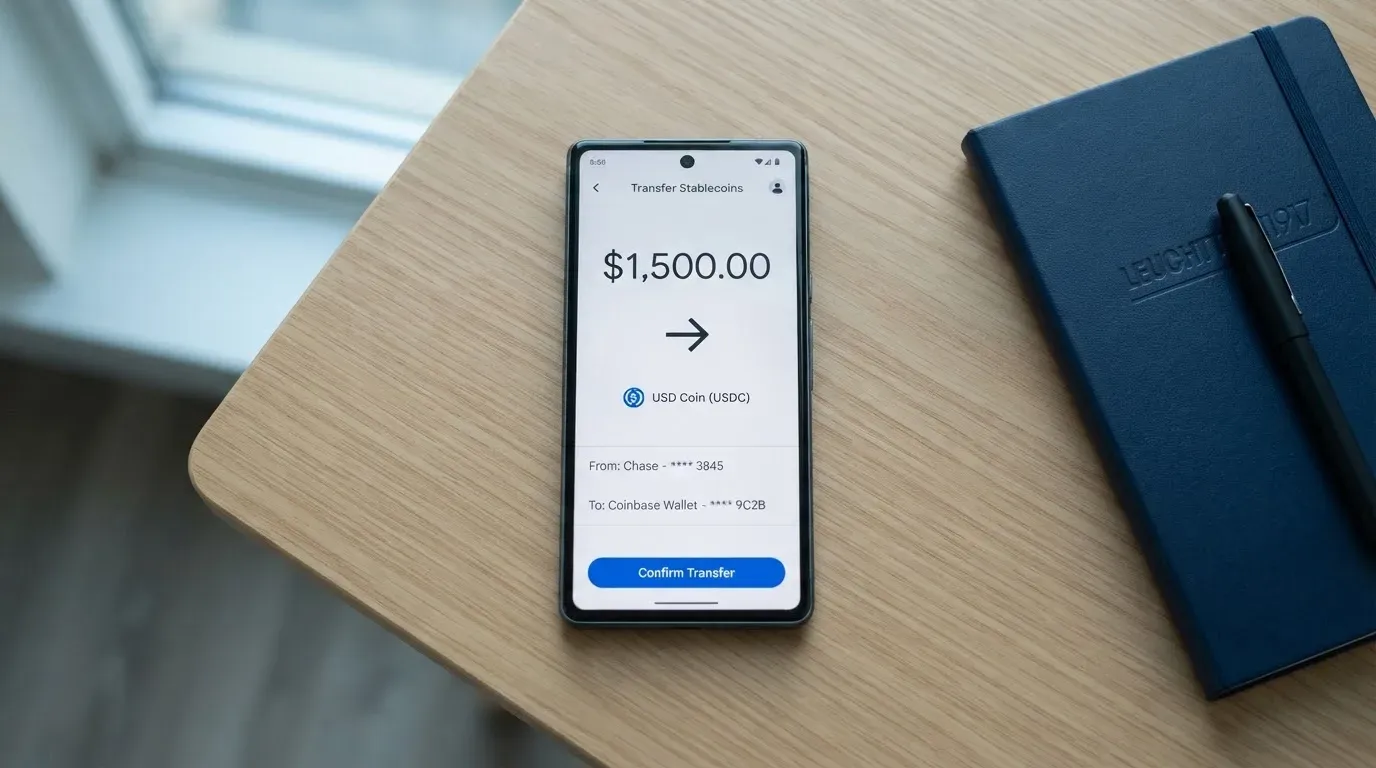
Timing is published, which is unusually helpful: USDT on TRC-20 is near-instant, while BTC and ETH take 5–30 minutes. Fees are not stated. Minimums are not stated. Networks are not stated beyond the TRC-20 hint on USDT, and that gap is the one to think hard about.
The same token on a different network is a different token. USDT exists on Ethereum, Tron, Solana, Polygon, Avalanche and others; Tron prices its transactions through bandwidth and energy, often burning TRX. Send USDT on a chain the provider does not expect and the deposit may never arrive, and blockchain transfers are irreversible — a deposit sent on an unsupported network, or to an address belonging to another network, can be lost or need manual support recovery with no guarantee. That is not a rare edge case; it is the single most common way people lose money into crypto card wallets.
So check the network before you send, every time, and treat any address you copy as unverified until you have read it against the provider’s own screen. And keep a little ETH in an Ethereum-based wallet if you ever send ERC-20 tokens: gas on that network is paid only in ETH, so a wallet holding USDT with no ETH cannot actually send. If you want the second opinion on which rails to use, here is the background that makes the difference: Circle stopped supporting USDC on Tron in February 2024, so “USDC over TRC20” is not a native option, while Tether’s USDT is issued across many chains with reserves intended to back it 1-to-1.
Withdrawal is a separate question and the answer is not stated. There is nothing published about taking money back out, and that is worth asking about too — for most readers the exit route matters as much as the entry route.
Paying with it every day
Here the card’s disclosure thins out fastest. The site says the CardFlow Mastercard works on Amazon, Netflix, Shopify, AWS and more. That is a list of large, widely accepting merchants, and it is worth reading for what it is: proof the number works at scale, not proof it works everywhere. Blocks that a card can be sold — some merchant categories, some countries, some prepaid structures — are not stated, and neither is anything about gambling or other restricted categories, which are a known area of issuer policy rather than law.
Apple Pay and Google Pay are not disclosed, and neither is any app. What I could find is a web service with no store listing, which leaves open questions that matter if you plan to check your balance in a queue: no app means no push notifications, and probably no biometric login. Rewards are not stated either — there is no cashback rate, no cap and no programme to compare.
There is one genuinely useful control. The Cards page describes freezing: click Freeze on any card, unfreeze whenever you want, alongside one-tap freeze and 2FA. That is the right shape of feature for a card whose whole life is a number sitting in a browser, and it belongs on any shortlist. But custody and safeguarding are not stated, and that is the question underneath all the daily-use questions: whose money is it while it sits there?
For context on what the answer would look like if you were dealing with a regulated e-money institution, such institutions must safeguard customer funds by segregating them in dedicated accounts or insuring them — and such funds are not the same as bank deposits, may not be covered by deposit guarantee schemes. Whether any such arrangement exists behind this card, the pages do not say.
What can go wrong
Nothing has gone wrong that anyone has written down. That is the honest headline, and it is not reassuring — it is an absence of evidence produced by searches that returned only other companies. No Trustpilot page was located for the company; a similarly named page belongs to a different company. No complaints, no independent reviews, no news. For a service holding people’s money, the absence of a public footprint usually means the service is small, not that it is clean.
Alongside that, three risks sit unresolved.
The company behind the card is not stated. No legal entity, no issuer, no regulator. This is not a technicality. Visa and Mastercard do not issue crypto cards to consumers themselves; they license issuers, and they can suspend a programme. In November 2022 Visa said it had “terminated our global agreements with FTX”, and the FTX US debit card programme was wound down by its issuer. WaveCrest, a Visa issuer that supplied crypto card brands, was suspended by Visa in Europe in 2018, closing all WaveCrest-issued Visa programmes. Closures generally follow a pattern: a notice period, then spending and loading stop, then users are asked to withdraw remaining balances. In one 2026 closure reported by a secondary source — a single, unconfirmed account — new loads ended 8 July 2026 and spending stopped 8 August 2026. You do not need a company to be in trouble for that sequence to matter to you; you need to know who the counterparty is before the notice arrives.
Your money sits with a custodian, or it does not, and you cannot tell. Control of crypto belongs to whoever holds the private key or seed phrase; with a custodial wallet the provider holds the credentials and you must trust them completely. A seed phrase — typically 12 to 24 words — is an unencrypted form of the private key, and anyone who obtains it can restore the wallet and spend the funds. Crypto transfers are typically irreversible and a stolen key has no built-in recovery. Custodial platforms have a real record of failure: Mt. Gox (about US$350 million reported stolen, 2011–2014), Coincheck (about US$400 million, 2018) and Ronin Network (US$625 million, 2022). With a self-custody-linked card the funds stay in your own wallet until the moment of payment, but you carry the whole burden of key loss, phishing and clipboard-hijacking malware that swaps copied addresses. CardFlow’s pages do not tell you which model you are in.
Support and disputes are thin. There is an in-site chat widget labelled “CardFlow Support” and marked “Online · Replies in minutes”, plus an FAQ. Disputes, complaints handling and chargeback rights are not stated. A chargeback is a refund ordered by the card issuer to settle a dispute, with reason codes such as fraud, duplicate billing or goods not received; in the US, debit card reversal rights come from Regulation E, credit card rights from Regulation Z, and prepaid-card coverage varies and should not be assumed. With a virtual card and no stated dispute process, a recurring payment charged twice is a problem you would have to solve through an undocumented channel. If that worries you, ask what the process is before you save a card to any subscription.
One more thing to hold in mind: stablecoins are not stable by definition. They aim to hold a stable value, and Tether’s USDT and Circle’s USDC are US-dollar-pegged — the BIS in July 2025 put about 90% of stablecoin market capitalisation in these two — but USDC temporarily lost its peg in March 2023 during the US banking crisis, and TerraUSD collapsed in May 2022. Tether also says it disables tokens in wallets on the OFAC sanctions list and has frozen funds tied to illicit activity. None of that is a prediction; it is a reminder that the value you loaded is not the same as a bank balance.
What to take instead
I would not tell you to avoid CardFlow outright. I would tell you that if the reasons you want a card are the reasons most people want one — you want a number you can pay subscriptions with, you want to know what it costs, you want someone to answer when a payment goes wrong — then there are three alternatives with more of their cards on paper. Here is the comparison, and I will walk you through what each line means for you.
| CardFlow | Cardex | HyperCard | Card.fi | |
|---|---|---|---|---|
| My score | 4.9 / 10 | 5.6 / 10 | 4.7 / 10 | 6.6 / 10 |
| Who it’s for | Nigeria; “Nigerians and global users”, no list | “One crypto card, 200+ countries”, no list or exclusions | No country list on official pages; App Store says works in “more than 176 countries” | Ships to “200+ countries”; terms bar residents of, or orders from, sanctioned countries |
| Card | Virtual USD Mastercard | Debit crypto card on VERVE, VISA, Mastercard, UnionPay; virtual and physical | Prepaid “HyperCard”, network not stated; balance in USD or EUR | Virtual Classic and Premium, physical Classic and Premium, metal |
| Card creation | Free | Not stated | Not stated | $49 virtual Classic, $249 virtual Premium; physical and metal not listed |
| Monthly / annual / inactivity fee | not stated | not stated | not stated | None listed |
| Conversion | not stated | Real-time crypto-to-fiat at payment; no percentage stated | not stated | Conversion fee shown before each top-up |
| FX | not stated | not stated | not stated | Classic 3.5%, Premium 2.5% |
| Top-up fee | not stated | not stated | not stated | Classic 1.5% + $1.00, Premium 1% |
| Funding | BTC, ETH, USDT, naira transfer | USDT, USDC, BTC wallets | Deposit USDT, BTC, ETH in the app | 32 coins across 5 networks; converted at market rate on arrival |
| Networks | USDT on TRC-20 near-instant; others not stated | not stated | not stated | Ethereum, Base, BNB Chain, Solana, Kaanch |
| Rewards | not stated | not stated | not stated | Cashback on spending: Classic 0.8% (cap 10 USDT/month), Premium 1%, Metal 1.2% or 2% |
| Notes | Legal entity and issuer not stated | Card currency is Naira per the listing | — | Wrong chain risks permanent loss; every physical order includes a virtual card |
Cardex (5.6 / 10) is the closest thing here to what a crypto card in Nigeria usually looks like: a debit crypto card on VERVE, VISA, Mastercard and UnionPay, virtual and physical, with an App Store listing that is naira-focused — you pay in naira. Its real selling point is that conversion happens in real time at the moment of payment, with what the site calls an “AI-Powered Conversion Rate” scanning global exchange rates and picking the best one when you spend; no fee percentage is stated, which is the same weakness as CardFlow. Funding is USDT, USDC and BTC wallets, networks unstated. My caution: “200+ countries” with no country list and no exclusions is a marketing phrase until you see the terms.
HyperCard (4.7 / 10) scores lowest, and for a specific reason: it is the least transparent of the three on paper. The App Store says it works in “more than 176 countries”, but that is acceptance, not eligibility — it says where the card will work, not who can hold one. The network is not stated on the listing, and neither are fees. It deposits USDT, BTC or ETH in the app and holds the balance in USD or EUR. If you are choosing between two products you cannot both evaluate, choose neither.
Card.fi (6.6 / 10) is the one that publishes its numbers, which is why it scores highest. Virtual Classic costs $49 and Virtual Premium $249 one-time; physical and metal prices are not listed, and every physical order includes a virtual card. No monthly, annual, inactivity or minimum-balance fee is listed. Fees are concrete: top-up 1.5% + $1.00 on Classic and 1% on Premium, FX 3.5% on Classic and 2.5% on Premium, with the conversion fee shown before each top-up. Rewards are cashback on card spending only — Classic 0.8% capped at 10 USDT per month, Premium 1%, Metal 1.2% (cap 100 USDT per month and 5,000 USDT) or 2% (cap 250 USDT per month and 20,000 USDT); the headline 10% at coffee shops is capped at 10 USDT per month, and the “up to 18%” on balances is Metal and variable. The catch is the one that matters most in this category: it supports 32 coins across 5 networks — Ethereum, Base, BNB Chain, Solana and Kaanch — and a deposit on the wrong chain risks permanent loss. Its terms also bar residents of, or orders from, a country subject to sanctions that would prohibit the service. Cards are issued “under licence from the relevant card schemes”, with Visa and Mastercard not named.
The honest summary of that table: CardFlow is not dramatically worse than its rivals on fees, because none of them publish them either. It is worse on the things that decide what happens when something goes wrong — a named company, a dispute process, a withdrawal route. If you read only one column, read the last one.
Who I would recommend it to
I would recommend CardFlow to a Nigerian user who has a specific, narrow reason to want this card: a USD balance for online services, funded from a naira account or from USDT, without waiting days for a physical card to arrive. That person knows what they are buying, keeps a small balance, and treats it as a convenience rather than as an account. For them the near-instant USDT on TRC-20 and the three-minute virtual card are genuinely useful, and the one-tap freeze is the right control to have.
I would not recommend it as a first crypto card, and I would not recommend it to anyone whose main worry is getting money back out or getting a payment reversed. I would not recommend it as a primary card for daily life, since Apple Pay and Google Pay are not disclosed and there is no app I could find. And I would be careful with it if your plan involves large balances, because custody is not stated, complaints and dispute handling are not stated, and I could not find the legal entity that stands behind it.
If you want the number to change, the card’s job is easy and I would put it plainly: name the company and the issuer, publish the fee schedule, say whether KYC is required, publish the withdrawal and dispute process, and state the networks and minimums for each top-up method. Any card that does those five things is worth more than one that markets itself as smart.
Frequently asked questions
What is the CardFlow card?
CardFlow is a virtual USD Mastercard offered by a fintech platform aimed at Nigeria, describing itself as “Nigeria’s smartest fintech card platform” for “Nigerians and global users”. The card is created in about 3 minutes and is virtual only, so there is no physical version. It draws on NGN and USD wallets funded with crypto or naira, and it spends in USD. Beyond that basic shape, the card’s public pages disclose very little.
How does the CardFlow card work?
You hold a balance and spend it, which makes CardFlow behave like a prepaid card rather than a bank debit card — crypto or naira goes in, fiat value goes onto the card, and the card cannot overdraw that balance. The card then works at merchants that accept Mastercard, and the site names Amazon, Netflix, Shopify and AWS among them. What that balance is worth to you depends on fees the card does not publish.
Is CardFlow a bank?
Not on the published evidence. No legal entity, issuer or regulator is stated anywhere on the pages I could read, so there is no basis for calling it a bank or an e-money institution. That distinction matters: e-money funds are not the same as bank deposits and may not be covered by a deposit guarantee scheme, whereas bank deposits usually are. Treat this as an unknown counterparty rather than a bank.
Who owns CardFlow?
I could not determine this, and that is a finding rather than a gap I filled with a guess. Searches for the company name alongside review sites returned only other businesses, and no Trustpilot page exists for the domain; a similarly named page belongs to a different company. Before funding the card, ask support in writing which legal entity operates the platform and which institution issues the Mastercard.
Is the CardFlow card available in my country?
The card publishes no country list and no exclusions, so you cannot check eligibility from the page — the only stated audience is Nigeria plus “global users”. General rules still apply to how card acceptance and screening work, but acceptance at a shop is not the same as permission to hold the card. Ask support about your country of residence and your citizenship separately, since screening is often applied to both.
Does the CardFlow card require KYC?
Not stated, which is an answer in neither direction. KYC rules for regulated businesses normally cover identity documents, address, date of birth, nationality and sanctions screening, and accounts get frozen pending documents when due diligence cannot be completed. Because the card says nothing, ask support directly and keep the reply — and if the answer you get is that no check will ever be applied, weigh that carefully before sending real money.
How much does the CardFlow card cost?
Creating a virtual card is free — the site says it is “completely free”. Beyond that, the card states no monthly fee, no top-up fee, no conversion fee, no FX fee and no limits. On-chain network fees for a crypto deposit are charged by the blockchain, not the provider. Because the card’s own numbers are missing, the sensible approach is to fund it with a small amount first and watch what actually leaves your account.
How do I top up the CardFlow card?
The site FAQ says you can fund the wallet by bank transfer or with BTC, ETH or USDT; naira bank transfer is also listed, alongside NGN and USD wallets and a virtual naira account. USDT on TRC-20 is near-instant, while BTC and ETH take 5–30 minutes. Fees, minimums and the networks for the other coins are not stated — and blockchain transfers are irreversible, so sending on the wrong chain can mean losing the deposit.
Is the CardFlow card safe to use?
There is no evidence of harm and no evidence of safety — no complaints, no independent reviews and no news about the company. The controls that are published are reasonable: one-tap freeze and unfreeze on any card, and 2FA. What is not published matters as much: whether funds are held in custody, how they are safeguarded, and how to withdraw. Support is an in-site chat labelled “CardFlow Support” marked as replying in minutes, plus an FAQ.
Is the CardFlow card worth it?
Worth it only for a narrow case: a Nigerian user who wants a USD balance for online services, funded from naira or USDT, kept small and treated as a convenience rather than an account. Not worth it as a first crypto card, as a primary everyday card, or as a place to hold a large balance — Apple Pay and Google Pay are not disclosed, there is no app I could find, and rewards, withdrawal terms and dispute handling are all unstated.
Virtual cards in the catalogue – cryptocardcatalog
Content created by the «cryptocardcatalog» team