
A prepaid virtual card with no identity check — and several numbers it never publishes
 Available in US
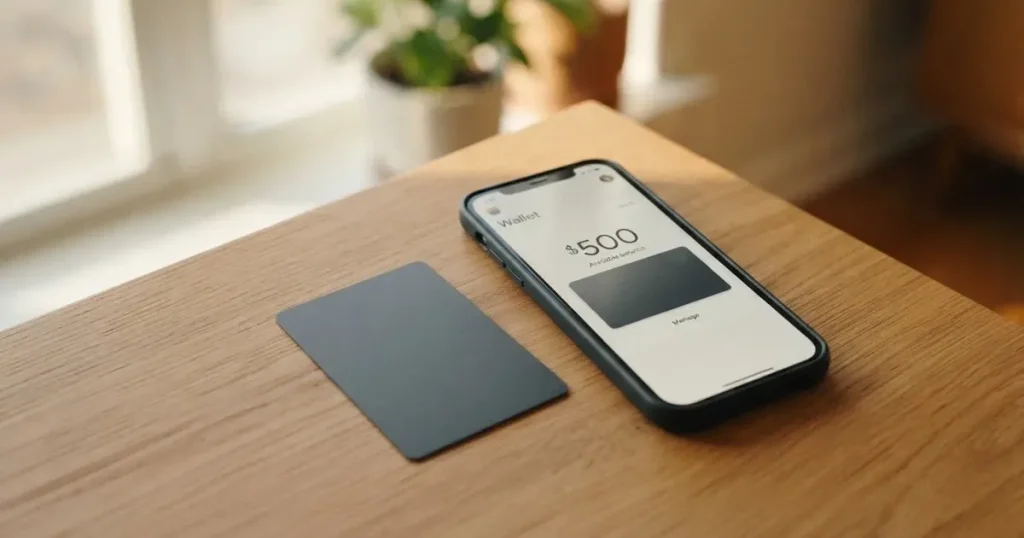
If you cannot get an ordinary bank card — no fixed address on paper, no documents a bank will accept, a country whose banks you would rather not deal with — then a card you buy with cryptocurrency and spend like a prepaid balance card is a genuinely different proposition from a bank account. Card2Crypto is one of these. It sells a virtual Mastercard that you pay for in crypto, with no identity check, and the balance sits in dollars.
I read what the card publishes about itself and worked through what it does not say. My score is 6.0 out of 10. That is a working product with one genuine advantage — it does not ask who you are — sitting on top of a company that names almost nothing about itself: no issuer, no country of registration, no licences, no fee schedule for the card, no complaints page, no third-party reviews I could find. The features it advertises are few and clear. The things you would need in order to decide whether it is worth your money are mostly absent from the public pages.
Below I take it in the order you would: who gets the card, how you get it, what it costs, how you load it, how you spend it, what can go wrong, and what the alternatives look like.
The conditions described here are current as of October 28, 2026.
Verdict: 6.0 out of 10
Card2Crypto suits a narrow but real case: someone who wants to pay for something online or in person with crypto, once or twice, without opening an account, without uploading a passport, and without a local banking relationship. If that is you, and the amount at risk is small — the card tops out at $499 — it does what it says. If you want this as your everyday card, want to know the exact fee you will pay at the till, or want to know who is liable when something goes wrong, you will not find those answers here, and that is the reason for a middling score rather than a bad one.
| Criterion | Mark | Why |
|---|---|---|
| Who can get it | 8 / 10 | “Anyone worldwide can purchase”; activation may be refused to residents of a 30-country list including Russia, Belarus, Serbia, Turkey, Ukraine |
| Cost | 5 / 10 | “No fee stated” on the card page; the card itself runs from $5 to $499; the 4–7% fee on the page belongs to the PayPal gift card, not the Mastercard |
| Top-up options | 8 / 10 | USDT and USDC on Polygon, Bitcoin, Ethereum, Solana, Monero; no reload function mentioned |
| Reliability and complaints | 4 / 10 | Software services only per the Terms; issuer, country and licences unnamed; no 3D Secure; no reviews found |
| Everyday use | 5 / 10 | Virtual only, Mastercard; “Supports Apple Pay & Google Pay”; no plastic, ATM situation not stated |
| Total | 6.0 / 10 | Works for the narrow case it was built for; tells you too little about everything around it |
The audience note is worth stating plainly, because it is the design, not an accident: this is anonymous, one-off, virtual card payment with no KYC. Nothing else about it tries to be more than that.
Will they give you the card?
Broadly yes, with a long list attached. The card’s own wording is “Anyone worldwide can purchase”. But activation is a separate step from purchase, and it can be refused if you live in one of thirty countries: Afghanistan, Albania, Belarus, Bosnia & Herzegovina, Burma/Myanmar, Central African Republic, Croatia, DR Congo, Cuba, Ethiopia, Iran, Iraq, North Korea, Lebanon, Libya, Mali, Nicaragua, Palestine, Russia, Saudi Arabia, Serbia, Somalia, South Sudan, Sudan, Syria, Turkey, Ukraine, Venezuela, Yemen, Zimbabwe. The basis given is residence, not citizenship.
Two things about that sentence matter. The list is unusually long and it includes several countries where the reason for wanting a no-KYC card is precisely the difficulty of opening an account. And the card attaches a condition to it: “Attempting to redeem or activate a card from a Restricted Country will void any right to a refund.” So if you are in one of those thirty places, the money you sent in crypto is gone.
What is not there is any statement about citizenship as opposed to residence, and nothing about what happens if you travel. A card is normally checked against the country of your address at activation, not against where you are standing when you tap.
For everyone else, the answer is that eligibility is broad and undocumented. There is no waiting list, no country list of the other kind, no income requirement. You do not need to be eighteen in any way the card mentions — it says nothing about age — though prepaid and debit cards in the industry generally go to adults, and some issuers set higher limits for younger customers.
How to get it
The whole flow is short, which is the appeal. You choose an amount, you pay in crypto, and you get a card number.
- Choose the amount. The card is sold in a range, from $5 to $499.
- Pay in crypto within a timer. The purchase screen gives you ten minutes to complete the payment.
- Wait. The card is described as typically ready within minutes, with up to 48 hours in high demand.
There is no application form in the ordinary sense and no credit check. On identity: the card states that all cards can be purchased and activated without KYC. That is the headline feature. At the same time, activation may need a valid name, email, phone number and billing address. Those are contact and billing details, not identity documents — there are no KYC levels and no tiered verification, because there is no verification to tier.
The card itself is a prepaid virtual debit Mastercard with a USD balance. Virtual only: there is no plastic version described, no physical delivery, nothing in the post.
One feature is worth knowing before you ever try to pay for anything online with it: the cards do not support 3D Secure. That is the step where your bank checks it is really you — a one-time code or a biometric prompt. Without it, the card has no second layer on online payments, and you should read the section on what can go wrong before you fund it.
Fees: what it really costs
Here is the honest version: the card’s public page says “no fee stated”, and that is as far as it goes. There is no published price for the Mastercard, no monthly fee stated, and no conversion or FX percentage for it. What you can read on the site is the card’s value range, $5 to $499.

The 4–7% figure that appears on the page belongs to the PayPal gift card product, not to the Mastercard. I want to be exact about that, because it is the single most misleading thing about the pricing: a number floats near the product and it does not apply to what you would be buying.
| Fee or limit | What the card states |
|---|---|
| Issuance | “No fee stated” on the card page; the card value runs $5 to $499 |
| Monthly fee | Not stated |
| Conversion / FX fee | Not stated for the Mastercard |
| ATM | Not stated |
| Daily and monthly spend limits | Not stated; only the purchase range $5 to $499 is given |
| Balance currency | USD; multi-currency not stated |
| On-chain network fee | Charged by the blockchain for your deposit, not by the card provider |
So let us run three ordinary situations and see what is knowable.
Buying something priced in dollars. This is the closest to a clean case. Your balance is in dollars, the merchant charges dollars, and the card page publishes no conversion fee for it. What remains unknown is whether the amount you loaded is exactly what you can spend, or whether a percentage comes off at the point of payment.
Paying somewhere that quotes in euros, pounds or anything else. This is the case the card’s silence hurts most. Your balance is dollars, so a conversion happens somewhere between you and the merchant, and the card does not publish what it takes. Add whatever the merchant or its acquirer applies for accepting a foreign-issued card, and the all-in cost of that payment is not a number you can compute before you make it.
Taking money out of an ATM. The card’s pages say nothing about cash withdrawal — no fee, no daily number, no PIN. Given the card is virtual-only, I would not treat an ATM as part of the plan.
There is also the fee you do not avoid: the network fee the blockchain charges to receive your transfer. That is charged by the network, not by the card, and it exists regardless of which card you use.
How to top it up
Loading the card is the strongest part of the offer, and the reason it scores well. Payment is in crypto, and the coins named on the card are USDT, USDC, Bitcoin, Ethereum, Solana and Monero. The payment menu narrows two of them to a specific network: USDT on Polygon and USDC on Polygon, alongside Bitcoin, Ethereum, Solana and Monero as their own entries.
That list is deliberately broad across the two kinds of coin people hold. Stablecoins let you move value without the volatility swing of a market order. Bitcoin, Ethereum and Solana cover the major networks. Monero is on a short list for a reason that is obvious to anyone who has thought about privacy, though the card makes no anonymity promise and neither should you assume one.
Here is the practical warning. Blockchain transfers cannot be reversed. If you send on a network the provider does not support, or to an address belonging to a different network, the deposit can be lost or need manual recovery from support with no guarantee attached. Send a small test amount first, on the network the payment screen actually shows you, and check the address twice.
Two things the card does not mention. There is no reload function described — the model appears to be one purchase per card rather than a card you top up repeatedly — and there is nothing about withdrawing money back out. On termination the Terms say your right to use the service ceases and do not address the balance.
Paying with it every day
Daily use is the weakest part of the picture, and it is a limitation of the product rather than a flaw in the execution. This is a virtual card. There is no plastic, so it lives in your phone or your wallet, and it is designed for the checkout where you type a card number.
Apple Pay and Google Pay are both supported, which is what makes a virtual card tolerable to live with — once the card number is in your phone’s wallet, Apple Pay replaces the card number with a device-specific number stored in the phone’s secure hardware, and each payment generates a fresh one-time code. Your actual number is not stored on Apple’s servers, and a stolen phone does not hand over a reusable card number. That is a real convenience and a real security property, and it comes from the phone, not from the card.
What is not there: no app is mentioned — the purchase flow runs on the web — no rewards, and no list of blocked merchant categories. That last one matters more than it sounds. Merchants classify themselves with a four-digit merchant category code, and the best-known example of blocking is gambling, code 7995, which many issuers refuse on specific cards as a matter of policy. If you are going to be declined somewhere, that is usually why, and this card does not tell you its policy.
Two more everyday realities from the industry, not from this card. Some shops simply refuse prepaid or foreign-issued cards, because the six or eight digit issuer identification number at the front of a card number is readable by the till and it reveals the issuer’s country. And a declined authorisation can leave a hold on your money for several days — typically up to seven — even though the purchase never went through.
What can go wrong
Read this section before you fund the card.
Nobody will tell you who is behind it. The Terms describe Card2Crypto as software services only. The issuer, the country of registration and any licences are not named. Payments are handled by unnamed licensed third-party providers. This is the central risk, and it is worth being precise about why. A card number is not magic: the first six or eight digits identify the institution that issued it, and the network routes the payment to that institution, not to the brand you bought from. So somewhere there is a licensed issuer holding your balance, and this card’s pages do not say who it is.
There is no 3D Secure. Online payments have no second check that it is you.
VPN use is prohibited. The card provider prohibits it strictly, and says it may lead to cancellation without refund. This is worth understanding rather than resenting: a virtual card with no identity check is frequently used to pay from a different apparent location, and the provider’s defence is that this is exactly the behaviour it cannot distinguish from fraud.
Custody is not stated. Whether your balance is held by a third party or linked to your own wallet is not on the public pages. That distinction is not cosmetic. With a custodial wallet the provider holds the credentials and you must trust them completely; with a self-custody-linked card the funds stay in your wallet until the moment of payment. If the answer turns out to be custodial, the industry record is sobering: Mt. Gox lost roughly $350 million, Coincheck about $400 million, and the Ronin Network bridge $625 million. Blockchain transfers are irreversible and a stolen key has no recovery path.
Refunds and disputes are yours to argue. Refunds are not available for restricted-country activation or for VPN use. A general refund policy is not described, and the Terms send disputes to the courts of an unnamed home country.
I found no independent verdict on it. Not a single Trustpilot or Reddit page for Card2Crypto surfaced in my search — the results were other brands. No official incidents are recorded, but with no reviews at all, that is not evidence of a clean record; it is an absence of evidence. A card with no public complaints page and no track record of satisfied users is a card where you are the first case if something fails.
Support runs through a contact page and a Telegram news channel. Hours and languages are not stated. The site carries a 2022–2026 copyright line; there is no public news page I could find.
One thing you can do for yourself: if you are in the EU, ESMA keeps an interim register of authorised crypto-asset service providers, white papers and entities flagged as non-compliant. A provider that appears there as authorised is a different proposition from one that does not appear at all.
What to take instead
If the reason you are here is no-KYC access, these are the three closest alternatives I looked at. None is a bank, and none is a substitute for real banking — but all three state more about themselves than Card2Crypto does, and you can weigh them against each other.
| Card2Crypto | Cardex | CardFlow | HyperCard | |
|---|---|---|---|---|
| My score | 6.0 / 10 | 5.6 / 10 | 4.9 / 10 | 4.7 / 10 |
| Card | Virtual prepaid Mastercard, USD | Debit crypto card on VERSE, Visa, Mastercard, UnionPay; virtual and physical | Virtual USD Mastercard, about 3 minutes to create | Prepaid “HyperCard”; network not stated |
| Cost to get it | “No fee stated”; value $5–$499 | Not stated | “Creating a virtual card is completely free” | Not stated; app page lists no fees |
| Conversion fee | Not stated | Real-time conversion at payment; no percentage stated | Not stated | Not stated |
| Coins accepted | USDT, USDC, BTC, ETH, SOL, XMR; networks USDT/USDC on Polygon | USDT, USDC, BTC; networks not stated | BTC, USDT, ETH or Naira transfer | USDT, BTC, ETH in the app; networks not stated |
| Who it suits | One-off anonymous virtual payments | Wider network choice, wants a physical option | Nigerian and global users | Simple USD or EUR prepaid balance |
| Who it does not suit | Anyone needing a plastic card, an ATM, or a published fee | Anyone wanting a stated price | Anyone outside the Nigerian framing | Anyone needing to know the network |
Cardex says one crypto card, 200+ countries, with no country list and no exclusions; its app listing is Naira-focused, so it reads as a Nigerian product with wider reach. CardFlow calls itself “Nigeria’s smartest fintech card platform” for “Nigerians and global users”, with no country list or exclusions stated. HyperCard’s official pages give no country list, and its app says the card works in “more than 176 countries” — note carefully that this is a statement about acceptance, not about who is eligible.
What none of them, and not Card2Crypto either, publishes is the number you would most want: what a payment actually costs you. Cardex at least describes the mechanism — real-time crypto-to-fiat conversion at the moment of payment, with an “AI-Powered Conversion Rate” that scans exchange rates and picks the best one — but gives no percentage. CardFlow at least prices the card itself: free to create. Neither is a full answer, and my scores reflect that.
Who I would recommend it to
I would recommend Card2Crypto to someone in this position: you need to pay for something you cannot easily pay for another way, you intend to hold a small balance, you are comfortable that you are trusting a company that will not tell you its issuer or its jurisdiction, and you have read the refund and VPN clauses and accepted them. For a one-off purchase of, say, a subscription or a travel booking, funded with a stablecoin, that is a reasonable use of the product.
I would not recommend it to you if any of the following is true. You want this to be your main card. You need cash from an ATM. You plan to hold more than a small balance for any length of time. You are a resident of one of the thirty restricted countries. You are buying something expensive, because without 3D Secure and without chargeback clarity you carry the loss if the payment goes wrong. Or you simply want to know what a payment will cost before you make it — this card will not tell you, and that alone is enough to send me looking elsewhere.
The honest summary is that the thing Card2Crypto promises, it delivers, and it promises almost nothing else. Its anonymity is real in the sense that no KYC is required and none will be. But the price of that anonymity is a stack of small unknowns, and you should load it accordingly.
Frequently asked questions
What is a Card2Crypto card?
It is a prepaid virtual Mastercard you buy with cryptocurrency, with a balance in US dollars. You choose an amount between $5 and $499, pay in crypto within a ten-minute timer, and receive a card number. There is no plastic version, no monthly fee is stated, and the card itself costs nothing extra on the published page.
Does Card2Crypto require KYC or identity checks?
No. The card states that all cards can be purchased and activated without KYC, and it has no verification levels of any kind. Activation may still need a valid name, email, phone number and billing address — those are contact details, not identity documents. No passport, selfie or proof of address is described anywhere.
Who can get one, and who is refused?
The card says anyone worldwide can purchase. Activation can be refused to residents of thirty countries: Afghanistan, Albania, Belarus, Bosnia & Herzegovina, Burma/Myanmar, Central African Republic, Croatia, DR Congo, Cuba, Ethiopia, Iran, Iraq, North Korea, Lebanon, Libya, Mali, Nicaragua, Palestine, Russia, Saudi Arabia, Serbia, Somalia, South Sudan, Sudan, Syria, Turkey, Ukraine, Venezuela, Yemen and Zimbabwe.
Is Card2Crypto a bank or a regulated company?
Not on the evidence its own pages give. The Terms describe it as providing software services only. The issuer, the country of registration and any licences are never named, and payments are said to be handled by unnamed licensed third-party providers. That gap is the single largest risk in using it.
What does a Card2Crypto card cost?
The card page says “no fee stated”, and no monthly fee or conversion percentage is published for the Mastercard — the 4–7% figure shown on the page belongs to the PayPal gift card, not this product. Any exchange-rate conversion cost is undisclosed, and blockchain network fees are charged by the network for your deposit.
Which coins and networks can I pay with?
USDT on Polygon, USDC on Polygon, Bitcoin, Ethereum, Solana and Monero are the options listed. Transfers are irreversible, so send a small test first, on exactly the network shown at checkout, and check the address — a wrong-network deposit can be lost or need manual recovery.
Can I add it to Apple Pay or Google Pay?
Yes — the card states it supports both. Once the number is in your phone’s wallet, Apple Pay and Google Pay replace it with a device-specific number stored in the phone’s secure hardware, with a fresh one-time code per payment, so your real card number is not stored by the wallet provider.
Is a Card2Crypto card safe to use?
Use it for small amounts and treat it as anonymous but not unaccountable. It has no 3D Secure, so online payments have no second identity check; VPN use is strictly prohibited and can lead to cancellation without refund; refunds are not available for restricted-country activation; and disputes go to the courts of an unnamed home country.
Can I withdraw money or cash from an ATM?
The card’s public pages say nothing about ATM withdrawal — no fee, no daily limit, no PIN arrangement — and there is no reload function described either. The card is virtual only. If you need cash or a top-up after purchase, neither is part of what this card documents.
Is Card2Crypto worth it?
For a one-off payment where a normal bank card is not an option, and where you accept that you will not be told the issuer, the fees or the jurisdictional detail — yes, at a small balance. For a primary card, for repeated spending, or for anything expensive, I would not: you are paying for anonymity with the absence of any published safeguard, complaint history or fee schedule.
Virtual cards in the catalogue – cryptocardcatalog
Content created by the «cryptocardcatalog» team