
A zero-fee crypto card with generous cashback, built for EEA residents who mostly spend and rarely need help
 Available in US
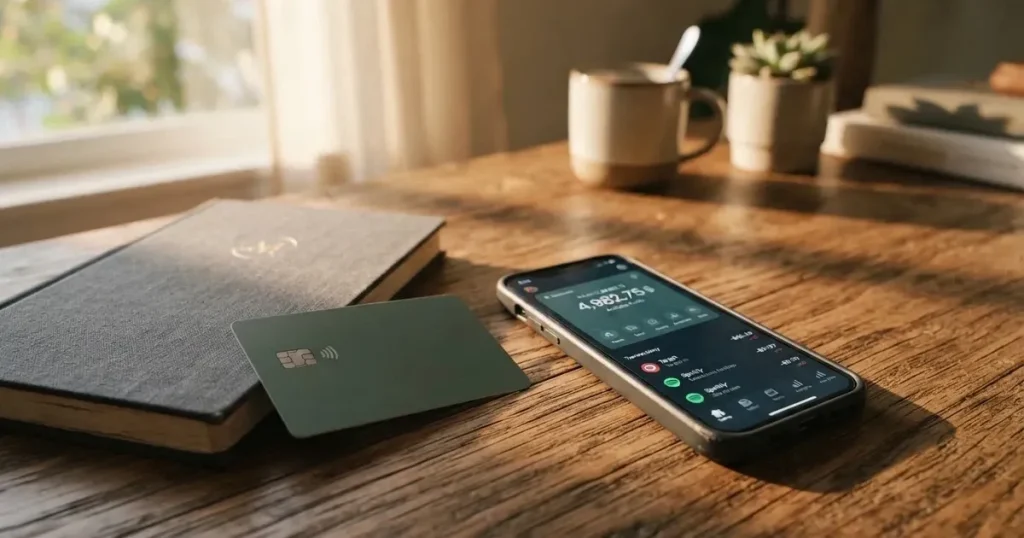
If you have ever tried to get a plain bank card and could not — because of where you live, what papers you hold, or a banking system that has decided you are not worth the paperwork — the Bleap card is built with you in mind. It is a Mastercard you can load from a crypto wallet or a bank transfer, spend like an ordinary debit card, and it does not charge you for issuing the card, for holding it, or for the month. On paper this is one of the cleanest cost structures in the category. Where I have reservations is not the price list; it is what happens when something goes wrong and you need a human being.
I have gone through the card’s own pages, its regulatory filings and the public complaint record to work out who it actually serves, what it actually costs day to day, and where the fine print and the public record disagree with the marketing.
The conditions described here are current as of October 28, 2026.
Verdict: 7.5 out of 10
Bleap scores well on money and poorly on everything that happens after you press a button with a problem attached. That is the shape of the card in one sentence: the cheapest everyday card in this comparison, and the one where I would think hardest before I depended on it for something urgent.
For the reader I have in mind — an EEA resident who wants a card with no monthly charge and wants a slice of their spending back — this is a good card. Zero FX markup, free withdrawals up to a stated monthly allowance, no subscription, and cashback that is genuinely above average for the category. If your spending is ordinary — supermarket, restaurant, a ride, streaming subscriptions — the rates line up unusually well with how people actually live.
For everyone else, the caveats are specific rather than general. If you need a metal card, only virtual and standard physical are described as available now. If you need to move large amounts in or out, published spending and transfer limits are not on the card’s public pages. If you live in Latin America outside Mexico and Brazil, it is described as “coming soon”. If you are a US, UAE, Turkish or Nigerian citizen living in Europe, third-party reporting says you are excluded regardless of where you live — that one is worth checking before you install anything.
| Criterion | Mark | Why |
|---|---|---|
| Who can get it | 6 / 10 | Residents of the EEA and Latin America, with Mexico and Brazil live and others “coming soon”; unofficial reporting says 31 countries, residence in the EEA or Switzerland required |
| Cost | 9 / 10 | Issuance, monthly and maintenance all 0; 0% FX markup; no Bleap fee on bank-transfer conversions; free ATM withdrawals up to 400 EUR a month |
| Top-up options | 8 / 10 | Bank transfer in EUR/USD, tokens from an external wallet on Solana, Base and Arbitrum, other currencies converted to USDC |
| Reliability and complaints | 6 / 10 | Bleap SIA (Latvia) holds a MiCA CASP licence from Latvijas Banka; unofficial reporting names the issuer as Unlimit; Trustpilot 3.5/5 across 72 reviews, with replies taking two to three weeks and card blocks reported |
| Everyday use | 9 / 10 | Instant virtual card and physical Mastercard, Apple Pay and Google Pay, free ATM withdrawals up to 400 EUR a month |
Total: 7.5 / 10.
Who will they give you the card to
Eligibility as the card states it: residents of the EEA and of Latin America, with Mexico and Brazil live and further countries described as “coming soon”. The full country list sits in the Help Center. The rule is residence-based, which is the part that catches people out — the test is where you live, not what you hold.
There is a second layer that the card’s own pages do not spell out in the same place. Unofficial reporting, from a third-party comparison site rather than from Bleap, describes 31 listed countries and says residence in the EEA or Switzerland is required, and that citizens of many countries including the US, the UAE, Turkey and Nigeria are excluded regardless of residence. I want to be clear about the provenance: I could not confirm that on Bleap’s pages. But the pattern is not unusual. Nationality gets screened separately from address, because sanctions screening and issuer risk policy reach past the postcode. If your passport is from one of those countries and you live in, say, Germany, do not assume the residence rule settles it — ask the Help Center before you start.
The company behind the card is Bleap SIA, registered in Latvia (40203714425, Riga), wholly owned by Bleap Ltd in the UK (14918472, London, founded 2023). It holds a MiCA CASP licence, No. 27-55/2026/14, from Latvijas Banka, granted 25 June 2026. That is a real licence from a real central bank, and it is the main reason I am willing to put money through this thing at all. It is not, however, a banking licence, and Bleap is not a bank.
How to get it
The signup runs through the app. You need to be 18 or older and living in a supported country. Identity verification happens inside the app and the card’s homepage says it usually takes under five minutes; the accepted documents and what counts as proof of address are listed in the Help Center rather than on the signup screen. Once you are through verification you get a virtual card instantly, or you can order the physical one.
On that last point the card’s own pages are not entirely consistent with each other, which is worth knowing before you plan around it. The homepage says physical cards ship “within 2 working days”. A Bleap blog post describes approval and delivery timelines running from instant for the virtual card to two to four weeks for a physical one. And third-party reporting says no shipping timeframe appears on the page at all, with one App Store reviewer saying physical ordering was gated behind a referral. Do not build a schedule on two working days.
The card itself is a Mastercard debit card, available virtual (instant) and physical. Balances are held in EUR and USD — as EURe and USDC respectively. One tier only: no paid plans, no subscription, no minimum balance. A metal card appears in unofficial listings as “coming soon”; I could not confirm it on Bleap’s pages.
On how much verification involves, the honest answer is that the public pages describe a single level and do not list rejection reasons. Unofficial reporting describes the top level as selfie, government ID and proof of address, with the possibility of being asked for a residence permit or source of funds. Expect that, not a surprise.
What it really costs: Fees
Here is the part of the review I can be most concrete about, because Bleap publishes unusually clean numbers.
| Fee or limit | Value |
|---|---|
| Issuance fee | 0 — no issuance fee |
| Monthly fee | 0 — no monthly or maintenance fee, no subscription, no minimum balance |
| Conversion on bank transfer | No Bleap fee; the card states that adding money, converting and spending are free |
| FX markup | 0% on non-EUR transactions |
| ATM withdrawals | Free up to 400 EUR per month; the fee above that cap is not stated |
| Tokens from an external wallet | Convertible in one tap, no fees; network fees are the blockchain’s, not Bleap’s |
| Daily and monthly limits | Spend limits are not stated on the public pages — the ATM free allowance is 400 EUR per month |
Three everyday payments, so this is not theoretical:
- A coffee in a eurozone city. Nothing is deducted from your balance beyond the price. No FX layer, because the transaction is in your own currency.
- A subscription billed in dollars. The card states a 0% Bleap FX markup, so the amount your balance drops by is the merchant’s price converted at the network rate. Unofficial reporting adds that Mastercard’s own rate and third-party charges can still apply — meaning something outside Bleap’s control can move the final number.
- Two cash withdrawals in a month. Both are inside the 400 EUR free allowance and cost you nothing from Bleap’s side. Note that the card’s card page also says “free withdrawals worldwide” with no cap, which conflicts with the 400 EUR figure given in its FAQ and on the homepage. I would plan on the 400 EUR version.
On the ATM allowance, unofficial reporting describes it more tightly than the card does: three withdrawals and 400 EUR in total per rolling month, with ATM operator surcharges possible. If that tighter version is right, three withdrawals a month is not much, and operator fees at the machine are your problem. The card’s own pages do not state the fee above the cap, so treat the higher of the two as your ceiling.
Card purchases and outgoing transfers also have limits, and these appear only in unofficial reporting: 10,000 EUR per purchase, 15,000 EUR per day, 30,000 EUR per rolling 30 days, with outgoing transfers at 3,000 EUR single, 5,000 EUR daily and 10,000 EUR rolling monthly. I could not find these on Bleap’s pages — the card points to the Help Center instead. If you are moving serious money, treat these as indicative only and ask.
How to Top up the card
Two routes, both straightforward.
Bank transfer. EUR and USD, held as EURe and USDC at 1:1. Other currencies get converted to USDC. Bleap states there is no conversion fee on bank transfers, and that adding money, converting and spending are free. The minimum top-up and any network fees are not stated.
From an external crypto wallet. Tokens arrive on Solana, Base or Arbitrum and convert into your balance in one tap, with no fee charged by Bleap. This is the route that makes the card interesting if you already hold crypto, and the one where the network matters: sending on a chain the provider does not support can mean the transfer is lost or needs manual recovery with no guarantee attached. Blockchain transfers do not reverse by themselves. If you have USDC on Tron, for instance, that is a different network from the three listed, and the economics are different too.
One more option worth naming, with the caveat that it is unofficial: buying crypto with a bank card, Apple Pay or Google Pay is reported to carry a 1% processing fee.
The wallet itself is non-custodial, MPC — the key is split into shares so no single party, including Bleap, holds the whole thing. There is no seed phrase; recovery runs through a secure email sign-in. That is a genuine improvement over the seed-phrase model, where anyone who obtains your 12 to 24 words can restore the wallet and spend from it. The cost of that convenience is that your recovery path runs through an email sign-in flow that the company operates.
On getting money back out: savings vaults charge 0% on withdrawal and have no lock-in, and the USD vault exists with the EUR vault listed as “coming soon”. Cash-out of crypto from a connected wallet to fiat exists in the Help Center, though I only saw the article titles and not the methods or fees. Withdrawal of your card balance to a bank account on closure is not stated. One user report from September 2026 says withdrawal was only to crypto and that EURe was hard to exchange — worth weighing if the exit route matters to you.
Paying with it every day
A virtual Mastercard you can hold in Apple Pay or Google Pay, and a physical card in the post. For daily use that is a complete setup: phone pay at the counter, card at the machine, and the balance sits in whatever currency you hold.
Cashback is the sharpest feature, and it is better than most. Up to 20% back in USDC:
- 20% on streaming, gaming and AI subscriptions
- 3% on rides and food delivery
- 2% on restaurants and supermarkets
- 1% on everything else
Cashback is paid after the merchant confirms, and the caps and conditions sit in the cashback terms rather than on the card pages. Read those if the 20% is what draws you in — rates like that are always conditional.
The app is on iOS and Android, and the homepage carries ratings of 4.8 on the App Store and 4.5 on Google Play, with no review counts or date shown on the page.
What is missing from the pages is as informative as what is on them. Blocked merchant categories are not stated. Dispute handling is not stated. Two-factor authentication, in-app freeze, spending controls and insurance are not stated — and those are the first things I would look for in any card that holds real money. The Help Center has a “Security and Backups” collection, which I did not read.
One piece of everyday mechanics worth knowing, since it catches people out with any card: merchant category codes. MCC 7995 covers gambling, and many issuers block it by policy rather than by law, with the blocked list varying by issuer. Whether Bleap blocks it is not something the pages answer.
What can go wrong
The complaints are the reason this card is a 7.5 and not a 9.
Read the record carefully, because it moved. Earlier user-reporting put Bleap at 2.5/5 across 46 reviews. As of 20 October 2026, Trustpilot shows 3.5/5 across 72 reviews, 59 of them in the last 12 months — so the picture improved. The company has still not replied to negative reviews. What that means for you: the score is a moving target, and the complaints below are themes, not verdicts.
The themes are consistent. Support replies take two to three weeks, or never — the July to September 2026 window is where most of this appears. Cards and transactions get blocked, and funds get frozen, without a reason given. One reviewer says their account was locked with support silent for more than three days; another cites verification delays of three weeks; one report in the earlier batch was a scam accusation. There are positive reviews too, several specifically about cashback and about not being declined at checkout. On the other side, an SMS for adding the card to Google Wallet never arrived (July 2026).
Official incidents are not stated by the card, so I want to be careful not to dress up user reports as established fact. What I can say is that an unverifiable record of blocks is a real operational risk, and a card that can be frozen without an explanation is a card I would not hold my only money in.
The company and its licences are solid ground. Bleap SIA, Latvian, wholly owned by Bleap Ltd in the UK, founded 2023, holding a MiCA CASP licence from Latvijas Banka dated 25 June 2026. The issuer is not named on the card’s pages; unofficial reporting from a third-party site names Unlimit (Unlimit EU Ltd) alongside Mastercard. Under EU rules, CASP licences are real — MiCA took legal effect in June 2023, its stablecoin rules applied from 30 June 2024, and the CASP provisions from 30 December 2024 — and a licensed provider authorised in one member state can serve the EU. But understand the layering: the card itself is a payment service regulated separately, so a crypto card usually rests on two licences. And note where the savings feature sits — outside the MiCA-regulated services, which means MiCA investor protections do not apply to it.
Support exists on paper: help.bleap.finance, a contact page, a status page and in-app support.
What to take instead
If the fees are what brought you here, the comparison below is fair — but check the reasons, because the alternatives each buy something with a different currency.
| Card | Score | Cost | Cashback | Who it is for |
|---|---|---|---|---|
| Bleap | 7.5 / 10 | No issuance, monthly or FX fee; free ATM to 400 EUR a month | Up to 20% in USDC by merchant category | EEA residents who spend from a crypto or fiat balance and want no monthly charge |
| MetaMask | 7.1 / 10 | Virtual free; metal $199/year; no foreign transaction fee, Mastercard rate used | 1% virtual, metal headline 3% limited to the first $10,000 spent | 45 listed countries, proof of residency required; US and UK sign-ups temporarily closed |
| KAST | 6.1 / 10 | Standard 0, Premium 1,000, Private 10,000 USD/year; FX 0.5%–1.75% on non-USD | 1.5% to 3% in USD, capped monthly by tier | Residency list shown only at KYC; ID from a restricted region can block eligibility |
| TokenPocket | 5.8 / 10 | “No additional fees” beyond a 1% crypto deposit fee | No cashback stated; the 1% is said to be refunded via rewards or lower transaction fees | European country list on Visa, a wider list on Mastercard, Americas described as planned |
Three things stand out when you put them side by side.
MetaMask is the closest substitute on cost, and it beats Bleap on transparency of currency — it names its issuer, Monovate, and its card provider, Crypto Life, and it says plainly that there is no foreign transaction fee. But the metal card is $199 a year, and the cashback is thinner. It also spends straight from your connected wallet across Linea, Base, Monad and Solana, which is a different model from Bleap’s balance.
KAST is the one with the tiered economics. Its fees are openly graduated: annual membership from 0 to 10,000 USD, cashback 1.5% to 3% capped at 2,000, 10,000 and 40,000 USD of monthly spend, and non-USD transactions costing 0.5% to 1.75% depending on where you live and which programme you are on. Its eligibility rules are stricter in a way that is worth reading closely — you can create an account in an unsupported country, but KYC stays locked, and holding an ID from a restricted region may disqualify you even when you live somewhere supported.
TokenPocket charges 1% to deposit crypto into the card and says that comes back to you later through rewards or reduced transaction fees. “Later” is doing real work in that sentence.
One background point that explains the whole category: Visa and Mastercard do not issue crypto cards to consumers themselves. They license issuers, and they can suspend a programme — Visa terminated its global agreements with FTX on 13 November 2022, and WaveCrest’s Visa programmes were suspended in Europe in 2018. Programme closures follow a pattern: a notice period, then loading and spending stop, then you are asked to withdraw. That is not a prediction about Bleap; it is the shape of the risk you accept by holding a crypto card rather than a bank card.
Who I would recommend it to
I would recommend Bleap to someone in the EEA who has a working crypto balance, spends it through streaming services, rides and food delivery, and wants a card that costs nothing to hold. The fee structure is not a marketing approximation; it is the product. Cashback at 20% on subscriptions is the kind of rate that makes a card feel generous in the exact month you use it most.
I would not make it my only card. The pattern I keep coming back to is support latency and unexplained blocks. Two to three weeks for a reply is not a complaint about tone; it is a complaint about whether the card will work on the day you need it. If you keep a fallback card elsewhere — and for anyone reading this, you should — that risk becomes a nuisance rather than a problem.
I would think twice if you are in Latin America outside Mexico and Brazil, if you are a citizen of a country that may be excluded regardless of residence, if you need to move more than a few thousand euros a day, or if you are planning around a metal card.
And a line I would underline for everyone: because a declined authorisation can leave a hold on funds for several days, sometimes up to seven, a declined transaction does not always mean the money left your balance and can be clawed back. Check your balance before you retry.
Frequently asked questions
What is the Bleap card?
Bleap is a Mastercard debit card that spends from a crypto or fiat balance you hold in the app. You load it by bank transfer in EUR or USD, held as EURe or USDC at 1:1, or by sending tokens from an external wallet on Solana, Base or Arbitrum. A virtual card arrives instantly, and a physical one can be ordered. It is operated by Bleap SIA in Latvia, which holds a MiCA CASP licence from Latvijas Banka.
How does the Bleap card work in practice?
You top up a balance, then spend it like any Mastercard — in a shop, online, or through Apple Pay and Google Pay with the virtual card. The balance can sit in crypto or fiat, and the same card draws on both. Cashback in USDC is paid after the merchant confirms the payment. There is no subscription and no minimum balance, so the card costs nothing to keep whether or not you use it in a given month.
Is Bleap a bank?
No. Bleap SIA is a Latvian company with a MiCA CASP licence from Latvijas Banka, granted 25 June 2026, and it is wholly owned by Bleap Ltd in the UK, founded 2023. That licence covers crypto-asset services. A card is a payment service regulated separately, so a crypto card usually rests on two licences. Treat it as a regulated crypto service with a card attached, not as a bank deposit.
Who can get the Bleap card?
The card says residents of the EEA and of Latin America, with Mexico and Brazil live and more countries “coming soon”, with the full list in the Help Center. Unofficial third-party reporting describes 31 countries and says residence in the EEA or Switzerland is required, and that citizens of some countries including the US, UAE, Turkey and Nigeria are excluded regardless of where they live. Check before you install anything.
Is the Bleap card free?
There is no issuance fee, no monthly fee, no maintenance fee and no minimum balance. It also states 0% FX markup on non-EUR transactions, no Bleap fee converting bank transfers, and no fee converting tokens from an external wallet in one tap. ATM withdrawals are free up to 400 EUR a month; the fee above that cap is not stated, and unofficial reporting describes the allowance as three withdrawals in a rolling month.
How do I top up the Bleap card?
Two ways. Bank transfer in EUR or USD, which is held as EURe or USDC 1:1, with other currencies converted to USDC and no Bleap conversion fee. Or tokens from your own wallet on Solana, Base or Arbitrum, converted into your balance in one tap. The minimum top-up and network fees are not stated — network fees are the blockchain’s, not Bleap’s.
Is the Bleap card safe?
The underlying company is licensed and the wallet is non-custodial MPC, with the key split so no single party holds it, no seed phrase, and recovery through a secure email sign-in. But safety is not the same as support. Trustpilot shows 3.5/5 across 72 reviews, with reports of support taking two to three weeks or never replying, and cards or funds blocked without explanation. Two-factor authentication, in-app freeze and spending controls are not stated on the public pages.
What cashback does the Bleap card pay?
Up to 20% in USDC on streaming, gaming and AI subscriptions, 3% on rides and food delivery, 2% on restaurants and supermarkets, and 1% on everything else. Cashback is paid after the merchant confirms the transaction, and caps and conditions live in the cashback terms rather than on the card pages. If the 20% is what draws you in, read those terms first.
Can I use the Bleap card in my country?
Where you can use it and where you can hold it are different questions. The card works as a Mastercard wherever Mastercard is accepted, but eligibility to hold one depends on your country of residence. For day-to-day spending abroad, the card states a 0% FX markup — though Mastercard’s own rate and third-party charges can still apply. For a card in your wallet, check the Help Center country list.
Is the Bleap card worth it?
For an EEA resident who already has a crypto balance and wants a card with no monthly charge and real cashback, yes — 7.5 out of 10 on my scoring, with the fee structure being the strongest thing about it. I would still keep a second card, because blocks and slow support are the recurring complaints. If you need large transfers, a metal card, or live access outside Mexico and Brazil, it is not the right card yet.
Wallet cards in the catalogue – cryptocardcatalog
Content created by the «cryptocardcatalog» team