
A solid euro crypto card hiding an unrevealed conversion spread
 Available in US
The Bitpanda card is a physical Visa debit card that spends straight from your Bitpanda account, converting your chosen crypto or metal holdings into euros at the moment of payment. There is no separate card balance to load: the card draws on a main asset you nominate, with an optional fallback. The account opens free, the monthly fee is zero, and the first delivery costs nothing — but the number that should matter most, the crypto conversion spread, is not published on the card pages. That single gap is why this card sits at 6.5 out of 10 rather than higher.
Conditions described are current as of October 28, 2026.
Verdict: 6.5 / 10 — good card, unpriced cost of doing the actual thing
I scored it 6.5 out of 10. The card does what it says and lives inside a regulated structure: it’s issued by Transact Payments Malta Limited under a Visa Europe licence and supervised by the Malta Financial Services Authority (registration C 91879). Everyday use is strong, reliability is strong, and the fee sheet has real zeros in it. But the whole point of a crypto card is that your crypto becomes euros, and Bitpanda does not publish the conversion spread — the trading fee charged when the payment asset is sold is debited automatically on every card payment, and its rate is not stated on the card pages. You are asked to accept the cost of the card’s only real job.
Who it suits: euro-area residents who already hold and spend crypto or precious metals in euros, and who want a plain physical Visa rather than a tokenised one. Who it does not suit: anyone who needs a US dollar card, anyone living outside the euro area, anyone who wants to know precisely what a purchase costs before they make it, and anyone whose main complaint is slow support.
The score breaks down as follows.
| Criterion | Mark | Why |
|---|---|---|
| Who can get it | 4 / 10 | Verified Bitpanda account and euro-area residence required; Bankident-verified users cannot order; Cyprus and Liechtenstein excluded |
| Cost | 7 / 10 | Opening, monthly and first delivery free; reissue EUR 5.90; FX fee EUR 0 but Visa mark-up applies; ATM 2% or EUR 2 minimum; conversion spread not disclosed |
| Top-up options | 6 / 10 | Main asset can be listed cryptocurrencies, precious metals or EUR, converted at payment; Crypto Indices excluded |
| Reliability and complaints | 8 / 10 | Issuer supervised by MFSA (C 91879); no card-specific complaints found; Trustpilot 4.1/5 from about 15,896 reviews; complaints centre on blocked withdrawals |
| Everyday use | 8 / 10 | Physical Visa, virtual not disclosed; Apple Pay and Google Pay; ATM with EUR 500 daily limit |
| Total | 6.5 / 10 | A well-run euro card whose conversion cost stays hidden |
Will they give you the card?
Yes, if two things are true: your Bitpanda account is fully verified, and you live in a euro-area country. The rule is by residence, not citizenship — nationality does not decide it. Users verified through “Bankident” cannot order the card at all; that verification route is excluded, so if you signed up that way, the card simply is not available to you. Cyprus and Liechtenstein are excluded by a separate support article even though both sit in the euro area.
Beyond that, the card pages do not list which documents count, and proof of address and age requirements are not stated there. KYC tiers and processing times are also not stated on the card pages. That gap matters for planning: you can verify the headline eligibility, but you cannot verify from the public pages how long a review will take or what paper it may demand.
One thing to understand before you apply. Bitpanda is not a bank. It is a custodial platform — it holds your assets and credentials — with a separate payment card issued by a licensed Malta issuer. The relationship splits across two regulated entities and two regulators, which is normal for this category and worth keeping in mind when something goes wrong and you need to work out whose problem it is.
How to get it
You apply inside the app, on a verified account. The physical Visa debit card is EUR-only, and one active card at a time is the rule. A virtual card is not disclosed on the pages — if a tokenised instant card matters to you, do not assume it exists.
Delivery takes 3–7 working days depending on destination. The first shipment is free. A replacement for a lost, stolen or damaged card is EUR 5.90 in the fee table, though the FAQ quotes EUR 9.90 for damage, loss or theft — a small internal inconsistency worth noting. An additional physical card costs EUR 10. The card is valid five years from issue, and a replacement is sent automatically at the end of that term. Delivery countries beyond euro-area residence are not stated.
In short: verify the account, make sure you live in a qualifying euro-area country, are not Bankident-verified and are not in Cyprus or Liechtenstein, then order in the app and wait three to seven working days.
Fees: what it really costs
The headline fees are the friendliest part of this card. There is nothing to pay to open the account, nothing per month, and nothing for the first delivery. A reissue runs EUR 5.90, and a second physical card EUR 10. The non-euro foreign-exchange fee is EUR 0, although Visa’s own mark-up still applies on top of that zero. Cash withdrawal costs 2% or EUR 2, whichever is higher, and local bank charges may add.
| Fee or limit | Value |
|---|---|
| Account opening | Free |
| Monthly fee | Free |
| First delivery | Free |
| Reissue | EUR 5.90 (FAQ: EUR 9.90 for damage, loss or theft) |
| Additional physical card | EUR 10 |
| Crypto conversion | Spread not stated; trading fee debited per payment |
| Non-EUR FX fee | EUR 0, Visa mark-up applies |
| ATM fee | 2% or EUR 2 minimum, whichever higher |
| ATM daily limit | EUR 500 |
| Daily spend limit | EUR 10,000 |
| Weekly spend limit | EUR 70,000 |
| Monthly spend limit | EUR 280,000 |
| Card currency | EUR only |
Now let us follow three ordinary payments through that table, because this is where the fee sheet stops being reassuring.
A EUR 40 lunch in your own country. The payment asset is converted to EUR at the moment of sale, and Bitpanda’s platform trading fee for selling that asset is debited from your account on each card payment. ATM and FX fees do not touch this one. Your visible card cost is zero; your real cost is the conversion spread, which the card pages do not publish.
A EUR 25 online subscription billed in USD. The Bitpanda-side FX fee is EUR 0, but Visa’s mark-up applies, so a positive spread sits between the real exchange rate and what you are charged. On top of that, the payment asset is still sold to euros first, so the trading fee and its spread apply as well. You are paying two spreads on one purchase and being told the card’s own share of one of them is zero.
A EUR 200 cash withdrawal. The fee is 2% or EUR 2, whichever is higher, so EUR 4 here — plus any local bank charge at the ATM. Free ATM withdrawals were a VIP-level perk, and since July 2025 the VIP scheme moved onto a Vision (VSN) token per a third-party note; the card page says top VIPs get unlimited free withdrawals each month. Whether you qualify, and at what level, you can only confirm in the app. The free allowance is not stated.
Cashback deserves a mention too. The Product Terms version 2.0.0 of 1 April 2025 fixed cashback at 1% of qualifying crypto transactions, credited to the EToken wallet in the asset used, and ended any BEST-VIP dependency. Payments made with a non-EToken asset are excluded, and so are fiat, stocks, metals and stablecoins. A page summary still says “up to 2%”, which the terms resolve against it — trust 1%, and treat the 2% figure as unconfirmed.
Top up: there is no card balance to top up
This is the concept that trips people up. The Bitpanda card has no separate top-up and no stored balance of its own. It spends a chosen main asset — and optionally a fallback asset — from your Bitpanda account, converting to EUR at the moment of payment. You top up the account, not the card, using the usual Bitpanda deposits.
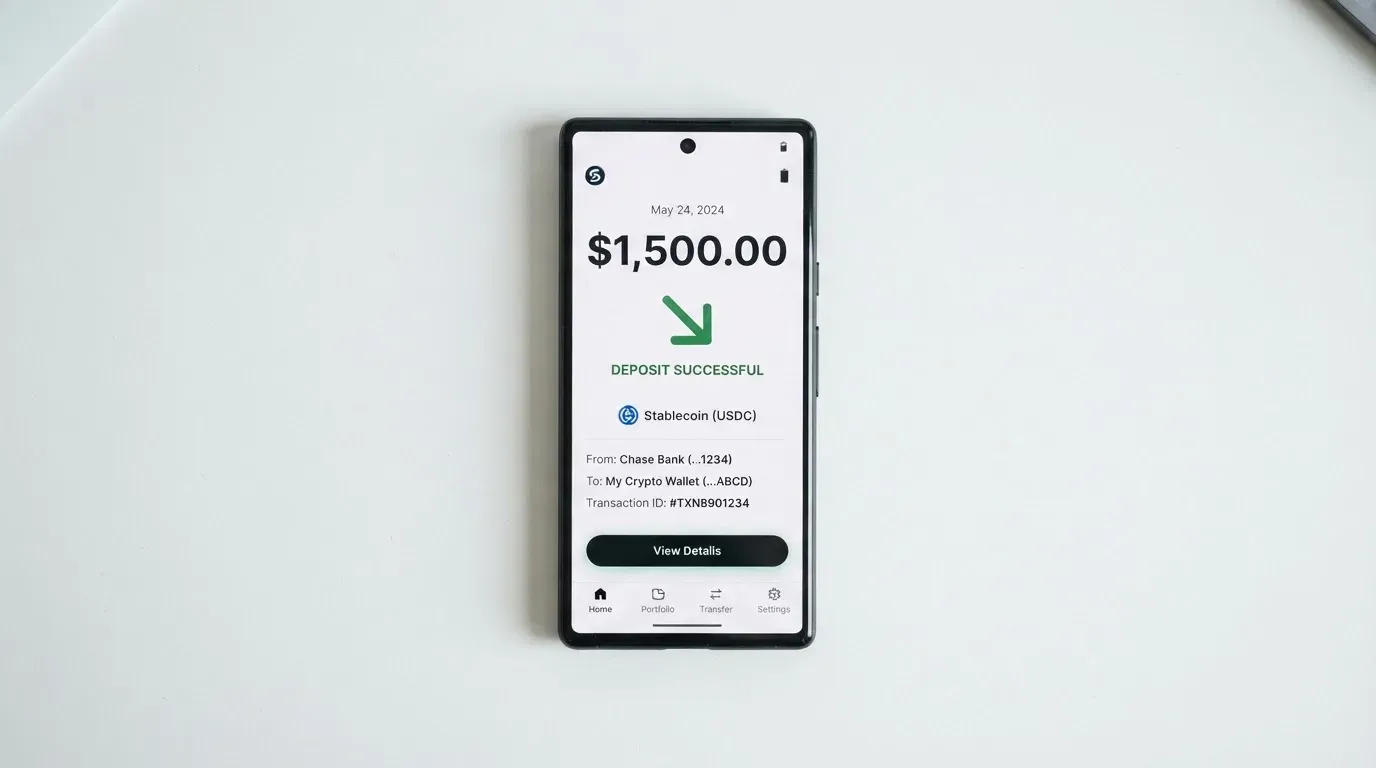
What you can choose as the main asset is broader than most people expect: any of the listed cryptocurrencies, precious metals, or plain EUR. So you can hold gold and spend it in a supermarket, or hold euros and spend euros. Crypto Indices are excluded. The minimum payment is EUR 1.
No card-specific top-up fee is stated. Multi-currency balance is not stated either, and since the card is EUR-only with refunds going to the EUR wallet, the account is effectively euro-denominated from the card’s point of view.
One practical warning sits with funding. Blockchain transfers are irreversible. A deposit sent on a network Bitpanda does not support, or to an address belonging to a different network, can be lost outright or need manual recovery with no guarantee attached. Check the network before you send, every time.
Paying with it every day
The everyday experience is good. It is a physical Visa debit card, EUR-only, with generous spending ceilings: EUR 10,000 a day, EUR 70,000 a week, EUR 280,000 a month. You can add it to Apple Pay, and a support article says you can add it to Google Pay like any other Visa card. Blocked merchant categories are not listed on the card page; the restriction lives in section 5.12 of the issuer’s Cardholder Agreement.
Refund handling is worth reading once. Under Product Terms 8.1, refunds including chargebacks are credited to your EUR wallet minus fees. An older card-account terms page — which still names Contis/Solaris wording and shows no date, and which conflicts with the current Malta issuer — says to contact the merchant first, report unauthorised or incorrect payments within 13 months, expect a decision on a refund within 10 business days, and receive a refund no later than the end of the next business day after notification for unauthorised payments. The current issuer’s Cardholder Agreement was not available to me to check, so treat the older timeline as indicative.
On app quality, the official site shows the app but the store rating is unofficial: Google Play shows an average of 3.60 from about 55 thousand ratings, per AppBrain, on an undated page seen in October 2026 and possibly out of date.
What can go wrong
A “Proof of funds” request stops everything. If Bitpanda asks for proof of funds, all payouts — including the card — are disabled until it is approved. This is official, and it is the single most disruptive thing on this list: your money is not gone, but it is stuck in a queue you cannot see.
Support is the recurring complaint. No card-specific complaints surfaced. Across the whole Bitpanda business, Trustpilot shows 4.1/5 from about 15,896 reviews, 73% five-star and 17% one-star, read on 20 October 2026. The 2026 complaint themes are blocked withdrawals and account restrictions, high currency-exchange commission and spreads, slow support during compliance reviews, German replies to English messages, and a 5% deposit-cashback promotion paid only partly. Aggregator summaries (AI-generated, low weight) also mention frozen accounts, KYC friction and support under stress.
The money is custodial. Bitpanda holds the credentials, so you trust the provider completely, and the platform carries counterparty and hack risk. An older terms page describes funds sitting in a segregated safeguarding account, not covered by the Lithuanian deposit insurance, with liability capped at 50 euros absent gross negligence. That page’s naming conflicts with the current issuer, so I would confirm the current position with support rather than rely on it.
Blocks and fraud checks work as designed. You can block and unblock the card in the app, with Visa anti-fraud monitoring and 3-D Secure. Loss or theft must be blocked in the account and reported immediately. Lost or stolen card phone number on the older page: +44 (0)333 202 3645. Support: helpdesk and contact form on the card page, “Contact Us” in the app, Account Portal messages, postal address Stella-Klein-Loew Weg 17, 1020 Vienna.
Two entity names to be aware of. The Product Terms of 1 April 2025 name the issuer as Transact Payments Malta Limited, the contract as with Bitpanda GmbH in Vienna, and Bitpanda Payments GmbH as payment services provider. A separate older page names UAB Finansines paslaugos Contis (Bank of Lithuania licence No. 53) as issuer. Current terms win.
What to take instead
If the reason you are reading this is that an ordinary bank card is hard to get, it is fair to ask what else exists. Here is how the alternatives line up against the Bitpanda card, on the score each one carries.
| Card | Score | Key facts |
|---|---|---|
| Bitpanda | 6.5 / 10 | Euro-area residents only; physical Visa, EUR-only; conversion spread not stated |
| International Visa Card | 6.7 / 10 | U.S.-issued Platinum Visa, virtual, pays in USD; physical “coming soon”; $5 issuance, no maintenance; 2% FX fee; blocked list of countries; no cashback stated |
| UNi Card | 6.1 / 10 | Multicurrency Mastercard, spends from UNi.Global balance; no annual or FX fee; converted at live OTC rates; rewards up to 3%; eligibility and funding not stated |
| Whop Cards | 5.2 / 10 | Visa; U.S. consumers in 31 states, businesses in 41; spends from Whop balance; 5% cashback at select merchants (Uber currently); fees not stated |
International Visa Card scores marginally higher, at 6.7, and it is built for a different job: U.S.-issued, USD-denominated, virtual, with a physical card listed as “coming soon.” Card use in USD is free on every plan, while foreign currency costs the Visa exchange rate plus a 2% FX fee. Deposits are free, accepting USDC or USDT into the USD account. The catch is reach: residents and registrants of a long list of countries — Belarus, mainland China, North Korea, Cuba, India, Iraq, Iran, Israel, Myanmar, Nepal, Nicaragua, Russia, Syria, Turkey, Ukraine, Venezuela, Vietnam — cannot get it, and purchases are blocked in a further set. No cashback is stated.
UNi Card sits at 6.1. It is a multicurrency Mastercard spending from the UNi.Global balance, with no annual fee and no foreign transaction fee, converted at live over-the-counter rates with, in its own words, no hidden exchange fees, and spend-to-earn rewards up to 3%. It also discloses almost nothing else — eligibility, top-up and physical or virtual form are all not stated.
Whop Cards comes last at 5.2, but for a U.S. reader it has the clearest shape: a Visa that works anywhere Visa is accepted, spending from a Whop balance that becomes usable as soon as a payment arrives, with 5% cashback at selected merchants, currently Uber. It is limited to 31 consumer states, its fees are not stated, and it is built around a platform balance rather than a self-standing card.
None of the three discloses its crypto conversion spread any more clearly than Bitpanda does. What separates them is currency and reach: if you live and spend in euros, Bitpanda is the only one of the four designed for you.
Who I would recommend it to
I would recommend this card to someone already inside the euro area, already verified with Bitpanda, who wants to spend crypto or metals in ordinary shops without moving assets to a bank first, and who is comfortable with a conversion spread they will only see after the payment clears. For that person it is a well-run card with a regulated Maltese issuer, zero monthly cost, generous limits and good mobile wallet support.
I would not recommend it to you if you need a dollar account, if you live outside the euro area, if you verified through Bankident or you are in Cyprus or Liechtenstein, or if the missing conversion number would make you nervous. Anyone who has been burned by a frozen withdrawal should also weigh the proof-of-funds lockout carefully before committing funds to this account.
Before you apply, do three things: confirm in the app what your current verification route is, confirm the exact ATM and FX cost in your usual currency, and ask support directly what the conversion spread is on the assets you hold. That last question is the one worth asking, and the answer is the reason this is a 6.5 and not an 8.
Frequently asked questions
What is the Bitpanda card?
It is a physical Visa debit card that spends directly from your Bitpanda account rather than from a bank. You nominate a main asset — listed cryptocurrencies, precious metals or plain EUR — and the card converts it to euros at the moment of payment. The card is EUR-only, one active card at a time, and a virtual version is not disclosed on the card pages.
How does the Bitpanda card work?
There is no card balance to load. The card draws on your chosen main asset, with an optional fallback, and converts to EUR when you pay. A trading fee for selling that asset is debited on each card payment, and the conversion spread itself is not published. Refunds, including chargebacks, land in your EUR wallet minus fees.
Is Bitpanda a bank?
No — it is a custodial crypto platform. The card itself is issued by Transact Payments Malta Limited under a Visa Europe licence, regulated by the Malta Financial Services Authority with registration C 91879. Your contract is with Bitpanda GmbH in Vienna, with Bitpanda Payments GmbH providing payment services. Custody and card issuance sit with separate regulated entities.
Who can get the Bitpanda card?
Anyone with a fully verified Bitpanda account who lives in a euro-area country. The test is residence, not citizenship. Users verified through “Bankident” cannot order it, and Cyprus and Liechtenstein are excluded. Which documents count and how long review takes are not stated on the card pages.
How much does the Bitpanda card cost?
Opening the account, the monthly fee and the first delivery are all free. A reissue is EUR 5.90 in the fee table, though the FAQ quotes EUR 9.90 for loss, theft or damage, and an extra physical card is EUR 10. The non-EUR foreign-exchange fee is EUR 0, but Visa’s mark-up still applies. ATM withdrawals cost 2% or EUR 2, whichever is higher.
How do I top up the Bitpanda card?
You do not top up the card — you top up the Bitpanda account through its usual deposits. The card spends whatever main asset you have nominated, converted to EUR at payment, with a minimum payment of EUR 1. Crypto Indices are excluded from eligible assets, and no card-specific top-up fee is stated on the card pages.
Is the Bitpanda card safe to use?
It is issued by a supervised Malta issuer with Visa anti-fraud monitoring and 3-D Secure, and you can freeze and unfreeze the card in the app. Loss or theft must be blocked in the account and reported immediately. Because the platform is custodial, you are trusting the provider with the credentials, so counterparty and hack risk sit with you.
Can I add the Bitpanda card to Apple Pay or Google Pay?
Yes. Apple Pay is listed on the card page, and a Bitpanda support article says the card can be added to Google Pay like any other Visa card. Google Pay is not mentioned on the card page itself, so the support article is the source for that. Blocked merchant categories are not listed on the card page; those sit in the issuer’s Cardholder Agreement.
Why are my payouts blocked?
The most likely reason is an open “Proof of funds” request: while Bitpanda has asked for it, all payouts including the card are disabled until approved. Beyond that, Trustpilot reviews of the whole Bitpanda business — 4.1/5 from about 15,896 reviews, read 20 October 2026 — repeatedly mention blocked withdrawals and account restrictions during compliance reviews.
Is the Bitpanda card worth it?
For euro-area residents spending crypto or metals in euros, yes: free to keep, physical Visa, EUR 10,000 daily spend limit, Apple Pay and Google Pay, and a supervised issuer. It is worth it only if you can accept an undisclosed conversion spread. If you need a dollar card, live outside the euro area, or want to know a purchase’s exact cost in advance, one of the alternatives will serve you better.
App and neobank cards in the catalogue – cryptocardcatalog
Content created by the «cryptocardcatalog» team